

You've decided to learn chess, and honestly? That's brilliant. Whether you've been inspired by watching grandmasters battle it out online or you simply fancy a mental workout, chess offers something truly special. This chess 101 guide will walk you through everything you need to know to get started, from setting up the board to understanding basic strategies that'll have you playing confidently in no time. Let's dive straight in, shall we?
Understanding the Chessboard and Setup
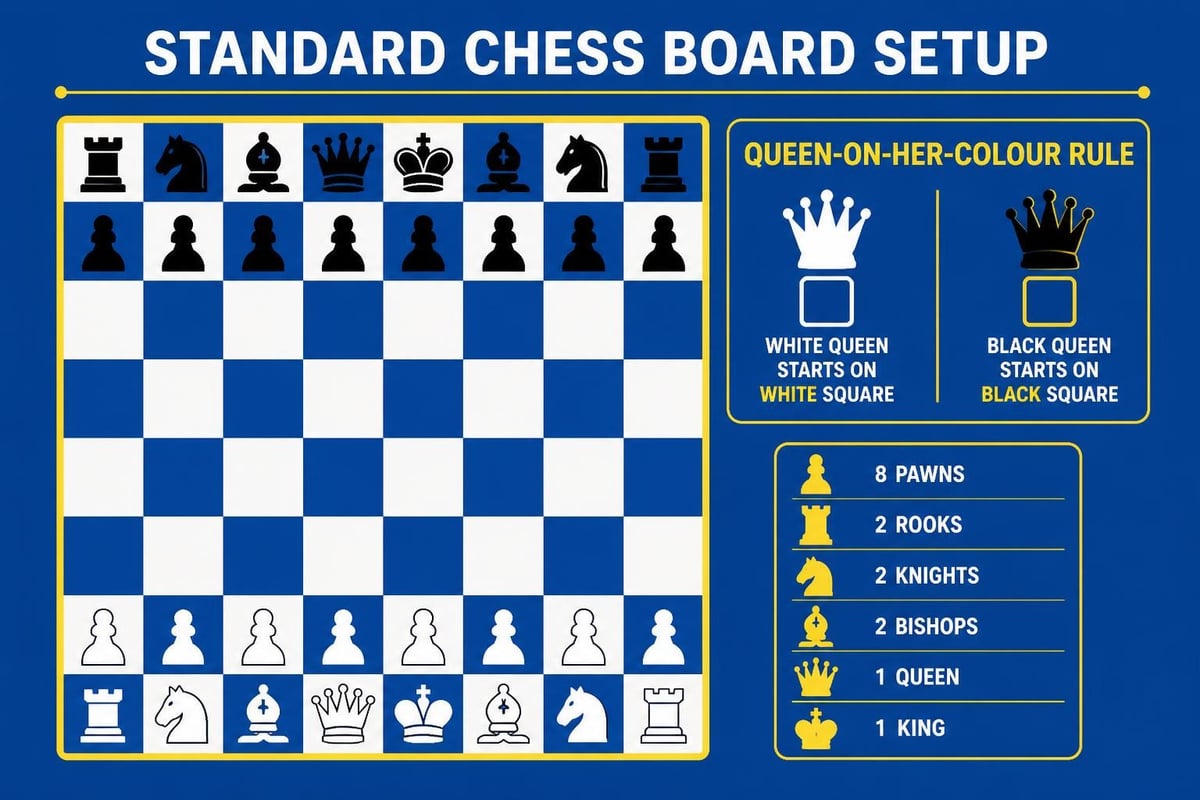
Before you can play, you need to understand your battlefield. The chessboard consists of 64 squares arranged in an 8x8 grid, alternating between light and dark colours. Here's something many beginners miss: the board must be positioned so that each player has a light square in the bottom-right corner. It's a small detail that matters more than you'd think.
Piece Placement Made Simple
Setting up your pieces correctly is your first chess 101 lesson. The back row (called the first rank for White and eighth rank for Black) follows a specific pattern. Here's how it works:
- Rooks go in the corners
- Knights sit next to the rooks
- Bishops are placed beside the knights
- Queen goes on her own colour (white queen on light square, black queen on dark square)
- King takes the remaining centre square
- Pawns fill the entire second rank, forming your defensive wall
A helpful memory trick? "Queen on her colour" has saved countless players from setup mistakes. Once you've got this down, you're ready to learn how these pieces actually move.
How Each Chess Piece Moves
This is where chess 101 gets properly interesting. Each piece has its own personality, its own way of controlling the board. Understanding these movements is absolutely fundamental to everything that comes after.
The Six Pieces and Their Powers
| Piece | Movement Pattern | Special Notes |
|---|---|---|
| Pawn | One square forward (two on first move) | Captures diagonally; promotes at opposite end |
| Knight | L-shape: two squares one direction, one square perpendicular | Only piece that jumps over others |
| Bishop | Any number of squares diagonally | Stays on one colour throughout game |
| Rook | Any number of squares horizontally or vertically | Essential for castling |
| Queen | Combines bishop and rook movements | Most powerful piece |
| King | One square in any direction | Must be protected at all costs |
The rules of chess can seem overwhelming at first, but once you start moving pieces around, they become second nature. I remember spending hours just moving a knight around the board, trying to visit every square. Sounds odd, but it genuinely helped the L-shaped movement pattern stick.
Special Moves That Often Confuse Beginners
Chess wouldn't be chess without a few quirky rules. Castling lets your king jump two squares towards a rook whilst the rook hops over to the other side. You can only castle when neither piece has moved, there are no pieces between them, and your king isn't in check or moving through check.
En passant is the move that makes beginners think you're cheating. When an opponent's pawn moves two squares from its starting position and lands beside your pawn, you can capture it as if it had only moved one square. You must do this immediately or lose the opportunity forever.
Pawn promotion is your reward for pushing a pawn all the way to the opposite end of the board. Most players choose a queen, but sometimes a knight can deliver a surprise checkmate. For more structured guidance on these fundamentals, check out our how to play chess cheat sheet.
The Objective: Checkmate and Game Outcomes
Right, so what's the actual point of all this? Your mission is to checkmate your opponent's king. That means putting their king in a position where it's under attack (in check) and has absolutely no legal way to escape. Not captured, mind you – just trapped with no options.
Understanding Check, Checkmate, and Stalemate
Check simply means the king is under attack. When you're in check, you must immediately:
- Move your king to safety
- Block the attack with another piece
- Capture the attacking piece
If none of these options exist, that's checkmate, and the game ends. But here's where chess 101 throws in a curveball: stalemate occurs when a player has no legal moves but isn't in check. This results in a draw, which can be frustrating when you're winning but accidentally trap your opponent's king without actually checking it.
Essential Chess Principles for Beginners
Now we're getting into the good stuff. Knowing how pieces move is one thing, but understanding why you should move them is what separates actual players from people just pushing wood around a board.
Control the Centre
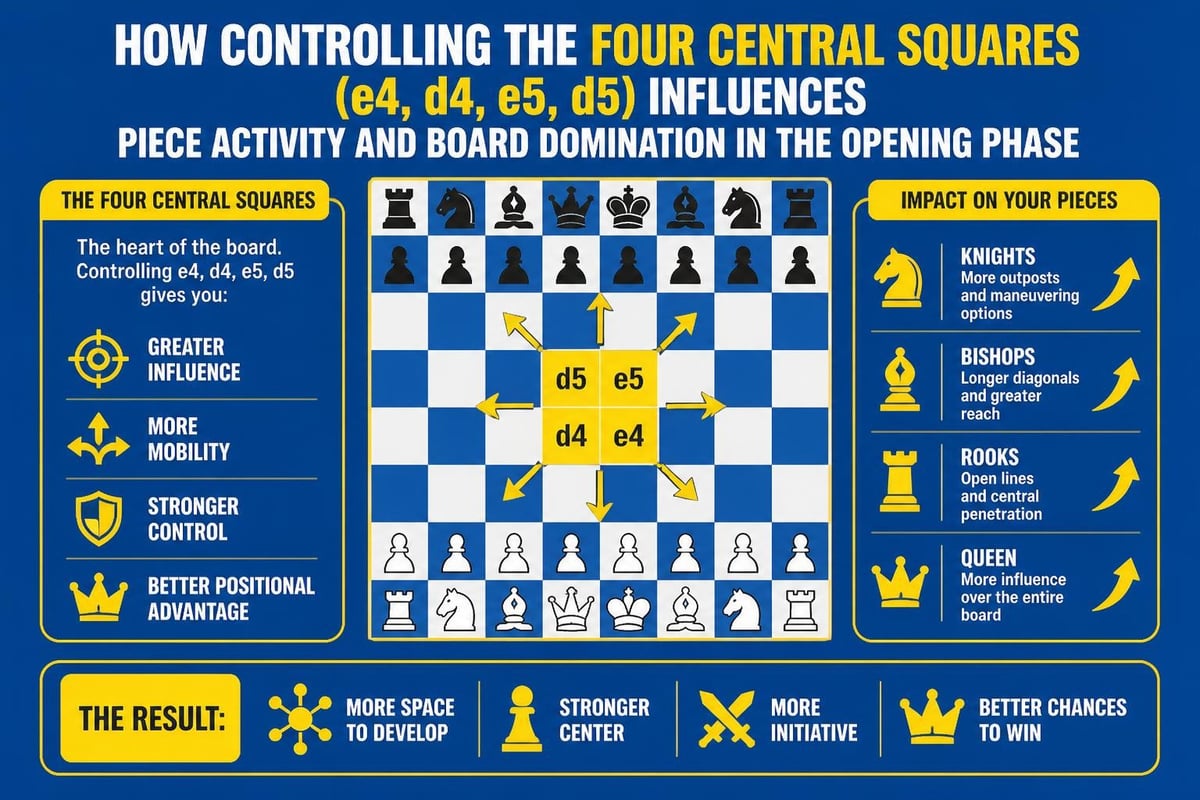
The four central squares (e4, d4, e5, d5) are prime real estate. Why? Because pieces in the centre control more squares and can reach both sides of the board quickly. Your opening moves should almost always aim to establish some central presence. This is fundamental chess 101 strategy that applies from beginner level right up to grandmaster play.
Develop Your Pieces Efficiently
Development means getting your pieces off their starting squares and into active positions. Here's a straightforward approach:
- Move pawns to open lines for your bishops
- Bring out knights before bishops (they're trickier to develop effectively)
- Castle early to protect your king
- Connect your rooks by clearing the back rank
- Don't move the same piece multiple times in the opening (unless necessary)
The basics of chess for beginners emphasise these principles because they create a solid foundation for the middlegame. Speaking of which, understanding common chess openings will give you structured ways to implement these ideas from move one.
Basic Tactical Patterns to Learn
Tactics are the building blocks of combination play. These patterns repeat constantly in games at every level, so recognising them gives you immediate advantages.
Five Fundamental Tactics
Forks occur when one piece attacks two or more enemy pieces simultaneously. Knights are particularly brilliant at this, though queens, bishops, and even pawns can deliver devastating forks.
Pins restrict piece movement by putting a valuable piece in front of an even more valuable one (often the king). The pinned piece can't move without exposing something more important.
Skewers are reverse pins where you attack a valuable piece, forcing it to move and exposing a less valuable piece behind it. Bishops and rooks excel at skewering.
Discovered attacks happen when moving one piece unveils an attack from another piece behind it. These can be absolutely brutal because you get two threats in one move.
Removal of the defender involves capturing or deflecting a piece that's protecting something important. Once the defender's gone, you can swoop in and claim your prize.
| Tactic | Best Pieces | Typical Target |
|---|---|---|
| Fork | Knight, Queen | King and Rook |
| Pin | Bishop, Rook | Piece in front of King |
| Skewer | Bishop, Rook, Queen | King or Queen |
| Discovered Attack | Any piece uncovering another | Various |
| Removal of Defender | Any attacking piece | Protected piece |
If you're serious about improving, working through chess puzzles will help these patterns become instinctive. Honestly, there's no substitute for tactical training when you're learning chess 101 fundamentals.

Opening Principles That Actually Work
You don't need to memorise 20 moves of theory when you're starting out. What you need is a framework for making sensible decisions in the opening phase.
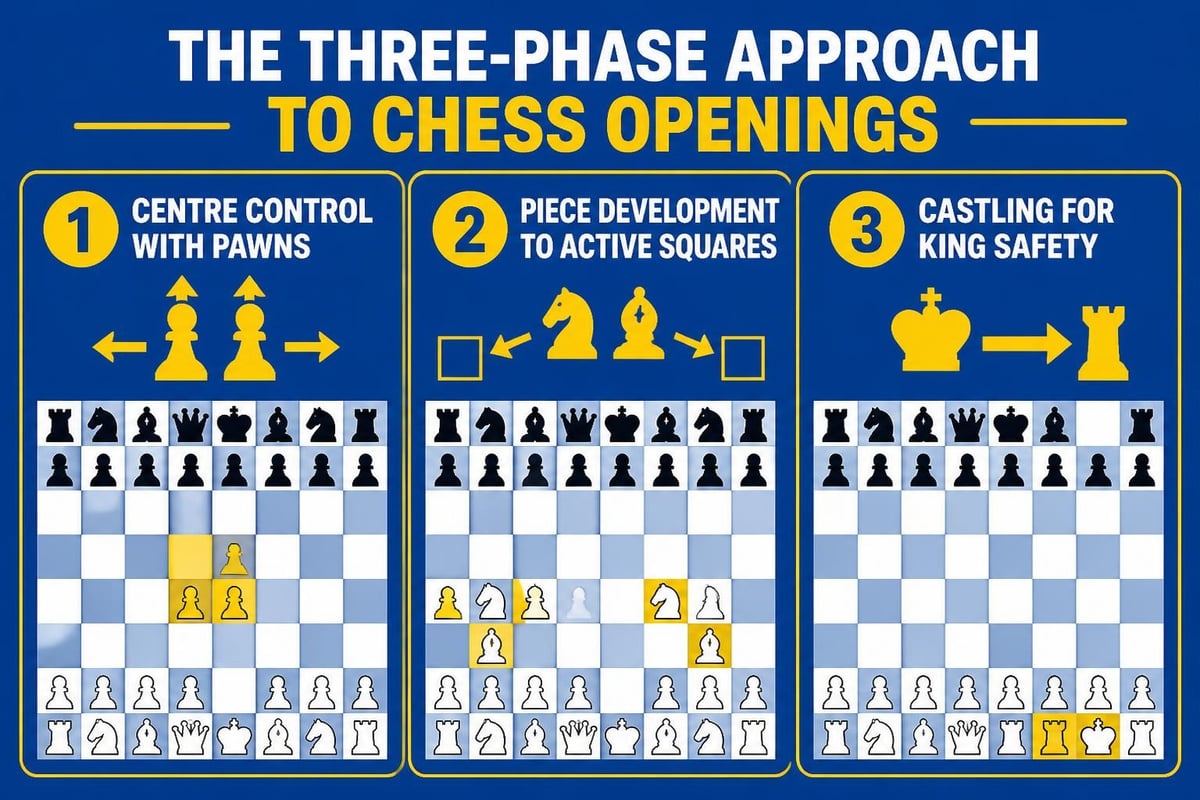
The Three Golden Rules
First, control the centre with pawns and pieces. Second, develop pieces quickly to active squares. Third, castle early to safeguard your king. Following these three principles will give you playable positions even against stronger players.
Different opening systems emphasise these principles in various ways. The Italian Game, for instance, develops naturally whilst maintaining central control. The London System offers a solid, system-based approach that's forgiving for beginners.
Want something sharper? The Sicilian Defense leads to asymmetrical positions where Black fights for the initiative from move one. Each opening has its own character, but they all respect fundamental chess 101 principles at their core.
Common Opening Mistakes to Avoid
Moving the same piece repeatedly wastes precious development time. Bringing your queen out too early makes it a target for your opponent's developing pieces. Neglecting king safety can turn a promising position into a quick loss.
Creating weaknesses in your pawn structure without good reason haunts you throughout the game. And please, don't ignore what your opponent is doing. Chess is a conversation, not a monologue. For deeper exploration of opening theory, there are excellent free online chess courses available.
Endgame Essentials for Beginners
Many chess 101 guides skip the endgame, which is frankly mental because that's where games are won or lost. Once most pieces have been traded off, the rules change slightly.
King Activity Becomes Crucial
In the opening and middlegame, you hide your king away. In the endgame, it becomes a fighting piece. Centralising your king and using it actively often makes the difference between winning and drawing.
Basic Checkmate Patterns
You absolutely must know how to checkmate with king and queen versus lone king. It's the most common winning endgame. King and rook versus king is slightly trickier but equally essential. Two rooks can deliver checkmate in various ways, usually by pushing the enemy king to the edge of the board.
Can't checkmate with king and bishop versus king, or king and knight versus king. You need at least two minor pieces (or one major piece) alongside your king to force checkmate. Understanding these fundamentals prevents you from wasting time trying impossible checkmates.
Strategic Thinking Beyond Chess 101
Once you've mastered the basic rules and principles, chess becomes about recognising patterns and forming plans. This is where the game transforms from following guidelines to genuine creative thinking.
Evaluating Positions
Ask yourself: who has more active pieces? Whose king is safer? Who controls key squares or files? Which pawn structure is superior? These questions guide your decision-making process. For structured improvement, exploring resources like chess for beginners PDF guides can provide frameworks for systematic thinking.
The comprehensive guide to understanding chess basics covers positional evaluation in greater depth, but the fundamental idea is weighing various factors to determine who stands better.
Creating and Executing Plans
Random moves lose games. Plans win them. Your plan might be as simple as "improve my worst-placed piece" or as complex as "sacrifice a pawn to open lines for an attack on the enemy king." The key is having a reason for your moves rather than just reacting to threats.
Practical Tips for Improving Quickly
Learning chess 101 theory is one thing. Actually getting better requires deliberate practice and the right mindset.
Play Regularly
There's no substitute for actual games. Online platforms make this easier than ever, but over-the-board play offers unique benefits. Start with longer time controls (15 minutes or more per side) to give yourself thinking time.
Analyse Your Games
Every loss contains lessons. Every win might contain mistakes you got away with. Reviewing your games, ideally with a stronger player or computer analysis, accelerates improvement dramatically.
Study Tactics Daily
Spending just 15 minutes daily on tactical puzzles will sharpen your calculation and pattern recognition faster than almost anything else. The patterns you learn solving puzzles appear constantly in real games.
Learn From Quality Resources
Whether you prefer books, videos, or digital guides, quality matters enormously. Resources from established platforms provide reliable information that won't lead you astray. If you're interested in creating your own educational resources or guides, platforms like CreateSell offer tools for developing and sharing knowledge products effectively.
For general reading and continuous learning beyond chess, exploring platforms like Tell eBook can expose you to various educational materials across different subjects. Building a broad knowledge base often enhances strategic thinking in unexpected ways.
Building Mental Resilience
Chess can be emotionally demanding. You'll blunder pieces, miss obvious tactics, and lose games you should have won. This is completely normal and happens to everyone, including world champions.
Dealing With Losses
Every player loses. Frequently. The difference between improving players and stagnating ones is how they respond to losses. Treat each defeat as data, not a personal failing. What went wrong? Where did you deviate from sound principles? What will you do differently next time?
Understanding the chess rating system helps contextualise wins and losses. You're not trying to win every game. You're trying to gradually increase your skill level over time.
Maintaining Focus
Chess demands concentration. Start with shorter sessions if you find your attention wandering. Twenty minutes of focused practice beats an hour of distracted half-effort every single time.
For younger players or those supporting teens in their chess journey, resources like those from Emmadavisbooks.com offer guidance on building confidence and managing the emotional aspects of competitive pursuits, which transfers beautifully to chess improvement.
Finding Your Chess Community
Chess is ultimately a social game, even when played across a silent board. Connecting with other players enhances enjoyment and accelerates learning.
Joining Clubs and Finding Coaches
Local chess clubs offer face-to-face games, tournaments, and usually some level of instruction. The social aspect makes learning more enjoyable, and having regular opponents at various skill levels provides ideal practice conditions.
For those preferring online instruction, our guide covers finding the best online chess coach for your specific needs and budget. Personal coaching accelerates improvement, especially when addressing specific weaknesses in your game.
Online Versus Over-the-Board Play
Both have merits. Online play offers convenience, instant opponents at any hour, and usually computer analysis of your games. Over-the-board play develops different skills, particularly calculating without being able to take moves back, and the social experience is entirely different.
Most serious players do both, using online games for regular practice and over-the-board events for the full competitive experience.
Moving Beyond Chess 101
Once you've absorbed these fundamentals, you'll naturally develop preferences. Some players love sharp tactical battles. Others prefer slow positional squeezes. Some specialise in particular openings whilst others maintain broad repertoires.
Understanding chess master levels gives you benchmarks for long-term progress, but don't become obsessed with ratings. Focus on enjoying the game and improving gradually.
The beauty of chess is that there's always more to learn. Even after mastering everything in this chess 101 guide, you'll discover new patterns, strategies, and ideas that deepen your appreciation for the game. That endless depth is precisely what makes chess so captivating.
Your chess journey doesn't have a finish line. It has milestones, achievements, and moments of insight that make the whole endeavour worthwhile. Whether you eventually compete in tournaments, play casually with friends, or use chess as mental exercise, the skills you develop, both cognitive and emotional, transfer to countless other areas of life.
Mastering chess 101 fundamentals gives you everything needed to start playing confidently and enjoying this incredible game. The principles covered here – from piece movements to basic tactics and strategic thinking – form the foundation upon which all chess improvement builds. If you're looking to accelerate your progress with structured, easy-to-reference materials, Chess Cheat Sheets provides comprehensive guides, opening repertoires, and puzzle collections designed specifically for beginners and intermediate players who want to improve efficiently without drowning in excessive theory.


