

Starting your chess journey can feel overwhelming with countless books, videos, and courses competing for your attention. You're probably wondering where to begin, what's worth your time, and how you can learn efficiently without drowning in theory. That's precisely why many aspiring players turn to a chess for beginners pdf as their starting point. These downloadable guides offer structured learning paths that you can reference anytime, print out, or read on your tablet whilst playing. The beauty of PDF resources lies in their portability and the ability to learn at your own pace, whether you're commuting, relaxing at home, or squeezing in a quick study session during lunch.
Why PDF Guides Work Brilliantly for Chess Beginners
Let's be honest: you've got a busy life. Finding time to sit through hours of video content or attend in-person classes isn't always realistic. PDF guides solve this problem beautifully because they're:
- Immediately accessible without requiring internet connectivity after downloading
- Easily searchable when you need to revisit specific concepts
- Print-friendly for those who prefer physical study materials
- Compatible with every device you own
The Chess Cheat Sheets approach to learning exemplifies this perfectly. Rather than overwhelming beginners with exhaustive theory, streamlined guides focus on what you actually need to start winning games.
The Science Behind Learning Chess
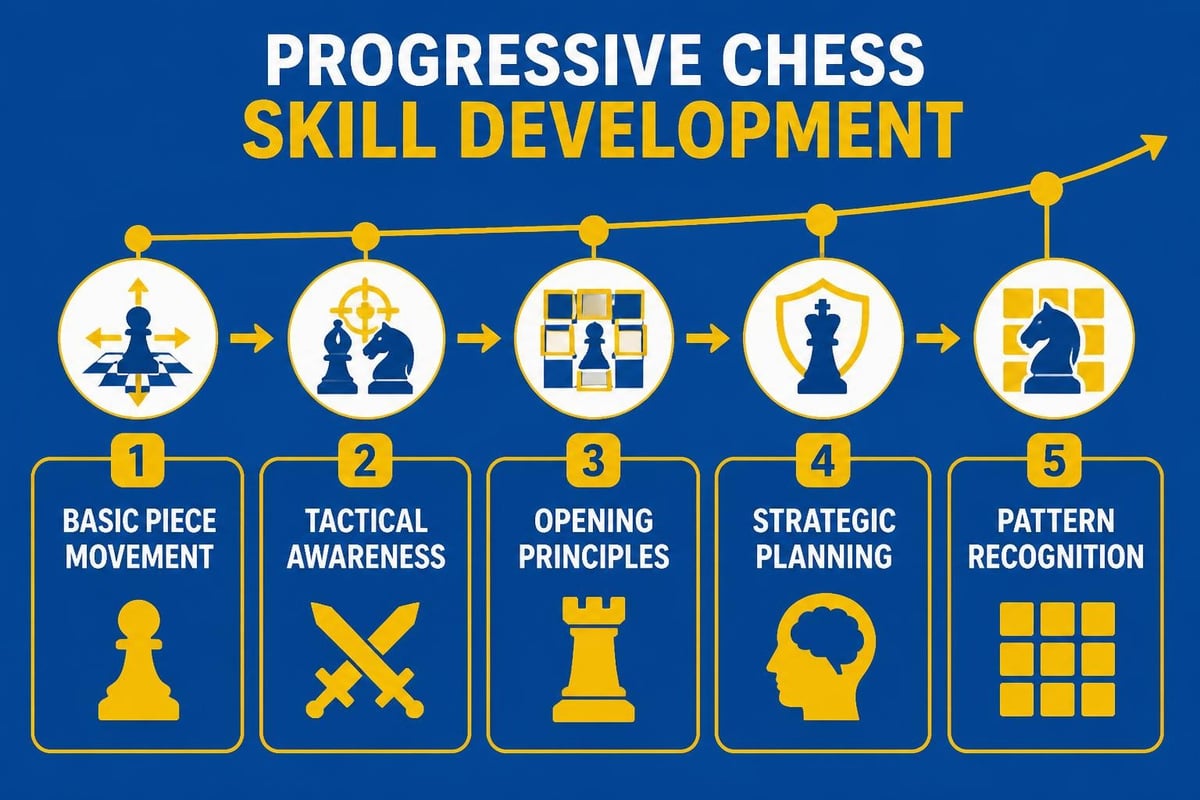
Interestingly, research has examined how humans develop chess skills over time. Studies on human performance in chess reveal that beginners benefit most from structured, progressive learning rather than random exposure to concepts. A well-designed chess for beginners pdf follows this scientific approach, introducing pieces systematically before building towards complex strategies.
Think about it this way: you wouldn't learn to drive by immediately joining motorway traffic, would you? Similarly, chess instruction should start with fundamentals and gradually increase complexity.
What Should Your First Chess PDF Include?
Not all beginner guides are created equal. You'll want to ensure your chosen chess for beginners pdf covers these essential topics:
Board Setup and Basic Rules
- Correct board orientation (white square on the right)
- Initial piece placement for both sides
- How each piece moves with clear diagrams
- Special moves like castling, en passant, and pawn promotion
- Check, checkmate, and stalemate distinctions
The comprehensive guide at My Chess Sets provides exactly this foundation, making it an excellent free starting point.
Opening Principles That Actually Matter
You don't need to memorize 20 moves deep into the Sicilian Defence just yet. Focus on these fundamental opening concepts:
- Control the centre squares (e4, d4, e5, d5)
- Develop your pieces quickly
- Castle early for king safety
- Don't move the same piece twice in the opening
- Connect your rooks
The beauty of chess opening guides is they distill complex theory into actionable patterns you can apply immediately.
Comparing Free vs Premium PDF Resources
Here's where things get interesting. You've probably noticed both free and paid options whilst searching. Let's break down what you actually get:
| Feature | Free PDFs | Premium Resources |
|---|---|---|
| Basic rules and piece movements | ✓ | ✓ |
| Opening repertoire suggestions | Limited | Comprehensive |
| Tactical puzzles | 10-50 | 500+ |
| Endgame techniques | Basic | Advanced |
| Regular updates | Rare | Frequent |
| Print quality | Variable | Professional |
The community-driven chess Wikibook represents an excellent free option that covers fundamentals thoroughly. However, as you progress, you'll likely want more specialized content tailored to your preferred playing style.
Practice Makes Permanent (Not Just Perfect)
Reading about chess without playing is like reading about swimming without getting in the pool. You need practical exercises that challenge you progressively. 1001 Chess Exercises for Beginners by Franco Masetti and Roberto Messa offers exactly this, providing a massive collection of tactical problems organized by difficulty.
Similarly, dedicated chess puzzles help reinforce pattern recognition, which is absolutely crucial for improvement.
Building Your Learning Schedule Around PDF Resources
Now, how do you actually use a chess for beginners pdf effectively? Here's a realistic schedule that won't overwhelm you:
Week 1-2: Fundamentals
- Spend 20 minutes daily learning piece movements
- Play 5-10 casual games against friends or online opponents
- Review your games to identify blunders
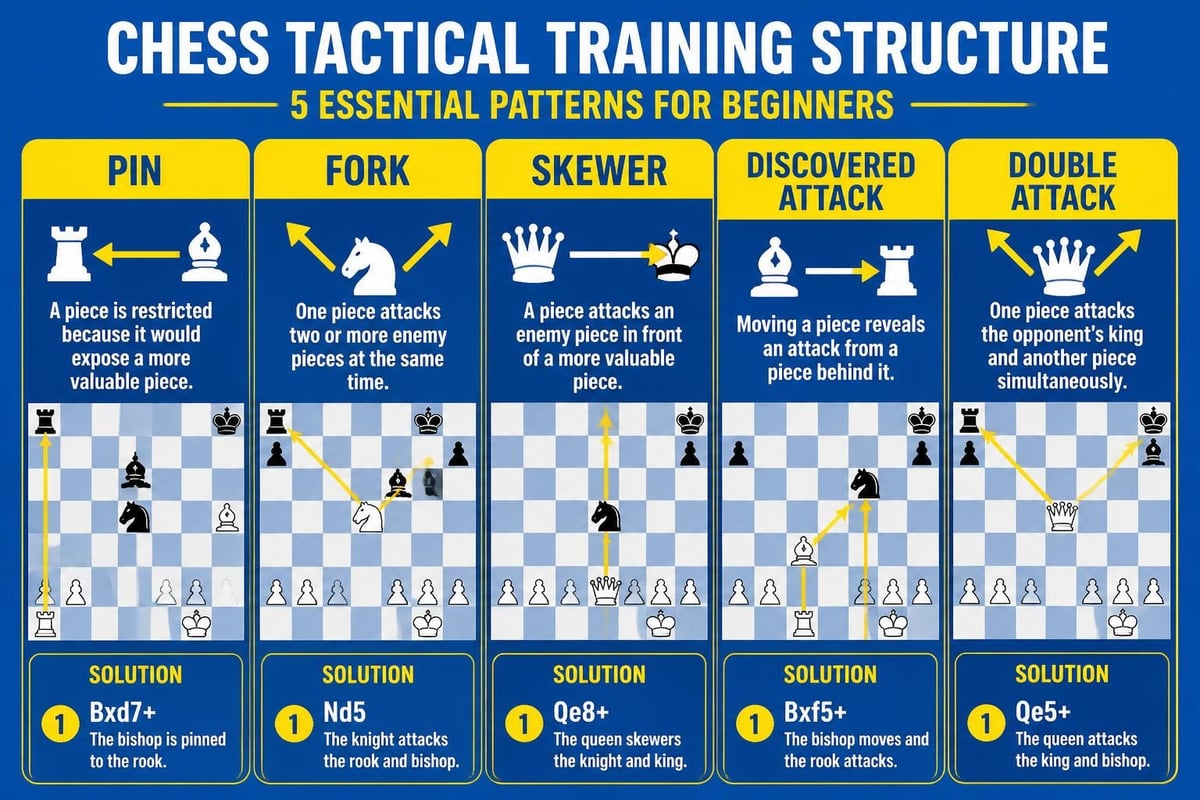
Week 3-4: Basic Tactics
- Solve 10 simple puzzles daily
- Learn fundamental tactical patterns (pins, forks, skewers)
- Apply these tactics in your games
Week 5-6: Opening Principles
- Study one simple opening system thoroughly
- Play 15-20 games using only that system
- Notice which positions feel comfortable
Week 7-8: Elementary Endgames
- Master king and pawn endgames
- Learn basic checkmate patterns
- Practice these positions until they're automatic
This approach mirrors how many players successfully improve after exploring free online chess courses and applying structured learning methods.
The Hidden Gems in Chess PDFs
Beyond basic instruction, quality chess for beginners pdf resources often contain underappreciated sections that accelerate your improvement:
Notation Systems Made Simple
You'll encounter algebraic notation everywhere in chess. Understanding it unlocks the ability to replay famous games, follow annotated analysis, and track your own games. Rogers' eBook for beginners particularly excels at explaining notation through practical examples rather than dry definitions.
Common Beginner Mistakes
Knowing what not to do saves countless lost games. Watch for these frequent errors:
- Moving pawns in front of your castled king
- Neglecting piece development for early attacks
- Trading pieces without purpose
- Ignoring opponent's threats
- Leaving pieces undefended
Interestingly, just as players develop chess skills through structured practice, strategic thinking transfers to other competitive pursuits. Even activities like those at 24-7 Casino benefit from similar pattern recognition and decision-making frameworks, though obviously the rules differ significantly.

Choosing the Right Opening System From Your PDF
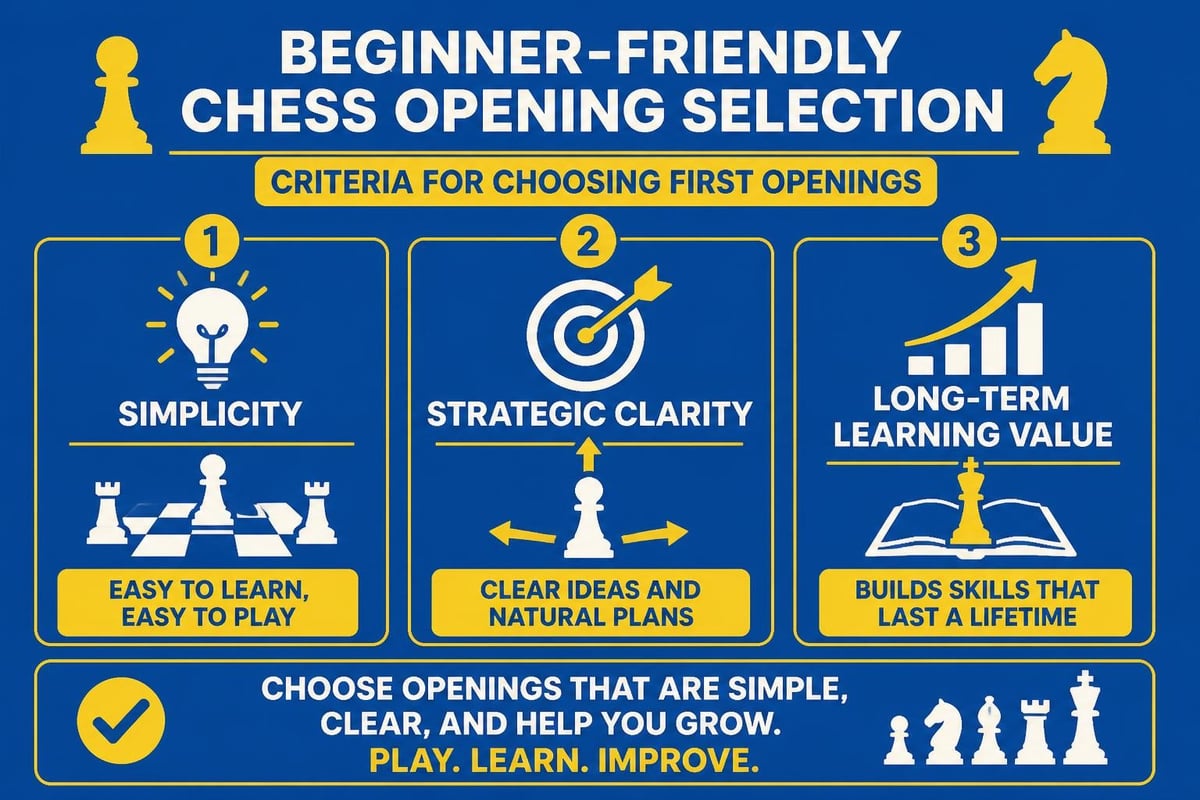
Here's something nobody tells beginners: you don't need to learn every opening. Pick one system for White and one defence for Black, then go deep rather than wide.
For beginners, I'd recommend:
As White:
- The Italian Game (simple development, clear plans)
- The London System (flexible, fewer forcing variations)
As Black:
- The Scandinavian Defence against 1.e4
- The Slav Defence against 1.d4
These openings appear regularly in beginner guides because they emphasize fundamental principles rather than memorization. Understanding how difficult various openings are to play helps you make informed choices suited to your current level.
Tracking Your Progress Beyond the PDF
A chess for beginners pdf gives you knowledge, but tracking improvement requires active measurement. Consider these metrics:
| Progress Indicator | How to Measure | Target for Beginners |
|---|---|---|
| Rating | Online chess platforms | 800-1200 after 6 months |
| Puzzle accuracy | Daily puzzle performance | 70%+ correct |
| Blunder frequency | Games analysis | < 3 per game |
| Opening knowledge | Moves played from memory | First 8-10 moves |
Understanding chess ELO ratings helps you set realistic expectations and celebrate genuine milestones rather than getting discouraged by comparing yourself to experienced players.
Supplementing Your PDF Studies
Whilst a comprehensive chess for beginners pdf forms your foundation, combining different resources accelerates learning:
- Play regularly against opponents slightly stronger than you
- Analyze your games to identify recurring mistakes
- Watch instructional videos to see concepts demonstrated dynamically
- Join chess communities for motivation and feedback
- Use tactical trainers to sharpen pattern recognition
The most effective learners integrate multiple approaches rather than relying solely on one resource. Think of your PDF as the textbook, but your actual games as the laboratory where you test what you've learned.
Advanced PDF Features Worth Finding
As you progress, look for chess for beginners pdf resources that include:
- Interactive diagrams (if viewing digitally) allowing you to move pieces
- Annotated games showing grandmaster thinking processes
- Quiz sections testing your understanding of each chapter
- Video links connecting PDF content to visual demonstrations
- Progress tracking sheets to monitor which sections you've mastered
Premium resources often combine these features seamlessly, transforming passive reading into active learning.
The Economics of Chess Learning Materials
Let's talk about investment. Quality chess instruction represents tremendous value compared to most hobbies:
- Free PDFs: £0 (perfect for trying chess risk-free)
- Basic books: £10-20 (comprehensive but static)
- Private coaching: £30-100+ per hour (expensive but personalized)
- Online courses: £50-200 (good middle ground)
- Premium PDF bundles: £20-50 (portable, comprehensive)
Starting with free resources whilst you discover whether chess captivates you makes perfect sense. Once you're committed, investing in structured materials from specialized providers offers the best return on both money and time.
Common Questions About PDF Chess Learning
"Can I really learn chess from a PDF alone?" Absolutely, though combining it with actual play accelerates your progress significantly. The PDF provides the framework; your games provide the experience.
"How long until I'm decent at chess?" With consistent practice (30 minutes daily), most beginners reach competency within 3-6 months. You'll enjoy games much sooner, though.
"Should I memorize everything?" No! Focus on understanding principles rather than memorizing specific positions. Chess rewards pattern recognition and logical thinking, not rote memorization.
Making PDF Content Stick
Reading isn't enough. Try these active learning techniques:
- Set up positions from the PDF on a physical board
- Explain concepts to someone else (even if imaginary)
- Create flashcards for tactical patterns
- Immediately apply new concepts in your next game
- Review regularly rather than cramming everything once
Spaced repetition proves particularly effective for chess improvement. Study a concept, apply it, return to it a week later, then again after a month.
Avoiding Analysis Paralysis
Here's a trap many beginners fall into: endlessly studying PDFs without playing enough games. You're gathering knowledge but not developing skill. Chess improvement requires both theoretical understanding and practical application.
Set a rule: for every hour studying your chess for beginners pdf, play at least two hours of actual chess. This ratio ensures you're testing concepts in real situations where they actually matter.
The Future of Your Chess Journey
Starting with a solid chess for beginners pdf puts you on the right path, but where you go from there depends on your goals. Some players enjoy casual games with friends. Others compete in tournaments. Many simply appreciate chess as a mental workout that keeps their mind sharp.
Whichever direction appeals to you, remember that every grandmaster started exactly where you are now: confused by how knights move, uncertain about tactics, and wondering if they'd ever stop blundering pieces.
The difference between players who improve and those who plateau often comes down to having accessible, well-organized resources that make learning enjoyable rather than overwhelming.
Finding the right chess for beginners pdf sets your foundation, but sustained improvement comes from applying those lessons consistently through practice and guided study. Whether you're working through free community resources or investing in specialized materials, the key is matching your learning style with resources that keep you engaged. Chess Cheat Sheets offers exactly this combination: streamlined guides, practical puzzles, and opening resources designed specifically for beginners and intermediate players who want to improve efficiently without drowning in overwhelming theory. Ready to take your game to the next level with resources built specifically for practical improvement?


