

Imagine the quiet thrill of outsmarting your opponent on the chessboard, each move a blend of art, science, and intuition. The journey to true chess mastery is legendary, filled with milestones that challenge and inspire players at every turn. In this article, we’ll break down the 9 essential chess master levels recognized in 2026, making sense of what sets each apart, the skills you’ll need, and how passionate players climb the ranks. Curious about what it really takes to join the world’s elite? Let’s uncover the path to mastery together.

The Evolution of Chess Master Titles
The story of chess master levels is as fascinating as the game itself. Over centuries, titles have evolved, shaping the journey of every ambitious player. Let’s explore how these levels came to be, why they matter more than ever in 2026, and the legends who have left their mark.
Historical Background of Chess Titles
Chess master levels have roots reaching back to the 19th century. Early chess circles recognized top players with informal titles, often based on reputation or local victories. There was no official ranking, so being called a master was as much about word of mouth as skill.
With the rise of international chess, the need for a fair system grew. In 1950, FIDE, the world chess federation, introduced formal titles. This move brought structure and consistency to chess master levels, turning them into respected milestones for players everywhere.
The Modern Chess Title System
Today, chess master levels are defined by clear criteria. FIDE and national federations award titles based on rating thresholds, tournament performance, and achieving norms. For example, a FIDE Master must hit a specific rating and meet tournament standards.
Official FIDE titles, like Grandmaster or International Master, are recognized worldwide. National titles, such as National Master, vary by country. To see all requirements, the FIDE Chess Titles and Requirements list is the go-to resource for understanding chess master levels in detail.
Why Chess Master Levels Matter in 2026
In 2026, chess master levels are more important than ever. For many, earning a title is a gateway to professional opportunities, sponsorships, and coaching roles. Titles help players stand out, whether competing in major tournaments or teaching the next generation.
Chess master levels are also making chess more accessible worldwide. With more federations and online events, players from diverse backgrounds now have a real shot at reaching these milestones. This global growth has sparked new energy in the chess community.
Notable Titleholders and Their Impact
Famous players who have achieved top chess master levels inspire millions. Grandmasters like Magnus Carlsen and Judit Polgar have shaped the chess world with their talent and charisma. Their achievements highlight the prestige and dedication tied to these titles.
As of 2026, thousands of players hold official titles, with numbers rising each year. Titled players often serve as coaches, authors, and ambassadors, spreading chess culture far and wide. Their influence ensures that chess master levels remain a symbol of excellence.
The 9 Essential Chess Master Levels Explained
Have you ever wondered what it really takes to climb the chess master levels? Whether you’re dreaming of competing on the world stage or simply want to measure your progress, understanding these levels can give you a roadmap for your chess journey. Let’s break down each of the nine essential chess master levels recognized in 2026, exploring what sets them apart and how players reach each one.
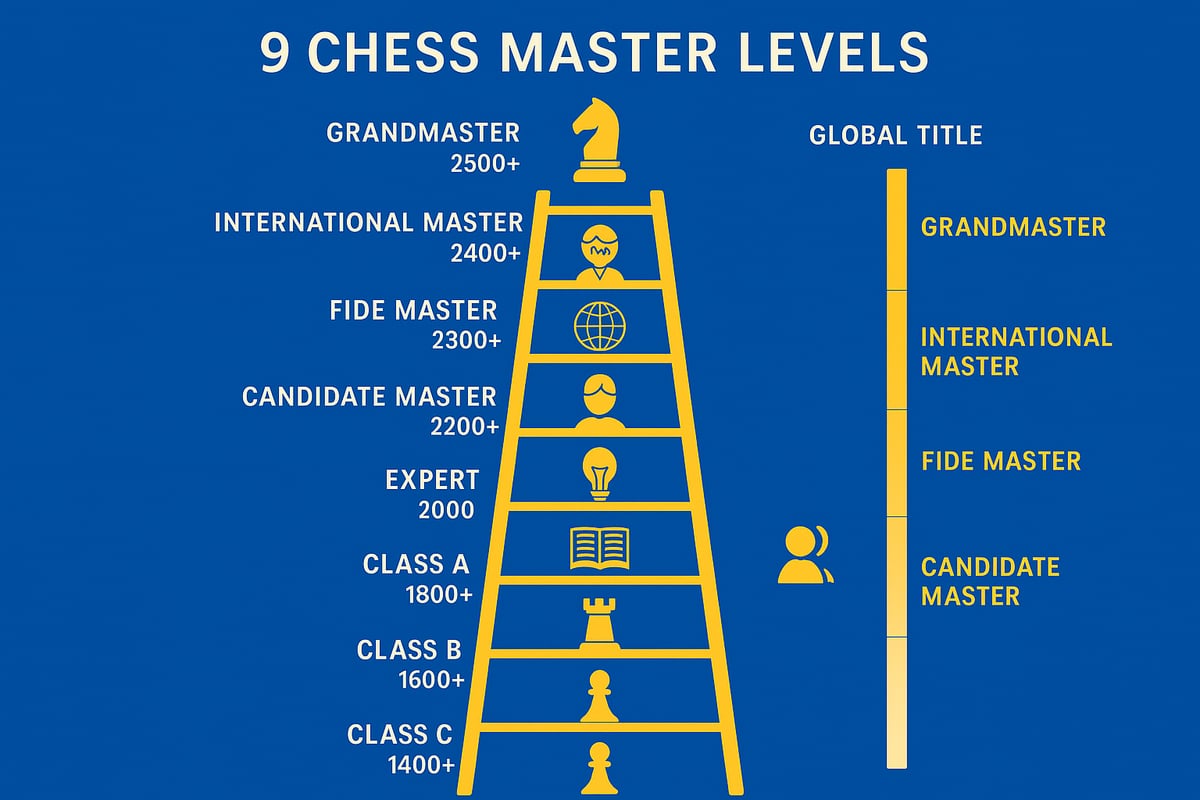
1. Candidate Master (CM)
The Candidate Master (CM) is often considered the first major milestone among chess master levels. Awarded by FIDE, the world chess federation, the CM title typically requires achieving a rating of 2200 or higher. This level marks a significant leap from casual play, signaling that you’ve mastered tactical awareness, possess a reliable opening repertoire, and have a solid grasp of endgame fundamentals.
Players at this stage usually develop their skills through consistent participation in club tournaments and youth championships. The journey to CM is now more accessible than ever, especially with the expansion of chess in Asia, where a surge of young players are earning this title. For ambitious club players, reaching CM can be a powerful motivator to push deeper into advanced strategies, setting the stage for higher chess master levels.
- Typical requirements: FIDE rating 2200+
- Key skills: Tactics, opening knowledge, endgame basics
- Pathways: Club tournaments, youth events, regional competitions
Not only does CM recognition boost confidence, but it also opens the door to more challenging events and coaching opportunities.
2. FIDE Master (FM)
Moving up to the next rung, the FIDE Master (FM) title is a clear indicator of advanced chess mastery. To achieve this level within the chess master levels, you need a FIDE rating of 2300 or higher. FMs distinguish themselves with refined positional understanding and a knack for deep tactical calculations.
The FM title often serves as a stepping stone toward the more prestigious International Master (IM) and Grandmaster (GM) titles. Many notable FMs have used this stage to catapult themselves into the world’s elite, sometimes progressing rapidly through the ranks. In scholastic chess programs, earning the FM title has become a key benchmark for young prodigies.
- Requirements: FIDE rating 2300+
- Skills: Strategic planning, advanced tactics, opening depth
- FM in practice: Stepping stone for higher titles, respected in both youth and adult chess circuits
For those aspiring to climb the chess master levels, FM is a respected badge of honor and a signal that you’re ready to compete internationally.
3. National Master (NM)
The National Master (NM) is a country-specific title and a major achievement in many local chess scenes. For example, in the United States, the USCF awards NM status to players reaching a 2200 rating. While NM is not a FIDE title, it is highly valued within national federations and local clubs.
Earning NM places you among the top players in your country, often leading to greater involvement in coaching, club leadership, and regional tournaments. The NM title serves as both recognition and a springboard for those looking to compete beyond their borders.
- Requirements: Typically national rating 2200+
- Prestige: High status in local communities
- Role: Coaching, organizing, mentoring
Unlike FIDE titles, NM criteria vary by country, but all NMs share a passion for raising the standard of play at home. For many, NM is the first step to tackling international chess master levels.
4. Woman Candidate Master (WCM)
Recognizing the importance of diversity in chess, the Woman Candidate Master (WCM) title is awarded to female players who achieve a FIDE rating of 2000 or higher. This entry-level title among women’s chess master levels is crucial for encouraging participation and development in a sport that has historically been male-dominated.
WCMs often emerge from youth and women’s tournaments, benefiting from global initiatives aimed at increasing female representation. The growth in WCMs worldwide is a testament to the effectiveness of these programs.
- Requirements: FIDE rating 2000+ (women)
- Focus: Gender diversity, youth engagement
- Opportunities: Women’s tournaments, mentorship, scholarships
As more federations invest in women’s chess, the WCM title continues to inspire new generations to pursue higher chess master levels.
5. Woman FIDE Master (WFM)
The Woman FIDE Master (WFM) title is the next step up for female players, requiring a FIDE rating of 2100 or more. At this level, players demonstrate advanced tactical skills, a growing command of opening theory, and competitive experience at the international level.
Earning WFM is an important milestone for women aiming for the top chess master levels. It serves as a strong foundation for those aspiring to become Woman International Masters (WIM) or even Grandmasters.
- Requirements: FIDE rating 2100+ (women)
- Skills: Advanced tactics, opening theory, tournament experience
- Recognition: Celebrated in women’s chess leagues
Prominent WFMs often serve as role models in their communities, showing what’s possible with dedication and the right support.
6. International Master (IM)
The International Master (IM) title is a professional milestone that signals deep chess expertise. To earn IM, you need a FIDE rating of 2400 or higher and must achieve three IM norms by performing at a high level in internationally rated tournaments.
IMs are recognized for their strategic depth, adaptability, and consistent high-level tournament results. Many legendary grandmasters, including world champions, first made their mark as IMs before ascending to the highest chess master levels.
- Requirements: FIDE rating 2400+, three IM norms
- Skills: Strategic planning, advanced calculation, resilience
- Career impact: Coaching, professional play, authoring books
For many, IM is the minimum requirement for top-tier coaching roles and a respected credential in the global chess community.
7. Woman International Master (WIM)
The Woman International Master (WIM) title is awarded to female players who reach a FIDE rating of 2200 and earn three WIM norms. This title is a key stepping stone for women aiming to compete at the highest chess master levels.
WIMs are regularly seen in international women’s tournaments, where they gain valuable experience and exposure. The WIM title is often a launchpad for global chess careers, with many WIMs moving on to become WGMs or even GMs.
- Requirements: FIDE rating 2200+ (women), three WIM norms
- Pathways: International events, women’s championships
- Influence: Encourages more women to pursue chess professionally
The WIM title showcases the growing depth and talent in women’s chess around the world.
8. Grandmaster (GM)
At the pinnacle of chess master levels stands the Grandmaster (GM) title. This is the most prestigious title awarded by FIDE, requiring a rating of 2500 or more and three GM norms. GMs are universally recognized as the elite of the chess world, shaping the game’s strategies and inspiring countless players.
GMs enjoy significant media attention, sponsorship opportunities, and career benefits. As of 2026, the number of active GMs continues to rise, with more young prodigies breaking age records every year.
- Requirements: FIDE rating 2500+, three GM norms
- Status: Highest global recognition
- Impact: Influence on chess theory, tournament organization, and education
If you’re aiming for the top, studying chess openings strategy guides can make a big difference at this level.
9. Woman Grandmaster (WGM)
The Woman Grandmaster (WGM) title is the highest honor for female players in the women’s chess master levels, awarded to those who reach a FIDE rating of 2300 and achieve three WGM norms. WGMs compete in top global competitions and often serve as role models, inspiring more women to take up chess.
WGMs play a crucial role in growing the game, mentoring up-and-coming talents and representing their countries on the world stage.
- Requirements: FIDE rating 2300+ (women), three WGM norms
- Opportunities: International tournaments, leadership roles, media appearances
- Significance: Drives growth in women’s chess worldwide
The WGM title continues to encourage female participation and leadership across all chess master levels, ensuring the future of chess is more inclusive and dynamic than ever.
The Path to Achieving Chess Mastery
Ready to start your journey through the chess master levels? Understanding the path ahead can turn a daunting process into an exciting adventure. Whether you are aiming for your first title or climbing toward grandmaster, knowing what to expect makes every step more rewarding.
Typical Progression Through the Master Levels
If you have ever wondered how players navigate the chess master levels, you are not alone. Most start at local clubs, sharpening their skills against peers. As you build experience, tournament play becomes crucial. Advancing through these levels means meeting rating thresholds—like 2200 for Candidate Master or 2500 for Grandmaster—and earning norms in official competitions.
Choosing the right tournaments is key. Some events are norm-eligible, while others offer unique regional opportunities. With each victory, you move closer to the next rung on the chess master levels ladder. The process rewards persistence and strategic planning, not just raw talent.
Training Methods and Tools
To break through the chess master levels, effective training is your best ally. Many players work with coaches to fine-tune strategy and analyze games. Study materials, such as opening toolkits and annotated games, are staples in every serious player’s arsenal.
Online platforms have revolutionized preparation. Puzzle practice is now a daily ritual for most, helping you sharpen tactical vision and spot patterns quickly. If you want to supercharge your training, check out these chess puzzles for training, which offer targeted exercises for every skill level.
Interactive tools and video lessons keep learning engaging. The key is consistency—regular, focused practice propels you upward in the chess master levels.
Common Obstacles and How to Overcome Them
Every journey through the chess master levels comes with bumps in the road. Have you ever hit a plateau where progress stalls? Or felt the sting of burnout after a string of tough losses? These hurdles are normal.
Psychological barriers, like self-doubt or fear of new openings, can slow you down. Overcoming them means setting realistic goals, celebrating small wins, and sometimes stepping back to recharge. Many players find that switching up study routines or entering a new tournament can reignite motivation.
Remember, the climb through the chess master levels is a marathon, not a sprint. Support from coaches and peers makes a huge difference.
Statistics: Title Achievement Rates
Curious about how many make it to each stage of the chess master levels? Let’s look at some data:
| Title Level | % of Registered Players | Most Common Age Group |
|---|---|---|
| Candidate Master | 2.5% | 14–25 |
| FIDE Master | 1.2% | 16–30 |
| National Master | 1.8% | 18–35 |
| International Master | 0.7% | 18–35 |
| Grandmaster | 0.3% | 20–40 |
You will notice that the chess master levels become more exclusive as you ascend, but global trends show increasing diversity and younger titleholders breaking new ground every year.
The Impact of Chess Master Levels on the Global Chess Community
The influence of chess master levels on the global chess community in 2026 is impossible to overlook. These titles have become more than just badges of honor—they are symbols of achievement, dedication, and expertise that inspire players across continents. Whether you are just starting out or aiming for the highest ranks, understanding chess master levels can open doors to new opportunities and connections within the worldwide chess scene.
As chess master levels have become more recognized, they have played a key role in shaping the structure and excitement of tournaments and leagues. Many major competitions now require or highlight certain titles, making the pursuit of these milestones essential for both professional and ambitious amateur players. The prestige associated with these titles also fuels sponsorships and media attention, helping to elevate the status of chess in popular culture. If you are curious about the distribution of titled players globally, you can explore the Number of Titled Chess Players by Country for some fascinating insights.
Titleholders often serve as the backbone of chess education and outreach. Masters become coaches, authors, and role models, sharing their knowledge with the next generation and fostering a vibrant learning environment. Their involvement in local clubs, national federations, and online platforms amplifies their impact, making chess more accessible and appealing to a diverse audience. The ripple effect of their expertise can be seen in the growing number of youth champions and the rise of chess master levels in regions that were once underrepresented.
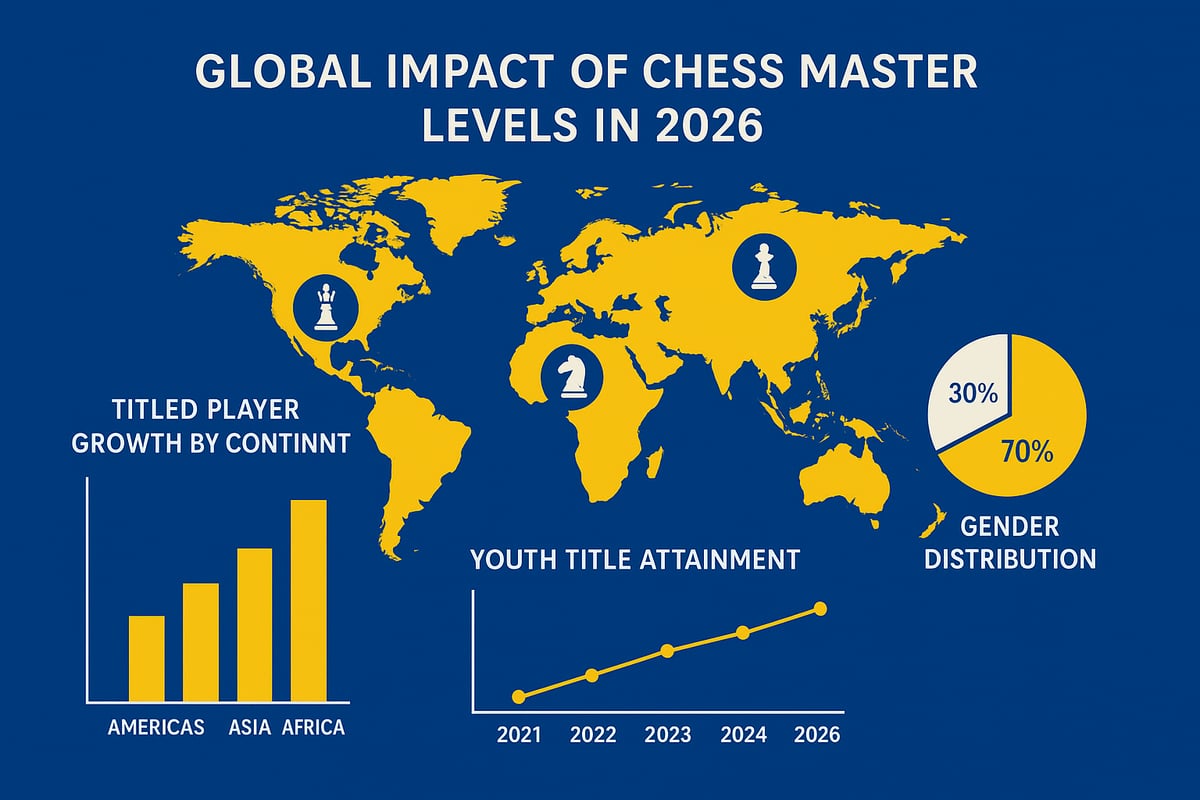
Diversity and inclusivity are on the rise, with more women and young players achieving master titles than ever before. Regional growth is especially notable in Asia, Africa, and Latin America, where new title programs and initiatives are making a tangible difference. According to Global Chess Player Statistics 2025, the number of titled women and youth has seen a significant increase, reflecting the expanding reach and influence of chess master levels around the world.
Frequently Asked Questions About Chess Master Levels
Curious about chess master levels and how they work? You’re not alone. Here are answers to the questions players ask most about these prestigious chess milestones.
What is the difference between FIDE and national titles?
FIDE titles are recognized internationally, while national federations like the USCF offer their own chess master levels within their country. FIDE titles, such as International Master or Grandmaster, follow strict global criteria. National titles, however, depend on local rules and rating systems. If you want to compete worldwide, FIDE chess master levels open more doors.
How do rating and norms work for titles?
To achieve most chess master levels, you need to reach a specific rating and sometimes earn "norms." A rating reflects your performance in rated games, while norms are earned by performing at a title-level standard in official tournaments. Each chess master level has its own rating and norm requirements, so check your goal title’s criteria.
Can master titles be revoked or lost?
Generally, chess master levels are permanent once awarded by FIDE or national federations. Exceptions are rare, such as proven cheating or administrative errors. However, losing rating points does not take away your title. Once you’ve earned a chess master level, it’s yours for life unless extraordinary circumstances arise.
Are there age limits or minimums for titles?
There are no official age restrictions for chess master levels. Young prodigies and senior players alike can achieve these titles. Some of the youngest titleholders have earned master titles before their teens, while others reached milestones later in life. This shows that chess master levels are accessible to any age group.
How do online chess and hybrid events affect titles in 2026?
Online chess and hybrid tournaments have changed how players pursue chess master levels. Digital platforms now host many rated events, making titles more accessible. Anti-cheating measures are stricter, and FIDE recognizes select online results for norms and ratings. For more on this shift, see the Impact of Online Platforms on Chess Growth. The chess master levels landscape continues to evolve with technology.
So, after exploring what it really takes to climb each of these nine chess master levels, you’re probably wondering—what’s the next step for you? Whether you’re just starting out or aiming for your own title, the right study resources can make all the difference. I know how overwhelming endless theory can feel, but you don’t need to memorize it all. If you want a practical, all-in-one way to boost your skills and feel more confident in your games, why not take a look at Get The FULL Chess Mastery Bundle? It’s like having your own chess toolkit at your fingertips—ready whenever you are!


