

You've decided to take your chess game seriously, or perhaps you're looking for the perfect learning environment for your child. Either way, searching "chess academy near me" is just the first step. Finding the right chess academy can transform your understanding of the game, accelerate your progress, and connect you with a community of like-minded players. But with so many options available in 2026, how do you know which academy deserves your time and investment? Let's explore everything you need to know about choosing a chess academy that matches your goals, learning style, and schedule.
Understanding What Makes a Chess Academy Worth Your Time
Not all chess academies are created equal, and what works brilliantly for one player might leave another feeling frustrated. A quality chess academy should offer more than just lessons about moving pieces across a board. The benefits of playing chess extend far beyond the game itself, including improved memory, enhanced problem-solving skills, and better concentration.
When you're evaluating a chess academy near me, you'll want to consider several crucial factors. The instructor's experience matters enormously. A coach who's played competitively understands the psychological aspects of tournament play, not just the theoretical knowledge found in books. They've experienced the pressure of timed games, the disappointment of losses, and the strategic thinking required to climb the rating ladder.
Key Credentials to Look For
Here's what separates exceptional chess instruction from mediocre teaching:
- FIDE or national chess federation ratings that demonstrate competitive experience
- Proven teaching methodology with testimonials from current or former students
- Age-appropriate instruction tailored to different developmental stages
- Tournament preparation beyond just classroom instruction
- Ongoing professional development showing the instructor stays current with chess theory
The structure of the curriculum matters just as much as the instructor's credentials. A well-designed chess programme builds skills progressively, ensuring students master fundamental concepts before advancing to complex strategies.
Weighing the Benefits of In-Person vs Online Chess Academies
The chess education landscape has transformed dramatically over recent years. When searching for a chess academy near me, you'll encounter both traditional in-person venues and sophisticated online platforms. Each format offers distinct advantages worth considering.
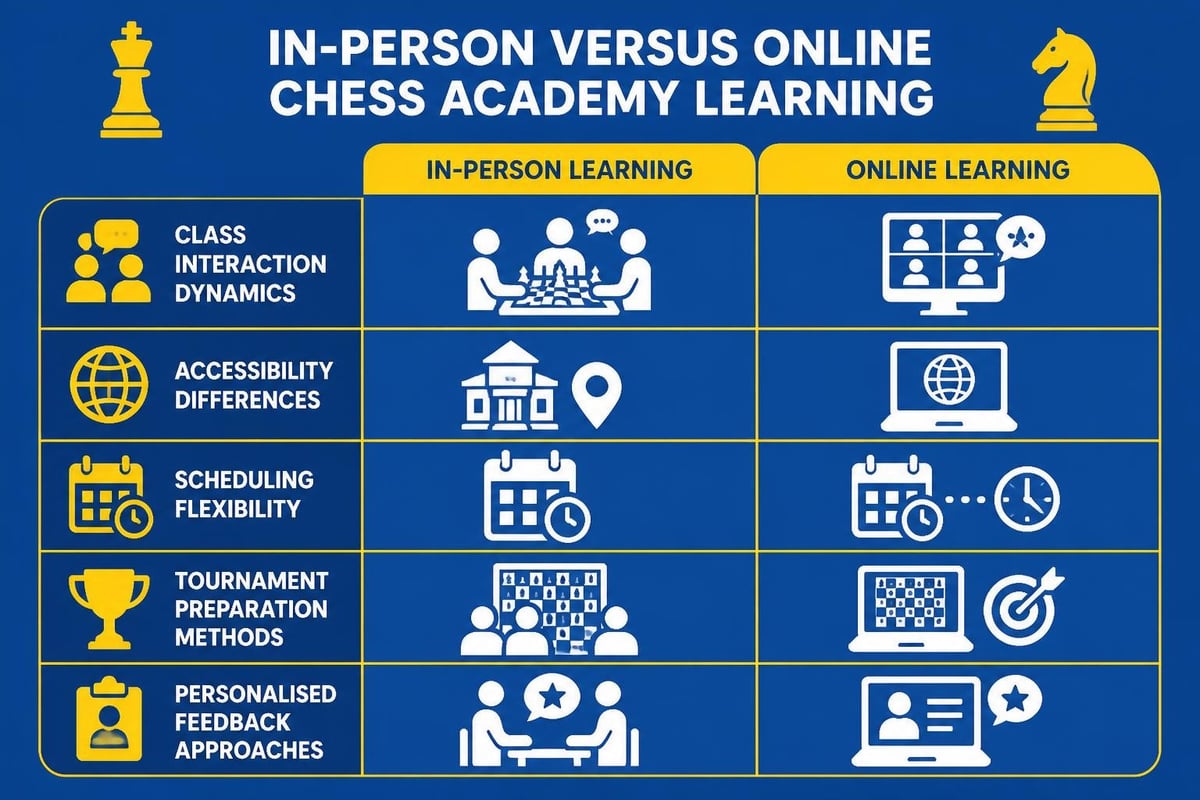
In-person academies create an environment where students engage directly with coaches and peers. There's something valuable about analysing positions on a physical board, reading your opponent's body language, and experiencing the tangible atmosphere of focused study. These academies often host regular tournaments, creating opportunities for practical application of skills learned during lessons.
Online chess academies, meanwhile, offer unprecedented flexibility and access to world-class instruction regardless of your geographic location. You're no longer limited to coaches within driving distance. A student in a small town can now learn from grandmasters who might have been completely inaccessible just a decade ago.
Making the Right Choice for Your Situation
| Factor | In-Person Academy | Online Academy |
|---|---|---|
| Scheduling | Fixed class times | Flexible, on-demand options |
| Instructor Access | Local coaches only | Global talent pool |
| Cost | Generally higher (facility overhead) | Often more affordable |
| Social Interaction | Direct peer engagement | Virtual community building |
| Travel Required | Yes | No |
Your decision should reflect your personal circumstances. If you're juggling work commitments or have children with packed schedules, an online academy might provide the flexibility you need. However, if social interaction and hands-on learning resonate with you or your child, a traditional chess academy near me offers irreplaceable benefits.
What to Expect During Your First Chess Academy Session
Walking into your first chess academy session can feel intimidating, but knowing what to expect helps ease those nerves. Most quality academies begin with an assessment to gauge your current skill level. This isn't about passing or failing; it's about placing you in the appropriate learning track.
During initial sessions, expect foundational work regardless of your level. Even intermediate players benefit from reviewing basic principles with expert guidance. You might discover gaps in your understanding of chess board set up or opening principles that have been holding back your progress.
Typical Session Structure
- Warm-up puzzles to activate tactical thinking (10-15 minutes)
- Lesson content covering specific topics or openings (20-30 minutes)
- Practical application through guided games or position analysis (20-30 minutes)
- Review and homework assignment to reinforce concepts (5-10 minutes)
The best academies don't just teach you what to do; they explain why certain moves work and help you develop pattern recognition. You'll learn to identify recurring themes in positions, which accelerates your improvement dramatically. Understanding common chess openings becomes much easier when taught within a structured curriculum.
Evaluating Teaching Methods and Learning Approaches
When investigating a chess academy near me, pay close attention to their teaching philosophy. Some academies emphasize rote memorization of opening lines, while others focus on understanding strategic principles that apply across multiple positions. The latter approach typically produces better long-term results.
Choosing the right chess coach involves understanding different teaching styles and determining which aligns with your learning preferences. Some instructors adopt a Socratic method, asking questions that guide you toward discovering answers yourself. Others prefer direct instruction, clearly explaining concepts before testing understanding through exercises.
The most effective chess academies incorporate multiple teaching modalities. Visual learners benefit from diagram analysis and video demonstrations. Kinesthetic learners need hands-on practice moving pieces and playing positions. Auditory learners thrive when concepts are explained verbally and discussed in depth.
Questions to Ask During Your Evaluation
- How do you adapt instruction for different learning styles?
- What's your student-to-teacher ratio in group classes?
- How do you measure and track student progress?
- What resources do students access between sessions?
- How do you handle students who progress at different paces?
Don't hesitate to request a trial session before committing. Any reputable chess academy should welcome this opportunity to demonstrate their teaching quality. During this trial, observe whether the instructor creates an encouraging environment where mistakes become learning opportunities rather than sources of embarrassment.
The Importance of Age-Appropriate Chess Education
If you're searching for a chess academy near me for your child, age-appropriate instruction becomes paramount. Research-backed benefits of chess for children include improved academic performance, enhanced focus, and better critical thinking skills, but these advantages only materialise when teaching methods match developmental stages.
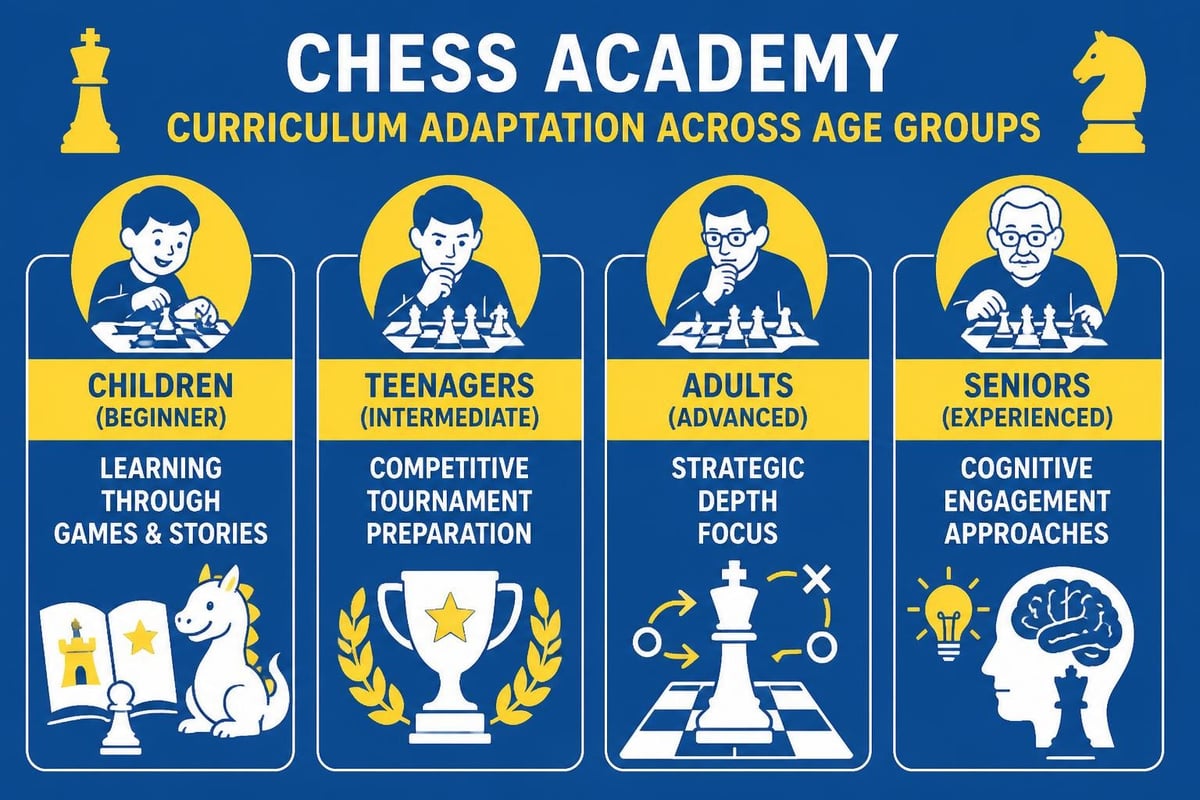
Young children (ages 5-8) need playful, game-based instruction that maintains attention and builds enthusiasm. The focus should be on basic piece movement, simple checkmate patterns, and having fun. Drilling opening theory with this age group is counterproductive and often kills their natural interest in the game.
Older children and teenagers (ages 9-17) can handle more structured instruction. This is when students begin developing serious competitive aspirations. They're ready for systematic opening study, endgame technique, and tournament preparation. The best academies for this age group balance serious study with maintaining the joy of discovery.
Adult Learning Considerations
Adult learners bring different advantages and challenges to chess study. They often possess better self-discipline and can handle abstract concepts more easily than children. However, adults typically have less time for practice and may struggle with the humility required to work through beginner concepts.
A quality chess academy near me for adults should:
- Respect time constraints with efficient, focused lessons
- Connect chess concepts to real-world strategic thinking
- Provide flexible scheduling options
- Create low-pressure environments for adults returning to chess after years away
- Offer both competitive and recreational learning tracks
Group Classes vs Private Lessons: Which Path Suits You?
This decision significantly impacts your chess academy experience. Group chess lessons offer distinct advantages, particularly for children, including social interaction, peer learning, and exposure to different playing styles. There's something valuable about watching classmates tackle the same problems you're struggling with, often from completely different angles.
Group settings also cost less per session than private instruction, making quality chess education more accessible. The competitive element of group classes can motivate students who thrive on friendly rivalry. You'll push yourself harder when you see peers mastering concepts you're still working to understand.
Private lessons, conversely, offer personalised attention impossible in group settings. Every minute focuses on your specific weaknesses and goals. If you're preparing for an important tournament or working to overcome a particular strategic blind spot, private instruction accelerates progress dramatically.
| Aspect | Group Classes | Private Lessons |
|---|---|---|
| Cost per hour | £15-30 | £40-80 |
| Attention to individual needs | Limited | Complete |
| Social learning opportunities | High | None |
| Scheduling flexibility | Low (fixed times) | High |
| Progress pace | Group-dependent | Self-determined |
Many players find a hybrid approach works best. Regular group classes provide structure, community, and cost-effective instruction, supplemented by occasional private sessions to address specific weaknesses or prepare for important events.
Assessing Curriculum Quality and Progression Systems
A chess academy near me should demonstrate a clear curriculum with defined learning objectives at each level. Beware of programmes that seem to teach random topics without logical progression. Quality chess education builds systematically, with each concept preparing students for the next level of complexity.
The curriculum should cover all three game phases: opening, middlegame, and endgame. Too many academies over-emphasize opening preparation while neglecting endgame technique. This creates players who know the first fifteen moves of the Sicilian Defense but can't convert winning endgames.
Essential Curriculum Components
Opening Instruction Should Include:
- Understanding opening principles rather than just memorizing moves
- Building a practical opening repertoire suited to your playing style
- Transition planning from opening to middlegame
- Handling opponents' deviations from main lines
Middlegame Training Must Cover:
- Tactical pattern recognition and calculation
- Positional understanding and plan formulation
- Piece coordination and activity
- Attack and defence techniques
Endgame Study Should Feature:
- Essential theoretical positions (K+P vs K, R+P vs R, etc.)
- Technique for converting advantages
- Drawing resources in difficult positions
- Practical endgame decision-making
Understanding chess ratings helps you track progress objectively. Quality academies incorporate regular assessments and help students set realistic improvement goals based on their starting point and time investment.
Red Flags to Watch Out For
Not every chess academy delivers on its promises. Here are warning signs that should make you think twice before enrolling:
Guaranteed rating improvements sound appealing but aren't realistic. Chess improvement depends on individual effort, practice consistency, and natural aptitude. Any academy promising specific rating gains is either inexperienced or dishonest.
Lack of qualified instructors becomes apparent when you ask about credentials. If an academy can't clearly communicate their coaches' playing strength, teaching experience, or educational background, that's concerning.
Rigid, one-size-fits-all instruction ignores the reality that students learn differently and progress at varying rates. Quality teaching adapts to individual needs rather than forcing everyone through identical programmes.
No trial period or money-back guarantee suggests an academy isn't confident in their service quality. Reputable programmes let you experience their teaching before making long-term commitments.
How Chess Academies Prepare Students for Tournament Play
If competitive chess interests you, tournament preparation should feature prominently in any chess academy near me. Playing in tournaments requires skills beyond board knowledge. Time management, psychological resilience, and practical decision-making under pressure all require specific training.
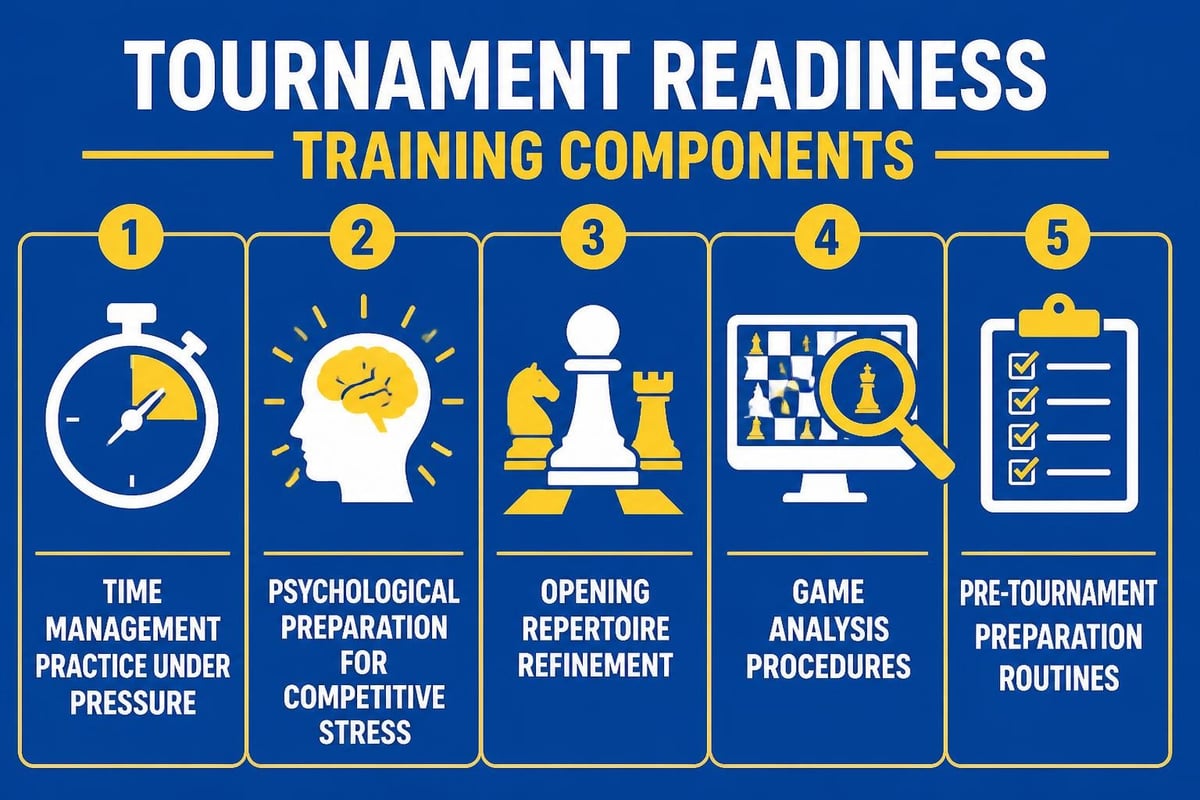
Quality academies organize regular internal tournaments giving students low-stakes competitive experience. They teach practical skills like proper chess notation, clock handling, and tournament etiquette. Students learn to analyze their games afterward, identifying mistakes and extracting lessons from both victories and defeats.
Pre-tournament preparation includes physical and mental readiness beyond chess study. Getting adequate sleep, maintaining proper nutrition, and developing pre-game routines all contribute to tournament performance. The best coaches address these holistic factors rather than focusing solely on chess theory.
Supplementing Academy Instruction with Independent Study
Even the finest chess academy near me can't replace personal study and practice. The most successful students complement structured instruction with independent work between sessions. This doesn't mean spending hours memorizing opening variations; effective independent study involves targeted practice addressing your specific weaknesses.
Resources like comprehensive opening guides help you deepen understanding of positions introduced during academy sessions. Working through tactical puzzles daily sharpens pattern recognition. Playing longer time-control games online allows you to practice decision-making without the pressure of tournament settings.
Your academy should provide guidance on effective home study. Ask your instructor for specific recommendations about:
- How much time to dedicate to chess study outside class
- Which openings to focus on for your repertoire
- Recommended books, websites, or software
- How to analyze your games productively
- Balancing study with practical play
The Financial Investment: What Should You Expect to Pay?
Chess academy costs vary dramatically based on location, instructor credentials, and class format. In major UK cities, expect to pay £20-40 per hour for group classes at a quality chess academy near me. Private lessons typically range from £40-80 per hour, with grandmaster instruction commanding premium rates of £80-150 per hour.
Many academies offer package deals providing better value than pay-as-you-go options. A ten-week term might cost £250-400 for weekly group sessions. Some programmes include additional resources like access to online training platforms, puzzle databases, or video libraries as part of membership fees.
Getting Value for Your Investment
Consider the total value package, not just hourly rates. A seemingly expensive academy might include:
- Unlimited access to online training materials
- Regular tournaments included in tuition
- Small class sizes ensuring individual attention
- Recorded sessions for later review
- Guest lectures from titled players
Compare these offerings against cheaper alternatives that provide only basic instruction. Sometimes paying more upfront delivers better long-term value and faster improvement.
Making Your Final Decision
You've researched options, perhaps visited a few academies, and now face the decision. Trust your instincts about the learning environment and instructor rapport. Your gut feeling about whether you'll thrive in a particular setting often proves accurate.
Consider starting with a short-term commitment even if longer programmes offer better pricing. A month or term-long trial lets you genuinely assess whether the teaching style, curriculum, and community fit your needs before investing significantly.
Selecting the right chess academy for children requires involving them in the decision. Their enthusiasm and comfort level matter enormously. A technically superior programme won't benefit a child who dreads attending sessions.
Don't feel pressured to choose the first chess academy near me that seems adequate. Finding the right fit might take time, but that investment in research pays dividends through accelerated improvement and sustained enjoyment of chess study.
Beyond the Academy: Building a Complete Chess Education
Remember that a chess academy provides structure and guidance, but true mastery comes from immersing yourself in chess culture broadly. Watch top-level games online, follow chess news, and engage with the broader chess community. Many cities have chess clubs offering casual play and additional learning opportunities beyond formal academy instruction.
Online platforms complement in-person academy work beautifully. You can practice tactics, play games at your convenience, and access tutorials covering virtually any chess topic imaginable. The key is integrating these resources thoughtfully rather than consuming chess content randomly without clear learning objectives.
Finding the best online chess coach might supplement your academy instruction for specific needs. Perhaps your academy excels at strategic teaching but you need additional tactical training, or vice versa. Building a complete chess education often means drawing from multiple sources rather than relying on a single programme exclusively.
Finding the right chess academy near me transforms your relationship with the game, providing structure, expertise, and community that accelerate improvement far beyond what self-study alone can achieve. Whether you're starting your chess journey or looking to break through a performance plateau, the right academy makes all the difference. Once you've found your ideal learning environment, complement that structured instruction with targeted resources that reinforce key concepts. Chess Cheat Sheets offers comprehensive opening guides, tactical puzzles, and streamlined resources designed specifically for beginners and intermediate players who want to improve efficiently without overwhelming study demands. These practical tools help you master the positions and patterns your academy introduces, turning classroom lessons into lasting skills that elevate your game.


