

Have you ever wondered why some chess players seem to spot tactical combinations instantly whilst you're still calculating variations? The secret might not be natural talent but rather a systematic training approach that turns conscious calculation into automatic recognition. The woodpecker method has emerged as one of the most effective tactical training techniques in modern chess education, and it's helping players at all levels transform their board vision. Unlike traditional puzzle-solving where you tackle different problems each day, this method takes a radically different approach that might feel counterintuitive at first but delivers remarkable results.
What Makes the Woodpecker Method Different
The woodpecker method flips conventional wisdom about chess training on its head. Instead of constantly seeking new puzzles, you work through the same set of tactical problems repeatedly over shorter and shorter timeframes. Think of it like a woodpecker pecking at the same tree: persistent, focused, and gradually making deeper impressions until the patterns become second nature.
Created by Grandmaster Axel Smith and International Master Hans Tikkanen, this approach emerged from their observation that elite players don't calculate every variation from scratch. They recognise patterns instantly because they've encountered similar positions countless times. The woodpecker method transforms your tactical training by prioritising speed and pattern recognition over deep analysis.
The Core Principles
Here's what sets this method apart from standard tactical training:
- Repetition over variety: Solving the same puzzles multiple times rather than constantly seeking new ones
- Speed progression: Each cycle through your puzzle set must be faster than the previous one
- Pattern absorption: Building unconscious recognition rather than conscious calculation
- Measurable progress: Clear metrics through timing each cycle
The beauty of this system lies in its simplicity. You're not trying to become a better calculator; you're training your brain to recognise winning patterns automatically, much like how you recognise common chess openings without having to think through every move.
How to Implement Your First Woodpecker Cycle
Ready to put this method into practice? Let's break down exactly how to structure your training for maximum effectiveness.
Setting Up Your Puzzle Collection
Start by selecting 300-500 tactical puzzles at an appropriate difficulty level. This is crucial: the puzzles should challenge you but remain solvable within a reasonable timeframe. For most intermediate players, this means choosing puzzles rated slightly below your current playing strength.
Where to source your puzzles:
- Tactical training books focused on specific themes
- Online puzzle databases filtered by rating range
- Curated collections from coaching resources
- Purpose-built woodpecker method materials
Quality matters more than quantity here. You'll be spending significant time with these positions, so ensure they're well-constructed problems with clear tactical themes rather than random positions.
The Three-Cycle Framework
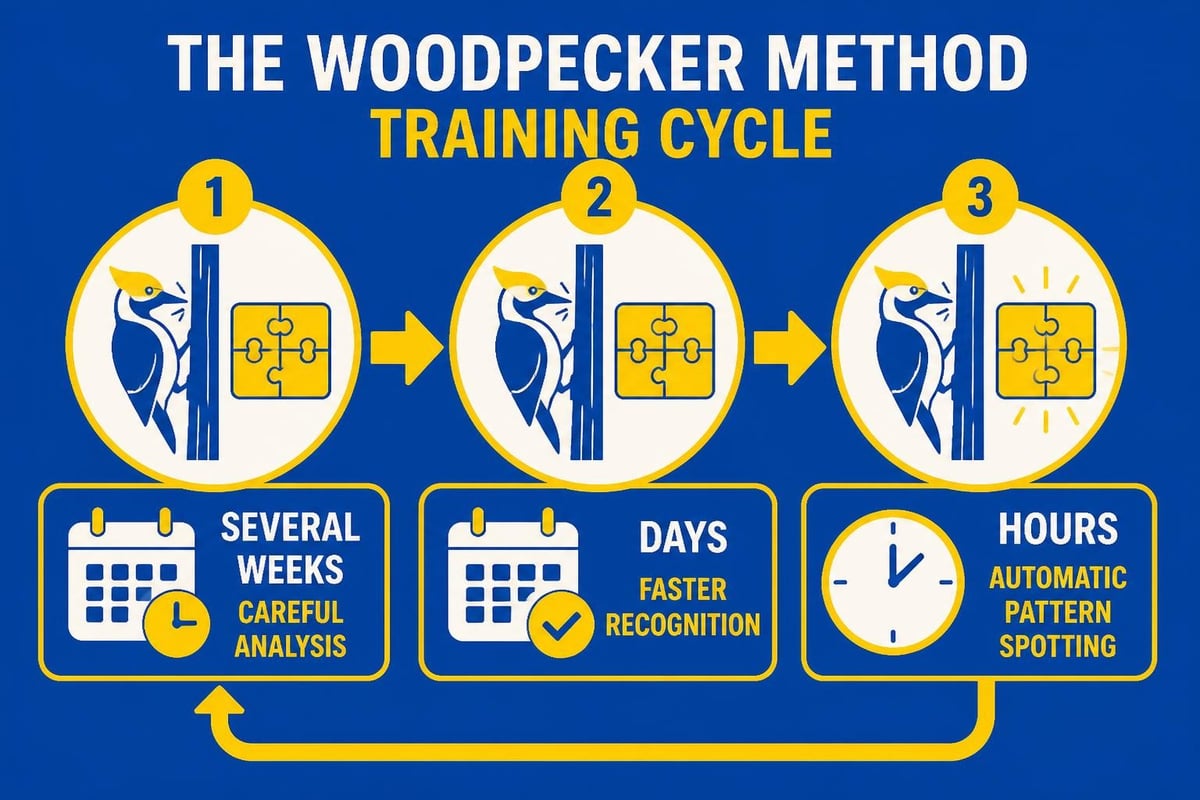
The original woodpecker method follows this proven structure:
| Cycle | Target Completion Time | Focus Area | Expected Difficulty |
|---|---|---|---|
| First Pass | Several weeks | Solve all puzzles, mark wrong answers | Challenging, requires deep thought |
| Second Pass | Several days | Re-solve entire set much faster | Patterns emerging, quicker recognition |
| Third Pass | Hours | Rapid-fire solving with minimal thought | Automatic recognition dominates |
During your first cycle, take whatever time you need to solve each puzzle. Don't guess; work through the variations properly. When you make an error, mark that puzzle but don't immediately re-solve it. The magic happens when you encounter it again in subsequent cycles.
Your second pass should feel dramatically different. You'll notice positions triggering instant recognition even before you consciously calculate. This is where the method starts delivering results. Push yourself to complete this cycle in less than a quarter of the time your first pass required.
Why Pattern Recognition Beats Pure Calculation
Let's address the elephant in the room: doesn't solving the same puzzles repeatedly mean you're just memorising solutions rather than improving your chess? This common objection misunderstands how chess mastery actually develops.
When you study positional chess through puzzles, you're not memorising individual positions. You're absorbing the underlying patterns that repeat across thousands of different games. The same principle applies to tactical training with the woodpecker method.
The Science Behind Repetition
Think about learning to drive a car. Initially, every action requires conscious thought: checking mirrors, signalling, changing gears. After sufficient repetition, these actions become automatic, freeing your conscious mind to focus on navigation and traffic conditions. Chess tactics work identically.
Research into the woodpecker method's effectiveness shows that this repetitive approach builds what psychologists call "chunking" in long-term memory. You're not memorising individual moves but rather recognising configurations that signal tactical opportunities.
Benefits beyond tactical vision:
- Improved board scanning during games
- Faster elimination of candidate moves
- Reduced time pressure in critical positions
- Increased confidence in tactical complications
- Better defensive awareness against opponent threats
The beauty is that these patterns transfer to positions you've never seen before because tactical motifs repeat endlessly throughout chess. That back-rank mate pattern from puzzle 127 appears in completely different contexts in your actual games.
Common Mistakes to Avoid
Having worked with countless players implementing this training method, I've noticed several pitfalls that reduce effectiveness. Let's make sure you avoid them.
Mistake 1: Choosing the Wrong Puzzle Set
Selecting puzzles that are too difficult creates frustration and prevents you from completing cycles quickly enough. If you're spending ten minutes per puzzle on your first pass, they're probably too hard. Conversely, puzzles that are too easy won't challenge your pattern recognition sufficiently.
The sweet spot? Puzzles where you can find the solution within 2-5 minutes on your first attempt. This ensures you're working in your development zone without grinding to a halt.
Mistake 2: Not Tracking Your Progress
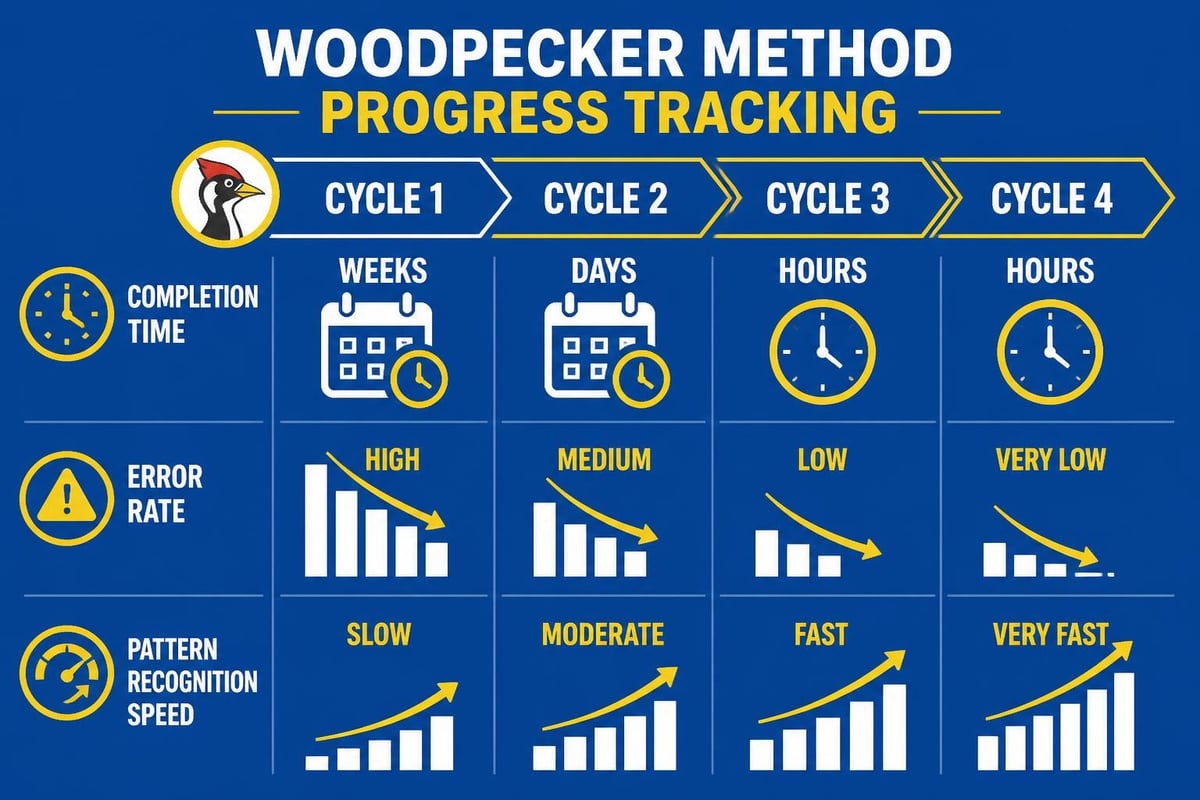
One of the most motivating aspects of the woodpecker method is watching your completion times plummet. Keep a simple log:
- Date started each cycle
- Date completed each cycle
- Total time invested
- Number of errors made
This data proves the method works and keeps you motivated when progress feels slow. There's something deeply satisfying about completing in three days what took you three weeks initially.
Mistake 3: Giving Up Too Soon
The first cycle feels brutal. You'll encounter positions that stump you completely. Your brain will resist solving "the same puzzles again" during the second cycle. This resistance is normal and precisely why the method works. Players discussing their experiences consistently report that breakthrough moments come during the second and third cycles, not the first.
Adapting the Method for Your Level
The woodpecker method isn't one-size-fits-all. Tailoring it to your specific rating and goals makes the difference between mediocre and transformative results.
For Beginners (Below 1200)
Start with fundamental tactical themes: pins, forks, skewers, discovered attacks. Your puzzle set might be smaller (200-300 puzzles) but should cover these basics comprehensively. Focus on positions with clear single-move solutions before progressing to multi-move combinations.
Consider combining this tactical work with fundamental chess concepts to build a well-rounded foundation. Tactics don't exist in isolation; understanding basic positional principles helps you spot when tactical opportunities arise.
For Intermediate Players (1200-1800)
This is the sweet spot where the woodpecker method delivers maximum impact. Your puzzle selection should include:
- Complex combinations requiring 3-5 moves
- Positions with multiple candidate moves
- Defensive tactical problems
- Endgame tactics alongside middlegame themes
- Mixed positional and tactical elements
At this level, you're building the pattern library that separates strong club players from beginners. The difference between a 1400 and 1700 player often isn't strategic understanding but rather tactical sharpness and pattern recognition speed.
For Advanced Players (1800+)
Higher-rated players benefit from themed woodpecker cycles targeting specific weaknesses. Perhaps you struggle with queen and knight combinations, or you miss defensive resources in complex positions. Create specialised puzzle sets addressing these gaps.
Advanced players might also run parallel cycles: one focused on pure tactics, another on positional understanding through pattern recognition. This multi-dimensional approach accelerates improvement across all aspects of your game.
Integrating the Woodpecker Method with Other Training
Tactical training shouldn't exist in isolation from the rest of your chess education. How does the woodpecker method fit alongside opening preparation, endgame study, and game analysis?
Creating a Balanced Training Schedule
Here's a weekly structure that many improving players find effective:
| Day | Primary Focus | Secondary Focus | Woodpecker Time |
|---|---|---|---|
| Monday | Opening study | Game analysis | 30 minutes |
| Tuesday | Woodpecker cycle | Endgame positions | 60 minutes |
| Wednesday | Playing games | Quick tactics | 20 minutes |
| Thursday | Woodpecker cycle | Strategic concepts | 60 minutes |
| Friday | Game analysis | Opening review | 30 minutes |
| Weekend | Tournament play or longer games | Light tactics | 30 minutes |
Notice that woodpecker sessions happen multiple times weekly but not daily. This spacing allows pattern consolidation in long-term memory whilst preventing burnout. You're running a marathon, not a sprint.
Complementing Opening Preparation
Your improved tactical vision directly enhances opening play. When you study the Sicilian Defense or the Queen's Gambit, recognising typical tactical motifs helps you understand why certain moves are recommended whilst others are risky.
The patterns you absorb through woodpecker training appear repeatedly in specific openings. That knight fork pattern from puzzle 89? It's exactly the trap your opponent might fall into in your favourite variation. This synergy between tactical and opening study accelerates improvement in both areas.
Measuring Success Beyond the Puzzles
How do you know if the woodpecker method is actually improving your chess rather than just making you better at solving specific puzzles? Look for these indicators in your actual games.
Real-Game Improvements
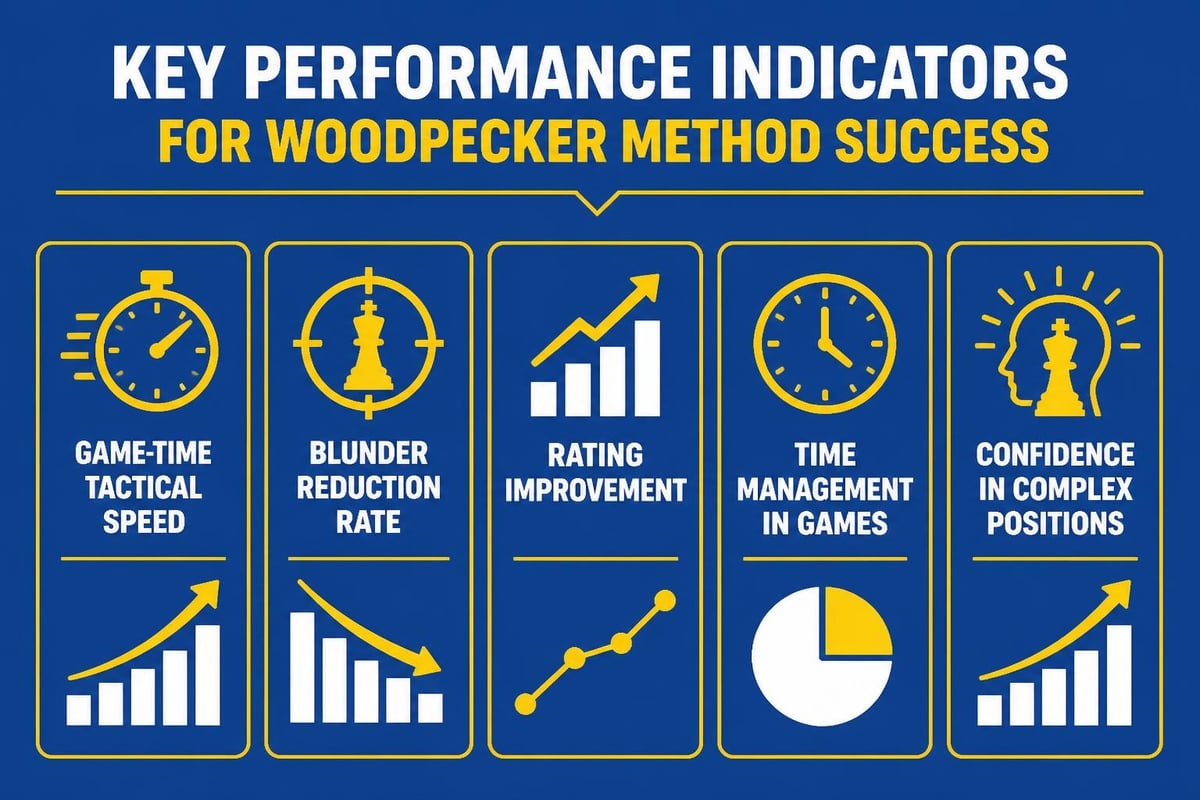
After completing 2-3 full woodpecker cycles, you should notice:
- Faster tactical spotting: Seeing combinations within seconds rather than minutes
- Fewer blunders: Automatic checking for opponent's threats before moving
- Better time management: Spending less clock time on tactics, more on strategy
- Increased aggression: Confidence to enter tactical complications when objectively better
- Defensive sharpness: Spotting opponent's threats before they materialise
Track your chess rating progression alongside your woodpecker cycles. Many players report rating gains of 100-200 points after completing their first full cycle, though individual results vary based on starting strength and overall training approach.
Qualitative Changes
Beyond numbers, pay attention to how chess feels different. Do you experience that "instant recognition" sensation more frequently? When reviewing your games, are you spotting tactical points you would have missed previously? These qualitative shifts often precede measurable rating improvements.
The most telling sign? Other players commenting that your tactical play has sharpened. When opponents start avoiding tactical positions against you, you know the training is working.
Advanced Variations and Next Steps
Once you've completed several full woodpecker cycles, where do you go next? The method offers several progression paths for long-term development.
Thematic Cycles
Instead of mixed tactical puzzles, create cycles focusing on specific themes: sacrifices, defensive tactics, endgame combinations, or attacking patterns against specific pawn structures. This targeted approach addresses weaknesses whilst maintaining the repetition-based methodology.
If you primarily play the King's Indian Defense, compile puzzles from games featuring this opening. You'll absorb typical tactical patterns specific to your repertoire whilst applying woodpecker principles.
Speed Variations
Traditional woodpecker cycles measure improvement through completion time. An advanced variation sets fixed time limits from the start:
- Blitz woodpecker: 10 seconds maximum per puzzle from first cycle
- Rapid woodpecker: 30 seconds per puzzle, focusing on intuitive recognition
- Classical woodpecker: Longer time limits but requiring written analysis of variations
Each variation trains different aspects of tactical ability. Blitz woodpecker develops instant pattern recognition; classical woodpecker builds deeper calculation skills whilst maintaining the repetition principle.
Group Woodpecker Sessions
Training partners can run synchronized woodpecker cycles, comparing progress and discussing positions. This social element adds accountability and reveals different approaches to the same puzzles. You might spot a tactical pattern through one method whilst your partner sees it differently, enriching both your understanding.
Technology and Tools for Woodpecker Training
Whilst the original method uses physical books, modern technology offers advantages for tracking and implementation. Specialized apps utilize the woodpecker method with built-in timing, progress tracking, and spaced repetition algorithms.
Digital advantages:
- Automatic time tracking across cycles
- Performance analytics and progress graphs
- Randomized puzzle order within sets
- Mobile accessibility for training anywhere
- Integrated analysis engines for verification
Physical book benefits:
- No screen fatigue during extended sessions
- Easier to set up a physical board for complex positions
- Better for deep analysis without digital distractions
- Tangible sense of progress as you work through pages
Many serious players combine both: digital tools for tracking and convenience, physical boards for positions requiring deeper analysis. Find the balance that keeps you engaged and consistent.
Troubleshooting Common Challenges
Even with proper implementation, you'll encounter obstacles. Here's how to overcome the most common challenges.
Plateau During Second Cycle
Your second cycle should be dramatically faster than your first, but what if it's not? This usually indicates one of three issues: puzzles too difficult, insufficient gap between cycles, or rushing through the first cycle without genuine understanding.
The fix depends on the cause. If puzzles are too hard, don't hesitate to switch to an easier set. If you rushed the first cycle, slow down and ensure you're actually understanding the tactical themes. If cycles are too close together, wait a few weeks before starting your second pass.
Boredom and Motivation Issues
Solving the same puzzles repeatedly can feel monotonous. Combat this by varying your approach: solve from different perspectives (defending side versus attacking side), set personal speed challenges, or combine woodpecker sessions with rewarding activities like watching instructional videos on tactical training.
Remember why you started: every position you solve faster represents a pattern you'll recognize instantly in your games. That's not boring; that's building chess mastery systematically.
Time Management Constraints
Life gets busy, and finding hours for woodpecker cycles proves challenging. The solution? Shorter, more focused sessions. Even 15-20 minutes daily maintains momentum better than sporadic marathon sessions. Quality and consistency beat quantity every time.
Break your puzzle set into smaller chunks (50 puzzles instead of 500) for mini-cycles requiring less total time investment. You'll still gain pattern recognition benefits whilst accommodating a realistic schedule.
The woodpecker method isn't magic, but it's the closest thing chess improvement has to a guaranteed system. By committing to repetitive tactical training, you're building the pattern recognition that separates strong players from the rest. Whether you're just starting your chess journey or pushing towards expert level, this approach delivers measurable results through consistent application. At Chess Cheat Sheets, we provide the streamlined guides and puzzle resources that complement your woodpecker training perfectly, helping you master tactical patterns alongside openings and endgames. Start your first cycle today and experience how systematic repetition transforms your tactical vision.


