

The chess world never stands still, and 2026 has already brought us a fascinating array of developments that are reshaping how we learn, play, and think about the game. Whether you're a club player looking to sharpen your tactical awareness or an aspiring master building your opening repertoire, understanding what's new in chess can give you a significant edge. From established publications continuing to deliver world-class content to cutting-edge AI research transforming how we understand strategic thinking, there's never been a more exciting time to be involved in chess. Let's explore the most significant developments that should matter to you as a developing player.
The Magazine That Defined Chess Journalism
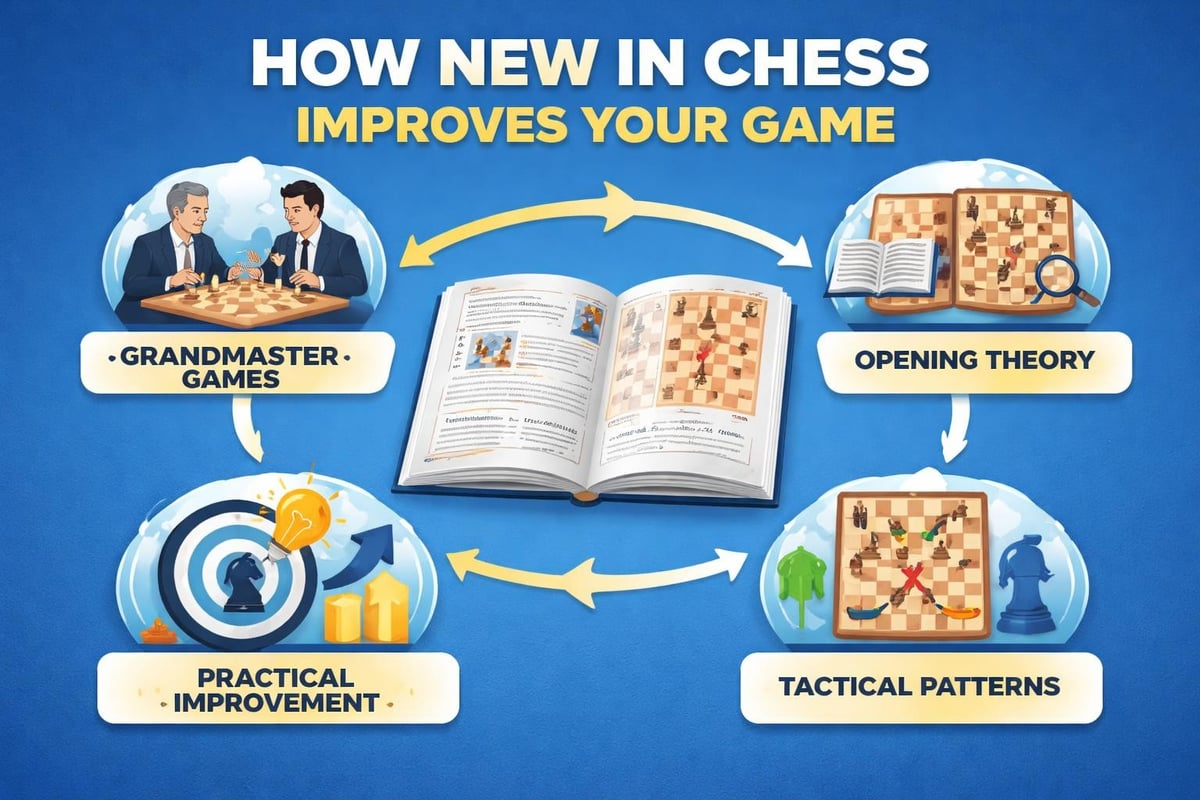
When we talk about what's new in chess, we absolutely must start with the publication that has shaped chess journalism for decades. New In Chess magazine has been the gold standard since its founding in 1984, offering unparalleled coverage of elite tournaments, deeply annotated games, and insights from the world's strongest players. What makes this magazine particularly valuable for intermediate players isn't just the top-level analysis but the way it bridges the gap between aspirational chess and practical improvement.
Why This Magazine Matters for Your Development
The beauty of New In Chess lies in its ability to make grandmaster-level thinking accessible. Each issue features:
- Annotated games from recent tournaments with explanations that reveal the thought process behind critical decisions
- Opening surveys that show you how theory is evolving in real-time
- Training exercises designed by elite coaches to sharpen specific skills
- Player interviews that give you insight into how professionals approach preparation
You might wonder why reading about super-GM games matters when you're working on breaking through 1600 or 1800. Here's the thing: watching how the best players handle common chess openings teaches you pattern recognition that directly transfers to your own games. When you see Magnus Carlsen converting a slight edge in an Italian Game, you're learning principles applicable to your club matches.
The Historical Context Worth Knowing
New In Chess has a rich history that reflects the broader evolution of chess media. Founded by Dutch chess enthusiast Joop van Oosterom and later steered by Jan Timman, the magazine has weathered the digital revolution while maintaining its commitment to quality analysis. Understanding this context helps you appreciate why the publication remains relevant in 2026, even as countless online resources compete for your attention.
What sets this publication apart in today's crowded chess education landscape is editorial curation. Unlike the overwhelming flood of online content, each issue is carefully crafted to provide genuine value rather than just volume. When you're deciding where to invest your limited study time, having trusted sources becomes invaluable.

Chess Format Innovation and Tournament Evolution
Magnus Carlsen's influence on chess extends far beyond his dominance at the board. In 2025, Carlsen voiced support for a chess 'triathlon' format that would combine classical, rapid, and blitz chess into unified events. This proposal, aimed at revitalizing competitive chess, represents a significant shift in how we might experience high-level competition.
For developing players, this innovation actually offers valuable lessons:
- Time management flexibility becomes more crucial when you're comfortable across different time controls
- Opening preparation needs to balance depth (for classical) with breadth (for faster formats)
- Psychological resilience improves when you can switch mindsets between contemplative and instinctive play
The triathlon concept acknowledges what many club players already know: different time controls develop different skills. Your classical games teach you deep calculation and strategic planning. Rapid games force you to trust your intuition while maintaining accuracy. Blitz sharpens your tactical vision and pattern recognition.
What This Means for Your Training
Should you train differently knowing that chess might be moving toward multi-format competitions? Absolutely. Here's a practical approach:
| Time Control | Weekly Allocation | Primary Benefit | Training Focus |
|---|---|---|---|
| Classical | 50% | Deep understanding | Opening study, endgame technique |
| Rapid | 30% | Balanced skills | Tactical training, time management |
| Blitz | 20% | Pattern recognition | Opening traps, quick calculation |
This balanced approach ensures you're developing the complete skill set modern chess demands. When you're working through chess opening guides, consider how your chosen systems perform under time pressure. The London System, for instance, offers reliability across all time controls, which is why studying the London System thoroughly pays dividends in multiple formats.
The AI Revolution Reshaping Chess Understanding
Perhaps nothing represents what's new in chess quite like the intersection of artificial intelligence and the royal game. Two groundbreaking research papers from late 2025 demonstrate how AI is transforming our understanding of strategic reasoning.
ChessArena and Strategic AI Evaluation
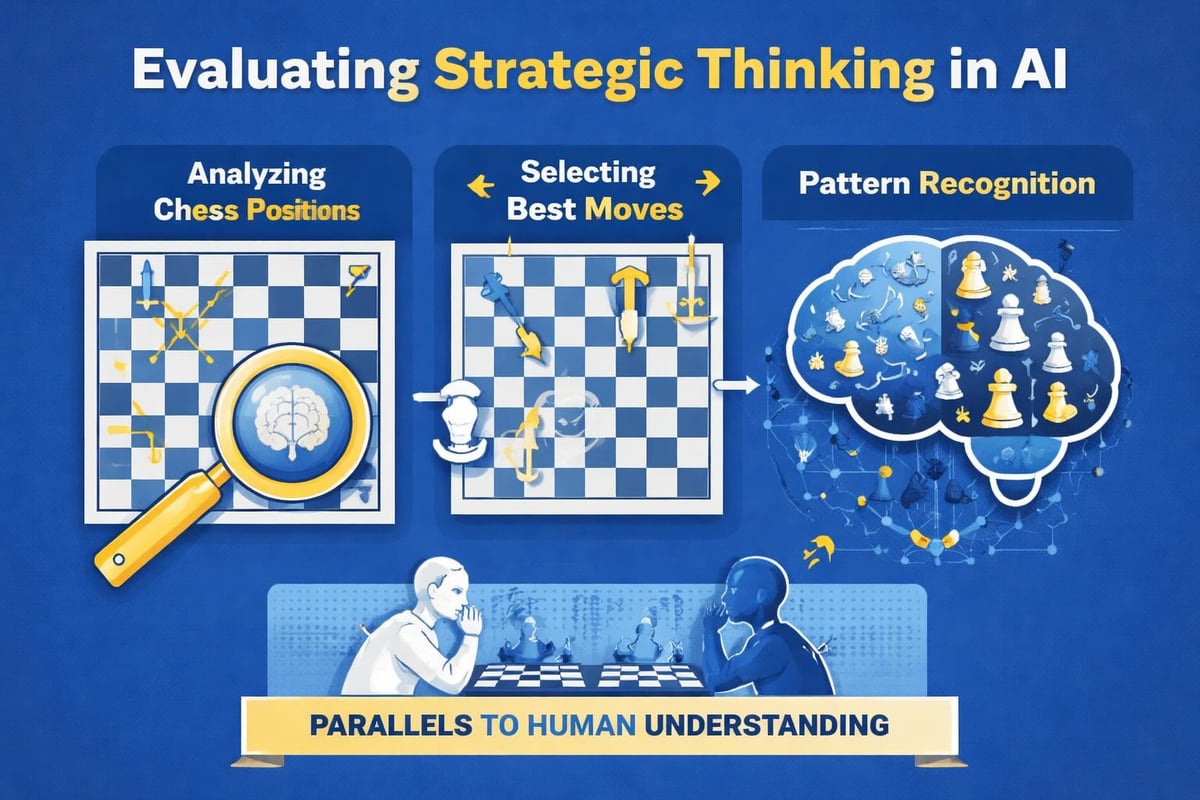
The first development, ChessArena, introduces a sophisticated testbed for evaluating how large language models handle strategic reasoning through chess. Why does this matter to you as a practical player? Because the same principles being tested-pattern recognition, strategic planning, and tactical calculation-are exactly what you're developing in your own game.
LLM CHESS Framework
Similarly, the LLM CHESS framework benchmarks reasoning and instruction-following capabilities using chess as the testing ground. What's fascinating is how these AI studies reveal the structure of chess thinking itself. When researchers break down how AI "learns" chess concepts, they're essentially mapping the same learning journey you're on.
Key insights from AI research applicable to human learning:
- Position evaluation relies on recognizing familiar patterns more than calculating every possibility
- Strategic planning works best with clear, hierarchical goals (control the centre, develop pieces, king safety)
- Tactical execution improves through exposure to similar pattern types repeatedly
These findings validate something experienced coaches have known intuitively: you get better at chess by building a mental library of positions and patterns, not by trying to calculate everything from scratch. This is precisely why resources like comprehensive opening guides work so effectively-they help you build that pattern library efficiently.
Creative Chess Variations and Gaming Crossovers
What's new in chess isn't limited to traditional formats and study methods. The gaming world has discovered chess as fertile ground for creative reimagining, bringing fresh perspectives to the ancient game.
Passant: A Chess Roguelike
One particularly innovative development is "Passant: A Chess Roguelike," which transforms traditional chess by introducing roguelike game elements. While this might seem like pure entertainment, there's educational value here. The game forces players to adapt to unexpected scenarios and develop flexible thinking-skills that transfer directly to over-the-board chess.
When you encounter unusual positions in these chess variants, you're exercising the same creative problem-solving muscles you need when your opponent deviates from theory. If you've ever been caught off-guard by an unexpected move in your favourite opening system, you know how valuable adaptability becomes.
The Value of Cross-Training Your Chess Brain
Think of chess variants like cross-training for athletes. A runner might swim or cycle to develop different muscle groups while maintaining cardiovascular fitness. Similarly, playing chess variants can:
- Strengthen tactical vision by presenting unfamiliar piece configurations
- Enhance creativity by removing the safety net of memorized theory
- Improve calculation by forcing you to evaluate positions without reference points
- Build confidence in your ability to navigate uncertainty
This doesn't mean abandoning serious study-your progress still depends on mastering fundamental concepts. But occasional excursions into chess variants can refresh your perspective and prevent study burnout.
Practical Application: Staying Current Without Overwhelm
With so much happening in the chess world, how do you stay informed without becoming overwhelmed? Here's a structured approach that balances awareness with focused improvement.
Monthly Chess Information Diet
Week 1: Deep Dive Read one major article or game collection from New In Chess or similar quality sources. Focus on understanding one key concept thoroughly rather than skimming multiple topics.
Week 2: Tactical Training Work through tactical puzzles without worrying about external developments. This is your foundation-pure chess skill development.
Week 3: Opening Updates Check if there are new developments in your main openings. Look for recent games by top players in your systems. For example, if you play the Sicilian Defense, search for latest GM games in your specific variation.
Week 4: Experimentation Try one new idea you discovered, whether it's a variation, a training method, or even a chess variant. This keeps your chess fresh and maintains motivation.
Filtering What's Genuinely New in Chess
Not every development deserves your attention. Use these criteria to decide what's worth your study time:
- Direct applicability: Will this help you win more games at your current level?
- Skill development: Does this develop transferable chess skills?
- Motivation: Does this make you excited to study and play more chess?
If something fails all three tests, it's probably just noise. Your goal is improvement, not just staying informed about chess news.
Leveraging Modern Resources for Classical Improvement
Here's the beautiful paradox of what's new in chess in 2026: the best modern resources actually make classical chess improvement more accessible than ever. You don't need to choose between traditional study methods and modern innovations-they complement each other perfectly.
Combining Traditional and Modern Study
Consider how you might prepare for an upcoming tournament:
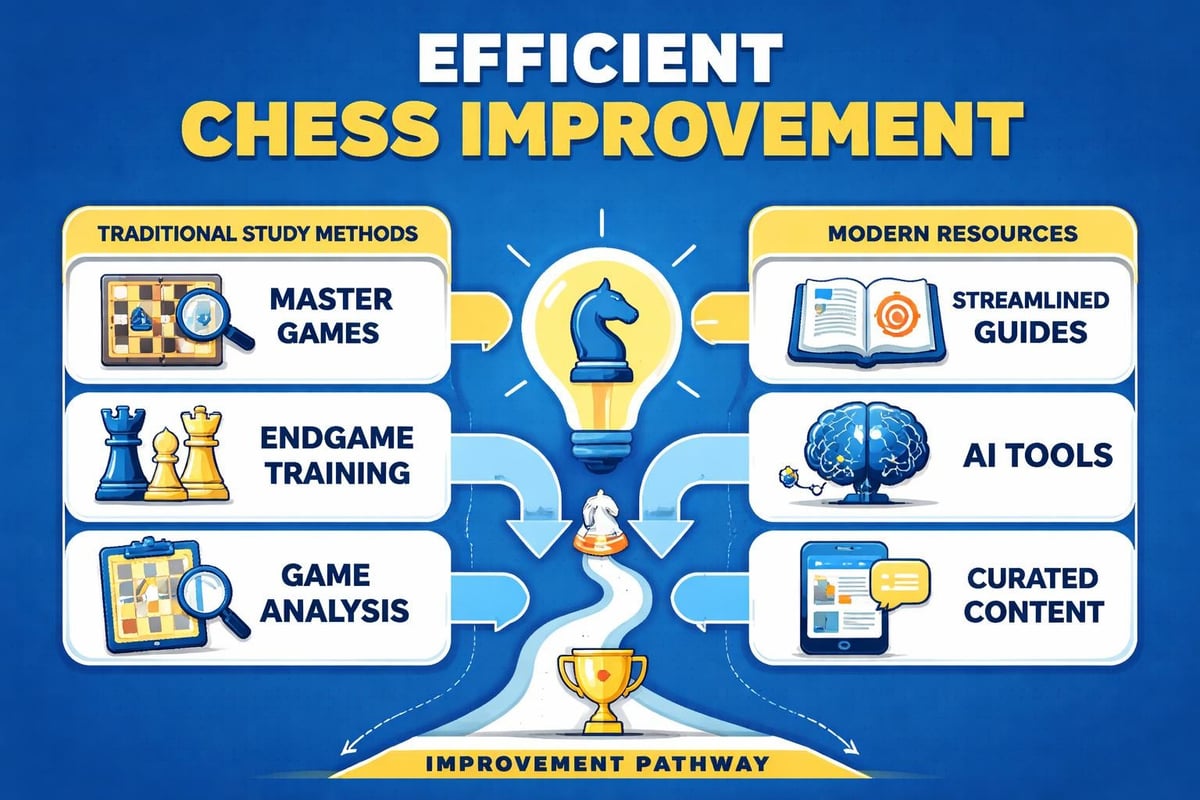
Traditional approach:
- Study master games in your openings
- Work through endgame manuals
- Analyze your own games with a coach or strong player
Modern enhancement:
- Use curated opening guides that distill essential theory
- Supplement with AI analysis to find missed tactics
- Review new in chess magazine articles for cutting-edge ideas in your systems
Neither approach alone is optimal. The traditional methods provide depth and understanding. Modern tools add efficiency and breadth. Together, they create a powerful improvement system.
Specific Example: Opening Preparation in 2026
Let's say you want to add the English Opening to your repertoire. Here's how you'd use both old and new resources:
- Foundation: Read the strategic ideas behind the English Opening from a comprehensive guide
- Pattern building: Study annotated games showing typical middlegame structures
- Modern refinement: Check what's new in chess regarding recent English Opening theory
- Practical testing: Play rapid games to test your understanding under realistic conditions
- Targeted improvement: Identify gaps using game analysis, then return to study materials
This cyclical process ensures you're building genuine understanding while staying current with developments. The English Opening guide provides your foundation, while awareness of current trends keeps your repertoire fresh and relevant.
The Psychology of Staying Motivated with New Developments
One underappreciated aspect of following what's new in chess is the motivational boost it provides. When you read about Magnus Carlsen's latest tournament victory or discover a creative new training method, it reminds you why you fell in love with chess in the first place.
Psychological benefits of staying connected to chess developments:
- Inspiration from seeing top players overcome challenges similar to your own
- Community connection through shared interest in current events
- Goal setting based on achievable milestones you observe in others' progress
- Perspective on your own improvement journey within the broader chess world
However, there's a balance to strike. Consuming chess content becomes problematic when it replaces actual playing and studying. Use news and developments as seasoning, not the main course. Your primary diet should always be deliberate practice-solving positions, playing rated games, and analyzing your mistakes.
Creating Your Personal Chess Development Ecosystem
Think of your chess improvement as an ecosystem where different elements support each other:
- Structured learning (opening study, endgame training) provides the foundation
- Practical play (tournament games, online matches) tests and reinforces knowledge
- Analytical review (game analysis, mistake correction) identifies growth areas
- Cultural engagement (following current chess, reading magazines) maintains motivation and context
When these elements balance properly, each reinforces the others. Your tournament games become more meaningful when you understand how they connect to broader chess developments. Your opening study feels more relevant when you see top players employing similar systems.
Building Your Chess Knowledge Base Efficiently
With everything that's new in chess competing for your attention, efficiency becomes crucial. You can't study everything, so choose wisely. Here's a framework for building knowledge that actually improves your results.
The 80/20 Principle Applied to Chess Study
Focus 80% of your study time on fundamentals that will impact 80% of your games:
High-Impact Areas (80% of study time):
- Tactical pattern recognition
- One or two solid opening systems per colour
- Basic endgame positions (K+P, rook endgames, basic checkmates)
- Middlegame planning principles
Enrichment Areas (20% of study time):
- Advanced opening theory and novelties
- Complex endgame studies
- Chess culture and current events
- Experimental variations and creative ideas
This distribution ensures you're building the foundation that wins games while maintaining the variety that keeps chess interesting. When you discover something new in chess that catches your attention, categorize it: is this foundational knowledge or enrichment? Both have value, but they deserve different time allocations.
Decision Matrix for New Chess Information
| Information Type | Study Priority | Time Investment | Application Timeline |
|---|---|---|---|
| Tactical pattern you've never seen | High | 30-60 minutes | Immediate |
| New variation in your main opening | Medium-High | 1-2 hours | Next tournament |
| Interesting endgame study | Medium | 30 minutes | Long-term |
| GM game in unfamiliar opening | Low-Medium | 15 minutes | Cultural knowledge |
| Chess variant or innovation | Low | 15-30 minutes | Motivation/fun |
This matrix helps you allocate scarce study time effectively. When you read about new developments, immediately categorize them so you're making conscious decisions about where your energy goes.
The Role of Quality Resources in Your Chess Journey
Throughout this exploration of what's new in chess, one theme emerges clearly: quality resources matter enormously. The chess world produces vast amounts of content, but not all of it serves your improvement equally well.
This is where curated, focused materials prove their worth. Whether you're working through beginner-friendly opening systems or diving deeper into advanced opening theory, having streamlined guides saves you countless hours of sorting through contradictory information.
Recognizing Quality in Chess Resources
High-quality chess resources share common characteristics:
- Clear organization that guides you from fundamentals to complexity
- Practical examples showing ideas in realistic positions
- Explanations of why moves work, not just what moves to play
- Appropriate depth for your current skill level
- Regular updates reflecting current understanding
When evaluating any new chess resource-whether a magazine article, opening guide, or training program-apply these criteria. Your time is valuable, and investing it wisely accelerates your progress dramatically.
The democratization of chess knowledge in 2026 means you have unprecedented access to quality instruction. Take advantage of this by choosing resources aligned with your goals and learning style. Some players thrive on comprehensive written guides, while others prefer video content or interactive tools. Experiment to find what works for you, then commit fully to that approach.
The chess landscape in 2026 offers more opportunities for improvement than ever before, from prestigious publications maintaining editorial excellence to innovative AI research revealing the structure of strategic thinking. Staying current with these developments enriches your chess experience while focused study builds the skills that win games. Chess Cheat Sheets provides exactly this balance-streamlined, comprehensive guides that let you master openings and essential concepts efficiently, giving you more time to enjoy the royal game itself. Start building your chess knowledge base with resources designed specifically for developing players who value their time and want proven results.


