

Have you ever wondered what separates a good chess player from a great one? The answer often lies in studying the masterpieces that have shaped chess history. Great chess games aren't just entertaining spectacles-they're textbooks in disguise, teaching us strategic principles, tactical patterns, and creative ideas that can transform our own play. Whether you're just starting out or looking to break through to the next level, learning from the legends can accelerate your improvement dramatically.

Why Studying Great Chess Games Actually Works
You might think that watching grandmasters play is a bit like watching Formula 1 racing when you're still learning to drive. But here's the thing: great chess games contain patterns and principles that apply at every level.
When you study a classic match, you're not just memorizing moves. You're absorbing the thought process behind those moves. You're seeing how top players handle pressure, create threats, and convert advantages. This is exactly why greatest World Chess Championship games continue to fascinate players decades after they were played.
The Educational Power of Legendary Matches
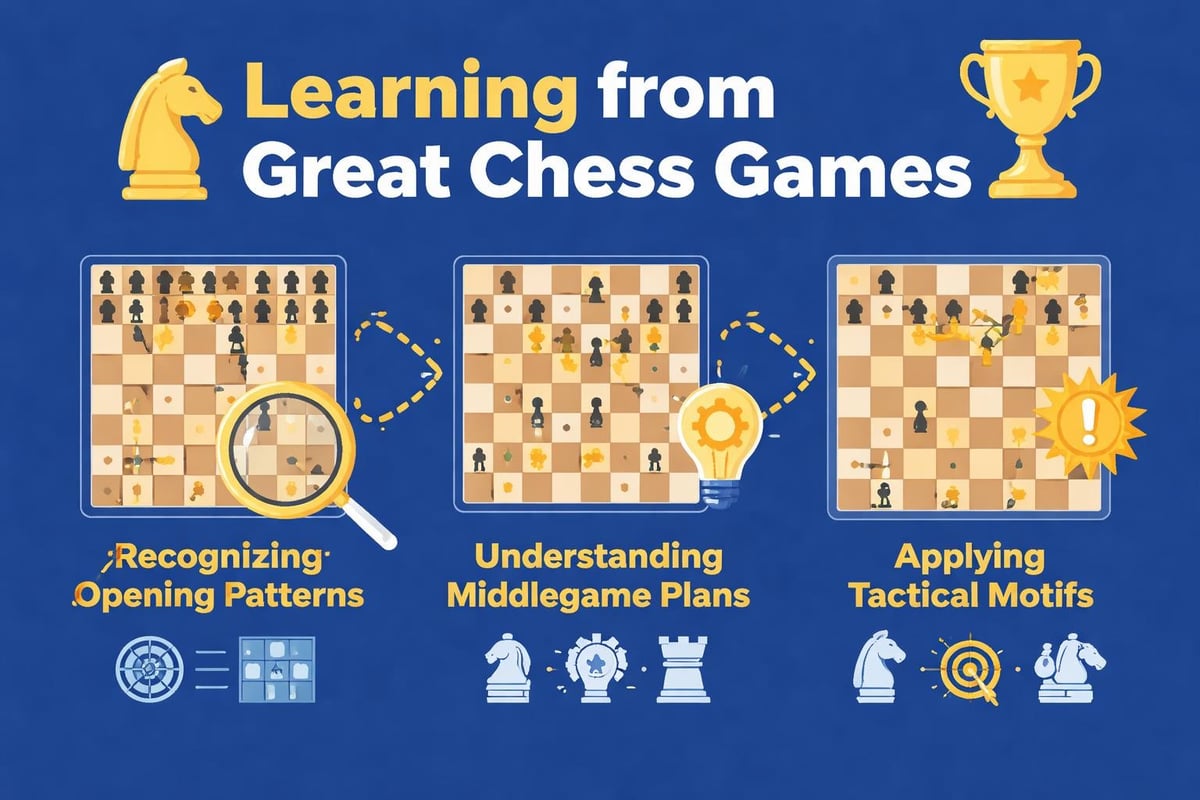
Consider what happens when you replay a famous game with annotations:
- You discover opening ideas that you can immediately add to your repertoire
- You learn middlegame patterns that appear repeatedly in your own games
- You understand endgame techniques through practical examples
- You develop tactical vision by seeing brilliant combinations unfold
The beauty of this approach is its efficiency. Rather than grinding through hundreds of practice games, you're learning from the absolute best examples chess has to offer.
Historic Encounters That Changed Chess Forever
Some games transcend mere victory and defeat. They redefine what we think is possible on the chessboard.
The Immortal Games That Earned Their Names
Kasparov's Immortal against Topalov in 1999 remains one of the most astonishing displays of tactical brilliance ever witnessed. Kasparov sacrificed material with breathtaking confidence, calculating lines that seemed impossibly deep. What can we learn from this masterpiece? That sometimes the most aggressive continuation is actually the most accurate.
Similarly, Anand's Immortal demonstrated that even in the modern era of computer preparation, human creativity can still produce stunning brilliancies. Anand's attacking prowess in that 2013 encounter showed how piece coordination and timing can overwhelm even the strongest defenses.
When Humans Met Machines
The historic 1996 match between Kasparov and Deep Blue marked a watershed moment. This wasn't just about computers beating humans-it revealed new strategic possibilities that humans hadn't fully explored.
| Aspect | Human Strength | Computer Strength | What We Learn |
|---|---|---|---|
| Calculation | Pattern recognition | Deep tactical lines | Combine intuition with concrete analysis |
| Strategy | Long-term planning | Positional evaluation | Balance plans with precise calculation |
| Openings | Understanding ideas | Database knowledge | Know the 'why' behind moves |
Recent Masterpieces Worth Studying
Think the golden age of chess brilliancy is over? Think again. Modern players continue to produce games worthy of study.
The top 10 chess games of 2025 showcase how contemporary chess has evolved. These games reflect deeper opening preparation, more sophisticated strategic understanding, and tactical complexity that would have amazed players from previous generations.
Looking back at the top chess games of 2024, we see emerging patterns that you can incorporate into your own play. The rising stars aren't just copying the classics-they're building upon them.
What Modern Great Chess Games Teach Us
Today's masterpieces often feature:
- Hybrid opening approaches that mix classical and modern ideas
- Dynamic imbalances where material and activity are constantly weighed
- Prophylactic thinking that prevents opponent counterplay before it starts
- Precise endgame technique that squeezes wins from minimal advantages
These elements appear in your games too, just in simpler forms. By studying how the masters handle them, you develop the pattern recognition to spot similar opportunities.
Building Your Personal Collection
You don't need to study every famous game ever played. What you need is a curated selection that addresses your specific weaknesses and interests.
Choosing Games That Match Your Style
Are you an aggressive player who loves the Sicilian Defense? Then focus on great chess games featuring sharp Sicilian battles. Prefer positional play? Seek out strategic masterpieces in closed positions.
The collection of famous chess games available online can seem overwhelming. Here's how to filter them effectively:
- Start with your openings: Find games in your repertoire
- Focus on one player: Study how a master handles similar positions
- Choose annotated versions: Commentary reveals the thinking behind moves
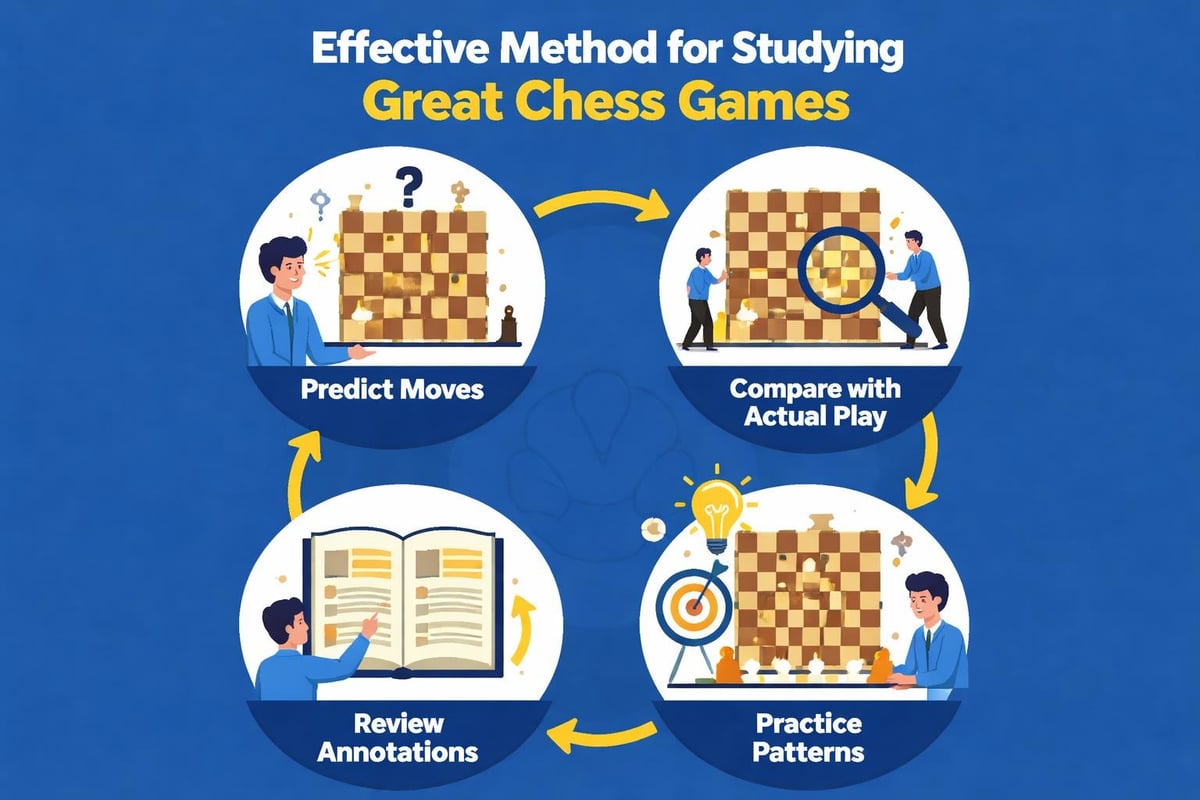
- Replay actively: Try to predict moves before seeing them
How Many Games Should You Study?
Quality trumps quantity every time. Deeply understanding five great chess games will benefit you more than superficially reviewing fifty.
| Study Depth | Number of Games | Time Investment | Retention |
|---|---|---|---|
| Surface review | 50+ games | 1-2 hours | Low |
| Moderate analysis | 20-30 games | 5-10 hours | Medium |
| Deep study | 5-10 games | 20+ hours | High |
I recommend the deep study approach. Really dissect those games. Understand not just what happened, but why it happened and how it applies to your level of play.
Extracting Practical Lessons From Master Play
Here's where many players go wrong: they admire brilliant games but never translate those ideas to their own play. The key is active learning.
The Annotation Method
When you study great chess games, create your own notes. Ask yourself questions at critical moments:
- What would I play here?
- Why did the master choose differently?
- What tactical motifs enabled this combination?
- How does this relate to positions I encounter?
This active engagement transforms passive viewing into genuine learning. You're building neural pathways that will fire when you see similar patterns in your games.
From Openings to Endgames
The most common chess openings appear repeatedly in classic games for good reason-they work. By studying how masters navigate these openings, you gain practical understanding beyond mere move memorization.
Consider exploring comprehensive chess resources that connect classic games to specific opening systems. This integrated approach helps you see how opening choices lead to characteristic middlegame positions.
Themed Collections for Targeted Improvement
Want to improve your attacking play? Study attacking masterpieces. Struggling with endgames? Focus on technical wins.
Attack and Sacrifice
The 10 most famous chess games often feature spectacular sacrifices. These games teach courage-the willingness to invest material for intangible advantages like initiative and king safety.
When studying attacking games:
- Note the preparatory moves that enabled the attack
- Identify weaknesses in the defender's position
- Observe how piece coordination multiplied attacking force
- Learn when to switch to technique after breaking through
Positional Masterclasses
Not every great game features fireworks. Some teach patient maneuvering and strategic domination. These positional classics often prove more instructive for intermediate players because the ideas are more universally applicable.
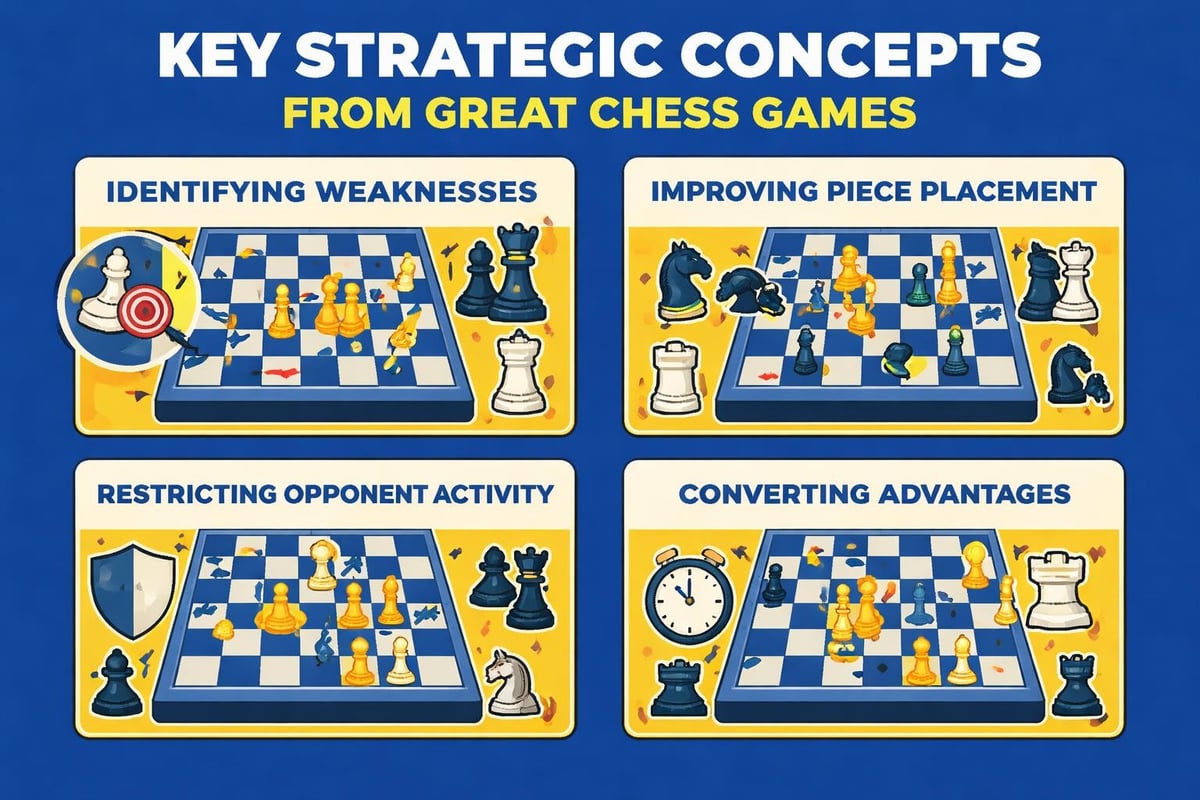
Look for games where the winner:
- Identified a long-term weakness
- Improved piece placement systematically
- Prevented opponent counterplay
- Converted a small advantage through technique
Applying Lessons to Your Openings
You've probably chosen your opening repertoire based on what feels comfortable. But have you studied how the masters play your openings?
Learning From Fischer's Approach
Understanding what openings Bobby Fischer played reveals a blueprint for opening selection based on soundness and clarity. Fischer's games show how deep understanding of fundamental openings beats trendy novelties.
If you're playing as Black, studying the best openings for Black in historic games reveals tried-and-tested approaches that have withstood decades of analysis.
Connecting Games to Your Study
The brilliant thing about modern chess education is how readily you can connect concepts. After studying a great game in a particular opening, you can immediately consult guides and cheat sheets to understand that opening system better.
This two-way learning-from general principles to specific openings and back-accelerates your improvement dramatically.
The 64 Essential Games Approach
One comprehensive resource worth exploring is the selection of 64 great chess games that covers chess history comprehensively. This collection provides a structured path through chess evolution.
Why 64? It's a complete board's worth of lessons, covering different eras, styles, and strategic themes. Working through such a collection systematically ensures balanced improvement across all aspects of the game.
Creating Your Study Schedule
Rather than binge-studying, spread your game analysis over time:
- Week 1-2: Select and review five games quickly
- Week 3-4: Deep-dive into game one, creating detailed notes
- Week 5-6: Apply lessons from game one in your own play
- Week 7-8: Deep-dive into game two, connecting it to game one
This spaced repetition ensures concepts stick. You're not just memorizing-you're integrating ideas into your chess understanding.
Common Mistakes When Studying Classic Games
Even with the best intentions, players often stumble when studying great chess games. Let's address these pitfalls head-on.
Mistake One: Passive Viewing
Simply replaying moves without engagement produces minimal learning. Your brain needs to work. Predict moves, question decisions, and challenge yourself to understand the position independently.
Mistake Two: Ignoring Your Level
A 1200-rated player studying grandmaster endgame technique in great chess games might miss the point. The tactics are instructive, but the subtle positional nuances might be beyond current understanding. Choose games with clear, applicable lessons.
Mistake Three: No Follow-Up Practice
You've studied a brilliant kingside attack. Wonderful! Now what? Unless you practice similar attacking patterns in puzzles and games, that knowledge remains theoretical. The chess puzzles you solve should reinforce patterns from games you study.

Integrating Game Study Into Your Improvement Plan
Great chess games shouldn't exist in isolation from your other training. They're part of an integrated improvement system.
| Training Element | Weekly Time | How It Connects to Game Study |
|---|---|---|
| Playing games | 3-5 hours | Apply learned patterns in practice |
| Tactical puzzles | 2-3 hours | Sharpen motifs seen in classics |
| Opening study | 1-2 hours | Understand systems through master play |
| Game analysis | 1-2 hours | Review your games against classic patterns |
| Classic game study | 1-2 hours | Learn new concepts and ideas |
Notice that studying great games takes just 1-2 hours weekly. That's enough to make steady progress without overwhelming your schedule. Consistency beats intensity.
Tracking Your Progress
Keep a learning journal. After studying each game, note:
- The main strategic lesson
- Two tactical patterns you learned
- One opening idea to remember
- How this connects to your recent games
This reflection solidifies learning and creates a personal reference you can revisit.
Resources That Enhance Your Study
While studying great chess games independently is valuable, combining them with quality educational resources multiplies effectiveness. The best chess books often feature annotated classic games alongside explanatory material.
For those seeking accessible learning materials, exploring good beginner chess books that incorporate famous games provides context that pure game collections might lack.
The digital age offers advantages too. Many free chess books in PDF format include classic game collections with modern analysis, making top-level instruction accessible to everyone.
Making Classics Relevant to Modern Play
You might wonder if games from the 1920s or 1960s still matter in 2026. Absolutely they do-but you need to extract timeless principles rather than copying specific lines.
What Never Changes
Despite computer analysis and evolved opening theory, these elements of great chess games remain eternally instructive:
- Tactical motifs: Pins, forks, and sacrifices work the same today
- Strategic principles: Weak squares and pawn structures haven't changed
- Psychological insight: Understanding when to complicate or simplify
- Practical play: Converting advantages under time pressure
What Has Evolved
Modern preparation means some classic opening lines are refuted. That's fine. You're studying the game for its middlegame ideas and overall strategic approach, not to copy move-by-move.
When you encounter outdated opening play in classic games, view it as a historical artifact. The real lesson begins when the pieces are developed and the battle starts.
Your Next Steps in Chess Mastery
Starting your journey through great chess games can feel daunting. Where do you begin? Here's a practical roadmap.
Week One Action Plan
- Choose three games from different eras featuring your favorite opening
- Play through each game once without studying deeply
- Select the one that resonates most with you
- Spend the week analyzing that single game in depth
- Find a similar position in your recent games
This focused approach prevents overwhelm while ensuring genuine learning. You're building momentum through small, consistent wins.
Building Long-Term Habits
Great chess improvement isn't about intensive cramming. It's about sustainable habits that compound over months and years. Studying one great game weekly adds up to 52 games annually-a substantial education.
Combine this with practical play, tactical training, and opening preparation, and you've got a complete improvement system. Each element reinforces the others, creating synergistic growth in your chess understanding.
Studying great chess games transforms your understanding of chess by revealing patterns, strategies, and tactical motifs that appear repeatedly at every level. By actively analyzing classic and modern masterpieces, you're essentially learning from the best teachers in chess history. Ready to accelerate your improvement with structured, efficient learning? Chess Cheat Sheets provides streamlined guides, opening resources, and practical tools designed specifically to help players like you master chess concepts without overwhelming study sessions, turning insights from classic games into immediate improvements in your play.


