

Chess is booming in 2026, and more people than ever want to master the basics. But with so many options out there, finding good beginner chess books can feel overwhelming for newcomers.
Which ones actually help you improve quickly? That’s what this guide is all about. You’ll discover the top 7 good beginner chess books with proven results and fresh, modern approaches.
We’ll break down each book’s features, price, unique benefits, and who will benefit most. Ready to fast-track your chess improvement? Let’s dive in and find the perfect book for you.

Why Start with Chess Books?
Are you wondering why so many new players still turn to good beginner chess books in an age full of apps and YouTube tutorials? The answer is simple: books offer a focused, proven way to build your chess skills from the ground up.
The Value of Structured Learning for Beginners
When you first dive into chess, the sheer volume of advice online can feel overwhelming. Good beginner chess books cut through this noise, providing a clear, step-by-step learning journey. Unlike scattered videos or endless app notifications, a book guides you through rules, tactics, openings, and endgames in a logical order.
Books are designed to help you build a solid foundation. They break down complex ideas into simple language, making it easy for you to grasp even tricky concepts. Many titles include annotated games and exercises, so you can practise what you learn and track your progress.
Did you know that Chess.com reports beginners using structured study materials like good beginner chess books improve their skills about 30% faster than those relying on videos alone? The permanence of a book means you can revisit lessons as often as you need, reinforcing learning over time.
Let’s look at how books compare to other resources:
| Resource Type | Depth of Explanation | Permanence | Distraction-Free | Exercises Included | Suitable for Review |
|---|---|---|---|---|---|
| Books | High | Yes | Yes | Yes | Yes |
| Apps | Medium | No | No | Yes | Sometimes |
| Videos | Variable | No | No | Rarely | Sometimes |
Many legendary players started their journey with good beginner chess books. For example, Garry Kasparov and Magnus Carlsen both credit classic chess books for shaping their early understanding. Books offer in-depth annotated games and puzzles, allowing you to study real matches and apply new strategies.
If you worry about information overload or not knowing where to start, books solve these pain points by offering a curated learning path. You move at your own pace, without distractions or pressure. Recent research, such as the Learning to Play Chess from Textbooks (LEAP) study, shows that textbook-based learning is especially effective for building long-term chess skills.
Choosing good beginner chess books means you invest in a resource that grows with you. You can mark pages, write notes, and revisit sections as your understanding deepens.
Books are not just about learning moves, they are about developing your thinking process. That’s why so many chess coaches recommend starting with books before moving on to other tools.
A good beginner chess book is your personal coach, always ready to guide you, free from the noise and distractions of the online world.
How to Choose the Right Beginner Chess Book in 2026
Choosing among the many good beginner chess books can feel overwhelming, especially with so many titles crowding the shelves in 2026. Where do you even start? The right book can set the tone for your entire chess journey, so it pays to think carefully about what matters most to you as a new player.
What Makes a Good Beginner Chess Book?
The best good beginner chess books prioritise clear, jargon-free explanations. If you are just starting out, you want a book that teaches rules, tactics, and basic strategies without assuming any prior knowledge. Look for approachable language, stepwise instructions, and plenty of diagrams. Books that break concepts into bite-sized lessons are ideal, as they help you avoid information overload and allow for steady progress.
Practicality is also key. Many good beginner chess books include exercises, puzzles, and annotated games, which reinforce learning and keep you engaged. Think of these as training wheels for your chess brain, helping you practise what you have just read. A book that lets you test your understanding as you go will keep you motivated and confident.

Practical Features to Look For
When comparing good beginner chess books, pay attention to the formats available. Do you prefer a classic print book, or would you rather have a digital or interactive edition you can access on your device? Some books now come with companion websites, video explanations, or even interactive puzzles. Pricing is worth considering too, as some premium editions include extra tools or lifetime updates.
Author reputation matters more than you might think. Chess books by experienced coaches, grandmasters, or well-known educators tend to be more reliable and up-to-date. Before you buy, check community reviews on Amazon or Goodreads to see what other beginners have found most helpful. A high average rating and positive feedback about clarity and usefulness are good signs you are on the right track.
Modern Content and Notation
A crucial factor in 2026 is that good beginner chess books should use modern algebraic notation. Older books often use descriptive notation, which can be confusing for new learners. Modern books help you transition smoothly to online play and community discussions, where algebraic notation is standard. Up-to-date books also reflect current chess strategies and trends, making your learning experience more relevant.
Let us look at a quick comparison:
| Feature | Outdated Book | Modern Book |
|---|---|---|
| Notation | Descriptive | Algebraic |
| Content | Classic games | Current strategies |
| Interactive Elements | Rare | Often included |
Choosing a book with modern features saves you from unnecessary frustration and helps you fit right in with today’s chess world.
Real-World Comparisons and Reviews
It is always wise to cross-reference your top choices with trusted community lists and expert recommendations. Many famous chess players, like Magnus Carlsen and Judit Polgár, started their journeys with foundational books. However, what worked a decade ago may not be the best fit today, so look for books that are praised for both accessibility and modern relevance.
If you want even more guidance, check out curated chess resources for beginners, which round up the best tools, guides, and book lists designed for new players. Pairing your chosen book with these extra resources ensures you will not miss out on any important learning aids.
In the end, the right good beginner chess books will match your learning style, use clear language, and offer plenty of practical support. Take your time, read reviews, and do not be afraid to sample a few options before committing. The right choice can make all the difference in your chess improvement path.
Top 7 Good Beginner Chess Books to Read in 2026
Are you searching for good beginner chess books to kickstart your chess journey or help someone else learn the ropes? With so many options on the shelves, it can feel overwhelming to pick the right titles. To make things easier, I’ve put together a handpicked list of the top 7 good beginner chess books for 2026. Each of these books stands out for its teaching style, practical benefits, and proven results. Whether you’re a complete novice, a returning player, or someone aiming to build strong foundations, you’ll find something tailored to your needs here.
Chess Cheat Sheets: Visual Opening & Endgame Guides
If you’re the kind of learner who loves visuals and hates dense walls of text, Chess Cheat Sheets might be your perfect match. This resource stands out from other good beginner chess books by offering quick-reference, visually-driven guides that help you grasp openings and endgames without memorising endless theory.
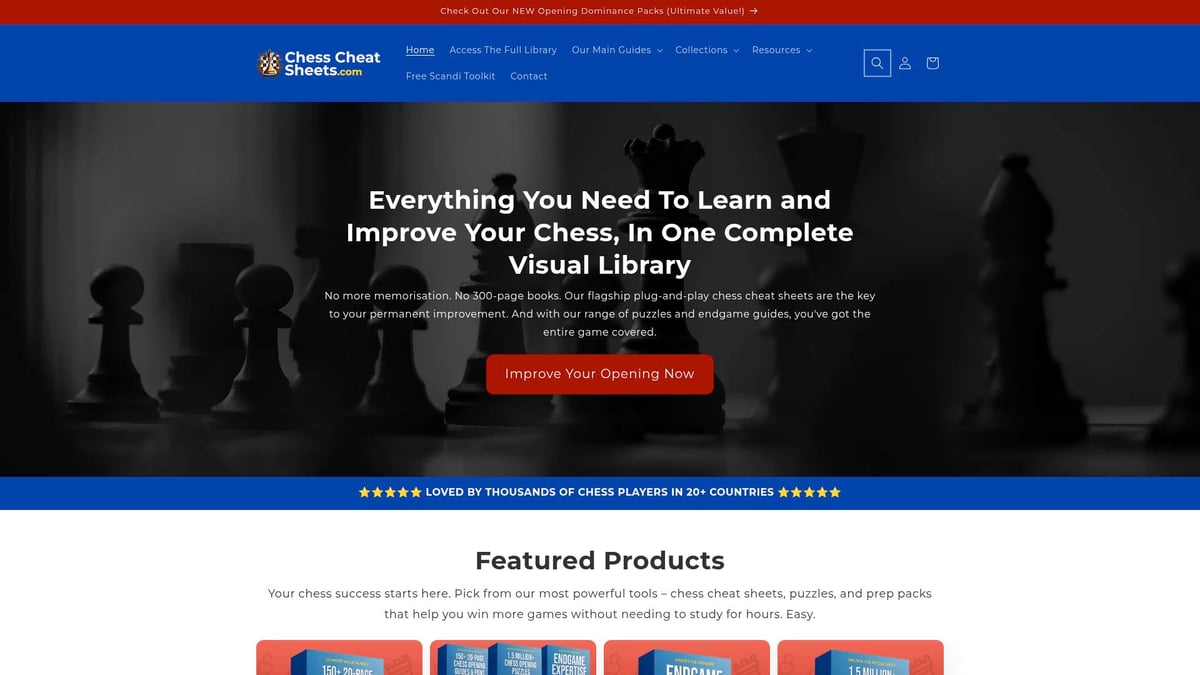
The pricing is flexible. You can start with the Free Scandinavian Defence Toolkit (worth £45) or opt for premium bundles and lifetime VIP access. Digital delivery means you get instant access, no matter where you are in the world.
What makes Chess Cheat Sheets truly special is its focus on rapid learning. Instead of slogging through chapters, you get concise cheat sheets, over 1.5 million puzzles, and practical endgame guides. This is a game-changer for those who want to improve quickly, especially if you’re juggling a busy schedule.
You’ll find it especially useful if you’re a beginner, hobbyist, or even an intermediate player who wants a handy reference. The practical, visual approach means you can reinforce what you learn instantly during real games. However, if you prefer traditional prose or in-depth storytelling, you might find this format less satisfying.
Thousands of players trust Chess Cheat Sheets to make chess improvement accessible and fun. The unique selling point? It cuts through the noise and makes learning chess approachable for everyone. If you’d like a quick start, the How to play chess cheat sheet is a handy companion for absolute beginners looking for foundational help.
Bobby Fischer Teaches Chess
When you think of good beginner chess books, this classic is a must-mention. Written by the legendary world champion himself, Bobby Fischer Teaches Chess has helped millions of new players build a tactical foundation.
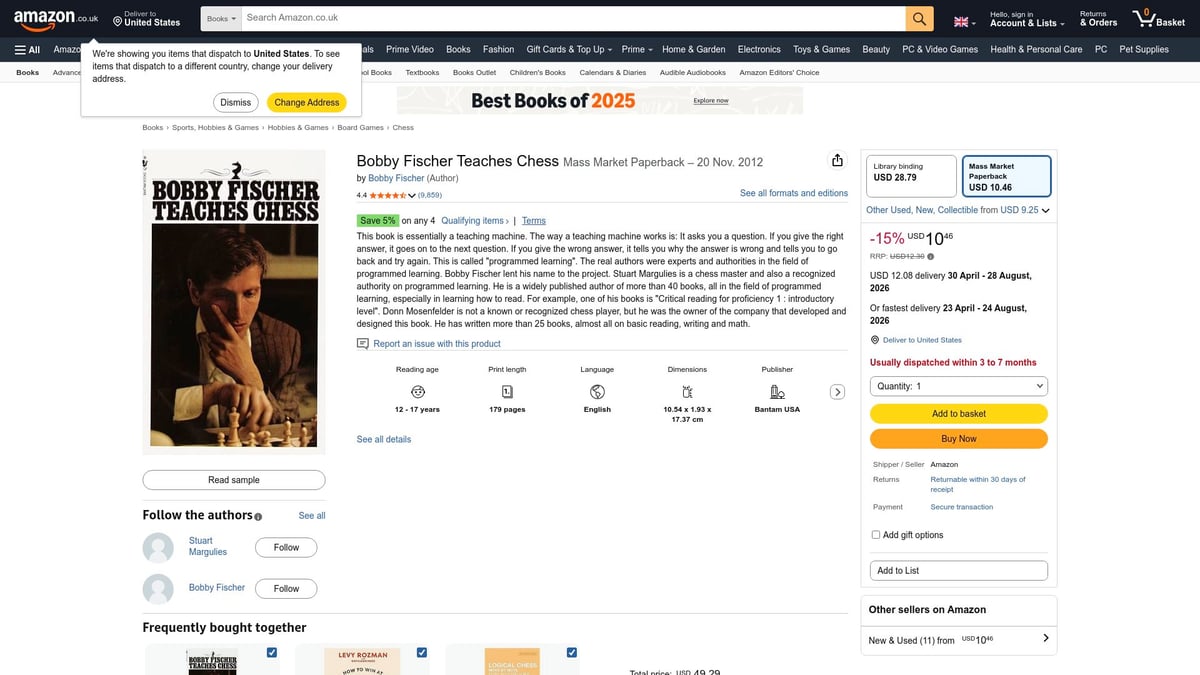
Available for £7 to £12 in paperback, it’s affordable and widely accessible. The book uses a step-by-step, self-paced format, focusing on basic tactics and checkmate patterns. You don’t need to know any chess jargon to get started, making it ideal for all ages.
One of the book’s strengths is its interactive style. Each page presents a problem, asks you to choose the best move, and then explains the answer. This approach is perfect if you want to develop your tactical vision without feeling overwhelmed.
However, the book doesn’t cover openings or endgames in much detail, and some examples may feel a bit dated. Still, its simplicity and effectiveness make it a favourite for those just starting out.
If you’re looking to build confidence and understand the basics, Bobby Fischer Teaches Chess is one of the good beginner chess books you’ll want on your shelf. It’s especially great for people who want to learn by doing, rather than just reading about concepts.
Pandolfini's Ultimate Guide to Chess
Pandolfini’s Ultimate Guide to Chess is a comprehensive and approachable resource for learners who want a thorough introduction to the game. Priced around £10 to £15, it’s available both in print and digital formats, making it easy to get started wherever you are.
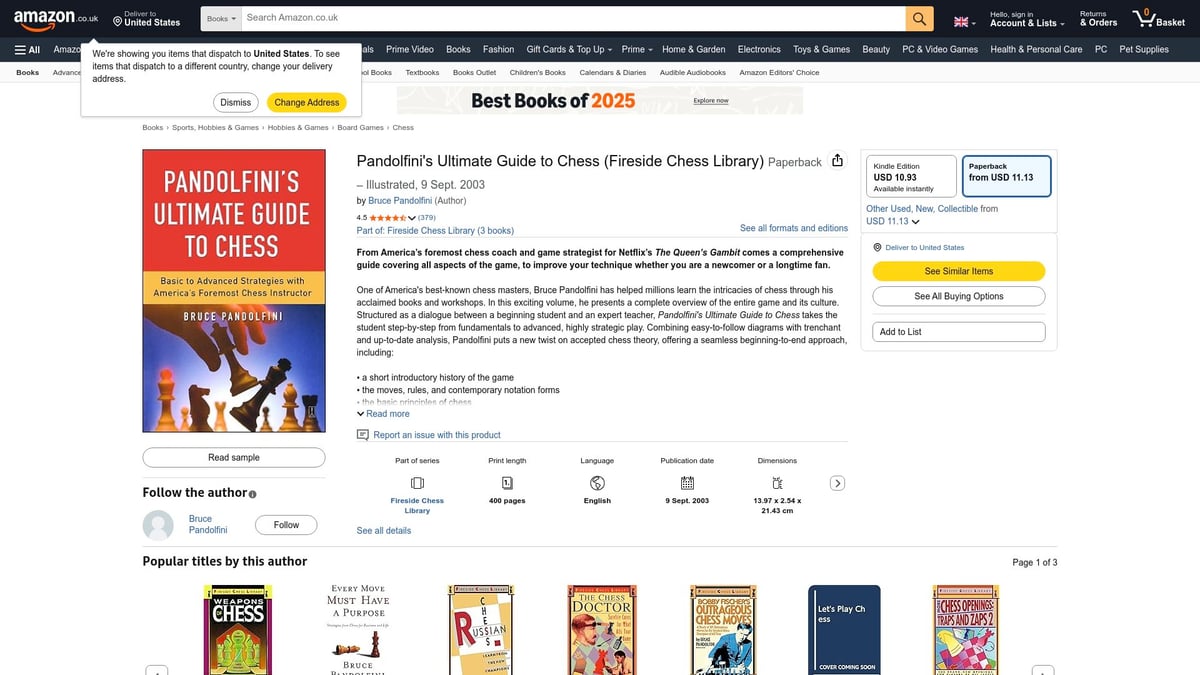
What sets this book apart from other good beginner chess books is its conversational tone and broad coverage. It walks you through the rules, basic tactics, openings, and endgames, all with clear explanations and practical advice. The inclusion of annotated games helps you see real-world applications of the concepts you’re learning.
Adult beginners and returning players will appreciate the holistic approach. If you’re looking for a single, all-in-one resource to guide you from the basics to more advanced strategies, this book delivers. While it might be a bit much for very young children, its clarity makes it accessible for most readers.
There are fewer interactive exercises compared to some other titles, but the depth of content more than makes up for it. Pandolfini’s reputation as an educator means you’re in safe hands. For anyone seeking good beginner chess books that cover every stage of learning, this is a reliable choice.
How to Win at Chess by Levy Rozman (GothamChess)
Levy Rozman, known as GothamChess, brings his signature teaching style to this modern chess guide. Priced between £12 and £16, How to Win at Chess is available in multiple formats, making it one of the most accessible good beginner chess books for today’s learners.
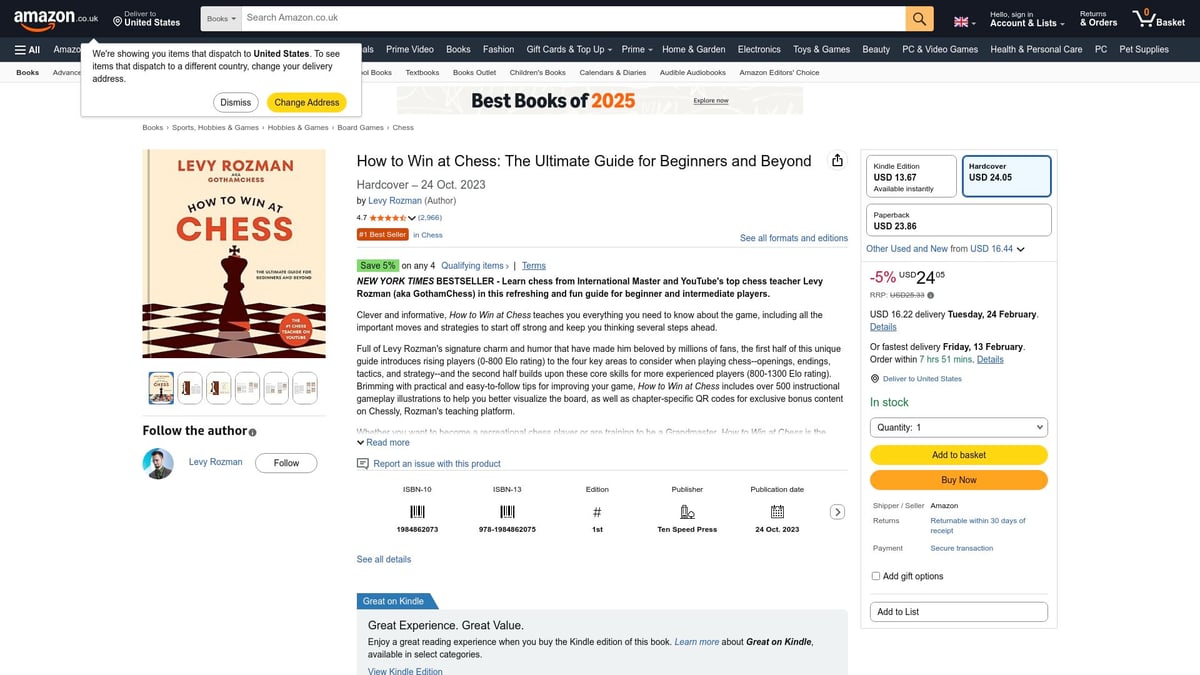
If you find chess notation intimidating, this book is for you. Rozman keeps notation to a minimum and focuses on easy-to-understand language and relatable examples. His experience as an online chess streamer shines through, offering a fresh approach that resonates with both younger and older readers.
The book covers foundational tactics, strategies, and practical advice, making it perfect for complete novices or fans of online chess personalities. While it doesn’t go into great depth on advanced topics, it provides a solid starting point and builds your confidence quickly.
What’s unique is Rozman’s engaging tone and knack for breaking down complex ideas into bite-sized lessons. This is one of those good beginner chess books that feels like having a friendly coach by your side. If you want a modern, motivational entry into the world of chess, this book fits the bill.
Learn to Play Chess Like a Boss by Patrick Wolff
If you’re after structured learning and a friendly tone, Learn to Play Chess Like a Boss by Grandmaster Patrick Wolff is a top pick among good beginner chess books. Priced at £10 to £15, it’s available in both print and digital editions, making it easy to access for learners of all ages.
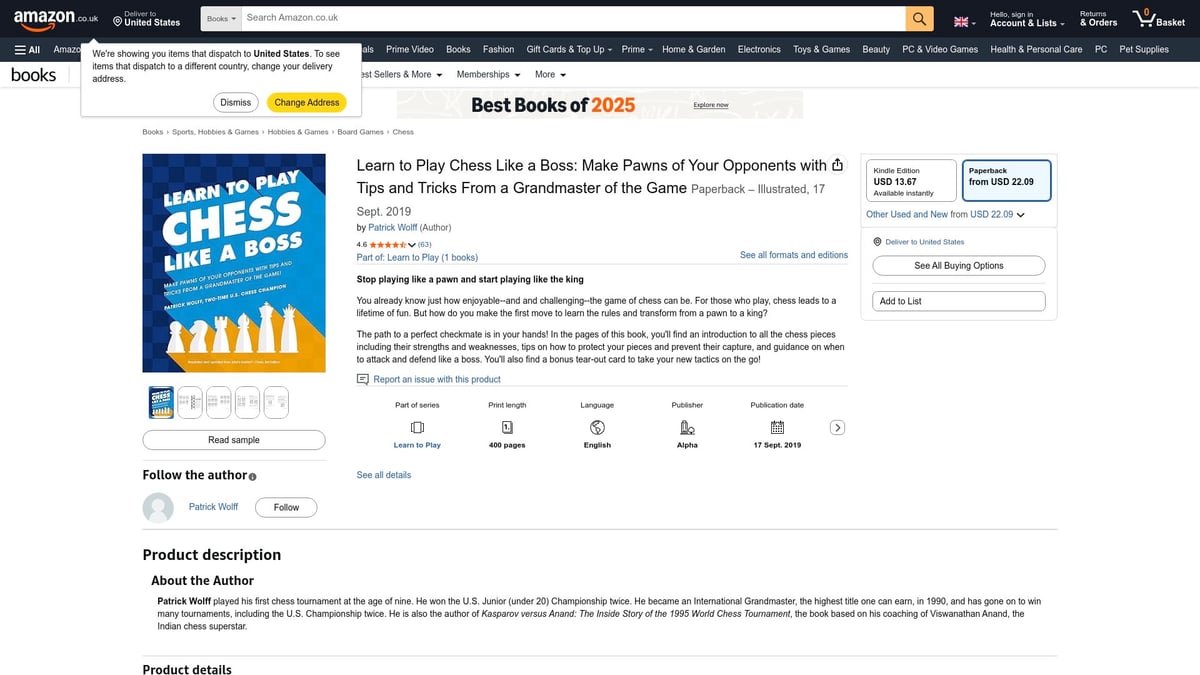
This book provides stepwise lessons that guide you through openings, tactics, strategy, and endgames. Each concept is explained clearly, with plenty of diagrams and practical examples to reinforce your understanding. Whether you’re a child or an adult, the book’s curriculum-style approach helps you progress steadily.
One of the book’s standout features is its ability to bridge the gap between the basics and intermediate play. You’ll find yourself building confidence as you tackle each new chapter. While some content may overlap with other beginner books, Wolff’s engaging tone and clear progression make it a standout.
The focus here is on building a strong foundation, making it one of the good beginner chess books for anyone who wants to move beyond just learning the rules. If you prefer a well-structured, step-by-step journey into chess, this title is a fantastic choice.
Logical Chess: Move by Move by Irving Chernev
Logical Chess: Move by Move stands out as one of the most instructive good beginner chess books for those ready to take their understanding deeper. Priced between £8 and £14, it’s a classic that’s stood the test of time.
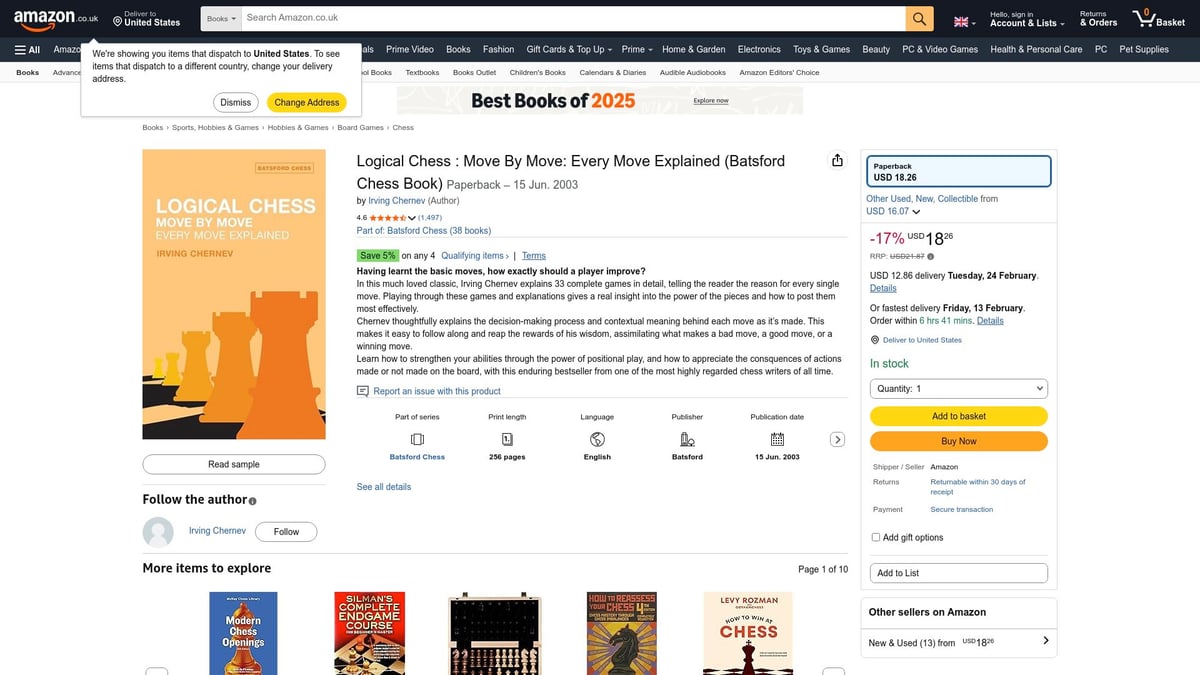
The book features annotated master games, with every move explained in detail. This unique approach helps you not just memorise moves, but truly understand the strategic thinking behind them. If you’re keen to learn why players make certain decisions, Chernev’s commentary is invaluable.
While the games are from earlier eras, the lessons are timeless. Beginners who want to improve their positional play and analytical skills will benefit most. The language is clear, but some absolute beginners might find the depth challenging at first.
If you’re looking for good beginner chess books that go beyond tactics and teach you how to think like a chess player, Logical Chess: Move by Move is an essential addition to your library.
Play Winning Chess by Yasser Seirawan
Play Winning Chess by Grandmaster Yasser Seirawan is a modern classic among good beginner chess books. Priced at £11 to £16, it’s available in multiple formats and is praised for its clear, engaging writing style.
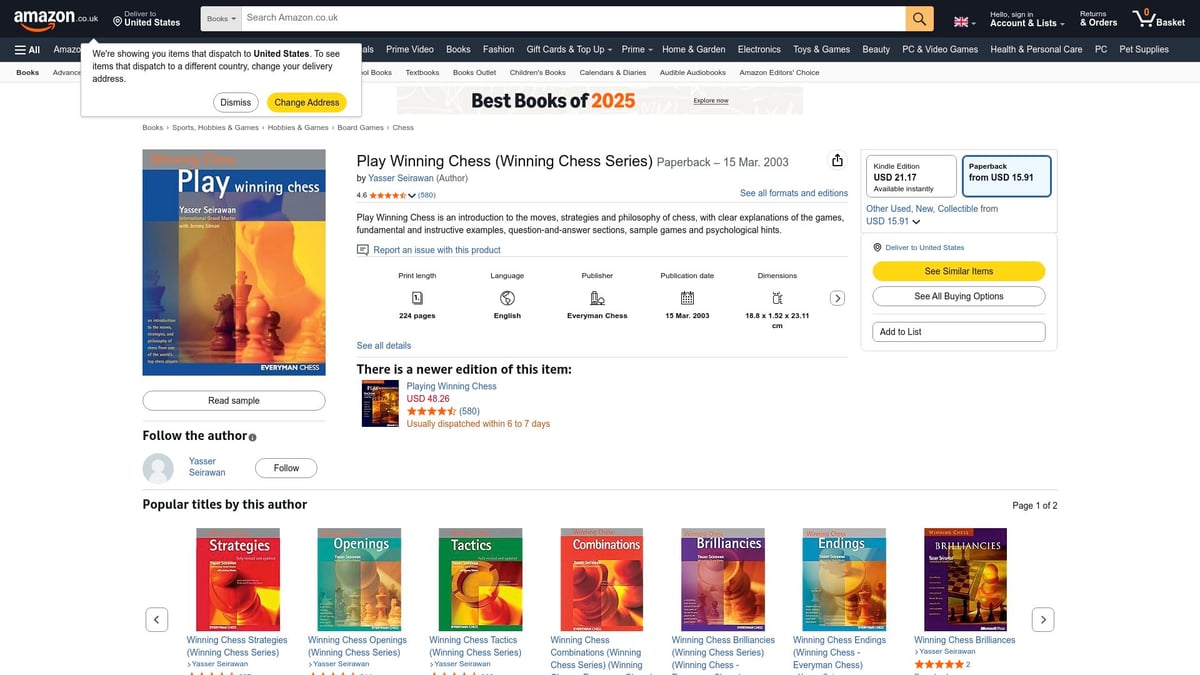
The book introduces key chess concepts such as force, time, space, and pawn structure, all explained with practical examples and exercises. It’s ideal if you’re looking to bridge the gap between tactics and strategy, helping you transition from beginner to intermediate play.
Seirawan’s approach is both accessible and insightful, making it suitable for self-study or classroom use. While the focus is less on endgame basics, the depth and clarity of the material make up for it. Some readers may need to revisit certain chapters to fully grasp the concepts, but that’s part of the learning process.
This is one of those good beginner chess books that’s been praised for making complex ideas understandable. If you want to develop a well-rounded chess foundation, Play Winning Chess is a smart investment.
Quick Comparison Table of Good Beginner Chess Books
| Book Title | Price Range | Format | Unique Benefit | Best For |
|---|---|---|---|---|
| Chess Cheat Sheets | Free–£45+ | Digital | Visual guides, instant access | All levels, visual learners |
| Bobby Fischer Teaches Chess | £7–£12 | Step-by-step tactics | Absolute beginners | |
| Pandolfini's Ultimate Guide | £10–£15 | Print/Digital | All-in-one resource | Adult beginners |
| How to Win at Chess | £12–£16 | Multi-format | Modern, minimal notation | Novices, online learners |
| Learn to Play Chess Like a Boss | £10–£15 | Print/Digital | Structured curriculum | Children, adults |
| Logical Chess: Move by Move | £8–£14 | Print/Digital | Move-by-move annotation | Advancing beginners |
| Play Winning Chess | £11–£16 | Multi-format | Tactics & strategy blend | Beginners to intermediate |
As you can see, each of these good beginner chess books brings something unique to the table. If you’re eager to supplement your reading, consider exploring Free online chess courses for interactive lessons that pair perfectly with your book learning.
No matter which book you choose, remember that progress comes from consistency and curiosity. The right book can be your gateway to a lifetime of enjoyment and improvement in chess.
Additional Tips for Accelerating Chess Improvement
Are you ready to squeeze even more value from your good beginner chess books? Accelerating your chess improvement is not just about reading, but also about how you put what you learn into practice. By blending proven study habits with modern resources, you can give your chess journey a real boost. Research like Quantifying human performance in chess shows that structured learning makes a measurable difference, so let’s make your study time count.
Set a Consistent Study Schedule and Track Progress
To get the best from your good beginner chess books, consistency is key. Set aside dedicated time each week for focused study. Even 20 minutes a day can help ideas stick. Use the exercises and puzzles in each book to track your growth.
Try keeping a simple log of which chapters or concepts you’ve covered. After each study session, play a few games to apply what you’ve learned. Analysing your moves with a chess engine or online tool can reveal patterns and mistakes. Don’t forget to revisit tough chapters and annotate your own games to deepen your understanding. This routine transforms passive reading into active learning.
- Schedule regular sessions for book study
- Track your progress with book exercises
- Play and analyse games to reinforce new skills
Combine Resources for Maximum Benefit
Good beginner chess books are a fantastic foundation, but pairing them with other resources can supercharge your improvement. For example, alternating between book study and online puzzles has been shown to speed up rating gains. Joining a chess club or an online community lets you discuss new strategies and get feedback.
Visual aids like cheat sheets or summary guides can help you review tricky concepts quickly. If you’re looking for more ways to learn, check out the best website to learn chess for online tools and interactive lessons that match your book learning. By blending books, digital resources, and community, you’ll see results faster and enjoy the journey even more.
- Alternate book study with online play
- Use visual aids alongside books
- Join a chess club or online forum for support
With these strategies, you’ll make the most of your good beginner chess books and set yourself up for lasting improvement.
So, now that you’ve got the inside scoop on the best beginner chess books for 2026, why not take your learning a step further? If you’re like me, sometimes a little extra help—like a handy cheat sheet—makes all the difference when you’re stuck on tricky openings or need a quick reminder. You don’t have to memorise endless theory or sift through dense textbooks. If you’re ready to put what you’ve learned into practice and want a head start with your opening game, you can get your FREE Scandinavian Defense Opening Toolkit (worth £30) and see for yourself how much easier chess improvement can be.


