

Chess never goes out of style, does it? Whether you are a newcomer or have played for years, the game’s mix of strategy and creativity keeps us coming back for more. There is something about the intellectual challenge that hooks both casual fans and serious competitors.
With so many titles out there, finding the best chess books can feel overwhelming. As we move closer to 2026, the sheer number of new releases and timeless classics only adds to the confusion.
That is why this guide brings you the best chess books for every type of player. Discover which books will speed up your learning, deepen your understanding, and make your chess journey more enjoyable, no matter your level.

Why Read Chess Books in 2026?
Have you ever wondered why, in a world bursting with chess apps and AI trainers, the best chess books still hold such power? As we head into 2026, the bookshelf remains a secret weapon for players at every level. Chess books are more than just old-fashioned—they’re a bridge between tradition and modern mastery.
The Digital vs Print Debate
You might be asking yourself, is there still a place for the best chess books when digital resources are everywhere? The answer is yes, and it’s not just nostalgia talking.
Print books offer a sense of focus and depth that’s hard to find online. They let you immerse yourself, free from the distractions of notifications and endless tabs. At the same time, digital resources have exploded in popularity, with websites and apps offering instant feedback and community play.
The real secret? Combining both worlds. According to the best website to learn chess, players who mix classic books with digital study see faster progress. Books provide the foundation, while online tools let you practise and experiment in real time. That’s why the best chess books are still a vital part of every serious player’s toolkit.
Books in the Age of Chess Engines
Chess engines have changed how we study. You can analyse any position with Stockfish or play endless online games, but engines can’t teach you the thinking behind the moves. The best chess books explain not just what to play, but why.
Annotated games, found in many top books, walk you through master-level decisions. They reveal plans, traps, and historical turning points. This step-by-step guidance is something even the smartest engine can’t offer. When you read the best chess books, you learn to think like a grandmaster, not just mimic one.
List: What books offer that engines don’t:
- In-depth explanations and thought processes
- Historical context and human stories
- Structured lessons and gradual progression
Boosting Your Chess Mind
Did you know reading the best chess books can actually rewire your brain? Studies show that book study enhances memory, pattern recognition, and critical thinking. Unlike quick video tutorials, books demand you slow down, visualise, and digest ideas.
Psychologically, books help you develop patience and resilience. They force you to grapple with tough positions and reflect on mistakes. This is why top players still return to the best chess books for inspiration and insight.
Trends and Community Insights
Chess publishing is more alive than ever in 2026. We’re seeing new authors, updated editions, and a fresh wave of annotated classics. According to Chess.com, over 33,000 members in their Improvers Group are sharing and recommending the best chess books every month.
It’s no coincidence that many world champions, from Fischer to Carlsen, credit classic books for their breakthroughs. The best chess books shape not just what you know, but how you think. Whether you love the smell of paper or the swipe of a tablet, there’s never been a better time to add a great chess book to your routine.
How to Choose the Right Chess Book for Your Level
Choosing the best chess books can feel overwhelming, especially with so many options vying for your attention. But getting it right is crucial. The right book can transform your chess journey, while the wrong one might leave you confused or uninspired.
If you’re unsure where to begin, don’t worry. Let’s break down how you can pinpoint the best chess books for your unique needs, no matter your level or learning style.
Assess Your Playing Strength
The first step to finding the best chess books is knowing your current skill level. Are you a complete beginner, a club player, or already competing in tournaments?
Beginners often benefit most from books that focus on basic rules, tactics, and simple strategies. Intermediate players might want books that explain positional play and middlegame planning. Advanced players should consider titles with deep analysis and modern theory.
Matching your reading material to your ability ensures you build a solid foundation before moving on to more complex concepts. This approach keeps learning enjoyable and prevents frustration.
Discover Your Learning Style
Everyone absorbs information differently, so your ideal chess book should match your preferred learning style.
If you’re a visual learner, look for books with lots of diagrams and clear illustrations. Analytical learners may prefer detailed explanations and annotated games. If you enjoy stories or historical context, narrative-driven books that explore the lives and games of great players will keep you engaged.
Understanding your style can help you select the best chess books that make tough ideas click. Remember, a book that works wonders for someone else might not suit you, and that’s perfectly fine.
Match Book Content to Your Needs
It’s also important to think about which chess topics you want to focus on. The best chess books often target a specific area, such as openings, tactics, endgames, or chess psychology.
If you struggle with the opening phase, an openings guide or toolkit can be invaluable. For those wanting to sharpen tactical skills, puzzle books are ideal. Endgame books are crucial for converting small advantages into wins. And if you’re aiming to boost your mindset, psychological guides can help.
Mixing classic texts with modern publications ensures you’re learning up-to-date theory and timeless concepts. This balance is key for lasting improvement.
Use Reviews and Study Plans
Before committing to a book, check reviews and sample chapters. Honest feedback from other players can help you avoid outdated analysis or dense language that doesn’t match your style.
Websites like Chess Book Reviews provide in-depth insights into the best chess books, making it easier to find options that suit your level and interests.
Structured study plans can also help you get the most out of your reading. Set clear goals, break your study into manageable chunks, and revisit key concepts regularly.
Avoid Common Pitfalls
Many players get stuck by buying too many books or relying on just one source. Overwhelming yourself with choices can stall your progress, while sticking to a single book might leave gaps in your knowledge.
A great approach is to start with one or two carefully chosen titles, then expand your library as your needs evolve. For example, moving from a simple guide like “Bobby Fischer Teaches Chess” to something advanced like “My Great Predecessors” can mark your growth as a player.
By staying mindful of your level, style, and study habits, you’ll discover the best chess books that truly accelerate your improvement and enjoyment.

The Top 8 Chess Books to Read in 2026
Are you overwhelmed by the sheer number of chess books on offer? You are not alone. With so many titles vying for your attention, finding the best chess books for your personal growth can feel like searching for a needle in a haystack. This curated list brings together the classics, modern gems, and unique resources that will shape your chess journey in 2026.
To help you navigate, here is a quick comparison table of our top picks:
| Title | Author | Best For | Price Range |
|---|---|---|---|
| Chess Cheat Sheets | Various | Beginners/Intermediates | Free–Varies |
| Logical Chess: Move by Move | Irving Chernev | Beginners | £12–£18 |
| How to Win at Chess | Levy Rozman | Beginners | £14–£20 |
| My Great Predecessors | Garry Kasparov | Intermediate/Advanced | £20–£30/vol |
| Simple Chess | Michael Stean | Intermediate | £10–£16 |
| The Seven Deadly Chess Sins | Jonathan Rowson | Adv. Beginners/Tournament | £13–£18 |
| 100 Endgames You Must Know | Jesus de la Villa | All levels | £15–£22 |
| Move First, Think Later | Willy Hendriks | Intermediate/Advanced | £12–£18 |
Let’s dive into the details and discover which of the best chess books will elevate your play this year.
Chess Cheat Sheets: The Complete Visual Library
If you are a visual learner or someone who finds dense textbooks daunting, Chess Cheat Sheets might be the best chess books alternative for you. This resource offers visual cheat sheets, opening toolkits, and over 1.5 million puzzles designed to make learning intuitive.
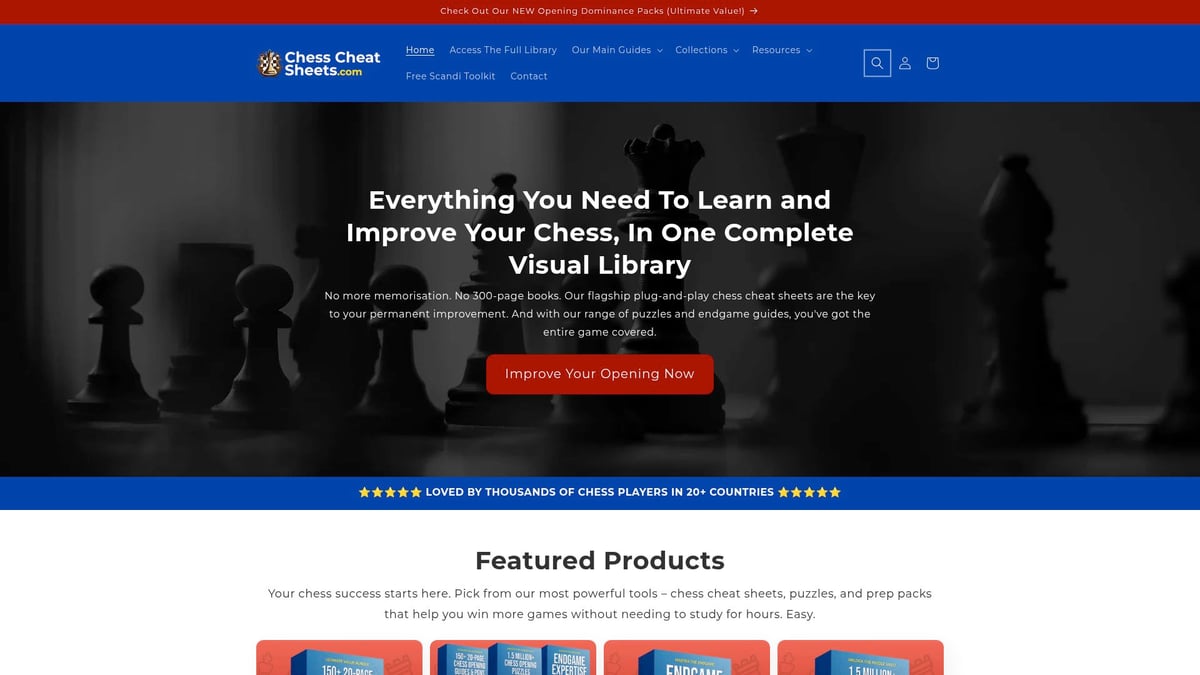
- Pricing: Free Scandinavian Defence Toolkit (worth £45), premium bundles available.
- Core Features: Visual library, opening toolkits, endgame guides, lifetime VIP access.
- Key Benefits: Reduces memorisation, supports “plug-and-play” learning, covers all stages.
- Target Audience: Beginners to intermediates, self-paced learners, global users.
- Pros: Instant application, trusted community, free high-value resources.
- Cons: Not a traditional book, less in-depth theory.
Chess Cheat Sheets is ideal if you want actionable, easy-to-digest material. For those just starting out, you might also want to learn to play chess free as a complementary guide. The best chess books adapt to your learning style, and this visual approach is a game-changer for many.
Logical Chess: Move by Move by Irving Chernev
Few books have stood the test of time like Chernev’s Logical Chess. For decades, it has been considered one of the best chess books for beginners, thanks to its clear move-by-move commentary on master games.
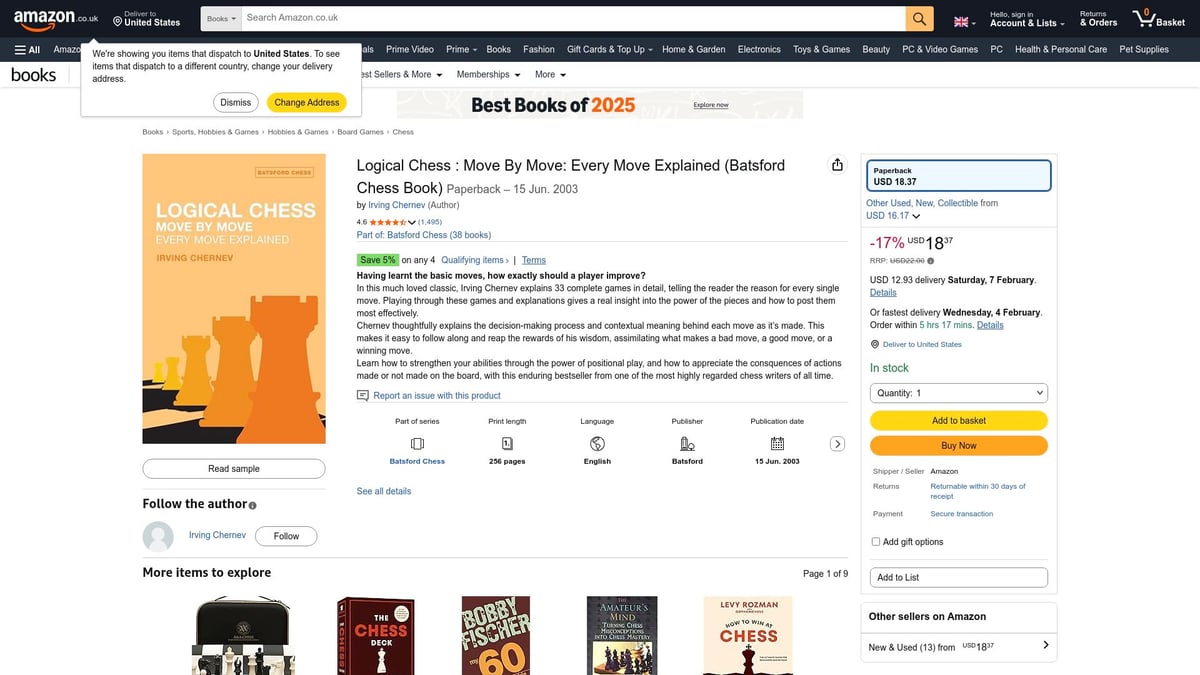
- Pricing: Around £12–£18.
- Core Features: Annotated classic games, move explanations.
- Key Benefits: Builds foundational logic and strategic thinking.
- Target Audience: Beginners to lower-intermediate players.
- Pros: Accessible, timeless, widely recommended.
- Cons: Some analysis is outdated, limited on modern openings.
Whether you are new to chess or looking to solidify your basics, Logical Chess gives you the tools to see chess as a studyable skill. It reminds us why the best chess books are those that never go out of style.
How to Win at Chess by Levy Rozman (GothamChess)
Levy Rozman’s debut brings a fresh, accessible voice to the world of chess literature. If you follow GothamChess on YouTube, you know his style is friendly and clear, making this one of the best chess books for absolute beginners.
- Pricing: £14–£20.
- Core Features: Modern guide, practical advice, clear diagrams.
- Key Benefits: Covers all phases, up-to-date, fun tone.
- Target Audience: Beginners, casual players.
- Pros: Engaging, easy to follow, great for self-study.
- Cons: Less depth for advanced players, new to the market.
This title is a hit among new players and social learners. If you are building your foundation, you will appreciate how the best chess books like this one break down complex ideas into approachable lessons.
My Great Predecessors Series by Garry Kasparov
Are you ready for a deep dive into chess history and world champion games? Kasparov’s series is considered among the best chess books for intermediate and advanced players, blending historical narrative with expert analysis.
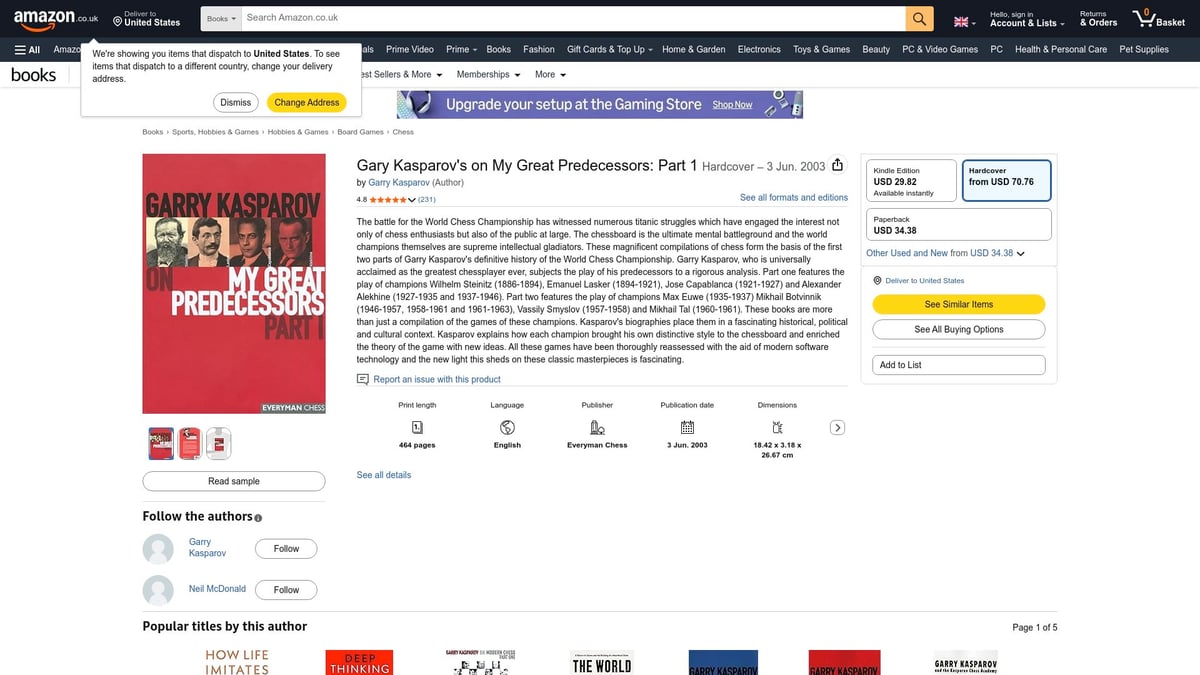
- Pricing: £20–£30 per volume (five volumes).
- Core Features: Annotated games, chess history, evolution of ideas.
- Key Benefits: Historical insight, rich analysis, authored by a legend.
- Target Audience: Intermediate to advanced, chess historians.
- Pros: Comprehensive, authoritative, inspiring.
- Cons: Dense, requires commitment, multi-volume set.
Kasparov’s work is referenced by grandmasters for its depth. The best chess books do more than teach moves, they connect you to the game’s legacy.
Simple Chess by Michael Stean
Looking to improve your positional understanding? Simple Chess is praised as one of the best chess books for intermediate players aiming to master strategy over tactics.
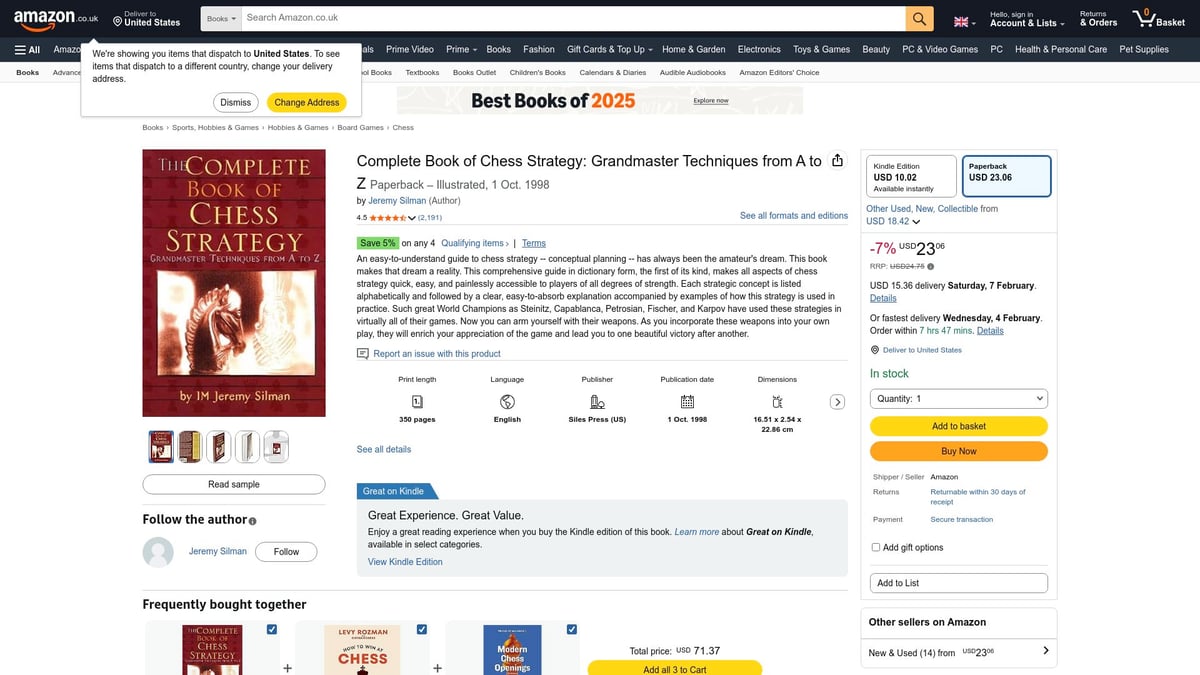
- Pricing: £10–£16.
- Core Features: Positional play, strategic concepts, practical examples.
- Key Benefits: Demystifies planning, concise explanations.
- Target Audience: Intermediate players.
- Pros: Clear, practical, modern alternative to classics.
- Cons: Less on tactics, may be basic for advanced users.
If you have outgrown beginner guides, Simple Chess will help you see the board with new eyes. The best chess books often provide those “aha” moments that change your approach forever.
The Seven Deadly Chess Sins by Jonathan Rowson
Chess is as much a battle of minds as it is of pieces. Rowson’s book stands out among the best chess books for its unique focus on psychology, mindset, and the mistakes even strong players make.
- Pricing: £13–£18.
- Core Features: Psychology, thought process, mental errors.
- Key Benefits: Increases self-awareness, engaging narrative.
- Target Audience: Advanced beginners to tournament players.
- Pros: Unique, practical mindset advice, insightful.
- Cons: Abstract, less focus on concrete tactics.
If you want to understand why you lose games you “should” win, this is one of the best chess books to read. It is often cited as the top text on chess psychology.
100 Endgames You Must Know by Jesus de la Villa
Endgames win tournaments, and de la Villa’s book is a staple for players of all levels. It earns its place among the best chess books for its crystal-clear diagrams and practical positions.
- Pricing: £15–£22.
- Core Features: Essential endgame positions, simple explanations.
- Key Benefits: Builds real endgame skill, easy to follow.
- Target Audience: All levels, club players.
- Pros: Focused, practical, coach approved.
- Cons: Does not cover all advanced endings.
Want to go further? The Endgame Expertise Collection is a great resource to supplement your learning. The best chess books on endgames are those that give you confidence in the trickiest phase of the game.
Move First, Think Later by Willy Hendriks
If you feel stuck or find traditional advice stale, Hendriks’ book is a breath of fresh air. Among the best chess books for shaking up your routine, it challenges the way you think about improvement.
- Pricing: £12–£18.
- Core Features: Training myths, dynamic thinking, puzzles.
- Key Benefits: Promotes creativity, breaks old habits.
- Target Audience: Intermediate to advanced, plateaued players.
- Pros: Entertaining, thought-provoking, practical.
- Cons: Not a step-by-step manual for beginners.
Move First, Think Later is praised for its unique approach. The best chess books are not always about rules, sometimes they are about breaking them.
Choosing the best chess books is a personal journey. Whether you crave history, psychology, practical puzzles, or visual guides, there is a perfect fit waiting for you. Explore these options and let your next favourite chess book inspire your play in 2026.
Honorable Mentions and Community Favourites
When searching for the best chess books, you will quickly realise that the top 8 barely scratch the surface. The chess community is full of passionate readers who continually recommend hidden gems and classic guides that transform the way you play.
Community-Recommended Titles
Here are some community favourites that often appear on lists of the best chess books:
- How to Reassess Your Chess by Jeremy Silman (for taking your positional play to the next level)
- Winning Chess Middlegames by Ivan Sokolov (deep dive into middlegame plans)
- Understanding Chess Move by Move by John Nunn (clear, move-by-move insight)
- The Amateur’s Mind by Jeremy Silman (addresses common thinking mistakes)
- Concise Chess Endings by Neil McDonald (practical endgame reference)
- How to Beat Your Dad at Chess by Murray Chandler (fun, tactical puzzles for all ages)
If you are curious about recent releases or want to see which new titles the chess world is buzzing about, check out the ECF Book of the Year 2026 for award-winning picks and fresh perspectives.
Peer Insights and Expanding Your Library
The Chess.com Improvers Group, with over 33,000 members, regularly shares their most impactful reads. Their suggestions help you navigate the endless choices and find the best chess books for your personal growth. Peer reviews and club discussions are a fantastic way to avoid analysis paralysis.
Here is a quick comparison of additional favourites:
| Book Title | Focus Area | Best For |
|---|---|---|
| How to Reassess Your Chess | Positional Strategy | Intermediate |
| Winning Chess Middlegames | Middlegame Mastery | Intermediate-Advanced |
| Understanding Chess Move by Move | Game Analysis | All Levels |
| The Amateur’s Mind | Thinking Errors | Club Players |
| Concise Chess Endings | Endgame Techniques | Beginners-Intermediates |
| How to Beat Your Dad at Chess | Tactical Training | Kids & Adults |
Get Involved and Explore More
The best chess books for you might be just a forum post or club chat away. Personal recommendations often lead to discoveries you would not find in typical lists. For more inspiration and practical strategies, visit the Chess.com Blog: Improve at Chess in 2026 where players discuss their favourite reads and learning journeys.
Step into the conversation, share your own experiences, and let your chess bookshelf evolve with the wisdom of the global community. After all, the best chess books are those that speak directly to your style, level, and ambitions.
So, after diving into the best chess books to read in 2026, you might be wondering—what’s the next step to actually put all this knowledge into action? I get it, sometimes you just want something practical that helps you see results right away, especially with those tricky openings that seem to pop up in every game. That’s where I think you’ll love this: you can Get your FREE Scandinavian Defense Opening Toolkit (worth £30). It’s a brilliant way to boost your opening play without wading through endless theory—just grab it and see how much more confident you feel at the board.


