

You've probably seen those sleek devices sitting between players at chess tournaments, counting down seconds with precision. A digital chess clock has become an essential tool for serious chess players, transforming how we manage time during games. Whether you're playing casual blitz matches at your local club or preparing for tournament play, understanding these timing devices can give you a significant edge. Let's explore everything you need to know about modern chess clocks and how they can improve your game.
What Makes a Digital Chess Clock Different?
The evolution from mechanical to electronic timing has revolutionised competitive chess. Unlike their analog predecessors that relied on pendulums and springs, digital clocks use electronic circuits to track time with millisecond accuracy.
Key advantages include:
- Precise time tracking without mechanical drift
- Multiple time control settings in one device
- Increment and delay features for modern formats
- Clear digital displays readable from any angle
- Battery operation for portability
Traditional analog clocks served chess well for decades, but they had limitations. The ticking sound could distract players, and setting complex time controls meant physical adjustments. Digital chess clocks have transformed competitive play by offering programmable settings that can be changed instantly.
Programming Flexibility
Modern digital clocks store multiple timing modes. You can switch from blitz to rapid to classical time controls with a few button presses. This versatility means one device serves all your chess needs, whether you're practising common chess openings with quick games or settling in for longer strategic battles.
Essential Features to Look For
Not all digital chess clocks are created equal. When selecting a timing device for your chess improvement journey, certain features matter more than others.
Time Controls and Increments
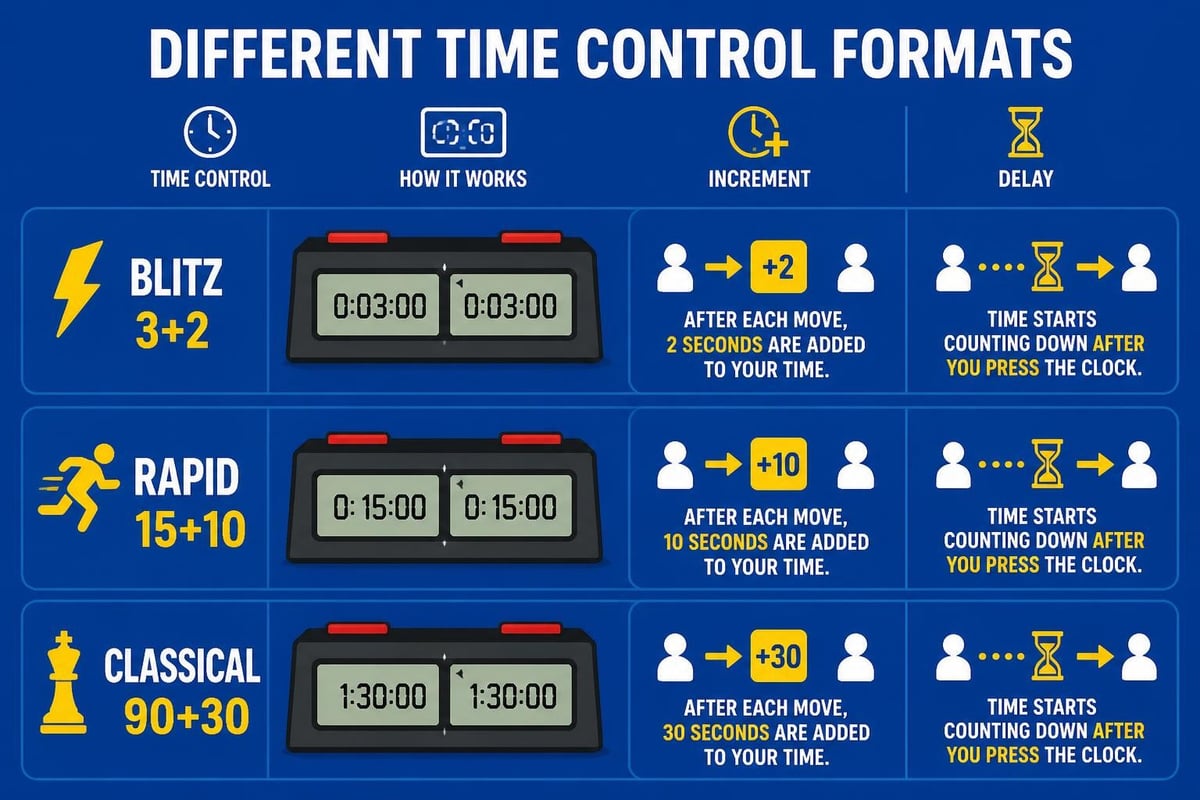
The increment function adds seconds to your clock after each move. This prevents time scrambles and rewards players who move efficiently. Fischer increment (adding time before your move) differs from Bronstein delay (adding time up to a maximum), and quality digital clocks support both.
| Time Control Type | Typical Setting | Best For |
|---|---|---|
| Blitz | 3 minutes + 2 seconds | Quick tactical practice |
| Rapid | 15 minutes + 10 seconds | Balanced gameplay |
| Classical | 90 minutes + 30 seconds | Tournament preparation |
| Bullet | 1 minute + 0 seconds | Speed training |
Display and Visibility
You need to see your remaining time clearly, especially when seconds count. The best digital chess clocks feature large, high-contrast displays that remain visible in various lighting conditions. Some models include backlighting for low-light environments, whilst others prioritise screen size for visibility across the table.
Move Counters
Serious tournament play requires tracking move numbers, particularly when time controls change after a certain number of moves. Quality clocks count moves automatically, eliminating guesswork and preventing disputes. This feature becomes crucial when studying chess openings where theoretical knowledge extends beyond move 20.
Understanding FIDE Approval
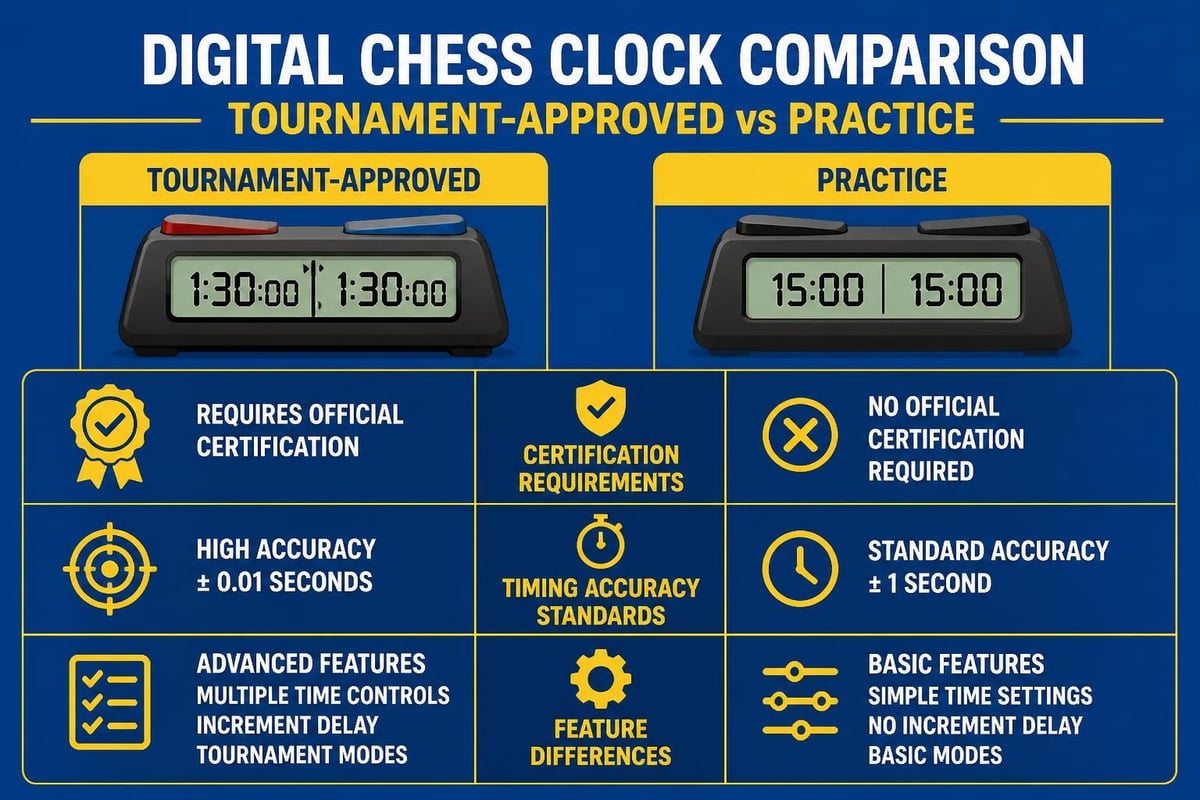
The International Chess Federation (FIDE) sets standards for competitive equipment. FIDE-approved digital chess clocks meet specific requirements for accuracy, durability, and functionality.
FIDE approval criteria include:
- Timing accuracy within strict tolerances
- Minimum display size requirements
- Durability standards for tournament use
- Specific time control capabilities
- Move counter functionality
Does FIDE approval matter for casual players? Not necessarily. If you're playing at home or in friendly club matches, non-approved models often provide excellent value. However, anyone serious about tournament chess should invest in approved equipment to practise under authentic conditions.
Tournament Standards vs Practice Models
Tournament-grade clocks offer professional features but carry premium prices. Practice models sacrifice some advanced functions whilst maintaining core timing capabilities. For players working on improving their positional skills, a mid-range digital chess clock provides everything needed without breaking the bank.
Popular Models and Their Strengths
Several manufacturers dominate the digital chess clock market, each offering distinct advantages.
DGT Series
DGT (Digital Game Technology) produces industry-standard timing devices. The DGT2010 represents their classic model, whilst the DGT3000 offers enhanced features including Bluetooth connectivity for digital board integration. These clocks excel in tournament settings where reliability matters most.
Features Comparison Table
| Model | FIDE Approved | Increment Types | Move Counter | Connectivity |
|---|---|---|---|---|
| DGT2010 | Yes | Fischer, Bronstein | Yes | None |
| DGT3000 | Yes | Fischer, Bronstein, Delay | Yes | Bluetooth |
| Entry Models | No | Fischer only | Sometimes | None |
| Smart Clocks | Varies | Multiple | Yes | Wi-Fi/Bluetooth |
Budget-conscious players can find reliable alternatives. Various digital chess clocks serve beginners excellently whilst costing significantly less than professional models. The key is matching features to your actual needs rather than overspending on capabilities you won't use.
Setting Up Your Digital Chess Clock
Configuration intimidates many players initially, but the process becomes straightforward with practice. Most digital clocks follow similar setup procedures.
Basic Configuration Steps
- Power on the device and select your desired time control mode
- Set initial time for both players (usually equal)
- Configure increment or delay if using these features
- Activate move counter if needed for your game format
- Test both sides before starting your match
Common mistakes include forgetting to activate the increment or setting different times for each player accidentally. Always verify settings before starting, especially in important games. When practising openings like the Sicilian Defense, consistent time controls help you gauge whether you're spending appropriate time in the opening phase.
Custom Time Controls
Advanced players often create custom settings for specific training purposes. You might use extremely short time controls for tactical training or longer periods when studying complex endgames. The flexibility of a digital chess clock supports varied practice routines that accelerate improvement.
Time Management Skills
Owning a digital chess clock means nothing without proper time management. Understanding chess clocks involves more than technical operation.
Effective time strategies include:
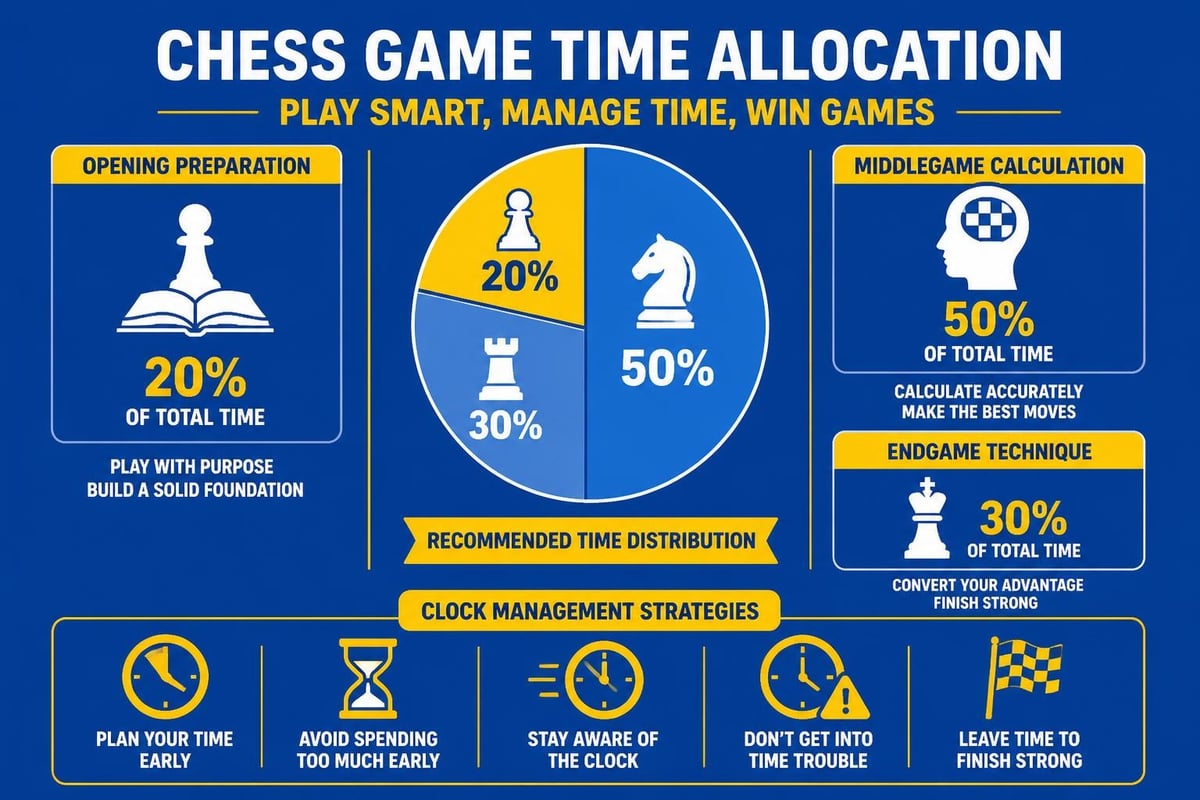
- Spending less time on known opening theory
- Reserving time for critical middlegame decisions
- Moving quickly in simplified positions
- Using increment time wisely rather than banking it
Players often mismanage time in positions they've studied. If you've memorised the Ruy Lopez up to move 15, you should play those moves rapidly, banking time for the complex middlegame ahead. A digital chess clock's precision helps you track exactly how long you spend in each phase.
Building Time Discipline
Practice with progressively faster time controls. Start with comfortable margins and gradually reduce available time. This approach builds confidence and prevents the panic that occurs when you're down to final seconds. Many players find their tactical vision actually improves under time pressure once they've developed proper habits.
Online vs Physical Clocks
Digital platforms have built-in timing, so why purchase a physical digital chess clock? The reasons extend beyond necessity.
Tangible Benefits
Physical clocks create tournament atmosphere during home practice. The tactile feedback of pressing the clock after your move builds muscle memory that translates to over-the-board play. When you eventually compete in person, the physical clock feels familiar rather than foreign.
Training with a real clock also eliminates the temptation to analyse with engines mid-game. Online platforms make cheating effortless, whilst a physical setup enforces honest practice. For players serious about improving their chess ELO, this discipline proves invaluable.
Hybrid Training Approaches
Many modern players combine both methods. Use online chess for quick games and tactical training, whilst reserving physical board and clock for serious study sessions. This balanced approach develops both practical skills and theoretical knowledge. When studying complex openings like the Nimzo-Indian Defense, the physical setup encourages deeper analysis.
Maintenance and Longevity
Quality digital chess clocks last years with minimal care. Battery-operated models require occasional replacements, whilst rechargeable units need proper charging habits.
Maintenance tips:
- Remove batteries during extended storage periods
- Keep the clock away from extreme temperatures
- Clean the display with appropriate materials
- Store in protective cases when transporting
- Update firmware if available for your model
Professional-grade clocks withstand thousands of games. The investment pays dividends through reliability and consistent performance. Budget models may suffice initially, but serious players eventually upgrade to avoid mid-tournament failures.
Training Applications
A digital chess clock transforms practice sessions from casual to purposeful. Timed training develops skills that untimed study cannot.
Opening Preparation Drills
Set your clock to tournament controls and play through your opening repertoire. Can you reach your preparation's end within five minutes? This drill reveals which variations you've truly internalised versus those requiring additional study. Players often discover they know theory intellectually but struggle to recall it quickly under pressure.
Tactical Puzzle Sessions
Solve puzzles under time constraints. Start with generous limits and gradually reduce available time. This method builds pattern recognition speed, which directly impacts game performance. The puzzle collections designed for improvement benefit enormously from timed practice.
Simulated Tournament Conditions
Schedule regular games under your target tournament time control. This approach familiarises you with pacing, helps calibrate your internal clock, and reveals time management weaknesses. Many players discover they rush simple positions whilst overthinking complex ones, patterns a digital chess clock makes obvious through post-game review.
Choosing Based on Skill Level
Your chess strength influences which digital chess clock features matter most.
| Skill Level | Priority Features | Budget Range |
|---|---|---|
| Beginner | Simple controls, Fischer increment | £20-40 |
| Intermediate | Multiple presets, move counter | £40-80 |
| Advanced | FIDE approval, Bluetooth | £80-150 |
| Professional | Tournament-grade, connectivity | £100+ |
Beginners benefit from straightforward models with basic increment functionality. There's no need to spend extensively when you're still learning chess fundamentals. As your skills develop and tournament participation increases, upgrade to models matching competitive requirements.
Intermediate players should invest in versatile clocks supporting various time controls. This flexibility accommodates different training methods and casual versus serious games. The ability to quickly switch between blitz for tactics training and rapid for strategic study proves invaluable.
Common Issues and Solutions
Even quality digital chess clocks occasionally present challenges. Understanding common problems prevents frustration.
Battery Drain
Unexpected battery depletion usually indicates leaving the clock on accidentally. Modern models include auto-shutoff features, but verify settings if batteries drain quickly. Always carry spare batteries to tournaments, regardless of your clock's condition.
Time Synchronisation
Both players' clocks should start with identical time. If they drift, the clock may have defective components requiring professional service or replacement. Mechanics of chess clocks involve precise electronic timing that occasionally fails in lower-quality models.
Button Responsiveness
Worn buttons affect older clocks. The solution involves either professional repair or replacement. Tournament players cannot afford unreliable equipment, making this a critical issue. Practice clocks can tolerate reduced responsiveness, but competitive use demands perfect functionality.
Integration with Modern Chess Study
Your digital chess clock complements contemporary learning methods. While technology provides incredible resources, the clock grounds your study in practical reality.
Balancing Theory and Practice
Spending hours memorising opening variations provides little benefit if you cannot recall them under time pressure. Regular timed practice sessions with your digital chess clock verify which knowledge you've truly mastered. This testing reveals gaps in your preparation that pure study might miss.
Developing Practical Strength
Theoretical knowledge differs from practical ability. A player who knows 20 moves of the English Opening but cannot find good moves in unfamiliar positions lacks practical strength. Timed games force you to think independently, developing the decision-making skills that define strong players.
Making the Investment
Quality digital chess clocks represent significant purchases for casual players. Justifying the expense requires honest assessment of your commitment level.
Ask yourself: How often will I use this clock? Am I committed to regular timed practice? Do I plan tournament participation? Affirmative answers justify investment in quality equipment. Casual players might instead share clocks at their chess club or purchase budget models.
The clock becomes more valuable as your chess journey progresses. Early investment in quality equipment prevents future re-purchasing and ensures consistent training conditions. Many players regret buying cheap initial clocks that fail during crucial practice periods or embarrassing tournament moments.
Modern digital chess clocks have transformed how players manage time and develop practical skills. Understanding features, selecting appropriate models, and integrating timed practice into your routine accelerates chess improvement significantly. Whether you're working on opening preparation or endgame technique, consistent practice under realistic time controls builds the practical strength that theory alone cannot develop. Ready to take your chess to the next level? Chess Cheat Sheets offers comprehensive guides and resources designed to help you master openings and improve your game efficiently, complementing your timed practice with streamlined learning materials perfect for players at any level.


