

You've likely heard experienced players talk about mastering the basics, but what exactly are chess fundamentals, and why do they matter so much? Whether you're just learning the game or you've been playing for a while, understanding these core principles can transform your performance on the board. The beautiful thing about chess fundamentals is that they're not complex secrets locked away in thousand-page books. They're practical, applicable concepts that immediately improve your game once you grasp them.
Understanding the Building Blocks of Chess
Chess fundamentals form the foundation upon which all successful chess play is built. Think of them as the grammar rules of chess. You could technically play without them, but your games would be chaotic and ineffective.
The essential chess principles every player should master include controlling the centre, developing pieces efficiently, and safeguarding your king. These aren't arbitrary rules that chess teachers invented to make the game harder. They're time-tested concepts that emerged from millions of games played over centuries.
The Core Components
When we talk about chess fundamentals, we're really discussing several interconnected areas:
- Opening principles that help you start games with purpose
- Tactical patterns that create winning opportunities
- Positional understanding that guides your long-term planning
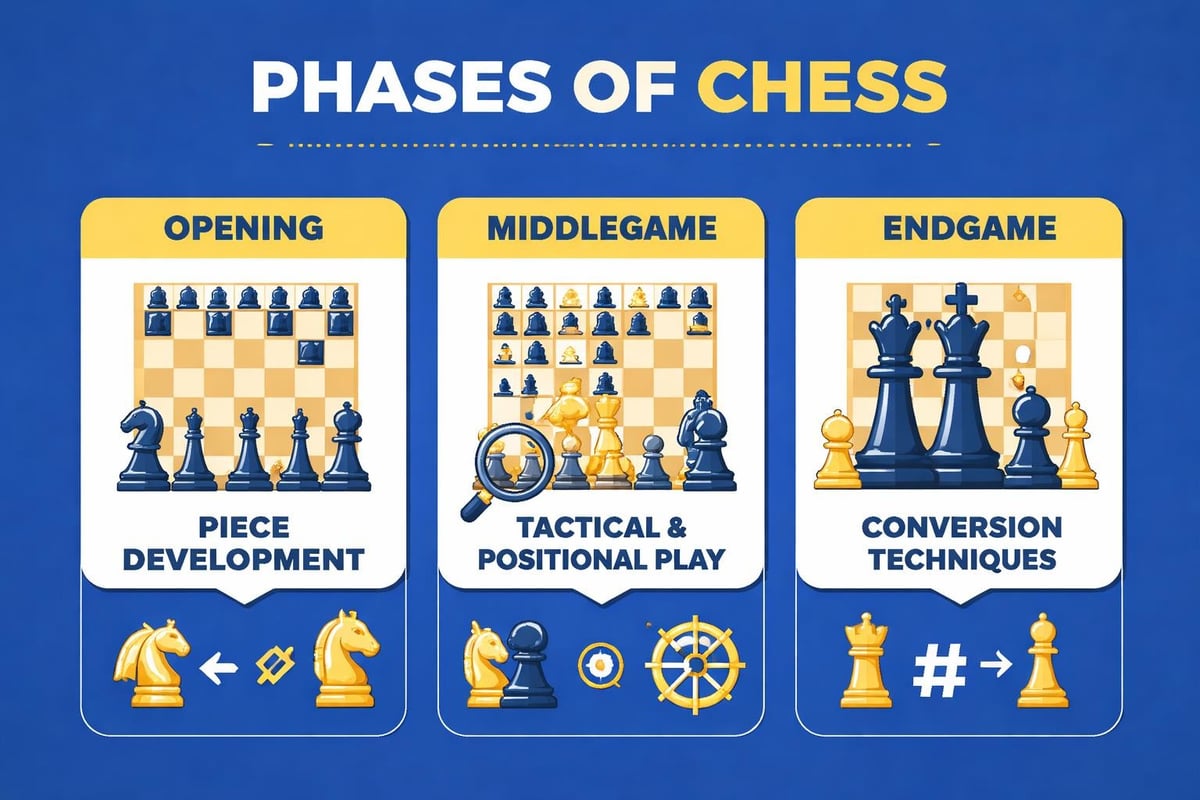
- Endgame techniques that convert advantages into victories
- Strategic thinking that ties everything together
Each of these components supports the others. You can't truly excel at tactics if your opening leaves your pieces poorly placed. Similarly, brilliant opening play means little if you can't convert your advantage in the endgame.
Centre Control: The Heart of Chess Strategy
Why does everyone bang on about controlling the centre? Because pieces placed in or aimed at the central squares (e4, d4, e5, d5) exert maximum influence across the board.
A knight on e4 can reach eight different squares. Move that same knight to a1, and it controls just two squares. The maths is simple, but the implications are profound.
Practical Centre Control Methods
You don't need to occupy the centre with pawns immediately, though that's often effective. Modern chess theory recognises several approaches:
- Classical occupation with pawns on e4 and d4
- Hypermodern control where pieces pressure the centre from the flanks
- Flexible systems that adapt based on your opponent's setup
The most common chess openings all address centre control in the first few moves. Whether you prefer the Italian Game, the Sicilian Defence, or the Queen's Gambit, you're fighting for central influence.
| Opening Type | Centre Strategy | Typical First Moves |
|---|---|---|
| Classical | Immediate occupation | 1.e4 e5 2.Nf3 Nc6 |
| Hypermodern | Control from distance | 1.Nf3 d5 2.g3 |
| Gambit | Sacrifice for development | 1.e4 e5 2.f4 |
Piece Development: Getting Your Army into Battle
You wouldn't send soldiers into battle one at a time whilst the rest stay in barracks, would you? Yet that's exactly what many beginners do in chess.
Piece development means bringing your knights, bishops, rooks, and queen into active positions where they can contribute to your plans. It's one of those chess fundamentals that seems obvious once explained but is frequently violated in practice.
Development Priorities
Your pieces want to come out in a specific order, generally speaking:
- Knights before bishops because knights have fewer good squares
- Minor pieces before major pieces to avoid threats and tempo loss
- Castle early to connect your rooks and safeguard your king
Each developing move should serve multiple purposes when possible. Your knight to f3 might develop a piece, control the centre, and prepare castling all at once. That's efficient chess.
The opening fundamentals for adult beginners emphasise this multi-purpose thinking. Don't just move pieces randomly outward. Move them to squares where they coordinate with your overall plan.

King Safety: Your Most Important Asset
Lose any piece except your king, and the game continues. Lose your king, and it's checkmate. This makes king safety a non-negotiable fundamental.
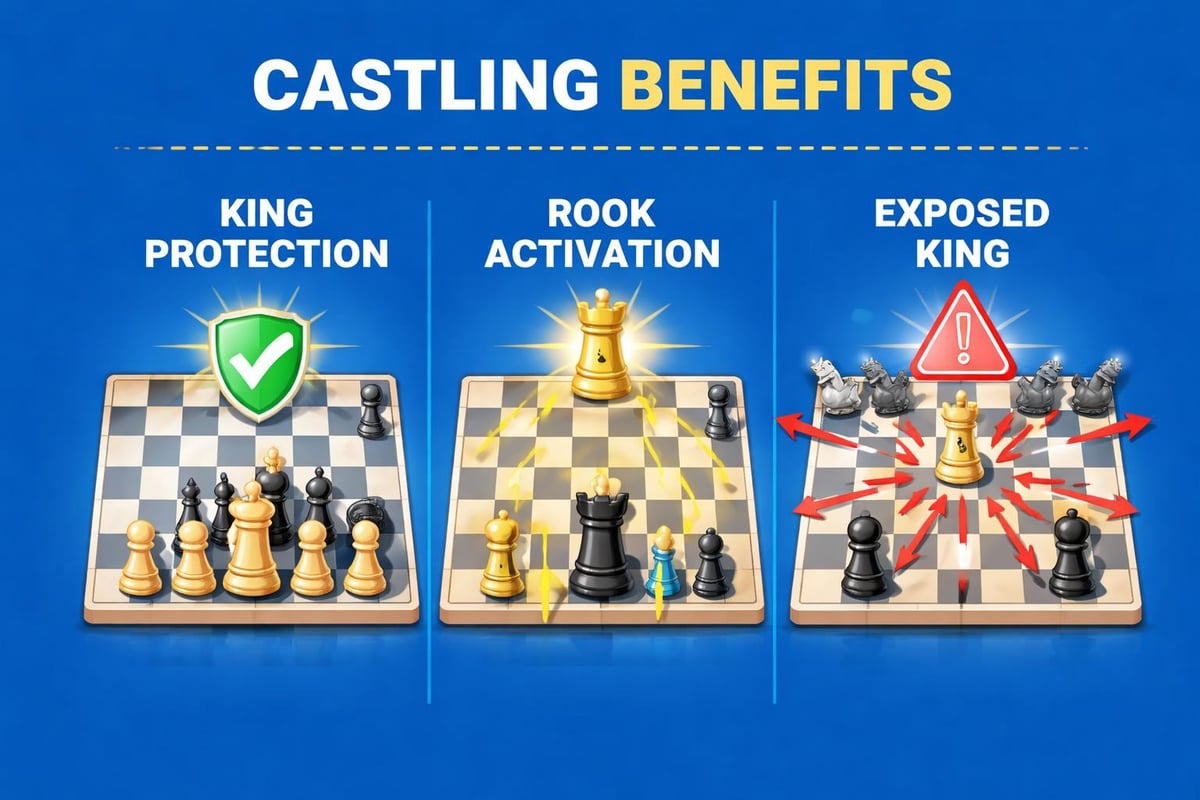
Castling is your primary king safety tool in most games. It tucks your king away behind pawns whilst activating a rook. Beautiful efficiency.
Common King Safety Mistakes
Delaying castling too long tops the list of beginner errors. You might want to launch a quick attack, but if your king remains in the centre, your opponent can often strike first.
Moving pawns in front of your castled king without good reason creates permanent weaknesses. Those pawns can't move backwards, so once you've pushed them, your king's shelter has holes.
Ignoring your opponent's attacking pieces is equally dangerous. If your opponent has a bishop aimed at your king, a queen on the same side, and rooks doubling on a file, perhaps it's time to prioritise defence over your own attack.
Tactical Awareness: Winning Material and Games
Chess fundamentals include recognising tactical patterns. These are the tools that actually win material and games. You can have perfect opening preparation, but if you miss a simple fork, all that preparation counts for nothing.
Essential Tactical Patterns
Learning these patterns doesn't mean memorising thousands of positions. It means training your brain to spot certain geometric relationships between pieces:
- Forks (one piece attacks two or more)
- Pins (a piece can't move without exposing something more valuable)
- Skewers (forcing a valuable piece to move, exposing something behind it)
- Discovered attacks (moving one piece reveals an attack from another)
- Double attacks (two threats simultaneously)
You'll find these patterns in virtually every game you play. Working through chess puzzles accelerates pattern recognition dramatically. Each puzzle is a mini-lesson in spotting tactical opportunities.
Positional Play: The Long Game
Tactics win material, but positional play sets up those tactical opportunities. This is where chess fundamentals become more nuanced and subtle.
Good positional play means improving your pieces gradually, creating weaknesses in your opponent's position, and restricting their options. It's less flashy than tactics but equally important.
Key Positional Concepts
Pawn structure determines much of your middlegame strategy. Isolated pawns, doubled pawns, passed pawns - each has specific implications for your plan.
Piece activity matters more than material sometimes. A rook on an open file can be worth more than a passive rook plus a pawn.
Weak squares in your opponent's camp become ideal outposts for your knights. Creating and exploiting these weaknesses is fundamental positional chess.
| Positional Element | Strong | Weak |
|---|---|---|
| Bishop pair | Both bishops active | Bishops blocked by pawns |
| Rook placement | On open/semi-open files | Behind own pawns |
| Knight position | Supported outpost | Edge of board |
| King activity | Active in endgame | Exposed in middlegame |
The Opening Phase: Starting Strong
The opening is where chess fundamentals shine most clearly. You have a blank canvas and specific principles to guide you.
Classical chess fundamentals, as outlined in works like José Raúl Capablanca's "Chess Fundamentals", emphasise simple, sound principles in the opening. Develop pieces, control the centre, safeguard your king, connect your rooks.
Modern opening theory has become incredibly sophisticated, but these fundamental principles still apply. Whether you're playing the Italian Game or studying the Caro-Kann Defense, you're working within these fundamental frameworks.
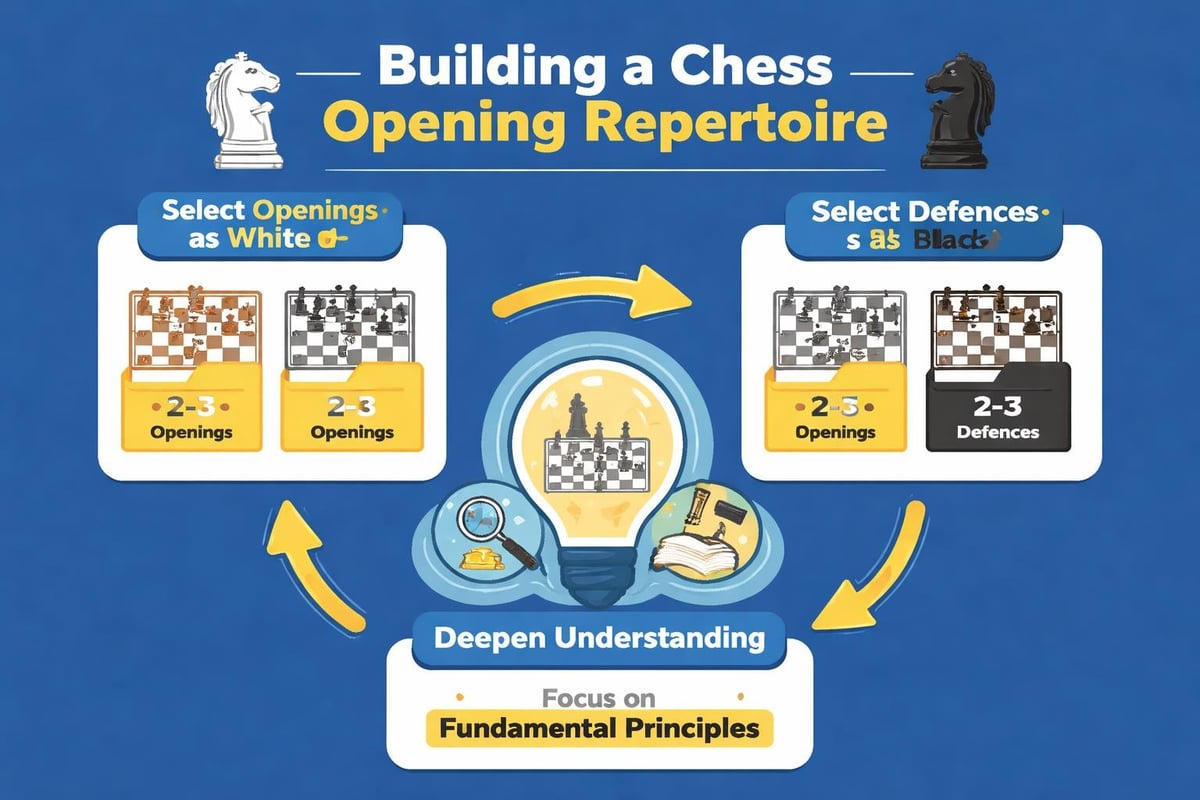
Building Your Opening Repertoire
You don't need to memorise 20 moves deep in every variation. That's not practical for most players. Instead, understand the fundamental ideas behind your chosen openings.
Why does White play f4 in the King's Gambit? To control e5 and open lines for attack. Why does Black play c6 in the Caro-Kann? To support d5 without blocking the bishop. Understanding these 'why' questions matters more than memorising specific move orders.
Endgame Essentials: Converting Your Advantage
The endgame is where chess fundamentals prove their worth. You've navigated the opening, survived the middlegame, and now you need to convert your advantage.
Endgame technique relies heavily on fundamental knowledge. King and pawn versus king. Rook and king versus king. These basic positions appear in nearly every endgame, either directly or as building blocks of more complex positions.
Critical Endgame Skills
King activity becomes paramount in the endgame. Your king transforms from a liability into a powerful piece. Centralising your king is often the first fundamental step in endgame play.
Pawn promotion drives most endgame strategy. Creating a passed pawn and shepherding it to the eighth rank wins countless games.
Opposition and zugzwang are fundamental endgame concepts. The opposition is a geometric relationship between kings that determines who controls key squares. Zugzwang is when any move worsens your position.
Studying Chess Fundamentals Effectively
How do you actually improve your understanding of these fundamentals? Reading articles helps, but active practice matters more.
Playing regularly is essential. Each game gives you opportunities to apply fundamental principles. Did you control the centre? Did you develop efficiently? Did you keep your king safe? Review your games with these questions in mind.
Solving puzzles sharpens tactical awareness. Even five minutes daily makes a noticeable difference over weeks and months. The positional skills you develop through puzzles transfer directly to your games.
Studying classic games shows fundamentals in action. Watch how strong players apply these principles under pressure. You don't need the latest super-GM games. Classic games from Capablanca, Alekhine, or Lasker demonstrate fundamentals beautifully.
Learning Resources
The internet offers enormous resources for learning chess fundamentals. You can learn to play chess free through various platforms, though structured resources often accelerate progress.
Books remain valuable. The best chess books on openings combine fundamental principles with specific variations. Similarly, finding free chess books in PDF format gives you access to classic texts that stand the test of time.
Common Fundamental Mistakes
Even players who understand chess fundamentals sometimes violate them under pressure. Recognising these common errors helps you avoid them.
Moving the same piece twice in the opening whilst other pieces sit undeveloped. Yes, sometimes you must, but often it's just wasted time.
Neglecting king safety for a speculative attack rarely works well. Your attack might succeed, but if your opponent's counter-attack arrives first, your unsafe king becomes your downfall.
Ignoring pawn structure in the middlegame creates long-term problems. That doubled pawn or isolated pawn might not matter immediately, but it'll haunt you in the endgame.
Course Correction Strategies
When you notice yourself violating fundamentals, pause and reassess. Ask yourself:
- Have I developed all my pieces?
- Is my king safe?
- Do I control or contest the centre?
- Are my pieces coordinating or scattered?
- What's my actual plan?
These simple questions bring you back to fundamental thinking. They're like a mental checklist for sound chess.
Applying Fundamentals Across Different Time Controls
Chess fundamentals apply whether you're playing rapid, blitz, or classical chess, but time pressure affects how you apply them.
In classical games, you have time to calculate deeply and apply positional fundamentals carefully. Use this time to find the most accurate moves that align with fundamental principles.
In rapid chess, you still apply fundamentals but rely more on pattern recognition. You can't calculate every line to completion, so fundamental principles guide your intuition.
In blitz chess, fundamentals become almost instinctive. You're playing on pattern recognition and ingrained habits. This is why drilling fundamentals matters - they become automatic responses under time pressure.
Balancing Fundamentals with Creativity
Does following chess fundamentals mean playing boring, mechanical chess? Absolutely not. Understanding rules lets you know when breaking them makes sense.
The strongest players have internalised fundamentals so thoroughly that they recognise when a position calls for unconventional play. They're not randomly violating principles. They're making informed decisions to break rules for concrete reasons.
You might delay castling because a specific tactical blow is available. You might accept a structural weakness to gain piece activity. These decisions work when grounded in fundamental understanding, not when made from ignorance.
Mastering chess fundamentals transforms your game from guesswork into purposeful, strategic play. These core principles - centre control, piece development, king safety, tactical awareness, and positional understanding - provide the framework for consistent improvement and confident decision-making at the board. Chess Cheat Sheets offers streamlined guides, comprehensive opening toolkits, and targeted puzzles that help you internalise these fundamentals without drowning in excessive theory, giving you practical resources that accelerate your progress from beginner uncertainty to intermediate confidence.


