

Are you ready to gain a real edge at the board? In today’s fast-paced chess world, mastering openings can make or break your results, especially as theory evolves month by month. This guide to the best chess books on openings for 2026 is designed to help you stay ahead of the curve, whether you’re a beginner or a seasoned tournament player. With so many new ideas and resources, picking the right tools is more important than ever. In this article, you’ll discover a curated list of the latest and most effective opening books, learn what sets each apart, find out who will benefit most, and see how these books can take your game to new heights. Ready to boost your opening skills and outplay your rivals? Let’s dive in.
Why Mastering Chess Openings Matters in 2026
Mastering chess openings is more than just memorizing a few moves—it is about gaining a real advantage right from the start. In 2026, with chess evolving at lightning speed, understanding why openings matter is the first step toward staying ahead. Whether you are aiming for club victories or online glory, choosing the best chess books on openings can make all the difference.
The Evolving Landscape of Chess Openings
Have you noticed how fast opening theory changes these days? Thanks to engines like Stockfish and AlphaZero, new ideas appear almost overnight. Lines that were once popular get refuted, while forgotten variations suddenly come back into fashion.
For example, the King's Indian Defense was nearly abandoned at top level, but computer analysis revived it with fresh approaches. Did you know that over 60 percent of club-level games are decided by mistakes in the opening? Staying updated is critical for both tournament and online play.
If you want a deeper look at how computers have transformed chess openings, check out this Impact of Computers in Chess guide. It highlights just how much technology has changed the landscape, making the best chess books on openings more essential than ever.
The Competitive Edge of Strong Opening Preparation
When you walk into a game knowing your openings, you feel confident and calm. Strong preparation means you save time on the clock and reduce stress, letting you focus on strategy instead of scrambling for moves.
Top players often say that having a solid opening repertoire is like wearing armor—you are better protected against surprises. In fact, players with robust opening knowledge score up to 20 percent higher in tournaments. There have even been notable upsets where underdogs toppled favorites, all because of superior opening preparation. The best chess books on openings can help you build this edge, giving you practical lines and modern analysis to outplay your rivals.
Common Pitfalls When Learning Openings
It is tempting to just memorize moves from a list, but that approach rarely works in real games. Many players make the mistake of relying on outdated resources or trying to learn too much too quickly. The result? Information overload, confusion, and poor performance when the game takes an unexpected turn.
Instead, focus on understanding the ideas behind the moves. Avoid jumping between random online sources. The best chess books on openings are structured, up-to-date, and teach you not just what to play, but why. This way, you build real knowledge that sticks.
What to Look for in a Chess Opening Book
With so many choices out there, how do you pick the right resource? Look for books that are clear, current, and filled with practical examples. The best chess books on openings break down complex ideas into digestible lessons, often using annotated games to show plans in action.
Think about your learning style, too. Print books are great for deep study, while digital resources often provide quick updates and interactive tools. Ideally, choose a book that balances theory with advice you can use in your own games. That way, your study time pays off at the board, no matter your level.

7 Essential Best Chess Books on Openings for 2026 Success
If you want to gain a real edge in today’s chess world, investing in the best chess books on openings is a must. There are tons of resources out there, but only a handful truly stand out for 2026. Below, you’ll find a carefully curated list of the top seven books (and resources) on chess openings, each with its strengths, quirks, and ideal audience. Whether you’re a beginner or a tournament regular, these picks will help you stay ahead of the curve and master your favorite lines.
Chess Opening Cheat Sheets – Lifetime Access
When it comes to the best chess books on openings that blend visual learning with practicality, Chess Opening Cheat Sheets is a modern favorite. For a one-time fee of $20, you get lifetime access to a vast digital library that’s always expanding. The resource includes dozens of visual cheat sheets, a puzzle vault with over 1.5 million challenges, themed toolkits, endgame guides, and bundled extras.
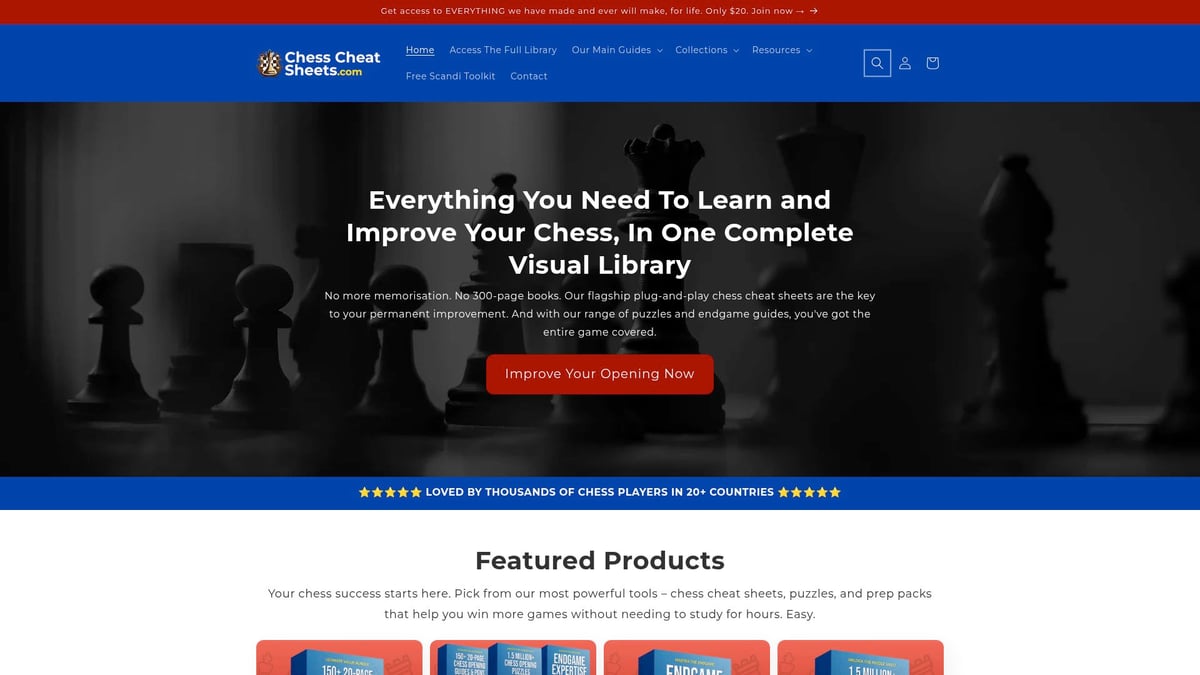
What sets this apart from traditional books? You don’t have to memorize endless lines. Instead, you get plug-and-play diagrams that make learning fast and intuitive. The platform is perfect for visual learners, busy adults, and anyone who wants instant digital access. Plus, you’ll find regular updates and free entry resources, making it a great value.
- Pricing: $20 for lifetime access
- Format: Digital, always updated
- Best for: Beginners, intermediates, visual learners
Pros:
- Extremely affordable
- Easy to use, visually intuitive
- Regularly updated with new content
Cons:
- Not a traditional book format
- Might not suit those seeking deep theoretical analysis
If you want to dive deeper into opening principles and see how visual guides can boost your learning, check out the Chess Openings Guide Overview. This resource pairs perfectly with the best chess books on openings for a well-rounded approach.
Modern Chess Openings: 16th Edition by Nick de Firmian
Modern Chess Openings, now in its 16th edition, is a classic for a reason. Priced at around $25 for the paperback, it offers a comprehensive reference to nearly every opening you’ll encounter, from the tried-and-true to the latest engine-inspired novelties. The book is trusted by generations and is regularly updated to keep up with the ever-changing chess landscape.
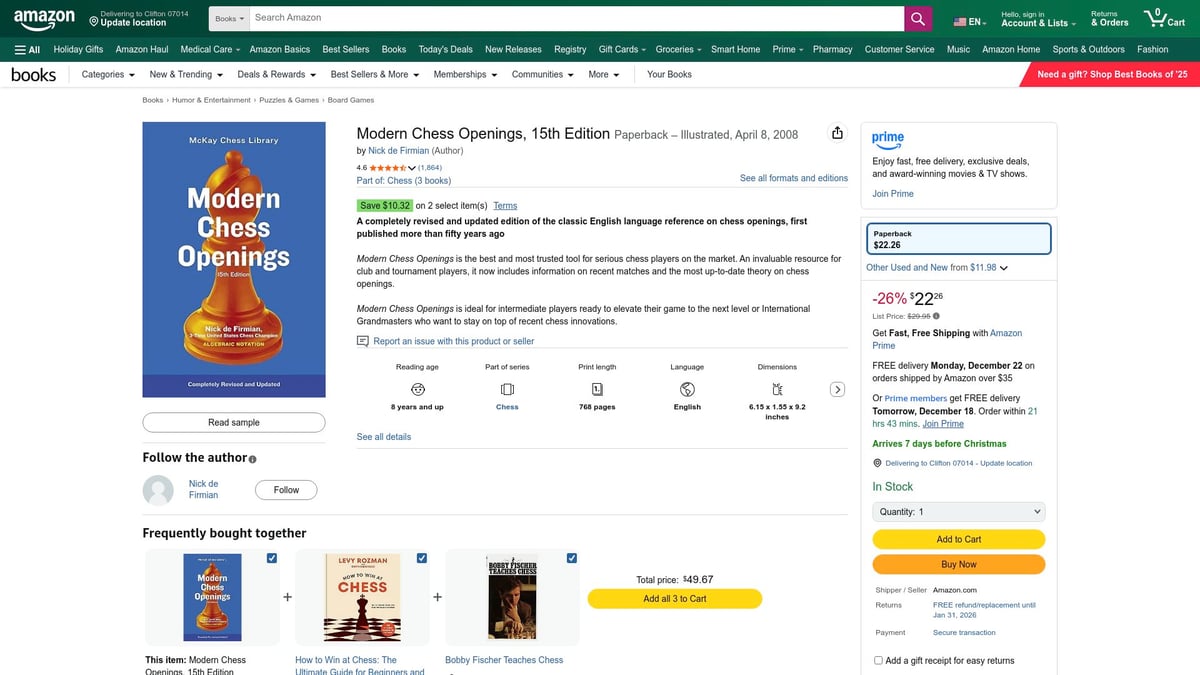
With clear organization and deep coverage, it’s a must-have for anyone serious about building a strong repertoire. This book is ideal for club players up to advanced competitors who want a single-volume reference.
- Pricing: About $25 paperback
- Format: Print
- Best for: Club players, advanced competitors
Pros:
- Authoritative and detailed
- Covers a huge range of openings
- Regular updates for evolving theory
Cons:
- Dense for absolute beginners
- Can be overwhelming due to its size
If you’re searching for the best chess books on openings that you can return to time and again, this one definitely deserves a spot on your shelf.
Opening Repertoire: The Modern Defence by Cyrus Lakdawala
For players looking to sharpen their black repertoire with a modern, flexible defense, this guide is a standout. At about $25 in print (or $17 as an ebook), Opening Repertoire: The Modern Defence delivers a complete system with move-by-move explanations, practical insights, and coverage of the latest trends.
Lakdawala’s conversational style makes complex ideas accessible, and the book’s focus on plans and ideas, rather than just moves, helps you truly understand the opening. This resource is perfect for intermediate to advanced players who want to surprise their opponents and stay ahead in theory.
- Pricing: $25 print, $17 ebook
- Format: Print or digital
- Best for: Intermediate to advanced players
Pros:
- Move explanations for club-level understanding
- Recent trends and practical advice
- Focused, fighting repertoire
Cons:
- Only covers the Modern Defence
- Not for those seeking multiple opening systems
If you want the best chess books on openings for one specific defense, this is a top choice.
Fundamental Chess Openings by Paul van der Sterren
If you’re building your foundation, Fundamental Chess Openings is a go-to. At around $40 in print, it covers every major opening and variation with accessible language and over 400 pages of analysis. The book is designed for self-study, making it easy to learn opening principles and explore new systems at your own pace.
Widely recommended by coaches, this resource strikes a perfect balance between depth and breadth. It’s especially suitable for beginners and club players who want to develop a solid understanding of the game’s most important openings.
- Pricing: About $40 print
- Format: Print
- Best for: Beginners, club players
Pros:
- Comprehensive, covers all major systems
- Easy to follow and reference
- Great for self-paced study
Cons:
- Not as deep for advanced theory seekers
- Some lines may lack cutting-edge novelties
For those seeking the best chess books on openings to build a strong foundation, this title is hard to beat.
The Agile London System by Alfonso Romero Holmes & Oscar de Prado
The Agile London System is a modern guide to a reliable and flexible opening for white. Priced at about $30, this book walks you through up-to-date move orders, anti-London responses, and illustrative games that bring the opening’s concepts to life. It’s perfect for club players and tournament competitors who want a solid repertoire they can trust.
What makes this book special is its focus on understanding plans rather than just memorizing moves. The London System has become increasingly popular, and this guide ensures you’re prepared for the latest trends and practical challenges.
- Pricing: $30 print
- Format: Print
- Best for: Club players, tournament competitors
Pros:
- Practical advice for real games
- Covers current lines and responses
- Easy to implement for white
Cons:
- Focuses on one system only
- May not appeal to aggressive tacticians
If you’re seeking the best chess books on openings for system-based play, this guide is an excellent pick.
Grandmaster Repertoire 1.e4 vs The Sicilian I by Parimarjan Negi
Ambitious players aiming to tackle the Sicilian head-on will love this book. For about $35, you get grandmaster-level analysis, in-depth theoretical coverage, and cutting-edge novelties that have influenced even professional play. The book is dense, but for those ready to invest the time, it’s a goldmine.
Negi’s work is trusted by advanced club players and aspiring masters worldwide. If you want to build a sharp 1.e4 repertoire and keep up with the latest trends, this is one of the best chess books on openings available today.
- Pricing: $35 print
- Format: Print
- Best for: Advanced club players, tournament competitors
Pros:
- Deep, authoritative analysis
- Up-to-date with modern theory
- Written by a top grandmaster
Cons:
- May be too advanced for casual players
- Requires focused study and commitment
For serious students, this book is a key to unlocking the secrets of the Sicilian.
Chess Openings for Beginners by Cory Klein
If you’re just starting out, Chess Openings for Beginners is a fantastic choice. At around $13 for a paperback, this book breaks down essential openings with clear diagrams and step-by-step instructions. The focus is on understanding, not rote memorization, which is crucial for new players.
It’s affordable, accessible, and perfect for self-study, classroom use, or even parents teaching their children. While it doesn’t cover every complex line, it provides the practical foundation every beginner needs to start winning games.
- Pricing: $13 paperback
- Format: Print
- Best for: New players, casual enthusiasts
Pros:
- Simple, clear language and diagrams
- Focuses on understanding ideas
- Affordable and easy to use
Cons:
- Limited depth for advanced study
- Not suitable for experienced players
For those searching for the best chess books on openings to kickstart their chess journey, this is an excellent starting point.
Comparison Table: Best Chess Books on Openings 2026
| Title | Price | Format | Best For | Key Features | Pros | Cons |
|---|---|---|---|---|---|---|
| Chess Opening Cheat Sheets | $20 | Digital | Beginners-Intermediates | Visual cheat sheets, puzzle vaults | Affordable, updated, visual | Not a book, less theory |
| Modern Chess Openings 16th | $25 | Club-Advanced | Comprehensive reference | Detailed, trusted | Dense, overwhelming | |
| Opening Repertoire: Modern Defence | $25 | Print, eBook | Intermediate-Advanced | Focused system, move explanations | Practical, up-to-date | Single opening only |
| Fundamental Chess Openings | $40 | Beginners-Club | Covers all major openings | Comprehensive, easy | Less depth for experts | |
| Agile London System | $30 | Club, Tournament | Modern London System, plans | Practical, current | Only one system | |
| GM Repertoire 1.e4 vs Sicilian | $35 | Advanced, Masters | Deep Sicilian analysis | Authoritative, detailed | Advanced, complex | |
| Chess Openings for Beginners | $13 | Beginners | Step-by-step, clear diagrams | Accessible, affordable | Not for advanced players |
Finding the best chess books on openings is all about matching your needs and learning style. Each book above offers a unique path to opening mastery. Dive in, experiment, and watch your chess improve.
How to Choose the Right Chess Opening Book for Your Needs
Selecting the best chess books on openings can feel like searching for a needle in a haystack, right? With so many options, it's easy to feel overwhelmed. The trick is to match your current needs, learning preferences, and chess ambitions with the right resource. Let’s break down how you can do this confidently.
Assessing Your Skill Level and Goals
Before you dive into the world of the best chess books on openings, pause and ask yourself: What’s my current level? Are you aiming to learn the basics, or are you prepping for serious tournament play?
Beginners usually benefit from books that explain principles and avoid overwhelming detail. Intermediates often look for structured repertoires, while advanced players want up-to-date theory and deep analysis.
Here’s a quick table to help you match your needs:
| Skill Level | Book Focus | Example Goal |
|---|---|---|
| Beginner | Principles, basics | Build confidence, avoid blunders |
| Intermediate | Repertoires, trends | Prepare for club games, expand lines |
| Advanced | Deep theory, novelties | Compete in tournaments, surprise |
If you’re unsure where to start, resources like Mastering Chess Openings can guide you through strategies that fit your goals.
Considering Learning Style and Format
Are you a visual learner who loves diagrams, or do you soak up information best through detailed explanations? The best chess books on openings come in various formats—print, digital, and even interactive platforms.
Younger players often prefer digital or visual resources, with over 70% indicating these formats help them learn faster. If you like flipping pages and making notes, print might be your style. For those who want instant updates and portability, digital versions are ideal.
Think about what keeps you engaged. Sometimes, a mix of formats gives the best results, especially if you’re juggling a busy schedule.
Staying Updated with Opening Theory
Chess opening theory evolves quickly, especially with new discoveries from computer analysis. Choosing the best chess books on openings means prioritizing recent publications or editions.
Outdated lines can hurt your results, as opponents may know recent refutations you’ve never seen. Look for books published or updated within the last couple of years. It’s also smart to supplement your study with online resources, so you’re always a step ahead.
Ask yourself: When was the last time I checked for new ideas in my favorite openings? Staying current is a game-changer.
Balancing Theory with Practice
Even with the best chess books on openings on your shelf, improvement comes from combining reading with active play. Mix book study with practical games and puzzles. Try to play out the lines you learn, and review annotated games to see how grandmasters handle your chosen openings.
Studies show players who combine reading with hands-on practice improve faster and retain more. So, don’t just read—play, review, and refine your repertoire regularly. This balanced approach will help you turn knowledge into real-world results.
Maximizing Results: Tips for Studying Chess Openings Effectively
Want to get the most out of the best chess books on openings? It is not just about reading cover to cover. It is how you approach your study that makes the difference. Let us break down a practical roadmap to boost your opening skills and turn that knowledge into real results.
Create a Structured Study Plan
Jumping into chess openings without a plan is like sailing without a compass. Start by picking one opening at a time from the best chess books on openings. Set a clear goal, such as mastering the first 10 moves or understanding key plans.
Break your learning into small, manageable sessions. For example, spend 20 minutes daily reviewing a specific chapter or replaying illustrative games. Use a calendar or checklist to track your progress and celebrate small wins.
Stick to your schedule, but stay flexible. If you hit a tricky line, give yourself extra time. The best chess books on openings are most effective when you approach them methodically instead of rushing through.
Use Both Books and Supplementary Tools
Relying solely on books can limit your growth, even if you have the best chess books on openings on your shelf. Pair your reading with digital tools like opening databases, video lessons, and puzzle trainers. This mix makes learning interactive and helps reinforce what you read.
For example, after studying a chapter, test yourself with online puzzles or review games from top players using the same opening. Exploring resources like the Most Popular Chess Openings guide can give you extra context and help you spot trends.
Mixing formats caters to different learning styles and boosts your retention. The best chess books on openings are a powerful foundation, but adding modern tools can take your preparation to the next level.
Practice Regularly with Real Games
Knowledge from the best chess books on openings becomes valuable only when you put it to the test. Play regular games online or at your local club, focusing on the openings you are studying.
Each game is a chance to apply new ideas, spot recurring patterns, and build confidence. You might notice certain traps or tactical motifs popping up, which is a sign you are internalizing your study.
Consider joining online tournaments or casual leagues. The feedback from practical play helps you identify strengths and gaps in your repertoire. Over time, you will see steady improvement as theory turns into skill.
Review and Update Your Repertoire
Chess never stands still, and neither should your study habits. Make it a habit to revisit the best chess books on openings and update your repertoire as theory evolves. Track your results, noting which lines give you trouble and which ones bring success.
When you lose a game in the opening, analyze it and return to your resources for answers. This feedback loop is key to growth. Stay curious and explore how technology has changed chess by reading articles like How Technology Changed Chess to keep your approach fresh.
The best chess books on openings are living tools. Combine them with regular review and adaptation to stay ahead of the curve and enjoy long-term success.
Frequently Asked Questions About Chess Opening Books
Curious about the best chess books on openings and how they fit into the modern chess landscape? Let’s tackle some of the most common questions players ask before choosing their next resource.
Are Chess Opening Books Still Relevant in the Age of Online Databases?
Absolutely. While online databases are overflowing with games and raw data, the best chess books on openings offer curated guidance you just can’t get from sifting through endless moves. Books provide structure, context, and expert commentary, making it easier to understand not just what to play, but why.
Many leading players combine books and databases for the best results. Books distill years of theory, practical advice, and annotated games into an easy-to-follow format. Plus, with AI like Stockfish and AlphaZero shaping opening theory, many books now include cutting-edge insights. If you want to dive deeper into how AI is transforming chess theory and opening preparation, check out this comprehensive Chess and Artificial Intelligence resource.
So, while digital tools are great, books remain essential for building a solid opening foundation.
How Often Should I Update My Opening Knowledge?
Updating your repertoire is crucial for anyone relying on the best chess books on openings. Theory evolves quickly, especially with new discoveries from engines and top-level play. A good rule of thumb is to review your openings at least once a year, or anytime you notice consistent trouble in your games.
For example, if a line you learned from a book starts getting refuted, or you see new moves popping up in tournaments, it’s time to refresh your resources. Top players regularly update their repertoires after big events or significant theoretical changes.
Stay alert for signs like frequent early losses or unfamiliar responses from opponents. When that happens, look for newer editions or supplementary materials to keep your opening preparation sharp.
What’s the Best Way to Retain Opening Knowledge?
Retention is all about active engagement. Reading the best chess books on openings is only the first step. To truly remember lines and plans, you need to practice, review, and even teach the material to others.
Try these strategies:
- Play your openings in real games, both online and over the board.
- Use spaced repetition: revisit tricky lines at regular intervals.
- Solve puzzles based on your opening choices.
- Annotate your games and learn from mistakes.
Studies show that combining reading, playing, and reviewing boosts retention significantly. For an in-depth look at how strong opening preparation can reduce mistakes, see this Statistical Look at Grandmaster Blunders. The more you apply and test your knowledge, the more confident and prepared you’ll feel in every game.
So, after exploring these top chess opening books and discovering what really makes a difference in your early game, you might be wondering—what’s the next step to actually boost your results? If you’re ready to put all this advice into action and see real improvement, why not take the guesswork out of your study routine? You can start sharpening your openings today, with resources designed for busy learners like us. Ready to see your confidence (and rating) climb? Start Improving Your Openings and turn those opening moves into real advantages on the board.


