

Chess has exploded in popularity worldwide, with millions of new players joining online platforms and local clubs in recent years. Everywhere you look, people are picking up chess boards and challenging friends or strangers to a match.
If you are just starting out, the world of chess might seem overwhelming. Maybe you have tried searching for lessons, only to find complex resources or pricey courses that feel out of reach.
The good news is you can now learn to play chess free in 2026, no matter your background. High-quality, accessible resources are everywhere, waiting to help you master the game step by step.
This essential guide will walk you through everything you need to start playing confidently. You will find actionable steps, expert insights, and the latest tools. Here is what you can expect:
- Understanding chess basics
- Building your skills
- Using free online resources
- Structured improvement plans
- Connecting with the global chess community
Let us get started on your chess journey together.

Understanding Chess: The Basics
Ready to learn to play chess free and lay a solid foundation? Let’s break down the basics so you can jump into your first game with confidence. We’ll cover the board, pieces, rules, notation, and key terms—everything you need to start playing right away.
The Chessboard and Pieces Explained
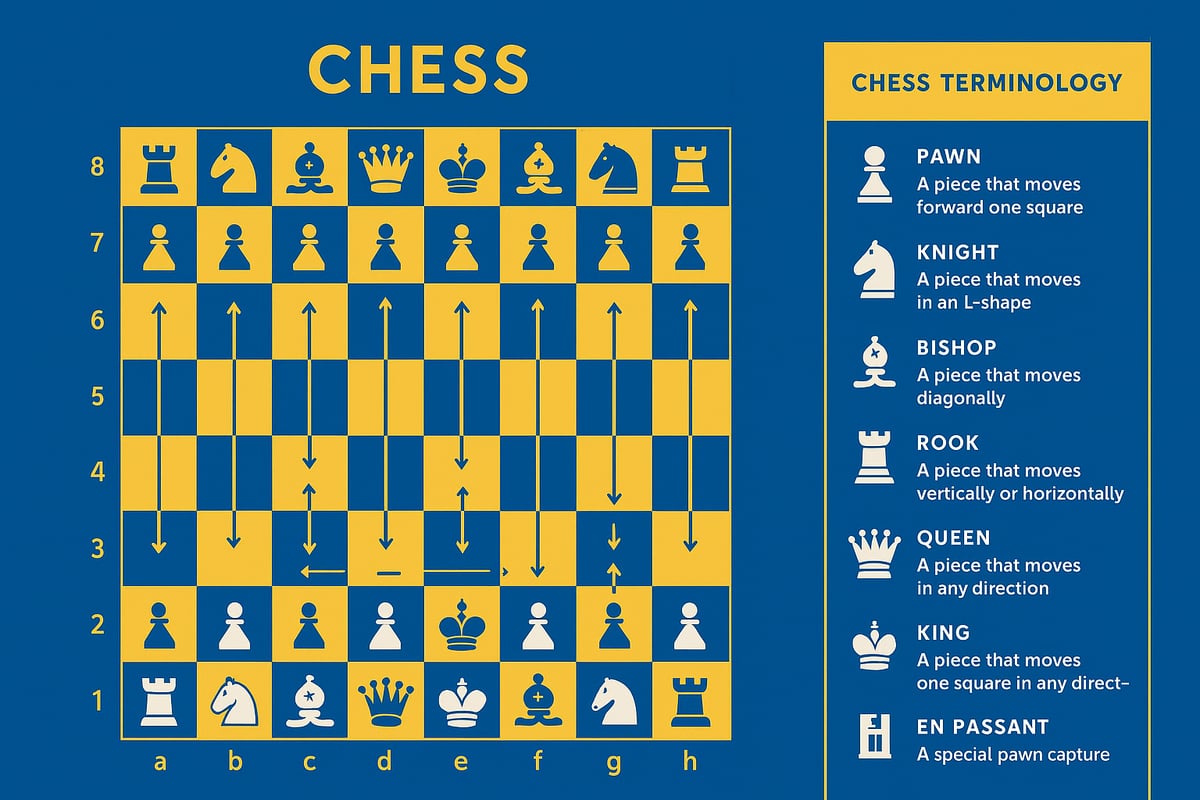
Imagine you’re about to learn to play chess free but first, what’s on the table? The chessboard is a square, 8x8 grid with 64 squares, alternating light and dark colors. The bottom right square should always be light. Each square is named by a coordinate: letters a-h for files (columns), numbers 1-8 for ranks (rows).
Here’s a quick table for piece placement:
| Piece | Count | Starting Squares |
|---|---|---|
| Pawn | 8 | 2nd/7th rank |
| Rook | 2 | Corners |
| Knight | 2 | Next to rooks |
| Bishop | 2 | Next to knights |
| Queen | 1 | Own color square |
| King | 1 | Next to queen |
A handy mnemonic: “Queen on her color.” So, white queen on a white square, black queen on black. According to FIDE, 80% of new players get the setup wrong, so double-check piece positions as you learn to play chess free.
Rules of the Game
The main goal when you learn to play chess free is simple: checkmate your opponent’s king. Each piece moves in its own unique way. Pawns move forward but capture diagonally. Knights jump in an L-shape. Bishops go diagonally, rooks move in straight lines, queens combine rook and bishop moves, and kings move one square in any direction.
Here’s what you need to know:
- Players alternate turns, white moves first.
- You can only move your own pieces to legal squares.
- Pawns reaching the far side of the board promote to any piece except king.
- Special moves: castling (king and rook switch spots for safety), en passant (special pawn capture), and pawn promotion.
Did you know 60% of beginners mix up castling rules? If you want a step-by-step visual, check out this How to Play Chess Cheat Sheet for a free, quick reference as you learn to play chess free.
Basic Chess Notation
To learn to play chess free and study games, you need chess notation. The board uses algebraic notation: files labeled a-h, ranks 1-8. Each move is recorded by piece and destination. For example, e4 means move a pawn to e4, Nf3 means knight to f3, O-O means kingside castling.
Here’s a mini code block for reference:
1. e4 e5
2. Nf3 Nc6
3. Bb5 a6
Notation lets you replay games, analyze, and share progress with others as you learn to play chess free. It’s like a universal chess language!
Essential Chess Terminology
Every time you learn to play chess free, you’ll hear words like check, checkmate, stalemate, and draw. Let’s define a few essentials:
- Check: The king is attacked, must respond.
- Checkmate: The king is attacked, no escape—the game ends.
- Stalemate: No legal moves, but the king isn’t in check—a draw.
- Fork: One piece attacks two at once.
- Pin: A piece can’t move without exposing a more valuable one.
- Skewer: An attack on a valuable piece that, when it moves, exposes a less valuable one.
For example, the famous “pin” from a classic Fischer game shows how terminology helps you spot tactics and improve faster. Mastering this language will speed up your progress as you learn to play chess free.
Step-by-Step: How to Play Your First Chess Game
Ready to jump in and play your first chess game? Even if you’re new, you can learn to play chess free with just a board, a little curiosity, and this guide. Let’s break it down step by step so you can set up, make your first moves, and understand what’s happening on the board.
Setting Up and Starting
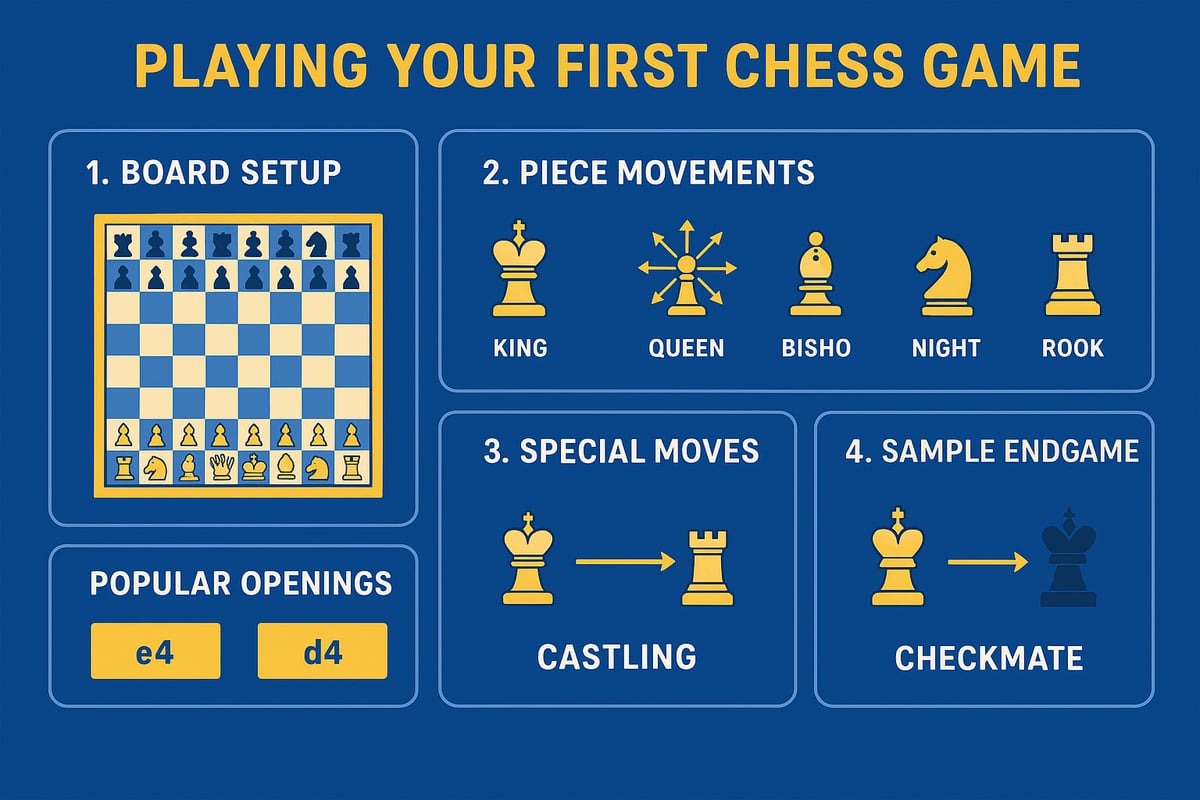
Start by placing your chessboard so that a white square is in the bottom-right corner for both players. Lay out the pieces: rooks on the corners, knights next to them, then bishops, and place the queen on her matching color. The king takes the last square. Line up the pawns in front of the main pieces.
Not sure who plays which side? Flip a coin or let the youngest player pick. White always moves first. The first move sets the tone—most beginners open with e4 or d4, which control the center. These moves are popular for a reason, according to Lichess 2025 data.
If you want more guidance as you learn to play chess free, check out Free Chess Learning Resources for beginner-friendly tutorials.
Understanding Turns and Piece Movement
In chess, players alternate turns, with white always going first. Each piece has its own way to move: pawns go forward one square, knights hop in an L-shape, bishops glide diagonally, rooks move in straight lines, the queen combines rook and bishop moves, and the king goes one square in any direction.
When you learn to play chess free, mistakes like moving the knight incorrectly are common. Did you know 70% of beginners misplay knights in their first game? Double-check your moves, and remember: only knights can jump over other pieces.
Explore different piece movements and practice until each feels natural. The more you play, the easier these basics become.
Capturing and Special Moves
Capturing happens when your piece lands on a square occupied by an opponent’s piece, removing it from the board. Exchanges can be simple or strategic—sometimes it’s worth trading a pawn for a more valuable piece.
Special moves add a twist. Castling lets you move your king and rook at the same time, protecting your king and connecting your rooks. En passant allows a pawn to capture another pawn in a special scenario. Pawn promotion happens when a pawn reaches the far side, turning into any piece (usually a queen).
As you learn to play chess free, try these moves in practice games to get comfortable. Castling, in particular, is often misunderstood, so review the rules before your first real match.
Ending the Game: Checkmate and Draws
The main goal is to checkmate your opponent’s king, meaning the king is under attack with no escape. Stalemate is different, resulting in a draw when a player has no legal moves but isn’t in check.
Other draws happen with insufficient material, threefold repetition, or a deadlocked position. For example, a famous stalemate from the 2024 World Junior Championship shows how a game can end unexpectedly.
Learning to recognize these endgame scenarios is crucial as you learn to play chess free. Practice spotting checkmate and stalemate patterns so you’re ready when your first game reaches the finish line.
Free Online Resources to Learn Chess in 2026
Are you ready to discover how you can learn to play chess free using the best online resources in 2026? With so many tools available, it can feel overwhelming, but you do not have to spend a dime to get started. Let us walk through the top platforms, tutorials, and guides that make the journey easy and enjoyable, no matter your experience level.
Leading Free Chess Platforms
Choosing the right platform is the first step if you want to learn to play chess free. The top sites in 2026 are Chess.com, Lichess, and Chess24. Each offers unique features for new and experienced players alike.
| Platform | Free Features | User Base (2026) |
|---|---|---|
| Chess.com | Lessons, puzzles, forums, live games | 120 million+ |
| Lichess | Unlimited puzzles, open source, tournaments | 80 million+ |
| Chess24 | Video series, live commentary, forums | 35 million+ |
You can play live games, solve puzzles, and join forums on these platforms. They all provide a welcoming space to learn to play chess free and connect with others.
Free Chess Tutorials and Video Lessons
If you prefer learning by watching, there are plenty of high-quality video lessons available. YouTube channels like GothamChess, Hanging Pawns, and ChessNetwork are favorites in the community.
For example, GothamChess’s “Beginner to Winner” playlist has over 10 million views and breaks down complex topics into short, friendly lessons. Whether you are reviewing openings or tackling tricky tactics, these tutorials help you learn to play chess free with expert guidance.
Try mixing in different channels to find a teaching style that clicks with you. Most creators offer complete series for absolute beginners and intermediates.
Interactive Chess Puzzles and Tactics Trainers
Practicing tactics is the secret sauce for rapid improvement. Both Chess.com and Lichess let you learn to play chess free with unlimited puzzles, so you can sharpen your skills every day.
Solving puzzles builds pattern recognition and confidence. Lichess, for instance, offers daily puzzles with no subscription needed. You pick your level and practice at your own pace.
Want to challenge yourself? Try the tactics trainers, which adapt to your strengths and weaknesses. Over time, you will spot forks, pins, and mates with ease.
Downloadable Guides, PDFs, and Apps
Looking for resources you can access anytime? There are plenty of free guides, eBooks, and apps designed for self-study. The official FIDE beginner guides are a solid start, and apps like ChessKid and Magnus Trainer (free tier) make learning fun for all ages.
You can also find curated collections of Free Chess Books and PDFs that cover openings, tactics, and endgames. These downloads are perfect for reviewing concepts offline as you learn to play chess free.
With over 2 million ChessKid downloads in 2025, these tools are a proven way to build your foundation without spending money.
Chess Cheat Sheets: Visual Learning for Beginners
If you are a visual learner, Chess Cheat Sheets are a game changer. These guides use clear diagrams and simple explanations to help you learn to play chess free without memorizing pages of rules.

The platform offers free sample toolkits and cheat sheets designed for quick reference during games. Beginners worldwide praise their practical format, which makes remembering piece moves, tactics, and openings a breeze.
For anyone who wants an efficient and friendly way to improve, these visual resources are hard to beat.
Building Your Chess Skills: Essential Strategies and Tactics
Ready to build your skills and truly learn to play chess free? This section will give you a practical roadmap, from opening moves to checkmate patterns and tactical exercises. Let’s break down the core strategies and habits every new player needs.
Opening Principles for Beginners
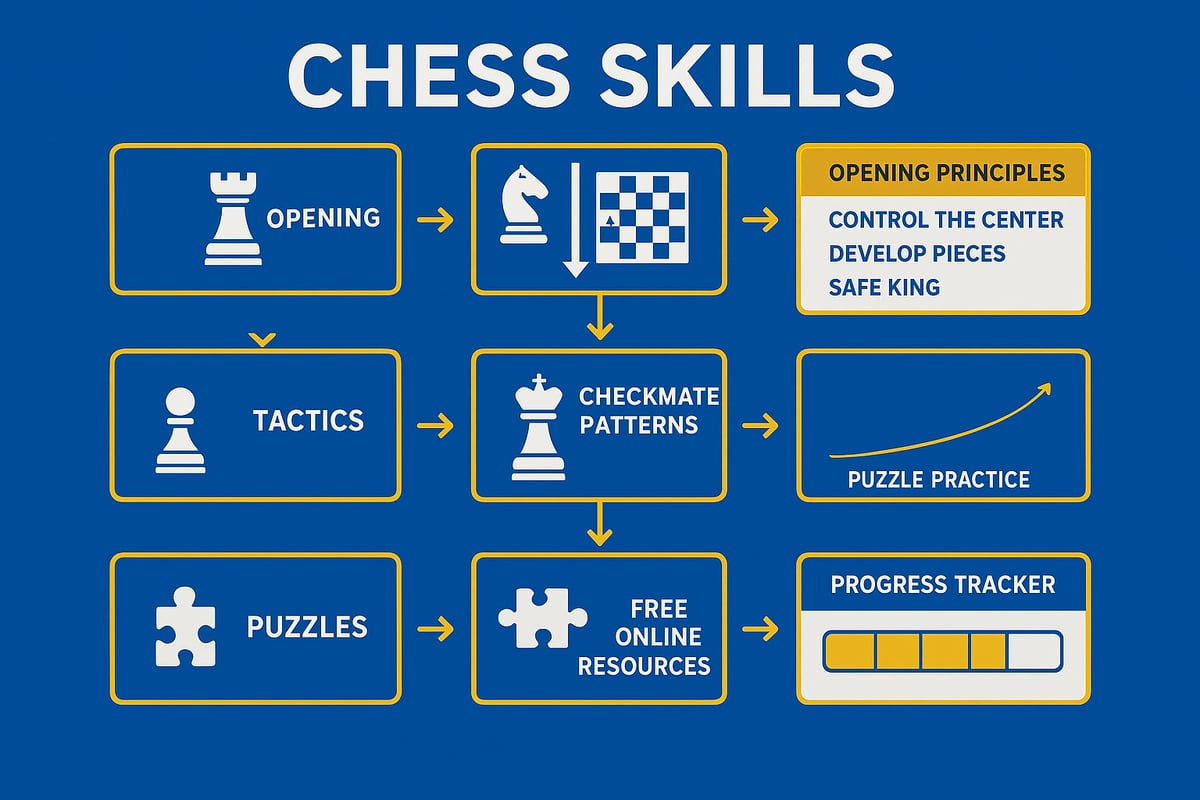
If you want to learn to play chess free and improve quickly, focus first on the basics of the opening. The opening is all about three key ideas:
-
Control the center: Moves like
e4,d4,e5, andd5help you control the middle of the board. - Develop your pieces: Bring out knights and bishops early, aiming them toward the center.
- Keep your king safe: Castle early to protect your king and connect your rooks.
Coaches say that 75% of chess lessons for beginners emphasize these points. While there are famous openings like the Italian Game or Queen’s Gambit, you don’t need to memorize dozens of moves. Stick to these principles, and you’ll set yourself up for a strong game.
Basic Tactics Every Player Should Know
To really learn to play chess free, mastering tactics is a must. Tactics are short-term tricks that win material or deliver checkmate. Here are five you’ll use all the time:
- Fork: One piece attacks two targets at once.
- Pin: An attacked piece can’t move without exposing a more valuable piece behind it.
- Skewer: The reverse of a pin—attack a valuable piece first, then capture what’s behind it.
- Discovered Attack: Move one piece to reveal an attack from another.
- Double Attack: Multiple threats created in a single move.
A Chess.com study found that solving tactics improves your win rate by 18%. Practice spotting these patterns in your games, and you’ll see immediate progress.
Common Checkmate Patterns
You can learn to play chess free and still master checkmates found in games at every level. Some patterns appear over and over:
- Back rank mate: The king is trapped on the back row by its own pawns.
- Smothered mate: The king is surrounded by its pieces and checkmated by a knight.
- Scholar’s mate: A four-move checkmate popular with beginners.
- Ladder mate: Two rooks work together to push the king to the board’s edge.
Scholar’s mate appears in 22% of beginner games. Recognizing these patterns means you’ll finish more games with a win—and dodge common traps.
The Importance of Endgames
A lot of new players who learn to play chess free ignore endgames, but that’s a mistake. The endgame is when only a few pieces remain, and every move matters.
Knowing these concepts will help you convert advantages:
- Opposition: Using your king to control key squares.
- King and pawn endings: Getting a pawn to promotion.
- Basic checkmates: King and queen vs. king, king and rook vs. king.
A classic example is using your king to escort a pawn to the last rank. Mastering these basics lets you win games others might only draw.
Practicing with Puzzles and Online Games
The best way to learn to play chess free is through regular practice. Daily chess puzzles train your brain to spot tactics and patterns fast. Rapid and blitz games (short time controls) give you real experience under pressure.
Lichess users solve over 1 billion puzzles each month. For structured improvement, try Improve Positional Skills with Puzzles, which offers free resources and step-by-step guidance.
Mix puzzles with fast games to balance thinking and instinct, and track your progress over time.
Avoiding Common Beginner Mistakes
As you learn to play chess free, you’ll make mistakes—everyone does! Here are some to watch for:
- Pushing too many pawns early and leaving your king exposed
- Forgetting to develop all your pieces before launching an attack
- Overlooking your opponent’s threats and missing simple tactics
Review your games after playing. Look for patterns in your losses, and don’t be afraid to ask for advice in online chess communities. Every mistake is a stepping stone to improvement.
Creating Your Free Chess Improvement Plan
Ready to take your next big step? Building a personalized improvement plan is the secret sauce if you want to learn to play chess free and keep getting better. With a clear roadmap, steady progress, and the right resources, you can avoid plateaus and grow your skills faster than you ever thought possible.
Setting Realistic Goals and Tracking Progress
If you want to learn to play chess free and see results, start by setting clear, measurable goals. Think about what you want: maybe hitting a 1000 rating, solving 50 tactics each week, or playing 20 rapid games a month.
Use free tools like Chess.com or Lichess to track your stats. Both platforms offer dashboards where you can monitor your rating, puzzle streaks, and win rates. For beginners, a great starting point is aiming for a 1000 rating in three months. Remember, progress is personal, so celebrate small wins along the way.
Structuring Your Study Routine
Consistency is key if you want to learn to play chess free and improve steadily. Build a weekly routine that balances study and play. Here’s a sample schedule to get you started:
- Monday: 15 minutes of opening practice
- Tuesday: 20 minutes solving tactics
- Wednesday: 15 minutes endgame study
- Thursday: Play 2 rapid games
- Friday: Review one master game
- Weekend: Join an online club event or tournament
Even just 30 minutes a day can boost your rating by 150 points in six months, according to recent surveys. Adjust your routine to fit your life and energy levels.
Leveraging Free Resources for Maximum Impact
To learn to play chess free, you’ll want to mix up your resources for a well-rounded experience. Combine video lessons, interactive puzzles, and cheat sheets for the best results.
Rotate between different formats so you don’t get bored. For example, alternate between Lichess puzzles, YouTube tutorials, and PDF guides. If you’re teaching or learning with others, check out the Free Chess Curriculum for Educators for a structured, no-cost study plan. The more variety you use, the deeper your understanding will grow.
Joining Online Communities and Clubs
Chess is more fun and effective when you connect with others on the same journey. If you want to learn to play chess free, join online communities, Discord servers, and clubs on platforms like Chess.com or Lichess.
These spaces let you share games, get feedback, and find new study buddies. There are more than 50,000 active clubs online, so you’re sure to find a group that fits your vibe. Community support can keep you motivated and help you overcome tough learning spots.
Participating in Free Online Tournaments
Playing in tournaments is the ultimate test if you’re out to learn to play chess free and sharpen your competitive edge. Free weekly tournaments happen on platforms like Lichess and Chess.com, with options for all skill levels.
You’ll gain experience with real rating systems and learn how to handle pressure. Don’t worry about results at first—focus on playing your best and reviewing each game. Over time, you’ll notice your confidence and skill growing with every event.
Connecting with the Global Chess Community
Chess is more than just a game on a board—it's a vibrant, global community that welcomes players of all backgrounds. If you're looking to learn to play chess free and connect with others, there are countless ways to get involved both online and offline. Let's explore how you can become part of this growing world.
Local Chess Clubs and In-Person Events
Joining a local chess club is one of the most rewarding ways to learn to play chess free while meeting new people. Clubs can be found in schools, libraries, and community centers in nearly every city. Not sure where to start? Try searching your city name plus "chess club" online or check community bulletin boards.
The benefits of face-to-face chess are huge. You get real-time feedback, participate in friendly tournaments, and build lasting friendships. According to the US Chess Federation, club memberships have grown by 15% since 2024, reflecting the worldwide chess boom. This matches trends seen in the global chess market growth, showing that chess is thriving everywhere.
So, whether you’re a beginner or looking to sharpen your skills, your local club is the perfect place to start your journey.
Social Media and Streaming
If you want to learn to play chess free and stay up-to-date with the latest trends, social media and streaming platforms are your best friends. Platforms like Twitch and YouTube are packed with chess influencers, live games, and Q&A sessions that make learning interactive and fun.
You can follow grandmasters, join live streams, and even participate in online community events from your phone or laptop. In 2025, Twitch chess viewership soared to 30 million hours, proving that digital chess is more popular than ever. The rise of chess in esports has also brought new excitement and opportunities to engage with the game.
Jumping into these digital spaces helps you connect, learn, and get inspired—no matter where you are.
Learning from Top Players and Coaches
Watching grandmasters in action is a fantastic way to learn to play chess free and pick up advanced strategies. Many top players and coaches offer free annotated games, lessons, and commentary online. Sites like Lichess and ChessBase provide access to thousands of master games and user-created studies.
You can pause, rewind, and analyze moves at your own pace. Magnus Carlsen’s online simul series, for instance, attracts over 100,000 viewers, giving you a front-row seat to world-class chess. Observing these games deepens your understanding and helps you develop your own style.
If you ever get stuck, try searching for a coach’s lesson on your favorite opening or endgame pattern—there’s always free insight waiting for you.
Staying Motivated and Celebrating Progress
To truly learn to play chess free, staying motivated is key. One of the best ways is to track your progress and celebrate every milestone, no matter how small. Many online platforms let you share your achievements, earn badges, and join themed challenges with players worldwide.
Set personal goals, like playing ten games a week or solving daily puzzles. When you hit a plateau, reach out to the community for advice or join an online challenge to reignite your passion. Sharing your progress keeps you accountable and makes the journey much more enjoyable.
Remember, the chess community thrives on encouragement and shared success. Celebrate your wins, learn from your losses, and keep moving forward—you’re part of something much bigger.
So, now that you know the basics and have a roadmap for learning chess for free in 2026, why not take the next step and start sharpening your openings? Trust me, having a solid opening toolkit can make a huge difference, especially when you’re just starting out and want to build your confidence fast. If you’re curious to see how much smoother your games can go with a little boost, you can Start Improving Your Openings right now. Think of it as your shortcut to playing smarter from your very first moves—let’s see where your chess journey takes you!


