

Have you ever wondered why some chess players seem to improve rapidly whilst others plateau despite hours of practice? The difference often comes down to having proper guidance. A chess coach can be the catalyst that transforms your scattered efforts into focused improvement, helping you identify weaknesses you didn't know existed and building a personalised roadmap to achieve your chess goals. Whether you're stuck at 1200 or pushing towards 1800, the right instruction can make all the difference.
Why Consider Working with a Chess Coach?
Let's be honest: chess is complicated. You can spend months studying openings only to realise you've been memorising moves without understanding the underlying principles. That's where expert guidance becomes invaluable.
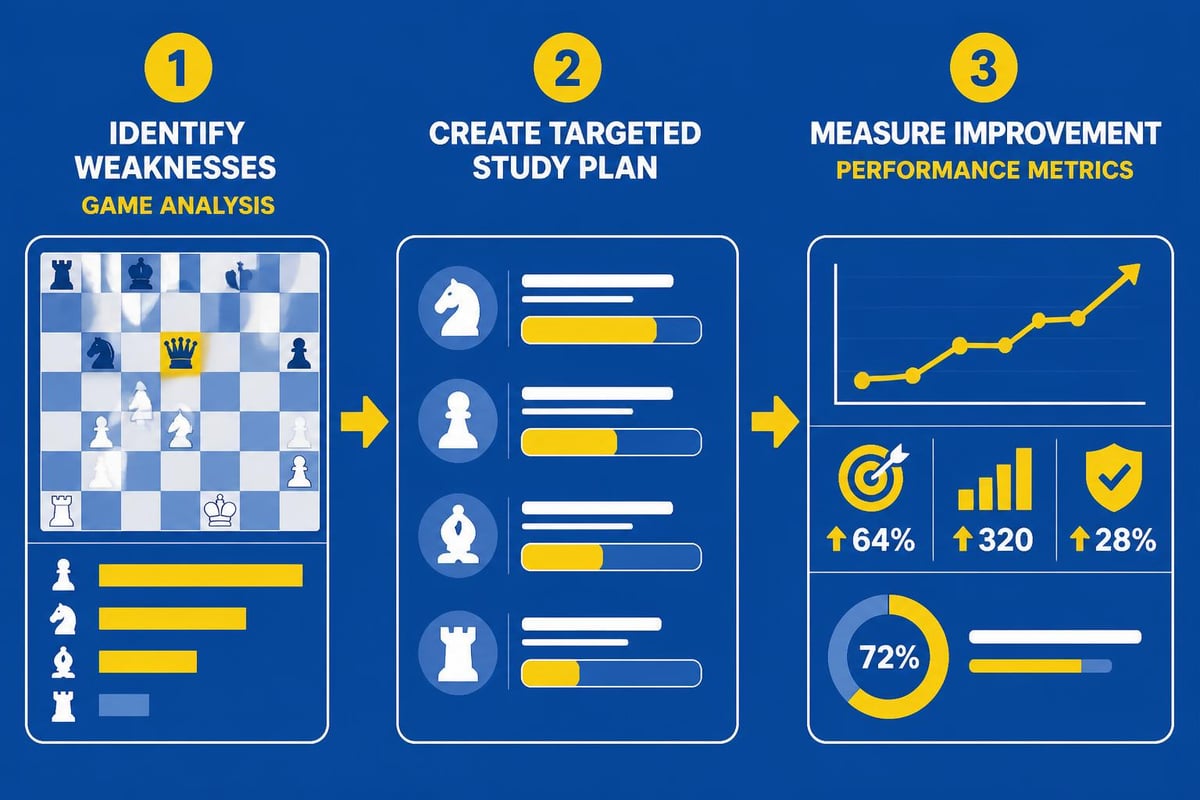
A qualified chess coach brings structure to your improvement journey. Instead of wandering through endless YouTube videos or randomly solving puzzles, a coach makes improvement clearer, faster, and easier to sustain by providing personalised feedback on your specific weaknesses. They've seen hundreds of students make the same mistakes you're making right now.
Think about it this way: professional athletes don't train alone, so why should chess be any different? A coach serves multiple roles that you simply can't replicate through solo study:
- Pattern recognition expert who spots recurring mistakes in your games
- Accountability partner who keeps you on track with your training schedule
- Opening advisor who helps you build a repertoire that suits your style
- Psychological support during tournaments and competitive moments
The cognitive benefits extend beyond chess itself. Research has even explored whether chess instruction improves mathematical problem-solving abilities, suggesting that the structured thinking developed through coaching transfers to other areas.
What Should You Look For in a Chess Coach?
Not all coaches are created equal. You wouldn't hire a driving instructor who only knows automatic cars when you need to learn manual, right? The same principle applies here.
Rating and Experience
First up, let's talk credentials. Your coach should ideally be rated at least 200-400 points above your current level. A 1400-rated player probably won't benefit much from a 1600-rated coach, but a master-level instructor can provide insights that'll serve you for years.
But rating isn't everything. Teaching ability matters just as much. I've known grandmasters who couldn't explain concepts to save their lives, and National Masters who were absolutely brilliant at breaking down complex ideas.
Teaching Style and Communication
This is crucial. When selecting a chess coach based on skill level and personal goals, consider whether you need someone who pushes you hard or someone who takes a gentler approach. Some students thrive under pressure; others shut down.
Ask yourself these questions:
- Do you prefer detailed explanations or quick, actionable tips?
- Are you comfortable being challenged directly on your mistakes?
- Do you learn better through discussion or demonstration?
- How much homework are you willing to commit to between sessions?
The answers will guide you towards the right personality match. A mismatch here leads to frustration on both sides.

Specialisation and Methodology
Here's something many players overlook: coaches often specialise. Some excel at teaching tactics to beginners. Others focus on positional understanding for intermediate players. A few specialise in opening preparation for advanced students.
| Coach Type | Best For | Typical Focus Areas |
|---|---|---|
| Tactics Specialist | 800-1400 rated | Pattern recognition, calculation |
| Positional Coach | 1400-1800 rated | Pawn structures, piece activity |
| Opening Expert | 1600+ rated | Repertoire building, theory |
| Endgame Trainer | All levels | Technical positions, conversion |
The responsibilities of a chess coach include providing clear explanations and using students' games for analysis, but how they prioritise these varies based on their specialisation.
When Do You Actually Need a Chess Coach?
Right, let's address the elephant in the room. Do you really need a coach, or can you continue improving on your own?
You're probably ready for coaching if:
- You've plateaued for 6+ months despite regular practice
- You consistently make the same types of mistakes
- You have specific tournament goals (like reaching a certain rating)
- You want to accelerate your improvement timeline
- You struggle to identify what to study next
You might not need one yet if you're still in your first year of playing, under 1000 rating, and making rapid natural progress. At that stage, simply playing games and doing basic tactics often provides plenty of improvement fuel.
The Self-Study Alternative
Between sessions or instead of coaching entirely, many players benefit from structured resources. For instance, understanding the most common chess openings gives you a foundation that makes coaching sessions more productive. When you arrive knowing basic opening principles, your coach can focus on deeper concepts rather than starting from scratch.
Similarly, working through chess puzzles independently develops the tactical vision that coaches can then refine and contextualise within your games.
Maximising Your Chess Coaching Sessions
You've found a coach. Brilliant! Now, how do you avoid wasting their time and your money?
Preparation Is Everything
Come prepared with annotated games. Not just any games, either. Bring losses where you genuinely don't understand what went wrong, or wins where you felt uncomfortable but squeaked through. These are goldmines for learning.
Before each session:
- Review your recent games and note confusing moments
- Complete any assigned homework thoroughly
- Write down specific questions about positions or concepts
- Have a chess board or digital setup ready for analysis
One student I know keeps a "confusion journal" where he writes down every position that puzzles him during the week. His coach loves it because they can dive straight into meaningful analysis rather than searching for teaching moments.
Implementing Feedback
Here's where most students falter. Your coach analyses a game, points out that you repeatedly ignore backward pawns, and assigns exercises. Two weeks later, you're still ignoring backward pawns. Sound familiar?
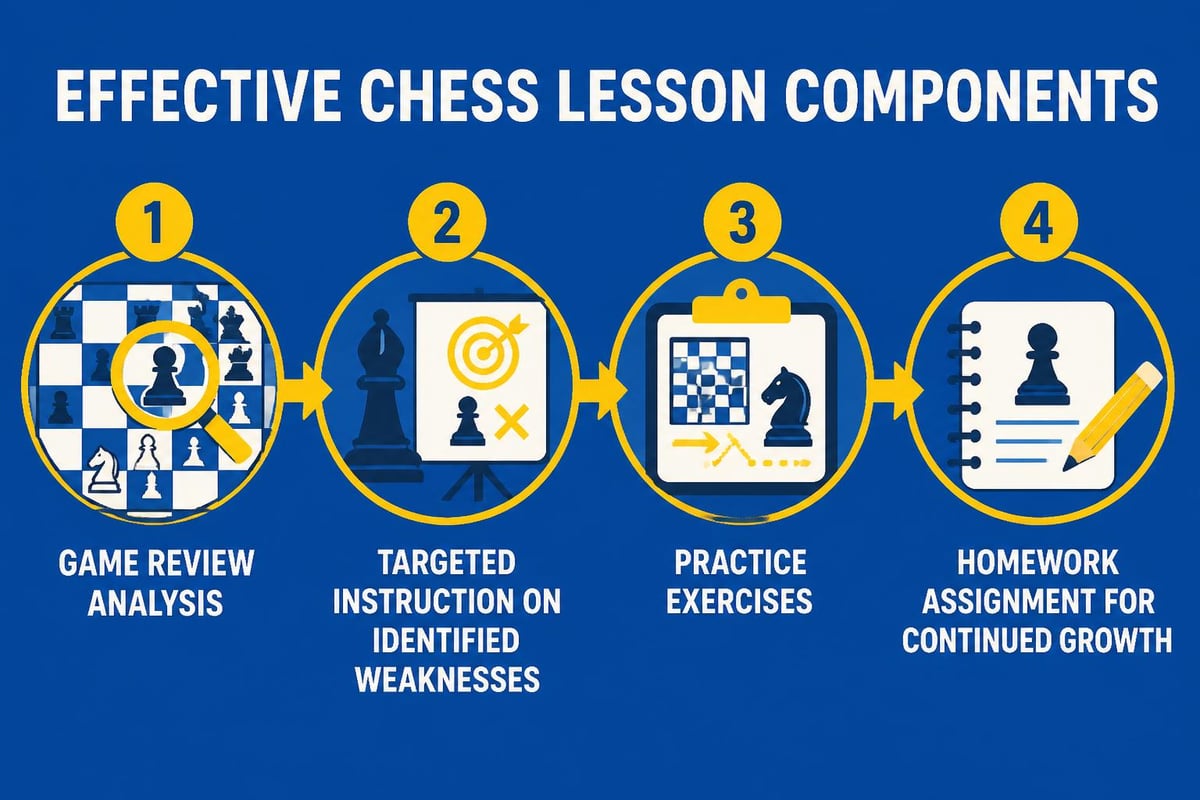
Effective chess lessons balance instruction, practice, and review to ensure concepts stick. But that structure only works if you follow through on your end.
Create a training schedule that includes:
- Daily tactics (15-20 minutes)
- Opening review using resources like the London System guide for your repertoire
- Weekly game analysis of your own matches
- Monthly review of coaching notes and progress
Online Versus In-Person Chess Coaching
The world's changed. In 2026, most coaching happens online, and honestly, that's often better anyway.
The Online Advantage
Online platforms offer incredible flexibility. You can work with a coach in Moscow whilst sitting in Manchester. Schedule a session during your lunch break. Record lessons for later review. Share games instantly through Chess.com or Lichess.
When evaluating online chess instruction platforms, look for structured curricula and appropriate teaching methodologies rather than flashy marketing. The best platforms combine live interaction with recorded resources.
Top features to look for:
- Screen sharing and annotation tools
- Game database integration
- Homework assignment systems
- Progress tracking dashboards
- Flexible scheduling options
Plus, online coaching typically costs 20-40% less than in-person sessions. You're paying for expertise, not petrol money and venue hire.
When In-Person Still Wins
That said, face-to-face coaching has its place. Younger players (under 12) often focus better in person. Some people simply connect more easily without a screen between them. And there's something about sitting across a physical board that can't be fully replicated digitally.
For tournament preparation specifically, in-person coaching can simulate the pressure and physical environment you'll face over the board. That's valuable if you struggle with competition nerves.
Building Your Opening Repertoire with Coach Guidance
Opening preparation deserves special attention because it's where many players waste tremendous effort.
Your coach should help you select openings that match your playing style and time constraints. If you're an aggressive player who loves tactics, you probably shouldn't be grinding out the Berlin Defence. Similarly, understanding what opening Magnus Carlsen uses is interesting, but his repertoire requirements differ vastly from yours.
The Practical Approach to Opening Study
Here's a controversial opinion: beginners and intermediate players shouldn't study openings deeply at all. There, I said it.
Instead, learn a few solid systems that are easy to understand and hard to punish. The London Opening exemplifies this philosophy, providing a reliable structure without requiring massive memorisation.
| Opening Characteristic | Beginner Priority | Advanced Priority |
|---|---|---|
| Theoretical depth | Low | High |
| Strategic clarity | High | Medium |
| Tactical sharpness | Medium | Varies by style |
| Memorisation required | Minimal | Extensive |
A good chess coach will resist the temptation to dump their favourite esoteric variations on you. Instead, they'll ask: "What suits your strengths? What can you actually remember? What positions do you enjoy playing?"
Setting Realistic Goals with Your Coach
Let's talk expectations. You're not going from 1200 to 2000 in six months, no matter how good your coach is. Sorry to burst that bubble.
The Reality of Chess Improvement
What to expect from a chess coaching programme includes a clear learning plan and skill development, but the timeline varies enormously based on your starting point, available study time, and natural aptitude.
Realistic rating gains with consistent coaching and practice:
- First year: 100-200 points (if starting below 1400)
- Second year: 75-150 points
- Third year: 50-100 points
- Beyond: Diminishing returns at higher levels
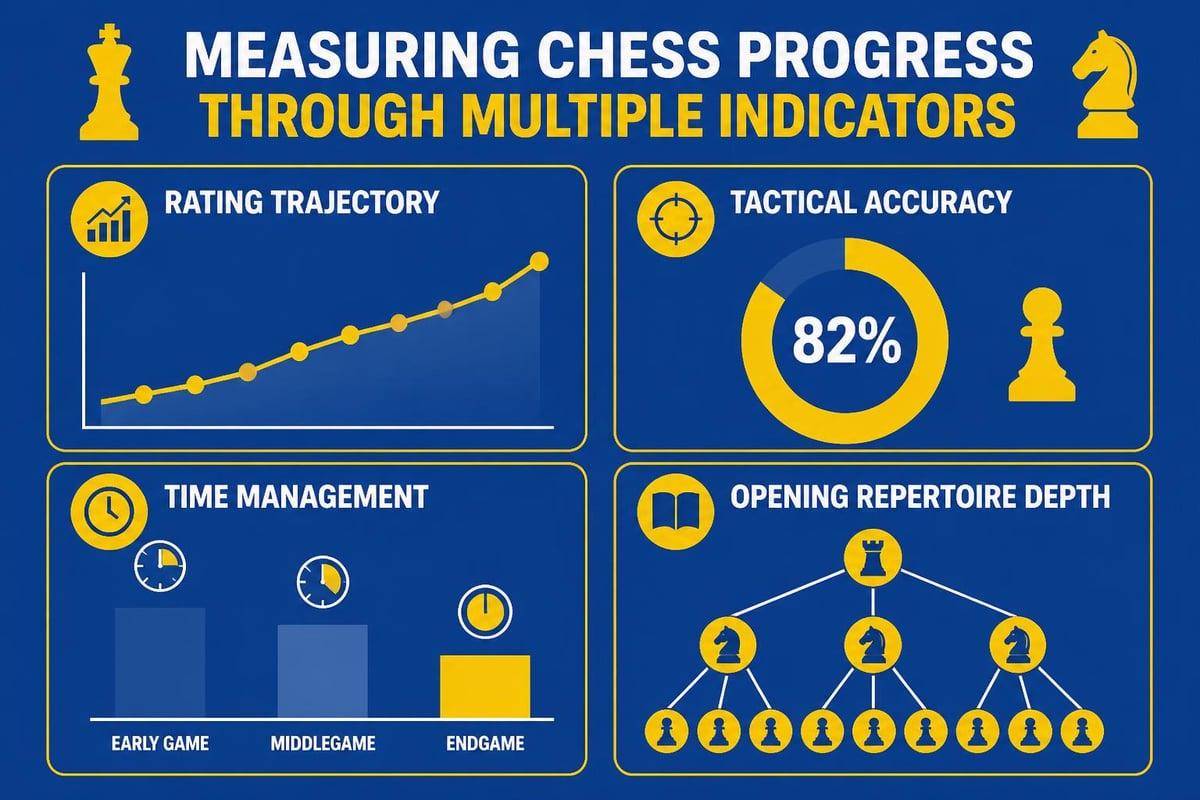
Notice the pattern? Early gains come faster. As you improve, each additional rating point requires more effort. That's normal and expected.
Cost Considerations and Value Assessment
Right, let's talk money because chess coaching isn't cheap.
In 2026, expect to pay anywhere from £20 to £100+ per hour depending on the coach's credentials and location. Online rates typically run:
- Club-level coaches (1800-2000): £20-35/hour
- Expert-level coaches (2000-2200): £35-55/hour
- Master-level coaches (2200-2400): £55-80/hour
- International Masters/GMs: £80-150+/hour
Is it worth it? That depends entirely on your goals and commitment. If you take weekly lessons but don't practice between sessions, you're burning money. But if you're serious about improvement and consistently work on assigned material, coaching can be the best investment you make in your chess.
Maximising Value
Consider these approaches to stretch your coaching budget:
- Bi-weekly instead of weekly sessions, with email check-ins between
- Group lessons that split costs amongst 2-4 students
- Monthly intensives rather than ongoing weekly commitments
- Focused mini-courses on specific weaknesses (tactics, endgames, etc.)
Combine professional coaching with quality self-study resources. For instance, working through chess opening cheat sheets between sessions reinforces concepts your coach introduces without requiring additional paid time.
Red Flags to Watch For
Not everyone advertising chess coaching deserves your trust or money. Watch out for these warning signs.
Immediate concerns:
- Coaches who promise specific rating gains by certain dates
- Instructors unwilling to provide student references or testimonials
- Anyone who discourages you from playing games or using other resources
- Coaches who spend sessions showing their own games rather than analysing yours
- Inflexible teaching that ignores your learning style or questions
Benefits of having a chess coach include motivation and strategic guidance, but manipulative coaches might create unhealthy dependency rather than fostering independent thinking. Your coach should be making you more self-sufficient over time, not more reliant on them.
Alternative Learning Paths
Coaching isn't the only path forward. Many strong players reached expert level through disciplined self-study, particularly with modern resources.
The key is having structure and accountability, which you can create yourself. Joining a chess club provides both, plus regular competition. Online communities offer analysis and discussion. Books remain incredibly valuable for deep understanding.
For instance, exploring chess resources that consolidate opening theory, tactics, and strategic concepts can complement or even substitute for coaching depending on your learning style and discipline level.
Some players thrive independently. Others need external structure. There's no shame in either approach.
Making the Final Decision
So, should you hire a chess coach? Here's my honest assessment framework.
Hire a coach if you:
- Have specific, time-bound goals (tournament performance, rating target)
- Plateau despite consistent effort
- Can afford 1-2 sessions monthly without financial stress
- Will commit to homework and practice between sessions
- Learn better through interactive discussion than solo study
Continue self-study if you:
- Are still in your first year of serious chess
- Make steady progress on your own
- Have limited budget for chess expenses
- Prefer learning at your own pace
- Can maintain discipline without external accountability
There's no universal right answer. Your chess journey is personal, and the best approach honours your circumstances, learning style, and objectives.
Whatever you choose, remember that improvement requires consistency. Whether guided by a coach or navigating independently, showing up regularly to study, play, and analyse makes all the difference. The perfect coach can't help someone who doesn't put in the work, whilst a dedicated self-learner with good resources can achieve remarkable things.
Finding the right chess coach or learning approach ultimately depends on your personal goals, budget, and commitment level. Whether you work with an instructor or study independently, the key is consistent, focused practice targeting your specific weaknesses. If you're looking to complement coaching or build a solid foundation through self-study, Chess Cheat Sheets offers streamlined guides, opening toolkits, and puzzle collections designed to accelerate your improvement without overwhelming you with theory. Start building your chess knowledge efficiently today.


