

There's something inherently special about playing chess with pieces that have real weight and character. A brass chess set brings exactly that to your games. Whether you're studying openings, working through tactical puzzles, or simply enjoying a casual match with a friend, the feel of solid brass pieces adds a tactile dimension that plastic simply can't match. For chess players who take their game seriously, investing in quality equipment isn't just about aesthetics; it's about creating an environment that enhances focus and makes every study session more engaging.
Why Choose a Brass Chess Set?
When you're deciding on your next chess set, you've got countless options. So why brass? Let me walk you through the benefits that make brass stand out from the crowd.
First off, durability is unmatched. Brass is an alloy of copper and zinc that can last generations when properly cared for. Unlike wooden pieces that can chip or plastic pieces that fade and crack, a brass chess set develops character over time. That subtle patina that forms on brass tells a story of countless games played and strategic battles fought.
The weight of brass pieces offers a satisfying heft. Each time you pick up a piece to execute that brilliant tactical shot you've been planning, you feel the substantial quality in your hand. This weight serves a practical purpose too: pieces don't tip over easily, which means fewer disruptions during intense games when you're calculating variations from your favourite chess openings.
Aesthetic Appeal That Enhances Your Study Space
Here's what many players don't consider: your study environment matters. When you're working through complex middlegame positions or memorising critical lines, having beautiful chess pieces makes the experience more enjoyable.
Brass has a warm, golden sheen that catches light beautifully. Unlike chrome or stainless steel that can feel cold and clinical, brass brings warmth to your chess board. As it ages, it develops a natural patina that many collectors actively seek out. You can polish it back to a mirror shine or embrace the antique look-the choice is entirely yours.

What to Look for When Buying a Brass Chess Set
Not all brass sets are created equal. Before you make a purchase, you'll want to consider several factors that separate a quality set from a disappointing one.
Weight and Size Specifications
The first question to ask is: what size board will you be using? Standard tournament boards are 50-55mm squares, and you'll want pieces that match proportionally. Here's a quick reference guide:
| Square Size | King Height | Base Diameter | Recommended Weight per Piece |
|---|---|---|---|
| 45mm | 75-80mm | 32-35mm | 30-50g |
| 50mm | 85-95mm | 38-42mm | 50-80g |
| 55mm | 95-105mm | 42-48mm | 80-120g |
Heavier pieces generally indicate solid brass construction rather than hollow pieces. If you're serious about having a set that lasts, aim for the heavier end of these ranges.
Construction Quality
You need to examine how the pieces are made. Solid cast brass offers the best durability, though it comes at a higher price point. Some manufacturers create hollow brass pieces to reduce costs, but these can feel cheap and may dent more easily.
Check the base felt carefully. Quality sets feature thick, well-adhered felt that won't peel off after a few games. The felt protects your board and ensures smooth piece movement-crucial when you're practising speed chess or working through tactical puzzles under time pressure.
Design Considerations
Brass sets come in various styles, from classic Staunton patterns to more ornate decorative designs. For serious study and play, I recommend sticking with traditional Staunton designs. Why? They're universally recognised, making it easier to distinguish pieces during rapid calculation.
That said, if your set will primarily serve as a display piece between study sessions, decorative designs can be stunning conversation starters. Just ensure the pieces remain easily distinguishable at a glance-you don't want confusion during critical moments of a game.
Maintaining Your Brass Chess Set
Here's the thing about brass: it requires more care than plastic, but far less than you might think. With a simple maintenance routine, your set will look brilliant for decades.
Regular Cleaning Routine
For day-to-day maintenance, you'll want to:
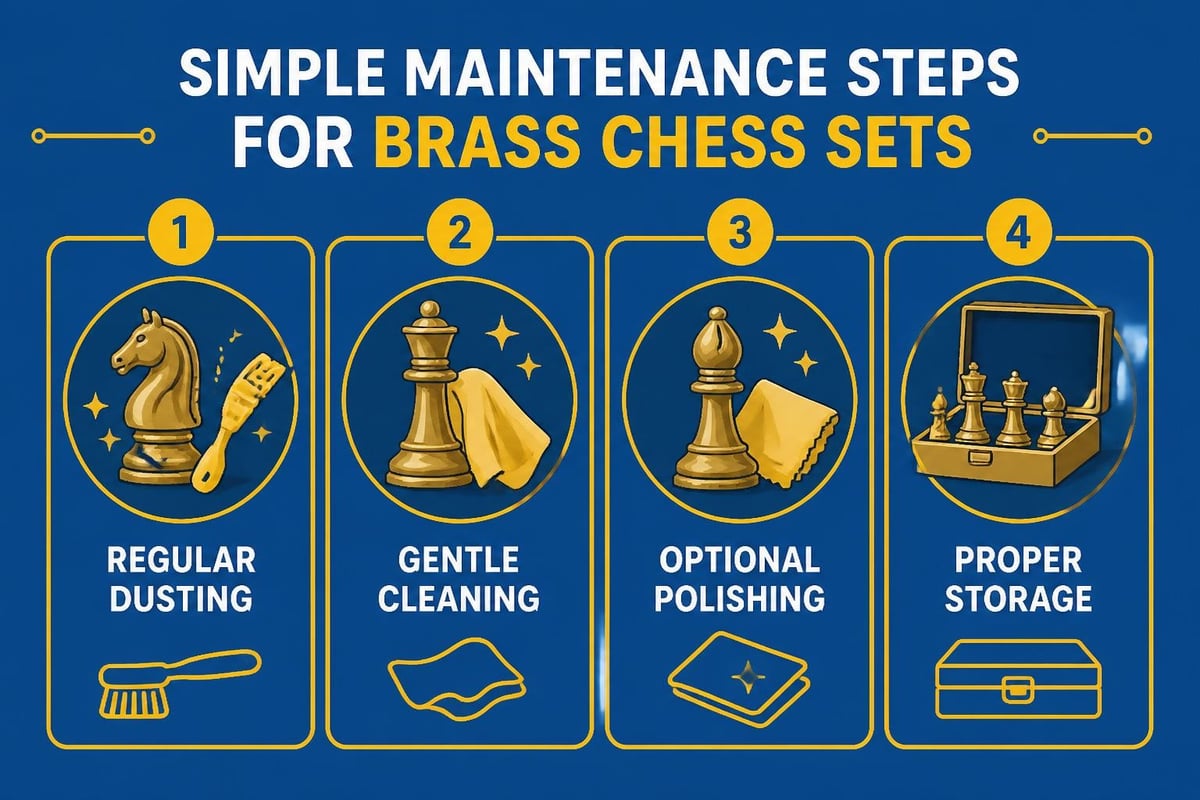
- Dust weekly with a soft, dry cloth
- Handle pieces with clean hands to minimise oil transfer
- Store properly in a lined box when not in use
- Avoid harsh chemicals that can damage the brass finish
After particularly long study sessions working through complex positions, give your pieces a quick wipe down. Natural oils from your hands can accelerate tarnishing, so this simple step makes a huge difference.
Deep Cleaning and Polishing
Every few months, depending on how often you use your set, you'll want to give it a proper clean. Brass care requires specific techniques to maintain its appearance without causing damage.
For unlacquered brass (the most common type in chess sets), here's what works:
- Mix warm water with mild dish soap
- Gently clean each piece with a soft cloth
- Rinse thoroughly with clean water
- Dry immediately with a lint-free cloth
- Apply brass polish if you want that mirror shine
Some players prefer the aged patina that develops naturally. If that's your style, you can skip the polishing step entirely. The oxidation process of brass creates a protective layer that many find aesthetically pleasing.
What to Avoid
Certain practices can damage your brass chess set permanently. Never use:
- Abrasive scrubbers that scratch the surface
- Acidic cleaners like vinegar on lacquered brass
- Ultrasonic cleaners that can loosen joints
- Dishwashers (I know it sounds obvious, but you'd be surprised)
For detailed guidance on cleaning unlacquered brass, particularly if your set has developed significant tarnishing, professional cleaning products designed specifically for brass work best.
Brass vs. Other Metal Chess Sets
How does brass stack up against other metal options? Let's break down the comparison.
Material Characteristics
| Metal Type | Weight | Durability | Maintenance | Cost | Patina Development |
|---|---|---|---|---|---|
| Brass | Heavy | Excellent | Moderate | Medium-High | Yes, attractive |
| Stainless Steel | Medium-Heavy | Excellent | Low | Medium | No |
| Zinc Alloy | Light-Medium | Good | Low | Low | No |
| Bronze | Heavy | Excellent | Moderate | High | Yes, attractive |
| Pewter | Medium | Fair | Low | Medium | Limited |
When you compare these options, brass offers an ideal middle ground. It's more affordable than bronze whilst still developing that sought-after patina. It's heavier and more substantial than zinc alloy, making it better for serious play. And whilst stainless steel requires less maintenance, many players find brass more aesthetically pleasing.
For a comprehensive comparison of different metal chess pieces, including their specific characteristics and ideal use cases, you'll find detailed buying guides helpful when making your decision.
Using Your Brass Set for Chess Study
Beyond the obvious pleasure of playing games, a quality brass chess set can enhance your chess study in ways you mightn't expect.
Tactile Learning Benefits
There's research suggesting that physical manipulation of chess pieces aids in memory retention. When you're working through critical variations in openings like the Caro-Kann Defense, moving actual pieces helps cement those positions in your mind more effectively than purely digital study.
The weight and feel of brass pieces create stronger tactile memories. You're not just visualising the position-you're physically experiencing it. This multi-sensory approach can accelerate your learning, particularly for complex strategic concepts.
Creating a Dedicated Study Space
Setting up a permanent board with your brass chess set sends a signal to your brain: this is where serious chess happens. Rather than clearing off your kitchen table each time you want to study, having a dedicated space with quality equipment makes it easier to establish a consistent practice routine.
Consider this setup for optimal study sessions:
- Proper lighting that doesn't create glare on the brass
- Comfortable seating for long analysis sessions
- Reference materials within arm's reach
- Your brass set as the centrepiece
- A notebook for recording insights

Price Ranges and Value Considerations
Let's talk money. What should you expect to invest in a quality brass chess set?
Budget options typically start around £50-£80. These sets often feature lighter weight pieces, simpler designs, and may have some quality control inconsistencies. They're fine for casual play but might disappoint serious students of the game.
Mid-range sets (£100-£250) offer substantially better quality. You'll get heavier pieces, superior craftsmanship, and finishes that last. For most intermediate players who want a set that balances quality and affordability, this range offers the best value.
Premium brass sets can exceed £300-£500 or more. These typically feature hand-finished details, exceptional weight, and often come with matching brass boards. Collectors and serious enthusiasts gravitate toward this tier.
Calculating Long-Term Value
Here's how I think about the investment: if you play or study chess regularly, you'll use your set thousands of times over its lifetime. A £200 brass set used three times weekly for ten years works out to roughly 13 pence per use. That's extraordinary value for something that enhances every interaction.
Compare this to replacing a £30 plastic set every two years because pieces crack or go missing. Over a decade, you've spent £150 on inferior equipment that never provided the same quality experience.
Where Brass Sets Shine (And Where They Don't)
Being honest about limitations helps you make the right choice for your needs.
Ideal Uses for Brass Chess Sets
Brass sets excel for:
- Home study and analysis sessions
- Casual games with friends where you want to impress
- Display purposes when not in use
- Building a permanent setup that stays in place
- Tactical training where piece weight prevents accidental displacement
Less Suitable Situations
You might want to consider alternatives if you need:
- Extreme portability for travel (brass is heavy!)
- Outdoor use where weather exposure is a concern
- Teaching young children who might drop pieces frequently
- Tournament play where organisers provide equipment
For serious study at home, though, there's hardly a better option than a well-maintained brass chess set.

Brass Sets and Your Chess Development
Can the physical equipment you use actually impact your playing strength? Whilst it won't directly improve your chess rating, quality equipment absolutely influences your engagement with study.
Think about it this way: when you enjoy the physical experience of working through positions, you're more likely to spend time studying. Those extra hours working on your London System middlegame plans or analysing common chess openings directly translate to improved performance.
The psychological effect of using quality equipment shouldn't be underestimated either. When you treat your chess study as important enough to invest in proper tools, you approach it with greater seriousness and focus.
Building a Complete Chess Study Toolkit
A brass chess set pairs beautifully with other study resources:
- Opening guides that break down key variations
- Puzzle books for tactical training
- Endgame resources to convert your advantages
- Digital tools for computer analysis
- Physical notation sheets for recording insights
The combination of tactile learning with your brass set and structured study materials creates a comprehensive approach to improvement.
Special Considerations for Different Brass Finishes
Not all brass finishes are identical. Understanding the options helps you choose what matches your preferences.
Polished Brass
This is the classic bright, golden finish most people picture. It requires regular polishing to maintain its shine but looks absolutely stunning when properly cared for. Polished brass shows fingerprints easily, so you'll need to wipe pieces down after extended handling.
Antiqued Brass
Some manufacturers apply chemical treatments to create an aged appearance from the start. This finish is more forgiving of natural tarnishing and can hide minor imperfections. If you prefer a vintage aesthetic without waiting years for natural patina, this option makes sense.
Lacquered Brass
A clear coating seals the brass, preventing tarnish formation. This finish requires the least maintenance but can't develop that natural patina some collectors prize. The lacquer can also wear through over time, creating patchy appearance unless removed and reapplied.
According to guidance on caring for different brass finishes, each type requires slightly different maintenance approaches to preserve its appearance.
Environmental Factors Affecting Your Brass Set
Where you store and use your set matters more than you might think.
Humidity is brass's enemy. Excessive moisture accelerates tarnishing and can create greenish corrosion spots. If you live in a humid climate, consider using silica gel packets in your storage box and running a dehumidifier in your study space.
Temperature fluctuations won't damage brass but can affect any adhesive holding felt bases. Avoid storing your set near radiators or in unheated spaces that experience extreme temperature swings.
Air quality plays a role too. Pollutants and even certain types of wood can cause tarnishing. If you notice your set tarnishing quickly despite regular care, the storage environment might be the culprit.
Storage Best Practices
When your set isn't in use:
- Store in a lined wooden box with individual compartments
- Keep in a climate-controlled space away from humidity
- Avoid direct sunlight which can heat pieces unevenly
- Consider anti-tarnish strips in the storage box
- Never store in plastic bags which trap moisture
Proper storage extends the time between polishing sessions and keeps your set looking brilliant.
Making Your Final Decision
You've learned about quality indicators, maintenance requirements, pricing, and practical considerations. How do you actually choose?
Start by asking yourself these questions:
How often will you use the set? Daily use justifies a higher investment in quality. Occasional use might allow for a more modest purchase.
What's your tolerance for maintenance? If polishing brass sounds meditative and enjoyable, go for unlacquered pieces. If you want minimal upkeep, consider lacquered or stainless steel instead.
Is this primarily for study or display? Study sets need clear piece differentiation and comfortable weight. Display sets can prioritise ornate design.
What's your realistic budget? Be honest about what you can comfortably afford. A mid-range brass set beats an aspirational premium set you can't actually purchase.
Do you value patina development? Some players love watching their set age naturally. Others prefer perpetual shine. Neither answer is wrong.
Test Before You Buy (When Possible)
If you can visit a chess shop or specialist retailer, handle different sets before purchasing. The feel of pieces in your hand, the weight distribution, the base diameter-these factors are difficult to judge from online photos alone.
When buying online, research the specific brass composition if disclosed. Higher copper content typically means better colour and patina development. Check whether felt bases are glued or mechanically attached (mechanical attachment lasts longer).
A brass chess set represents more than just playing equipment; it's an investment in your chess journey that rewards you every time you sit down to study or play. The tactile experience, durability, and timeless aesthetic create an environment that makes chess study genuinely enjoyable rather than feeling like work. Whether you're analysing critical positions, memorising opening variations, or simply enjoying the beauty of the game, quality equipment enhances every moment. Ready to complement your brass set with structured learning? Chess Cheat Sheets offers comprehensive guides, puzzles, and resources that help you master chess openings and improve your game efficiently, giving you the knowledge foundation to match your quality equipment.


