

There's something undeniably special about the weight of a metal piece settling onto a wooden board with that satisfying click. If you've ever played with metal chess pieces, you'll know exactly what I mean. That tactile experience transforms a simple game into something more memorable, more substantial. But with so many options flooding the market in 2026, how do you choose the right set? Whether you're upgrading from plastic pieces or investing in your first premium set, understanding what makes metal chess pieces special can help you make a choice you won't regret.
Why Metal Chess Pieces Matter for Serious Players
You might wonder whether the material of your chess pieces actually affects your game. The short answer? Absolutely.
Metal chess pieces offer benefits that go beyond aesthetics. The weight alone changes how you interact with the board. When you're working through complex positions, perhaps practicing opening strategies from the Italian Game, heavier pieces stay firmly in place. No more accidentally nudging your knight when reaching across the board.
The Psychology of Weight and Feel
Think about the last time you held a cheap plastic piece versus a weighted metal one. The difference isn't just physical.
Key psychological benefits include:
- Increased focus and deliberation before making moves
- Enhanced tactile feedback that reinforces learning
- Greater respect for piece value and positioning
- Improved connection to the game's rich history
Studies in chess education suggest that the physical experience of moving pieces can reinforce memory pathways. When you're studying the best chess books and practicing positions, the distinct feel of metal pieces can help cement those patterns in your mind.
Understanding Different Metals Used in Chess Sets
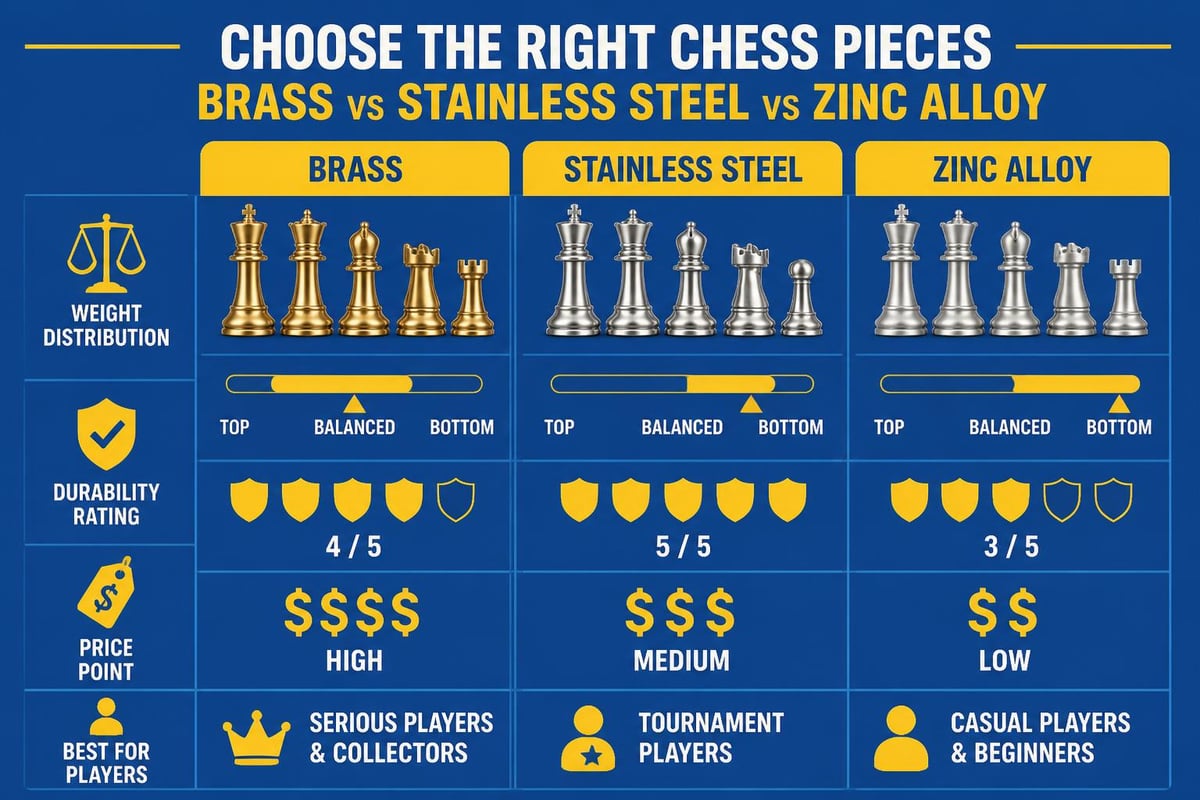
Not all metal chess pieces are created equal. The type of metal dramatically affects everything from price to playing experience.
Common Metals and Their Properties
| Metal Type | Weight | Durability | Price Range | Best For |
|---|---|---|---|---|
| Brass | Heavy | Excellent | Mid-high | Traditional players |
| Stainless Steel | Very Heavy | Outstanding | High | Tournament use |
| Zinc Alloy | Medium | Good | Low-mid | Beginners |
| Aluminum | Light | Fair | Low | Decorative sets |
Understanding metal composition helps you match your budget with your needs. Brass pieces, for instance, develop a beautiful patina over time, telling the story of countless games played. Meanwhile, stainless steel maintains its polish indefinitely, perfect if you prefer a consistently pristine appearance.
Brass: The Traditional Choice
Brass has been the gold standard (pun intended) for centuries. The metal's density creates pieces with excellent stability, and its workability allows for intricate detailing.
When you pick up a brass knight, you're holding the same material medieval craftsmen used. That historical connection matters to many players. Plus, brass pieces typically feature the sharpest details, from the horse's mane to the bishop's mitre.
Stainless Steel: Modern Durability
Stainless steel entered the chess world more recently, but it's made quite an impact. These pieces are virtually indestructible and maintain their appearance without polishing.
The extra weight of stainless steel pieces means they won't tip easily during rapid games. If you're practicing blitz positions from Magnus Carlsen's opening repertoire, you need pieces that stay put during quick moves.
Zinc Alloy: Budget-Friendly Quality
Don't dismiss zinc alloy sets too quickly. Modern manufacturing techniques have dramatically improved their quality. These pieces offer a genuine metal feel at a fraction of the cost of brass or steel.
For players just beginning their journey, perhaps working through free online chess courses, zinc alloy provides an excellent entry point into metal chess pieces without breaking the bank.

What to Look for When Buying Metal Chess Pieces
Choosing the right set involves more than picking your favorite metal. Let's break down the critical factors.
Size and Proportion Standards
Chess pieces follow specific sizing conventions. The king's height typically ranges from 3.75 to 4.5 inches for standard sets.
Critical measurements to check:
- King height (should match your board's square size)
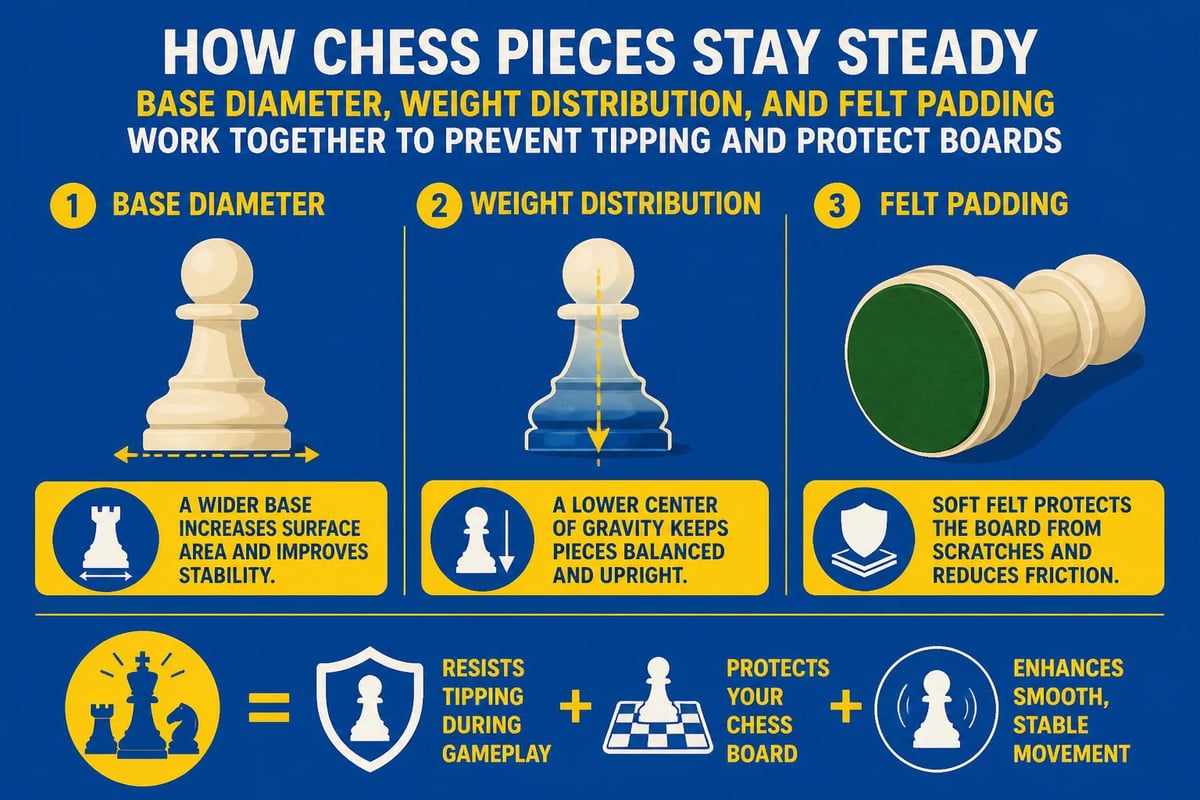
- Base diameter (wider bases prevent tipping)
- Overall proportions (pieces should look balanced)
- Weight distribution (bottom-heavy is best)
The general rule? Your king should be 75-80% of the square's width. A 2-inch square calls for a king around 3.75 inches tall. Getting this ratio right ensures comfortable play and proper aesthetics.
Felt Bases and Protection
Quality metal chess pieces feature felt pads on the bottom. This seemingly minor detail makes a massive difference.
Felt serves multiple purposes. It protects your board from scratches, dampens sound during play, and provides slight friction that prevents sliding. Without felt, metal pieces can damage wooden boards and create an unpleasant scraping sound with each move.
Check that the felt is securely attached. Cheap glue jobs result in pads falling off after minimal use. High-quality sets use industrial adhesives that last for years.
Design Styles and Themes in Metal Chess Sets
Metal opens up design possibilities that plastic simply can't match. The appeal of metal chess sets lies partly in their artistic versatility.
Classic Staunton Design
The Staunton pattern remains the worldwide standard for good reason. Introduced in 1849, its clean lines and distinctive silhouettes make piece identification instant, even for beginners.
Metal Staunton sets amplify the design's elegance. The weight adds gravitas to the familiar shapes, while metal's reflective properties catch light beautifully. When you're focusing on mastering chess openings, having clearly identifiable pieces reduces cognitive load.
Themed and Artistic Sets
Beyond traditional designs, metal enables incredible thematic sets. Historical battles, fantasy worlds, cultural motifs-metal's strength allows for intricate detailing.
However, a word of caution: highly stylized pieces can hinder practical play. If you're using your set for serious study, readability trumps artistry. Save the elaborate medieval knight sets for display and casual games.
Modern Minimalist Approaches
Recent years have seen a surge in minimalist metal chess pieces. These abstract designs strip away ornamentation, creating striking geometric forms.
Minimalist sets work beautifully for players who appreciate clean aesthetics. The simplified shapes can actually aid piece recognition once you adjust to them. They're particularly popular among younger players and those with modern décor preferences.
Maintenance and Care for Metal Chess Pieces
Investing in quality metal chess pieces means nothing if you don't maintain them properly. Fortunately, care requirements are straightforward.
Cleaning Different Metals
Each metal type demands specific cleaning approaches:
Brass pieces:
- Develop natural patina (many prefer this aged look)
- Polish with brass cleaner for original shine
- Apply thin wax coat after polishing for protection
- Avoid harsh abrasives that scratch surfaces
Stainless steel pieces:
- Simply wipe with damp cloth
- Use stainless steel cleaner for fingerprints
- Virtually maintenance-free
- Resistant to tarnishing and corrosion
Zinc alloy pieces:
- Gentle cleaning with mild soap
- Dry thoroughly to prevent spots
- Avoid prolonged water exposure
- Store in low-humidity environment
Storage Best Practices
Proper storage extends your set's lifespan significantly. Never toss metal pieces loosely into a box where they can scratch each other.
Individual compartments or felt-lined boxes protect each piece. If your set didn't include proper storage, consider investing in a dedicated chess box. The slight additional expense prevents damage that could ruin pieces worth far more.
The Historical Significance of Metal in Chess
Understanding where metal chess pieces come from adds depth to your appreciation. The history of metal chess sets reveals fascinating craftsmanship evolution.
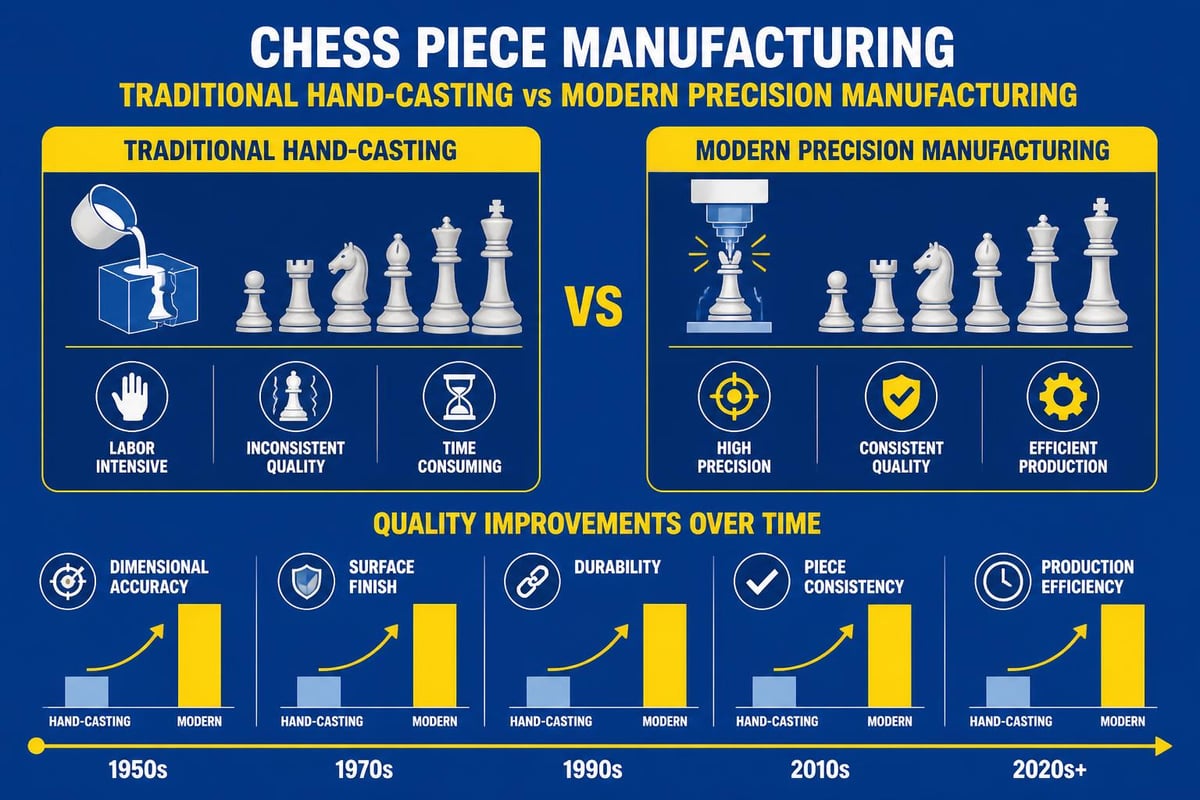
Medieval artisans created metal pieces by hand, often in precious metals for nobility. Each set represented weeks or months of skilled labor. The craftsmanship involved wasn't merely functional-it was art.
Modern manufacturing democratized these once-exclusive items. Today's casting and machining techniques allow ordinary players to own beautifully detailed metal sets. Yet the connection to that artisanal tradition remains, especially in higher-end brass and bronze pieces.
Matching Metal Pieces with the Right Board
Your beautiful metal chess pieces deserve an equally impressive board. The pairing matters more than you might think.
Material Considerations
Wooden boards complement metal pieces perfectly. The natural warmth of wood balances metal's coolness, creating visual and tactile harmony.
Ideal board materials for metal pieces:
- Walnut (rich, dark contrast)
- Maple (classic light squares)
- Rosewood (exotic, premium feel)
- Ebony (striking darkness)
Avoid glass or marble boards with metal pieces unless they have substantial felt bases. The hard-on-hard contact creates unpleasant sounds and risks chipping.
Square Size Calculations
We mentioned the king-to-square ratio earlier, but let's get specific. Measure your king's base diameter, multiply by 1.25 to 1.3, and that's your ideal square size.
For example, if your king's base is 1.6 inches in diameter, you want squares between 2.0 and 2.08 inches. This ensures pieces sit comfortably without crowding or appearing lost on oversized squares.
Investment Value and Price Points in 2026
Metal chess pieces span an enormous price range. Understanding what drives cost helps you make informed decisions.
Entry-Level Sets (£30-£80)
Budget metal sets typically use zinc alloy or lower-grade brass. They offer genuine metal weight and feel but may lack fine details or come with minimal accessories.
These work perfectly for players starting their journey, perhaps working through the Scandinavian Defense or other foundational openings. You get the benefits of metal without significant financial commitment.
Mid-Range Sets (£80-£200)
This sweet spot offers excellent value. Quality brass or stainless steel pieces with good detailing, proper felting, and often including a decent board.
Most serious recreational players find this range ideal. The pieces are substantial enough for daily use and study, looking handsome on display while remaining practical for regular games.
Premium Sets (£200+)
High-end metal chess pieces feature exceptional craftsmanship, premium materials, and often hand-finishing. Some incorporate precious metals or represent limited editions.
Are they worth it? That depends on your relationship with chess. If you spend hours weekly studying positions, analyzing games, or teaching others, premium pieces enhance that experience significantly.
Practical Considerations for Different Player Types
Your playing style and goals should inform your choice of metal chess pieces.
Tournament Players
If you compete regularly, invest in tournament-standard Staunton pieces. They should match FIDE specifications for size and weight.
Weight matters here. Pieces that stay firmly planted during clock hits prevent accidental disturbances. Many tournament players prefer stainless steel for its consistent heft and durability.
Study and Analysis
Players focused on improving their game, perhaps working through advanced chess books, benefit from pieces that facilitate extended board time.
Mid-weight brass pieces often work best. They're substantial enough to feel serious but not so heavy that moving them during long analysis sessions becomes tiresome.
Casual and Social Players
If chess is primarily social entertainment, you have maximum flexibility. Consider themed sets or unique designs that spark conversation.
The various metal-themed options available in 2026 let your personality shine. Just ensure pieces remain distinguishable during actual play.
Teaching and Coaching
Educators need durable, clearly identifiable pieces that withstand constant handling. Zinc alloy or brass Staunton sets work excellently.
Consider buying multiple identical sets if you teach groups. Consistency helps students focus on chess concepts rather than adjusting to different piece styles between lessons.
Environmental and Ethical Considerations
Modern consumers increasingly care about production ethics and environmental impact. Metal chess pieces raise specific considerations.
Manufacturing Processes
Metal chess pieces manufactured in China dominate the market, but quality varies enormously. Research manufacturers' practices before purchasing.
Look for companies committed to sustainable metal sourcing and fair labor practices. Several European manufacturers maintain higher environmental standards, though at premium prices.
Longevity as Sustainability
Here's a perspective often overlooked: quality metal chess pieces last generations. Unlike plastic sets that crack and degrade, a well-made brass or steel set bought today could still be playable in 2100.
This longevity represents genuine sustainability. The initial resource investment gets amortized over decades or centuries of use. You're not buying a chess set-you're acquiring an heirloom.
Making Your Final Decision
With all this information, how do you actually choose your perfect metal chess pieces?
Priority Ranking Exercise
List these factors in order of personal importance:
- Budget constraints
- Playing frequency
- Display vs. regular use
- Preferred metal type
- Design style preference
- Portability needs
- Board compatibility
- Future upgrade plans
Your personalized ranking reveals which features matter most. A player prioritizing portability might accept lighter zinc alloy pieces despite preferring brass aesthetics.
Testing Before Buying
Whenever possible, handle pieces before purchasing. Online shopping dominates in 2026, but specialty chess shops still exist in major cities.
Feeling the weight, examining the detailing, and checking felt quality in person prevents disappointment. If buying online, verify the return policy allows exchanges if the set doesn't meet expectations.
Starting Your Collection
Many dedicated players eventually own multiple sets. Consider starting with a solid mid-range set for regular play, then expanding into specialty pieces as budget allows.
Your first metal chess pieces mark a significant upgrade in your chess journey. Whether you're drilling the French Defense or exploring new opening systems, quality pieces make every moment at the board more enjoyable.
Metal chess pieces transform the playing experience through weight, durability, and timeless elegance that plastic simply can't match. Whether you choose brass, stainless steel, or zinc alloy, investing in quality pieces demonstrates commitment to your chess improvement. Ready to elevate your game beyond just the pieces? Chess Cheat Sheets provides comprehensive guides, puzzles, and opening resources designed to accelerate your progress from beginner to confident player-giving you the strategic knowledge to match your premium chess set.


