

Finding the best chess set ever isn't just about picking the most expensive option or the prettiest pieces. It's about discovering a set that matches your playing style, skill level, and how you actually use the board. Whether you're practicing openings, working through chess puzzles, or playing casual games with friends, the right chess set can genuinely enhance your experience. I've spent years watching players struggle with wobbly pieces and unclear squares, and I can tell you that your equipment matters more than most people realise.
What Actually Makes a Chess Set Exceptional
You might think all chess sets are basically the same, right? Thirty-two pieces, sixty-four squares, job done. But once you start playing regularly, you'll notice the differences quickly. The weight of the pieces in your hand, the clarity of the board, even the sound pieces make when they land on a square all contribute to your playing experience.
The history of chess pieces and sets reveals how design has evolved to meet players' needs. Modern sets build on centuries of refinement, but that doesn't mean older designs are obsolete. Some vintage-style sets offer incredible character whilst maintaining playability.
Tournament Standard Requirements
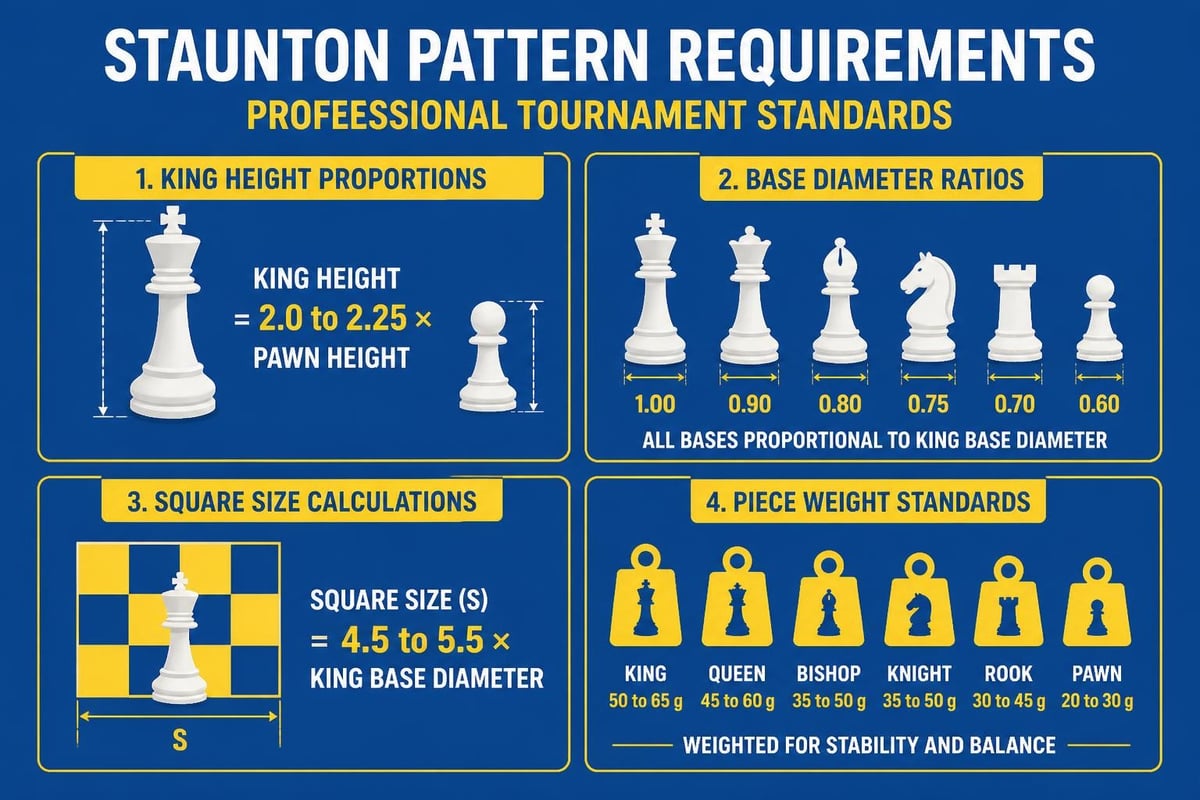
If you're serious about improving your game, you'll want something that meets tournament specifications. The Staunton pattern, established in 1849, remains the gold standard for competitive play. These sets have specific proportions that make pieces instantly recognisable during fast-paced games.
Here's what tournament organisers typically require:
- King height between 3.75 and 4.25 inches
- Square size proportional to king height (roughly double the king's base diameter)
- Weighted pieces with felt bases
- Clear colour contrast between light and dark squares
- Pieces that don't tip easily during play
The Staunton chess set standard has dominated competitive chess because it prioritises function over decoration. When you're calculating variations and tracking your chess openings, you need pieces that won't distract or confuse you.
Materials Matter More Than You Think
Walk into any chess shop and you'll face a bewildering array of materials. Plastic, wood, metal, glass, even marble. Each material offers distinct advantages and compromises. Let me break down what I've learned works best for different situations.
Wood Sets for Serious Players
Wooden sets represent the sweet spot for most improving players. They offer excellent weight, durability, and that satisfying tactile feedback when you move pieces. Sheesham and boxwood combinations are particularly popular, providing beautiful contrast without breaking the bank.
Premium wooden sets can last decades with proper care. I know players who've inherited sets from grandparents that still play perfectly. The investment pays off when you consider how many games you'll play over the years.
| Wood Type | Durability | Weight | Price Range | Best For |
|---|---|---|---|---|
| Sheesham | Excellent | Heavy | Mid-range | Tournament practice |
| Boxwood | Very Good | Medium | Mid-high | Display and play |
| Ebonised | Excellent | Heavy | High | Serious collectors |
| Rosewood | Excellent | Heavy | Very High | Premium sets |
Plastic Sets and Their Place
Don't dismiss plastic sets entirely. Modern vinyl boards with weighted plastic pieces offer incredible value for casual play and teaching beginners. They're virtually indestructible, easy to transport, and weather-resistant for outdoor games.
For learning chess fundamentals, plastic sets remove the anxiety of damaging expensive equipment. You can focus on improving your game rather than worrying about scratches and dents.
Board Design Considerations
The board matters just as much as the pieces. I've seen talented players struggle on poorly designed boards simply because the squares weren't clear or the proportions felt wrong. Your eyes spend hours scanning these sixty-four squares, so clarity is paramount.
Square Size and Spacing
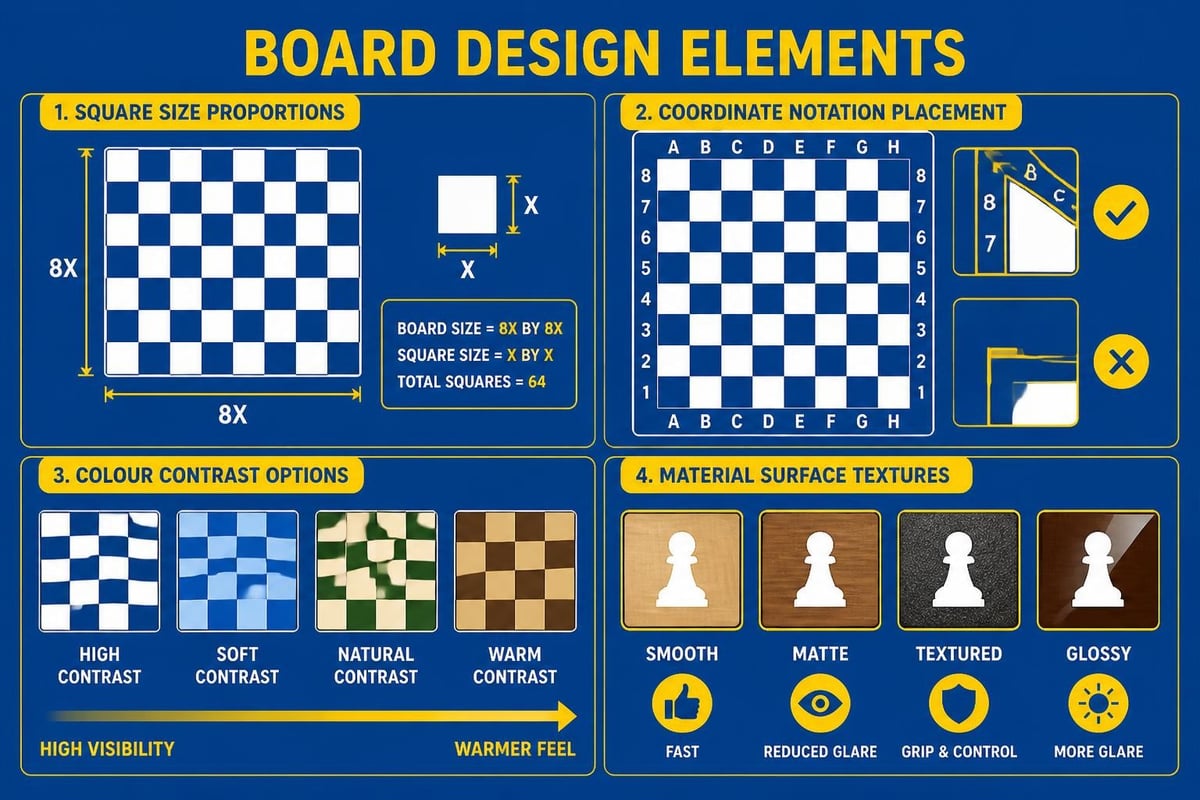
The relationship between piece size and square size follows mathematical principles. Tournament regulations specify that squares should be roughly twice the diameter of a pawn's base. This ensures pieces sit comfortably without crowding or looking lost.
Coordinate notation along the edges helps during study sessions. When you're analysing the Queen's Gambit variations, being able to quickly reference squares without counting makes a real difference.
Colour Contrast and Eye Strain
Here's something most beginners don't consider: you'll be staring at this board for hours. Poor colour contrast causes eye fatigue, which degrades your calculation ability during long sessions. The best chess set ever for you needs colours that remain comfortable even after a three-hour marathon.
Traditional brown and cream combinations work beautifully. Some modern sets use black and white for maximum contrast, though pure white can create glare under bright lights. Green and buff colours offer a gentler option for extended play.
Specific Recommendations for Different Players
Let me get practical here. What works for a tournament competitor differs dramatically from what a casual player needs. I've organised these recommendations based on how you actually use your set.
For Competitive Players and Club Members
You need something that meets tournament specifications but remains affordable enough to transport regularly. The House of Staunton's club sets or similar offerings provide excellent quality without premium pricing. These sets typically feature:
- Triple-weighted pieces for stability
- Felt-padded bases to protect boards
- Standard Staunton pattern
- Durable construction for frequent use
- Vinyl or wood boards with algebraic notation
When you're studying opening theory at the club, you'll appreciate pieces that stay put and a board that remains flat after hundreds of games.
For Home Study and Analysis
If you're primarily working through positions at home, comfort and aesthetics gain importance. A beautiful wooden set on your desk motivates regular study sessions. Quality here enhances your environment whilst supporting serious analysis work.
Consider sets with:
- Heavier pieces that don't shift when you're rapidly testing variations
- Larger boards that reduce eye strain during long sessions
- Storage solutions that keep pieces organised
- Materials that age gracefully and develop character
The expert-tested rankings highlight several sets that excel for home use, balancing beauty with functionality.
For Teaching and Multiple Students
Teachers need sets that survive enthusiastic handling whilst remaining budget-friendly enough to purchase in quantity. Plastic tournament sets tick these boxes perfectly. They clean easily, survive drops, and cost little to replace if pieces go missing.
When teaching fundamental chess concepts, you want students focusing on strategy rather than worrying about expensive equipment. Removing that anxiety improves learning outcomes dramatically.
Evaluating Quality Before Purchase
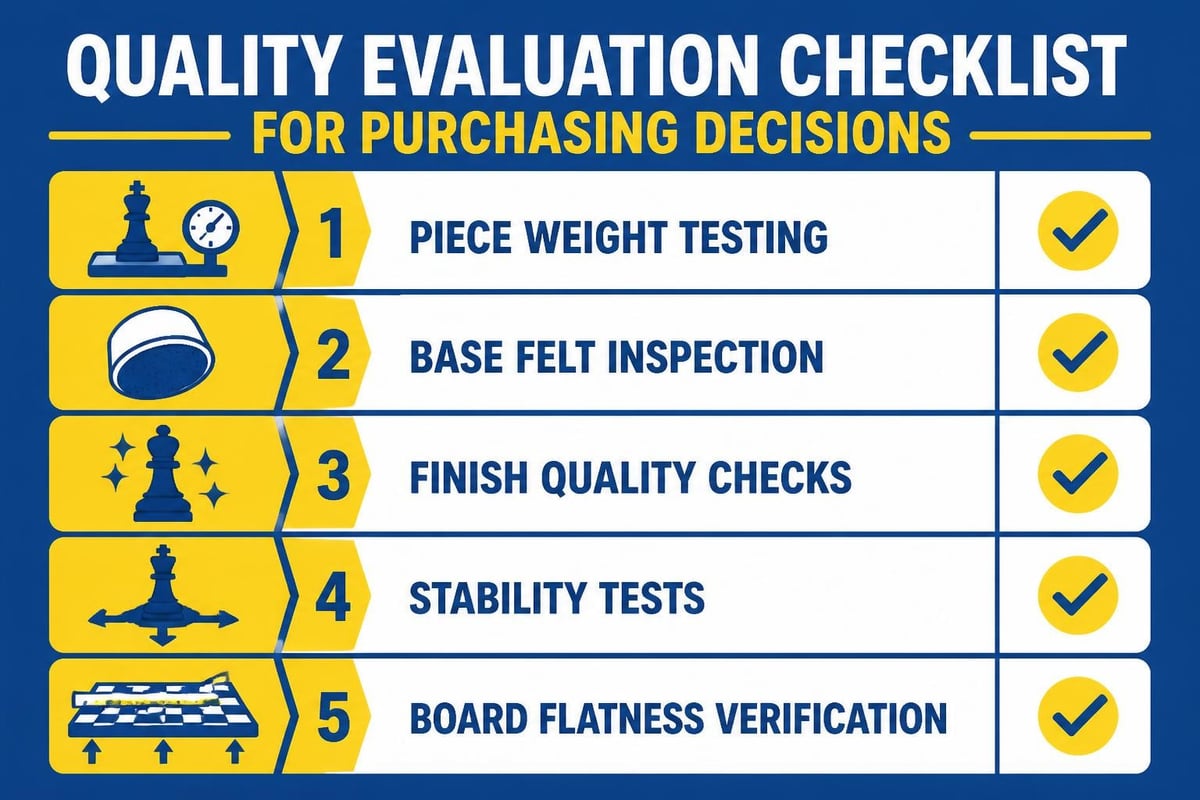
How do you actually assess quality when shopping? Online photos can deceive, and not everyone has access to specialist chess shops. I've developed a checklist that helps identify quality regardless of where you're buying.
Physical Inspection Points
If you can examine the set in person, check these factors:
- Weight distribution: Pieces should feel balanced, not top-heavy
- Base quality: Felt should be evenly applied without gaps or bubbles
- Finish: No rough edges, splinters, or manufacturing flaws
- King stability: The tallest piece should stand firmly without wobbling
- Board flatness: Place the board on a table and check for warping
One test I always perform: set up a complex position quickly. Quality sets make this effortless. Poor sets frustrate you with toppling pieces and unclear square borders.
Online Shopping Red Flags
When buying online, watch for these warning signs:
| Red Flag | What It Means | Alternative Action |
|---|---|---|
| No weight specifications | Likely lightweight pieces | Seek detailed specifications |
| Promotional photos only | Hiding quality issues | Find customer review photos |
| Unclear materials | Often lowest-grade materials | Contact seller directly |
| No size dimensions | Pieces may be incorrectly proportioned | Request exact measurements |
Reading comprehensive reviews helps you spot quality issues before spending money. Look for reviews from players at your skill level with similar usage patterns.
Beyond Traditional Sets: Alternative Options
The best chess set ever for you might not be traditional at all. Modern innovations have created options that solve specific problems brilliantly, even if they wouldn't work in tournament settings.
Travel and Portable Sets
Magnetic sets have improved dramatically. Modern versions use strong magnets that hold pieces securely during car journeys whilst remaining easy to move. Folding boards with internal storage keep everything contained in one compact package.
For players who analyse positions during commutes or holidays, portability becomes the priority. These sets sacrifice some tactile quality for convenience, which represents a fair trade-off for mobile study.
Decorative Display Sets
Some sets prioritise artistry over playability. Hand-carved pieces, unusual materials like stone or metal, and themed designs create conversation pieces that happen to be functional. These work beautifully for occasional games and display purposes.
Just understand the compromise you're making. Ornate pieces can be harder to recognise quickly, and unusual materials might not offer ideal playing characteristics. They're gorgeous, though, and that has value too.
Electronic and Digital Integration
Modern sets sometimes include electronic boards that record moves automatically or provide computer analysis. These technological additions help serious students review their games and identify improvement areas. The evolution of chess equipment continues to incorporate new technologies whilst respecting traditional gameplay.
For players working systematically through training material, digital integration can streamline the study process. Just ensure the physical playing experience remains satisfying.
Maintenance and Longevity
Even the best chess set ever deteriorates without proper care. I've seen beautiful wooden sets ruined by neglect and cheap plastic sets last decades with simple maintenance. Your investment deserves protection.
Wooden Set Care
Wood requires regular attention to maintain its appearance and functionality. Here's what actually matters:
- Keep pieces away from direct sunlight to prevent fading
- Apply furniture wax annually to protect the finish
- Store in moderate humidity to prevent cracking
- Clean with slightly damp cloth only, never soaking wet
- Check felt bases periodically and replace if needed
The effort pays off. Well-maintained wooden sets develop a beautiful patina that enhances their character whilst remaining perfectly playable.
Board Protection
Boards suffer damage from rolling, folding, and liquid exposure. Vinyl boards can crease permanently if stored incorrectly. Wooden boards warp in humidity extremes. Simple precautions prevent these issues:
- Store boards flat or properly rolled
- Use board bags for transport
- Keep away from radiators and dampness
- Clean spills immediately
- Avoid placing heavy objects on boards
When you're using your board regularly for studying openings, protection becomes habitual. The extra thirty seconds to store it properly saves replacement costs.
Budget Considerations and Value
Let's talk money. How much should you actually spend on the best chess set ever for your needs? The answer depends entirely on your circumstances and commitment level.
Entry-Level Investment
For beginners exploring whether chess will become a long-term passion, spending £30-50 on a decent tournament-style plastic set makes perfect sense. This provides adequate quality for learning fundamentals without major financial risk.
At this level, prioritise:
- Standard sizing that meets tournament specifications
- Clear square markings for learning notation
- Reasonable piece weight for stability
- Durability to survive the learning curve
You can always upgrade later if chess becomes a serious hobby. Starting with functional equipment beats delaying because you're saving for something premium.
Mid-Range Quality
The £100-200 range offers outstanding value. You'll find quality wooden sets, excellent boards, and craftsmanship that lasts years. This represents the sweet spot for committed club players and serious students.
These sets typically feature triple-weighted pieces, quality wood construction, and professional finishes. The improvement in playing experience over budget sets justifies the investment if you're playing regularly.
Premium and Collector Sets
Beyond £300, you're entering collector territory. Premium woods, exceptional craftsmanship, and sometimes historical reproductions characterise this category. These sets appreciate in value whilst providing playing excellence.
Collectors and serious enthusiasts find joy in owning these sets beyond their functional value. If you can afford it and chess represents a significant part of your life, premium sets offer satisfaction that transcends mere utility.
Making Your Final Decision
So how do you actually choose from the overwhelming options? I recommend a structured approach that matches equipment to your specific situation rather than chasing some mythical perfect set.
Start by honestly assessing your playing patterns:
- How often do you actually play?
- Where do most games happen?
- Are you studying seriously or playing casually?
- What's your realistic budget?
- Do aesthetics matter to you personally?
Answering these questions narrows your options dramatically. The comprehensive guides and reviews available in 2026 provide detailed comparisons once you know what you're looking for.
Testing Before Committing
If possible, play several games on different sets before buying. Chess clubs, tournament venues, and specialist shops offer opportunities to handle various options. What feels perfect in your hands might not match what reviewers recommend.
Trust your instincts alongside expert advice. The best chess set ever exists at the intersection of objective quality and personal preference. You'll know it when you find it.
Growing Your Collection
Many serious players eventually own multiple sets for different purposes. A travel set, a study set, and perhaps a beautiful display set serve different needs. This approach removes the pressure to find one perfect option.
Start with one quality set that covers your primary use case. Add others as your needs and budget evolve. Your chess equipment can grow alongside your developing chess skills and deepening appreciation for the game.
Choosing the best chess set ever ultimately comes down to understanding your needs and finding equipment that serves them beautifully. Whether you select a classic wooden Staunton set, a practical tournament set, or something uniquely suited to your situation, quality equipment enhances every game you play. At Chess Cheat Sheets, we understand that improving your chess involves more than just studying openings and tactics, which is why our comprehensive guides and resources help you develop a complete understanding of the game. Explore our collection of streamlined cheat sheets, puzzles, and opening guides to complement your perfect chess set and accelerate your improvement today.


