

Starting your chess journey can feel overwhelming, especially when you're faced with hundreds of opening variations to choose from. You've probably watched games where players rattle off 15 moves of theory before pausing to think, and you're wondering where on earth to begin. The good news? You don't need to memorise extensive theory to start winning games. What you need is a solid understanding of opening principles and a few reliable openings that'll serve you well as you develop your skills. In this guide, we'll explore the best beginner openings chess players should focus on, along with practical advice to help you build a winning repertoire without the headache.
Why Opening Choice Matters for Beginners
Your opening sets the tone for the entire game. It's not just about memorising moves; it's about understanding the logic behind those moves. When you learn the fundamentals of chess openings, you're actually building thinking patterns that'll help you throughout the middle game and beyond.
Many beginners make the mistake of jumping straight into complex systems like the Najdorf Sicilian or the King's Indian Defence. While these openings are perfectly sound, they require deep theoretical knowledge and tactical sharpness that most new players haven't yet developed. Instead, you want openings that teach you good habits whilst being forgiving of small inaccuracies.
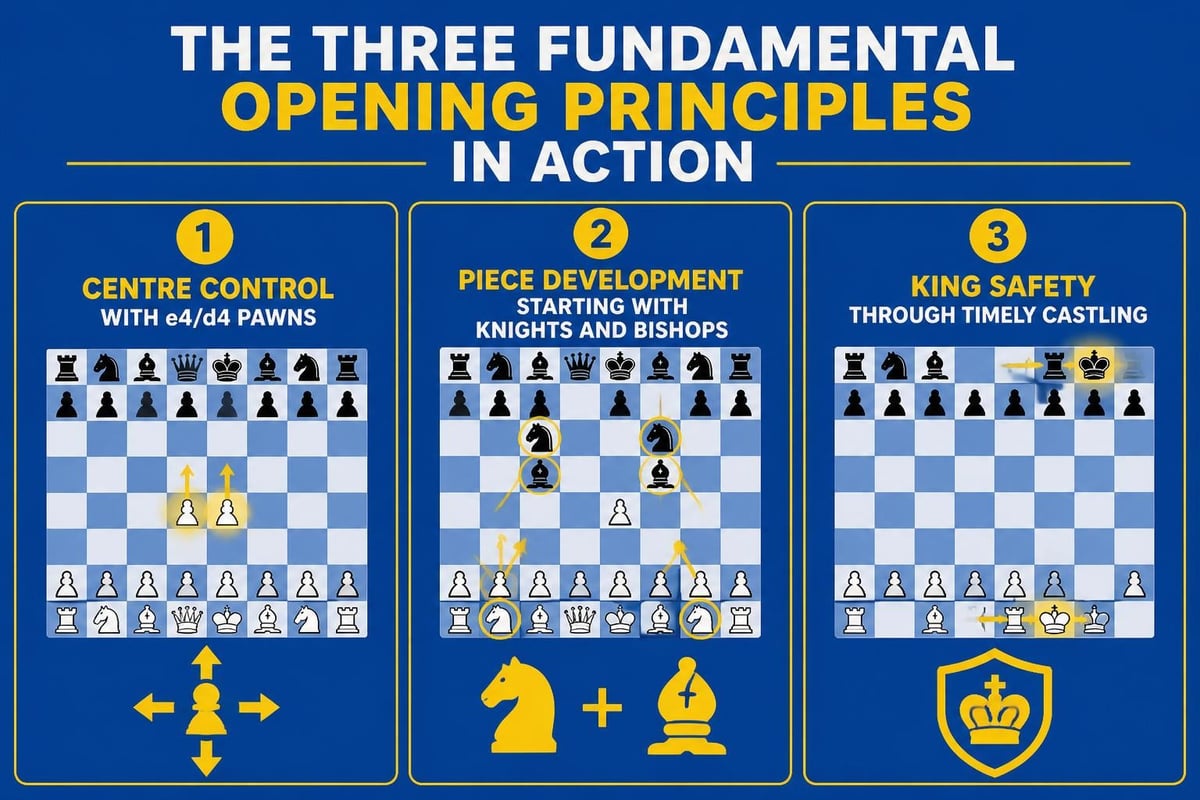
The Core Principles That Matter
Before we dive into specific openings, let's establish what makes an opening suitable for beginners:
- Clear development plans that don't require memorising 20 moves of theory
- Natural piece placement that follows fundamental principles
- Flexibility to handle your opponent's responses without needing specific knowledge
- Strategic clarity so you understand what you're trying to achieve
The Italian Game: Your First Opening as White
If I had to recommend just one opening for beginners playing White, the Italian Game would be it. Starting with 1.e4 e5 2.Nf3 Nc6 3.Bc4, this opening has been teaching players sound chess for centuries.
What makes the Italian Game one of the best beginner openings chess players can learn? It naturally follows all the key principles. You control the centre with your e-pawn, develop your knight to its most active square, and then develop your bishop whilst eyeing Black's vulnerable f7 square. It's chess in its purest form.
The beauty of the Italian Game lies in its simplicity. You're not trying to trick your opponent or win material through tactical complications. Instead, you're building a solid position and preparing to castle kingside. From there, you can choose between aggressive plans (like an early d4 push) or more strategic approaches (developing your remaining pieces before committing to a plan).
Key Moves and Ideas
Here's a typical sequence in the Italian Game:
- e4 e5
- Nf3 Nc6
- Bc4 Bc5
- c3 Nf6
- d4
This straightforward plan gives you a strong centre and active pieces. You'll typically castle kingside, develop your remaining pieces, and then look for opportunities to advance in the centre or on the flanks. The Italian Game offers clear strategic goals that help you understand positional chess.
The French Defence: Solid and Strategic
When you're playing Black against 1.e4, you want something reliable that doesn't require memorising endless variations. The French Defence (1.e4 e6) fits this description perfectly. It's one of those openings that rewards strategic understanding over tactical memorisation.
After 1.e4 e6 2.d4 d5, you're immediately challenging White's centre. Unlike openings where you allow White complete central control, the French lets you stake your claim from move one. Yes, your light-squared bishop gets locked in temporarily, but you'll have clear plans to activate it later through moves like ...c5 or by manoeuvring it to d7 and then e8-h5.
| Aspect | French Defence | Open Games (1...e5) |
|---|---|---|
| Central structure | Asymmetrical, pawn chains | Symmetrical initially |
| Complexity | Medium-term planning | Immediate tactics possible |
| Bishop development | Delayed but planned | Immediate |
| Typical result | Strategic middlegame | Sharp tactical play |
The French teaches you about pawn structures, piece manoeuvres, and long-term planning. These skills transfer beautifully to other areas of your game. Many players stick with the French throughout their chess career because it offers such rich strategic content.

The London System: Consistency Is Key
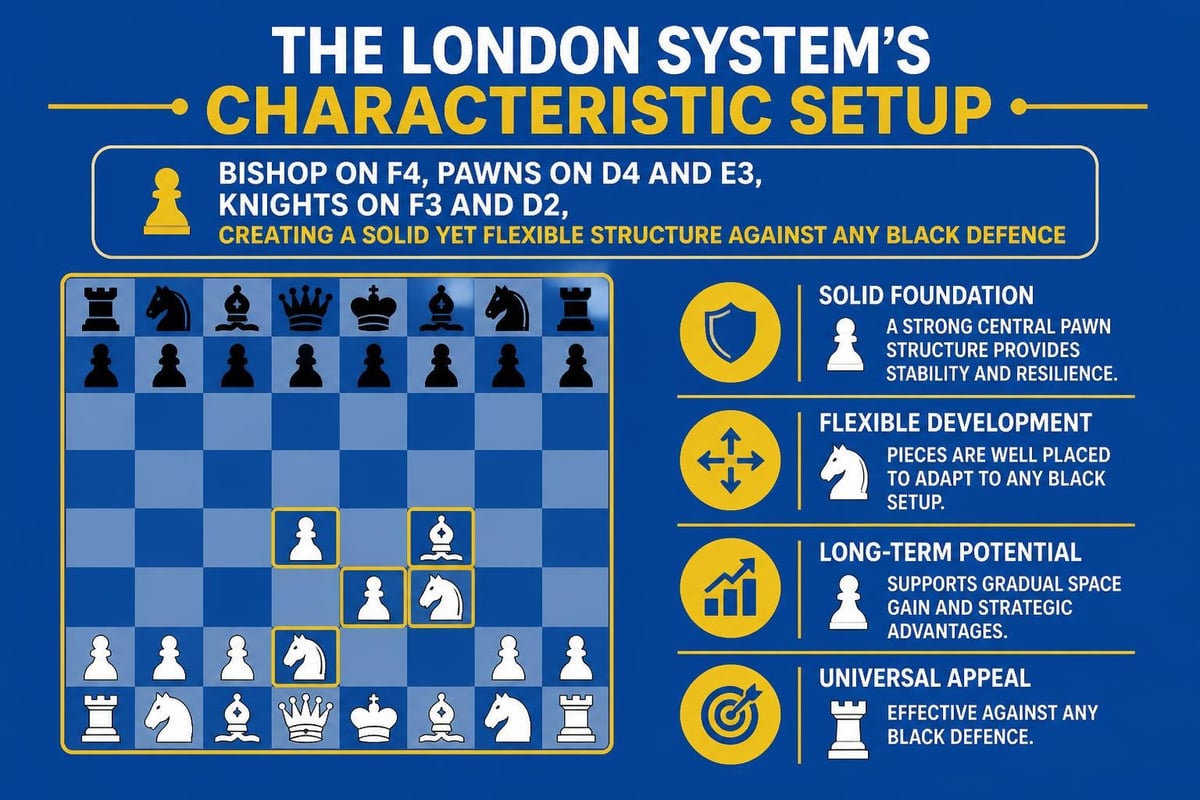
Want an opening that works against virtually anything Black plays? The London System might be your answer. This setup-based opening has gained massive popularity in recent years, and for good reason.
Playing the London means you'll develop your pieces to the same squares regardless of what Black does: 1.d4, 2.Bf4 (or Nf3 first, then Bf4), 3.e3, 4.Nf3 (or Bd3), and eventually c3, Nbd2, and castling. This consistency means less memorisation and more time spent understanding typical plans and pawn breaks.
The London System demonstrates that middlegame planning starts from move one. You're building a specific pawn structure and piece setup that leads to familiar middlegame positions. This repetition accelerates your learning because you're playing similar positions repeatedly.
When to Avoid the London
Despite its strengths, the London isn't perfect for every beginner. If you're the type of player who craves sharp tactical battles and immediate central confrontations, you might find it too slow. It's a system for players who value understanding and solidity over tactical fireworks.
The Caro-Kann: Reliability Personified
Another excellent choice when facing 1.e4 is the Caro-Kann Defence (1.e4 c6). This opening shares the French's solid reputation but with one crucial difference: your light-squared bishop develops easily to f5 or g4.
After 1.e4 c6 2.d4 d5, you're following a similar strategic idea to the French. You're challenging the centre and preparing to develop your pieces to active squares. The main line continues 3.Nc3 dxe4 4.Nxe4 Bf5, and you've already developed a piece that often causes problems for French players.
The Caro-Kann appears regularly in discussions about the most common chess openings at all levels. From club players to super-GMs, people trust it because it offers a healthy balance between solidity and winning chances. The Classical Variation provides particularly clear strategic guidelines for developing your pieces and executing your plans.
The Scotch Game: Active and Direct
If you prefer more open positions with piece activity over quiet manoeuvring, the Scotch Game deserves your attention. After 1.e4 e5 2.Nf3 Nc6 3.d4, you're immediately opening the centre and creating piece play.
The Scotch offers several advantages for improving players:
- Immediate central action teaches you about open positions
- Tactical opportunities arise naturally from the open centre
- Less theoretical than other e4 openings like the Ruy Lopez
- Clear plans involving rapid development and king safety
Following 3...exd4 4.Nxd4, you've created an asymmetrical position with lots of piece activity. Your knight sits powerfully on d4, you can develop your pieces rapidly, and you'll often castle quickly and look for attacking chances. It's chess with the training wheels off, but not so sharp that one mistake costs you the game immediately.
The Queen's Gambit: Classical and Powerful
You've probably heard about the Queen's Gambit thanks to the popular Netflix series, but did you know it's genuinely one of the best beginner openings chess players can master? Starting with 1.d4 d5 2.c4, this opening has been a mainstay of chess for over 500 years.
Don't let the word 'gambit' fool you. After 2...dxc4, White isn't actually sacrificing anything. You'll regain the pawn easily, usually with moves like e3 and Bxc4. What you gain is rapid development and central control. Many comprehensive guides recommend the Queen's Gambit for players looking to build a solid foundation.
Building Your Queen's Gambit Repertoire
The Queen's Gambit leads to various structures depending on whether Black accepts (2...dxc4) or declines (2...e6 or 2...c6). This variety might seem daunting initially, but it's actually beneficial. You learn multiple pawn structures and middlegame plans, making you a more complete player.
Most beginners find the Queen's Gambit Declined particularly instructive. After 1.d4 d5 2.c4 e6, you'll typically continue with 3.Nc3 Nf6 4.Bg5, developing pieces and putting pressure on Black's position. The resulting positions teach you about piece coordination, central control, and gradual improvement of your position.
The King's Indian Defence: For Ambitious Spirits
If you're playing Black against 1.d4 and want something more ambitious than the solid approaches we've discussed, consider the King's Indian Defence. Starting with 1.d4 Nf6 2.c4 g6, you're signalling your intention to fianchetto your bishop and fight for the centre from the flanks.
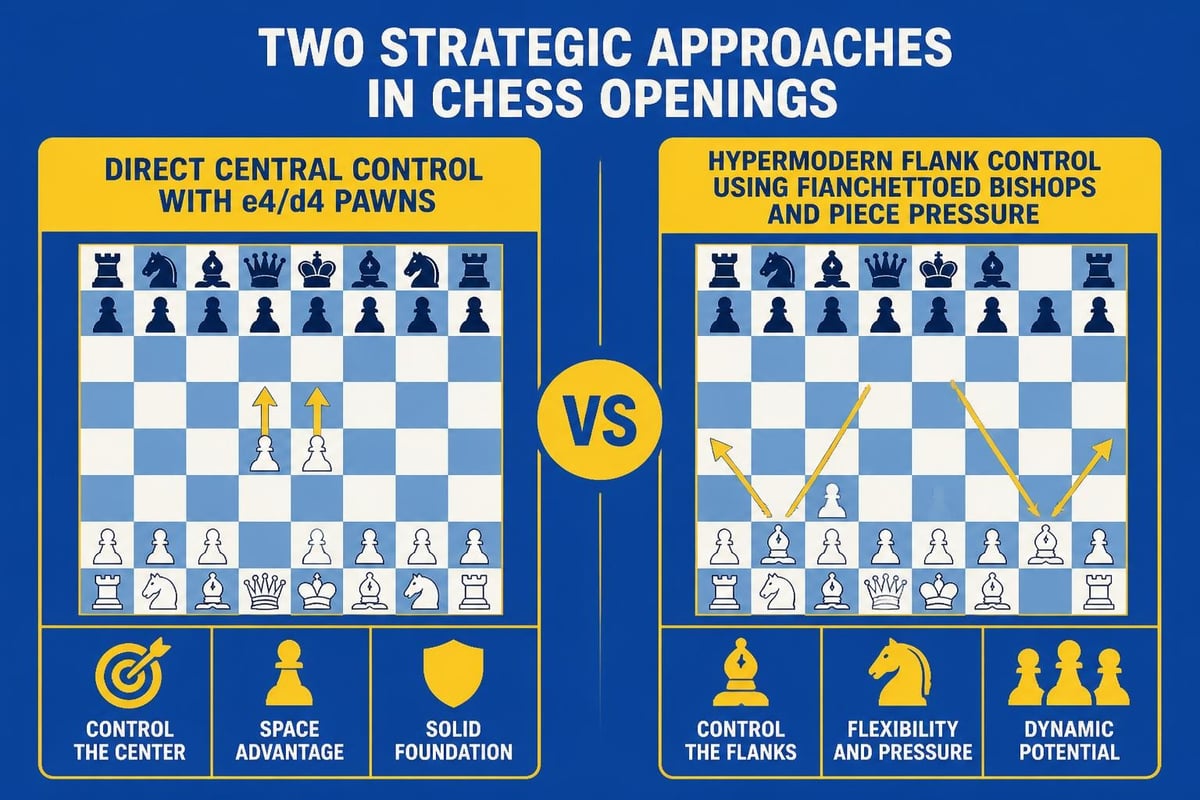
The King's Indian represents a different philosophy. Instead of immediately contesting the centre with pawns, you allow White to build a pawn centre and then attack it. This approach teaches you dynamic play, pawn breaks, and how to create counterplay when your opponent seems to control the board.
Fair warning: the King's Indian requires more study than some other beginner options. The positions can become extremely sharp, with both sides attacking on opposite flanks. However, if you're willing to invest time understanding the key ideas, it rewards you with exciting, fighting chess.
Building Your Opening Repertoire Strategically
Now that we've covered several openings, you might wonder how to construct a cohesive repertoire. Here's a practical approach for beginners:
As White:
- Choose one main opening after 1.e4 (Italian Game or Scotch Game work brilliantly)
- Pick one main opening after 1.d4 (London System or Queen's Gambit provide excellent options)
- Learn the basic ideas and typical plans in each
As Black:
- Select one response to 1.e4 (French Defence or Caro-Kann offer solidity)
- Choose one response to 1.d4 (Queen's Gambit Declined or King's Indian Defence cover different styles)
- Understand the key pawn breaks and piece placements
This gives you four openings to learn, which is manageable without overwhelming yourself. As you improve, you can expand your repertoire, but these foundations will serve you for years.
Common Mistakes Beginners Make
Even when playing the best beginner openings chess has to offer, new players often stumble over the same errors. Let's address the most frequent ones:
Neglecting Development
The biggest mistake? Moving the same piece multiple times in the opening whilst other pieces remain on their starting squares. Each move should contribute to your development or control of the centre. Moving your queen out early might seem aggressive, but it usually just gives your opponent free developing moves whilst they attack your queen.
Ignoring the Centre
Whether you control the centre with pawns (classical approach) or pieces (hypermodern approach), you must address it somehow. Developing pieces to the rim whilst ignoring e4, d4, e5, and d5 leads to cramped, passive positions.
Forgetting King Safety
I've seen countless beginners delay castling to "develop all my pieces first" or "launch an attack." This usually backfires spectacularly when their opponent opens the centre and their king becomes vulnerable. Castle early, typically within your first 10 moves.
How to Study Openings Effectively
Knowing which openings to play is one thing; learning them efficiently is another. Here's how to make the best use of your study time:
- Learn principles before variations – Understand why moves are played, not just what moves are played
- Play your openings in games – Theory means nothing without practical experience
- Review your games – Every loss teaches you what you don't yet understand
- Use spaced repetition – Review key positions regularly rather than cramming
Consider using resources specifically designed for beginners. The beginner-friendly guides at Chess.com provide excellent starting points, whilst more detailed opening guides offer systematic approaches to building your repertoire.
Practical Tips for Your First 100 Games
Theory is wonderful, but practical advice wins games. Here's what to focus on during your early chess career:
Pattern Recognition Over Memorisation
Don't try to memorise 15 moves of theory in your chosen opening. Instead, learn the typical pawn structures, piece placements, and plans. When you understand patterns, you can reconstruct the position logically rather than relying on memory.
Stick With Your Choices
It's tempting to switch openings after every loss, but consistency pays dividends. Play the same openings for at least 50-100 games before considering changes. This repetition helps you understand the positions deeply and recognise recurring themes.
Track Your Progress
Keep a simple notebook or digital document tracking what you learn from each game. When did you deviate from principle? What tactical patterns appeared? Which positions felt comfortable? This reflection accelerates improvement dramatically.
| Learning Method | Time Investment | Retention Rate | Best For |
|---|---|---|---|
| Reading opening books | High | Medium | Understanding concepts |
| Watching videos | Medium | Medium | Visual learners |
| Playing games | High | High | Practical pattern recognition |
| Reviewing with engine | Medium | High | Finding mistakes |
| Spaced repetition drills | Low | Very high | Memorising key positions |
Transitioning to the Middlegame
Here's something many beginners don't realise: your opening should flow naturally into a middlegame you understand. The best beginner openings chess players choose aren't just about reaching move 10 safely; they're about reaching positions where you know what to do next.
The Italian Game transitions into middlegames with central tension and piece play. The French Defence leads to pawn chain strategies and minority attacks. The London System creates familiar pawn structures where you understand the typical plans. This continuity between opening and middlegame makes learning chess less fragmented and more intuitive.
When you're analysing your games move by move, pay special attention to moves 10-15. This transition phase often determines whether your opening was successful. Did you emerge with active pieces and a clear plan? Or are you cramped and uncertain about what to do?
Resources to Deepen Your Understanding
Beyond just knowing which openings to play, you want resources that help you improve systematically. Consider exploring comprehensive opening guides that break down complex positions into digestible concepts.
For practical improvement, nothing beats solving puzzles that arise from your chosen openings. When you work through tactical exercises from familiar positions, you're training pattern recognition in the structures you'll actually face. This targeted practice proves far more effective than random puzzle sets.
Additionally, understanding rating systems and how they relate to opening choice helps set realistic expectations. Your current chess Elo influences which openings suit you best, and matching your repertoire to your skill level accelerates improvement.
Advanced Beginner Considerations
Once you've played 100-200 games with your core repertoire, you might consider expanding strategically. This doesn't mean abandoning your foundations; rather, it's about adding depth and handling specific lines your opponents repeatedly employ against you.
For instance, if you play the Italian Game but opponents consistently respond with the Two Knights Defence, you might study those specific positions more deeply. Similarly, French Defence players often need to understand the Advance Variation thoroughly since it's extremely popular at club level.
The key is targeted expansion based on your actual games, not theoretical completeness. You'll never know every variation, and trying to learn them all creates confusion rather than competence.
Choosing the best beginner openings chess has to offer sets you up for long-term success by teaching sound principles whilst building practical skills. Remember, your opening is just the beginning of your chess journey, not the destination. Ready to take your opening preparation to the next level? Chess Cheat Sheets provides streamlined guides, practical cheat sheets, and targeted resources that help you master your chosen openings without drowning in theory, so you can spend less time studying and more time winning games.


