

Imagine mastering every chess move, understanding not just what to play, but why, one step at a time. In a world where chess is more popular than ever, players like you are searching for a method that keeps up with the times.
This guide is your roadmap to success, offering a chess move by move approach designed for 2025. You will discover foundational principles, opening secrets, middlegame tactics, endgame strategies, annotated move-by-move examples, and practical improvement tips.
Are you ready to unlock actionable strategies and the latest insights? Follow each step, apply what you learn, and watch your chess skills grow.

The Foundations: Understanding Chess Principles Move by Move
Imagine sitting down at the board, knowing that every move you make is guided by time-tested principles and the latest chess insights. This is the secret to transforming your chess move by move, building a foundation that holds up under pressure. Instead of memorizing endless lines, you can rely on core ideas that apply to every position, every game.
The Importance of Classical Chess Principles
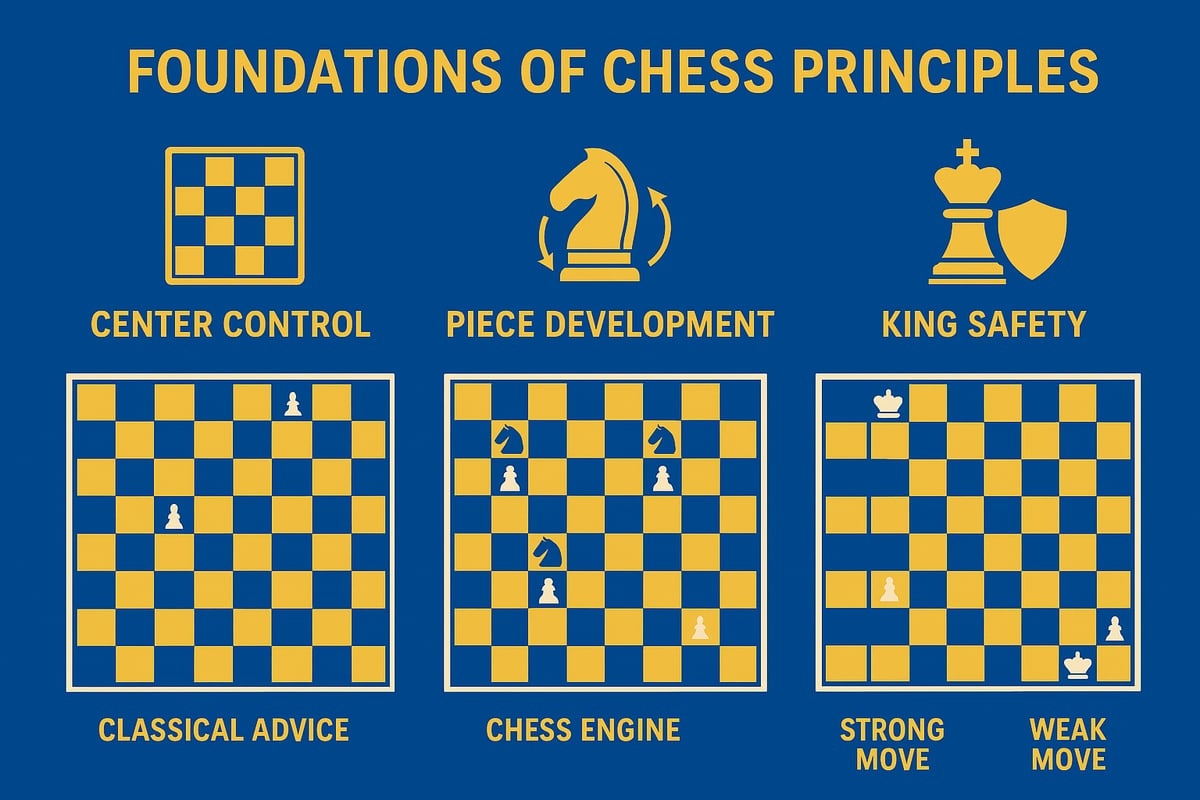
Let’s start with the bedrock of chess move by move mastery: classical principles. From the earliest days of chess, masters have stressed the importance of controlling the center, developing your pieces efficiently, and keeping your king safe. These ideas are not just for beginners—they shape every phase of the game.
Think about Chernev’s classic “Logical Chess,” where every move is explained with a guiding principle, not just memorized. The beauty of this approach is its universality. Whether you’re playing 1.e4 or 1.d4, you’ll find these rules steering your choices.
But chess in 2025 is a blend of old and new. Modern engines sometimes challenge these principles, suggesting moves that look odd but work after deep calculation. This is where the real magic of chess move by move thinking kicks in: you learn when to trust the principles and when to dig deeper.
Principle-based play gives you a roadmap, especially when you’re out of book. Calculation-based play lets you find tactical shots, but you need a foundation to know what to calculate. The two styles work hand in hand, helping you avoid blunders and seize opportunities.
| Classical Principle | Engine-Inspired Approach |
|---|---|
| Control the center | Sometimes cede center for activity |
| Quick development | Delay development for concrete gains |
| Early castling | Delay castling for initiative |
Grasping this balance is key to your growth in chess move by move.
Common Opening Principles and Their Application
Now, let’s look at how these principles play out in the opening. You’ve probably heard, “Occupy the center with pawns.” Even in today’s engine-driven world, this advice is still gold. When you push your e- and d-pawns, you claim vital space and open lines for your pieces.
Developing pieces toward the center is another pillar. Knights on f3 and c3, bishops on c4 and f4, all aim at the heart of the board. Avoid moving the same piece twice early on, unless there’s a clear reason. Each move should add something new.
Castling early is not just a tradition—both historical analysis and engine data back it up. For example, studies show that delaying castling often leads to king safety issues, especially in sharp lines like the Giuoco Piano. Did you know that a move like 4...Qe7 in this opening loses nearly half the time at the top level, compared to the simple 4...Nf6?
Another timeless lesson: don’t push pawns in front of your castled king. Players like Tarrasch and Alekhine warned against weakening your own defenses. Even now, engines confirm the cost of such pawn moves.
For a deeper dive into these essential ideas, check out this Chess Opening Principles: What Every Player Should Know guide, which breaks down the “why” behind each move.
By applying these basics, you’ll see your chess move by move decisions become more confident and logical.
How to Critically Evaluate Chess Advice
Here’s where things get interesting. Not all advice is created equal, and part of mastering chess move by move is knowing how to question what you hear. It’s easy to memorize “book moves,” but true improvement comes from understanding why a move works.
Balancing principles with calculation is a skill that grows over time. Engines are powerful teachers, but they’re not infallible. For example, in the Giuoco Piano, the move 9.h3 has sparked debate. Classical wisdom calls it slow, but engines often rate it highly for preventing pins and preparing d4.
The best way to learn? Challenge advice. Ask yourself, “What is this move doing? What happens if I try something else?” This move-by-move self-explanation builds your intuition and helps you avoid blindly repeating mistakes.
Try this: after every move in your own games, pause and explain it to yourself. Did you follow a principle, or did you spot a concrete tactical idea? This habit, combined with engine feedback, will sharpen your chess move by move understanding.
In the end, the journey to mastery is about blending classic wisdom, modern tools, and your own critical thinking—one move at a time.
Step 1: Mastering the Opening—Move by Move
Picture this: the first few moves of your chess game set the entire stage. If you want to master chess move by move, your opening repertoire is where it all begins. The opening is like the opening notes of a symphony—get them right, and the rest of your game will flow much more smoothly.
Build a Strong Opening Repertoire
Building your opening repertoire is like packing the perfect toolkit before a big adventure. In 2025, the most popular chess openings for White include the Italian Game, Ruy Lopez, and Queen’s Gambit. For Black, players gravitate toward the Sicilian Defense, French Defense, and Caro-Kann. But how do you choose the right one for you?
Start by picking openings that fit your style. Are you aggressive, or do you prefer quiet, strategic play? No matter your choice, the foundation is always to understand the principles behind each move, not just the moves themselves. When you study chess move by move, you’ll see that early control of the center, rapid piece development, and king safety are non-negotiable.
Let’s look at some common pitfalls:
- Moving the same piece twice without necessity
- Neglecting to develop minor pieces
- Making premature pawn moves in front of your king
- Delaying castling
A quick glance at grandmaster games shows how costly these mistakes can be. For example, in the Giuoco Piano, the move 4...Qe7 instead of 4...Nf6 loses nearly half the time at top levels.
Want to turbocharge your opening study? Visual tools and cheat sheets can make learning efficient and fun. They break down every opening move, so you always know not just what to play, but why—a key to mastering chess move by move.
Move-by-Move Breakdown of a Model Opening
Let’s dive into a classic: the Giuoco Piano. Here’s how a typical line unfolds, step by step:
| Move | Purpose | Alternatives | Engine Eval |
|---|---|---|---|
| 1.e4 | Controls center, opens lines | d4, Nf3 | +0.20 |
| 1...e5 | Fights for center | c5, e6 | +0.10 |
| 2.Nf3 | Attacks e5, develops | Nc3, d3 | +0.25 |
| 2...Nc6 | Defends e5, develops | d6, Nf6 | +0.15 |
| 3.Bc4 | Targets f7, develops | Bb5, d4 | +0.30 |
| 3...Bc5 | Develops, eyes f2 | Nf6, Be7 | +0.20 |
| 4.c3 | Prepares d4, controls center | d3, Nc3 | +0.35 |
With chess move by move, each action has a reason. For example, 5.d4 is often better than 5.O-O because it challenges the center and opens lines for your pieces. Early queen moves or unnecessary pawn pushes, on the other hand, can backfire quickly.
Engines today often confirm classic advice, but sometimes they suggest surprising alternatives. By reviewing each move’s purpose, threats, and consequences, you sharpen your decision-making and avoid memorizing blindly.
Chess Cheat Sheets: Visual Guides for Opening Mastery
If you’re eager to master chess move by move, you’ll love plug-and-play visual resources. Visual Chess Opening Guides provide clear, annotated diagrams for every step of popular openings.

These guides help you see the “why” behind every move, not just the sequence. You’ll find toolkits, puzzles, and even free starter kits to reinforce your learning. For beginners and club players, this means you can build a strong, principle-based opening repertoire without feeling overwhelmed.
Imagine having a quick reference at your fingertips during practice or play. Visual guides help you spot patterns and understand real-world consequences of each decision. With these resources, the journey to mastering chess move by move becomes not only possible, but genuinely enjoyable.
Step 2: Navigating the Middlegame—Tactics, Strategy, and Planning
Stepping into the middlegame feels like entering a dense forest. The opening has given you a path, but now every branch leads to new possibilities and hidden dangers. Using a chess move by move approach, you can break down complex positions into manageable steps.
In this section, you’ll learn how to recognize when the middlegame begins, spot powerful tactical patterns, build strategic plans, and avoid classic mistakes. Let’s dive in and see how you can master the heart of every chess battle.
Transitioning from Opening to Middlegame
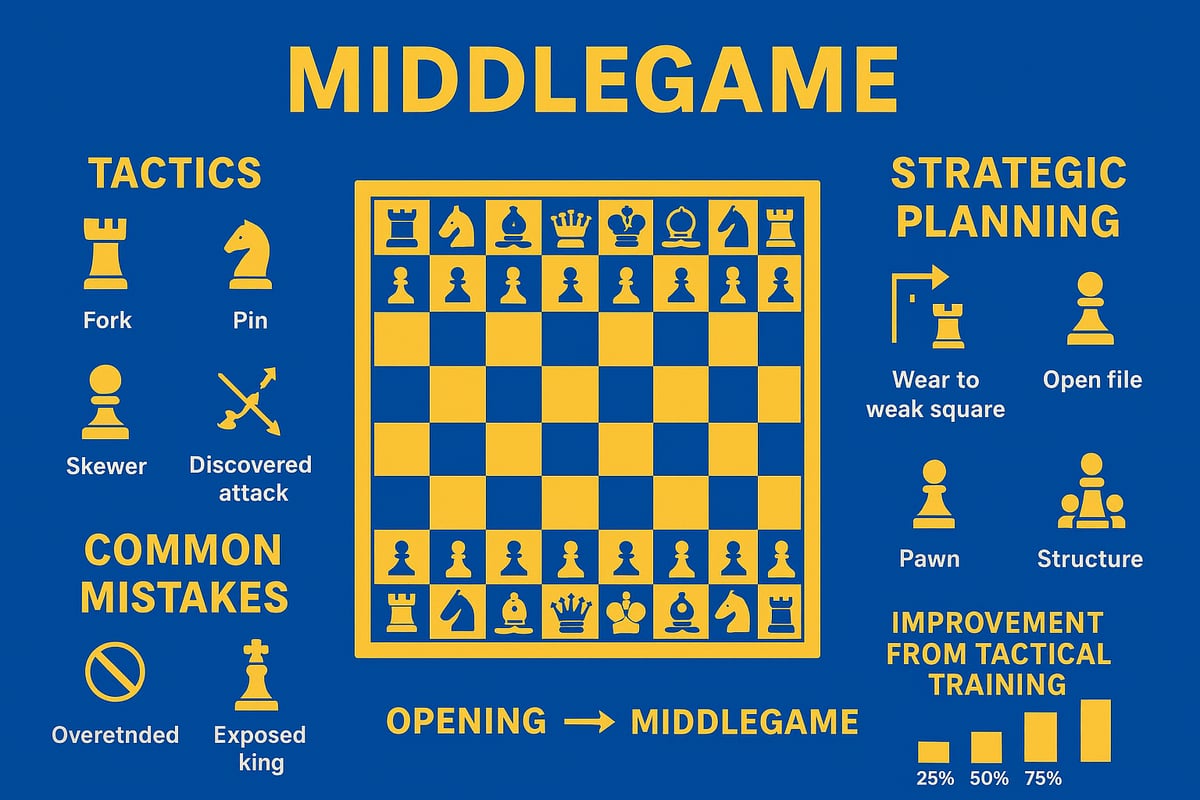
How do you know when you’ve left the opening and stepped into the middlegame? Usually, the answer is simple: most pieces are developed, kings are castled, and the early plans have played out. Now, the focus shifts from theory to creativity.
A chess move by move mindset helps you spot the moment to change gears. Look for imbalances: Is one side ahead in development? Are there open lines or weak pawns? These clues signal it’s time to start planning.
For example, after both sides have castled, you might notice your opponent’s pawns are doubled or their pieces are awkward. That’s your cue to form a middlegame plan. Using this approach, you can evaluate each position as it evolves, not just follow rote sequences.
Key Middlegame Tactics and How to Spot Them
Tactics are the fireworks of chess. They can turn a quiet position into a decisive win in a single move. The chess move by move method is perfect for learning tactical patterns, because it encourages you to ask, “What threats exist right now?”
Essential tactical motifs include:
- Forks: One piece attacks two targets at once
- Pins: A piece can’t move without exposing a more valuable piece
- Skewers: Like pins, but the more valuable piece is attacked first
- Discovered attacks: Moving one piece reveals another threat
Practicing these with puzzles is vital. In fact, club-level players who solve daily puzzles improve their accuracy by up to 20 percent. If you want to sharpen your move-by-move thinking, try using resources like Improve Positional Skills with Puzzles. These tools help you recognize tactics and apply them in your own games.
Don’t just solve puzzles—review each solution so you understand not just what worked, but why. This habit builds your tactical intuition step by step.
Strategic Planning: Move-by-Move Thinking
Tactics may win material, but strategy wins wars. Strategic planning in chess move by move means evaluating the position after every turn and adapting your plan as the board changes.
What should you look for? Start with:
- Weak squares: Are there outposts for your knights?
- Open files: Can your rooks invade?
- Pawn structure: Are there targets or passed pawns to create?
For example, consider the Colle System. A pawn push like c4 c5 can open lines, but only if you’re ready to support the advance. If you see your opponent’s king looking vulnerable, ask yourself: “Is now the moment to attack, or should I improve my worst-placed piece first?”
Prophylaxis is another crucial concept—anticipating what your opponent wants and stopping it before it starts. By thinking move by move, you can balance attack and defense without getting caught off guard.
| Strategic Feature | Move-by-Move Question |
|---|---|
| Weak squares | Can I occupy or defend them? |
| Open files | Should I double my rooks? |
| Pawn structure | Is there a weakness to target? |
Common Middlegame Mistakes and How to Avoid Them
Even strong players fall into classic traps. The chess move by move approach helps you spot errors before they become disasters.
Common mistakes include:
- Overextending pawns, leaving your king exposed
- Grabbing pawns at the expense of piece activity
- Trading pieces without a clear reason
Take, for instance, a game where White snatches a pawn with Bxh6 but falls behind in development. Often, the price of greed is too high. Always ask, “Does this move improve my position, or just win material?”
To avoid these pitfalls, analyze your games after you play. Go through each move, asking if you followed principles or got distracted by short-term gains. Over time, you’ll develop a sharper sense for danger and opportunity.
Remember: Every middlegame is a new puzzle. By breaking it down chess move by move, you’ll build the skills to outplay your opponents, one decision at a time.
Step 3: Endgame Essentials—Securing Victory One Move at a Time
Ever reached an endgame and felt unsure of what to do next? You are not alone. The endgame is where your chess move by move understanding truly gets tested. Here, a single slip can turn a win into a draw or even a loss. Let us break down the essentials so you can convert more games and feel confident at the board.
The Importance of Endgame Knowledge
You might wonder, why invest time in the endgame? Well, over 50% of amateur games are decided right here. No matter how well you play the opening or middlegame, the endgame is where your chess move by move skills can secure victory or save a tough position.
In the endgame, fewer pieces mean calculation and understanding matter more. Here, memorizing a few key positions and methods gives you practical tools for real games. If you know how to convert a pawn advantage or hold a draw in a tough spot, you will feel more confident every time you play.
It is not just about memorizing tricks, though. Learning the endgame helps you see the logic behind each move and builds your overall chess move by move thinking. This is the phase where your choices are magnified, and each decision truly counts.
Core Endgame Principles
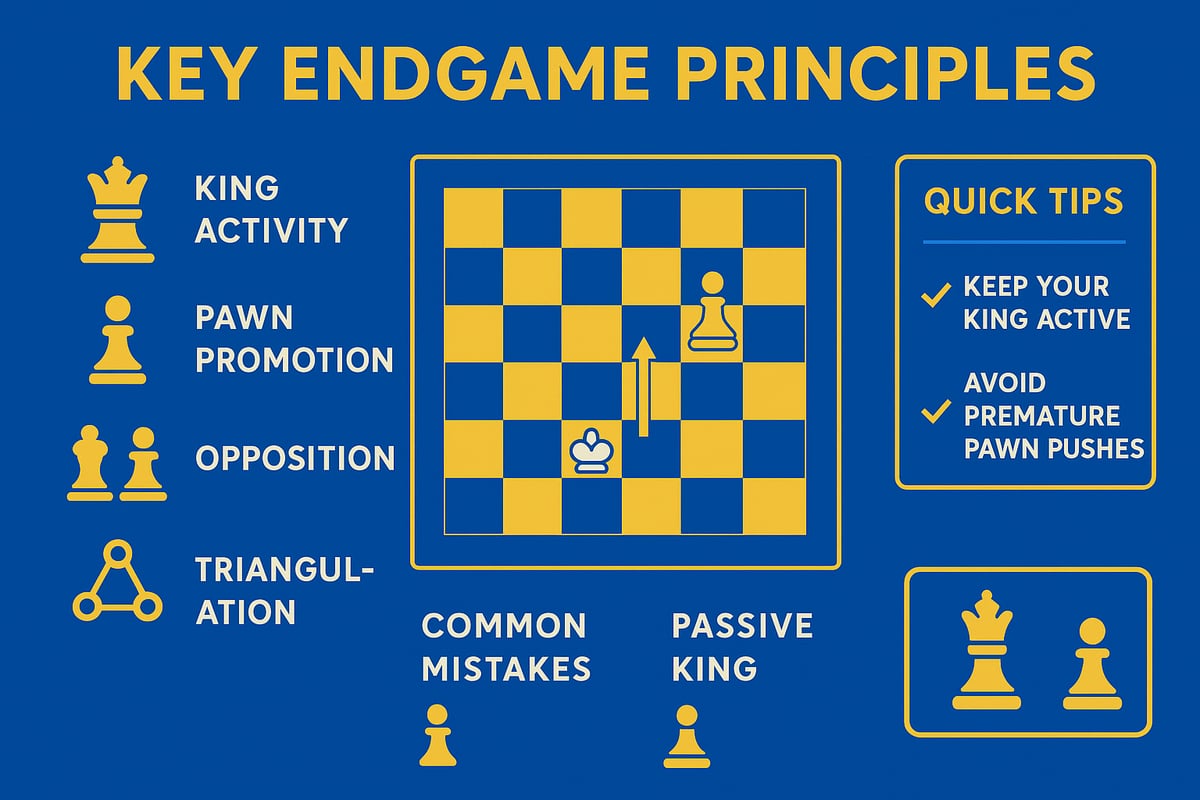
To play the endgame well, you need a set of guiding principles. The most important? King activity. In the endgame, your king is a fighting piece, not just a bystander. Get it to the center and use it actively.
Next, focus on pawn promotion. Every move should either help your pawn advance or stop your opponent from promoting. Understanding opposition and triangulation will help you outfox your opponent in king and pawn endings.
Here is a quick table summarizing key endgame principles:
| Principle | Why It Matters |
|---|---|
| King Activity | Controls key squares, supports pawns |
| Pawn Promotion | Turning pawns into queens wins games |
| Opposition | Forces opponent’s king back |
| Triangulation | Wastes moves to gain the advantage |
If you are ready for even more advanced strategies, check out Advanced Chess Endgame Strategy and Techniques for deeper insights. These principles, combined with chess move by move analysis, build a solid foundation for success.
Move-by-Move Endgame Example
Let us walk through a simple but critical endgame: king and pawn versus king. This is the bread and butter of chess move by move mastery.
Suppose you have a white king on e5, a pawn on d5, and the black king on e7. What is your plan? First, use your king to support the pawn’s advance. If you play 1. d6+, Black responds 1...Kd7. Now, 2. Kd5 gives your king the opposition.
Continue with 3. Kc6 followed by 4. d7 and eventually promote the pawn. Notice how each move serves a purpose: advancing your pawn, keeping the opponent’s king away, and using opposition. This basic pattern pops up in countless games and is a perfect example of applying chess move by move logic to win.
Common Endgame Mistakes
Even strong players stumble in the endgame. One common error is pushing pawns too early, which can make them targets instead of strengths. Another mistake is leaving your king passive, stuck on the edge while your opponent’s king dominates the center.
Some players underestimate their opponent’s resources, missing tricky draws or stalemates. To avoid these pitfalls, always ask yourself: what is my opponent threatening, and how can I improve my position with each move?
To sharpen your skills, practice endgame puzzles and review your games. Use cheat sheets and step-by-step guides to reinforce your chess move by move approach. With deliberate practice, these mistakes will become learning opportunities, and your endgame confidence will soar.
Step 4: Annotated Game Walkthroughs—Learning Move by Move
Ever wondered how top players truly learn chess move by move? It is not just about memorizing lines, but about understanding the story behind each move. Annotated games are your secret weapon. By following each decision, you step into the shoes of masters, see their plans unfold, and grasp the logic that engines and grandmasters use today.
If you want to accelerate your growth, make annotated game study a regular habit. Let us dive into how this works in practice.
The Value of Move-by-Move Game Analysis
Why do annotated games matter so much for anyone learning chess move by move? It is because they break down complex ideas into digestible steps. Each move comes with a reason, a threat, or a missed opportunity. When you walk through a game like Von Scheve–Teichmann (Berlin 1907), you see how plans form, evolve, and sometimes fall apart.
Annotated games offer a unique blend of storytelling and technical insight. You get to witness real mistakes and brilliant ideas, not just theory. This approach is perfect if you want to build intuition and spot patterns in your own play.
Want to make the most of this learning method? Try pairing your study with a How to Play Chess Cheat Sheet. It gives you a stepwise reference as you follow along, reinforcing each concept in real time.
Stepwise Analysis: Applying Principles and Calculation
When you analyze chess move by move, focus on three things: the principle behind each move, the engine’s evaluation, and possible alternatives. For example, in the Von Scheve–Teichmann game, look at move 11.Nxe5. Here, White grabs a pawn, but at the cost of development and king safety. The engine immediately spots this as a critical mistake, while classical annotations might focus on lost initiative.
Try asking yourself at each turn: Is this move following a principle, or is it a calculated exception? Compare your thoughts to both classical wisdom and modern engine suggestions. This habit strengthens your decision-making and helps you avoid common traps.
Modern research even shows that understanding player behavior can boost move prediction accuracy by 25%. If you are interested, check out A Behavior-Based Knowledge Representation Improves Prediction of Players' Moves in Chess by 25% for a deeper dive into the science behind move choice.
Comparing Classical and Engine Analysis
Here is where things get really interesting for your chess move by move journey. Sometimes, engines and classic texts disagree sharply. Take the famous 9.h3 in the Giuoco Piano. Classical annotators often called it slow or even dubious, arguing it wasted time. Today, engines rate it as nearly perfect, citing subtle prophylactic ideas and king safety advantages.
What does this mean for you? Always balance human advice with computer checks. Use annotated games to test your understanding: note where your intuition matches the engine, and where it does not. This ongoing dialogue between old and new is what keeps chess endlessly fascinating.
Do not be afraid to challenge what you read. The best progress comes when you question, verify, and adapt your approach based on both principle and calculation.
Extracting Lessons from Master Games
Every annotated game is packed with actionable lessons. Here are a few you can take away from a chess move by move study session:
- Always ask “why” after each move, not just “what.”
- Compare principle-based moves to engine recommendations.
- Keep an eye out for recurring mistakes or missed tactics.
- Practice explaining moves in your own words as you review.
- Use resources like annotated games and cheat sheets for regular self-assessment.
By making this review process a habit, you will spot patterns in your play and sharpen your decision-making. Remember, active learning beats passive reading every time. Ready to level up? Dive into an annotated game today and see how much you can learn from every move.
Step 5: Building Your Own Move-by-Move Improvement Plan for 2025
Ready to take your chess move by move learning to the next level? Building a personalized improvement plan is how you turn knowledge into lasting results. Whether you’re aiming for your first tournament win or just want to beat a tough friend, a clear, stepwise approach will keep you motivated and on track. Let’s break down how you can craft your own chess move by move plan for 2025.
Setting Training Goals and Tracking Progress
Every effective chess move by move journey starts with a clear goal. What do you want to achieve in 2025? Maybe you want to increase your online rating by 200 points, win more club games, or master a specific opening.
Break your main goal into smaller, measurable targets. For example, aim to solve 50 tactics puzzles each week or play 10 annotated games per month. Tracking progress is crucial. Use a simple spreadsheet, a chess journal, or even apps that log your performance after each session.
Here’s a quick table to help you outline your chess move by move goals:
| Goal | Metric | Timeline |
|---|---|---|
| Improve opening play | Pass 80% on Chess Openings Quiz | 1 month |
| Tactics accuracy | 90%+ in puzzles | Weekly |
| Endgame study | 5 positions/week | Ongoing |
Regularly review your progress and adjust your targets as you improve. This keeps your chess move by move plan dynamic and tailored to your growth.
Practical Daily Routines for Chess Growth
Consistency beats cramming in chess move by move improvement. The secret is a simple, daily routine that covers all game phases. Here’s a sample schedule you might try:
- 15 minutes: Review opening lines or concepts
- 20 minutes: Solve tactics puzzles
- 15 minutes: Study endgame basics or practice positions
- 10 minutes: Annotated game review
Rotate your focus every few weeks to avoid burnout. If you’re short on time, even a quick 15-minute tactics session can keep your mind sharp. Remember, the goal is steady progress, not perfection.
Want to mix it up? Try setting a timer, using flashcards, or challenging yourself with themed puzzles. Little rituals like these make your chess move by move plan feel fresh and fun.
Leveraging Technology and Resources
In 2025, technology is your chess move by move coach. Use chess engines for blunder checks, but don’t let them replace your own thought process. Apps like Lichess, Chess.com, and analysis tools help you review games, spot patterns, and track mistakes.
Interactive resources are a game changer. For a deeper dive into chess principles across the opening, middlegame, and endgame, check out The 24 Essential Principles of Chess | Opening, Middlegame, Endgame covered. Videos, quizzes, and annotated databases make learning engaging.
Balance screen time with traditional study. Read books, set up positions on a real board, and practice visualizing moves away from the computer. This blend keeps your chess move by move learning well-rounded.
Community and Coaching for Move-by-Move Feedback
Chess doesn’t have to be a solo journey. Joining a chess club or online community gives you feedback, motivation, and a place to share your chess move by move progress. You can post annotated games, ask for advice, or participate in group lessons.
Consider working with a coach who can analyze your games move by move and point out recurring mistakes. If coaching isn’t an option, try study groups or online forums where you can discuss strategy and tactics.
Not sure where to start? Sites like Chess.com and Lichess have active forums and clubs. The more you engage, the more you’ll learn from different perspectives, making your chess move by move plan more effective.
Avoiding Plateaus: Continuous Move-by-Move Self-Assessment
Everyone hits a plateau in their chess move by move journey. The key is regular, honest self-assessment. After each game, ask yourself: Did I follow opening principles? Was my middlegame plan clear? Did I handle the endgame confidently?
Create a simple checklist for each phase:
- Opening: Developed pieces, king safety, center control?
- Middlegame: Tactical blunders, active plans, time management?
- Endgame: King activity, pawn structure, conversion technique?
Use feedback from your games to spot patterns and adjust your study plan. Celebrate small wins and don’t get discouraged by setbacks. The chess move by move process is all about learning, adapting, and enjoying the game as you grow.
So, after diving into all these move by move strategies—from openings to endgames—you might be wondering, “Okay, what’s my next step to really start seeing results in my own games?” If you’re ready to put these ideas into action and want a simple way to boost your chess openings right now, I’ve got something for you. Why not take the leap and Start Improving Your Openings? With stepwise guides and visual cheat sheets, you’ll get the practical support you need to build confidence, play smarter moves, and actually enjoy the process of leveling up your chess.


