

Chess has evolved dramatically over the past few years, and in 2026, the concept of 247chess represents more than just a catchy phrase. It embodies the reality that chess improvement never sleeps, and neither should your access to quality training resources. Whether you're a beginner setting up your pieces for the first time or an intermediate player refining your tactical vision, having round-the-clock access to structured learning materials has become essential for consistent progress. The beauty of modern chess education lies in its availability, and understanding how to leverage 247chess resources effectively can accelerate your journey from novice to confident player.
What Makes 247chess Different from Traditional Learning
Traditional chess instruction often relied on scheduled lessons, club meetings, or set study times. You'd wait for your weekly session, work through a few positions, and then practice what you could remember until the next meeting. The 247chess approach flips this model entirely.
With constant access to learning materials, you can:
- Study openings at 6 AM before work
- Solve tactical puzzles during your lunch break
- Review endgame principles late at night when inspiration strikes
- Adapt your learning schedule to your natural rhythm
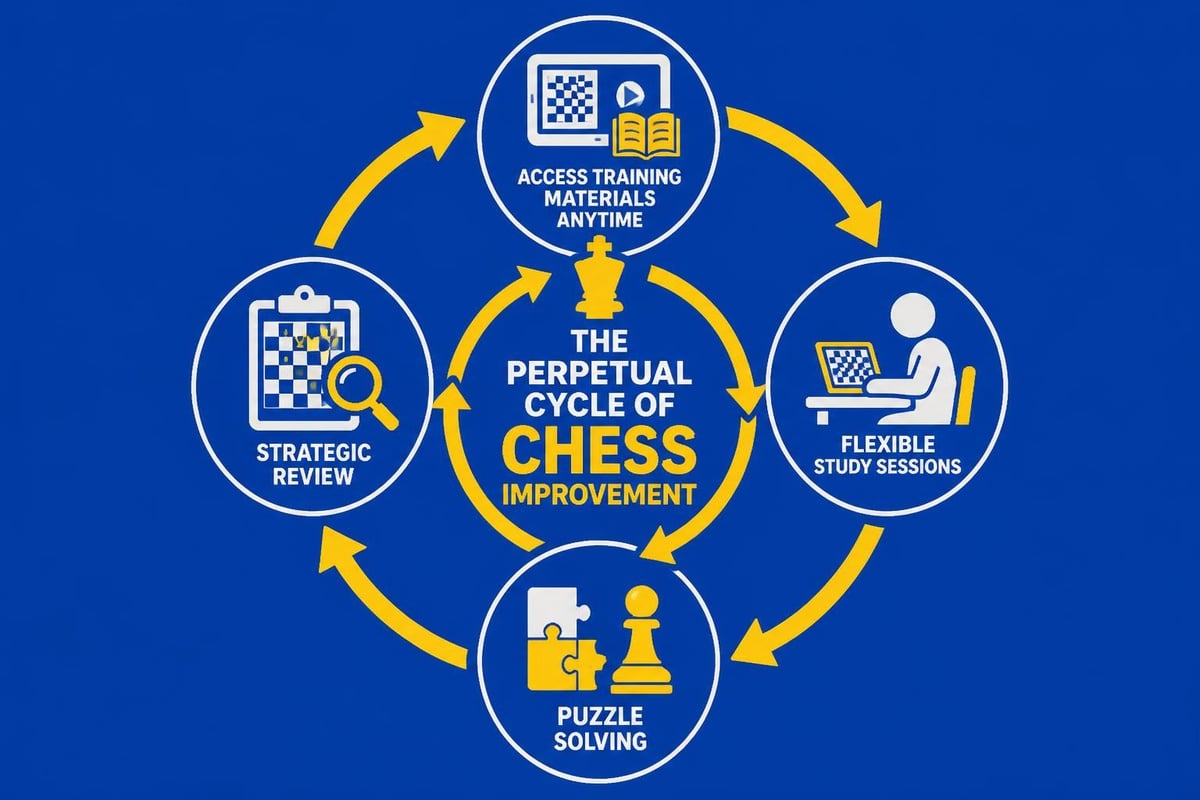
This flexibility matters because chess improvement isn't linear. Sometimes you'll have a burst of energy at midnight and want to dive deep into the French Defense. Other times, you might only have fifteen minutes between meetings but still want to sharpen your pattern recognition. The 247chess model accommodates both scenarios seamlessly.
The Psychology Behind Round-the-Clock Access
There's something powerful about knowing resources are always available. It removes the pressure of "making the most" of limited study time and instead creates opportunities for organic, curiosity-driven learning. When you can explore chess concepts whenever the mood strikes, you're more likely to maintain long-term engagement with the game.
Structuring Your 247chess Training Programme
Having access to resources all day doesn't mean you should study randomly. The most successful players using the 247chess model create flexible frameworks rather than rigid schedules. Think of it as having a well-stocked kitchen rather than meal times dictated by someone else.
Morning Sessions: Building Your Opening Foundation
Start your day with opening preparation. Your mind is fresh, and you're more likely to retain theoretical knowledge. Spend 15-30 minutes reviewing your chosen systems. This doesn't mean memorising endless variations, but rather understanding the key ideas behind moves.
Morning routine suggestions:
- Review 2-3 main line positions from your repertoire
- Identify the typical pawn structures that arise
- Note the piece placement goals for both sides
- Play through one master game in that opening
Understanding how to properly set up the chess board might seem basic, but it's the foundation everything else builds upon.
Midday Breaks: Tactical Sharpening
Your lunch break or mid-afternoon pause is perfect for tactical training. These short, intense sessions keep your calculation skills sharp without requiring the deep concentration needed for strategic study. The 247chess philosophy shines here because you can complete meaningful work in small time blocks.
| Time Available | Recommended Activity | Expected Benefit |
|---|---|---|
| 10 minutes | 5-7 tactical puzzles | Pattern recognition |
| 20 minutes | Thematic puzzle set | Specific tactic mastery |
| 30 minutes | Mixed difficulty puzzles | Calculation depth |
Resources like the 1.5 million chess openings puzzles pack ensure you never run out of fresh material, no matter how often you practice.
Evening Study: Strategic Depth and Analysis
Evenings suit deeper strategic work. You've finished your day's obligations, and you can settle in for more contemplative study. This is when you might explore complex positional concepts, analyse your own games, or study master games with detailed annotations.
The 247chess approach means you're not constrained by a coach's availability or a class schedule. You can spend two hours on a single endgame position if it fascinates you, or switch topics if your mind wanders.
Essential Components of 247chess Resources
Not all round-the-clock resources are created equal. The most effective 247chess materials share certain characteristics that make them suitable for independent, flexible learning.
Modular Content Design
Quality 247chess resources break information into digestible modules. You shouldn't need to complete an entire course in one sitting. Instead, look for materials that let you:
- Jump to specific topics without losing context
- Complete meaningful learning in 15-minute increments
- Build on previous knowledge without mandatory prerequisites
- Return after breaks without starting over
This modular approach mirrors how comprehensive chess learning resources are structured by leading educators, recognising that modern learners value flexibility.
Progressive Difficulty Scaling
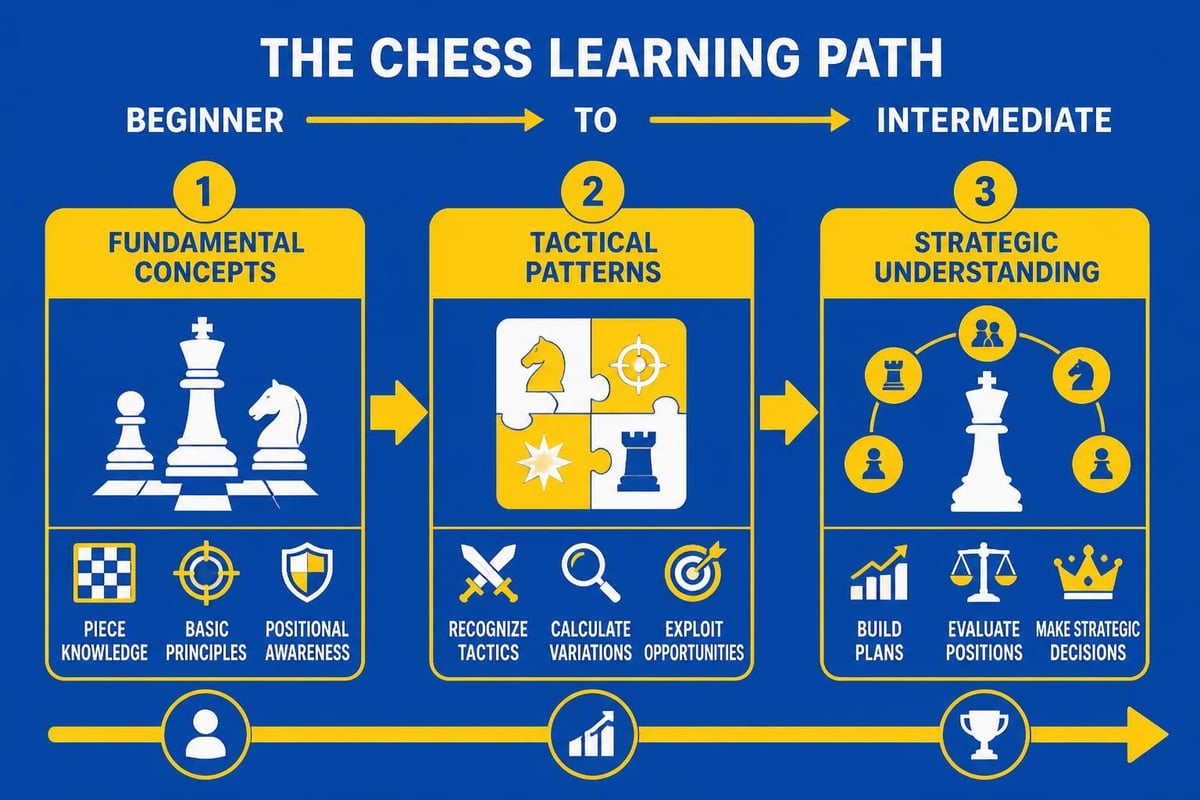
The best 247chess materials grow with you. They include beginner-friendly explanations but don't patronise intermediate players. You'll find resources that clearly indicate difficulty levels, allowing you to challenge yourself appropriately at any hour.
Difficulty progression markers:
- Beginner: Fundamental principles and basic patterns
- Intermediate: Tactical combinations and strategic planning
- Advanced: Complex position evaluation and deep calculation
Multi-Format Presentation
Different times of day suit different learning formats. Morning commutes might be perfect for video content, whilst late-night study sessions might call for text-based analysis you can pause and contemplate. The 247chess model thrives when resources present information through multiple channels.
Integrating Technology with 247chess Learning
The digital revolution has made the 247chess concept practical for millions of players. In 2026, technology doesn't just deliver content; it adapts to your learning patterns and provides personalised feedback at any hour.
Database-Driven Practice Systems
Modern 247chess platforms use sophisticated databases to serve fresh content continuously. These systems track your performance, identify weak areas, and automatically adjust difficulty. When you log in at 11 PM on a Tuesday or 7 AM on Saturday, the system knows your history and presents appropriate challenges.
Research into managing large chess game datasets demonstrates how technology can organise millions of positions for efficient retrieval and learning.
Adaptive Learning Algorithms
The most impressive 247chess resources use machine learning to optimise your study time. They notice if you struggle with certain tactical motifs and increase exposure to those patterns. They recognise when you're consistently solving puzzles too easily and raise the difficulty.
This personalisation happens automatically, meaning your 3 AM study session is just as productive as afternoon practice, because the system adjusts to your current performance level regardless of when you access it.
Community Features Without Synchronous Demands
Traditional chess clubs require everyone to gather simultaneously. The 247chess approach includes community features that work asynchronously. You can:
- Post a position for analysis and receive feedback over the next 24 hours
- Challenge players at your level who'll move when their schedule allows
- Contribute to ongoing discussions without being online at specific times
- Learn from a global community across all time zones
Many players benefit from exploring free online chess resources that combine individual study tools with flexible community interaction.
Building Your Personal 247chess Curriculum
With unlimited access comes the challenge of focus. The most successful users of 247chess resources create personalised curricula that provide structure without rigidity.
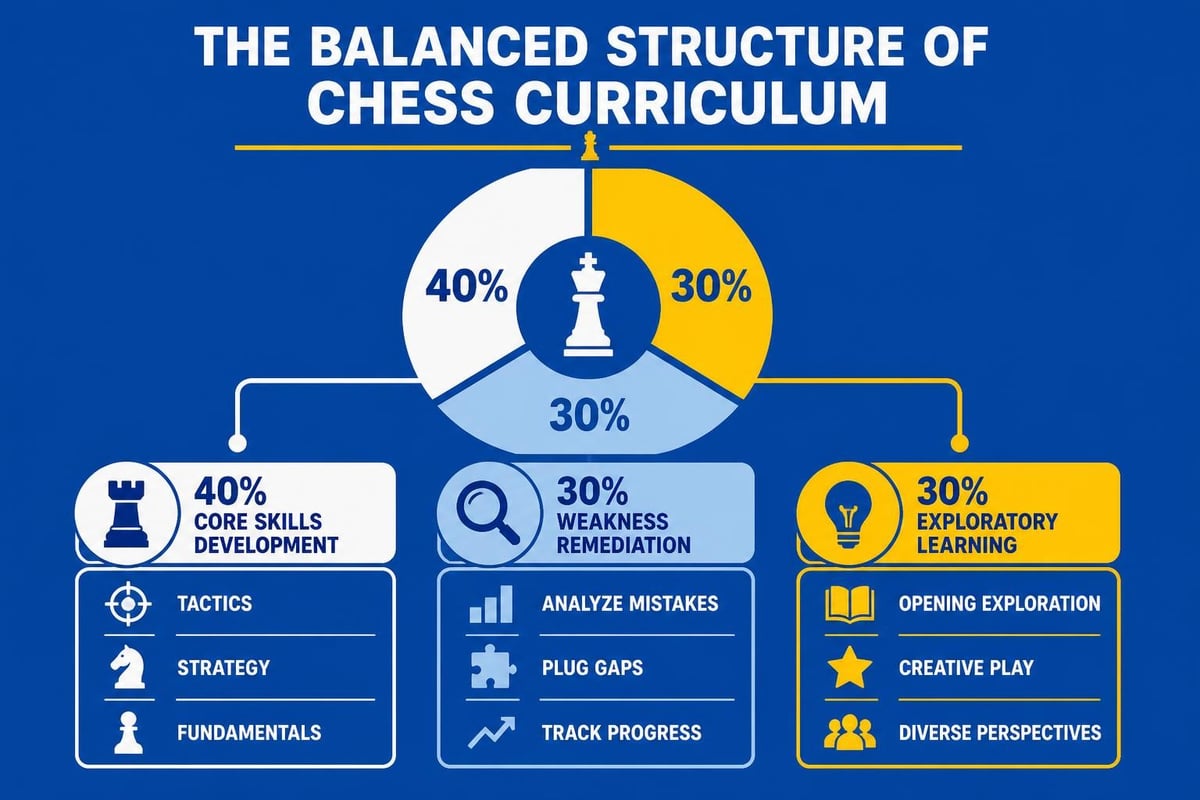
The 70-20-10 Time Allocation
Professional educators often recommend dividing study time across three categories:
- 70% Core Development: Spend most time on fundamental skills (tactics, your opening repertoire, basic endgames)
- 20% Weakness Remediation: Target specific gaps in your understanding
- 10% Exploration: Try new openings, study historical games, experiment with unfamiliar positions
This framework works perfectly with 247chess access because you can allocate time percentages weekly or monthly rather than per session. Some days you might spend your entire 20 minutes on exploration; other days, you'll do pure tactical training.
Tracking Progress Without Obsession
| Metric | Weekly Check | Monthly Review |
|---|---|---|
| Puzzles Solved | Count and accuracy | Difficulty progression |
| Opening Coverage | Positions reviewed | Repertoire completeness |
| Game Analysis | Games studied | Pattern recognition improvement |
| Rating Changes | Note fluctuations | Overall trend |
The 247chess model makes tracking easier because digital platforms automatically record your activity. You can review progress whenever curiosity strikes, not just during scheduled assessment periods.
Balancing Breadth and Depth
One risk of 247chess access is becoming a perpetual beginner, always sampling new material without mastering anything. Combat this by cycling between breadth and depth phases.
Breadth phase (2-3 weeks):
- Survey multiple openings
- Try various tactical themes
- Explore different playing styles
Depth phase (4-6 weeks):
- Master one opening system thoroughly
- Specialise in specific tactical patterns
- Study complete annotated games in detail
Understanding the most common chess openings helps you make informed choices during breadth phases about which systems deserve deep study.
Common Pitfalls in 247chess Learning
Unlimited access creates unique challenges. Being aware of these pitfalls helps you maintain productive study habits even when resources are always available.
The "I'll Do It Later" Trap
Ironically, knowing you can study anytime sometimes means you never study. Combat this by setting minimum daily engagement thresholds. Even five minutes solving two puzzles maintains momentum and prevents complete lapses.
Information Overload Paralysis
With thousands of positions, hundreds of openings, and countless instructional resources available instantly, you might freeze trying to decide where to start. This is why the curriculum framework mentioned earlier proves so valuable. It provides decision-making guardrails.
Skipping Fundamentals for Novelty
Advanced concepts are more exciting than basic principles, and 247chess access makes it tempting to jump ahead. Resist this urge. The endgame expertise collection might look less glamorous than attacking systems, but endgame knowledge provides exponential returns on investment.
Maximising Different Time Windows
The 247chess philosophy recognises that not all study time is equal. Different situations call for different activities.
Micro-Sessions (5-10 minutes)
Perfect for:
- Quick tactical puzzles
- Reviewing a single position
- Checking opening move orders
- Reading one annotated game move
These snippets might seem insignificant, but they compound remarkably. Five puzzles daily equals 1,825 positions annually, substantially improving pattern recognition.
Standard Sessions (30-45 minutes)
Ideal for:
- Thematic opening study
- Complete game analysis
- Structured endgame training
- Working through puzzle sets with specific themes
This is your bread-and-butter study time, where most improvement happens.
Deep Dives (90+ minutes)
Best used for:
- Comprehensive opening repertoire building
- Analysing multiple games from tournaments
- Complex strategic concept mastery
- Creating personal opening preparation
Even occasional deep dives accelerate progress significantly. The 247chess model means you can schedule these when you have natural energy and interest, not when a class happens to meet.
The Role of Physical Resources in a Digital 247chess World
Despite digital dominance, physical chess resources still matter in 2026. The most effective 247chess learners blend both formats strategically.
Printed cheat sheets offer unique advantages:
- No screen fatigue during extended study
- Better spatial memory formation
- Portability without battery concerns
- Reduced digital distractions
Keep a physical reference beside your board for over-the-board practice, whilst using digital resources for puzzle solving and game analysis. This hybrid approach maximises the 247chess concept across different learning contexts.
Measuring Success Beyond Rating Points
Your chess Elo rating provides one success metric, but the 247chess approach encourages broader progress indicators.
Alternative success measures:
- Faster pattern recognition in typical positions
- Increased comfort with previously intimidating openings
- Better time management during games
- More accurate position evaluation
- Reduced blunders through improved calculation
These qualitative improvements often precede rating increases by weeks or months. The constant access 247chess provides lets you notice incremental gains that might be invisible with sporadic study.
Adapting 247chess Principles to Different Skill Levels
The beauty of round-the-clock learning is its scalability across all playing strengths.
For Beginners
Focus your 247chess access on:
- Fundamental tactical patterns (forks, pins, skewers)
- Basic opening principles rather than specific variations
- Simple endgame positions (king and pawn versus king, basic rook endgames)
- Short games demonstrating clear tactical or strategic themes
Resources like 1000 Italian Game puzzles provide structured practice in popular openings suitable for developing players.
For Intermediate Players
Leverage 247chess resources to:
- Build a complete opening repertoire with both White and Black
- Study master games in your chosen systems
- Tackle complex tactical combinations requiring multi-move calculation
- Master critical endgame positions beyond the basics
Educational programmes like those detailed in Corsica's chess revolution in schools demonstrate how structured, accessible resources benefit learners at every stage.
Creating Sustainable 247chess Habits
The key to long-term success with round-the-clock chess resources isn't studying constantly; it's establishing sustainable patterns that integrate naturally into your life.
The Habit Stacking Technique
Attach chess study to existing routines:
- Solve three puzzles whilst your morning coffee brews
- Review one opening position during your commute
- Analyse one game position before bed
These micro-habits require minimal willpower because they piggyback on established behaviours.
Rest and Consolidation Periods
Even with 247chess access, your brain needs time to consolidate learning. Build in rest days where you play casually or don't touch chess at all. This prevents burnout and actually enhances retention.
Variety to Maintain Engagement
| Day Type | Primary Focus | Secondary Activity |
|---|---|---|
| Monday | Tactical puzzles | Opening review |
| Tuesday | Endgame study | Casual games |
| Wednesday | Game analysis | Puzzle solving |
| Thursday | Opening depth | Tactic practice |
| Friday | Mixed review | Tournament preparation |
| Weekend | Longer sessions | Tournament play or rest |
This rotation prevents monotony whilst ensuring comprehensive skill development.
The Future of 247chess Learning
As we progress through 2026 and beyond, the 247chess concept will continue evolving. Emerging technologies promise even more personalised, accessible chess education.
Artificial intelligence applications, such as those explored in research on natural language processing for chess move evaluation, will provide increasingly sophisticated feedback available instantly, any time you study.
Virtual reality might soon offer immersive 247chess environments where you visualise positions three-dimensionally, whilst augmented reality could overlay analysis on physical chess boards during home study sessions.
The core principle remains constant: quality chess education should never be constrained by artificial time barriers. Whether you're studying at dawn or midnight, on weekdays or weekends, during summer or winter, the resources to improve should always be within reach.
The 247chess approach transforms how we think about chess improvement, making quality training accessible whenever inspiration strikes. By combining flexible access with structured curricula and sustainable habits, you can progress consistently without sacrificing life balance. Chess Cheat Sheets provides exactly this kind of round-the-clock support through comprehensive guides, extensive puzzle collections, and streamlined opening resources that work with your schedule, not against it. Whether you have five minutes or five hours, the tools to sharpen your game are ready when you are.


