

You've probably heard the term "ultimate chess" thrown about in chess circles, but what does it actually mean? Is it a specific variant, a software package, or simply a way to describe mastery of the game? The truth is, it's all of these things and more. Whether you're exploring Ultimate Chess software options or trying to achieve the ultimate level of chess understanding, this guide will help you navigate the landscape and improve your game significantly.
What Is Ultimate Chess Exactly?
Ultimate chess isn't just one thing, which can make it a bit confusing at first. The term gets used in several contexts across the chess world.
At its most basic, ultimate chess refers to reaching the pinnacle of chess understanding and skill. It's that level where tactics become second nature, where you see combinations several moves ahead, and where your positional understanding guides every decision. But there's more to the story than just being really good at chess.
The Software Definition
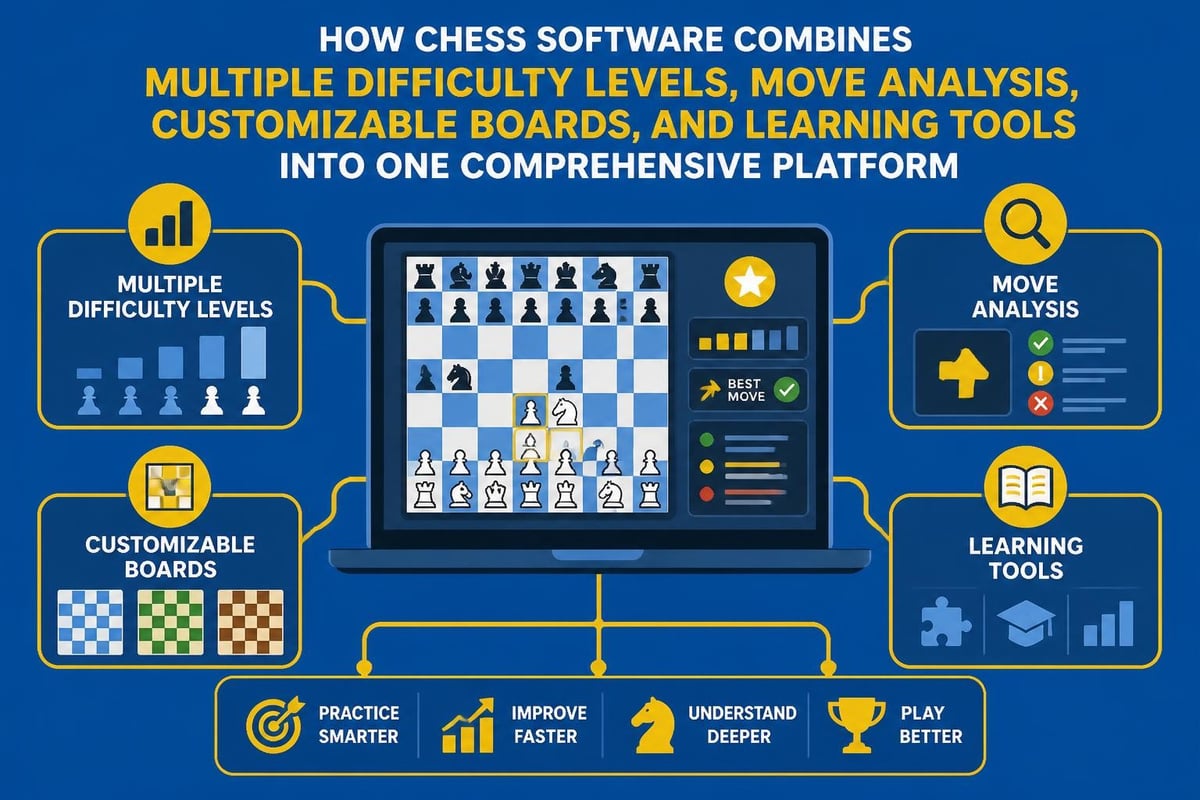
When most people search for ultimate chess today, they're often looking for chess software that enhances their playing experience. The Ultimate Chess software by Selectsoft offers multiple difficulty levels, customizable boards, and move history tracking. It's designed to provide a comprehensive chess experience on your computer, allowing you to play against AI opponents of varying strengths.
These software packages typically include:
- Multiple difficulty settings from beginner to grandmaster level
- Customizable board designs and piece sets
- Move suggestion features for learning
- Game analysis and review capabilities
- Save and load functionality for ongoing games
The Variant Interpretation
There's also an interesting discussion happening in the chess community about ultimate chess as a variant concept. This interpretation combines elements from different chess variants into one comprehensive game. Think of it as the "everything included" version of chess, where you might encounter rules from Chess960, variant board sizes, or unique piece movements.
This creative approach to the game appeals to players who've mastered traditional chess and are looking for new challenges. It keeps the core principles intact while adding layers of complexity and surprise.
Mastering Ultimate Chess Through Practice
Whether you're using software or pursuing chess mastery in general, the path forward requires structured practice. You can't just play random games and hope to improve significantly.
Building Your Foundation
Start with the basics, even if they seem simple. Understanding fundamental principles is what separates players who plateau from those who continue improving. This means drilling your knowledge of the most common chess openings until they become automatic responses.
Your foundation should include:
- Piece development principles - Getting your pieces into active positions quickly
- Control of the centre - Fighting for d4, d5, e4, and e5 squares
- King safety - Castling at the right moment and keeping your king protected
- Pawn structure awareness - Understanding how pawn formations impact the game
The beauty of working on fundamentals is that they transfer to every position you'll encounter. Even in complex endgames or tactical puzzles, these principles remain relevant.
Structured Learning Approaches
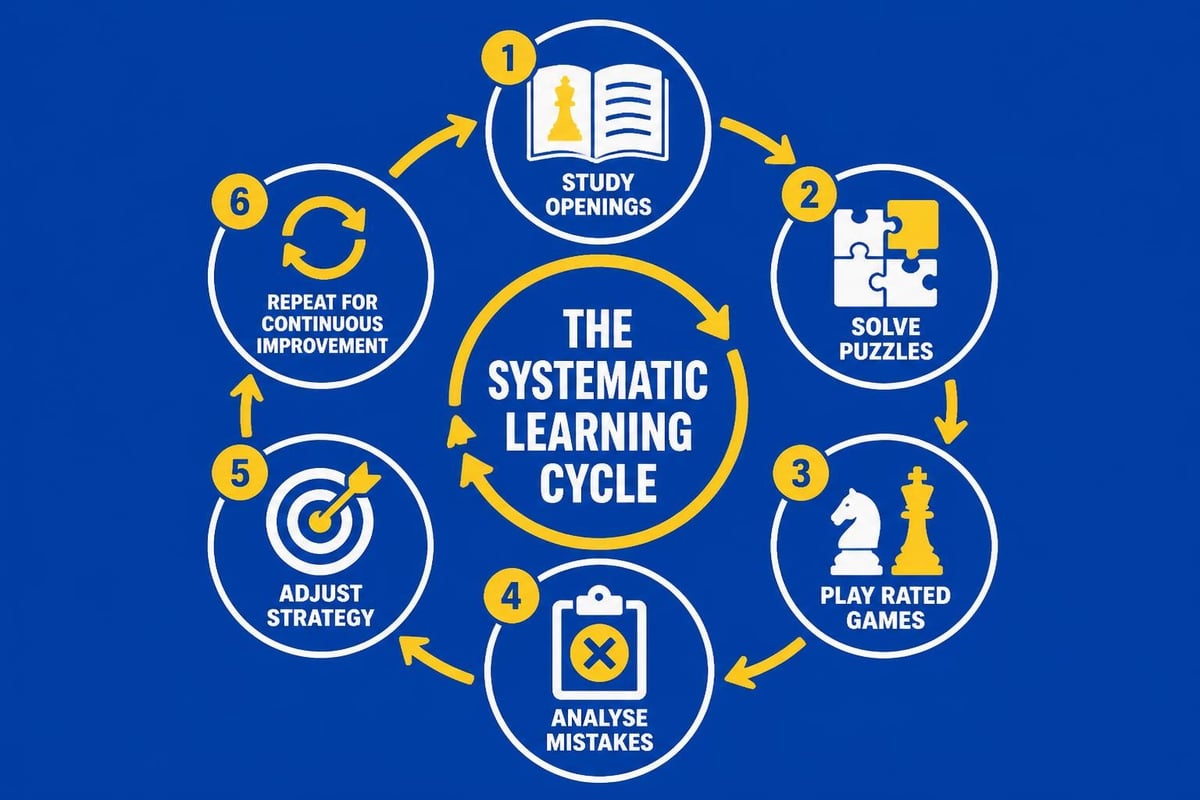
Random practice only gets you so far. You need a systematic approach to improvement that addresses your specific weaknesses whilst reinforcing your strengths.
| Learning Method | Time Investment | Effectiveness | Best For |
|---|---|---|---|
| Opening study | 30-45 mins daily | High for beginners | Building repertoire |
| Tactical puzzles | 20-30 mins daily | Very high | Pattern recognition |
| Game analysis | 45-60 mins weekly | High | Understanding mistakes |
| Endgame practice | 30 mins 3x weekly | Medium-high | Technical skills |
This structured approach ensures you're not just playing chess, but actively improving with each session. Many players struggle because they play dozens of games without ever analysing where they went wrong.
Leveraging Technology for Ultimate Chess
The chess world has changed dramatically with technology, and you'd be silly not to take advantage of these tools. Modern chess software and platforms offer features that grandmasters of previous generations could only dream about.
AI Opponents and Analysis
Playing against AI opponents at various strengths is brilliant for improvement. Unlike human opponents, computer opponents are always available, never get tired, and can be adjusted to match your exact skill level. This allows you to practice specific scenarios repeatedly until you've mastered them.
Modern chess engines provide analysis that highlights your mistakes immediately. You can see where you went wrong, what the better move was, and why it was superior. This instant feedback loop accelerates learning significantly.
Online Platforms and Resources
The online chess community offers countless opportunities to practice and learn. You can find opponents at any time of day, join tournaments, and participate in training sessions tailored to your rating level.
These platforms typically offer:
- Rating systems that track your progress over time
- Puzzle databases with thousands of tactical exercises
- Video lessons from titled players and coaches
- Opening explorers showing popular continuations
- Game databases with millions of historical games
Advanced Concepts in Ultimate Chess
Once you've got the basics sorted, it's time to explore deeper concepts that separate intermediate players from advanced ones. These ideas require more nuanced understanding and take longer to master.
Positional Understanding
Tactics win games, but positional understanding wins tournaments. You need to develop a feel for which positions are favourable and why, even when there are no immediate tactical shots available.
This involves understanding:
- Weak squares and how to exploit them
- Piece coordination and harmony
- Prophylactic thinking (preventing your opponent's plans)
- Long-term strategic planning
Studying games by positional players like Anatoly Karpov or Tigran Petrosian helps develop this intuition. You'll notice they often make moves that don't seem immediately threatening but create subtle advantages that accumulate over time.
Opening Repertoire Development
Your opening repertoire should be like a well-organised toolkit. Each opening should serve a specific purpose and complement your overall style. If you prefer tactical complications, openings like the Scotch Game might suit you better than quieter systems.
Building your repertoire requires:
- Choosing openings that match your playing style
- Learning the key ideas, not just memorising moves
- Preparing responses to common deviations
- Regularly updating your knowledge as theory develops
Don't try to learn every opening at once. Start with one system as White and two as Black (one against 1.e4 and one against 1.d4). Master these before expanding your repertoire. Understanding your chess level helps you choose appropriate openings for your rating.
Practical Training Methods
Theory is great, but you need practical methods to transform knowledge into skill. Here's how to structure your training for maximum benefit.
Puzzle Solving Routines
Tactical puzzles are the fastest way to improve pattern recognition. Set aside 20-30 minutes daily for focused puzzle solving. Don't just guess and check answers. Take time to calculate variations properly, even if it means solving fewer puzzles.
Your puzzle routine should include:
- Easy warm-up puzzles (2-3 minutes)
- Challenging problems at your level (15-20 minutes)
- Difficult puzzles above your level (5-10 minutes)
- Review of missed puzzles (end of session)
This balanced approach ensures you're building confidence whilst also stretching your abilities. Resources like comprehensive puzzle packs provide endless material for improvement.
Game Analysis Protocol
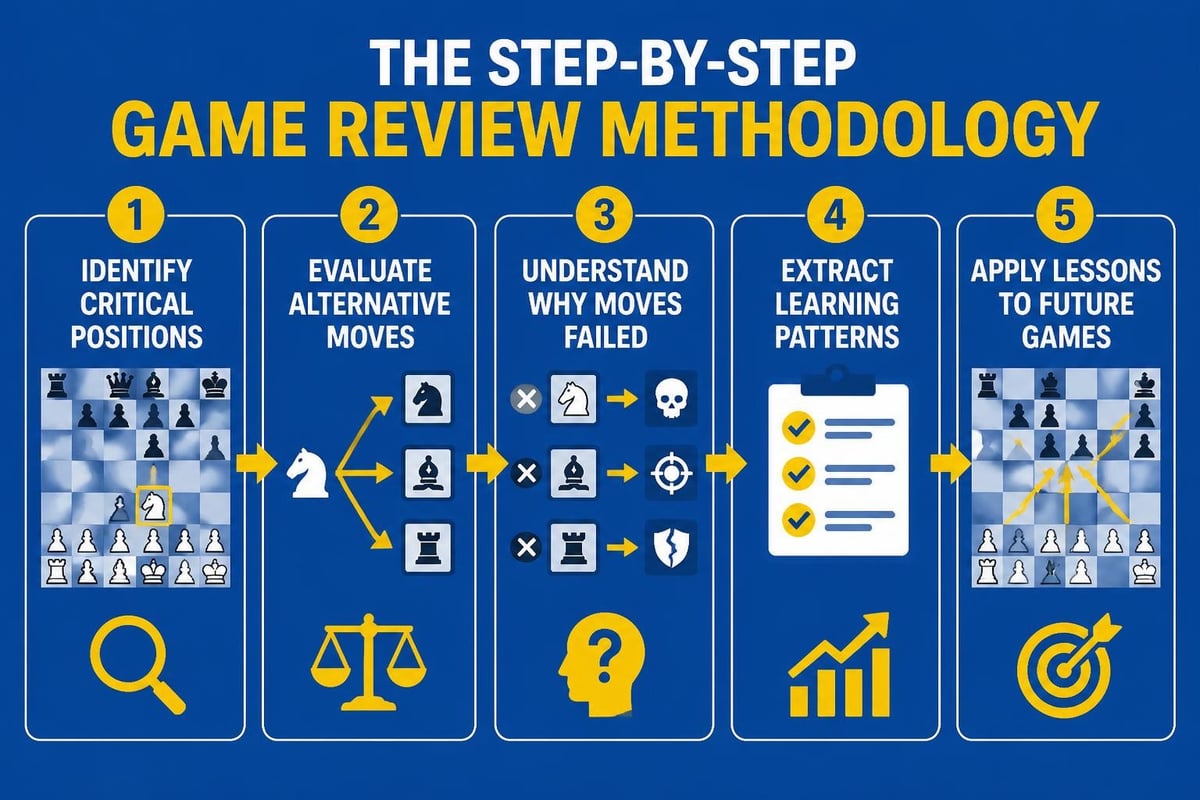
After every serious game, spend at least 15 minutes analysing it. Look for critical moments where the evaluation shifted significantly. What caused these shifts? Were they tactical oversights or positional misjudgements?
| Analysis Step | Focus Area | Time |
|---|---|---|
| Initial review | What was my plan? | 3 mins |
| Critical positions | Where did the game turn? | 5 mins |
| Alternative moves | What could I have done differently? | 5 mins |
| Pattern identification | What patterns appeared? | 2 mins |
This systematic review process helps you learn from every game rather than just moving on to the next one. Many players improve slowly because they repeat the same mistakes without recognising them.
Mental Aspects of Ultimate Chess
Chess isn't just about knowing the right moves. Your mental state, concentration ability, and emotional control significantly impact your performance.
Concentration and Focus
Top players can maintain deep concentration for hours during tournament games. This isn't a natural ability, it's a trained skill. You can improve your focus through deliberate practice.
Try these concentration exercises:
- Play longer time control games (30 minutes or more per side)
- Eliminate distractions during study sessions
- Practice visualisation exercises without a board
- Take short breaks between intensive study periods
Your ability to spot tactics and calculate variations improves dramatically when you're fully focused. Conversely, even simple positions become confusing when you're distracted or tired.
Dealing with Losses
Everyone loses at chess, even world champions. How you respond to losses determines whether they become learning experiences or sources of frustration. After a painful loss, it's tempting to immediately play another game to "get revenge". Resist this urge.
Instead, take a short break, then analyse the game objectively. What specific mistakes led to the loss? Were they tactical blunders, opening preparation failures, or time management issues? Identifying the root cause helps you address it in future games.
Resources for Reaching Ultimate Chess Level
You don't need to figure everything out alone. The chess world offers abundant resources to accelerate your improvement.
Structured Learning Materials
Comprehensive guides provide systematic coverage of specific topics. Rather than piecing together information from random sources, structured materials take you from basics to advanced concepts in a logical sequence. The ultimate chess openings bundle exemplifies this approach, offering complete coverage of essential opening systems.
Quality learning materials should include:
- Clear explanations of core concepts
- Practical examples from real games
- Practice exercises to reinforce learning
- Progressive difficulty levels
Working with Coaches
While self-study takes you far, working with an experienced online chess coach can identify blind spots you'd never notice yourself. Coaches provide personalised feedback, correct misconceptions, and guide your study towards areas that will yield the greatest improvement.
Even a few sessions with a good coach can dramatically shift your understanding of positions you've struggled with for months.
Advanced Software Features
Modern ultimate chess software goes beyond simple gameplay, offering sophisticated features that mirror professional training tools.
Engine Analysis Integration
Top chess engines like Stockfish and Komodo evaluate positions with superhuman accuracy. Learning to use engine analysis effectively helps you understand complex positions and verify your calculations. However, don't become dependent on engines. Use them to check your analysis after you've formed your own conclusions.
Engine analysis reveals:
- Precise evaluation of positions (in pawn units)
- Best move sequences (principal variations)
- Alternative strong moves you might have missed
- Critical tactical opportunities in the position
Database Study
Studying how strong players handle specific positions provides invaluable insights. Modern chess databases contain millions of games, searchable by opening, player, result, and position. This allows you to see how grandmasters handle the openings you're studying.
For example, if you're learning the Catalan Opening, you can search for all games by top players in this system. You'll discover typical plans, common tactical themes, and how to handle various responses from your opponent.
Endgame Mastery in Ultimate Chess
Many players neglect endgame study, focusing exclusively on openings and tactics. This is a critical mistake, as endgames determine the outcome of many games where you've successfully navigated the opening and middlegame.
Essential Endgame Principles
Basic endgame knowledge is non-negotiable for serious improvement. You must know fundamental checkmates, basic pawn endgames, and common rook endgames. These positions appear repeatedly, and you can't afford to fumble them.
Start with these essential endgames:
- King and queen versus king
- King and rook versus king
- King and pawn versus king
- Rook and pawn versus rook (Lucena and Philidor positions)
- Basic bishop versus knight endgames
Resources like endgame expertise collections provide systematic training in these crucial positions. Spending even 15 minutes weekly on endgame study pays enormous dividends in tournament play.
Calculation in the Endgame
Endgames require precise calculation because there's less margin for error. With fewer pieces on the board, each move carries greater weight. You can't rely on intuition alone. You must calculate concrete variations to their conclusion.
Practice endgame calculation by:
- Setting up theoretical positions and calculating without moving pieces
- Verifying your calculations with engine analysis
- Solving endgame studies (composed positions with brilliant solutions)
- Playing practice endgames against strong opponents or computers
Tournament Preparation
If you're planning to compete in tournaments, ultimate chess mastery requires specific preparation beyond general improvement.
Opening Preparation
Tournament players must prepare their openings more deeply than casual players. You need to know critical variations in your repertoire and have responses ready for your opponent's likely choices. This doesn't mean memorising 20 moves deep in every line, but understanding key positions and typical plans.
Your pre-tournament preparation should include:
- Reviewing recent games in your openings
- Checking for new theoretical developments
- Preparing surprises in less critical positions
- Ensuring you know critical forcing lines
Time Management Skills
Tournament games have time controls you must respect. Running into time pressure turns winning positions into losses. Develop a time management strategy that allocates more time for critical decisions and moves faster in routine positions.
| Game Phase | Time Allocation | Focus |
|---|---|---|
| Opening | 10-15% | Follow preparation, avoid long thinks |
| Early middlegame | 25-30% | Establish plans, maintain flexibility |
| Critical moment | 30-40% | Calculate key variations thoroughly |
| Conversion/Defence | 15-25% | Execute technique, manage time pressure |
Practising with clock during training games helps develop good time management habits. Don't wait until tournaments to learn this crucial skill.
The Role of Chess Variants
Exploring chess variants can actually improve your standard chess by forcing you to think more flexibly and rely on principles rather than memorised patterns. Theoretical explorations like infinite chess stretch the boundaries of what's possible in chess, even if you never actually play these variants.
Variants worth exploring include:
- Chess960 (Fischer Random) - Randomised starting positions that eliminate opening preparation
- Crazyhouse - Captured pieces can be dropped back onto the board
- Three-check - First player to give three checks wins
- Atomic - Captures cause explosions that remove surrounding pieces
These variants develop tactical alertness and force you to calculate from first principles rather than relying on pattern recognition alone.
Achieving ultimate chess mastery requires dedication, structured practice, and the right resources to guide your improvement journey. Whether you're exploring software options, deepening your theoretical knowledge, or refining your tactical skills, the path forward becomes clearer with proper guidance. Chess Cheat Sheets provides comprehensive resources, from opening guides to puzzle collections, designed to accelerate your progress without overwhelming you with unnecessary complexity. Start building your chess mastery today with streamlined tools that deliver results.


