

You've probably heard whispers about a legendary chess book that shaped generations of world champions. The Soviet Chess Primer stands as one of the most influential chess instructional texts ever written, and for good reason. Originally published in 1956, this systematic approach to chess education transformed how players learn the game. But what makes it so special, and more importantly, can it still help you improve your chess in 2026?
The Historical Significance of Soviet Chess Education
The Soviet Union dominated chess for decades, producing world champions like Botvinnik, Petrosian, Spassky, and Karpov. Their success wasn't accidental. It stemmed from a methodical, scientific approach to chess instruction that prioritised understanding over memorisation.
The soviet chess primer emerged from this golden era of chess pedagogy. Written by Ilya Maizelis, the book embodied the Soviet system's core principles: systematic progression, tactical pattern recognition, and deep positional understanding. Unlike many chess books of its time that simply presented game collections, this primer offered a structured curriculum.
What Made Soviet Chess Training Revolutionary
Soviet chess schools developed a reputation for creating complete players. Their students didn't just know opening moves-they understood why those moves worked. This pedagogical approach influenced chess education worldwide.
- Structured progression from simple to complex concepts
- Emphasis on tactical motifs before strategic themes
- Practical exercises reinforcing each lesson
- Minimal memorisation, maximum understanding
The teaching methodology focused on building a solid foundation. Students mastered basic tactical patterns before exploring opening theory. They learned endgame principles alongside middlegame strategy. This comprehensive approach created well-rounded players rather than specialists.
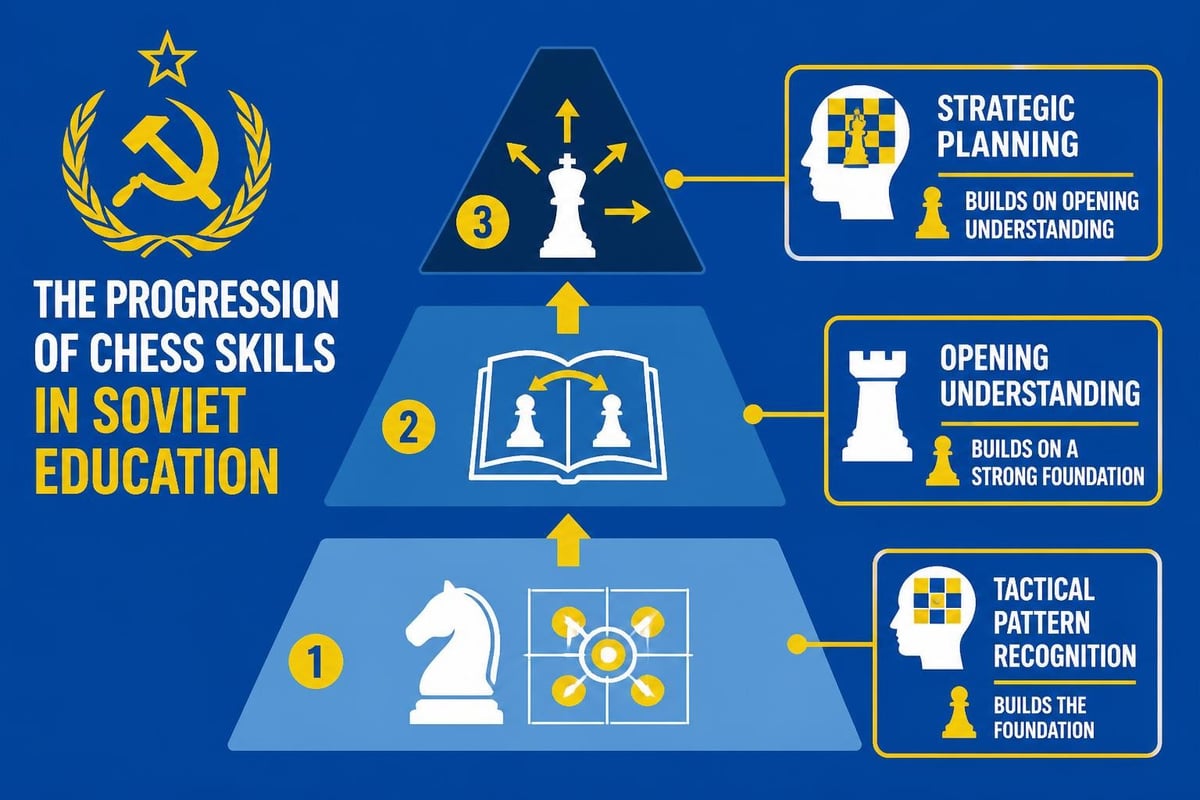
Inside the Soviet Chess Primer's Structure
When you open the soviet chess primer, you'll find a carefully sequenced learning path. The book doesn't assume you're already familiar with chess jargon or complex variations. Instead, it builds your knowledge step by step.
The content begins with fundamental concepts. You'll encounter basic tactical themes like pins, forks, and skewers presented through clear examples. Each concept receives thorough explanation followed by practice positions. This pattern repeats throughout the book, reinforcing learning through active engagement.
Core Content Areas
| Section | Focus Area | Skill Level |
|---|---|---|
| Part One | Basic Tactics | Beginner |
| Part Two | Opening Principles | Beginner to Intermediate |
| Part Three | Middlegame Strategy | Intermediate |
| Part Four | Endgame Technique | Intermediate |
The soviet chess primer distinguishes itself through its exercise selection. Rather than overwhelming you with hundreds of random positions, it presents carefully chosen examples that illustrate specific themes. You'll work through positions that build on previous lessons, creating a coherent learning experience.
According to the detailed review on ChessReads, the book's greatest strength lies in its systematic approach. Each chapter prepares you for the next, creating a logical progression that mirrors how chess understanding actually develops.
How This Classic Compares to Modern Learning Resources
You might wonder whether a book from 1956 remains relevant today. After all, chess theory has evolved considerably. Modern databases contain millions of games, and engines have revealed new truths about positions previously considered settled.
Yet the soviet chess primer addresses timeless fundamentals. Tactical patterns haven't changed. The principles governing piece activity, king safety, and pawn structure remain constant. What has changed is how we access and supplement this foundational knowledge.
Advantages of the Soviet Approach
The primer's structured methodology offers benefits that random puzzle-solving or video-watching can't match. When you work through the book systematically, you develop a coherent understanding of how chess concepts interconnect.
Modern chess education often suffers from information overload. You can watch countless chess videos for beginners or browse free online chess courses, but without structure, your knowledge remains fragmented. The soviet chess primer provides that missing framework.
Think of it this way: you could learn vocabulary words randomly, or you could study them within sentences and paragraphs that show how they function. The primer takes the latter approach, presenting chess concepts in their proper context.

Practical Applications for Modern Players
So how can you actually use the soviet chess primer to improve your game today? The key is integration. You don't need to treat it as your only study resource, but rather as a foundational text that complements modern tools.
Start by working through the tactical exercises. Even if you're familiar with basic tactics, the primer's presentation might reveal nuances you've missed. The exercises progress logically, each building on skills developed in previous sections.
Combining Classical and Contemporary Study
- Work through one chapter of the soviet chess primer systematically
- Apply the concepts in your online games immediately
- Supplement with modern resources like opening databases for specific variations
- Review your games using the principles learned
- Return to the primer for the next concept
This blended approach leverages the primer's structured pedagogy while incorporating modern tools. You might study opening principles from the book, then explore what opening does Magnus Carlsen use to see those principles in action at the highest level.
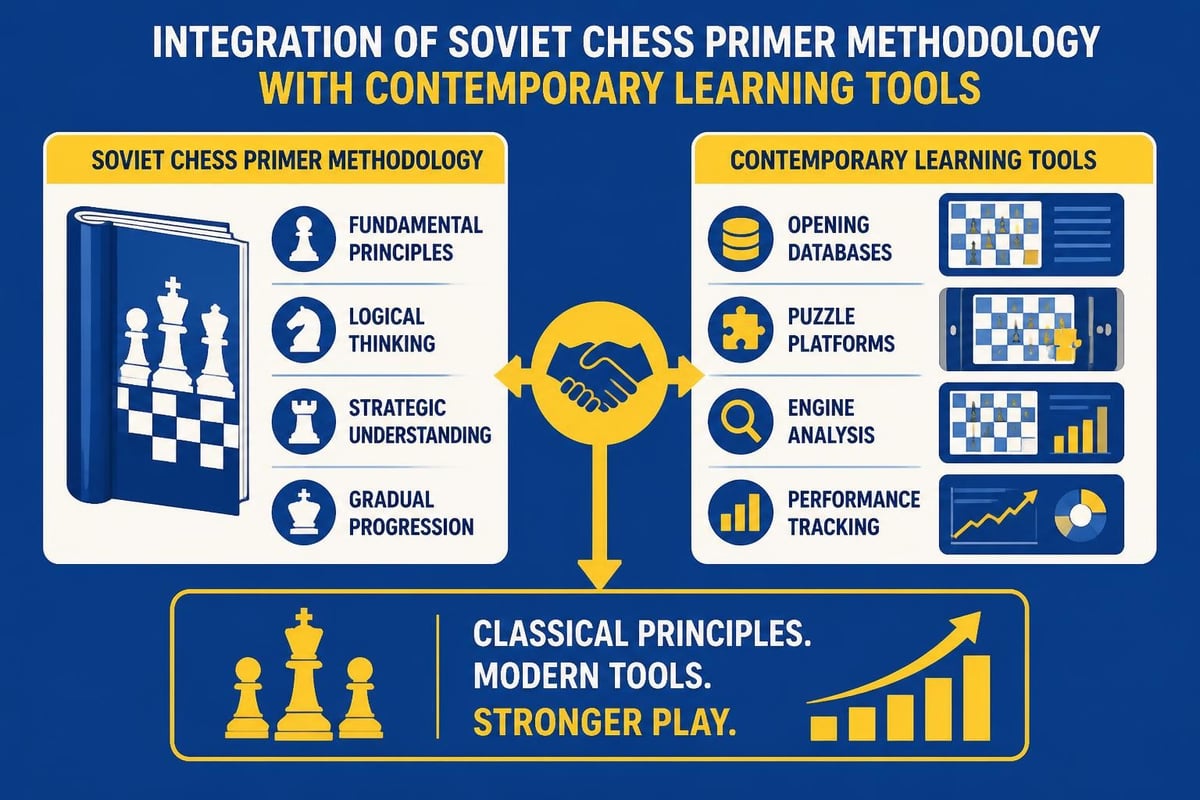
The soviet chess primer excels at teaching you how to think about positions. Modern resources excel at providing vast amounts of information. Together, they create a powerful combination for improvement.
Who Benefits Most from This Instructional Approach
Not every chess book suits every player. The soviet chess primer has an ideal audience, though its principles can benefit anyone willing to engage with its systematic approach.
Beginner players find the structured progression particularly valuable. If you've recently learned how pieces move and want to develop genuine chess understanding, the primer offers an excellent roadmap. It won't overwhelm you with variations or expect prior knowledge.
Intermediate players who feel their improvement has plateaued often discover gaps in their foundational understanding. You might know plenty of opening theory but struggle to formulate middlegame plans. The primer addresses these underlying weaknesses.
Learning Style Considerations
Some players prefer highly visual learning with diagrams and minimal text. Others appreciate detailed verbal explanations. The soviet chess primer balances both approaches, but leans toward explanation and understanding rather than pure pattern recognition.
| Learning Preference | Primer Suitability | Alternative Options |
|---|---|---|
| Structured, methodical | Excellent | Puzzle books |
| Visual, pattern-based | Good | Tactics trainers |
| Theory-focused | Moderate | Opening encyclopedias |
| Game-based learning | Good | Annotated collections |
The book assumes you'll spend time thinking about positions rather than quickly clicking through them. This makes it better suited for dedicated study sessions than casual browsing. You'll get more value from 30 minutes of focused work with the primer than from three hours of unfocused puzzle-solving.
Accessibility and Modern Editions
Finding the soviet chess primer has become easier in recent years. New In Chess published a modern edition that makes this classic accessible to contemporary readers. The updated version includes forewords from notable chess figures who discuss the book's enduring relevance.
You can explore detailed bibliographic information on Open Library to understand the book's publication history and different editions. Various retailers stock the hardcover edition, which many players prefer for its durability during extended study sessions.
Cost and Value Proposition
Chess books range dramatically in price. Premium opening repertoire books often cost £30-40 or more. The soviet chess primer typically retails for a moderate price, offering exceptional value considering its comprehensive scope.
Compare this to the cost of online coaching or premium training platforms. A single month's subscription to a top-tier chess platform might exceed the price of this book, yet the primer provides knowledge you'll reference for years.
The investment makes particular sense if you're building a chess library. While specialised resources like guides to the Scandinavian Defense or Italian Game serve specific purposes, the soviet chess primer offers broad foundational value.
Limitations and Supplementary Resources
No single book can address every aspect of chess improvement. The soviet chess primer, despite its strengths, has limitations worth acknowledging.
Modern opening theory has evolved beyond the primer's scope. While it teaches excellent opening principles, you'll need contemporary resources for specific opening preparation. The book won't tell you the latest theoretical novelty in the Najdorf Sicilian, for instance.
Computer-era insights don't feature in the original material. Modern engines have revealed that some classical evaluations were imprecise. This doesn't invalidate the primer's teaching, but you should supplement it with engine analysis of your own games.
Building a Balanced Study Programme
- Foundation: The soviet chess primer for systematic understanding
- Tactics: Regular puzzle-solving on platforms like Chess.com or Lichess
- Openings: Specialised resources for your repertoire
- Endgames: Dedicated endgame manuals
- Practical play: Regular games with analysis
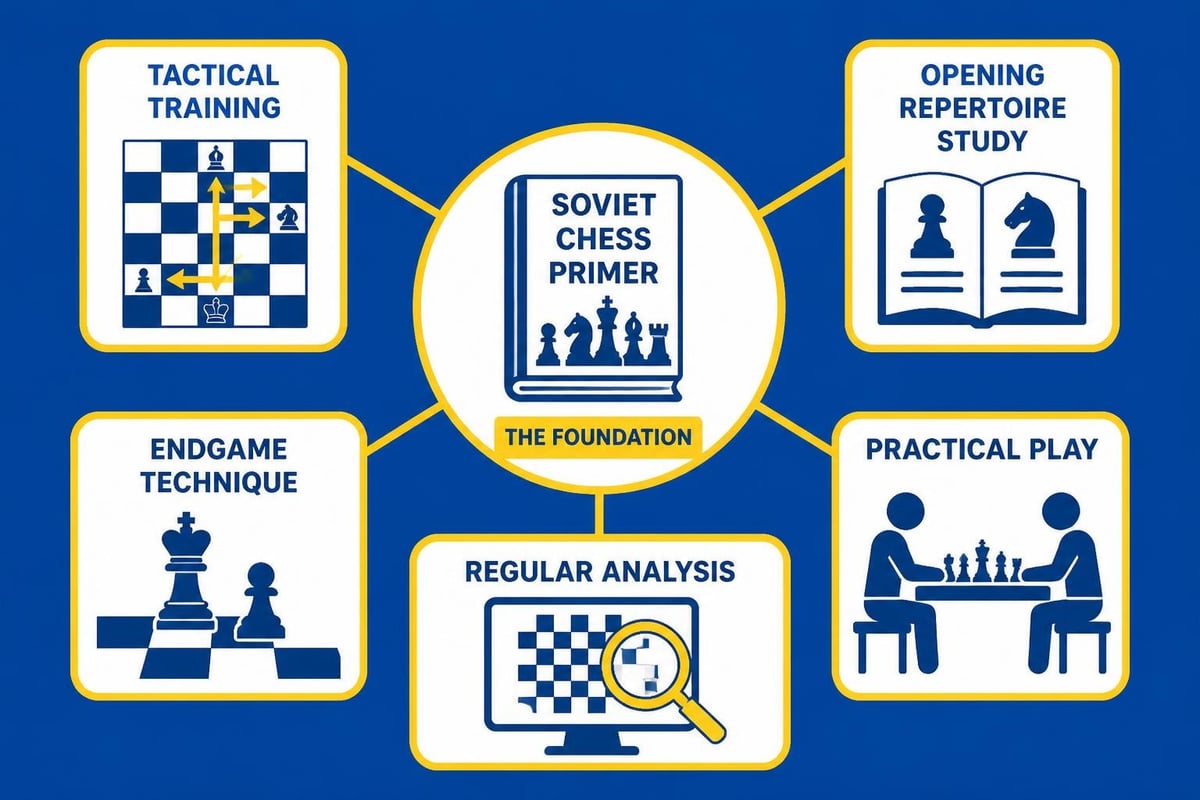
Think of the primer as your core curriculum, with other resources as electives. You wouldn't study only grammar and ignore vocabulary, but you need grammar to use vocabulary effectively. Similarly, the primer's systematic approach provides the framework for integrating other chess knowledge.
If you're exploring the best chess books for your library, consider how they complement each other. A book about chess openings for white serves a different purpose than the soviet chess primer's foundational teaching.
Implementation Strategies for Busy Players
You're probably juggling chess improvement with work, family, and other commitments. How can you actually implement the soviet chess primer's lessons without dedicating hours daily?
The answer lies in consistency over intensity. Twenty minutes of focused study with the primer beats two hours of distracted browsing. Set realistic goals based on your schedule rather than ambitious plans you'll abandon.
Weekly Study Framework
Monday/Tuesday: Work through 1-2 positions from the current chapter. Don't just solve them-understand why the solution works and how it connects to previous concepts.
Wednesday/Thursday: Play online games specifically applying what you've learned. If you studied tactical motifs involving weak back ranks, look for those opportunities in your games.
Friday: Review your weekly games using the primer's principles. Did you apply what you studied? What situations arose where those concepts were relevant?
Weekend: Progress to the next section or review challenging positions from earlier chapters.
This schedule totals perhaps 90-120 minutes weekly-achievable for most players while still providing steady progression through the material.
Measuring Your Progress
How will you know the soviet chess primer is actually improving your play? Unlike memorising opening theory where you can immediately test your knowledge, foundational understanding develops gradually.
Track your tactical success rate in online puzzles. After studying tactical themes in the primer, you should notice improved pattern recognition. Your puzzle rating might increase, or you'll solve familiar patterns more quickly.
Analyse your game quality beyond just results. Are you making fewer one-move blunders? Do your plans make more strategic sense? These qualitative improvements often precede rating gains but indicate genuine progress.
Progress Indicators
- Faster tactical recognition in your games
- Better opening understanding without memorising moves
- More coherent plans in the middlegame
- Improved endgame technique in practical positions
- Higher quality losses-losing for strategic reasons rather than blunders
That last point deserves emphasis. As you internalise the primer's lessons, even your defeats should reflect better chess understanding. You'll lose because your opponent outplayed you strategically, not because you hung pieces or missed basic tactics.
The Legacy Continues
The soviet chess primer's influence extends beyond individual study. Its pedagogical principles shaped chess education worldwide. Many modern coaches unconsciously employ methods that originated in Soviet chess schools.
You'll find echoes of its structured approach in contemporary training programmes. The emphasis on understanding over memorisation, the progression from tactics to strategy, the integration of all game phases-these weren't universal before Soviet methodologies gained prominence.
Modern players benefit from this legacy even if they've never opened the primer itself. The book represents a philosophy of chess education that prioritised creating complete, thinking players rather than specialists or theoreticians.
When you study the soviet chess primer today, you're not just reading a historical curiosity. You're engaging with a proven system that created world champions and elevated countless club players. Its methods remain relevant because they address fundamental aspects of chess understanding that transcend eras.
The soviet chess primer offers a structured, systematic approach to chess improvement that remains valuable seven decades after its initial publication. Its focus on fundamental understanding rather than rote memorisation provides a solid foundation that complements modern training resources. Whether you're just starting your chess journey or looking to fill gaps in your foundational knowledge, this classic text deserves consideration. If you're seeking to accelerate your improvement with streamlined resources that build on these timeless principles, Chess Cheat Sheets offers comprehensive guides, puzzles, and opening resources designed to enhance your skills efficiently without overwhelming you with unnecessary complexity.


