

Starting your chess game with the white pieces gives you a crucial advantage: the first move. But how do you make the most of it? Choosing the right chess openings for white can feel overwhelming when you're faced with hundreds of systems, variations, and theoretical lines. The good news is that you don't need to memorise everything. Whether you're just starting out or looking to expand your repertoire beyond the basics, understanding which openings suit your style and skill level will transform your game. In this guide, we'll explore the most effective chess openings for white, breaking down their strengths, weaknesses, and ideal situations for deployment.
Why Your Opening Choice Matters More Than You Think
Have you ever wondered why grandmasters spend years perfecting their opening repertoires? It's not just about memorising moves. The opening sets the stage for the entire game, determining whether you'll fight for space in the centre, launch an early attack, or build a solid positional foundation.
When you play White, you're essentially asking a question with every move. Your opponent must respond, giving you the chance to dictate the direction of the game. But this advantage only works if you know where you're heading.
The Three Pillars of Strong Opening Play
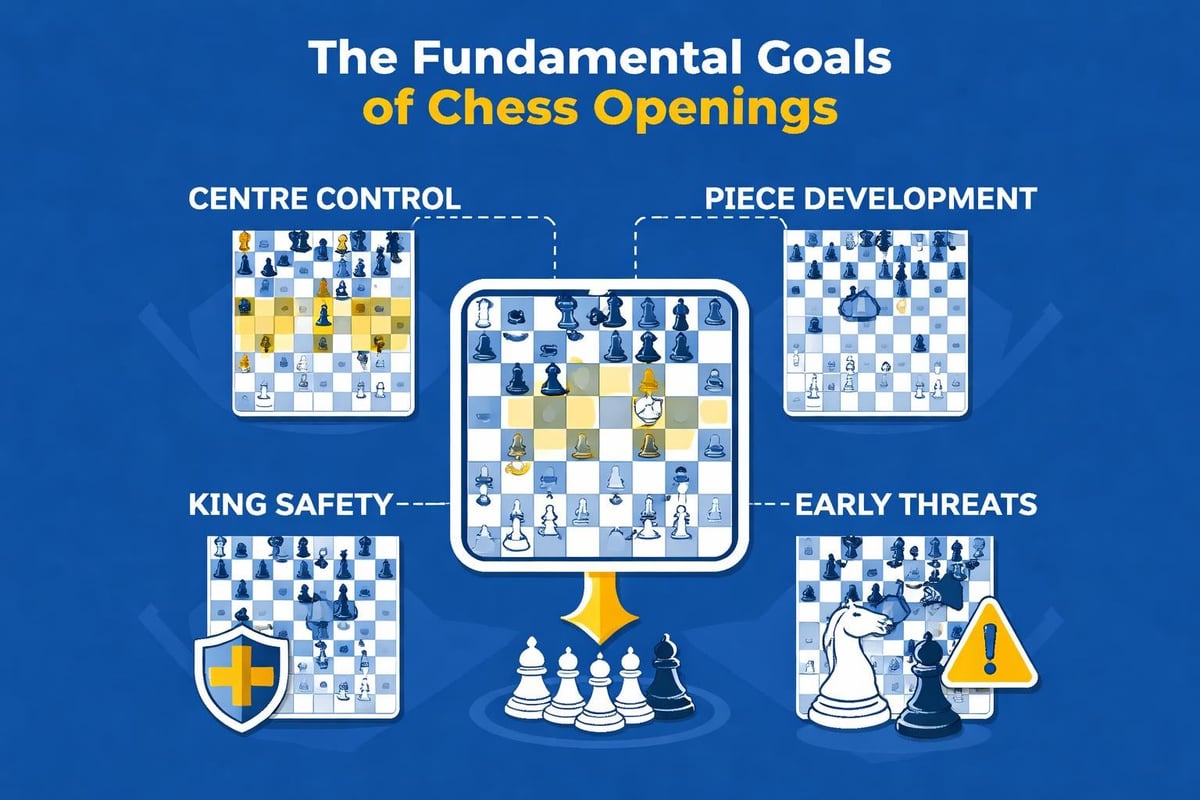
Every effective chess opening for white should accomplish at least two of these fundamental goals:
- Control the centre with pawns and pieces
- Develop your pieces quickly and efficiently
- Ensure king safety through timely castling
- Create immediate threats that your opponent must address
The best chess openings for white balance these elements whilst fitting your natural playing style. Are you someone who loves tactical fireworks, or do you prefer slow strategic battles?
Beginner-Friendly Systems That Build Solid Foundations
Let's start with openings that won't overwhelm you with variations. These systems follow clear principles and remain effective even when your opponent deviates from main lines.
The Italian Game: Classical and Reliable
The Italian Game (1.e4 e5 2.Nf3 Nc6 3.Bc4) has been teaching players good habits for centuries. You're developing pieces, controlling the centre, and preparing to castle. Simple, right?
What makes this opening brilliant for learners is its flexibility. If Black plays ...Bc5, you're in the Giuoco Piano. If they choose ...Nf6, you're heading toward the Two Knights Defence. Either way, the underlying principles remain consistent. The Italian Game offers multiple pathways whilst keeping your position sound.
Key advantages:
- Natural development pattern
- Clear plans in the middlegame
- Teaches you to value piece activity
- Remains viable at all levels
The London System: Your Reliable Weapon
Perhaps no opening has gained more popularity in recent years than the London System. Starting with 1.d4 and following up with Bf4, this setup-based approach lets you build a solid position regardless of what Black plays.
The beauty of the London? You can often play the same setup against multiple Black responses. This dramatically reduces your study time whilst giving you a rock-solid foundation. Many players find the London System particularly appealing because it focuses on understanding typical positions rather than memorising sharp variations.
| Opening | First Moves | Difficulty | Best For |
|---|---|---|---|
| Italian Game | 1.e4 e5 2.Nf3 Nc6 3.Bc4 | Beginner | Learning fundamentals |
| London System | 1.d4 and Bf4 | Beginner | Pattern recognition |
| Queen's Gambit | 1.d4 d5 2.c4 | Intermediate | Positional players |
| Ruy Lopez | 1.e4 e5 2.Nf3 Nc6 3.Bb5 | Intermediate | Deep study enthusiasts |
Aggressive Chess Openings for White That Create Early Pressure
Fancy putting your opponent on the back foot from move one? Some chess openings for white are designed specifically to create immediate complications and force Black to solve problems early.
The King's Gambit: High Risk, High Reward
With 1.e4 e5 2.f4, you're literally offering a pawn to blast open the centre and create attacking chances. The King's Gambit remains one of the most aggressive options available, though it requires precise play.
Is it sound at the highest levels? That's debatable. But between club players, it creates exactly the sort of chaotic positions where tactical awareness matters more than theoretical knowledge. You'll learn to calculate quickly and spot attacking patterns.
The Scotch Game: Immediate Central Tension
The Scotch Game (1.e4 e5 2.Nf3 Nc6 3.d4) smashes open the centre immediately. No slow manoeuvring here. You're forcing Black to make critical decisions by move three. Understanding the Scotch Game's aggressive nature helps you recognise when to push for tactical complications.
This opening suits players who trust their calculation and enjoy sharp positions. Magnus Carlsen has used it successfully, which tells you something about its viability.
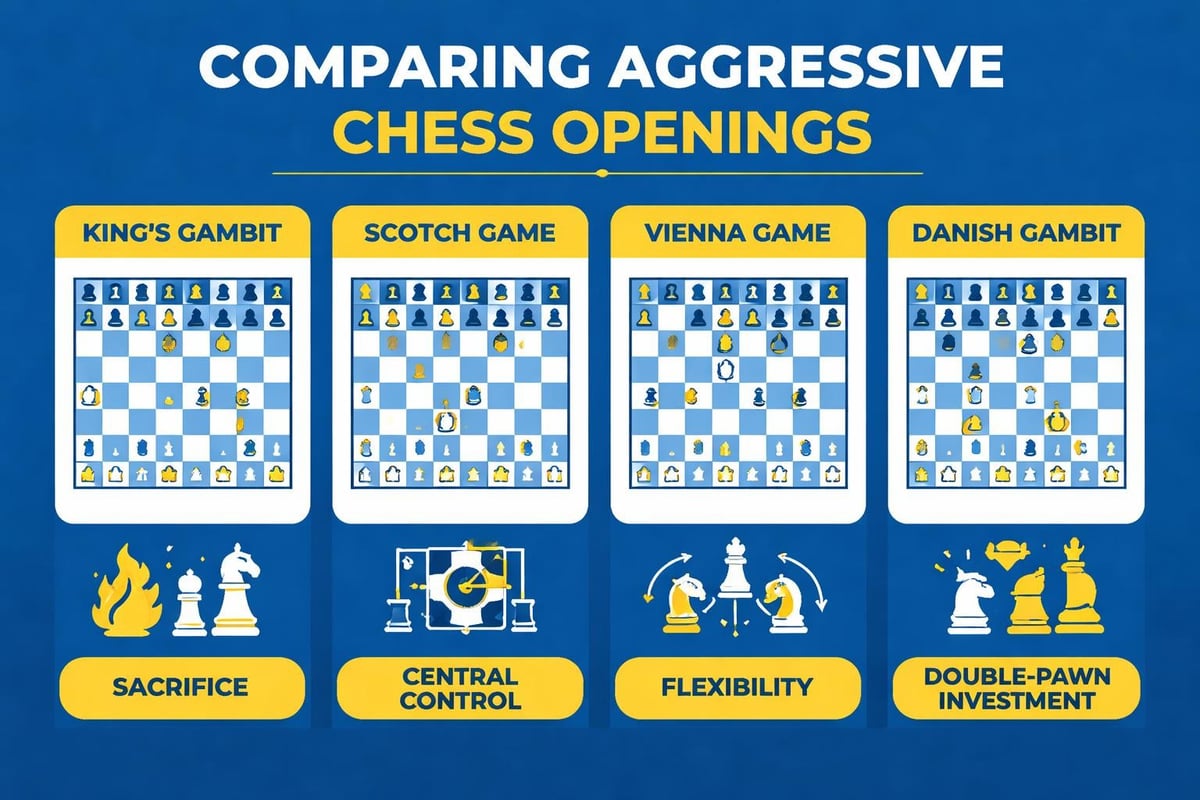
Aggressive openings comparison:
- King's Gambit: Maximum aggression, requires accurate defence knowledge
- Scotch Game: Balanced aggression, solid compensation for piece activity
- Vienna Game: Delayed aggression, flexible attacking options
- Danish Gambit: Extreme aggression, two pawns for rapid development
Positional Masterpieces for the Strategic Player
Not everyone wants to launch immediate attacks. Some of the strongest chess openings for white focus on building subtle advantages that accumulate over time.
The Queen's Gambit: Timeless Positional Play
Yes, the Netflix series brought attention to it, but the Queen's Gambit has been a cornerstone of positional chess for over a century. With 1.d4 d5 2.c4, you're fighting for central control without immediately opening lines.
What's brilliant about this opening is its depth. You can play it your entire chess career and continue discovering new ideas. The positions teach you about pawn structures, piece placement, and long-term planning.
The English Opening: Ultimate Flexibility
Starting with 1.c4 gives you tremendous flexibility. You're controlling the centre from the side, often transposing into other openings or creating unique positions. The English Opening rewards players who understand positional concepts over those who memorise variations.
Many players discover the English after reaching intermediate level, when they're ready to appreciate its subtlety. It's less about forced tactics and more about understanding when to expand, exchange, or restrict your opponent's options.
The Ruy Lopez: The Spanish Inquisition of Chess
If you want to dive deep into chess theory, the Ruy Lopez awaits you. After 1.e4 e5 2.Nf3 Nc6 3.Bb5, you're entering one of chess's most analyzed territories.
The Ruy Lopez offers White a small but persistent advantage when played well. You'll develop a feel for manoeuvring, subtle piece play, and how to maintain pressure without overextending. It's an education in itself.

Building Your Personal Opening Repertoire
Here's the truth: you don't need to learn every chess opening for white. What you need is a focused repertoire that covers your responses to Black's main defences whilst matching your playing style.
How Many Openings Should You Actually Learn?
For beginners, start with just one or two systems. Maybe the Italian Game against 1...e5 and the London System against everything else. That's genuinely enough.
As you improve, you might add a second option against 1...e5 (perhaps the Scotch or Ruy Lopez) and develop specific responses to popular defences like the Sicilian Defense or Caro-Kann.
Building your repertoire by rating:
- Under 1200: One solid system against each Black response
- 1200-1600: Main line plus one alternative for variety
- 1600-2000: Deeper understanding of chosen systems, second options prepared
- Above 2000: Multiple systems, surprise weapons, theoretical preparation
Matching Openings to Your Playing Style
Think about what you enjoy at the chessboard. Do tactical puzzles excite you? Then aggressive openings for White might suit your temperament better than slow positional grinds.
Prefer strategic battles where you outmanoeuvre opponents? The Queen's Gambit, English, or even the Catalan could be your weapons of choice. The Catalan Opening combines queenside development with central control in particularly subtle ways.

Common Mistakes When Learning Chess Openings for White
Let's talk about what not to do. I've seen countless players sabotage their progress by making these errors.
Memorising Without Understanding
You've probably encountered players who rattle off fifteen moves of theory, then collapse when you deviate on move sixteen. Don't be that player. Understanding why moves work matters infinitely more than memorising sequences.
When studying any chess opening for white, ask yourself:
- What is this move accomplishing?
- What would happen if I played something else?
- What's my plan if my opponent responds differently?
Switching Openings Too Frequently
Here's a mistake I see constantly: someone loses one game with the Italian, so they switch to the Scotch. Then they lose with that, so they try the Vienna. Stop.
Stick with your chosen chess openings for white for at least 20-30 games before evaluating whether they suit you. Every opening loses games sometimes. That's chess.
Ignoring Your Opponent's Choices
The best opening for White isn't just about what you play. It's about responding effectively to what Black chooses. If you only prepare for 1...e5 but everyone at your club plays the Sicilian, you've got a problem.
Understanding common chess openings your opponents actually play helps you prioritise your study time effectively.
Resources and Study Methods That Actually Work
How should you actually learn these openings? Reading this article is a start, but practical study makes the difference.
The Right Way to Study Openings
Forget about memorising 20 moves deep. Instead, focus on:
- Learn the key ideas behind your chosen opening
- Play practice games with your new system
- Review your games to spot where you went wrong
- Study master games in your chosen lines
- Use spaced repetition to retain important variations
The beginner-friendly approaches outlined by Chess.com emphasise these same principles because they work.
Tools and Materials Worth Your Time
Quality resources save you hours of wasted effort. Chess Cheat Sheets' comprehensive guides distil complex openings into digestible formats that you can actually remember and apply.
| Resource Type | Best For | Time Investment |
|---|---|---|
| Cheat Sheets | Quick reference, pattern recognition | 15-30 minutes per opening |
| Opening Books | Deep understanding | 2-4 hours per opening |
| Video Courses | Visual learners | 1-3 hours per opening |
| Database Study | Advanced preparation | 30+ minutes per variation |
| Practice Games | Practical application | 20-30 minutes per game |
Reviewing Your Opening Play
After each game, spend five minutes reviewing the opening phase. Did you achieve your goals? Where did you deviate from principles? What would you do differently?
This reflection transforms experience into improvement. You're not just playing chess openings for white; you're understanding them.
Handling Black's Most Popular Defences
Your opponent gets a say in which opening appears on the board. Here's how to prepare for their most likely responses to 1.e4 and 1.d4.
Against 1.e4: The Main Defences
When you play 1.e4, you'll face these defences most often:
1...e5: Your classical options include the Italian Game, Ruy Lopez, Scotch Game, or even the Vienna Game. Pick one main line and one backup.
1...c5 (Sicilian): The most challenging response. You can play Open Sicilian lines (2.Nf3 and 3.d4), closed variations (2.Nc3), or anti-Sicilian systems like the Grand Prix Attack.
1...e6 (French): Leads to strategic battles. The Advance Variation (3.e5) or Tarrasch (3.Nd2) offer good practical chances. Understanding the differences between French and Caro-Kann structures helps you navigate these positions.
1...c6 (Caro-Kann): Similar to the French but with different structures. The Advance Variation or Fantasy Variation creates imbalanced positions.
Against 1.d4: Building Your Arsenal
After 1.d4, you'll typically face:
- 1...d5: Queen's Gambit territory or London System setups
- 1...Nf6: Can transpose to numerous systems; flexibility required
- 1...e6 or 1...c5: Often heading toward Indian defences or Benoni structures
The London System handles all these responses reasonably well, which explains its popularity. Alternatively, mainline Queen's Gambit preparation covers most 1...d5 responses.
Advanced Concepts for Improving Players
Once you've got the basics down, these ideas will deepen your understanding of chess openings for white.
Pawn Structure Fundamentals
Every opening creates characteristic pawn structures. The isolated queen's pawn, hanging pawns, Carlsbad structure, and countless others each demand specific plans.
Learning to recognise these structures helps you navigate positions when you're past your preparation. You'll know whether to attack on the kingside, create breaks in the centre, or dominate weak squares.
Transposition Awareness
Many chess openings for white can transpose into each other. The English might become a Reversed Sicilian. Your Queen's Gambit could transpose to a Catalan. Understanding these connections expands your flexibility.
When to Deviate From Theory
Here's an underappreciated skill: knowing when to leave the main lines. Sometimes playing a slightly inferior but less analysed variation makes practical sense. You're fighting on your terms, not in your opponent's preparation.
Against stronger players, unexpected but sound moves can equalise the practical chances. Against weaker players, staying in positions you understand matters more than playing the objectively best move.
Practical Training Exercises
Theory means nothing without practice. Here's how to drill these openings into your playing strength.
Daily Opening Study Routine
Spending 15-20 minutes daily beats marathon weekend sessions:
- Monday/Wednesday/Friday: Study new variations or ideas
- Tuesday/Thursday: Review recent games in your openings
- Saturday: Play practice games focused on your openings
- Sunday: Solve tactical puzzles from your opening structures
Consistency builds retention. You're training pattern recognition, not cramming for an exam.
Themed Game Practice
Play a session where you use only one opening, regardless of what your opponent plays. If you're drilling the Italian Game, play it in every game that allows 1.e4 e5.
This focused practice accelerates your understanding faster than randomly rotating openings.
Analysis Techniques That Build Understanding
Don't just run the computer engine after your games. First, analyse without assistance:
- Identify where you left known theory
- Evaluate if you achieved your opening goals
- Find the critical moment when advantage shifted
- Only then check with an engine
This process develops your analytical skills alongside opening knowledge. The top openings recommended by experienced players become more accessible when you understand your own games deeply.
Mastering chess openings for white doesn't require memorising encyclopedic theory-it requires understanding core principles, choosing systems that match your style, and consistent practice. Whether you're drawn to the aggressive tactics of the King's Gambit or the subtle positional play of the Queen's Gambit, building a focused repertoire accelerates your improvement dramatically. Ready to streamline your opening preparation and stop wasting time on unnecessary variations? Chess Cheat Sheets offers comprehensive guides and resources that distil complex openings into practical, easy-to-remember formats, helping you master your chosen systems efficiently and boost your confidence at the board.


