

If you've ever wondered what chess pieces looked like nearly a thousand years ago, you're in for a treat. The lewis chessmen represent one of the most remarkable archaeological discoveries in chess history, offering us a window into how medieval players approached the game we still love today. These intricately carved walrus ivory pieces, discovered in the 19th century on a remote Scottish beach, continue to captivate chess enthusiasts and historians alike. But what makes these medieval treasures so special, and what can they teach modern players about the game?
The Discovery That Changed Chess History
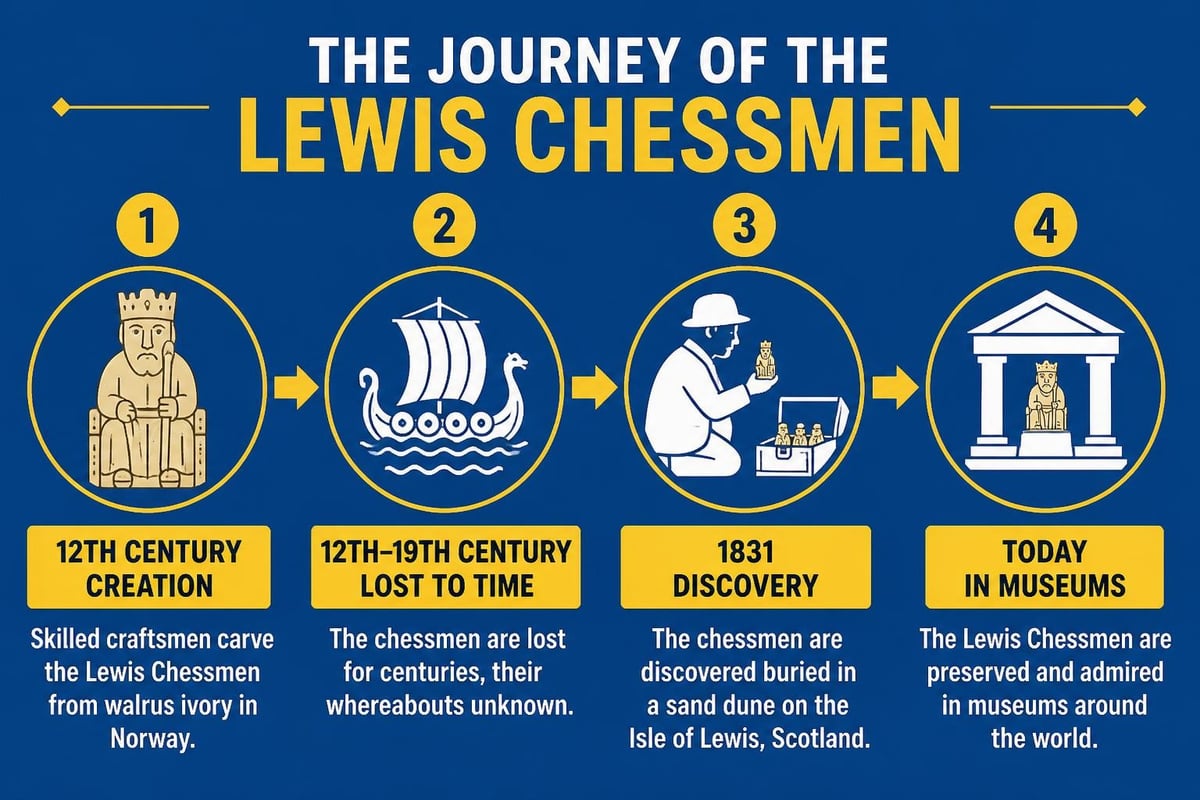
Picture this: it's 1831, and someone stumbles upon a hidden cache of ivory chess pieces on the Isle of Lewis in Scotland's Outer Hebrides. The exact circumstances remain shrouded in mystery, with various accounts suggesting a local man named Malcolm MacLeod found them buried in a sand bank at Uig Bay.
What he'd discovered would become one of the most significant finds in chess archaeology. The hoard contained 93 pieces from at least four different chess sets, along with 14 tablemen (pieces for another medieval game) and a belt buckle. The Wikipedia entry provides a comprehensive overview of exactly what was found that day.
These weren't just any chess pieces. They were masterpieces of medieval craftsmanship, each one carefully carved with distinctive personalities and features that make them instantly recognizable even today.
Where Did They Come From?
The origin of the lewis chessmen has been debated for decades. Most scholars agree they were crafted sometime between 1150 and 1200 AD, but where exactly?
The leading theories include:
- Norway: The most widely accepted theory suggests they were made in Trondheim, Norway's medieval capital
- Iceland: Some experts point to Icelandic workshops with access to walrus ivory
- Scotland: A minority opinion suggests local Scottish craftsmen
The style and materials provide crucial clues. Walrus ivory was a prized commodity in medieval Scandinavia, and the artistic style matches Norwegian craftsmanship from that period. Research into cultural transmission in chess helps us understand how these pieces reflect the broader social dynamics of medieval Norse culture.
What Makes These Pieces So Distinctive?
Have you ever looked at modern chess pieces and felt they were a bit impersonal? The lewis chessmen are anything but. Each piece is a character with its own personality, carved with remarkable attention to detail.
The Pieces Themselves
The collection includes all the pieces you'd expect in medieval chess, though with some interesting variations from what we use today:
| Piece Type | Modern Name | Notable Features |
|---|---|---|
| Kings | Kings | Seated on thrones, sword across lap |
| Queens | Queens | Right hand supporting chin (looking worried!) |
| Bishops | Bishops | Hold crosiers, wear mitres |
| Knights | Knights | Mounted on small horses |
| Rooks | Rooks | Standing warriors (warders) biting shields |
| Pawns | Pawns | Simple standing stones |
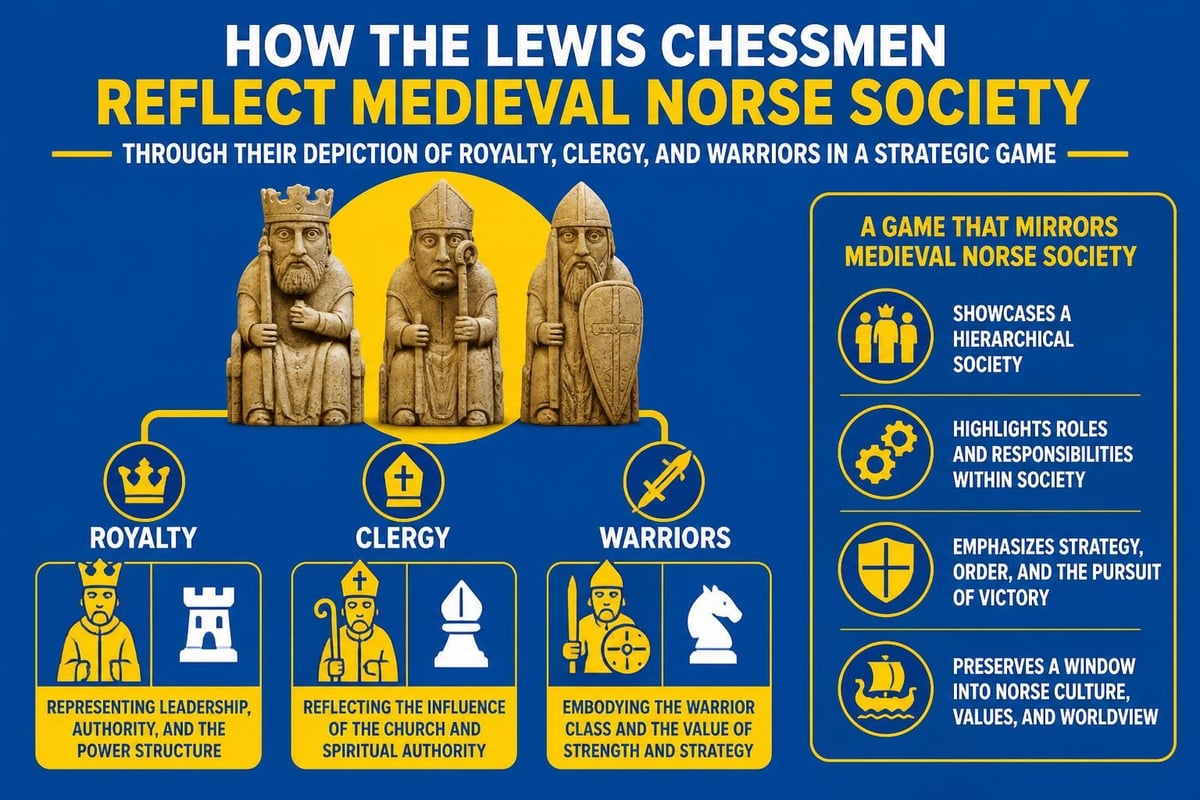
The queens are particularly fascinating. They're shown with their hand to their cheek, an expression that's been interpreted as everything from contemplation to despair. Some scholars suggest this gesture represents wisdom and counsel, fitting for a powerful piece on the board.
The rooks might surprise you most of all. Rather than castle towers, they're depicted as berserker warriors biting the tops of their shields. This reflects the Viking tradition of these fearsome fighters who were said to enter battle in a trance-like fury. Just as understanding chess openings for white requires knowing the context behind each move, appreciating these pieces means understanding the cultural context of their creation.

The Artistic and Cultural Significance
The lewis chessmen aren't just game pieces. They're works of art that tell us volumes about medieval society, trade networks, and cultural exchange.
Craftsmanship That Stands the Test of Time
The carver (or carvers) who created these pieces possessed extraordinary skill. Working with walrus ivory is challenging even with modern tools. Imagine doing it with 12th-century equipment.
Each piece shows:
- Intricate facial expressions that convey distinct emotions
- Detailed clothing showing period-accurate medieval dress
- Individual characteristics meaning no two pieces are exactly alike
- Remarkable preservation despite being buried for centuries
The level of detail suggests these weren't cheap sets for casual players. These were luxury items, probably owned by wealthy merchants or nobility. The history and significance of these artifacts reveals how chess was a game of status and prestige in medieval times.
What They Reveal About Medieval Chess
Here's where things get really interesting for chess players. The lewis chessmen show us that the game we play today has evolved significantly, yet certain fundamentals remain unchanged.
The Evolution of Chess Pieces
Medieval chess differed from our modern game in several ways. The queen, for instance, was a much weaker piece until around the 15th century when the rules changed dramatically. The bishops moved differently too.
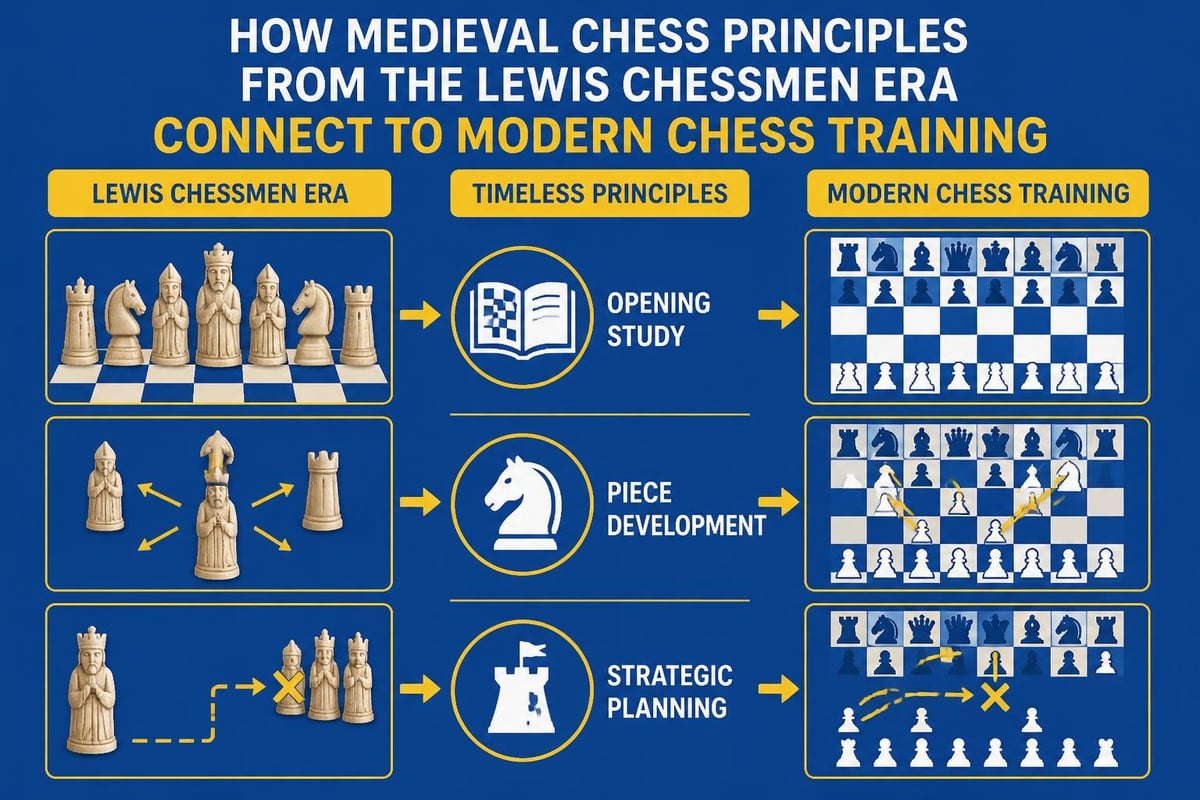
Yet the strategic essence remained the same: position your pieces, control key squares, protect your king, and outmanoeuvre your opponent. When you're studying the most common chess openings today, you're following a tradition that stretches back through these very pieces.
Who Played With These Sets?
The quality and craftsmanship suggest these sets belonged to the medieval elite. Chess in the 12th century was:
- A game of the nobility and wealthy merchants
- A teaching tool for military strategy
- A social activity that demonstrated education and refinement
- A way to pass long winter evenings in northern climates
The presence of multiple sets in the hoard suggests they may have been stock for a merchant, possibly lost or hidden during a sea voyage.
The Lewis Chessmen in Modern Culture
Fast forward to today, and the lewis chessmen have become iconic symbols of chess history. You've probably seen them even if you didn't realize it.
Pop Culture Appearances
Remember the giant wizard chess scene in Harry Potter and the Philosopher's Stone? Those pieces were modeled directly on the lewis chessmen. The film's production team created oversized replicas that captured the distinctive character of the originals, introducing a new generation to these medieval masterpieces.
They've also appeared in:
- Museum exhibitions worldwide, including permanent displays at the British Museum and National Museum of Scotland
- Documentaries about chess history and medieval archaeology
- Replica sets that allow chess enthusiasts to own their own versions
- Academic studies examining everything from their artistic merit to their cultural significance
The blog post about their modern connections explores how these ancient pieces continue to influence contemporary chess culture.
Lessons for Modern Chess Players
You might wonder what 900-year-old chess pieces can teach you about improving your game today. Actually, quite a lot.
The Timeless Nature of Strategy
The lewis chessmen remind us that chess fundamentals haven't changed. The same principles of development, king safety, and piece coordination that mattered in medieval Norway matter on Chess.com in 2026.
Core lessons include:
- Each piece has value: The care taken to craft individual pieces reflects how each has its own strengths
- Position matters: Just as the pieces were carefully arranged in medieval games, modern players must focus on piece placement
- Protection is crucial: The worried-looking queens remind us that even powerful pieces need safeguarding
- Plan ahead: Medieval players needed strategy just as much as we do
When you're working through chess opening puzzles, you're developing the same pattern recognition skills medieval players honed.
The Mystery Continues
Despite nearly two centuries of study, the lewis chessmen still hold secrets. Why were they buried? Who owned them? Were they truly made in Norway or somewhere else entirely?
Unanswered Questions
Researchers continue to investigate several puzzles:
| Question | Current Theories |
|---|---|
| Why buried on Lewis? | Merchant's hidden stock, personal burial, emergency concealment |
| Missing pieces | Lost before burial, incomplete sets, some still undiscovered |
| Exact origin | Trondheim most likely, but evidence isn't conclusive |
| Original owner | Wealthy merchant, church official, or nobleman |
Historical research into their origins continues to uncover new clues, though definitive answers may remain elusive.
Modern Analysis Techniques
Twenty-first-century technology is bringing new insights. Researchers now use:
- 3D scanning to analyze carving techniques in unprecedented detail
- Material analysis to trace the ivory's geographical origin
- Comparative studies with other medieval artifacts
- Digital reconstruction to model missing pieces and complete sets
These investigations might finally solve mysteries that have persisted since 1831.
Connecting Past and Present
The enduring appeal of the lewis chessmen lies in their ability to bridge centuries. When you look at these pieces, you're connecting directly with medieval chess players who faced the same challenges you do: how to develop pieces effectively, when to attack, when to defend.
What Modern Players Can Appreciate
Understanding chess history enriches your appreciation of the game. Just as studying endgame expertise improves your technical skills, learning about historical chess deepens your connection to the game's traditions.
The lewis chessmen teach us that chess has always been about more than just moving pieces. It's about:
- Critical thinking and planning several moves ahead
- Adaptation to your opponent's strategies
- Respect for the game's complexity and depth
- Patience in developing winning positions
These weren't just entertainment for medieval players. They were tools for developing the mind, much as we use chess today for cognitive improvement and competitive challenge.
Where to See Them Today
Fancy seeing these magnificent pieces in person? The collection is split between two locations, following their acquisition in the 19th century.
Museum Locations
The British Museum in London holds 82 pieces, while the National Museum of Scotland in Edinburgh displays 11 pieces. Both museums showcase them prominently, recognizing their importance to cultural heritage.
Visiting these exhibitions offers a chance to see the intricate details up close, from the worried expressions on the queens' faces to the fierce determination of the berserker rooks. Photography is usually permitted, so you can capture your own memories of these remarkable artifacts.
Both museums also offer replica sets in their gift shops, allowing chess enthusiasts to take home their own version of history. These reproductions range from affordable resin copies to high-end ivory-alternative versions that closely match the originals.
The Enduring Legacy
The lewis chessmen continue to inspire chess players, artists, and historians nearly two centuries after their discovery. They remind us that chess transcends time and culture, connecting people across vast stretches of history.
For those of us who love chess, these pieces represent something special: tangible proof that the game we cherish has captivated minds for nearly a millennium. The strategic thinking required to play well hasn't changed, even if the pieces themselves have evolved in appearance.
Whether you're just learning the basics through chess videos for beginners or you're an experienced player studying advanced theory, you're part of a tradition that stretches back through these medieval masterpieces and beyond.
The lewis chessmen offer more than just historical curiosity; they demonstrate how chess has united players across centuries through shared strategic challenges and the pure joy of the game. Whether you're inspired by ancient artifacts or modern competition, improving your chess requires dedication, practice, and the right resources. Chess Cheat Sheets provides comprehensive guides, puzzles, and opening resources designed to help you master the game efficiently, connecting you to the same strategic traditions that captivated medieval players nine hundred years ago.


