

You've probably dreamed of playing chess with someone across the world, watching the pieces move magically on your board as if by invisible hands. That's no longer just fantasy. The square off chess board has transformed this vision into reality, merging centuries-old chess tradition with cutting-edge robotics and artificial intelligence. Whether you're looking to challenge distant opponents or train against AI that physically moves pieces, this technology represents a significant leap forward for chess enthusiasts who want more than screen-based gameplay.
What Makes the Square Off Chess Board Different
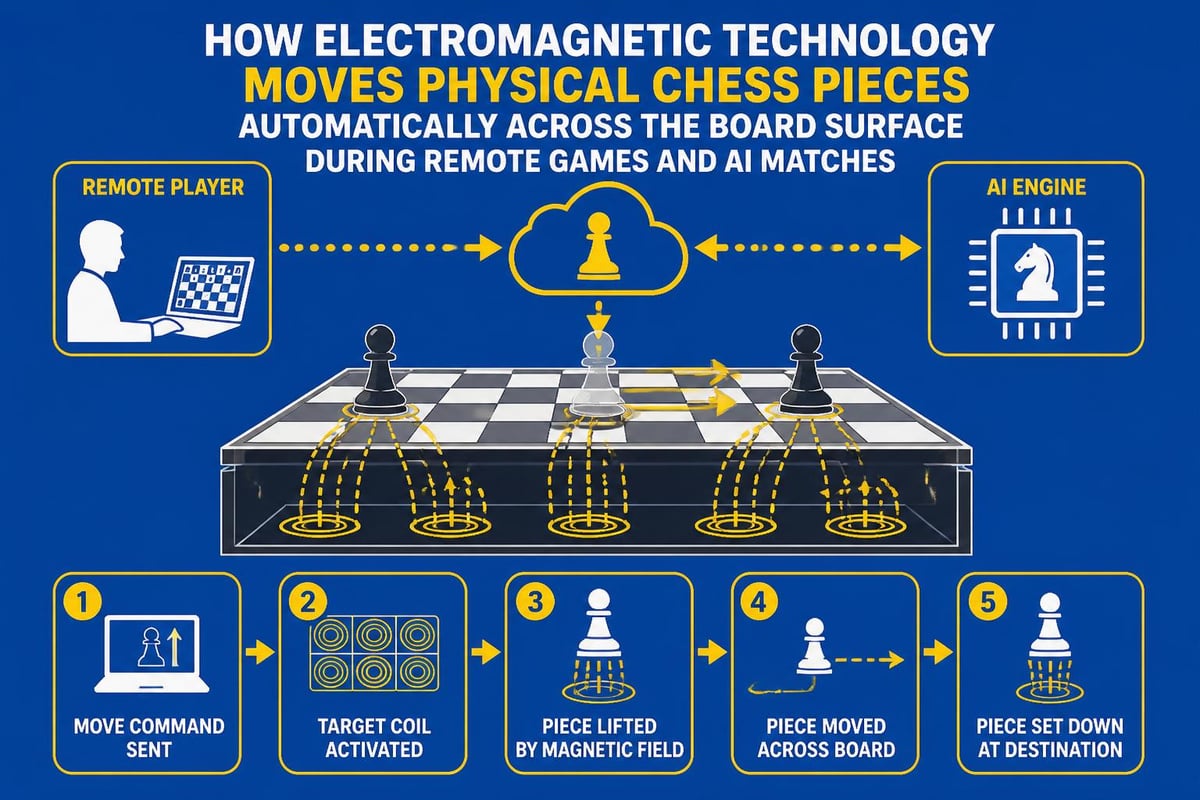
The square off chess board isn't just another electronic chess set. It's a robotic chess platform that physically moves pieces using electromagnets hidden beneath the board surface. When you make your move, the board registers it automatically. When your opponent responds-whether they're in another country or the AI engine decides its next move-the board springs to life, sliding pieces across the squares without human intervention.
This telerobotic chess board connects players worldwide, creating an experience that feels remarkably like sitting across from your opponent. The technology works through a combination of sensors that detect piece movements and robotic arms beneath the board that execute moves with precision.
Physical Components That Power the Experience
Let's break down what's actually inside one of these boards:
- Electromagnetic movement system that guides pieces across the board
- Pressure sensors embedded in each square to detect piece placement
- Bluetooth connectivity for smartphone and tablet integration
- Rechargeable battery providing hours of wireless gameplay
- LED indicators showing possible moves and highlighting squares
The board connects to a dedicated mobile app where you can find opponents, adjust difficulty levels, and access various game modes. You might be wondering how smooth the movement actually feels. From user reports, the pieces glide naturally across the board, though occasionally the system requires recalibration if pieces aren't perfectly centered.
Training Features That Accelerate Your Improvement
Beyond remote play, the square off chess board offers substantial training benefits. The integration with chess engines means you're essentially practicing against thousands of rated opponents, all while maintaining the tactile experience of moving real pieces. This matters more than you might think-there's psychological research suggesting that physical manipulation enhances learning compared to purely digital interfaces.
The AI coaching features adapt to your skill level. If you're just mastering chess openings, the board can play at beginner strength and gradually increase difficulty as you improve. For intermediate players studying specific systems like the London opening, you can program the board to respond with particular defensive setups, giving you targeted practice.
Game Modes for Different Learning Goals
| Mode | Purpose | Best For |
|---|---|---|
| Adaptive AI | Matches your skill level | Consistent challenge without frustration |
| Puzzle Mode | Solves tactical positions | Pattern recognition improvement |
| Opening Trainer | Practices specific openings | Building repertoire knowledge |
| Timed Games | Tournament preparation | Developing clock management skills |
The Square Off Kickstarter campaign highlighted AI-based features including personalized coaching that analyzes your playing style and suggests areas for improvement. This combines well with structured study materials. For instance, you might review chess openings for white using cheat sheets, then immediately practice those variations against the board's AI.
Remote Play Capabilities and Social Features
The square off chess board truly shines when connecting with distant opponents. Using the companion app, you can challenge friends regardless of location. They move pieces on their board, and your board replicates those moves automatically. It creates an intimacy that video chess simply can't match.
Recent iterations have added video calling directly into the experience. The robotic chess board now includes video calling components for remote games, letting you see your opponent's face while the pieces move physically before you. This combination of visual connection and tactile gameplay addresses one of online chess's biggest drawbacks-the lack of personal interaction.
Social features worth noting:
- Global matchmaking pairs you with players of similar rating
- Friends list makes scheduling games with regular opponents simple
- Tournament mode allows multiple players to compete in brackets
- Game history records all matches for later analysis
- Sharing capabilities let you post interesting games to social media
You can even spectate games, watching two boards battle it out autonomously. Imagine hosting a small gathering where everyone watches a grandmaster game replay itself on your coffee table, pieces moving on their own as the historic match unfolds.
Different Square Off Models and Their Features
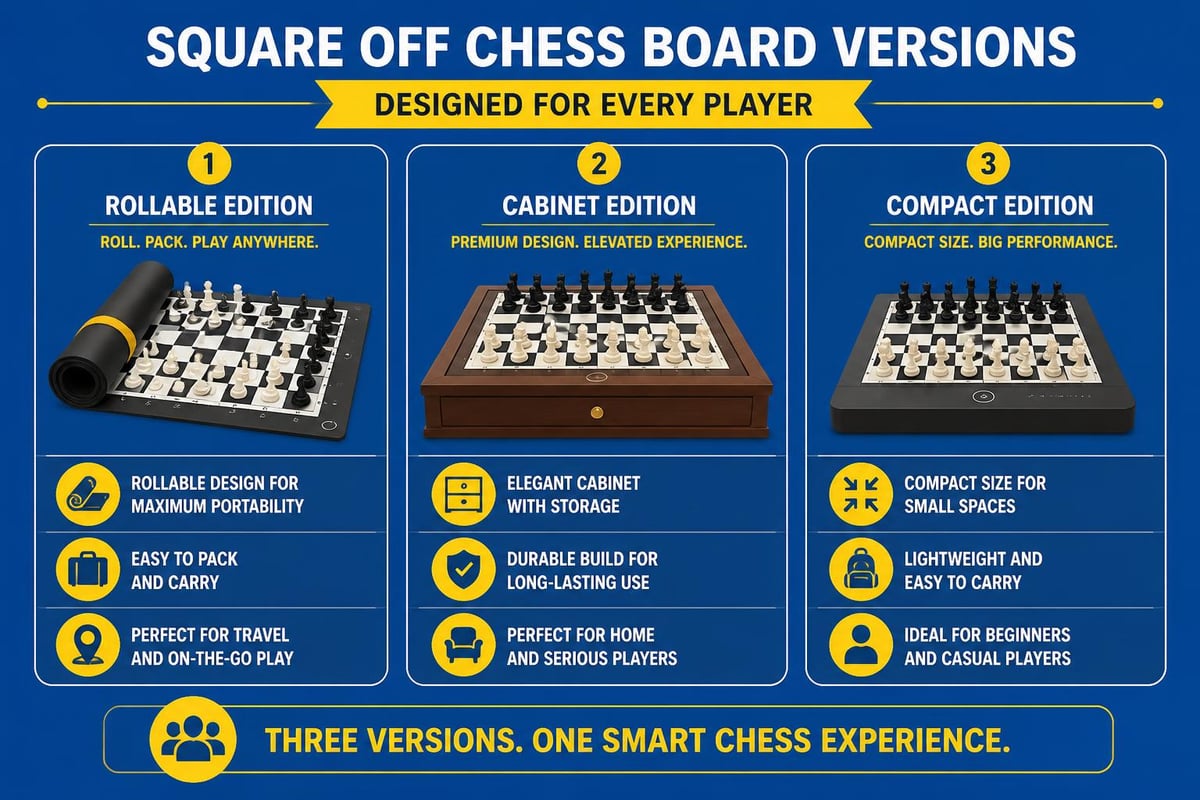
The company offers several variations, each targeting different priorities. The original square off chess board focuses on core functionality-robotic movement and app connectivity in a full-sized wooden cabinet. It's beautiful but not particularly portable.
That changed when Square Off introduced a rollable connected chess board, addressing portability concerns. This silicone version can be rolled up like a yoga mat, making it perfect for travel. The pieces magnetically attach to the flexible surface, and the robotics system somehow still functions despite the unconventional material.
Comparing Square Off Board Options
| Model | Size | Portability | Price Range | Best Use Case |
|---|---|---|---|---|
| Grand Kingdom | Full cabinet | Stationary | Premium | Home centerpiece |
| Pro | Standard board | Moderate | Mid-range | Serious players |
| Swap | Rollable | Highly portable | Entry-level | Travel and casual play |
| Neo | Compact | Good | Affordable | Beginners |
The autonomous chess board features self-moving pieces powered by AI, with variations in processing power and material quality across models. Higher-end versions include more powerful engines, better piece recognition, and premium wood construction that rivals traditional chess sets.
Integration with Chess Learning Resources
Here's where things get interesting for players serious about improvement. The square off chess board doesn't replace structured study-it complements it beautifully. When you're working through opening variations from resources like Chess Cheat Sheets, you can immediately test those lines against the board's AI.
Let's say you're studying the pros and cons of the Queen's Gambit. You read through the theory, memorize key variations, and understand the strategic ideas. Then you sit at your square off chess board and play those positions repeatedly against AI that responds correctly. This multi-sensory learning-reading, seeing, and physically moving pieces-creates stronger neural pathways than any single method alone.
How to combine physical board training with study materials:
- Review opening theory for 15 minutes using cheat sheets
- Practice those specific lines against the board for 30 minutes
- Analyze where you deviated from recommended moves
- Return to study materials to understand why those deviations occurred
- Repeat with tactical puzzles and endgame positions
The board's move suggestion feature helps here too. If you're stuck, it can highlight legal moves or even show the objectively best move according to the engine. This immediate feedback accelerates learning compared to playing online where you might repeat mistakes without realizing them.
Technical Specifications and Performance
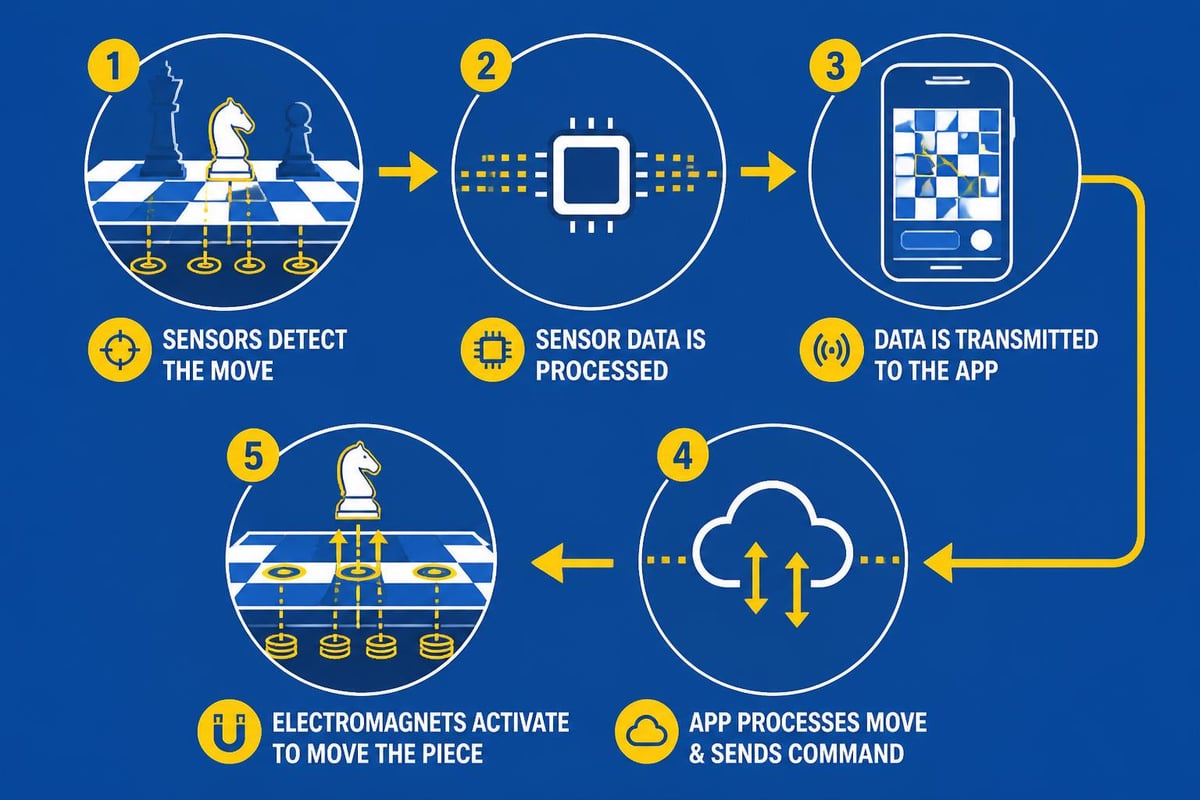
Understanding what's actually happening under the surface helps appreciate the engineering involved. The square off chess board uses a coordinate system to map the 64 squares, with sensors detecting when pieces are lifted or placed. The electromagnetic array beneath creates precise movements by activating specific magnets in sequence, pulling pieces along predetermined paths.
The chess engine itself varies by model, ranging from approximately 1800 to 2500+ rating strength. That's sufficient for most amateur players, though grandmaster-level users might find the strongest settings still beatable. Processing happens either on the board itself or through the connected app, depending on your model and settings.
Performance Metrics That Matter
When evaluating whether a square off chess board fits your needs, consider these specifications:
- Move execution speed: 2-5 seconds per piece movement
- Battery life: 4-8 hours continuous play (varies by model)
- Piece recognition accuracy: 99%+ when properly calibrated
- Connection range: 10 meters Bluetooth connectivity
- Engine depth: Analyzes 8-15 moves ahead depending on difficulty
The magnetic chess board enables remote play through smartphone synchronization, with cloud-based matching ensuring minimal latency even across continents. Most users report move delays of under two seconds during online games, which feels remarkably responsive for physical piece movement.
Practical Considerations for Chess Students
You might be wondering whether investing in a square off chess board makes sense for your current skill level. If you're primarily focused on opening theory and tactical improvement, the board offers genuine advantages over purely digital platforms. The physical interaction reinforces memory, and the ability to practice specific positions repeatedly without manual setup saves significant time.
However, it's worth noting that the board doesn't replace comprehensive study tools. You still need resources that explain why moves work, not just which moves to make. That's where combining this technology with comprehensive chess guides and cheat sheets creates a complete learning system.
For beginners especially, the square off chess board removes some friction from learning. You don't need to find opponents at your local club or coordinate schedules. The AI is always available, perfectly patient, and precisely calibrated to your level. This consistency helps build confidence before facing human opponents.
When the Square Off Board Makes Most Sense
Consider this technology if you:
- Value tactile learning and retain information better through physical interaction
- Have limited access to regular in-person opponents
- Want to maintain connections with distant chess friends or family
- Prefer studying away from screens after work hours on devices
- Enjoy the aesthetic of traditional chess sets but want modern functionality
Conversely, if your primary goal is reaching master-level strength quickly, you might get better value from software that offers deeper analysis features and larger databases. The square off chess board excels at making practice enjoyable and accessible, which matters tremendously for maintaining long-term motivation.
The Educational Philosophy Behind Robotic Chess
There's something worth examining about why the Square Off chess board melds the classical with the robotic. It's not just nostalgia or novelty-there are legitimate pedagogical reasons for maintaining physical pieces in the digital age.
Cognitive load research suggests that removing unnecessary variables helps learning. When you study best openings for black on a screen, part of your mental energy goes toward navigating the interface, processing digital graphics, and managing multiple windows. With a physical board, your focus narrows entirely to the position and strategic considerations.
The square off chess board preserves this focused environment while adding digital conveniences. You get automatic move recording, instant access to opponents, and AI training-all without the cognitive overhead of managing software. For players using structured learning approaches, this streamlined experience supports rather than distracts from improvement.
Future Developments in Connected Chess Hardware
The technology continues advancing rapidly. Researchers are developing systems like CVChess, a deep learning framework for converting chessboard images to digital notation, suggesting future boards might use cameras rather than pressure sensors. This could reduce cost while increasing accuracy.
Integration with streaming platforms is another frontier. Imagine broadcasting your games where viewers see both the physical board and digital analysis overlays in real-time. For chess educators and content creators, the square off chess board offers unique presentation opportunities that pure software can't match.
Potential future features include:
- Voice-controlled piece movement and commands
- Augmented reality overlays showing engine analysis
- Automatic tournament pairing and bracket management
- Integration with major chess platforms like Chess.com and Lichess
- Advanced position recognition for starting from any setup
The market for connected chess hardware is still young, which means both opportunities for innovation and risks of obsolescence. Early adopters should expect firmware updates and feature additions, but also potential compatibility challenges as standards evolve.
Balancing Technology with Traditional Study
Here's the honest truth: the square off chess board won't make you a better player by itself. It's a tool, and like any tool, its value depends entirely on how you use it. The players seeing genuine improvement combine this technology with traditional study methods-analyzing master games, solving puzzles, studying endgames, and reviewing their losses.
Think of it as part of a broader improvement ecosystem. You might start your study session reviewing a London System chess opening guide, understanding the strategic ideas and typical piece placements. Then you sit at your square off chess board and play five games implementing those ideas against progressively stronger AI. Finally, you review those games, identifying where you deviated from the principles you studied.
This cycle-study theory, practice application, analyze results-works regardless of your tools. The square off chess board simply makes the practice phase more engaging and accessible. It removes the excuse of "I can't find opponents at my level" or "I'm too tired to stare at another screen after work."
Creating an Effective Practice Routine
Here's a sample weekly schedule incorporating the board:
| Day | Activity | Duration | Focus |
|---|---|---|---|
| Monday | Opening study + board practice | 60 min | New variations |
| Tuesday | Tactical puzzles + board games | 45 min | Pattern recognition |
| Wednesday | Rest or casual play | 30 min | Enjoyment |
| Thursday | Endgame study + board practice | 60 min | Technique |
| Friday | Game analysis + corrections | 45 min | Learning from mistakes |
| Weekend | Tournament games or long sessions | 90 min | Integration |
The key is viewing the square off chess board as your practice partner rather than your teacher. It provides perfect implementation of moves and tireless repetition, but it doesn't explain strategic concepts or correct misunderstandings about positional play.
Making the Investment Decision
Let's address the financial consideration directly. Square off chess boards range from roughly £200 for basic models to £1,500+ for premium versions. That's substantial compared to traditional boards or free online chess platforms. The question becomes whether the unique benefits justify that cost for your specific situation.
If you're someone who struggles with screen fatigue, travels frequently, or simply values the aesthetic and tactile experience of physical chess, the value proposition strengthens considerably. The board effectively replaces both a premium chess set and provides ongoing access to opponents and training, which over years of use might prove cost-effective.
For parents introducing children to chess, the square off chess board offers particular advantages. Kids often engage more readily with physical objects than screens, and the "magical" moving pieces capture imagination in ways that digital chess struggles to match. Combined with resources from a best website to learn chess, young players get both the wonder of discovery and structured guidance.
However, if you're primarily interested in rapid rating improvement and don't particularly mind screen-based play, investing that same money in coaching sessions or premium training software might yield better results. The square off chess board excels at making practice enjoyable and consistent-crucial factors for long-term development but not the only path to improvement.
The square off chess board represents an exciting convergence of traditional chess culture and modern technology, offering unique benefits for players who value physical interaction alongside digital convenience. Whether you're looking to maintain connections with distant chess partners, practice openings against adaptive AI, or simply enjoy the aesthetic of automated piece movement, this technology delivers a genuinely novel experience. To complement your hands-on practice with structured opening theory and strategic guidance, Chess Cheat Sheets provides the perfect companion resources, helping you understand not just which moves to make but why they work, transforming your square off chess board practice sessions into powerful learning experiences.


