

You've probably heard that chess is incredibly complex, with millions of possible positions and decades of theory to memorise. While that's true at the highest levels, the reality for most of us is quite different. The beauty of simple chess lies in understanding that you don't need to know everything to play well and enjoy the game. By focusing on fundamental principles and clear thinking, you can make significant progress without drowning in endless variations or memorising opening theory 20 moves deep. Let's explore how stripping chess back to its essentials can actually make you a stronger, more confident player.
What Makes Chess Simple (and Why Complexity Is Overrated)
Have you ever watched a grandmaster explain their thought process and been surprised by how straightforward it sounds? That's because strong players have internalised the core principles that govern the game. Simple chess isn't about dumbing down the royal game; it's about recognising that most positions are decided by a handful of recurring themes.
Think of it this way: you wouldn't try to learn a language by memorising the entire dictionary. Instead, you'd start with common phrases, basic grammar, and everyday vocabulary. Chess works the same way. The Simple Chess club on Chess.com brings together players who understand this philosophy, focusing on practical improvement rather than theoretical perfection.
The Core Principles That Never Change
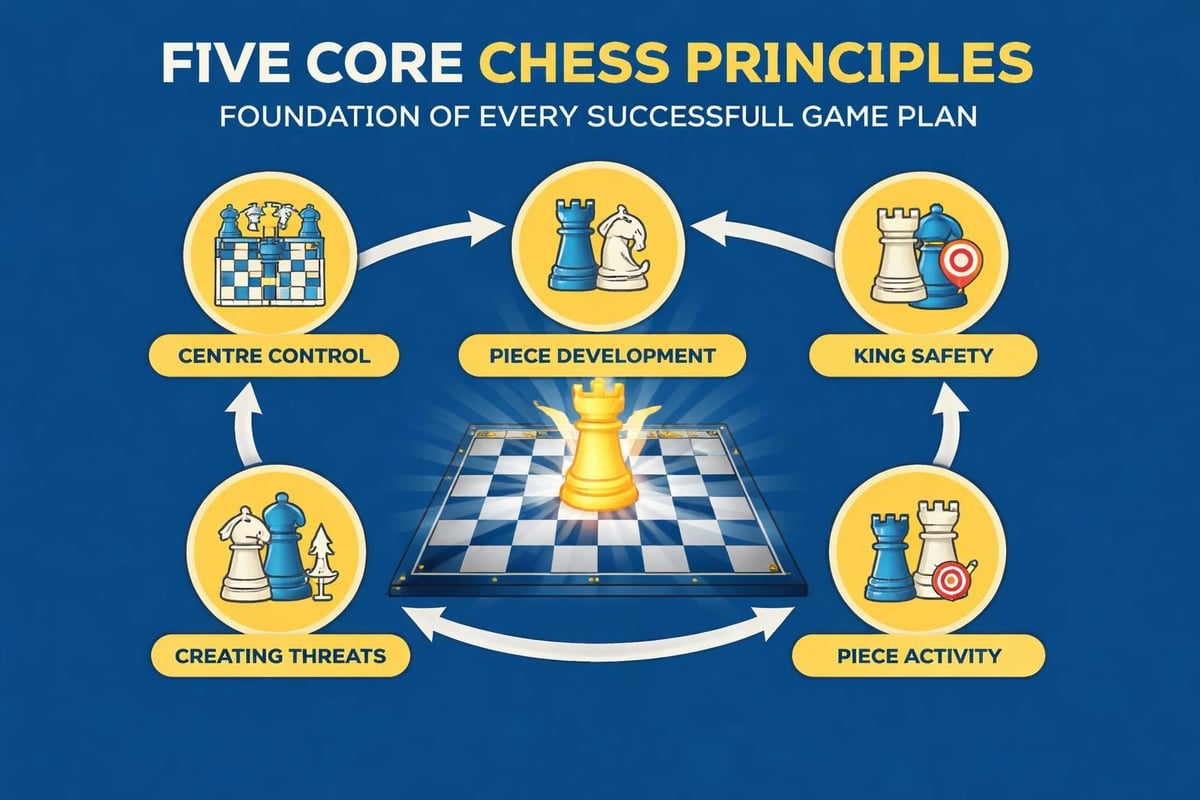
Regardless of your rating or experience level, certain truths remain constant in every chess game:
- Control the centre with pawns and pieces
- Develop your pieces to active squares before launching attacks
- Keep your king safe through timely castling
- Create threats that force your opponent to respond
- Think about piece activity rather than just material count
These aren't revolutionary concepts, but they're remarkably powerful when applied consistently. When you strip away the noise and focus on these fundamentals, decision-making becomes clearer and mistakes become less frequent.
Breaking Down the Opening Without Memorisation
Opening theory can feel overwhelming. There are hundreds of named openings, thousands of variations, and new theory being developed every week. But here's a secret: you don't need most of it. Simple chess in the opening phase means understanding the goals rather than memorising moves.
| Opening Principle | What It Means | Example Application |
|---|---|---|
| Control the centre | Place pawns on e4/d4 or e5/d5 | 1.e4 gives immediate central presence |
| Develop minor pieces | Knights and bishops out before rooks and queen | 1.e4 e5 2.Nf3 developing with purpose |
| Castle early | Get your king to safety by move 10 | Short castle (O-O) in most positions |
| Connect your rooks | Complete development so rooks protect each other | Clear the back rank through development |
When you're just starting out or looking to simplify your approach, good beginner chess books emphasise these principles over specific move orders. You'll find that understanding why you're making moves matters far more than knowing the "correct" 15th move of the Najdorf Sicilian.
Choosing Openings That Make Sense
Rather than playing whatever's fashionable or memorising computer-approved sequences, consider openings that teach good habits. The Italian Game, for instance, develops naturally and creates clear plans. Similarly, the best openings for black often share common characteristics: they're solid, principled, and don't require 20 moves of preparation.
If you're looking for a structured approach, you might check out how to learn chess today in less than 10 minutes, which demonstrates how quickly the basics can be grasped. The opening phase shouldn't be a memory test; it should be a logical extension of sound principles.
Middlegame Simplicity: Recognising Patterns
The middlegame is where chess earns its reputation for complexity. Positions open up, tactics abound, and long-term planning meets immediate calculation. Yet even here, simple chess principles can guide your decisions. Most club-level games are decided by a handful of recurring tactical motifs and strategic mistakes.
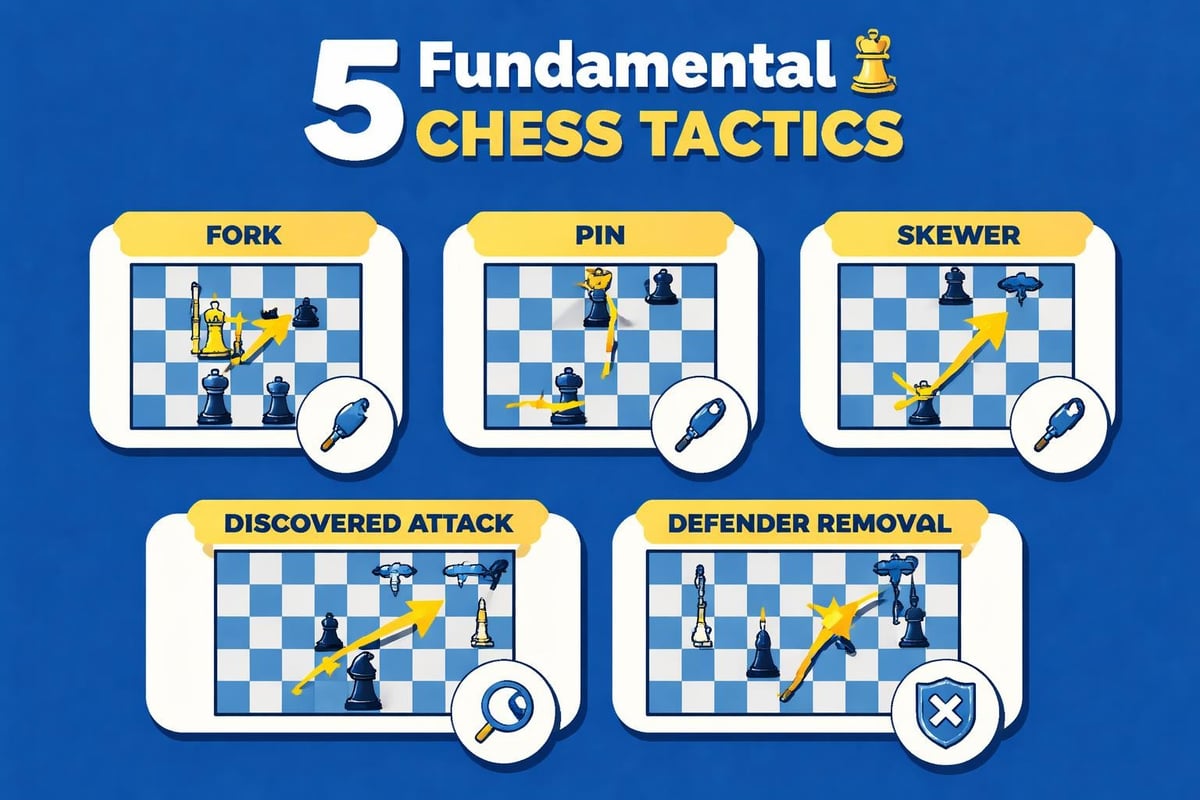
What patterns should you recognise? Start with these:
- Forks (one piece attacks two or more enemy pieces)
- Pins (a piece can't move without exposing something more valuable)
- Skewers (forcing a valuable piece to move and capturing what's behind it)
- Discovered attacks (moving one piece reveals an attack from another)
- Removal of the defender (eliminating a piece that protects something critical)
Once you've spotted these patterns in puzzles a few dozen times, they become second nature. You'll start seeing them in your own games without conscious effort. That's the power of pattern recognition in simple chess.
Strategic Planning Made Clear
Beyond tactics, you need a plan. But planning doesn't have to be complicated. Ask yourself three questions each move:
- What's my worst-placed piece, and how can I improve it?
- Where is my opponent weak (pawn structure, piece placement, king safety)?
- What's my ideal piece arrangement, and how do I get there?
These questions work at every level. A 1200-rated player and a 2200-rated player both ask them; they simply see deeper into the answers. The Kotaku overview of Simple Chess highlights how minimalist thinking can enhance your strategic vision by removing distractions.
Common Mistakes and How Simple Thinking Fixes Them
You know what's interesting? Most chess games at the club level aren't won through brilliant attacks or profound positional understanding. They're won because one player makes fewer mistakes than the other. By embracing simple chess thinking, you naturally avoid the most common pitfalls.
The Mistake Matrix
| Common Error | Why It Happens | Simple Chess Solution |
|---|---|---|
| Moving the same piece twice in the opening | Impatience or poor planning | Develop a different piece each move until castled |
| Weakening king safety unnecessarily | Attacking impulses | Ask "Is my king safe?" before each pawn push |
| Ignoring opponent's threats | Tunnel vision on your own plans | Always check: "What's my opponent threatening?" |
| Trading when behind in material | Automatic responses | Count material before accepting trades |
| Playing hope chess | Assuming opponent won't see your weaknesses | Verify every move with "Can this be punished?" |
If you're playing specific openings, resources like avoiding common Caro-Kann mistakes can help you understand position-specific errors. The principle remains the same: identify recurring mistakes and systematically eliminate them.
The Power of Slow Thinking
Simple chess often means slower chess. Not in clock time necessarily, but in mental approach. Before moving, run through a basic checklist:
- Is this move safe?
- Does it improve my position?
- Have I considered my opponent's best response?
- Am I following sound principles?
This might feel mechanical at first, but it becomes automatic with practice. You're building good habits that compound over time, much like learning any other skill.

Endgame Essentials: Where Simplicity Shines Brightest
The endgame is where simple chess truly comes into its own. With fewer pieces on the board, clear principles become even more powerful. Many players dread endgames, but they shouldn't. Endgames reward systematic thinking and precise calculation far more than opening knowledge or tactical fireworks.
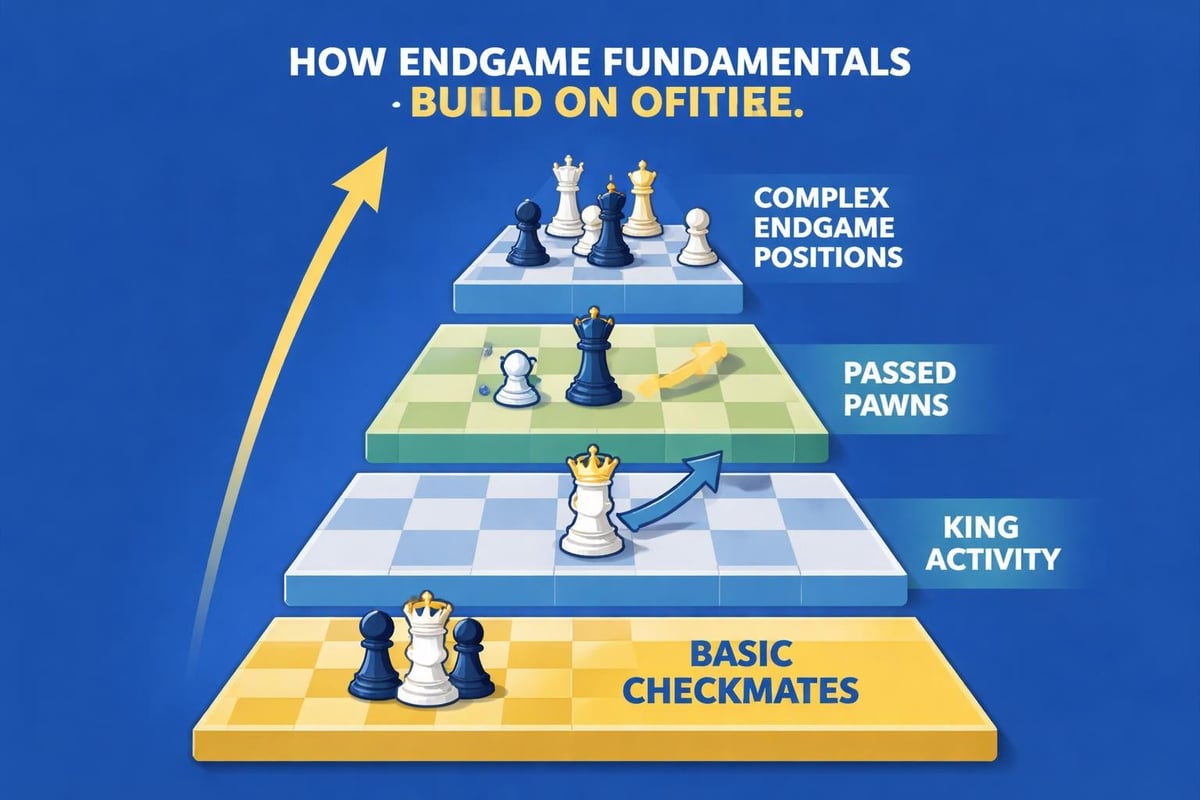
Start with these fundamental endgame ideas:
- Active kings win endgames (your king becomes a powerful piece)
- Passed pawns must be pushed or blockaded
- Rook activity matters more than rook placement
- Opposition decides many king-and-pawn endings
- Know the basic checkmates (king and queen, king and rook)
You don't need to study Dvoretsky's Endgame Manual to play decent endgames. Knowing how to checkmate with a king and queen, understanding basic king-and-pawn endings, and recognising when to trade pieces will win you far more games than memorising theoretical rook endgames.
Building Endgame Confidence
The beautiful thing about endgames is that you can study them systematically. Unlike openings, where new variations emerge constantly, endgame principles remain fixed. Practice with the Simple Chess Board app, which lets you set up positions and explore them without time pressure.
Set up basic positions and play them through:
- King and queen versus king
- King and rook versus king
- King and pawn versus king
- Rook and pawn endings with equal material
Once these become comfortable, you'll approach endgames with confidence rather than dread. That psychological shift alone is worth the investment.
Practical Tools for Simple Chess Improvement
Theory is valuable, but application determines results. How do you actually implement simple chess principles in your daily practice? It's easier than you might think, and it doesn't require hours of study each day.
Daily Practice Structure
Creating a routine removes decision fatigue and builds consistency. Consider this approach:
- 15 minutes of puzzles focusing on basic tactics (you'll find these in the puzzle collection)
- 20 minutes of game play with time to think (15+10 or slower)
- 10 minutes of review examining one key mistake from your games
- 5 minutes of principle review reading about one fundamental concept
That's 50 minutes total. You don't need to do this every day, but even three sessions per week will produce noticeable improvement over a few months.
Using Technology Wisely
Apps and online tools can support simple chess learning when used purposefully. The SimpleChess app offers customisable boards and various game modes that let you focus on specific aspects of your game. But remember: technology is a tool, not a teacher. It's most effective when combined with deliberate practice and self-reflection.
You might also explore structured resources. For instance, chess opening guides provide frameworks without overwhelming detail, helping you build a repertoire based on understanding rather than memorisation.
Building a Simple Chess Repertoire
One of the smartest moves you can make is developing a streamlined opening repertoire. Instead of playing different openings each game or trying to know everything, choose a few solid systems and understand them deeply. This approach embodies simple chess philosophy: depth over breadth.
For White, you might play 1.e4 and learn the basic responses to the most common defences. For Black against 1.e4, you could choose between a solid option like the Caro-Kann or French Defence (comparing these two defences helps you pick the right fit). Against 1.d4, a King's Indian or Queen's Gambit Declined covers most situations.
Quality Over Quantity
Three well-understood openings beat ten half-known ones. When you deeply understand your chosen systems, you'll:
- Recognise typical middlegame positions
- Know which plans work in various pawn structures
- Avoid opening traps and pitfalls
- Feel confident in the positions you reach
This confidence translates directly into better results. You're not wasting mental energy remembering moves; you're channelling it into finding good plans and calculating tactics. Resources like cheat sheets condense essential information, making review quick and retention easier.
The Psychological Edge of Simple Chess
Perhaps the most underrated aspect of simple chess is its psychological impact. When you play with clear principles and systematic thinking, you project confidence. Your opponents sense it. More importantly, you avoid the anxiety that comes from trying to remember complicated variations or feeling lost in unfamiliar positions.
Chess is as much a mental battle as a tactical one. Players who stick to simple, sound principles tend to make fewer blunders under pressure. Why? Because they're not overloading their working memory with unnecessary information. They're focused on what matters in the current position.
Staying Grounded During Games
When you feel overwhelmed during a game, return to basics:
- Check that your pieces are safe
- Look for forcing moves (checks, captures, threats)
- Ask what your opponent is trying to do
- Choose the move that best improves your position
This systematic approach prevents panic and keeps you in the game even when positions become sharp. You might not find the computer's top choice, but you'll consistently find good moves. In the long run, consistency beats occasional brilliance.
Learning Resources That Embrace Simplicity
Not all chess resources are created equal. Some overwhelm you with variations and exceptions; others focus on principles and understanding. For players committed to simple chess, choosing the right learning materials makes a massive difference.
Advanced chess books have their place, but only after you've mastered the fundamentals. Starting with books that emphasise understanding over memorisation builds a stronger foundation. Look for titles that explain the "why" behind moves, not just the "what".
Similarly, when exploring specific openings like the Ponziani Opening, seek resources that explain strategic ideas and typical plans. These frameworks transfer to other positions, making your study time more efficient.
Creating Your Learning Path
Everyone's chess journey is unique, but simple chess provides a universal roadmap:
- Master piece movement and basic tactics
- Learn opening principles (not specific lines)
- Practice common tactical patterns until automatic
- Study basic endgames systematically
- Play regularly with time to think
- Review your games focusing on principle violations
This path doesn't require expensive coaches or hundreds of hours. It requires consistency, focus, and a commitment to fundamentals. The most common chess openings article can help you understand what you're likely to face, making your study time more practical.
From Simple to Strong: The Natural Progression
Here's something encouraging: simple chess isn't just for beginners. Many strong players return to fundamental principles after years of complex study. They realise that consistency, pattern recognition, and sound decision-making matter more than knowing obscure theory.
As you progress, you'll naturally see more deeply into positions. The tactics that once required conscious effort to spot become instant. The strategic ideas that seemed abstract become concrete plans. But the foundation, those simple chess principles, remains unchanged. You're not abandoning simplicity; you're building sophisticated understanding on top of it.
This progression feels organic rather than forced. You're not trying to leap to mastery; you're taking steady, measurable steps. Each improvement reinforces the last, creating momentum that carries you forward. Before long, you'll notice that positions which once confused you now make sense. Moves that seemed mysterious become logical.
Simple chess isn't about limiting your potential; it's about building an unshakeable foundation that supports continuous growth. By focusing on fundamental principles, recognising recurring patterns, and avoiding common mistakes, you'll develop both skill and confidence without overwhelming yourself with endless theory. Whether you're just learning the game or looking to solidify your understanding, Chess Cheat Sheets provides the streamlined guides, puzzles, and opening resources you need to improve efficiently and enjoy the journey.


