

If you're looking to improve your chess understanding, studying the games of elite grandmasters offers invaluable insights. Peter Svidler stands out not just for his tournament achievements, but for his analytical approach and deep opening preparation that club players can actually learn from. As an eight-time Russian Champion and regular Candidates participant, his strategic thinking demonstrates principles that work at every level. What makes Svidler particularly instructive is his willingness to explain his thought process, making complex ideas accessible to players working to improve their game.
The Strategic Mind Behind Eight Championships
Peter Svidler's approach to chess combines rigorous preparation with flexible thinking. His achievements spanning multiple decades showcase consistency that few players achieve, with Russian Championship victories from 1994 through 2015.
What can you learn from this consistency? Svidler's success stems from his methodical approach to opening preparation and his ability to extract advantages from seemingly balanced positions. He doesn't rely on tricks or traps, instead building pressure through superior understanding of typical structures and plans.
Building a Reliable Opening Repertoire
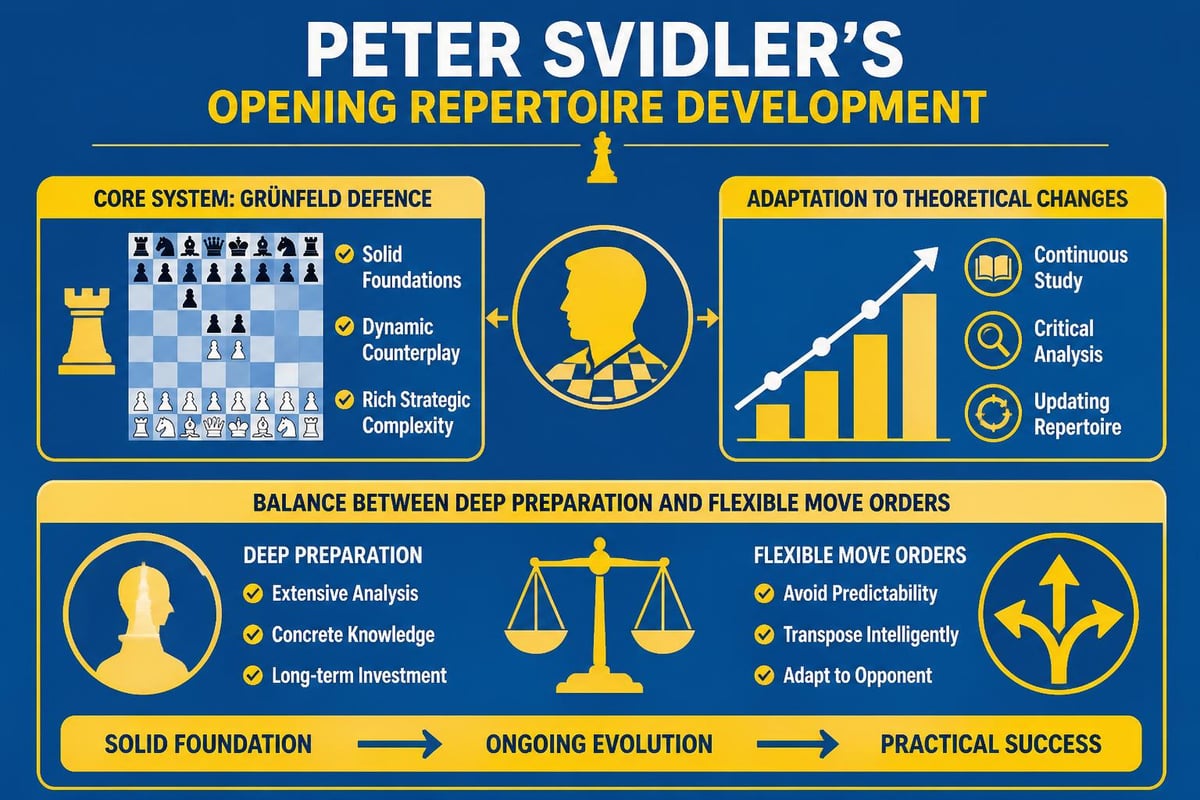
One of Svidler's signature weapons is the Grünfeld Defence, which he's employed throughout his career with remarkable success. This opening choice reveals much about his playing philosophy.
The Grünfeld exemplifies several principles worth adopting:
- Deep structural understanding over memorisation of variations
- Dynamic piece play rather than static pawn advantages
- Long-term compensation for material or positional concessions
- Flexibility to transition between different middlegame structures
When you study Svidler's most played openings, you'll notice he maintains core systems whilst adapting to modern theoretical developments. This balance between consistency and evolution is something intermediate players often struggle with.
Learning from Svidler's Positional Understanding
Svidler's games demonstrate exceptional positional judgment. Rather than seeking forced tactical wins, he accumulates small advantages and converts them methodically. This approach is particularly valuable for club players.
Consider his treatment of isolated queen's pawn positions. Whether playing with or against the isolani, Svidler understands the dynamic potential and defensive resources inherent in these structures. His games show when to blockade, when to challenge, and when to trade pieces.
Key Positional Concepts from Svidler's Games
Piece activity over material: Svidler frequently sacrifices pawns for active piece placement, demonstrating that activity often outweighs static material advantages. You'll see this in his handling of common chess openings where he accepts structural weaknesses for piece coordination.
Prophylactic thinking: Before executing his own plans, Svidler consistently addresses his opponent's threats. This defensive awareness prevents tactical oversights whilst maintaining initiative.
Endgame preparation: His technical skill in converting advantages shows the value of endgame knowledge. Even slight edges become wins when you understand the relevant techniques.
Here's how Svidler's approach compares to other elite players:
| Player | Opening Style | Middlegame Focus | Endgame Approach |
|---|---|---|---|
| Peter Svidler | Deep preparation, theoretical | Positional pressure | Technical precision |
| Magnus Carlsen | Universal flexibility | Practical complexity | Exceptional technique |
| Fabiano Caruana | Concrete calculation | Tactical accuracy | Theoretical endgames |
The Analytical Approach That Elevates Understanding
Beyond his playing career, Peter Svidler has become renowned for his commentary and analysis. His ability to articulate complex ideas simply makes him an exceptional teacher for improving players.
What sets his analysis apart? Svidler explains not just what moves are good, but why certain ideas work in specific positions. He breaks down grandmaster thinking into understandable components.

Translating Svidler's Methods to Your Game
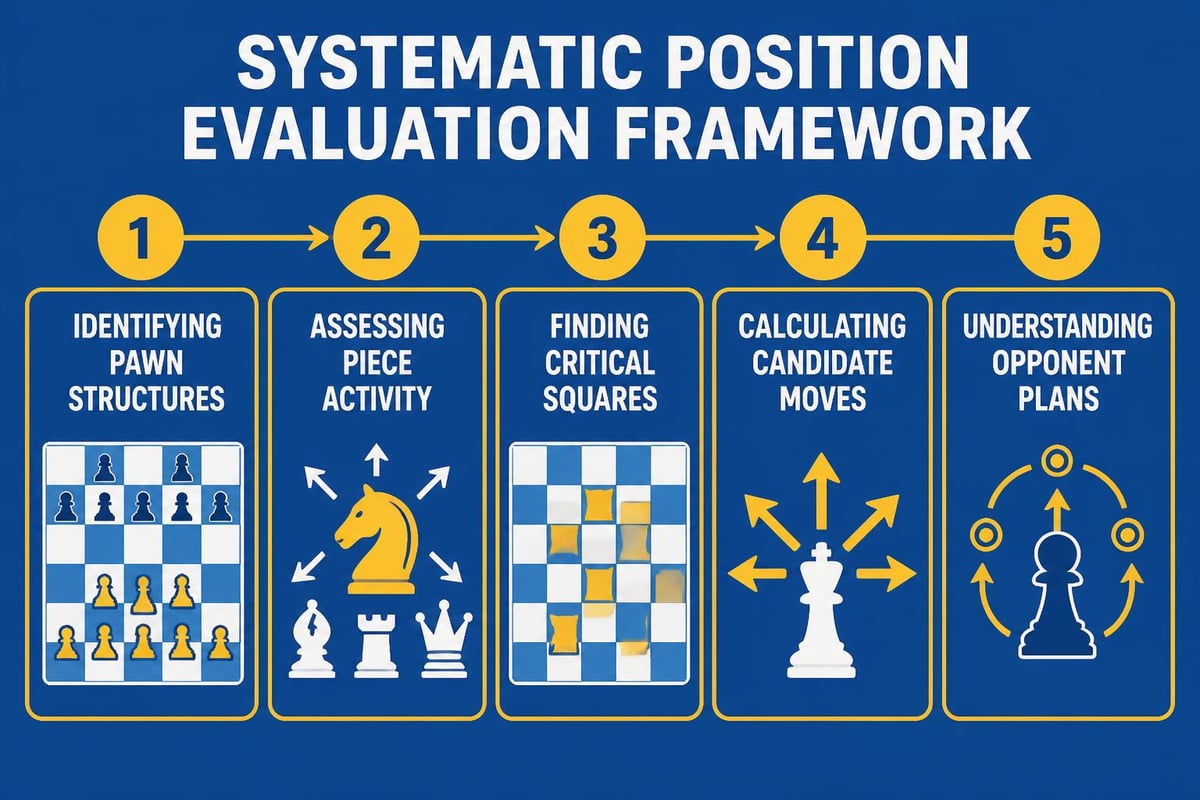
You can adopt Svidler's analytical framework in your own study. When reviewing games, ask yourself:
- What structures arose from the opening? Identify the pawn formation and its typical plans.
- Which pieces are well-placed and which need improvement? Evaluate each piece's effectiveness.
- What are the critical squares and weaknesses? Map out the key battlegrounds on the board.
- How does the position change after candidate moves? Calculate concrete variations but also assess resulting positions.
- What would my opponent want to achieve? Consider both sides' plans equally.
This systematic approach, visible in Svidler's best games, helps you develop pattern recognition that improves decision-making.
Candidates Tournament Insights and Competitive Preparation
Peter Svidler's participation in multiple Candidates Tournaments provides lessons in elite-level preparation and competitive psychology. His performance against top competitors reveals how the world's best players approach crucial games.
The Candidates environment demands intense preparation. Every opponent has thoroughly analysed your games, seeking weaknesses in your repertoire. How did Svidler navigate this pressure?
Opening novelties at critical moments: Rather than playing routine moves, he unleashed prepared improvements in must-win situations. This demonstrates the value of keeping some preparation in reserve.
Psychological resilience: Tournament chess involves setbacks. Svidler's ability to bounce back from losses and maintain fighting spirit shows mental toughness you can cultivate.
Practical decision-making: With stakes high, he chose positions suiting his style rather than seeking objective best moves. This self-awareness helps you play to your strengths.
Competition Lessons for Club Players
Whilst you're unlikely to face Candidates-level opposition, these principles scale down effectively:
- Prepare surprises for important games against familiar opponents
- Maintain emotional equilibrium regardless of recent results
- Play positions you understand rather than chasing fashion
- Study your specific opponents when possible, not just general theory
Opening Choices That Shaped a Career
Examining peter svidler's opening repertoire reveals a carefully constructed system that balanced ambition with solidity. His choices with both colours demonstrate strategic coherence.
With White: Creating Lasting Pressure
Svidler employed various systems as White, from the English Opening to classical 1.e4. What unified these choices was his focus on creating complex middlegames where understanding mattered more than memorisation.
When studying how to develop your own repertoire, similar to exploring what opening Magnus Carlsen uses, notice that elite players prioritise positions they understand deeply over theoretically critical lines they know less thoroughly.
His approach to the English Opening exemplifies this principle. Rather than memorising every transposition, he grasped the fundamental ideas: controlling the centre with pieces, maintaining flexibility, and gradually building pressure. You can apply this same thinking to mastering chess openings at your level.
With Black: The Grünfeld as a Model System
The Grünfeld Defence became synonymous with Svidler's style. This opening requires precise understanding but rewards players who invest the study time.
Why choose the Grünfeld? It offers:
| Advantage | Explanation |
|---|---|
| Dynamic counterplay | Black undermines White's centre actively |
| Reduced drawing margin | Creates imbalances favouring the better-prepared player |
| Consistent structures | Similar plans arise across variations |
| Endgame potential | Often leads to technically instructive endgames |
For improving players, studying Svidler's Grünfeld games teaches you how to handle strategic complexity and tactical sharpness simultaneously. The Grünfeld Defense principles he demonstrates apply broadly to other openings.
The Evolution of Playing Style
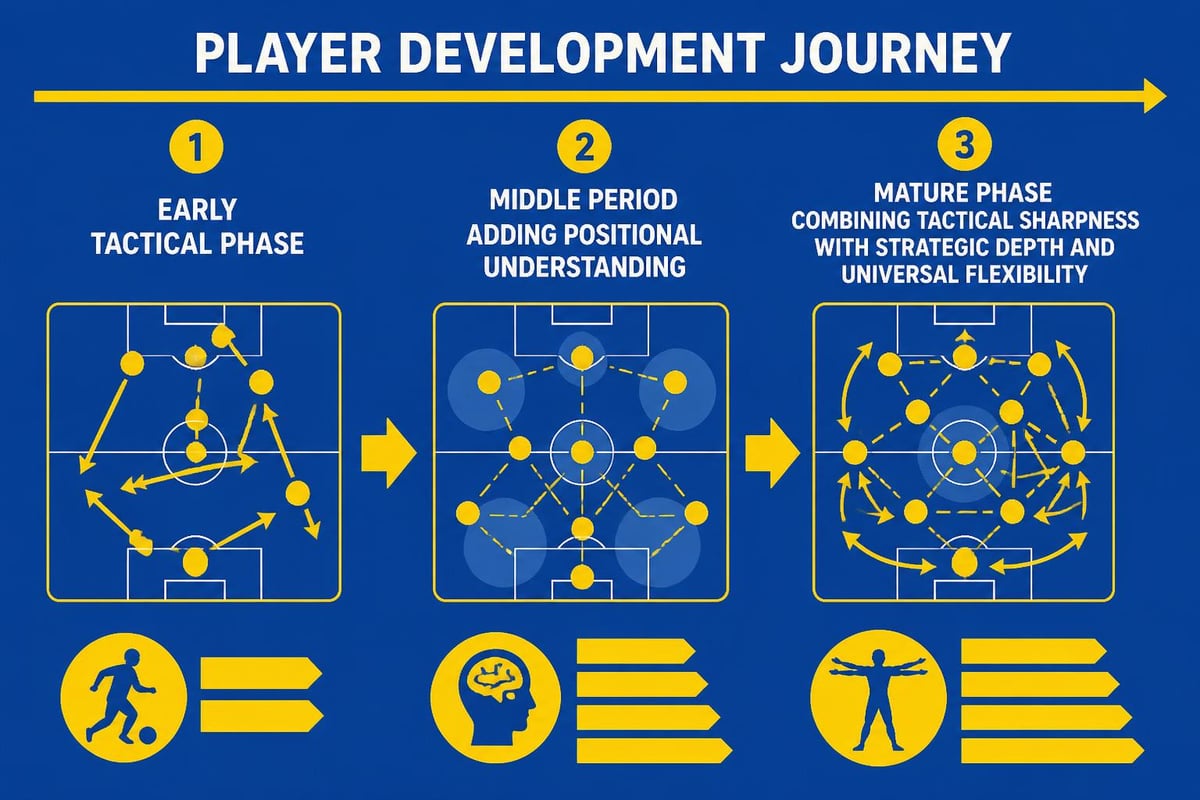
Peter Svidler's chess evolved throughout his career, adapting to changes in theory and competition whilst maintaining core principles. Tracking this evolution provides insights into how you should develop your own game.
Early in his career, Svidler played sharper, more forcing chess. As he matured, his style became more universal, incorporating positional elements alongside tactical prowess. This evolution reflects growing experience and deeper understanding.
Adapting Without Losing Identity
How did Svidler evolve whilst remaining recognisably himself? He expanded his repertoire strategically, adding systems that complemented rather than contradicted his existing strengths.
You can follow a similar path. Rather than completely overhauling your openings when you encounter difficulties, consider:
- Adding backup systems that suit your style for when main lines become too theoretical
- Improving weaker aspects gradually without abandoning strengths
- Studying modern games in your pet openings to stay current
- Deepening understanding of positions you already play rather than constantly seeking new systems
This measured approach to development builds on existing knowledge whilst addressing weaknesses. Whether you're exploring chess openings for White or refining Black defences, evolution should feel natural, not forced.
Practical Study Methods Inspired by Svidler
How can you incorporate Svidler's approach into your chess training? His methodical style lends itself well to structured study that club players can implement.
Game analysis with purpose: When studying your games or master games, focus on understanding plans and typical ideas rather than memorising moves. Svidler's analytical style emphasises conceptual grasp over rote learning.
Opening preparation with depth: Instead of surveying many openings superficially, select a core repertoire and study it thoroughly. Understand the typical middlegame positions arising from your openings.
Endgame technique development: Technical positions appear frequently in Svidler's games. Improving your endgame skills helps you convert the advantages you create, making your opening and middlegame study more valuable.
Creating Your Study Plan
Here's a weekly structure incorporating Svidlerian principles:
- Monday-Tuesday: Analyse one complete master game deeply, focusing on one player's decision-making throughout
- Wednesday-Thursday: Study one specific opening line or structure, learning typical plans and key games
- Friday-Saturday: Solve tactical puzzles and practice endgame positions
- Sunday: Review and analyse your own recent games, identifying patterns in your mistakes
This balanced approach develops all aspects of your game whilst building deep understanding. Resources like chess education guides can supplement this framework with structured materials.
The Value of Versatility in Modern Chess
One aspect distinguishing peter svidler from specialists is his versatility. Whilst known for the Grünfeld, he's played successfully across many openings and structures. This adaptability prevented opponents from preparing narrow anti-Svidler systems.
For your development, versatility offers several benefits:
- Reduced predictability against regular opponents who study your games
- Broader understanding of chess positions and typical plans
- Flexibility to choose setups based on opponent's style or tournament situation
- Enjoyment from experiencing different types of positions
However, versatility must be built on foundations. Master a core repertoire first, then gradually expand into complementary systems. Trying to play everything immediately leads to superficial knowledge.
Balancing Specialisation and Flexibility
| Approach | Advantages | Disadvantages |
|---|---|---|
| Narrow specialist | Deep preparation, confidence in key positions | Vulnerable to opponent preparation, limited experience |
| Universal player | Adaptable, harder to prepare against | Potentially shallower knowledge in each opening |
| Balanced repertoire | Strong core systems plus backup options | Requires disciplined study management |
Svidler exemplified the balanced approach, with go-to systems he knew deeply alongside alternative setups. This model works well for ambitious improvers who have time for serious study but need practical results.
Commentary Career and Teaching Excellence
Beyond his playing achievements, Peter Svidler's work as a commentator has made elite-level thinking accessible to thousands of chess fans and students. His explanations during broadcasts demonstrate pedagogical skill worth emulating in your own study.
What makes his commentary effective? Svidler balances concrete analysis with broader explanations, helping viewers understand both specific variations and general principles. He admits uncertainty where it exists, modelling honest self-assessment.
When studying games, adopt this dual-level approach. Analyse specific moves whilst also extracting general lessons applicable to similar positions. This creates transferable knowledge rather than isolated facts.
Learning from Analysis, Not Just Moves
Watching strong players analyse teaches you how to think about positions, not just what to play. This meta-skill accelerates improvement more than memorising opening theory.
Consider recording your own game analysis, explaining your thinking process aloud. This technique, similar to Svidler's commentary style, reveals gaps in your understanding and reinforces correct thinking patterns. Speaking through your analysis also slows down your thought process, reducing impulsive decisions.
Competitive Longevity and Sustained Excellence
Peter Svidler's career spanning decades at the elite level demonstrates the importance of sustainable training methods and competitive habits. How do you maintain high performance over many years?
Continuous learning: Chess theory evolves constantly. Svidler remained competitive by incorporating new ideas whilst retaining core systems. You can mirror this by staying current with developments in your openings whilst building on existing knowledge.
Physical and mental health: Elite performance requires managing stress, maintaining fitness, and avoiding burnout. These factors matter at every level.
Enjoyment of the game: Sustainable improvement requires genuine interest beyond results. Svidler's evident love for chess analysis and teaching suggests deep engagement with the game itself.
Building Habits for Long-Term Improvement
Rather than intense study bursts followed by inactivity, establish consistent routines:
- Daily tactics practice: Just 15-20 minutes maintains calculation skills
- Weekly game analysis: Regular review internalises lessons
- Monthly repertoire refinement: Gradual opening updates keep systems current
- Quarterly goal assessment: Honest evaluation ensures productive focus
This approach, reflecting the sustainability visible in Svidler's career, prevents burnout whilst ensuring steady progress. Whether you're using chess learning sites or working with coaches, consistency matters more than intensity.
Extracting Practical Lessons for Your Chess
So what can you take from Peter Svidler's career and apply immediately? His example offers several actionable insights for players at any level seeking genuine improvement.
Choose openings you genuinely understand, not just what's fashionable. Svidler's loyalty to the Grünfeld despite theoretical challenges shows the value of deep preparation in chosen systems.
Develop your analytical skills through regular, honest game review. Don't just check engine evaluations; try understanding why certain moves work or fail.
Build positions suited to your strengths rather than seeking objectively best positions you handle poorly. Self-awareness accelerates results.
Study complete games, not just opening theory or isolated tactics. Understanding how opening advantages convert (or dissipate) in the middlegame teaches crucial practical skills.
Embrace complexity rather than simplification when you have superior understanding. Svidler rarely traded into drawn endgames when he grasped the position better than his opponent.
These principles work because they're based on understanding, not memorisation. They scale from club level to elite chess, making them worthy of your study time and practice effort.
Peter Svidler's distinguished career offers a masterclass in strategic thinking, thorough preparation, and analytical excellence that players at every level can learn from. His approach to building opening repertoires around deep understanding rather than superficial memorisation provides a blueprint for sustainable improvement. Whether you're refining your existing systems or exploring new openings, the structured guides and resources at Chess Cheat Sheets can help you develop the solid foundational knowledge that characterised Svidler's approach, giving you the tools to improve efficiently without overwhelming study demands.


