

Have you ever wondered what the very first chess pieces looked like? The story of the oldest chess set takes us on a remarkable journey through time, revealing not just the evolution of a game, but the spread of culture and civilization itself. From sandstone fragments discovered in ancient palaces to intricately carved medieval masterpieces, these archaeological treasures tell us how chess transformed from a mysterious Eastern pastime into the global phenomenon it is today. Let's explore these ancient artifacts and discover what they reveal about the game that continues to challenge and delight players across the world.
The Quest for the World's Oldest Chess Piece
When archaeologists search for the oldest chess set, they're not just looking for antiques. They're hunting for clues about how human beings thought strategically, competed intellectually, and spread ideas across continents. The challenge, though, is that chess pieces from antiquity were often made from perishable materials that didn't survive the centuries.
The current frontrunner for the title of world's oldest chess piece is a small sandstone object discovered in Humayma, Jordan. According to research reported by Live Science, this unassuming artifact dates back approximately 1,300 years. What makes this discovery particularly fascinating is its location: found in the remains of an ancient trading post, it suggests chess was already spreading along Silk Road routes far earlier than historians previously believed.
Why Dating Chess Pieces Is Surprisingly Complex
You might think identifying the oldest chess set would be straightforward, but the reality is far more complicated. Several factors make this archaeological detective work particularly challenging:
- Material degradation: Many early pieces were carved from wood or bone, materials that rarely survive millennia
- Design evolution: Early chess pieces looked quite different from modern ones, making identification difficult
- Cultural variations: The game evolved differently in various regions, creating distinct piece styles
- Limited documentation: Written records from the first millennium are sparse and often ambiguous
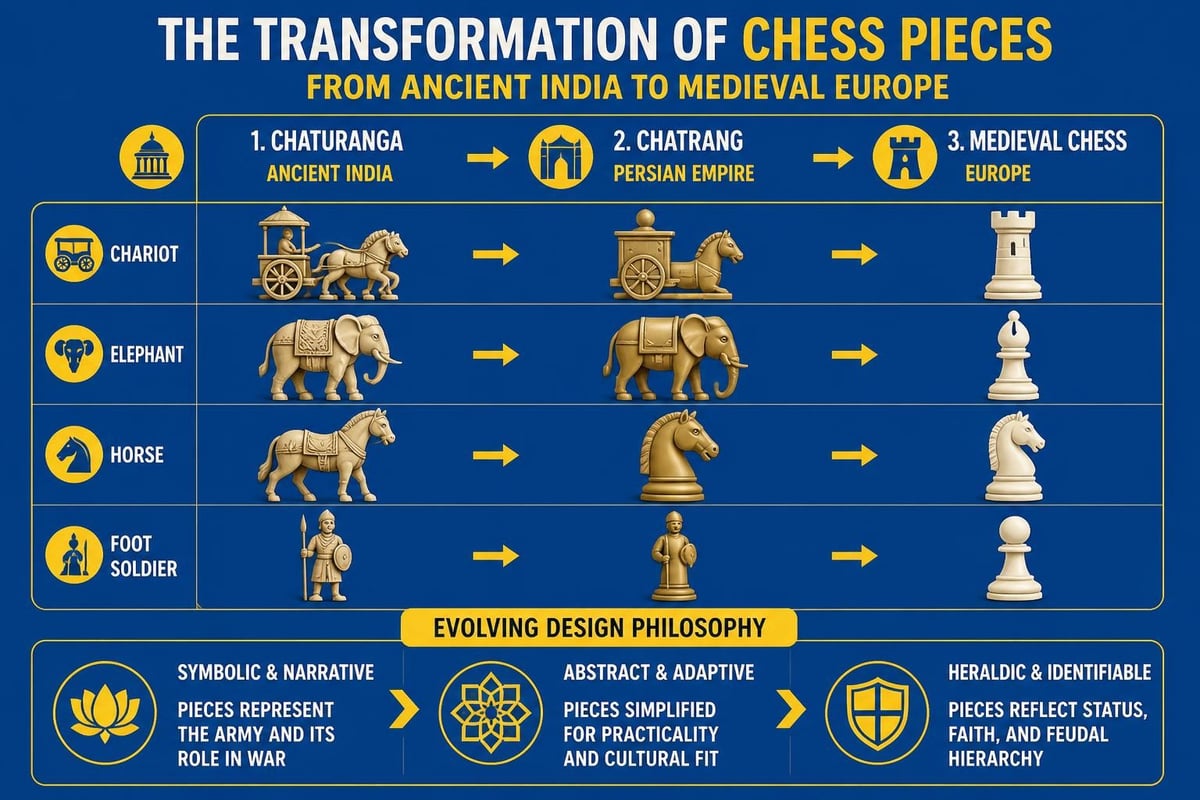
The comprehensive history of chess documented by Encyclopaedia Britannica shows how the game originated in India around the 6th century AD as "chaturanga" before spreading to Persia, the Arab world, and eventually Europe. Each culture transformed the pieces to reflect their own artistic sensibilities and religious constraints.
The Contenders: Four Ancient Chess Sets That Changed History
Several ancient chess sets compete for historical significance, each offering unique insights into how our beloved game developed. Let's examine the most important discoveries.
The Afrasiab Chessmen: Central Asian Pioneers
Discovered in Samarkand, Uzbekistan, the Afrasiab chessmen represent some of the earliest known chess pieces. These ivory figures date to approximately the 7th or 8th century AD and showcase the game's early form in Central Asia.
What makes these pieces particularly valuable to chess historians is their elephant-like design for what we now call bishops. This detail confirms the direct lineage from Indian chaturanga, where war elephants played a crucial battlefield role. Just as understanding chess openings helps modern players grasp strategic foundations, examining these ancient pieces helps us understand the game's conceptual foundations.
The Nashipur Pieces: India's Ancient Contribution
The Guinness World Records recognizes the Nashipur finds from Rajasthan, India, as among the oldest identified chess pieces, dating to approximately AD 900. These terracotta and ivory pieces provide crucial evidence of chess's presence in medieval India.
| Feature | Nashipur Pieces | Modern Pieces |
|---|---|---|
| Material | Terracotta, ivory | Plastic, wood, occasionally stone |
| Design | Abstract, culturally specific | Standardized Staunton pattern |
| Size | Variable, often small | Regulated for tournament play |
| Purpose | Gaming and status symbol | Primarily competitive play |
These pieces weren't just game equipment. They were status symbols, often buried with wealthy individuals or found in palace ruins, suggesting chess was already associated with intellectual sophistication and royal patronage.
The Lewis Chessmen: Medieval Masterpieces
Perhaps no ancient chess set captures public imagination quite like the Lewis Chessmen. Discovered on the Isle of Lewis in Scotland in 1831, this nearly complete 12th-century collection represents one of the finest medieval chess sets ever found. The detailed history of the Lewis Chessmen reveals pieces carved from walrus ivory and whale teeth, featuring expressive faces and detailed medieval garb.
While not the oldest chess set by several centuries, the Lewis Chessmen's exceptional preservation and artistic quality make them invaluable for understanding medieval European chess culture. The pieces show clear Scandinavian influence, suggesting they were crafted in Norway or Iceland before ending up in Scottish soil.
Key characteristics of the Lewis Chessmen:
- 78 pieces discovered (from at least four different sets)
- Carved from walrus ivory and whale teeth
- Dated between 1150-1200 AD
- Features queens, bishops, knights, rooks, and pawns
- Remarkably expressive facial features
The Albanian Mystery: A 5th-Century Surprise?
One of the most controversial discoveries comes from Albania, where researchers claim to have found what could be the oldest chess piece in a 5th-century palace. ABC News reported on this finding, which, if authenticated, would push back the European introduction of chess by several centuries.
This discovery remains hotly debated among historians. The timeline doesn't align with conventional understanding of chess's spread from India westward, leading some experts to suggest the artifact might be misidentified or the dating might be incorrect. Nevertheless, it demonstrates how new archaeological finds can challenge established historical narratives.

What Ancient Chess Sets Reveal About the Game's Evolution
Beyond their historical value, these ancient chess pieces teach us about how the game itself transformed over centuries. The oldest chess set fragments show us a game that was simultaneously familiar and foreign.
Design Philosophy and Cultural Adaptation
Early chess pieces were often abstract or figurative, depending on religious and cultural contexts. Islamic sets from the 9th-12th centuries typically featured abstract geometric shapes, adhering to religious prohibitions against representational art. Christian European sets, conversely, often depicted recognizable human and animal figures.
This same principle of adaptation applies to modern chess learning. Just as ancient cultures adapted chess to their contexts, today's players can adapt their learning methods. The comprehensive resources at Chess Cheat Sheets offer streamlined approaches that fit modern lifestyles, similar to how medieval Europeans simplified complex Persian chess rules for their own preferences.
From Four-Player to Two-Player Game
Some of the earliest chess versions included four-player variants. Archaeological evidence suggests the game underwent significant rule changes as it spread, eventually settling on the two-player format we know today. This evolution mirrors how chess strategy has evolved, with opening theory becoming increasingly sophisticated.

The Archaeological Process: How Experts Identify Ancient Chess Pieces
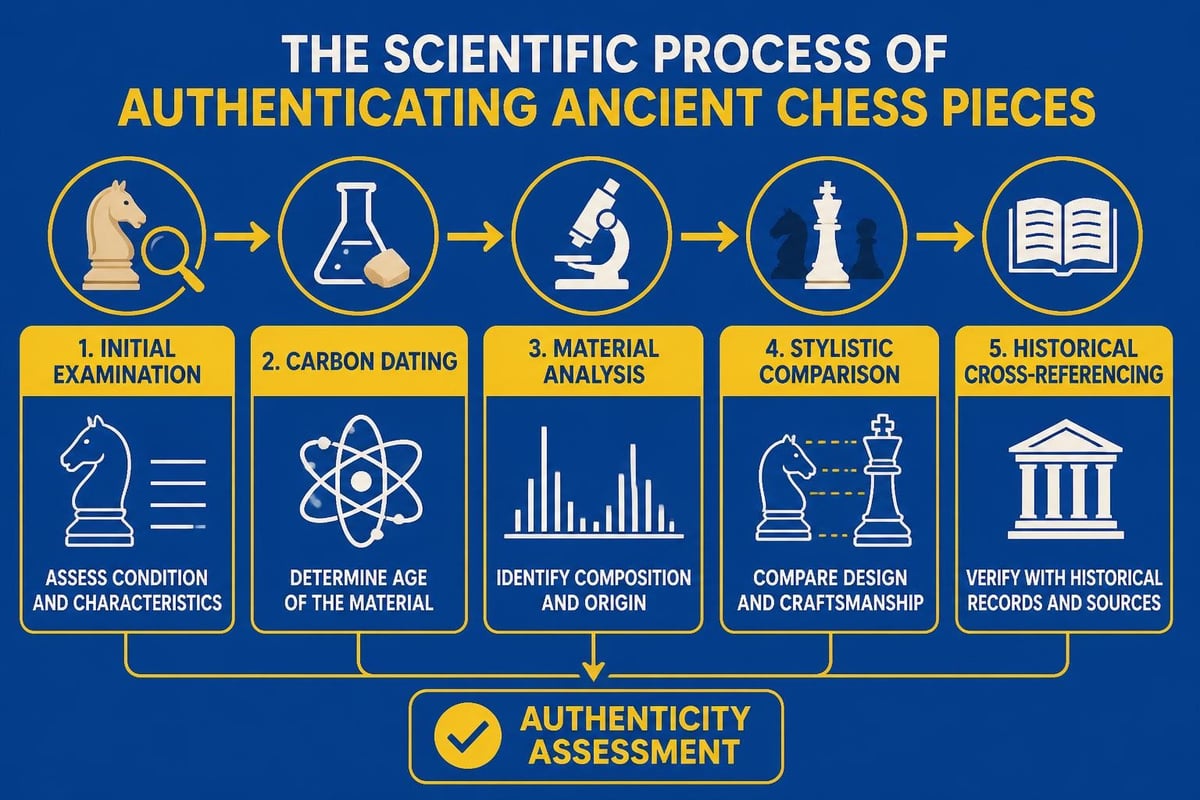
Identifying whether a carved object is truly part of the oldest chess set requires sophisticated analysis:
- Carbon dating and stratigraphic analysis: Determining the age of organic materials and their archaeological context
- Comparative iconography: Comparing designs with known chess pieces from similar periods
- Historical documentation: Cross-referencing with written records mentioning chess in specific regions
- Material analysis: Identifying the substance used and its geographic origin
- Size and proportion assessment: Evaluating whether dimensions match known gaming pieces
According to ScienceAlert's coverage of the Jordanian sandstone piece, even tiny fragments can yield enormous historical insights when properly analyzed. The object's distinctive carved pattern matched descriptions of early Islamic chess pieces, despite being smaller than a modern pawn.
Why Some Ancient Pieces Remain Unidentified
Many potentially ancient chess pieces sit in museum collections unrecognized because:
- They were catalogued before chess archaeology became sophisticated
- Their abstract designs don't match modern expectations
- They were found in contexts not associated with gaming
- Documentation was lost or incomplete during earlier excavations
Connecting Ancient Pieces to Modern Play
What does the oldest chess set have to do with your chess improvement today? More than you might think. Understanding chess's deep history enriches your appreciation of the game's strategic principles.
The fundamental concepts that made chess compelling in 6th-century India remain relevant today. Controlling the centre, developing pieces efficiently, and protecting your king were just as crucial for ancient players as they are for anyone studying the Sicilian Defense or the Ruy Lopez in 2026.
Lessons from Historical Chess Evolution
The transformation of chess pieces offers valuable lessons for modern players:
Pattern recognition transcends time: Ancient players developed pattern recognition just as you do when solving puzzles. The extensive puzzle collections available today build the same neural pathways that medieval grandmasters developed through endless practice.
Standardization improved competition: The eventual adoption of the Staunton pattern in 1849 made chess more accessible. Similarly, using standardized learning resources helps you build consistent knowledge frameworks.
Cultural exchange strengthened the game: Chess improved as it absorbed influences from Persia, Arabia, and Europe. Your own chess benefits from studying diverse opening systems and strategic approaches.
Modern Discoveries and Future Possibilities
The search for the oldest chess set continues. Archaeological excavations in India, Central Asia, and the Middle East regularly uncover new artifacts that could reshape our understanding of chess history.
Recent technological advances have revolutionized chess archaeology:
| Technology | Application | Impact |
|---|---|---|
| Ground-penetrating radar | Locating undiscovered sites | Identifies promising excavation locations |
| 3D scanning | Documenting fragile pieces | Preserves details without physical handling |
| DNA analysis | Dating organic materials | Provides more precise timelines |
| Chemical spectroscopy | Identifying material origins | Traces trade routes and cultural exchanges |
The evolution of chess sets documented on Wikipedia shows how each discovery adds another piece to the puzzle. We may yet find chess pieces that predate current record holders, potentially in unexpected locations along ancient trade routes.
What Future Discoveries Might Reveal
Historians hope future archaeological work will answer lingering questions:
- How quickly did chess spread from India to other regions?
- Were there multiple independent invention points for chess-like games?
- What rules variations existed in different ancient cultures?
- How did piece movement rules evolve over time?
Each new discovery of ancient chess artifacts brings us closer to understanding not just the game's history, but human cultural development itself. Chess represents one of humanity's most enduring intellectual pursuits, connecting us across millennia to players who faced the same 64 squares.
The Living Legacy of Ancient Chess
The oldest chess set fragments remind us that we're participants in an ancient tradition. Every time you sit down at the board, you're engaging with the same fundamental challenges that captivated Persian nobles, Arab scholars, and European royalty centuries ago.
This historical continuity makes chess unique among games. While the pieces have changed from ivory elephants to plastic bishops, the underlying strategic depth remains constant. Whether you're working through endgame collections or studying the King's Fianchetto Opening, you're building on knowledge accumulated over 1,400 years.
The chess sets discussed by Chess.com's historical overview show how each era left its mark on the game. From abstract Islamic pieces to elaborate Gothic carvings, these artifacts demonstrate chess's remarkable ability to adapt while maintaining its essential character.
The enduring appeal of ancient chess sets stems from:
- Their connection to famous historical periods and cultures
- The craftsmanship and artistic value they represent
- The strategic insights they offer about early gameplay
- Their role in documenting human intellectual development
- The mystery and romance surrounding their discovery
Modern players benefit from this rich heritage. Understanding where chess came from helps you appreciate where it's going. The same logical thinking that ancient strategists used to dominate their opponents applies directly to contemporary play, whether you're preparing for club matches or studying chess ratings and improvement.
The journey from the oldest chess set to modern tournament play spans continents, cultures, and centuries, yet the game's essential appeal remains unchanged. These ancient pieces remind us that chess mastery has always required dedication, strategic thinking, and continuous learning. If you're ready to build on this ancient tradition and accelerate your chess improvement, Chess Cheat Sheets offers streamlined guides, puzzles, and opening resources that honour the game's rich history while meeting the demands of modern players. Start your journey toward chess excellence today with tools designed to help you master the same timeless strategies that captivated players throughout history.


