

There's something captivating about watching a minimalist chess set sit on a table, stripped down to pure geometric forms and essential shapes. You might wonder why someone would choose simplicity over ornate, traditional Staunton pieces. But as chess players increasingly seek tools that support focus and clarity, the minimalist chess set has emerged as more than just a design statement. It's become a functional choice for players who value clean aesthetics whilst maintaining the strategic depth chess demands. Whether you're studying opening theory or analysing endgame positions, the right board and pieces can genuinely influence your experience.
Why Minimalist Design Appeals to Chess Players
Have you ever sat down to study a complex opening variation only to find yourself distracted by overly decorative pieces? Minimalist design philosophy removes visual noise, allowing your brain to focus on what truly matters: the strategic patterns unfolding on the board.
The Psychology Behind Simplicity
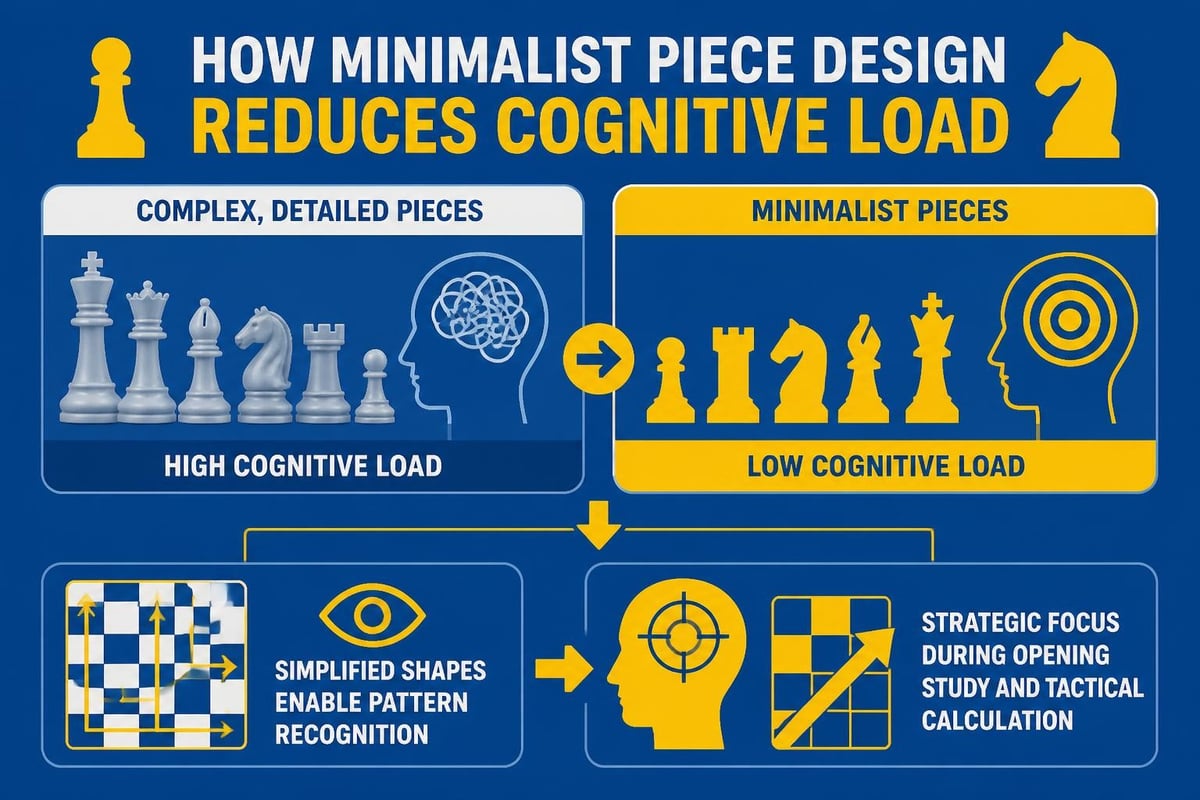
When you're working through tactical puzzles or memorising the nuances of the Caro-Kann Defense, every element of your study environment affects your concentration. A minimalist chess set reduces cognitive load by presenting pieces in their most recognisable forms without unnecessary embellishments.
Key psychological benefits include:
- Enhanced pattern recognition through clear piece silhouettes
- Reduced visual fatigue during extended study sessions
- Better mental clarity when calculating variations
- Improved focus on board position rather than decorative elements
The clean lines typical of minimalist sets help your eyes track piece relationships more efficiently. This becomes particularly valuable when you're trying to visualise London System middlegame plans or complex tactical sequences.
Design Meets Function
Modern minimalist chess sets often draw inspiration from innovative design approaches that challenge traditional aesthetics. Stefan Gougherty's transparent acrylic cube design, for instance, represents pieces through negative space. Whilst such avant-garde approaches might not suit everyone's taste, they demonstrate how minimalist thinking can completely reimagine chess equipment.
You don't need to embrace radical designs to benefit from minimalism. Even subtle reductions in ornamentation can transform your playing experience. The question isn't whether minimalism works, but rather which style of minimalist chess set suits your needs best.
Material Choices That Define Minimalist Chess Sets
The materials used in a minimalist chess set significantly impact both aesthetics and functionality. Unlike traditional wooden Staunton sets that rely on carved details, minimalist designs leverage material properties themselves to create visual interest.
Premium Material Options
| Material | Characteristics | Best For | Maintenance |
|---|---|---|---|
| Marble | Substantial weight, natural patterns | Display and serious play | Avoid impacts, dust regularly |
| Stainless Steel | Modern appearance, durable | Contemporary settings | Simple wipe-down cleaning |
| Acrylic | Lightweight, affordable | Travel and casual play | Scratch-resistant coating needed |
| Wood (Minimal Carving) | Warm aesthetic, traditional feel | Balanced design approach | Periodic oiling |
Premium minimalist sets crafted from materials like Carrara marble and brushed stainless steel elevate chess from game to art object. Tarek Elkassouf's designs showcase how material quality can compensate for ornamental simplicity, creating pieces that feel substantial and purposeful in your hand.
Balancing Weight and Portability
When selecting a minimalist chess set, consider how you'll primarily use it. If you're someone who studies chess openings at home, weight isn't a concern. Heavier materials like marble or metal actually provide satisfying tactile feedback when placing pieces.
However, if you need portability for club meetings or outdoor play, lightweight materials become essential. Some cleverly engineered designs even incorporate storage solutions directly into the board structure, allowing the entire set to collapse into a compact box.
Considerations for material selection:
- Your primary playing environment (home study vs travel)
- Budget constraints (acrylic vs premium materials)
- Aesthetic preferences (warm wood vs cool metal)
- Durability requirements (display piece vs daily use)
The material you choose will influence how the set feels during those lengthy sessions working through opening repertoires or solving endgame positions.

Design Styles Within Minimalism
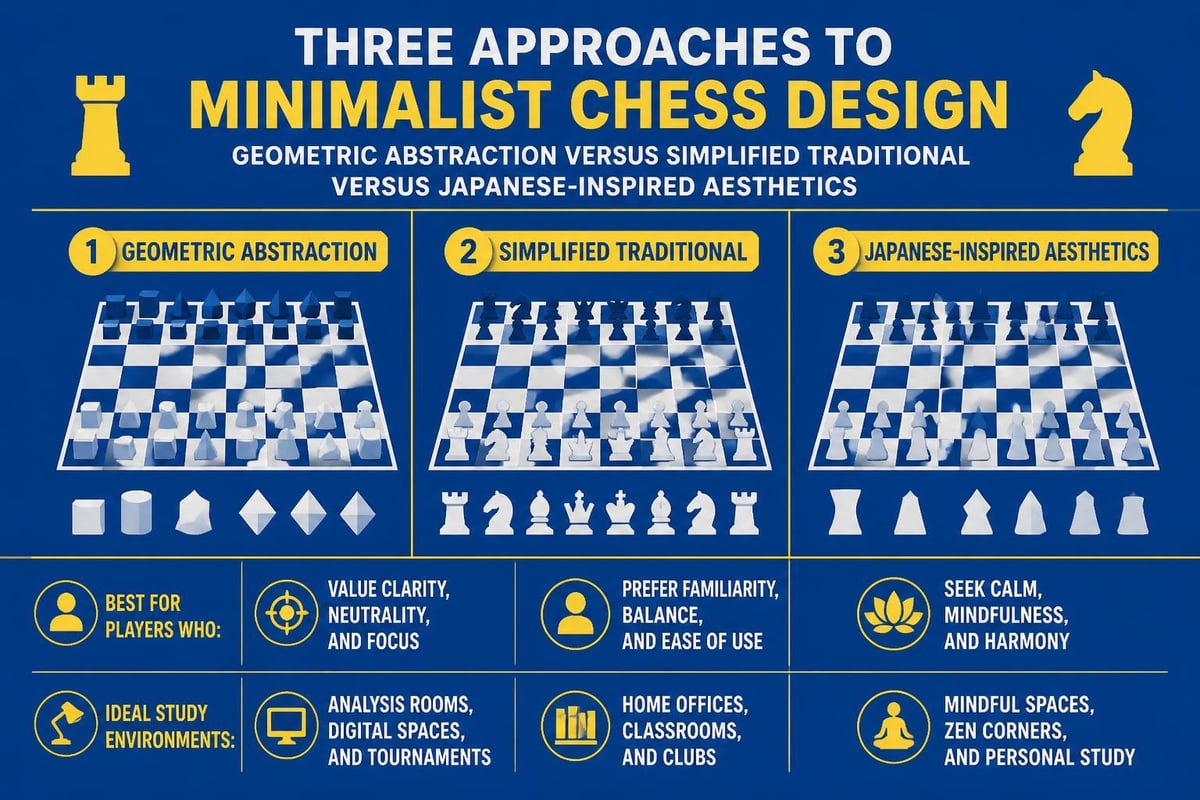
Not all minimalist chess sets look alike. The minimalist philosophy encompasses various design approaches, each offering distinct advantages for different types of players.
Geometric Abstraction
This style reduces each piece to basic geometric shapes. Pawns become cylinders or cones, rooks transform into rectangles, bishops into triangular forms. The rise of stylish minimalist designs has popularised these highly abstract interpretations.
You'll find geometric sets particularly useful if you're working on pattern recognition skills. The simplified shapes force your brain to identify pieces by their essential characteristics rather than decorative details.
Simplified Traditional
These sets maintain recognisable Staunton proportions but strip away ornamental carving. Knights retain their horse-head silhouette, but rendered in smooth, continuous curves rather than detailed mane and facial features.
For players transitioning from traditional sets, this approach offers familiarity whilst providing minimalist benefits. You won't need to retrain your visual recognition system, making them ideal if you frequently switch between tournament play and home study.
Japanese-Inspired Minimalism
Drawing from wabi-sabi aesthetics, some designers create minimalist chess sets that embrace natural imperfections and organic simplicity. These sets often feature unfinished wood surfaces, asymmetrical forms, and earth-tone colour schemes.
Choosing the Right Minimalist Chess Set for Study
As someone focused on chess improvement, your set selection should support your learning goals. Different aspects of chess study benefit from different design characteristics.
For Opening Repertoire Building
When you're memorising the intricacies of the Ruy Lopez or other complex openings, piece clarity becomes paramount. You'll be setting up positions repeatedly, checking variations, and testing your memory.
Optimal features for opening study:
- High contrast between light and dark pieces
- Stable bases that prevent accidental displacement
- Moderate size (not too large for quick setup, not too small to strain eyes)
- Matte finish to reduce glare during extended sessions
A minimalist chess set with these characteristics helps you focus on positional understanding rather than struggling with piece identification. The simplified forms let you concentrate on pawn structures, piece coordination, and strategic plans.
For Tactical Training
Tactical puzzles require rapid piece identification and relationship assessment. Your minimalist chess set should facilitate quick visual scanning across the board.
Consider sets with distinctive piece silhouettes that remain recognisable even in peripheral vision. When you're calculating a complex combination, you shouldn't need to consciously identify each piece. This automatic recognition frees mental resources for calculation.
For Endgame Practice
Endgame study involves deep calculation with fewer pieces. Here, a minimalist chess set truly shines. With reduced board complexity, clean piece design prevents visual confusion during precise manoeuvres.
Larger pieces can actually benefit endgame practice, as they make subtle pawn and king movements more visually apparent. However, ensure your board remains proportional to maintain proper spatial relationships.
Practical Considerations Beyond Aesthetics
Whilst minimalist design emphasises visual simplicity, practical functionality remains crucial for serious chess study.
Board Integration
Your minimalist chess set's effectiveness depends partly on board selection. Some sets include integrated boards designed specifically to complement the pieces, whilst others require separate board purchase.
Board characteristics to evaluate:
- Square size proportional to piece bases
- Contrast level between light and dark squares
- Surface texture (smooth vs slightly textured for piece stability)
- Edge design (flat, raised, or bevelled)
The relationship between pieces and board affects your overall playing experience more than you might initially expect. Pieces that appear elegant in isolation may feel cramped or lost on an ill-matched board.
Storage and Longevity
How will you store your minimalist chess set between study sessions? Unlike traditional sets with felt-lined boxes compartmentalised for each piece, minimalist designs sometimes prioritise aesthetic storage solutions that may not protect pieces optimally.
Consider whether your set includes:
- Individual piece protection (foam, compartments, or sleeves)
- Dust-resistant storage container
- Compact design for shelf or drawer storage
- Display-worthy presentation for permanent setup
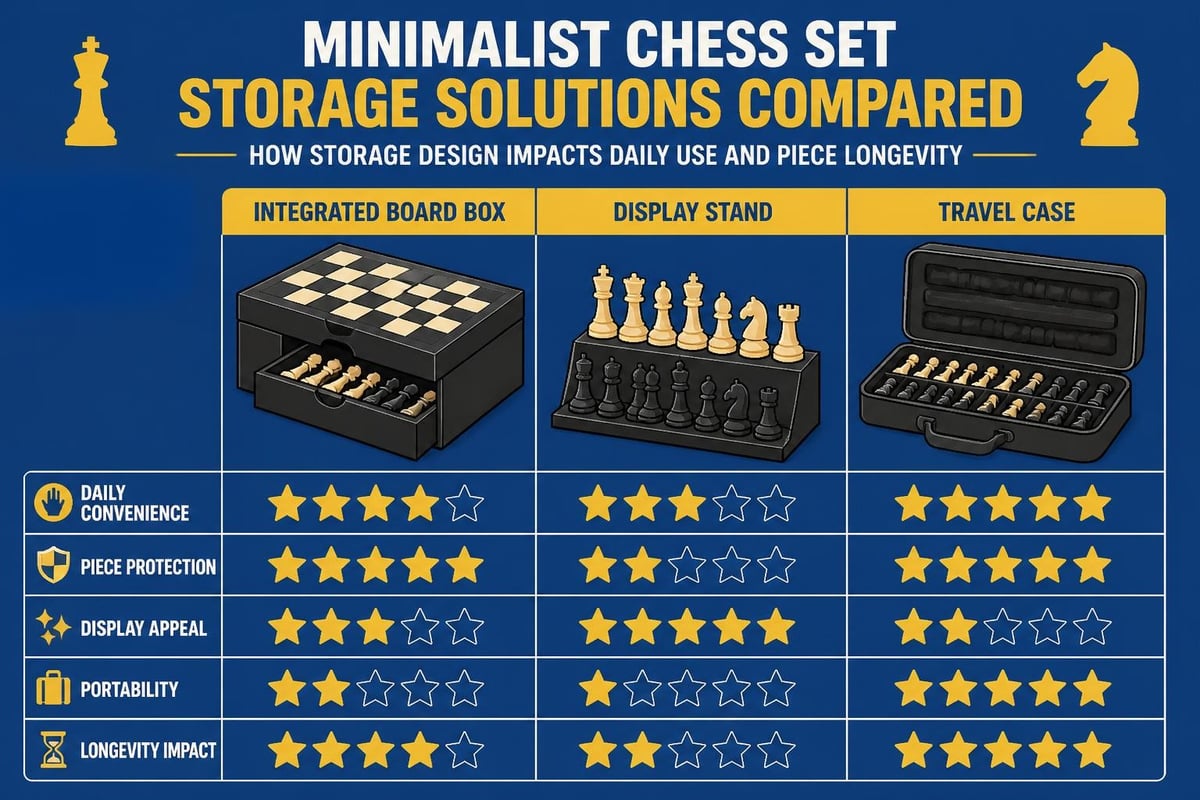
If you're investing in premium materials like marble or polished steel, proper storage prevents chips, scratches, and tarnishing. Budget accordingly for protective storage if your chosen set lacks adequate packaging.
Balancing Cost and Quality
Minimalist chess sets span a remarkable price range, from affordable acrylic designs to luxury collector's pieces costing hundreds or thousands of pounds.
Budget-Friendly Options
Entry-level minimalist sets, typically crafted from plastic, acrylic, or basic wood, start around £20-50. These provide minimalist aesthetics without premium materials. They're perfectly adequate for casual play and basic study.
Budget set advantages:
- Low financial risk for trying minimalist design
- Lightweight for portability
- Replacement affordability if pieces get lost
- Good option for club or classroom use
You won't get the tactile satisfaction of weighted pieces or premium materials, but budget sets serve their purpose well if your primary concern is studying chess move sequences rather than aesthetic enjoyment.
Mid-Range Quality
Sets in the £50-200 range typically offer better materials (solid wood, quality plastics, or basic metals) with more refined manufacturing. This segment provides the best value for serious players who want durability without luxury pricing.
Mid-range minimalist sets often include weighted pieces, better finish quality, and more thoughtful design details. They're suitable for players committed to regular study and improvement.
Premium Investment Pieces
High-end minimalist chess sets (£200+) represent both functional tools and design objects. These often feature:
- Exceptional materials (exotic woods, precious metals, natural stone)
- Handcrafted construction with attention to detail
- Designer provenance from recognised artists
- Limited production runs or custom designs
Are premium sets worth the investment? If chess plays a significant role in your life and you appreciate fine craftsmanship, they can enhance your daily practice experience. However, they won't make you a stronger player than quality mid-range alternatives.
How Minimalist Sets Support Different Playing Strengths
Your chess style and improvement focus might influence which minimalist chess set design serves you best.
Positional Players
If you excel at strategic manoeuvring and long-term planning, you'll appreciate minimalist sets that emphasise piece relationships. Clean designs help you visualise pawn structures, piece coordination, and spatial control without decorative distractions.
Sets with subtle height variations between piece types help positional players quickly assess which pieces control which squares. This visual clarity supports the strategic thinking that defines positional play.
Tactical Players
For tactically-minded players who thrive on combinations and concrete calculation, piece recognisability at various angles becomes crucial. When you're calculating a complex sequence, you need instant piece identification.
Choose minimalist designs that maintain distinctive silhouettes from multiple viewing angles. Abstract geometric pieces sometimes sacrifice this functionality for pure aesthetics.
Blitz and Rapid Players
If you enjoy faster time controls, your minimalist chess set needs pieces that sit stably during rapid movement. Weighted bases and low centres of gravity prevent knocking pieces over during quick play.
Additionally, high contrast between colours helps during time pressure when you're making moves partially on autopilot. Your visual system should distinguish pieces instantly without conscious effort.
Maintaining Your Minimalist Chess Set
Proper maintenance ensures your minimalist chess set remains beautiful and functional for years. Different materials require specific care approaches.
Regular Cleaning Procedures
For metal pieces:
- Wipe with soft, lint-free cloth after each use
- Polish occasionally with appropriate metal cleaner
- Avoid abrasive materials that scratch finishes
- Store in low-humidity environment to prevent tarnishing
For stone/marble pieces:
- Dust regularly with soft brush or cloth
- Clean spills immediately to prevent staining
- Use pH-neutral stone cleaner for deep cleaning
- Apply stone sealer annually if manufacturer recommends
For wood pieces:
- Dust with slightly damp cloth
- Apply wood conditioner 1-2 times yearly
- Avoid excessive moisture exposure
- Keep away from direct sunlight to prevent fading
For acrylic/plastic pieces:
- Wash with mild soap and water
- Dry thoroughly to prevent water spots
- Avoid harsh chemicals that damage plastic
- Store away from heat sources
Long-Term Preservation
Beyond regular cleaning, consider environmental factors affecting your minimalist chess set's longevity. Temperature fluctuations, humidity extremes, and UV exposure can all degrade materials over time.
If your set holds significant value (monetary or sentimental), document its condition with photographs. This creates a reference point for tracking any degradation and supports insurance claims if needed.
Integrating Minimalist Design Into Your Chess Practice
Your chess environment influences study effectiveness more than you might realise. A minimalist chess set can be part of a broader approach to creating optimal learning conditions.
Creating a Dedicated Study Space
Minimalist design principles extend beyond your chess set to your entire study area. Consider how visual simplicity throughout your space supports concentration and learning.
Elements of a minimalist chess study space:
- Uncluttered desk with only essential items
- Neutral colour scheme that doesn't compete for attention
- Organised storage for chess books and materials
- Good lighting that reduces eye strain
- Minimal decorative elements
When you sit down to work through common chess openings or solve tactical problems, your environment should support rather than distract from this focused work.
Combining Digital and Physical Tools
Many chess players now blend physical boards with digital study tools. Your minimalist chess set becomes the tactile component of a comprehensive study system.
You might analyse games on a computer or tablet, then recreate critical positions on your physical board for deeper understanding. The minimalist aesthetic complements digital tools' clean interfaces, creating visual coherence across your study methods.
Physical board practice remains valuable even in our digital age. Moving actual pieces engages different cognitive pathways than clicking on a screen, reinforcing learning through multiple sensory channels.
The Future of Minimalist Chess Design
As we move through 2026, minimalist chess set design continues evolving, incorporating new materials, manufacturing techniques, and conceptual approaches.
Sustainable Materials
Environmental consciousness increasingly influences chess equipment design. Expect more minimalist sets crafted from:
- Recycled plastics and metals
- Sustainably harvested woods
- Bio-based composites
- Upcycled materials
These eco-friendly options align with minimalist philosophy's emphasis on thoughtful consumption and lasting quality over disposable mass production.
Technology Integration
Some designers experiment with minimalist chess sets incorporating subtle technology. Imagine pieces with RFID chips that automatically record games for later analysis, all whilst maintaining clean, simple aesthetics.
Such innovations could bridge the gap between traditional board play and digital convenience without compromising minimalist design principles.
Customisation Options
As manufacturing technology advances, customisable minimalist chess sets become more accessible. You might specify exact dimensions, select from various materials, or adjust piece height ratios to your preferences.
This personalisation potential lets you create a minimalist chess set perfectly suited to your specific needs, whether you're focusing on blitz play, correspondence games, or detailed opening preparation.
Choosing a minimalist chess set represents more than an aesthetic decision. It's about creating an environment that supports your chess improvement journey through visual clarity and functional design. Whether you're working through opening variations, solving tactical puzzles, or analysing endgame positions, the right equipment genuinely enhances your study experience. As you develop your chess skills, Chess Cheat Sheets offers comprehensive guides, streamlined opening resources, and tactical puzzles designed to complement your minimalist approach to chess improvement. Start building a focused, effective study routine that strips away complexity and helps you master chess fundamentals with clarity and confidence.


