

There's something undeniably special about the weight of metal pieces in your hand. When you're studying the fundamentals of chess strategy, the tactile experience matters more than you might think. A metal chess set transforms your practice sessions from casual games into something that feels truly substantial, literally and figuratively. Whether you're working through opening variations or solving puzzles, the right chess set can enhance your focus and make your study sessions more enjoyable. But with so many options out there, from brass to bronze, from pewter to stainless steel, how do you choose the perfect metal chess set for your needs?
Why Choose a Metal Chess Set Over Other Materials
Let's be honest: you could play chess on anything. A cardboard set works just fine for learning tactics. But here's the thing - when you're investing time in improving your game, the equipment you use influences your experience.
Metal sets offer several distinct advantages that make them worth considering. They're incredibly durable, often lasting decades with minimal care. Unlike wooden sets that can chip or plastic sets that fade, metal pieces maintain their appearance through thousands of games.
Key benefits of metal chess sets:
- Exceptional weight and stability - pieces don't tip over during intense blitz games
- Long-lasting durability - resistant to wear, scratches, and environmental damage
- Unique aesthetic appeal - adds gravitas to your study space
- Maintenance-free - simple cleaning keeps them looking new
- Investment value - quality metal sets often appreciate over time
The weight is perhaps the most immediate difference you'll notice. When you're practising complex opening sequences, having pieces that stay firmly planted on the board means fewer distractions and more focus on the position.
Understanding Different Metal Types and Their Characteristics
Not all metals are created equal, especially when it comes to chess sets. Each material brings its own personality to the board, affecting everything from weight to patina development.
Brass and Bronze Sets
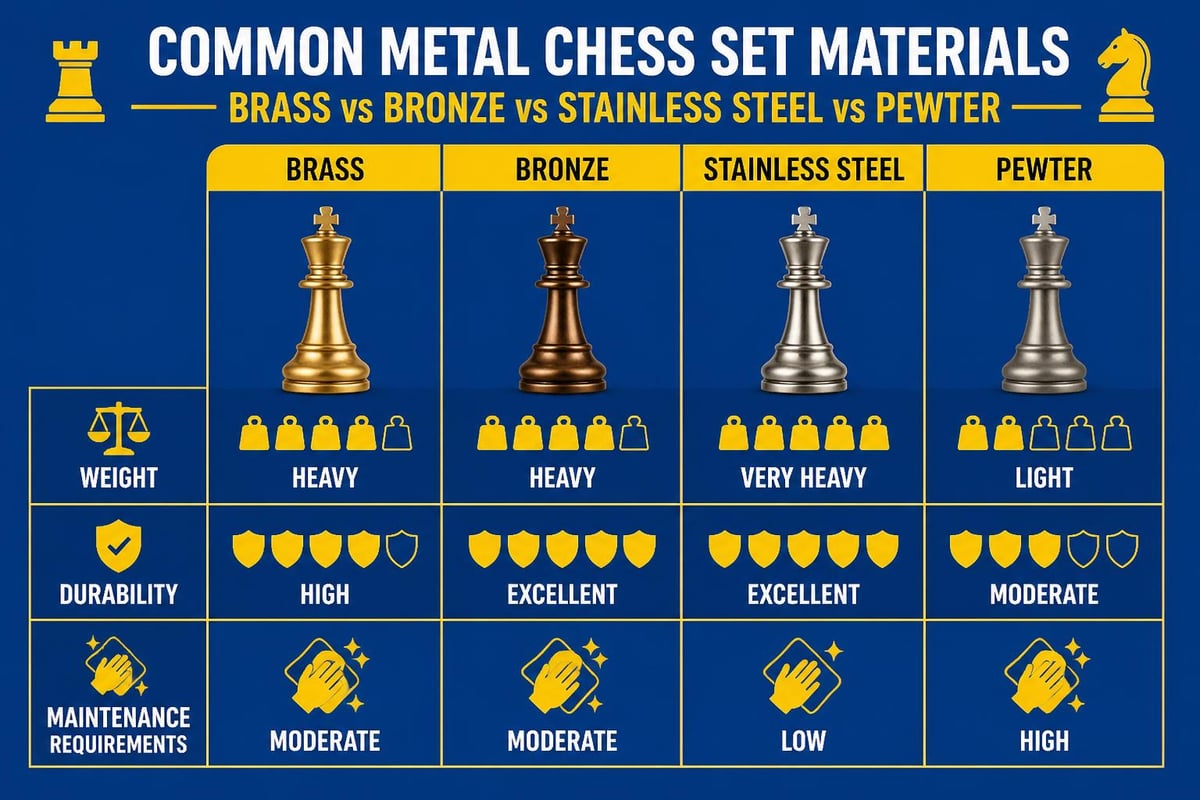
Brass remains one of the most popular choices for metal chess sets. It's an alloy of copper and zinc, giving it that warm, golden hue that develops a rich patina over time. Bronze, made from copper and tin, offers similar aesthetics with slightly different properties.
| Feature | Brass | Bronze | Stainless Steel | Pewter |
|---|---|---|---|---|
| Weight | Heavy | Very Heavy | Medium-Heavy | Light-Medium |
| Patina | Yes (green/brown) | Yes (dark brown) | No | Yes (dull grey) |
| Maintenance | Medium | Medium | Low | Low |
| Cost | Moderate-High | High | Moderate | Low-Moderate |
| Durability | Excellent | Excellent | Excellent | Good |
These traditional materials connect you to chess history. The German metal chess set by Württembergische Metallwarenfabrik from 1903 demonstrates how brass and bronze sets have been prized for over a century.
Modern Steel and Pewter Options
Stainless steel offers a contemporary aesthetic that many players appreciate. It's resistant to tarnishing and requires virtually no maintenance. Pewter, whilst lighter, provides an affordable entry point into metal sets with a distinctive silvery appearance.
The manufacturing process for these materials has evolved significantly. Modern metal manufacturing techniques allow for intricate detail work that wasn't possible in earlier decades, meaning today's sets can be both beautiful and affordable.

What to Look for When Buying a Metal Chess Set
Choosing your first metal chess set can feel overwhelming. You're making an investment, and you want to get it right. Let me walk you through the essential considerations.
Weight and Balance Considerations
Weight matters, but it's not just about heavy being better. Each piece should feel balanced in your hand. When you're working through challenging opening positions, you don't want pieces that feel top-heavy or awkward to move.
A standard king should weigh between 50-80 grams in a quality metal set. Anything lighter might feel insubstantial; much heavier becomes cumbersome during longer study sessions.
Testing weight and balance:
- Pick up the king - it should feel substantial but not unwieldy
- Place pieces on the board - they shouldn't wobble or tip easily
- Move pieces rapidly - they should glide smoothly
- Stack pieces when captured - they should sit stably
Size and Board Compatibility
Here's a mistake I see often: buying beautiful metal pieces that don't fit your board properly. The relationship between piece size and square size follows a general rule - your king's base should be about 75-80% of the square size.
For a standard tournament board with 2-inch squares, you'd want a king around 3.75 inches tall. This ensures pieces don't crowd the board whilst remaining visible and easy to manipulate.
Craftsmanship and Detail Quality
Quality varies enormously in metal chess sets. Some are mass-produced with minimal detail, whilst others showcase remarkable artistry. The modern metal chess set by John O'Brien, crafted from nuts, bolts, and drill bits, demonstrates the artistic potential of metal pieces.
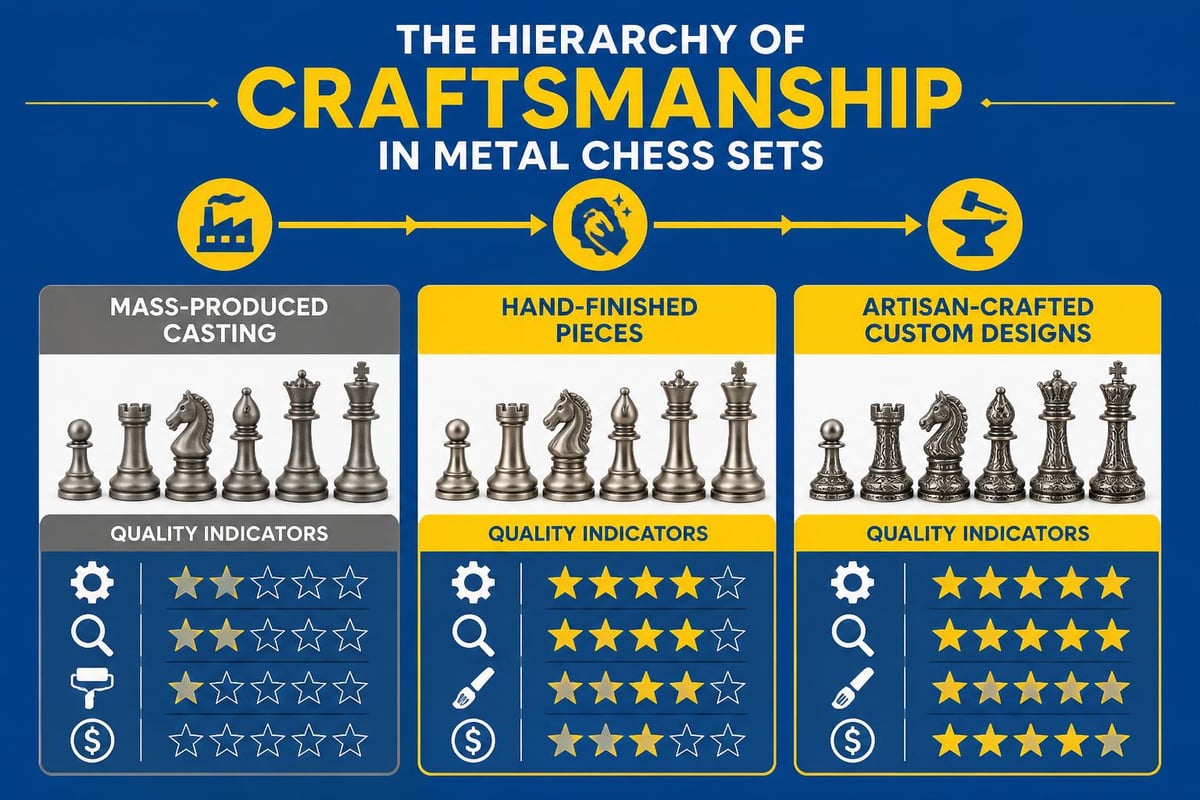
Look for clean casting with no pitting or rough edges. Examine the knight carefully - it's the most complex piece to cast and reveals manufacturing quality. Check that the felt bases are evenly applied and won't peel off easily.
Design Styles and Aesthetic Choices
Metal chess sets come in an astonishing variety of designs. Your choice here is personal, but it should complement both your playing style and your learning environment.
Traditional Staunton Designs
The Staunton pattern remains the gold standard for tournament play and serious study. Even in metal, this classic design offers familiarity and functionality. The English "Harlequin" metal chess set from the 20th century shows how traditional designs translate beautifully into metal.
When you're memorising opening variations, you want pieces you can recognise instantly. Staunton designs provide that immediate visual clarity.
Themed and Artistic Sets
Themed sets can make chess more engaging, particularly if you're building a collection or want something distinctive for your study space. Medieval battles, ancient civilisations, or abstract modern designs - metal lends itself to creative interpretation.
However, a word of caution: if you're using your set for serious study, overly ornate designs can become distracting. When you're working through complex tactical puzzles, you need clarity above all else.
Maintenance and Care for Your Metal Chess Set
One brilliant aspect of metal sets? They're remarkably forgiving. Unlike wooden sets that require specific oils or treatments, metal pieces need minimal attention.
Cleaning and Polishing
Most metal sets benefit from occasional cleaning. The method depends on your metal type and whether you want to maintain or remove patina.
Basic cleaning routine:
- Wipe with a soft, dry cloth after each use
- For deeper cleaning, use mild soap and warm water
- Dry thoroughly to prevent water spots
- For brass/bronze, decide if you want to preserve or remove patina
- Use appropriate metal polish if maintaining shine
Some players love the aged look of patinated brass. Others prefer the bright shine of freshly polished metal. There's no right answer - it's about what enhances your chess experience.
Storage Recommendations
Metal pieces are heavy, which means storage matters. Don't just toss them in a bag - they can scratch each other and damage board surfaces.
Individual compartments or felt-lined boxes work best. If your set didn't come with a storage box, consider investing in one. Proper storage protects your investment and keeps pieces ready for your next study session.
Price Ranges and Value Considerations
Let's talk money. Metal chess sets span an enormous price range, from under £50 to several thousand pounds. Understanding what drives these differences helps you make an informed choice.
| Price Range | What to Expect | Best For |
|---|---|---|
| £40-£100 | Basic metal alloys, simpler designs, mass production | Beginners wanting durability |
| £100-£300 | Quality brass/bronze, good detail, better finishing | Serious students and regular players |
| £300-£800 | Excellent craftsmanship, premium materials, artistic detail | Enthusiasts and collectors |
| £800+ | Hand-crafted, precious metals, museum quality | Collectors and investors |
This comprehensive buying guide for metal chess pieces offers detailed insights into what you're paying for at each level.
For most chess students working on improving their game, the £100-£300 range offers excellent value. You get quality materials and construction without paying for collector-level rarity.
How a Metal Chess Set Enhances Your Chess Study
You might wonder: does the physical set really matter when you're learning opening theory or practising tactics? Actually, yes - more than you'd think.
The weight and presence of metal pieces create a more mindful practice environment. When each move has physical consequence, you tend to think more carefully. This mirrors over-the-board tournament conditions better than lightweight pieces.
Creating a Dedicated Study Space
A beautiful metal chess set deserves a permanent home. Setting up a dedicated chess corner with your metal set creates psychological commitment to regular practice. When your set is always ready, you're more likely to spend 20 minutes working through positions or testing new opening ideas.
The Psychological Impact of Quality Equipment
There's something about using quality tools that elevates your work. Whether you're a carpenter with fine chisels or a chef with sharp knives, better equipment enhances the experience. The same applies to chess study.
When you invest in a quality metal chess set, you're signalling to yourself that chess matters. This psychological commitment often translates to more consistent practice and faster improvement.

Collecting Metal Chess Sets as a Hobby
Beyond their utility for play and study, metal chess sets make fascinating collectibles. Each piece tells a story about design trends, manufacturing techniques, and cultural perspectives on the royal game.
Historical and Antique Sets
Vintage metal sets offer a tangible connection to chess history. Sets from the early 20th century often feature craftsmanship that's difficult to replicate today. The value of historical sets has steadily appreciated, making them both enjoyable and potentially profitable to collect.
Contemporary Artisan Pieces
Modern chess artisans continue pushing boundaries with metal. The handcrafted 925 sterling silver and gold chess set with medical theme exemplifies how contemporary designers blend traditional materials with innovative concepts.
Collecting can complement your chess study beautifully. Each new set brings fresh appreciation for design whilst reinforcing your commitment to the game.
Comparing Metal Sets to Other Materials
How does metal stack up against wood, stone, or other materials? Each has merits depending on your priorities.
Wooden sets offer warmth and traditional appeal. They're often lighter and can be more affordable. However, they require more maintenance and aren't as durable as metal. Stone sets like marble provide stunning aesthetics - this complete buyer's guide to marble chess sets explores that option thoroughly - but they're extremely heavy and fragile.
Material comparison for chess students:
- Metal: Best for durability, weight, and long-term value
- Wood: Best for traditional aesthetics and moderate cost
- Stone: Best for display and luxury appeal
- Plastic: Best for portability and budget considerations
If you're primarily focused on improving your chess through consistent practice and study, metal offers the best balance of durability, usability, and aesthetic pleasure.
Making Your Final Decision
You've explored materials, designs, prices, and practical considerations. Now comes the moment of choice. Here's how to narrow down your options and select the metal chess set that's right for you.
Start by defining your primary use case. Are you mainly studying openings and endgames? Do you play frequent casual games with friends? Will this be a display piece that sees occasional use? Your answers guide everything else.
Decision framework:
- Determine your budget range
- Choose your preferred metal type
- Decide between traditional or themed design
- Verify size compatibility with your board
- Assess craftsmanship quality
- Consider storage and maintenance requirements
Don't rush this decision. A quality metal chess set can serve you for decades. Read reviews, examine pieces in person if possible, and choose something that genuinely excites you to sit down and play.
Regional Variations and Cultural Designs
Metal chess sets reflect diverse cultural interpretations of the game. European sets tend toward classical Staunton designs or historical themes. Asian manufacturers often incorporate regional artistic traditions. Middle Eastern sets might feature intricate geometric patterns or calligraphic elements.
These cultural variations add depth to your collection and appreciation of chess as a global phenomenon. When you're studying different opening systems, using sets from various traditions can make the learning process more engaging and culturally enriching.
A quality metal chess set transforms your chess experience from casual play to serious study. The weight, durability, and aesthetic appeal create an environment conducive to focused improvement, whether you're mastering new openings or refining your tactical vision. As you develop your game, having the right tools makes every practice session more enjoyable and productive. Chess Cheat Sheets provides the perfect complement to your metal chess set, offering comprehensive guides, puzzles, and opening resources that help beginners and intermediate players improve efficiently. With streamlined cheat sheets that make complex concepts accessible, you can spend less time searching for information and more time actually improving your game - all whilst enjoying the tactile pleasure of moving those beautiful metal pieces across the board.


