

You've probably heard the phrase "think before you move" countless times at the chessboard. But what actually separates good chess moves from mediocre ones? Understanding this distinction is fundamental to improving your game, yet many players struggle to identify quality moves consistently. The difference between a strong player and a beginner often comes down to pattern recognition and understanding which moves create long-term advantages. Whether you're just learning the game or looking to sharpen your tactical skills, recognising the characteristics of sound chess play will transform your results.

What Actually Makes a Chess Move "Good"?
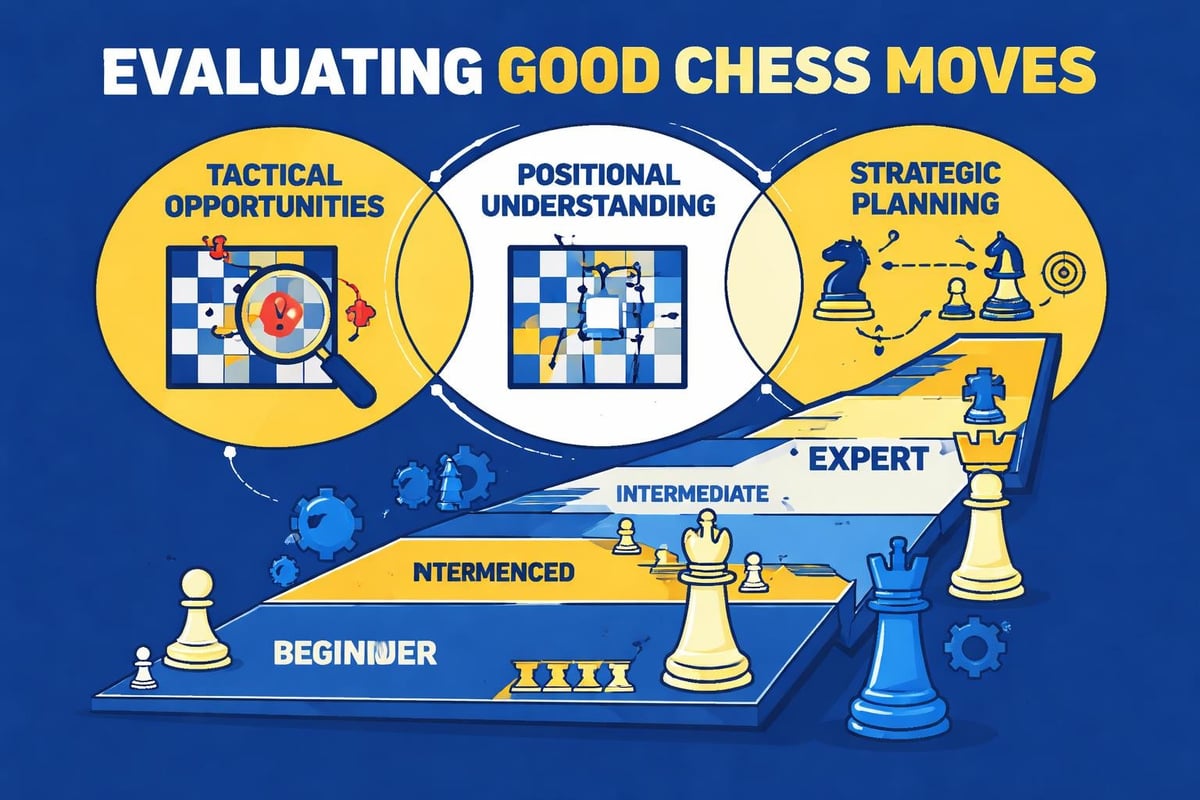
Let's start with a question: what criteria should you use when evaluating your options at the board? The answer isn't always straightforward, because chess is a game of trade-offs and context.
Good chess moves typically accomplish multiple objectives simultaneously. They might develop a piece whilst also attacking an opponent's weakness. Or they could improve your position defensively whilst preparing a future tactical blow. The best moves create what grandmasters call "multi-purpose threats."
Core Principles Behind Strong Moves
When you're sitting at the board, certain principles should guide your decision-making process:
- Central control: Moves that fight for or maintain control of the centre squares (e4, d4, e5, d5) typically carry more weight than peripheral play
- Piece activity: Every move should ideally improve the mobility and effectiveness of your pieces
- King safety: Especially in the opening and middlegame, moves that protect your king or expose the opponent's monarch deserve priority
- Pawn structure: Understanding which pawn moves create long-term strength versus weakness separates strong players from the rest
The King's Pawn Game exemplifies many of these principles, with 1.e4 immediately staking a claim in the centre whilst opening lines for the bishop and queen.
Opening Moves That Set You Up for Success
Your first ten moves can determine the entire trajectory of the game. But which opening moves actually deserve your study time?
Popular and Effective Opening Choices
Different openings suit different playing styles, but certain moves have stood the test of time. The Italian Game offers a straightforward approach that emphasises classical development and central control.
For beginners, focusing on openings with clear principles helps build a solid foundation:
- Develop knights before bishops when possible
- Castle early to ensure king safety
- Connect your rooks by completing development
- Avoid moving the same piece multiple times without good reason
The Queen's Gambit presents a more strategic approach, offering a pawn to gain central influence. This exemplifies good chess moves at a higher level, where temporary material investment creates lasting positional advantages.
Meanwhile, aggressive players might explore the King's Gambit, though this requires precise calculation and deep preparation. The gambit demonstrates how good chess moves sometimes involve calculated risks.
Tactical Patterns You Can't Ignore
Have you ever missed a winning combination that was staring you in the face? We've all been there. Recognising tactical patterns is essential for finding good chess moves in critical positions.
Essential Tactical Motifs
| Tactical Pattern | Description | When to Look For It |
|---|---|---|
| Fork | One piece attacks two or more enemy pieces simultaneously | When your knight can reach a central square |
| Pin | An attacked piece cannot move without exposing a more valuable piece | When pieces align on the same rank, file, or diagonal |
| Skewer | A valuable piece is attacked and must move, exposing a less valuable piece behind it | Similar to pins, but with piece value reversed |
| Discovered Attack | Moving one piece reveals an attack from another piece | When you have pieces lined up behind each other |
Working through chess puzzles regularly trains your brain to spot these patterns automatically. The more tactical motifs you recognise, the faster you'll identify good chess moves during your games.
Some of the best chess moves of all time involved brilliant tactical insights that changed the game's momentum entirely. These moves remind us that calculation and creativity go hand in hand.
Middlegame Strategy and Move Selection
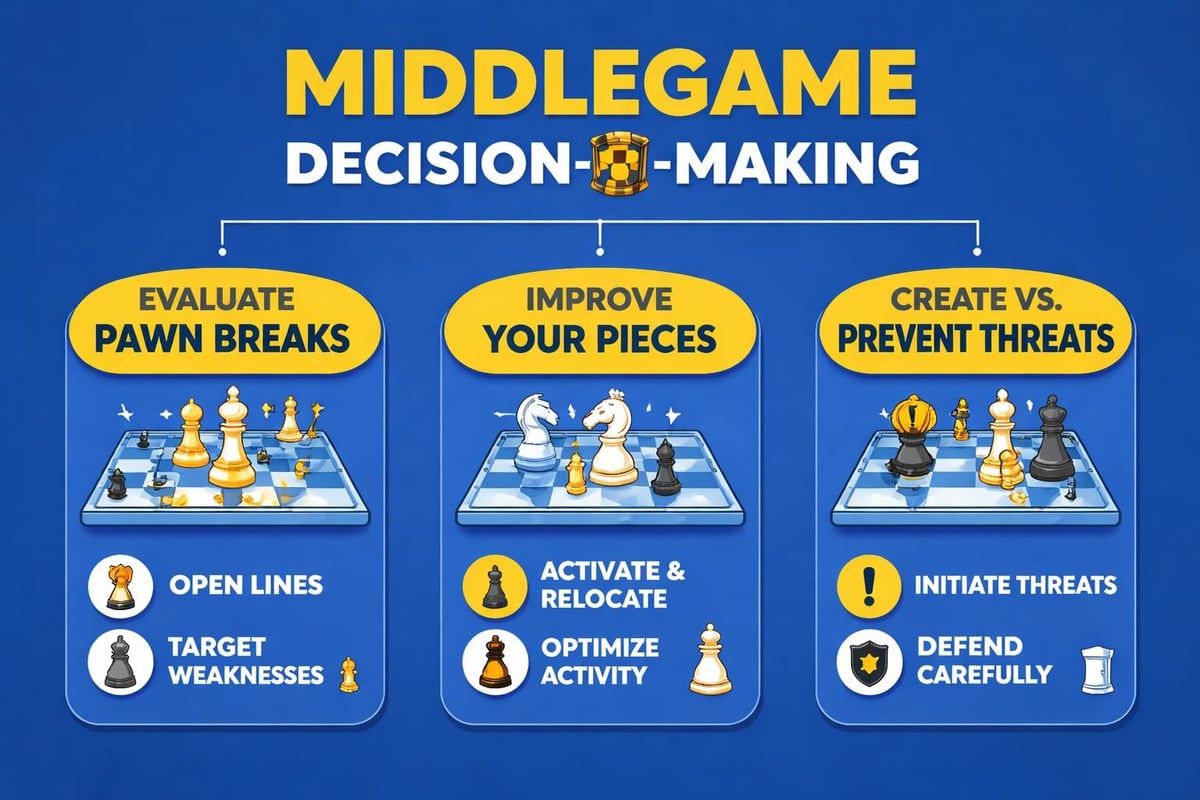
The middlegame is where chess truly becomes an art form. With the pieces developed and the position opened up, how do you choose between countless candidate moves?
Strategic considerations should guide your thinking:
- Identify weaknesses in your opponent's camp (isolated pawns, backward pawns, weak squares)
- Create threats that force your opponent to respond defensively
- Improve your worst-placed piece
- Restrict your opponent's most active piece
The concept of "improving moves" is crucial here. Sometimes the best move doesn't create an immediate threat but instead repositions a piece to a more influential square. These quiet moves often distinguish masters from amateurs.
Evaluating Position Types
Different positions require different approaches. In closed positions with locked pawn chains, patient manoeuvring and pawn breaks define good chess moves. Open positions demand precise calculation and tactical awareness.
Consider your piece coordination as well. Good chess moves enhance how your pieces work together, creating what chess teachers call "piece harmony." Your rook on the seventh rank becomes even more powerful when supported by your queen or bishop.

Endgame Precision and Winning Techniques
You've navigated the opening and survived the middlegame complexities. Now, with fewer pieces on the board, every move carries enormous weight.
Fundamental Endgame Principles
The endgame is where precision truly matters. A single inaccurate move can turn a winning position into a draw, or a drawable position into a loss.
Key endgame concepts include:
- King activity becomes paramount (your king transforms from a liability into a powerful piece)
- Passed pawns increase dramatically in value
- Rook activity and positioning often determine the outcome
- Opposition and triangulation become critical in pawn endgames
Understanding basic endgames gives you confidence throughout the game. When you know you can convert a winning endgame, you'll play the middlegame more decisively.
| Endgame Type | Critical Skill | Common Mistake to Avoid |
|---|---|---|
| King and Pawn vs King | Understanding the square of the pawn | Advancing the pawn too early without king support |
| Rook Endgames | Keeping your rook active, usually behind passed pawns | Allowing your rook to become passive on the back rank |
| Bishop Endgames | Creating passed pawns on both sides of the board | Trading into a wrong-coloured bishop endgame when losing |
| Knight Endgames | Centralising your knight and restricting opponent's knight | Allowing opponent's knight to reach a strong outpost |
Developing Your Move Selection Process
Right, so you understand the principles, you've studied tactics, and you know basic endgames. How do you actually choose your move in a real game?
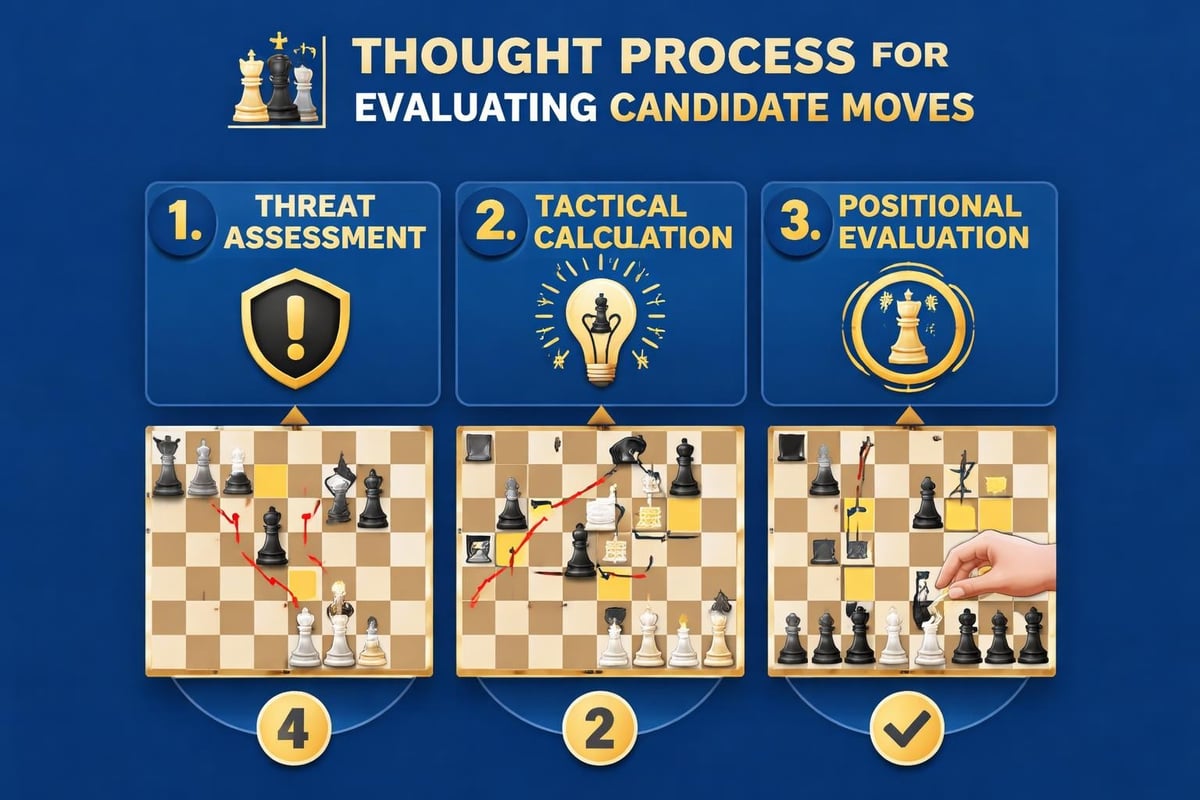
Follow this systematic approach:
- Analyse what your opponent's last move threatened or accomplished
- Identify all forcing moves (checks, captures, threats) in the position
- Consider quieter, positional improvements if no tactics exist
- Calculate the critical variations for your top candidate moves
- Choose the move that best fits your strategic goals
This process prevents blunders whilst ensuring you don't miss tactical opportunities. The most common chess openings all emphasise this logical approach to move selection from the very first move.
Avoiding Common Pitfalls
Even strong players fall into traps when they abandon systematic thinking. Moving too quickly, playing hope chess (hoping your opponent doesn't see your weakness), or getting distracted by flashy but unsound sacrifices all undermine good chess moves.
Warning signs that you're about to make a poor move:
- You haven't checked if the move hangs a piece
- You're moving the same piece for the third time in the opening
- You're creating weaknesses in your own position without compensation
- You haven't considered your opponent's most forcing reply
Learning From Master Games and Resources
You can accelerate your improvement by studying how strong players find good chess moves in complex positions. Watching annotated master games reveals the thinking process behind elite-level decisions.
Chess.com's collection of ten chess moves to play before you die showcases moments of pure genius that inspire players at every level. These moves demonstrate that creativity and calculation combine to create chess brilliance.
Building Your Chess Library
Resources matter when you're serious about improvement. Having quality chess resources at your fingertips helps you study efficiently without getting overwhelmed by information overload.
For opening preparation specifically, having detailed guides on your favourite systems saves countless hours. Whether you're exploring the Scandinavian Defense or the English Opening, structured learning beats random exploration.
Pattern Recognition and Intuition Development
As you gain experience, something interesting happens. You start "seeing" good chess moves without consciously calculating every variation. This intuition develops through pattern recognition.
Your brain begins recognising familiar structures and typical plans. When you've seen a particular pawn structure fifty times, you instinctively know which squares matter and which pieces belong where.
Training Your Chess Intuition
Consistent practice builds this intuitive understanding faster than sporadic study. Playing regularly, solving puzzles daily, and reviewing your games all contribute to pattern recognition.
Effective training methods include:
- Solving tactical puzzles at progressively difficult levels
- Playing rapid games to develop practical decision-making under time pressure
- Studying master games in your preferred openings
- Analysing your losses to understand where your move selection failed
The Ruy Lopez provides an excellent laboratory for developing positional intuition, with its rich strategic plans and typical middlegame structures.
Time Management and Move Quality
Here's something many players overlook: the relationship between time management and move quality. Spending your clock wisely is itself a skill that impacts the quality of your moves.
Balancing Speed and Accuracy
You don't need equal time for every move. Critical positions with forcing variations deserve deep calculation. Routine developing moves in familiar positions can be played quickly.
Time allocation guidelines:
- Spend more time when multiple captures or checks complicate the position
- Invest thinking time on moves that commit to a long-term plan
- Move faster in theoretical opening positions you've studied
- Reserve time for the transition to the endgame, where precision matters most
Understanding when to think and when to play on instinct separates tournament winners from perpetual time trouble victims.
Practical Improvement Strategies
Let's get practical. How do you actually improve your ability to find good chess moves during games?
Daily Training Routine
Consistency beats intensity when building chess skills. A modest daily practice routine outperforms marathon weekend sessions.
Suggested 30-minute daily routine:
| Activity | Time | Purpose |
|---|---|---|
| Tactical puzzles | 10 minutes | Sharpen calculation and pattern recognition |
| Opening study | 10 minutes | Build repertoire knowledge and typical plans |
| Endgame practice | 5 minutes | Master fundamental winning techniques |
| Game analysis | 5 minutes | Review one critical position from recent games |
This balanced approach ensures you develop all aspects of move selection simultaneously. You might also explore free online chess courses to supplement your independent study.
Working with chess tools and resources designed for efficient learning helps you progress without wasting time on ineffective methods.
Psychological Aspects of Finding Strong Moves
Your mental state dramatically affects your ability to find good chess moves. Fatigue, frustration, or overconfidence all cloud judgment.
Recognising when you're tilting (making emotional rather than logical decisions) is crucial. If you've just blundered, the temptation to play aggressively and "win it back" often leads to further mistakes.
Mental game tips:
- Take a deep breath before critical decisions
- Stand up and walk briefly between moves if playing in person
- Acknowledge mistakes quickly and refocus on the current position
- Maintain objective evaluation rather than wishful thinking
Championship-level players maintain emotional equilibrium throughout the game, which allows consistent move quality even under pressure.
Adapting Your Style to Different Opponents
Good chess moves also depend on context. What works against an aggressive attacker differs from what's effective against a solid, positional player.
Against tactical players, simplification and solid moves neutralise their main weapon. Against positional experts, creating imbalances and tactical complications plays to your advantage.
Reading Your Opponent
Pay attention to your opponent's tendencies during the game. Do they calculate quickly or think for ages? Do they favour certain piece placements? This information helps you choose moves that create the type of position they handle poorly.
Some players thrive in sharp, tactical positions whilst others excel in quiet, manoeuvring games. Steering the game toward your strengths and away from theirs represents good practical chess even if the computer suggests a different move.
Finding good chess moves consistently requires understanding principles, recognising patterns, and developing sound judgment through practice. The journey from beginner to strong player involves thousands of positions, hundreds of games, and countless hours of study, but the improvement comes steadily when you focus on quality over quantity. Chess Cheat Sheets provides the structured guides, opening resources, and training materials you need to accelerate this learning process without the overwhelm of unfocused study. Whether you're building your opening repertoire or sharpening your tactical vision, having the right resources makes all the difference in transforming chess knowledge into practical playing strength.


