

Have you ever wondered where you can play chess online without downloading software or creating complicated accounts? FlyOrDie Chess has been serving the online chess community for years, offering a straightforward browser-based platform that gets you into games quickly. Whether you're looking to sharpen your tactical skills between study sessions or test opening knowledge in real-time, this platform provides an accessible way to play chess against opponents from around the world. Let's explore what makes this platform tick and how it fits into your chess improvement journey.
What Makes FlyOrDie Chess Different
The online chess landscape in 2026 is crowded with platforms, each offering unique features and approaches. So what sets flyordie chess apart?
First and foremost, it's the instant accessibility. You don't need to download heavyweight applications or navigate through extensive registration processes. The official FlyOrDie Chess page emphasizes this browser-based simplicity, allowing you to jump straight into games from virtually any device with an internet connection.
Game Formats and Time Controls
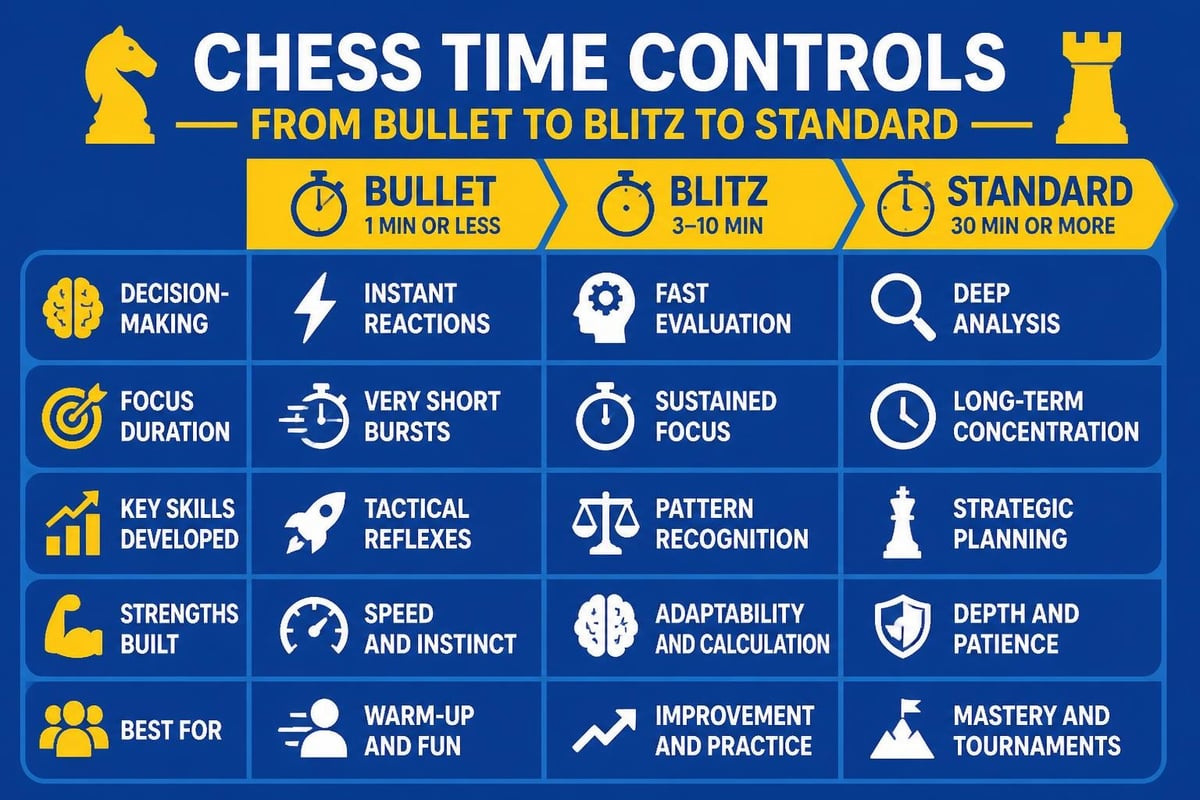
One of the platform's strengths lies in its variety of time controls. You're not locked into one pace of play.
- Blitz chess options ranging from 1 to 5 minutes per player
- Standard time controls for more thoughtful games
- Bullet chess for adrenaline-fueled quick matches
- Custom time settings to match your preferences
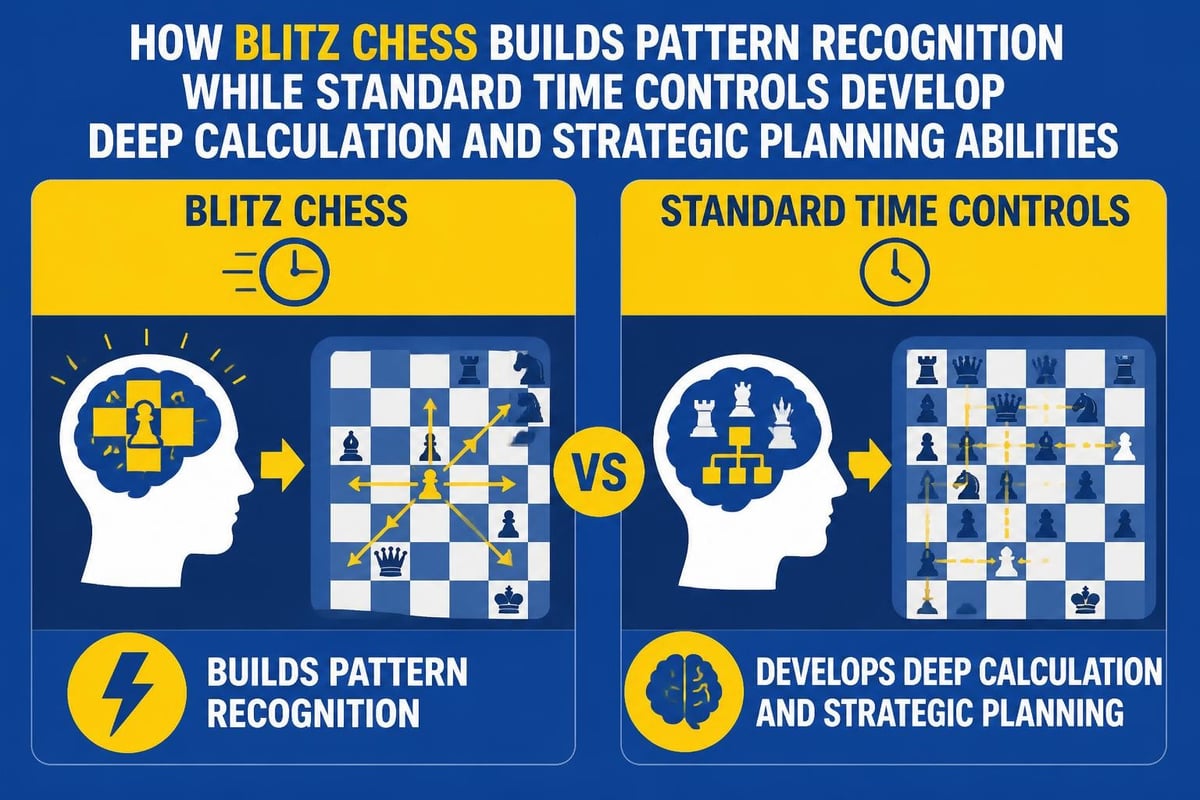
The FlyOrDie Blitz Chess variant particularly appeals to players who want to practice decision-making under pressure. This format forces you to rely on pattern recognition and intuition rather than deep calculation, which can be brilliant for reinforcing the opening principles you've been studying.
Interface and User Experience
The platform's interface prioritizes functionality over flashy graphics. You'll find a clean chessboard, clear piece designs, and straightforward navigation. Some players actually prefer this approach because it minimizes distractions and keeps your focus where it belongs: on the position.
The design has garnered enough attention that users on other platforms have requested similar themes. A discussion on Chess.com shows players expressing interest in adopting FlyOrDie's distinctive visual approach.
Features That Support Chess Improvement
Let's talk about how flyordie chess can actually help you get better at the game. After all, playing random games without purpose won't dramatically improve your chess.
Statistics Tracking and Analysis
The platform tracks your performance over time, giving you data about:
- Win/loss ratios across different time controls
- Rating progression and fluctuations
- Most common opening lines you encounter
- Performance trends over weeks and months
This statistical feedback helps you identify patterns in your play. Are you winning more often with White or Black? Do you perform better in blitz or longer time controls? Understanding these patterns allows you to focus your study more effectively with resources like Chess Cheat Sheets.
In-Game Communication
| Feature | Benefit | Chess Improvement Value |
|---|---|---|
| Text chat | Discuss positions post-game | Learn from stronger opponents |
| Emoji reactions | Quick acknowledgment | Maintain sportsmanship |
| Game analysis tools | Review critical moments | Identify tactical oversights |
The ability to communicate with opponents after games can be particularly valuable. Many players are willing to discuss critical positions, explain their thinking, or point out missed opportunities. This informal coaching accelerates learning in ways that playing alone cannot match.
Time Controls and Skill Development
Different time controls develop different aspects of your chess understanding. Flyordie chess offers enough variety to target specific skill areas.
Blitz Chess for Pattern Recognition
When you play blitz chess, you're training your brain to recognize patterns instantly. You don't have time to calculate every variation when you've got three minutes on your clock.
This format forces you to rely on the opening preparation you've done beforehand. If you've studied the most common chess openings, blitz games become the perfect testing ground for your knowledge.
The pressure of the clock also reveals gaps in your understanding. Positions where you consistently struggle to find good moves quickly indicate areas needing more study.
Standard Games for Deep Understanding
Longer time controls on flyordie chess allow for the type of thinking that actually improves your chess understanding. You can calculate variations properly, evaluate pawn structures, and plan multi-move strategies.
These games more closely resemble over-the-board tournament chess, making them ideal practice if you're preparing for competitions. They also give you time to apply complex opening theory, such as understanding how difficult the Sicilian Defense is to play in practical situations.
Tournament and Competitive Features
If you're serious about improving your chess, competitive play is essential. Flyordie chess provides tournament structures that add meaning to your games beyond casual practice.
Rating Systems and Progression
The platform uses rating systems similar to chess Elo ratings you'd find in traditional chess organizations. This gives you:
- A measurable benchmark of your current strength
- Motivation to improve through visible rating gains
- Appropriately matched opponents for competitive games
- Historical data showing your improvement trajectory
Watching your rating climb as you implement new opening ideas or improve your endgame technique provides tangible evidence of progress. It's satisfying to see the 50-point gain after you've spent a month studying a new opening system.
Tournament Structures
Regular tournaments on the platform create a competitive environment that pushes you to perform your best. Unlike casual games where you might experiment recklessly, tournaments encourage you to play your most solid chess.
Tournament experience also helps you:
- Handle pressure situations more effectively
- Manage your time across multiple games
- Maintain concentration over extended sessions
- Develop mental resilience after losses
Community and Social Aspects
Chess isn't just about moving pieces-it's about connecting with other players who share your passion for the game.
The flyordie chess community includes players from diverse backgrounds and skill levels. You'll encounter:
- Beginners learning the basics
- Club-level players honing their skills
- Experienced competitors testing new ideas
- Coaches offering advice and guidance
This diversity creates a rich learning environment. Playing against varied styles exposes you to different approaches to the game, broadening your understanding beyond what you'd encounter studying alone.
Platform Reliability and User Feedback
No platform is perfect, and it's worth understanding both strengths and weaknesses before investing significant time. Reviews from RatingFacts and SmartCustomer provide balanced perspectives on user experiences.
Common Strengths Users Report
Accessibility: The browser-based approach means you can play from virtually any device without installations.
Quick matchmaking: You're typically in a game within seconds rather than minutes.
Straightforward interface: No unnecessary features cluttering your screen.
Consistent performance: The platform handles games smoothly without lag in most cases.
Areas for Improvement
Like any platform, flyordie chess has aspects that some users find lacking compared to larger chess sites. The analysis tools aren't as sophisticated as those offered by platforms with dedicated chess engines built in.
The mobile experience, while functional, doesn't always match the desktop interface in terms of ease of use. If you primarily play on your phone or tablet, you might find the controls less intuitive than apps designed specifically for mobile play.
Integrating Platform Play with Structured Study
Here's where flyordie chess becomes genuinely valuable for your chess development: using it alongside structured learning materials.
Playing random games without study produces limited improvement. Studying theory without practical application doesn't stick. The combination creates exponential growth.
A Practical Improvement Framework
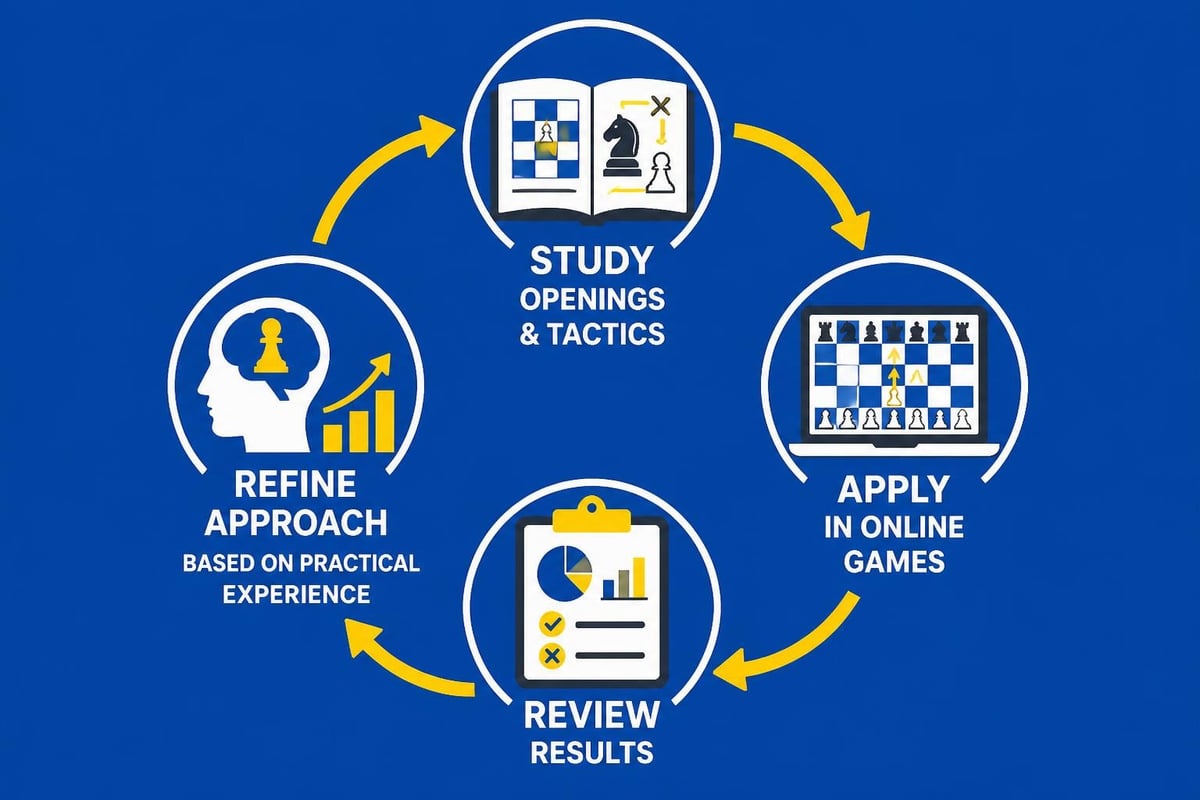
Consider this approach to maximize your development:
- Study phase: Spend 30 minutes reviewing an opening line or tactical pattern
- Application phase: Play 3-5 games on flyordie chess specifically trying to reach those positions
- Review phase: Analyze games to see how your preparation performed
- Refinement phase: Identify weaknesses and return to study with focused questions
This cycle transforms both your study and your playing. Your games have purpose beyond just winning, and your study directly connects to real positions you'll face.
Opening Preparation and Testing
If you're working through opening theory-say, the pros and cons of the Caro-Kann Defense-flyordie chess gives you immediate opportunities to test your knowledge.
You can deliberately choose the opening in your games and see which variations opponents actually play. This real-world data helps you prioritize which lines deserve deeper study versus which are purely theoretical.
Technical Aspects and AI Development
The broader chess world has seen remarkable technological advances in recent years. Research like the "Giraffe" deep reinforcement learning paper and "DeepChess" neural network approach showcases how AI is transforming chess understanding.
While flyordie chess doesn't incorporate the most cutting-edge AI analysis tools directly into its interface, understanding these technological contexts helps you appreciate what's possible in chess training. The platform serves as a practical testing ground for the understanding you develop through other means.
Choosing the Right Platform for Your Goals
Should flyordie chess be your primary training platform? That depends on your specific goals and preferences.
It excels if you want:
- Quick access without complex setups
- Varied time controls for different practice types
- A straightforward playing experience
- Community interaction and casual competition
You might look elsewhere if you need:
- Extensive built-in analysis tools
- Comprehensive lesson libraries
- Advanced features like puzzle trainers
- Mobile-first design and apps
Many improving players use multiple platforms, each serving different purposes in their training regimen. Flyordie chess might handle your blitz practice while you use other resources for puzzles, analysis, and structured lessons.
Making the Most of Your Playing Time
Regardless of which platform you choose, playing chess online effectively requires discipline and intention.
Pre-Game Preparation
Before logging in for a session:
- Set a specific goal (test a new opening, work on time management, practice endgames)
- Decide on an appropriate time control for your objective
- Allocate a fixed amount of time to avoid endless playing
- Prepare mentally to focus on quality over quantity
During-Game Focus
Treat each game as valuable practice rather than throwaway entertainment:
- Take your time on critical positions even in blitz
- Notice when you're playing moves automatically versus thinking
- Try to understand your opponent's plans, not just your own
- Accept that losses are learning opportunities
Post-Game Habits
The learning happens after the game as much as during it:
- Review critical moments immediately while fresh in memory
- Note positions where you felt uncertain or uncomfortable
- Check if your opening preparation held up
- Identify one specific lesson to take forward
This disciplined approach transforms casual games on flyordie chess into genuine training sessions that complement your broader chess education.
Time Control Strategy for Different Skill Levels
Your optimal time control varies based on where you are in your chess journey.
| Skill Level | Recommended Format | Reasoning |
|---|---|---|
| Beginner (Under 1000) | 10-15 minutes | Need time to find legal moves and basic tactics |
| Intermediate (1000-1600) | 5-10 minutes | Developing speed while maintaining accuracy |
| Advanced (1600+) | 3-5 minutes blitz | Pattern recognition and intuition training |
These aren't rigid rules-experiment to find what challenges you appropriately. The key is choosing time controls that push you slightly beyond comfort without causing panic.
Balancing Online Play with Other Study Methods
While flyordie chess provides excellent practical experience, it's one component of comprehensive chess improvement.
Your weekly chess schedule might include:
- 30% playing time (online games for application)
- 40% tactical training (puzzles and exercises)
- 20% opening study (learning new systems)
- 10% endgame work (fundamental positions)
This balance ensures you're developing all aspects of your game rather than just becoming proficient at blitz chess on one platform. The playing time validates your studying, while the studying gives purpose to your playing.
Whether you're testing opening ideas from your latest study session or simply enjoying competitive chess, flyordie chess offers a solid platform for practical play in 2026. The key to improvement lies not in the platform itself, but in how intentionally you use it alongside structured learning. Ready to take your opening knowledge from theory to practice? Chess Cheat Sheets provides the streamlined guides, opening resources, and tactical materials you need to make every game a stepping stone toward chess mastery, giving you the confidence to apply what you've learned in real games.


