

When you're trying to improve your chess game, the opening phase can feel like navigating a maze blindfolded. You've probably experienced that sinking feeling when your opponent plays a move you didn't anticipate in the first ten moves, leaving you scrambling for the rest of the game. This is where a comprehensive opening reference becomes invaluable, and that's precisely what makes fco fundamental chess openings such a standout resource. Written by Paul van der Sterren, this book has become a trusted companion for thousands of club players who want to understand openings without drowning in endless variations.
What Makes FCO Fundamental Chess Openings Different
Let's be honest: most opening books throw variations at you like confetti at a wedding. You're left memorising move sequences without really understanding why each move matters. The fco fundamental chess openings takes a refreshingly different approach.
Instead of overwhelming you with every possible line, van der Sterren focuses on the fundamental ideas behind each opening. This means you'll learn what to aim for in the middlegame, which piece placements make sense, and why certain pawn structures emerge from specific openings. This understanding-first approach means you can actually apply what you've learned, even when your opponent deviates from the main lines.
Coverage That Spans the Entire Opening Landscape
Here's what you'll find inside:
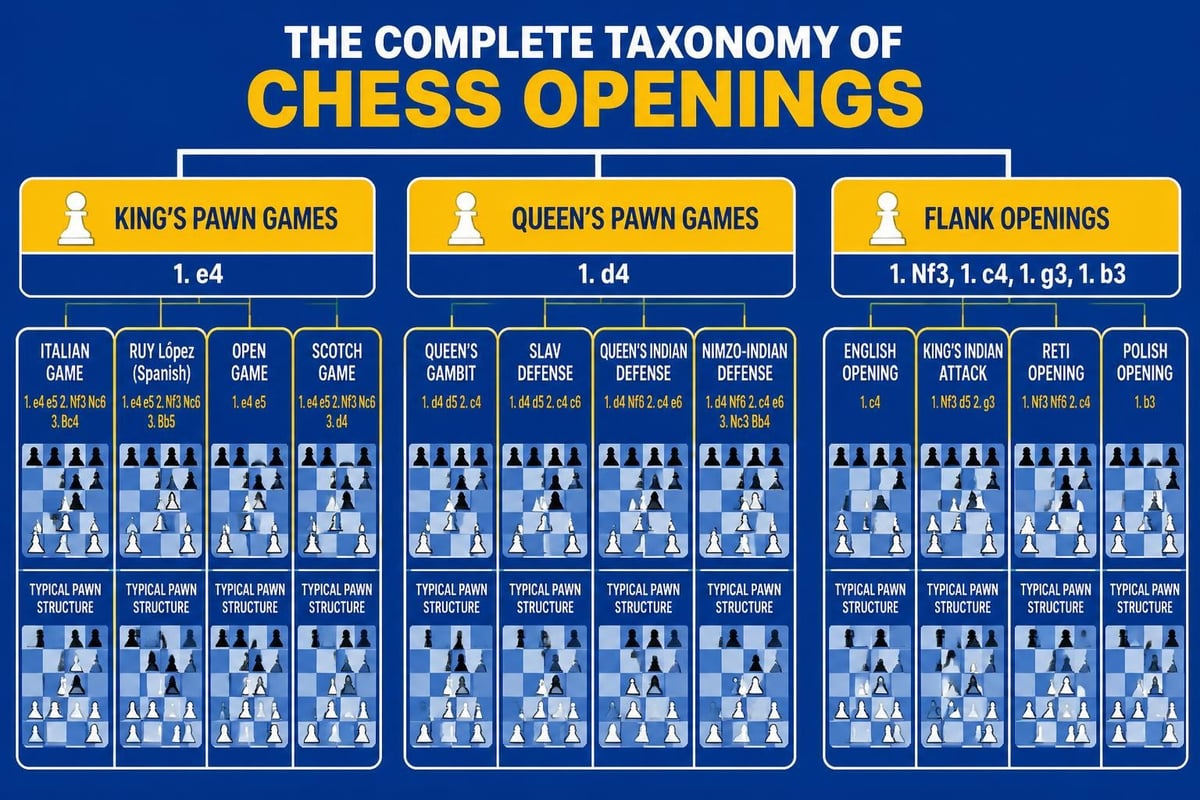
- King's Pawn Openings (1.e4): Including the Ruy Lopez, Italian Game, Sicilian Defence, and French Defence
- Queen's Pawn Openings (1.d4): Covering the Queen's Gambit, King's Indian Defence, and Nimzo-Indian Defence
- Flank Openings: English Opening, Réti System, and other non-traditional approaches
- Rare and Offbeat Lines: Enough coverage to handle unusual choices without getting sidetracked
This comprehensive scope makes it particularly valuable for players who want structured guidance across all opening families rather than specialising in just one or two systems.
Who Should Use FCO Fundamental Chess Openings
You might be wondering whether this book is right for your current skill level. Let me break it down for you.
Perfect for Club Players
If you're rated between 1200 and 2000, fco fundamental chess openings hits the sweet spot. You've moved past the absolute beginner stage where you're still learning how pieces move, but you're not yet a master who needs every theoretical nuance. The book assumes you understand basic tactics and positional concepts, then builds your opening knowledge on that foundation.
According to reviews from parents and coaches, it's also effective for younger players who are serious about improvement. The explanations are clear enough for dedicated juniors to grasp, making it suitable for chess club environments and home study alike.
Skill Level Comparison
| Player Type | FCO Suitability | Best Use Case |
|---|---|---|
| Beginner (Under 1000) | Moderate | Reference after learning basic principles |
| Intermediate (1000-1600) | Excellent | Primary opening guide |
| Advanced (1600-2000) | Very Good | Comprehensive overview and refresher |
| Expert (2000+) | Good | Quick reference, but needs supplementing |
How to Actually Use This Book
Right, so you've got the book in your hands. Now what? Simply reading it cover to cover won't magically improve your chess. Here's how to get maximum value from fco fundamental chess openings.
The Practical Study Method
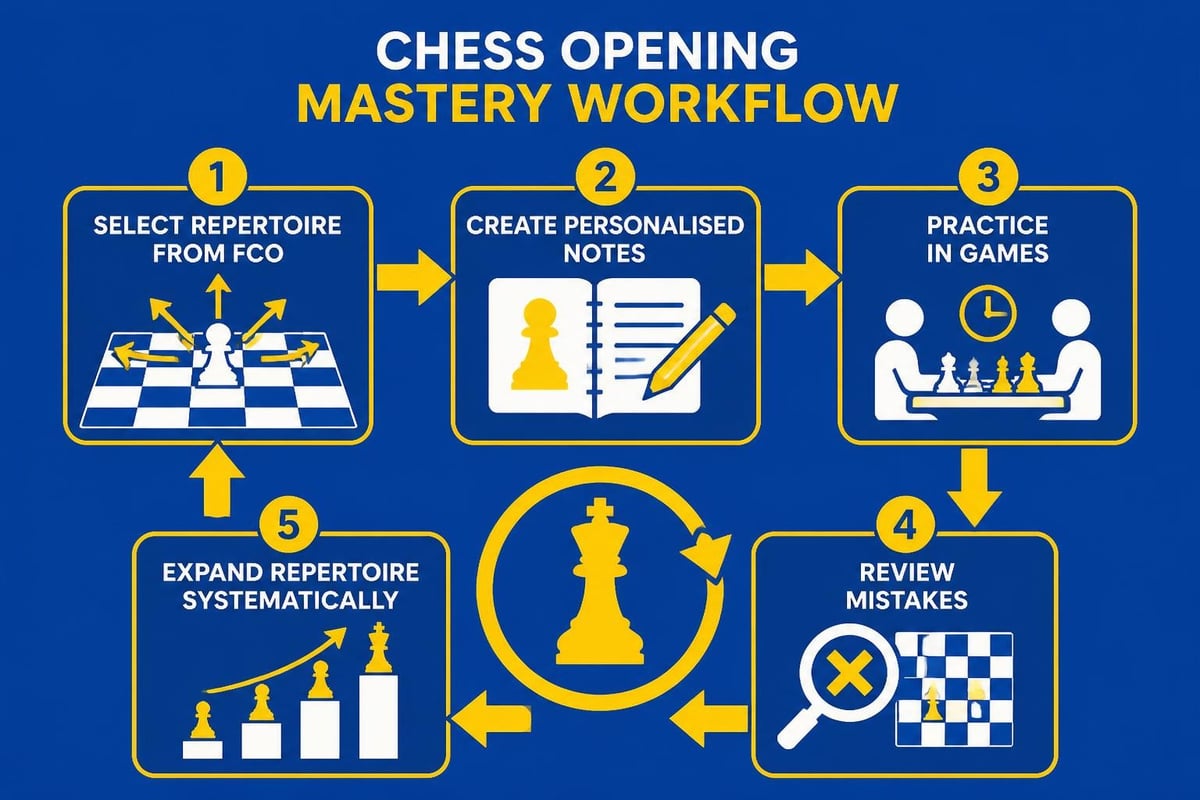
- Choose your repertoire strategically: Pick one or two openings as White and two or three defences as Black to start
- Read for understanding: Focus on the strategic explanations, not just memorising moves
- Play practice games: Test your new knowledge in actual games, whether online or over the board
- Review and adjust: When things go wrong, revisit the relevant sections to understand where you deviated
- Expand gradually: Once comfortable with your core repertoire, branch out to related systems
This approach aligns perfectly with how Chess Cheat Sheets structures its opening guides, emphasising practical understanding over rote memorisation.
Creating Your Personal Cheat Sheet
Here's a tip that transforms how you use fco fundamental chess openings: create condensed notes for each opening you study. Write down:
- The first 5-8 moves of your main line
- Key strategic themes (e.g., "control the centre, develop knights before bishops")
- Common tactical patterns to watch for
- Typical pawn breaks and when to execute them
These personalised summaries become your quick-reference guides during tournament preparation. You might even find that pairing FCO with resources like the London System chess opening guide gives you both the theory and the practical application you need.
The Strategic Approach to Opening Study
What I love about fco fundamental chess openings is how it teaches you to think strategically from move one. Let's explore this through some specific examples.
Understanding Pawn Structures
Every opening leads to characteristic pawn formations. The book excels at explaining why these structures matter. For instance, when you play the Sicilian Defence, you're often heading for an asymmetrical pawn structure where White has a central majority and Black has a queenside majority.
Van der Sterren doesn't just tell you this; he explains what it means for your plan. Black should typically:
- Generate counterplay on the queenside
- Challenge White's centre at the right moment
- Accept slightly cramped positions initially for dynamic potential later
This type of explanation makes the opening come alive rather than feeling like homework.
Comparing Similar Openings
One brilliant aspect of FCO is how it helps you understand the relationships between different openings. Consider these comparisons:
| Opening Pair | Key Difference | Strategic Implication |
|---|---|---|
| Ruy Lopez vs Italian Game | Bishop placement (b5 vs c4) | Ruy Lopez is more positional; Italian more tactical |
| King's Indian vs Grünfeld | Central approach | KID attacks centre; Grünfeld undermines it |
| Queen's Gambit Accepted vs Declined | Taking the c-pawn | QGA leads to more open positions earlier |
These comparisons, which research on opening complexity has shown are crucial for player development, help you make informed repertoire choices based on your playing style.
Common Criticisms and How to Address Them
No book is perfect, and fco fundamental chess openings has received its share of criticism. Let's address these concerns honestly.
"It's Not Deep Enough"
Some players complain that FCO doesn't go as deep into variations as more specialised works. That's absolutely true, but it's also the point. As Chess.com's review notes, this book prioritises breadth and understanding over exhaustive analysis.
If you're looking for every possible variation of the Najdorf Sicilian, you'll need a dedicated Najdorf book. But if you want to understand the fundamental ideas behind all major openings, FCO delivers brilliantly.
Solution: Use fco fundamental chess openings as your foundation, then supplement with specialised resources for openings you play regularly.
"Some Lines Feel Outdated"
Chess theory evolves constantly, and some lines in FCO reflect earlier theoretical assessments. However, at the club level where most of us play, these distinctions rarely matter. The strategic principles remain sound.
Solution: Combine FCO's explanations with modern free online chess courses or database analysis to catch up on recent theoretical developments in your main openings.

Integrating FCO Into Your Training Routine
You've probably got various chess resources competing for your attention. How does fco fundamental chess openings fit into a balanced training programme?
The Weekly Training Split
Here's a sustainable approach for intermediate players:
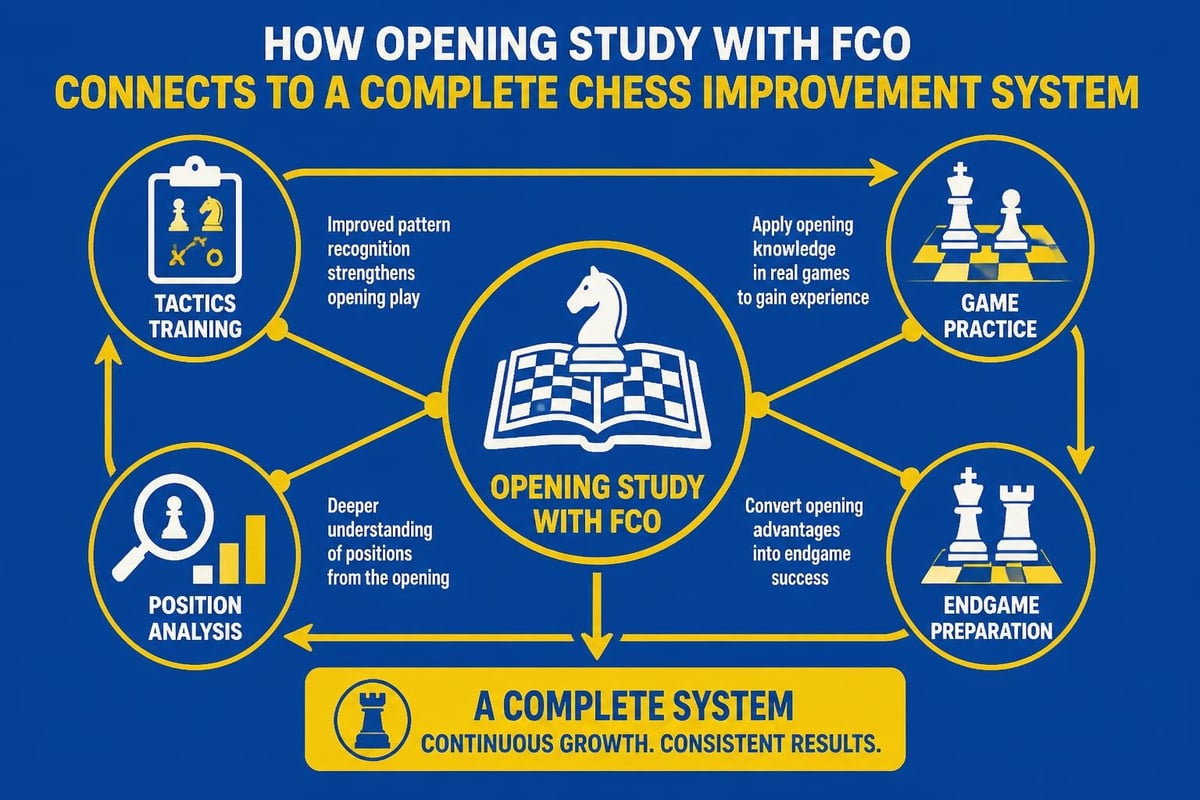
- Monday & Wednesday: Tactical puzzles and calculation (30 minutes)
- Tuesday & Thursday: Opening study with FCO (20-30 minutes)
- Friday: Play longer time control games applying your openings
- Saturday: Analyse your games, referencing FCO for opening insights
- Sunday: Endgame practice or rest day
This rhythm prevents opening study from consuming all your chess time whilst ensuring consistent progress. The key is regular, focused sessions rather than marathon cramming.
Connecting Openings to Middle and Endgames
One trap many players fall into is studying openings in isolation. The fco fundamental chess openings actually helps you avoid this by consistently linking opening choices to middlegame plans.
For example, when studying the Queen's Gambit, van der Sterren explains not just the opening moves but the typical endgames that arise, such as rook and pawn endings with a protected passed pawn. This holistic view makes your chess education far more effective.
Building Your Opening Repertoire with FCO
Let's get practical about repertoire selection. You can't possibly learn every opening in fco fundamental chess openings at once. Here's how to prioritise.
The Minimalist Starter Repertoire
As White:
- 1.e4 players: Focus on one response to each major defence (e4 e5, Sicilian, French, Caro-Kann)
- 1.d4 players: Learn the mainline Queen's Gambit and one system against the Indian Defences
As Black:
- Against 1.e4: Choose one defence that suits your style (solid or sharp)
- Against 1.d4: Learn one main defence (QGD, King's Indian, or Nimzo-Indian)
- Against 1.c4 and others: Use similar setups to your 1.d4 repertoire
This gives you everything you need whilst keeping study time manageable. As reviews on Goodreads suggest, starting small and expanding gradually leads to better retention and understanding.
Matching Openings to Your Playing Style
Not all openings suit all players. Use FCO's strategic descriptions to guide your choices:
- Tactical players: Consider the Sicilian Defence, King's Gambit, or sharp lines of the Italian Game
- Positional players: Explore the Ruy Lopez, Queen's Gambit Declined, or Caro-Kann Defence
- Flexible players: Look at the English Opening or Réti System as White
Your chess rating will improve faster when you play openings that align with your natural strengths whilst gradually developing weaker areas.
Supplementing FCO for Modern Chess
Whilst fco fundamental chess openings remains an excellent foundation, combining it with modern tools enhances your learning. Here's what works well together.
Digital Databases and FCO
Use FCO to understand the ideas, then explore these ideas in chess databases like Lichess or Chess.com. When van der Sterren explains a typical plan, search for master games featuring that opening and watch how strong players execute those plans in practice.
Research comparing opening strategies shows that seeing theoretical concepts applied in real games significantly improves pattern recognition and understanding.
Video Content and Written Material
Some players learn better through video, others through reading. If you struggle with FCO's text-heavy approach, supplement it with YouTube explanations of the same openings. Then return to FCO for the comprehensive reference material when you need to refresh specific details.
Getting Started Today
You're probably thinking, "This all sounds great, but where do I actually begin?" Here's your action plan for the next 30 days.
Month One Study Plan
Week 1-2: Choose your opening repertoire (2 as White, 2-3 as Black) and read those sections thoroughly in fco fundamental chess openings. Don't worry about memorising yet; just understand the ideas.
Week 3: Create your personal cheat sheets for each opening. Write down the main moves, key ideas, and typical plans. Play at least 5 games with each opening to test your understanding.
Week 4: Review your games, identify where you deviated from good principles, and reread relevant FCO sections. Refine your cheat sheets based on practical experience.
This structured approach, similar to how many chess coaches recommend beginning study, builds sustainable habits rather than encouraging cramming.
The Verdict on FCO Fundamental Chess Openings
After years of use by countless club players, fco fundamental chess openings has proven its worth. It's not trying to be an encyclopaedia of every variation or the latest theoretical manual. Instead, it succeeds brilliantly at what it sets out to do: teach you the fundamental ideas behind all major chess openings in a clear, organised manner.
According to ChessReads' review, the book's greatest strength is making complex opening theory accessible without oversimplifying. You'll finish each section with genuine understanding, not just memorised sequences.
The book works best when you:
- Use it as a foundation rather than your only opening resource
- Focus on understanding strategic themes before memorising variations
- Supplement it with practical play and game analysis
- Return to it periodically as your understanding deepens
For intermediate players building their opening knowledge in 2026, fco fundamental chess openings remains remarkably relevant. The fundamental strategic principles van der Sterren explains don't change with new computer discoveries; they're the timeless foundations upon which all opening play rests.
Quick Reference: FCO Strengths and Limitations
Strengths:
- Comprehensive coverage of all major opening systems
- Clear explanations of strategic ideas and typical plans
- Well-organised structure making specific openings easy to find
- Excellent for building broad opening knowledge
Limitations:
- Not deeply theoretical; requires supplementing for serious tournament play
- Some lines reflect older theoretical assessments
- Limited on the most cutting-edge variations
- Text-heavy format may not suit all learning styles
Whether you're just moving beyond beginner resources or you're an established club player refreshing your opening knowledge, FCO provides that crucial bridge between basic principles and advanced theory. It won't make you an opening expert overnight, but it will give you the foundation you need to develop into one over time.
Mastering chess openings doesn't require memorising thousands of variations; it requires understanding the fundamental ideas behind each system. That's exactly what fco fundamental chess openings teaches, and it's the same philosophy that drives our work here. If you're ready to complement your theoretical knowledge with practical, streamlined resources, Chess Cheat Sheets offers comprehensive guides and cheat sheets designed specifically for players who want to improve efficiently without drowning in endless theory. Start building your opening repertoire with confidence today.


