

When you've survived the opening traps and navigated the murky middlegame waters, there's one final test waiting for you: the endgame. It's here, when most pieces have left the board and precision matters more than ever, that many players flounder. This is precisely where dvoretskys endgame manual has earned its legendary reputation. For nearly three decades, this comprehensive tome has been the go-to resource for serious chess players looking to transform their endgame understanding from pedestrian to professional. But what makes this book so special, and more importantly, is it right for your chess improvement journey?
What Makes Dvoretsky's Endgame Manual Different
You've probably seen dozens of endgame books promising to unlock the secrets of rook endings or pawn races. So what sets this particular manual apart? The answer lies in its uncompromising depth and systematic approach.
Mark Dvoretsky, one of the most respected chess coaches in history, didn't write this book for casual weekend players. He crafted it as a training manual for ambitious students who genuinely want to master endgame technique. The comprehensive analysis available at Chess Analysis highlights how the book serves as both a teaching tool and a reference work.
The Systematic Structure
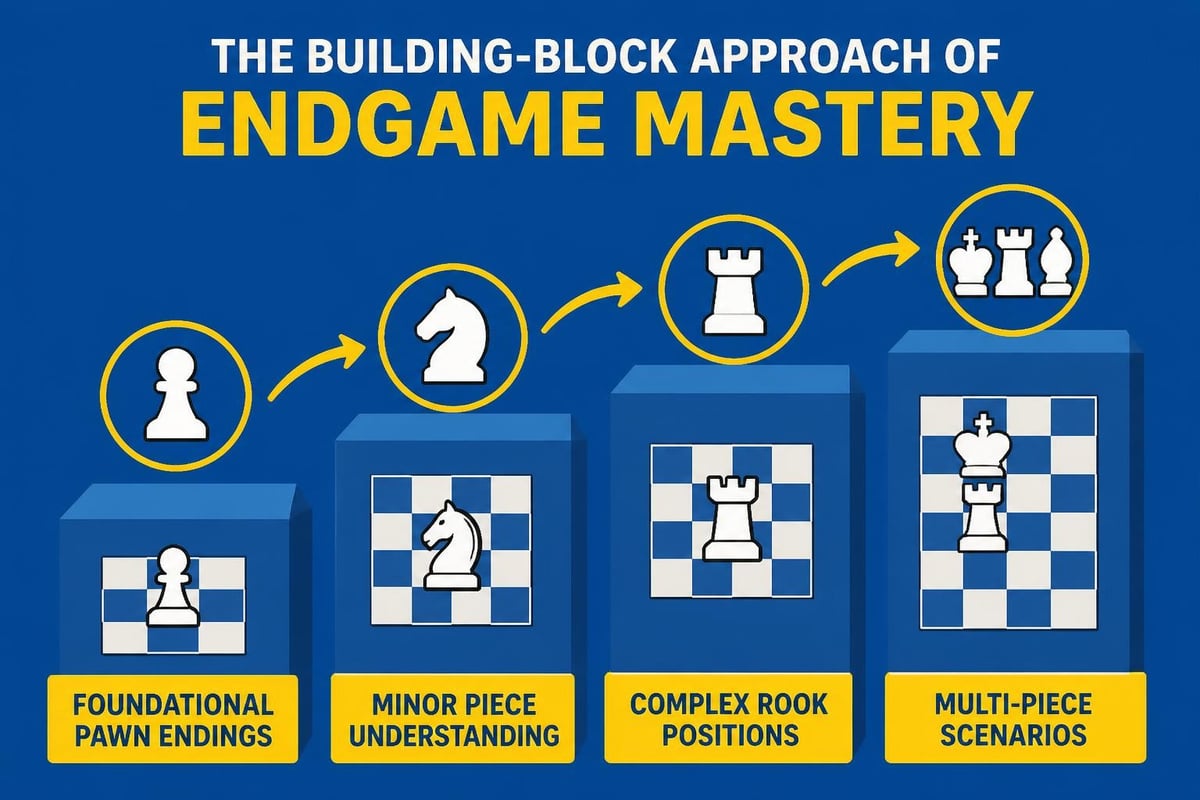
Unlike endgame books that jump randomly between positions, dvoretskys endgame manual follows a methodical progression:
- Pawn endings form the foundation, teaching you essential opposition, breakthrough, and king activity concepts
- Minor piece endings explore the nuances of knight versus bishop battles and same-piece scenarios
- Rook endings dive deep into the most common practical endgames you'll face
- Queen endings reveal the complexities of the most challenging endgame type
- Multi-piece positions combine everything into realistic scenarios
This isn't just theory for theory's sake. Each chapter builds on previous concepts, creating a scaffolding of understanding that supports increasingly complex positions.
Who Should Study This Endgame Manual
Let's be honest with each other: dvoretskys endgame manual isn't for everyone. If you're just learning how pieces move or struggling with basic chess opening principles, this book will overwhelm you.
The manual targets players rated approximately 1800 and above, though ambitious intermediate players can certainly benefit from working through it methodically. According to detailed reviews from Attacking Chess, the 6th edition has made some content more accessible whilst maintaining its rigorous standards.
Your Current Level Matters
Here's a practical framework to determine if you're ready:
| Your Rating | Recommended Approach | Expected Benefit |
|---|---|---|
| Under 1600 | Wait and build fundamentals | Minimal (too advanced) |
| 1600-1900 | Study selectively, focus on basic chapters | Moderate to High |
| 2000-2200 | Core study material | Very High |
| 2200+ | Essential reference and training tool | Critical |
Think about your recent games. Are you losing drawn endgames? Missing winning chances in simplified positions? These are signs you're ready for serious endgame work.
Breaking Down the Content
When you first crack open dvoretskys endgame manual, the sheer volume can feel intimidating. The 6th edition spans over 400 pages of dense material. But here's the thing: you don't need to memorise everything. You need to understand the principles.
The Pawn Ending Foundation
Dvoretsky starts with pawn endings because they're the building blocks of all endgame understanding. You'll encounter positions that seem simple but hide remarkable depth. The concept of corresponding squares, triangulation, and the theory of pawn breakthroughs all receive thorough treatment.
What I appreciate most is how the manual doesn't just show you the right moves. It explains the thinking process behind them. Why does the king need to occupy this square rather than that one? What's the critical tempo that changes everything?
Minor Piece Mastery
The chapters on bishops and knights reveal a world of subtlety. You'll learn when a bishop pair dominates, how knight placement can restrict enemy pieces, and the surprising number of theoretical positions every strong player should know.
One particularly valuable section covers bishop versus knight endings. These positions occur frequently in practical play, yet many players handle them purely on intuition. Dvoretsky provides the framework for systematic evaluation.
The Evolution Through Editions
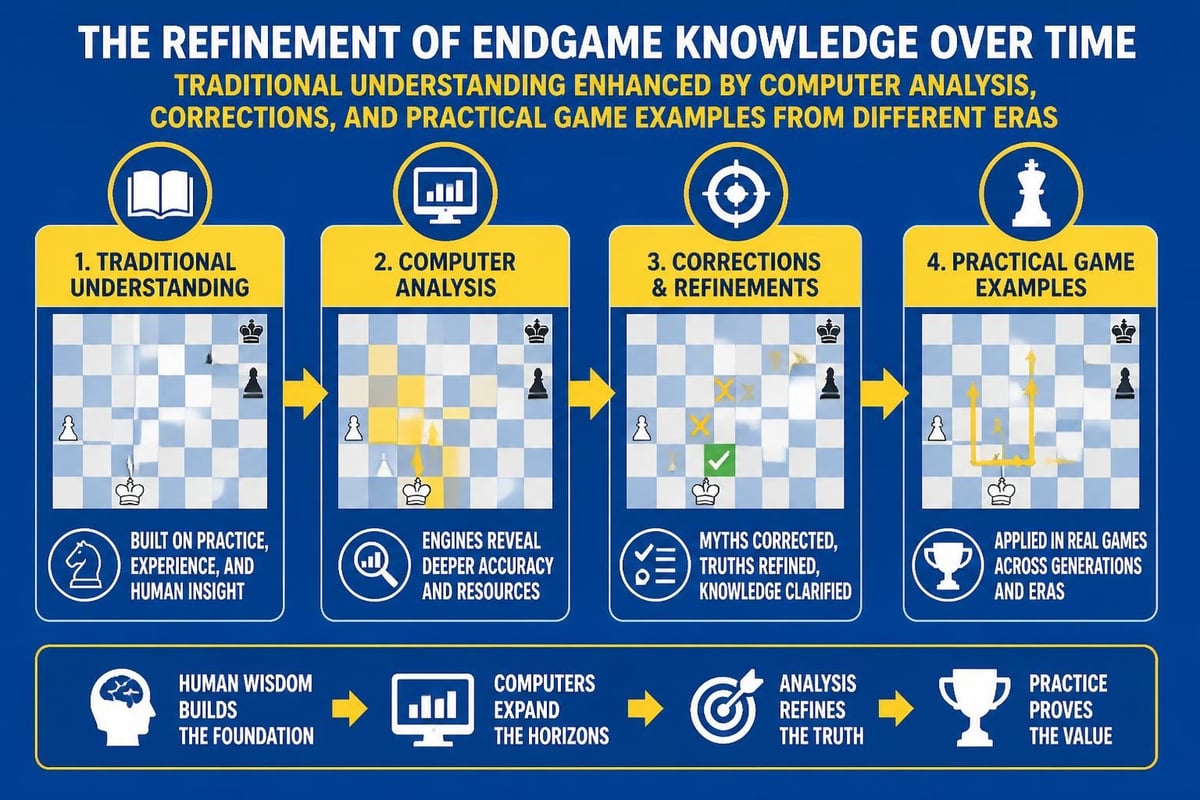
Dvoretskys endgame manual has gone through several iterations since its first publication. Each edition has refined and expanded the material based on new computer analysis and practical discoveries.
The 6th edition review on ChessReads notes significant improvements, including corrected analysis and newly added positions. This commitment to accuracy matters when you're investing serious study time.
What's New in Recent Editions
- Corrections based on modern tablebase analysis
- Additional practical examples from contemporary games
- Expanded exercise sections for self-testing
- Refined explanations of complex concepts
Computer analysis has changed endgame theory substantially since the book's first edition. Dvoretsky and his collaborators have incorporated these findings whilst maintaining the book's pedagogical approach.
How to Actually Study This Book
Here's where many players go wrong: they try to read dvoretskys endgame manual like a novel, from front to back in linear fashion. That's a recipe for frustration and burnout.
A Practical Study Plan
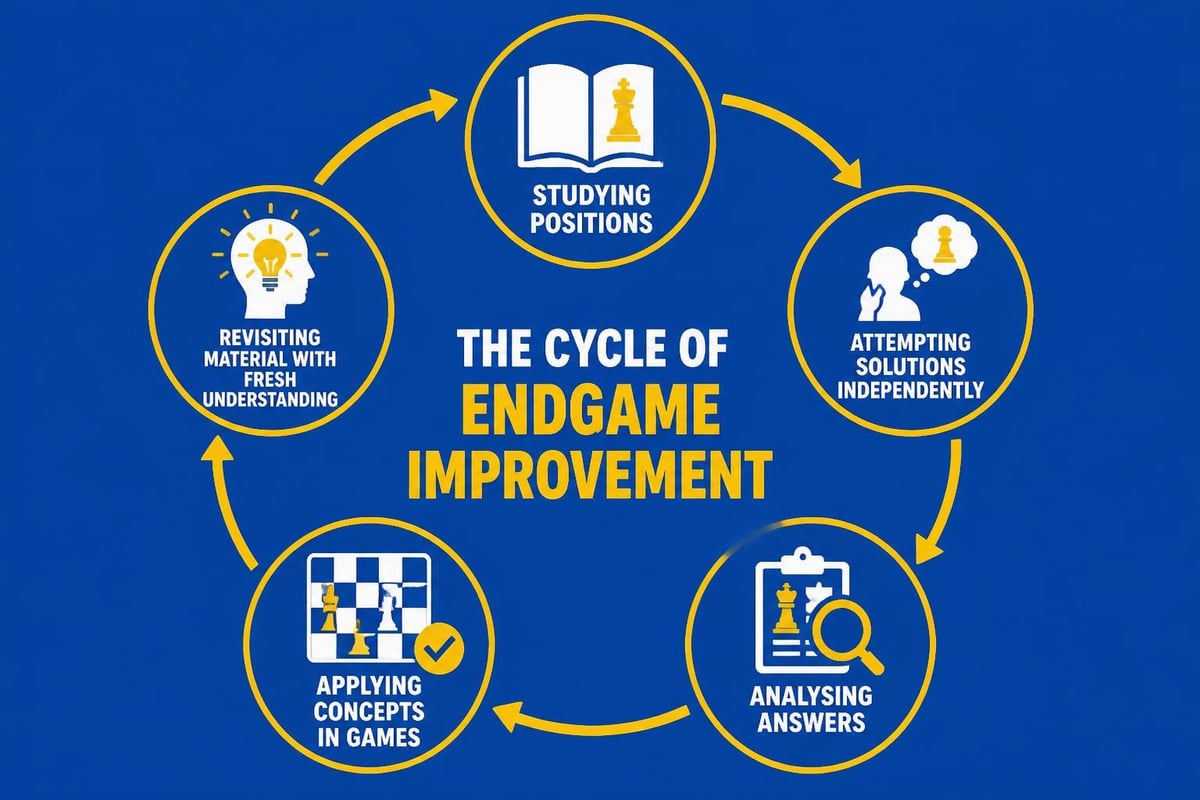
Instead, consider this approach that's worked for countless improving players:
- Start with the chapter summaries to understand the key themes
- Work through positions slowly with a physical board or quality software
- Focus on understanding over memorisation of specific variations
- Revisit difficult positions multiple times over weeks or months
- Test yourself with the exercises before checking solutions
The exercises deserve special mention. They're not simple "find the win" puzzles. Many require deep calculation and positional judgment. Don't feel discouraged if you struggle initially.
Time Investment Reality
Be realistic about the commitment required. Each chapter might take weeks of study to properly digest. The entire book could easily represent a year or more of focused work. That's not a weakness of the manual. It's a reflection of how deep endgame mastery actually goes.
Think of it as similar to learning complex opening systems where understanding principles matters more than memorising moves. Just as you wouldn't expect to master the Sicilian Defense overnight, endgames require patience and persistence.

Complementing Your Opening and Middlegame Study
You might wonder how endgame study fits into a balanced chess improvement programme. After all, you need to survive the opening and middlegame before reaching an endgame, right?
Here's the counterintuitive truth: studying endgames actually improves your entire game. When you understand what types of endgames favour your position, you make better decisions throughout the game. You'll recognise which pieces to trade, which pawn structures to aim for, and which simplified positions offer winning chances.
Integration with Other Study
| Study Area | Connection to Endgames | Practical Impact |
|---|---|---|
| Openings | Understanding resulting pawn structures | Better strategic choices |
| Tactics | Recognising forcing sequences | Sharper calculation in transitions |
| Strategy | Long-term planning for favourable endgames | Improved positional play |
| Puzzles | Pattern recognition in simplified positions | Faster accurate play |
While you're working through dvoretskys endgame manual, maintain your other chess activities. Solve tactical puzzles regularly and keep your opening repertoire fresh. The synergy between different aspects of chess study amplifies your overall improvement.
Common Challenges and Solutions
Let's address the elephant in the room: dvoretskys endgame manual has a reputation for being difficult. The reader reviews on Goodreads reflect this, with many praising its depth whilst acknowledging the challenging nature.
Overcoming Study Obstacles
Challenge: The positions seem too complex to understand. Solution: Break them down into smaller components. What's the key feature? The active king? The passed pawn? The piece coordination? Identify one critical element and build from there.
Challenge: You forget positions you studied weeks ago. Solution: This is normal and expected. Use spaced repetition. Revisit chapters after intervals of increasing length. The second and third passes will solidify understanding.
Challenge: The analysis goes too deep for your current level. Solution: Start with understanding the main ideas rather than every variation. You can always return for deeper study later.
Remember, even grandmasters don't memorise every position in this manual. They absorb the principles and pattern recognition that come from studying the examples.
The Practical Value for Your Games
Theory is useless unless it translates to the board. How does studying dvoretskys endgame manual actually improve your results?
Consider this: in a recent analysis of games between 1800-2200 rated players, researchers found that approximately 40% of decisive games reached a clearly defined endgame phase. Of those, roughly 60% featured technical errors that changed the result. These aren't blunders like hanging pieces. They're subtle mistakes in technique, timing, and understanding.
Real Results from Endgame Study
Players who systematically study endgames report several concrete benefits:
- Increased confidence when entering simplified positions
- Better time management in endgames due to pattern recognition
- More wins from equal or slightly better endgames
- Fewer losses from holdable or drawable positions
- Improved calculation skills that carry over to all game phases
You'll start recognising when a rook endgame is winning, when you need to avoid pawn trades, and when king activity trumps material considerations. These insights don't come from casual study. They emerge from working through the systematic approach that dvoretskys endgame manual provides.
Alternatives and Comparisons
Fairness demands acknowledging that other excellent endgame resources exist. Silman's Complete Endgame Course takes a rating-based approach. Müller and Lamprecht's Fundamental Chess Endings offers encyclopedic coverage. So why choose Dvoretsky?
The Unique Dvoretsky Advantage
The manual excels in its training methodology. Dvoretsky was primarily a coach, not just a theoretician. He understood how players learn and structured the material accordingly. The detailed exploration of Dvoretsky's career reveals his teaching philosophy permeates every page.
While Fundamental Chess Endings serves better as an encyclopedia for looking up specific positions, dvoretskys endgame manual functions as a structured course. Silman's book works wonderfully for lower-rated players, but once you've mastered its content, Dvoretsky represents the natural progression.
You might use multiple resources simultaneously. Reference encyclopedias for specific positions whilst working through Dvoretsky's systematic training. There's no rule saying you must choose only one endgame book.
Digital vs Physical Edition Considerations
In 2026, you've got choices about how to consume this content. The physical book remains popular, but digital editions offer distinct advantages.
Format Comparison
- Physical book: Better for deep study sessions, easier to set up positions on a board alongside
- Digital edition: Searchable text, portable for travel, often includes interactive features
- Audio options: Limited value for chess positions that require visualisation
Many serious students own both formats. They use the physical book for primary study at home and the digital version for review sessions whilst travelling. Whatever format you choose, having a chess board or quality chess software for working through positions is non-negotiable.
Making It Work for Intermediate Players
Earlier I mentioned the book targets 1800+ players. But what if you're rated 1500 and motivated to improve? Can you still benefit from dvoretskys endgame manual?
The answer is yes, with the right approach. Focus on the foundational chapters. Skip the incredibly complex theoretical positions that only appear once in a lifetime. Extract the principles without trying to memorise every variation.
Adapted Study Approach for Developing Players
Start with basic pawn endings. Master the concept of opposition, critical squares, and simple king and pawn versus king positions. These patterns appear constantly in practical games and form the bedrock of endgame understanding.
Move to the most common rook endgame positions. Philidor position, Lucena position, and back-rank defence techniques will serve you well. Skip the seven-piece tablebase positions for now.
Just as understanding fundamental opening principles matters more than memorising 20 moves of theory when you're developing, endgame principles trump exhaustive analysis at the intermediate level.
The Role of Computer Analysis
Modern chess players have an unprecedented tool: perfect play from tablebases in positions with seven pieces or fewer. How does this affect studying dvoretskys endgame manual?
The book incorporates tablebase corrections where earlier analysis proved inaccurate. However, Dvoretsky wisely focuses on positions and principles that help practical play rather than tablebase curiosities that rarely occur.
You can use engines to verify analysis as you study, but don't let perfect computer evaluations replace understanding. A position might be "drawn according to the tablebase" whilst remaining practically difficult for humans to hold. Dvoretsky teaches you to play chess, not to memorise computer lines.
Beyond the Manual: Continued Learning
Once you've worked through dvoretskys endgame manual, what's next? Endgame study never truly ends, but you'll have built a formidable foundation.
Consider these next steps:
- Analyse your own endgames from recent games using principles learned
- Study grandmaster endgames in your favourite openings to see how theory applies
- Teach endgame concepts to others, which deepens your understanding
- Revisit the manual periodically as your playing strength increases
Your understanding of positions you first studied at 1900 will deepen significantly when you review them at 2100. The layers of complexity reveal themselves gradually.
Investment in Your Chess Future
Purchasing and studying dvoretskys endgame manual represents a significant investment of both money and time. The book isn't cheap, and working through it properly requires hundreds of hours.
Is it worth it? For players serious about improvement, absolutely. Think about the cost per hour of quality instruction. A single coaching session might cost £50-100 for an hour with a strong player. This manual represents potentially years of guidance from one of history's greatest coaches.
The knowledge compounds over time. Unlike opening theory that changes with new discoveries, endgame principles remain constant. What you learn now will serve you throughout your chess career.
Mastering chess endgames transforms your entire approach to the game, giving you the confidence to navigate simplified positions and convert advantages into victories. While dvoretskys endgame manual provides the deep theoretical foundation serious players need, not every improvement journey requires such intensive study. If you're looking to strengthen your overall game with practical, accessible resources, Chess Cheat Sheets offers streamlined guides, puzzles, and learning materials designed specifically for beginners and intermediate players who want to improve efficiently without getting lost in overwhelming detail.


