

If you've spent any time exploring ways to improve your chess game, you've probably encountered the term "DGT chess" somewhere along your journey. Whether you're browsing through chess resources or watching tournament streams, DGT products have become an integral part of modern chess training and competition. But what exactly is DGT chess, and more importantly, how can it help you become a stronger player? Let's explore the world of Digital Game Technology and discover how these innovative tools can transform your chess experience from casual play to serious improvement.
What Is DGT Chess and Why Should You Care?
Digital Game Technology (DGT) has been revolutionising the chess world since its inception. At its core, dgt chess refers to a suite of electronic chess equipment designed to bridge the gap between traditional over-the-board play and digital analysis. Think of it as having the best of both worlds: the tactile satisfaction of moving physical pieces combined with the analytical power of chess engines and databases.
The company behind these innovations has created everything from tournament-standard clocks to sophisticated electronic boards that automatically record your moves. For players serious about improvement, understanding how to leverage DGT technology can accelerate your learning curve significantly.
The Core DGT Product Range
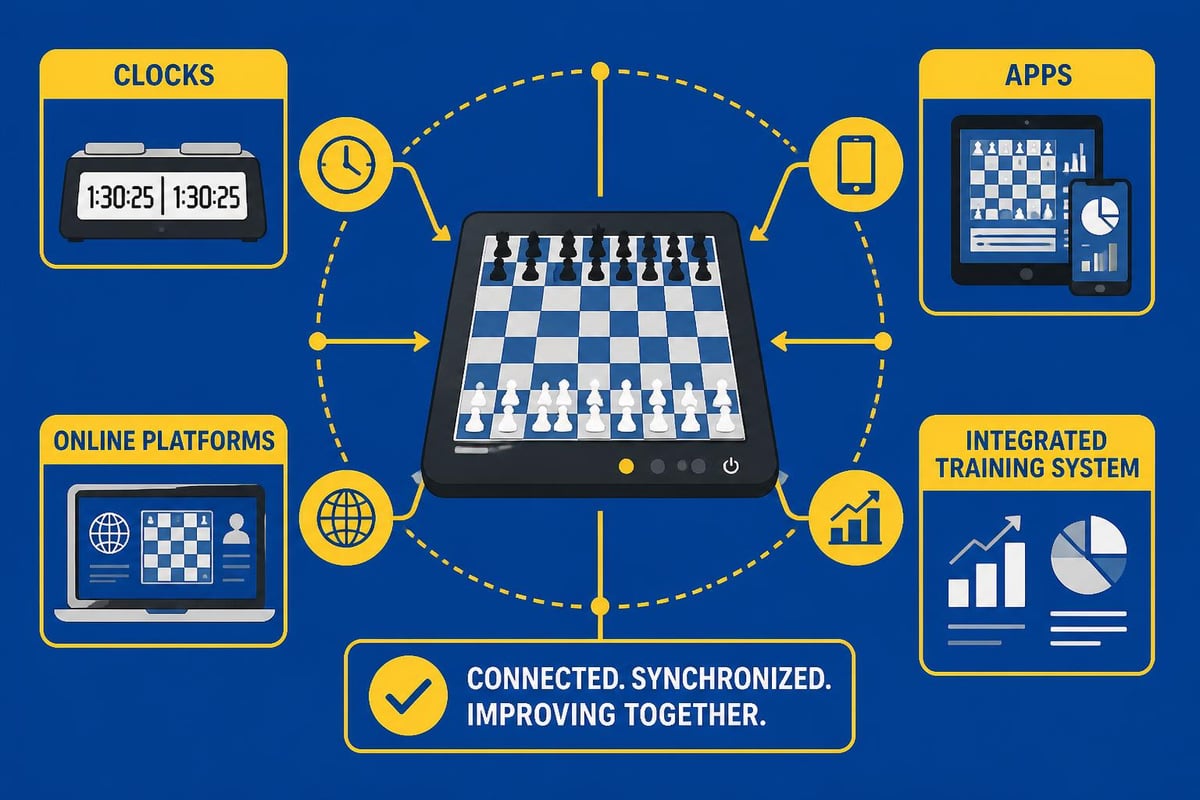
When we talk about dgt chess equipment, we're typically referring to three main categories:
- Electronic chess boards that detect and transmit moves automatically
- Digital chess clocks approved for official tournament play
- Software and apps that connect your physical board to online platforms
Each of these serves a distinct purpose in your chess development journey. The boards allow you to play physical games whilst simultaneously recording every move for later analysis. The clocks help you develop proper time management skills. The software bridges your real-world practice with powerful analytical tools.
How DGT Electronic Boards Enhance Your Training
The flagship product in the dgt chess lineup is undoubtedly the electronic board. These aren't just fancy gadgets; they're serious training tools used in major chess tournaments worldwide since 1998. But how exactly do they work, and what makes them valuable for improving players?
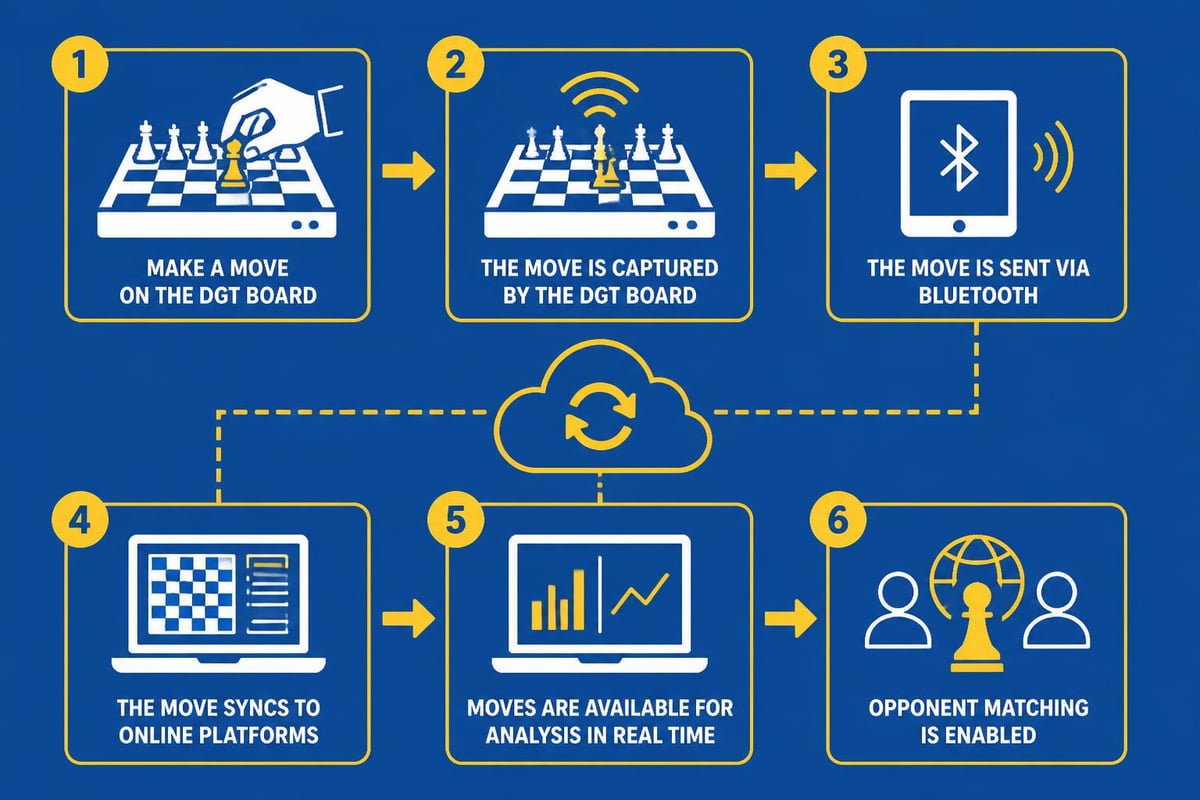
Each square on a DGT board contains sensors that detect which piece sits on it. When you make a move, the board recognises what happened and can transmit that information to a computer or mobile device. This seemingly simple feature unlocks tremendous training potential.
Training Benefits You Can't Ignore
Imagine playing through your favourite opening, perhaps the London System, on a physical board whilst the system automatically records every move. Later, you can review exactly where you deviated from theory or spot tactical opportunities you missed during the game.
Here's what makes DGT boards particularly valuable for intermediate players:
- Automatic game recording eliminates the tedious task of manual notation
- Integration with analysis engines lets you spot mistakes immediately
- Online play on a real board maintains the tactile experience you love
- Database building creates a personal library of your games
The psychological aspect matters too. When you know every move is being recorded, you tend to think more carefully. This heightened awareness translates into better decision-making habits, even when you're not using the board.

DGT Chess Clocks: More Than Just Timekeeping
Whilst electronic boards grab the spotlight, DGT's chess clocks deserve equal attention. The DGT 2010 digital chess clock holds the distinction of being the official FIDE-approved clock, but it's not just for tournament directors.
Time management is one of the most underrated skills in chess improvement. You might know all the theory behind common chess openings, but if you can't execute your plans within time constraints, that knowledge becomes less valuable.
Features That Matter for Improving Players
| Feature | Training Benefit | Practical Application |
|---|---|---|
| Multiple time controls | Practice different formats | Prepare for tournaments or online play |
| Move counter | Track game length | Identify time-wasting moments |
| Delay and increment modes | Learn modern time formats | Adapt to various tournament standards |
| Pause function | Review critical positions | Analyse without time pressure |
The beauty of training with a proper chess clock is that it forces you to balance depth of calculation with practical time constraints. Many players spend hours studying openings but crumble under time pressure because they've never practised with a clock.
When you're working through opening puzzles or studying specific variations, setting realistic time controls helps simulate actual game conditions. This practical approach to study yields better results than untimed analysis alone.
Connecting Physical and Digital: The DGT Chess App
One of the most exciting developments in dgt chess technology is the DGT Chess app, which connects DGT boards to the Lichess platform. This integration represents the future of chess training: seamless movement between physical and digital realms.
The app allows you to play online opponents using your physical DGT board. You make moves on the real board, and they appear instantly on Lichess. Your opponent's moves automatically appear on your board. It sounds like science fiction, but it's remarkably straightforward in practice.
Why This Matters for Your Improvement
Playing online chess has become the norm for most players, but many of us prefer the feel of real pieces. The disconnect between online play and physical boards has always been a compromise. DGT chess technology eliminates that compromise entirely.
You can now:
- Play against opponents worldwide whilst using a real board
- Practice against AI with physical pieces
- Save game records automatically for later review
- Maintain your online rating whilst enjoying tactile play
This hybrid approach particularly benefits players who struggle with screen fatigue or find it harder to visualise positions on a computer screen. By combining the social aspects of online chess with the physicality of real pieces, you create an ideal training environment.
DGT Products for Different Skill Levels
Not all dgt chess products suit every player at every stage. Let's break down which tools make sense for different skill levels and training goals.
For Beginners Building Foundations
If you're just learning to play chess competently, you might question whether DGT equipment is worth the investment. The honest answer is that beginners benefit more from focused study of fundamentals than from high-tech equipment.
However, if you're committed to rapid improvement, a DGT clock makes sense even at the beginner level. Learning time management from the start prevents bad habits from forming. Start with a basic model and focus on using it consistently rather than investing in the full electronic board setup.
For Intermediate Players Seeking Consistency
This is where dgt chess technology truly shines. Intermediate players have learned the basics but need systematic practice to reach the next level. A DGT electronic board combined with analysis software creates a powerful feedback loop.
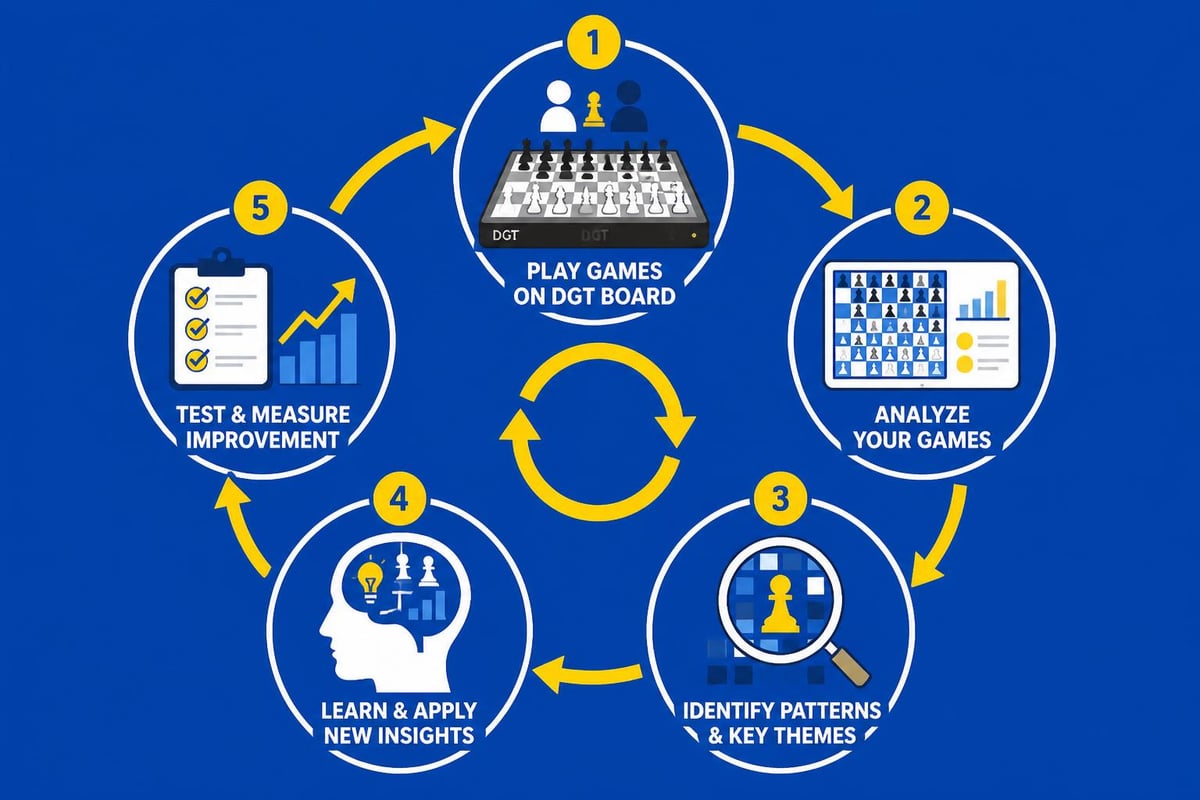
Consider this training approach:
- Play games on your DGT board against online opponents
- Review each game immediately using engine analysis
- Identify recurring mistakes in your opening repertoire
- Practice those specific positions using opening puzzles
- Play more games to test improvements
This cycle of play, analyse, practice, and test is exactly how stronger players improve. The DGT board makes this process seamless by eliminating manual data entry and creating comprehensive game records.
For Advanced Players and Tournament Preparation
Serious tournament players already understand the value of dgt chess equipment. The DGT Tournament e-Board used in professional events becomes a training partner that simulates actual tournament conditions.
Advanced players can use DGT setups to:
- Practice time management in critical positions
- Build opening repertoires with automatic recording
- Analyse adjourned positions without disturbing the board
- Stream their games for coaching feedback
The psychological preparation aspect shouldn't be underestimated either. Training with the same equipment you'll encounter in tournaments reduces variables and builds confidence.
Maximising Your DGT Investment: Practical Tips
Owning dgt chess equipment is one thing; using it effectively is another. Here are practical strategies to extract maximum value from your investment.
Setting Up Your Training Station
Create a dedicated space for your DGT board that's always ready for training sessions. This removes friction from your practice routine. When you have a spare 30 minutes, you can immediately start a training game rather than spending time on setup.
Essential setup components:
- Good lighting to reduce eye strain during long sessions
- Stable surface to prevent accidental piece displacement
- Nearby computer or tablet for analysis software
- Notebook for recording insights and patterns you notice
Integration with Your Study Routine
DGT technology works best when integrated with a comprehensive study plan. If you're working through specific openings like what Magnus Carlsen uses, set up the critical positions on your DGT board and play them against the computer or online opponents.
The key is active practice, not passive consumption. Reading about the Queen's Gambit helps, but playing it repeatedly on your DGT board while analysing the results creates deeper understanding.
Common Challenges and How to Overcome Them
Let's address the practical issues you might encounter with dgt chess technology and how to solve them.
Technical Setup Issues
Modern DGT boards are reliable, but technology occasionally presents challenges. The official DGT website provides extensive support documentation, but here are the most common issues:
Connection problems usually stem from outdated software or driver issues. Always ensure you're running the latest firmware updates. The company has shown commitment to improving their software based on user feedback.
Piece recognition errors typically occur when pieces aren't placed precisely on square centres. Following proper usage guidelines ensures accurate game recording. Take a moment to position pieces carefully, especially during critical positions.
Cost Considerations
DGT equipment represents a significant investment. A full electronic board setup can cost several hundred pounds, which makes some players hesitate. Consider whether the investment aligns with your improvement goals.
| Budget Level | Recommended DGT Products | Alternative Approach |
|---|---|---|
| Limited (£0-100) | DGT 2010 clock only | Use free online tools for analysis |
| Moderate (£100-300) | Clock + basic e-Board | Balance physical and digital training |
| Serious (£300+) | Full tournament setup | Professional-level training system |
Remember that quality equipment lasts years. A DGT clock purchased today will still function perfectly a decade from now, making the per-use cost quite reasonable for dedicated players.
Integrating DGT with Online Learning Resources
The real power of dgt chess technology emerges when you combine it with quality learning materials. Your physical DGT board becomes the testing ground for concepts learned through other resources.
Building a Comprehensive Training System
Think of your chess improvement as having three components: knowledge acquisition, practical application, and analytical review. Your DGT setup handles the second and third parts brilliantly.
For knowledge acquisition, resources like opening toolkits provide the theoretical foundation. You study the concepts, then immediately practice them on your DGT board. The board records your games, and you analyse where your understanding broke down.
This closed-loop system accelerates improvement because you're constantly testing knowledge in practical situations. Theoretical understanding without practical application remains abstract. Practical play without analytical review misses learning opportunities. DGT technology bridges these gaps.
Creating a Personal Game Database
One overlooked benefit of dgt chess boards is the automatic creation of a personal game database. Over months and years, you accumulate hundreds or thousands of games that reveal patterns in your play.
You might discover that you consistently struggle in certain pawn structures, or that you excel in tactical complications but flounder in quiet positional games. These insights guide your study priorities far more effectively than generic advice.
Advanced players can even analyse their games by opening, creating statistics on which variations yield the best results. If you're torn between the Italian Game and the Vienna Game, your personal database reveals which suits your style better.
The Future of DGT Chess Technology
As we move through 2026, dgt chess technology continues evolving. The integration between physical boards and online platforms grows more sophisticated, offering features that would have seemed impossible just a few years ago.
Artificial intelligence integration represents the next frontier. Imagine a DGT board that doesn't just record moves but offers real-time coaching suggestions based on your playing patterns. The technology exists; implementation is simply a matter of time.
For now, focus on maximising current DGT capabilities. The tools available today already exceed what most players fully utilise. Master the fundamentals before worrying about future innovations.
Making the Decision: Is DGT Chess Right for You?
Ultimately, whether to invest in dgt chess equipment depends on your commitment level and learning preferences. Ask yourself these questions:
- Do I prefer physical pieces over screen-based play?
- Am I willing to analyse my games regularly?
- Do I have space for a dedicated training setup?
- Can I commit to using the equipment consistently?
- Does my budget support the initial investment?
If you answered yes to most of these questions, DGT technology will likely accelerate your improvement. If you're content with purely digital training or play casually without systematic study, the investment might not provide proportional value.
The key insight is that DGT products are tools, not magic solutions. They enhance effective training but can't replace the fundamental work of studying positions, solving puzzles, and playing games. Combined with structured learning resources and consistent practice, however, they create a training environment that's hard to match.
Getting Started with DGT
If you've decided to incorporate dgt chess technology into your training, start small. A quality clock is the most accessible entry point and immediately improves your time management skills. As you develop consistent training habits, consider upgrading to an electronic board.
Research which specific models suit your needs. The DGT 2010 clock remains the gold standard for time controls, whilst various board models cater to different budgets and feature requirements.
Whatever you choose, commit to using it regularly. The best chess equipment is the equipment you actually use, not the fanciest model sitting unused in a cupboard.
DGT chess technology represents a powerful bridge between traditional over-the-board play and modern digital analysis, offering serious players tools to accelerate their improvement through systematic practice and review. When you're ready to complement your physical training with structured learning materials, Chess Cheat Sheets provides comprehensive opening guides, puzzle collections, and endgame resources designed specifically for players looking to improve efficiently. Whether you're building your opening repertoire or sharpening tactical skills, combining quality study materials with effective practice tools creates the ideal environment for chess improvement.


