

Have you ever wished for a chess opponent that perfectly matches your skill level? Not too easy, not frustratingly difficult, but just right for helping you improve? The DGT Centaur represents a breakthrough in chess training technology, offering an adaptive playing experience that grows with you. Unlike traditional chess computers that simply crush beginners or bore advanced players, this innovative device uses artificial intelligence to assess your strength and adjust its play accordingly. Whether you're just learning the basics or working to refine your middlegame tactics, the DGT Centaur provides a unique training partner that's always available.
What Makes the DGT Centaur Different from Traditional Chess Computers
The chess computer market has evolved dramatically over the past few decades, but most devices still follow the same pattern: you select a difficulty level, and the computer plays at that strength. Simple enough, right?
Not quite. The problem is that your skill level isn't static. You might play brilliantly one day and make elementary mistakes the next. You might be strong in openings but struggle in endgames. Traditional chess computers can't account for these variations.
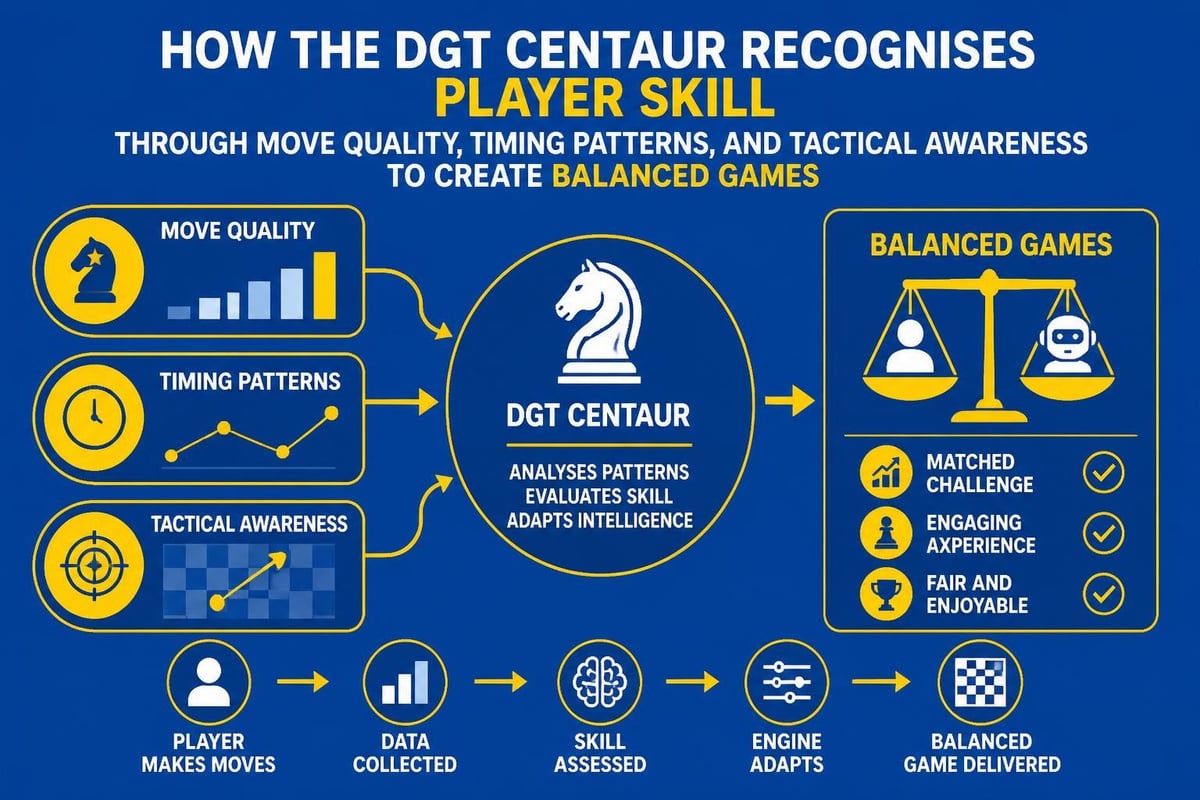
The DGT Centaur takes a completely different approach. Instead of forcing you to manually select difficulty levels, it observes how you play and automatically adjusts its strength to match yours. This adaptive AI technology creates a more natural, engaging experience that feels like playing against a human opponent who's evenly matched.
The Adaptive Playing Strength Technology
Here's how the adaptive system works in practice:
- Initial Assessment: The Centaur observes your first few moves to gauge your understanding of chess fundamentals
- Real-Time Adjustment: As the game progresses, it notices patterns in your play-tactical awareness, positional understanding, time management
- Dynamic Difficulty: The computer strengthens or weakens its play seamlessly within the same game
- Learning Curve Support: It challenges you enough to improve without creating frustration
This technology is particularly valuable for players who are actively working to improve their game. When you're studying chess openings or practising new tactical patterns, you need an opponent that tests your understanding without overwhelming you.
Physical Design and User Experience
Let's talk about what sets the DGT Centaur apart from other electronic chess boards. The moment you unbox it, you notice the quality craftsmanship. The wooden board feels substantial, and the pieces move smoothly across the sensor-equipped squares.
Build Quality and Components
The Centaur combines traditional aesthetics with modern technology in a way that respects the game's heritage. You're not staring at a screen or pushing buttons on a plastic console. Instead, you're moving real wooden pieces on a beautiful board.
| Feature | Specification | Benefit |
|---|---|---|
| Board Size | Tournament standard | Authentic playing experience |
| Piece Recognition | Individual sensors per square | Accurate move detection |
| LED Indicators | Multi-colour lights around board | Clear move suggestions and feedback |
| Battery Life | Up to 6 hours | Portable for club meetings or travel |
| Charging | USB rechargeable | No batteries to replace |
The sensor board technology works flawlessly. Each square detects when a piece is placed or removed, allowing for natural gameplay without the need to input moves manually. This might seem like a small detail, but it makes a huge difference in the playing experience.
The LED Move Indicator System
One of the most helpful features for improving players is the LED system around the board's edge. When the Centaur makes a move, small lights indicate which piece moved from where to where. This serves multiple purposes:
- Clarity: You never miss the computer's move, even if you stepped away briefly
- Learning: You can review the computer's last move before making yours
- Analysis: The visual feedback helps you understand tactical patterns
- Hint System: In coaching mode, the LEDs can suggest moves for you
This feature is brilliant for players working through common chess openings or trying to understand positional concepts. Instead of wondering "What did it just do?", you have immediate visual feedback.
Training Modes and Playing Options
The DGT Centaur offers several distinct playing modes, each designed for different training objectives. Understanding these options helps you maximise the device's educational value.
Adaptive Mode (The Centaur Style)
This is the flagship feature that gives the device its name. In Adaptive Mode, the computer constantly evaluates your play and adjusts accordingly. It's not trying to beat you-it's trying to give you a competitive, educational game.
For beginners working on fundamentals, the Centaur will play relatively simple moves, focusing on basic principles. As you demonstrate understanding, it gradually introduces more complex tactical ideas and positional challenges.
Intermediate players will find that the Centaur pushes them appropriately. If you're studying a particular opening system-say, the Sicilian Defense or the London System-the adaptive mode allows you to test your knowledge in realistic game situations.
Fixed Playing Levels
Sometimes you want consistency rather than adaptation. The Centaur includes several fixed playing levels ranging from absolute beginner to strong club player. These levels are useful when:
- You want to measure improvement by consistently beating a certain level
- You're practising specific positions or endgames
- You need a known difficulty for structured training sessions
- You're preparing for a tournament against players at a particular strength
Coaching and Hint Features
Here's where the Centaur shines for self-directed learners. The coaching mode offers move suggestions when you're stuck, helping you understand what strong moves look like in various positions.
Think of it as having a patient instructor sitting beside you. When you're faced with a complex position, you can request a hint. The LED lights show you candidate moves to consider, but the choice remains yours. This approach develops your decision-making skills rather than just showing you the "right" answer.
Practical Applications for Skill Development
Let's get specific about how you might integrate the DGT Centaur into your training routine. The device works best when used with clear objectives rather than just casual play.
Opening Preparation and Practice
One of the most effective uses is testing your opening repertoire. After studying an opening system using resources like chess opening guides, you need to practise those lines against resistance.
Here's a practical training method:
- Study an opening variation for 20-30 minutes
- Play several games with the Centaur, focusing on that opening
- Note positions where you struggled or felt uncertain
- Review those critical moments in your opening materials
- Repeat the cycle with the same or new variations
The adaptive nature of the Centaur means it won't punish you harshly for opening mistakes while you're learning, but it will gradually expect better moves as you demonstrate understanding. This is far more effective than playing online, where you might face the same opening trap repeatedly without understanding why it works.
Tactical Pattern Recognition
Tactics are the building blocks of chess improvement, and the Centaur provides an excellent platform for developing tactical vision. Unlike puzzle books or apps, the Centaur presents tactics within actual game contexts.
You'll encounter tactical motifs like pins, forks, skewers, and discovered attacks organically as games unfold. This contextual learning helps you recognise these patterns during your own tournament games. The adaptive difficulty ensures you face tactics that challenge you without being impossibly complex.
Endgame Mastery
Endgames are often neglected by improving players, partly because they're less exciting than tactical fireworks in the middlegame. The DGT Centaur makes endgame practice more engaging through its adaptive system.
When you reach an endgame position, the Centaur adjusts its play based on your demonstrated technique. If you struggle with king and pawn endgames, it will create instructive positions that test your understanding. As you improve, it raises the difficulty, introducing more complex pawn structures or piece configurations.
This graduated approach prevents the frustration of repeatedly losing "simple" endgames while ensuring you're always challenged at your current level.
Comparing DGT Centaur to Other Training Methods
How does the DGT Centaur stack up against other popular training options? Let's look at the practical considerations for different learning approaches.
DGT Centaur vs Online Chess Platforms
| Aspect | DGT Centaur | Online Platforms |
|---|---|---|
| Opponent Strength | Perfectly adapted to your level | Variable, sometimes mismatched |
| Distraction Level | Focused, single-purpose device | Notifications, chat, other temptations |
| Analysis Features | Basic LED feedback | Extensive computer analysis available |
| Social Element | Solo practice | Community, forums, clubs |
| Physical Benefits | Real board, pieces, spatial awareness | Screen-based, abstract representation |
| Cost | One-time investment | Often subscription-based |
The Centaur excels when you want distraction-free practice with a consistent training partner. Online platforms offer broader features but can become overwhelming or distracting. Many serious players use both: the Centaur for focused study sessions and online platforms for variety and competition.
DGT Centaur vs Chess Coaches
Working with a qualified chess coach provides personalised instruction and strategic guidance that no computer can match. However, coaches are expensive and require scheduling coordination.
The Centaur serves as a training partner between coaching sessions. You can practise the concepts your coach taught you, test new ideas, and develop consistency in your play. Think of it as homework that's actually enjoyable-you're applying lessons in game-like situations rather than just solving isolated problems.
DGT Centaur vs Traditional Chess Computers
Traditional chess computers follow the old model: select a level, play a game, get crushed or win easily. The adaptive capabilities of modern automatic chess boards have changed this paradigm entirely.
The DGT Centaur creates a fundamentally different experience. Instead of feeling like you're fighting a calculating machine, you're engaged in a competitive game with an opponent who makes the session productive. The psychological difference is significant-you're more likely to maintain regular practice when sessions feel rewarding rather than frustrating.
Who Benefits Most from the DGT Centaur
Not every chess player needs a DGT Centaur, but certain groups will find it exceptionally valuable. Let's identify who gets the most benefit from this investment.
Serious Beginners and Intermediate Players
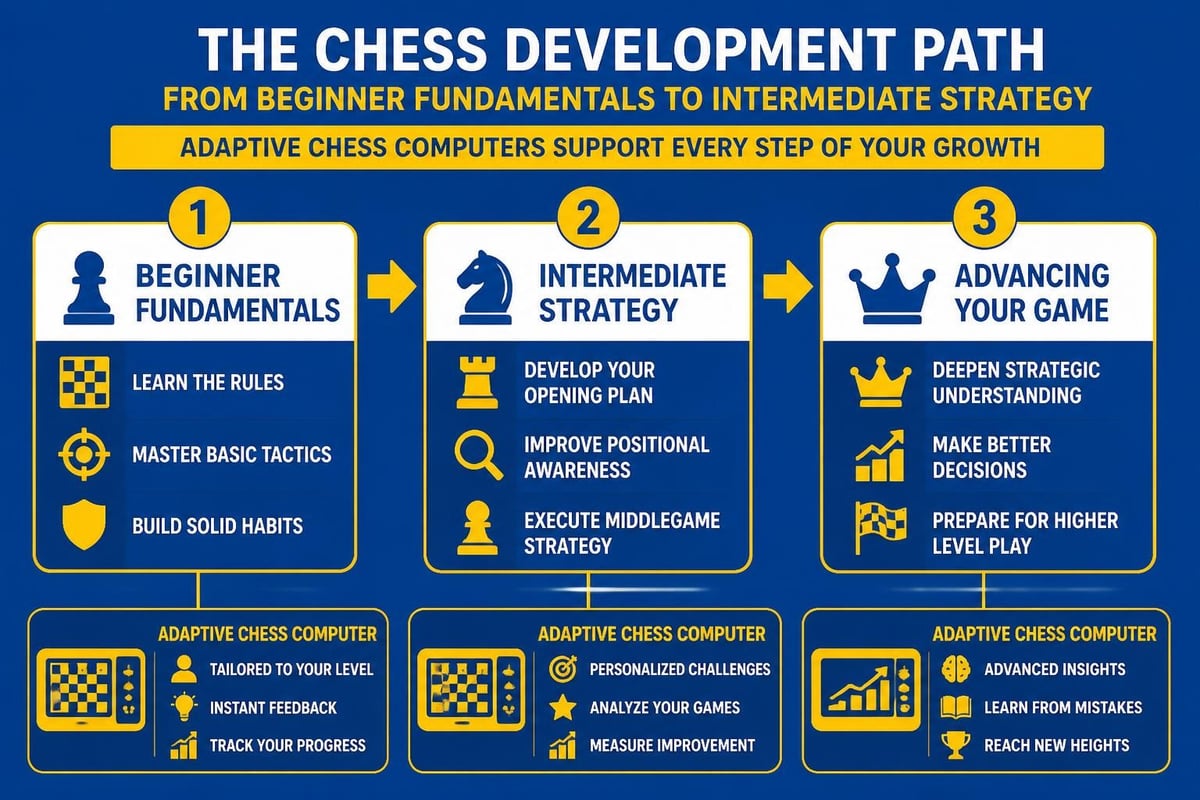
If you're committed to improvement but haven't reached expert level, the Centaur is almost perfectly designed for you. You're past the stage where you just need to learn how the pieces move, but you're not yet at the level where you need ultra-strong analysis engines.
The adaptive system grows with you as you progress from understanding basic tactics to grasping positional concepts. This makes it ideal for players roughly between 800 and 1800 chess ELO rating, though players outside this range will also find value.
Players Without Regular Training Partners
One of the biggest challenges in chess improvement is finding appropriate practice opponents. Your local club might have mostly stronger or weaker players. Online opponents are unpredictable in strength and reliability.
The Centaur solves this problem elegantly. It's always available, always at the right strength, and never cancels at the last minute. For players in areas without strong chess communities, it's an invaluable resource.
Parents Teaching Children Chess
The DGT Centaur excels as a teaching tool for young players. Children benefit from the physical board and pieces, which help develop spatial reasoning and pattern recognition. The adaptive difficulty means they can play productive games independently without constant parental supervision.
Parents who play chess can use the Centaur to ensure their children get appropriately challenging practice between family games. Parents who don't play chess can provide their children with a patient, knowledgeable opponent that adjusts to their developing skills.

Setting Up and Getting Started
When your DGT Centaur arrives, getting started is straightforward, but a few tips will optimise your experience from day one.
Initial Setup Steps
The physical setup takes just minutes:
- Charge the battery fully before first use (about 3 hours)
- Arrange the pieces in starting position
- Power on the device using the switch on the side
- Select your preferred mode using the simple menu system
- Start playing
The absence of complex menus or configuration screens is refreshing. You're playing chess within minutes of unboxing, not navigating settings or installing software.
Optimising Your Practice Sessions
To get maximum benefit from the Centaur, structure your practice intentionally. Here's a suggested weekly routine:
Monday & Wednesday: Opening practice (30-40 minutes)
- Review one opening variation from your repertoire
- Play 2-3 games focusing on that opening
- Note positions where you felt uncertain
Tuesday & Thursday: Tactical training (20-30 minutes)
- Play rapid games focusing on tactical awareness
- Use hint feature sparingly when truly stuck
- Review games mentally after completion
Friday: Endgame practice (30 minutes)
- Play games specifically to reach endgame positions
- Focus on technique and principle application
- Replay interesting endgames for deeper understanding
Weekend: Free play and testing (45-60 minutes)
- Play longer, more serious games
- Test new ideas or experiment with unfamiliar openings
- Enjoy the game without specific learning pressure
This structure ensures variety while maintaining focus on specific skill areas. Adjust timing and frequency based on your schedule and goals.
Maintenance and Care
The Centaur requires minimal maintenance, but a few practices will keep it performing optimally:
- Clean the board surface regularly with a slightly damp cloth
- Keep pieces properly weighted and balanced
- Store in a cool, dry place when not in use
- Charge the battery every few weeks even during periods of non-use
- Update firmware when new versions become available (check manufacturer website)
The build quality is robust, and with reasonable care, the device should provide years of reliable service. The Dutch review of the DGT Centaur emphasises its durability and long-term value as a training investment.
Integration with Broader Chess Study
The DGT Centaur works best as part of a comprehensive improvement program rather than as your sole training method. How does it fit into a balanced approach to chess development?
Complementing Study Materials
When you're working through opening theory, middlegame strategy, or endgame technique, the Centaur provides essential practical application. Reading about the Queen's Gambit or the Ruy Lopez builds theoretical knowledge, but playing those openings against an adaptive opponent builds practical understanding.
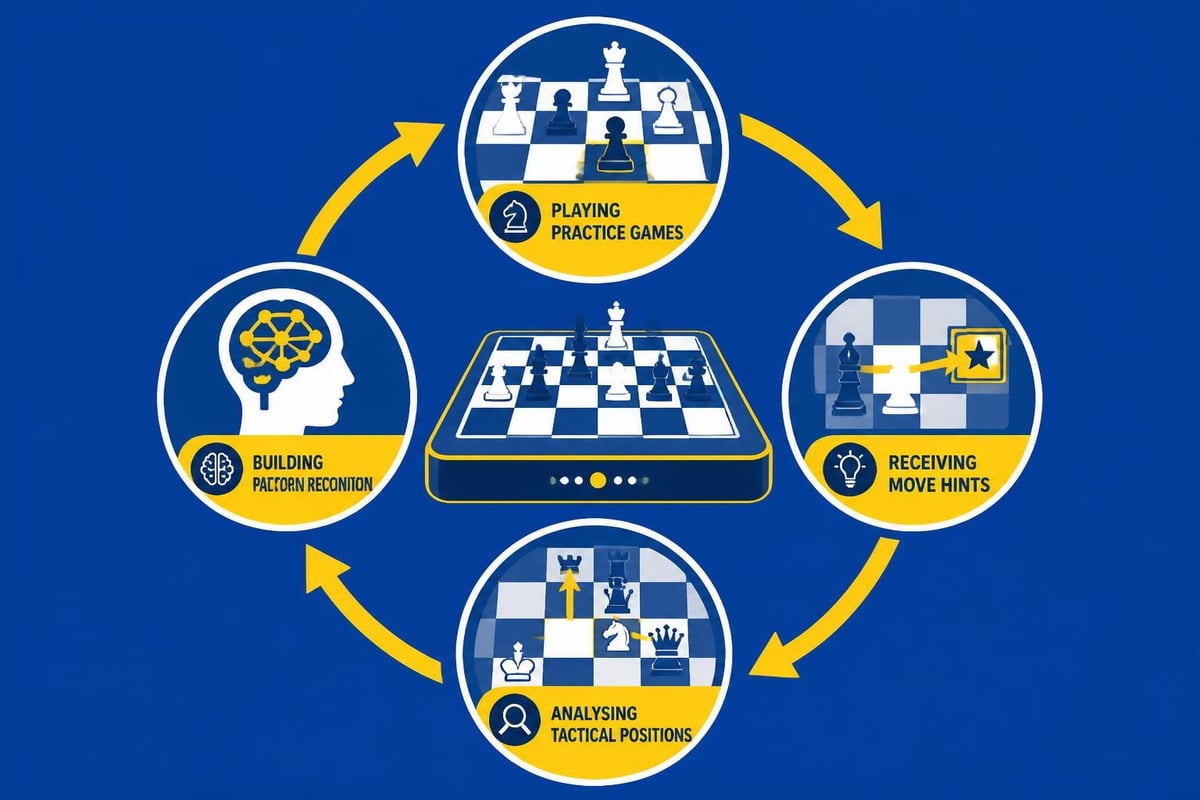
This cycle of study and practice accelerates improvement:
- Study: Learn concepts from books, videos, or courses
- Practice: Apply those concepts in games with the Centaur
- Reflect: Identify gaps in understanding or execution
- Review: Return to study materials with specific questions
- Repeat: Deepen mastery through continued application
Tracking Your Progress
While the Centaur doesn't include sophisticated analytics, you can track improvement informally by noting which adaptive level it settles at during your games. Over weeks and months, you should notice the computer playing increasingly strong moves to remain competitive with you.
Keep a simple training journal:
- Date and duration of practice session
- Opening or theme you focused on
- Positions or moves that challenged you
- Observations about the Centaur's playing strength
- Specific concepts to review before next session
This informal tracking helps you maintain motivation and identifies areas needing additional work.
The Value Proposition in 2026
Is the DGT Centaur worth the investment in 2026? Let's consider the practical economics alongside the training benefits.
The device typically retails for around £300-350, which might seem steep compared to free online resources. However, consider what you're getting:
One-Time Investment Benefits:
- No recurring subscription fees
- No internet connection required
- Physical board improves over-the-board play
- Distraction-free training environment
- Resale value if you eventually upgrade
Training Efficiency:
- Appropriately challenging games save time
- Focused practice produces faster improvement
- Reduced frustration maintains motivation
- Consistent availability enables regular practice
For committed players investing in their improvement, the cost per hour of quality practice becomes quite reasonable over the device's lifespan. Compare this to coaching fees (£30-50+ per hour), tournament entries, or even premium online memberships, and the Centaur offers excellent value.
Alternative Uses Beyond Solo Practice
The versatility of the Centaur extends beyond individual training. You can also use it for:
- Teaching demonstrations: Set up positions to show students or friends
- Game analysis: Replay your tournament games on the board
- Blindfold practice: Play without looking at the board, using LEDs to confirm moves
- Variant games: Some settings allow for different chess variants
- Relaxation: Sometimes you just want a pleasant game without stakes
This flexibility increases the device's value proposition considerably. You're not buying a single-purpose training tool but rather a versatile chess companion.
The DGT Centaur represents a significant step forward in chess training technology, offering adaptive play that meets you at your current level and grows as you improve. Whether you're working on specific openings, developing tactical awareness, or refining endgame technique, having an intelligent training partner makes the journey more effective and enjoyable. While the Centaur provides excellent over-the-board practice, pairing it with quality study materials creates the most powerful improvement strategy. Chess Cheat Sheets offers comprehensive guides, opening systems, and tactical resources that work perfectly alongside your Centaur training sessions, giving you the theoretical foundation to make the most of every practice game.


