

Virtual reality is revolutionising how we experience chess, transforming a centuries-old game into an immersive 3D adventure. Whether you're a beginner learning the basics or an intermediate player looking to sharpen your skills, chess VR platforms offer unique benefits that traditional boards and 2D screens simply can't match. In 2026, the technology has matured to the point where hand tracking, AI opponents, and social features create an experience that feels both futuristic and intimately connected to the game's strategic roots. Let's explore how this technology is reshaping chess education and practice.
Why Chess Players Are Embracing Virtual Reality
The chess world has always been about visualising the board, calculating variations, and understanding spatial relationships between pieces. VR takes these fundamental skills and amplifies them by placing you directly inside the game.
When you put on a VR headset, you're not just moving pieces on a flat surface anymore. You're standing at a three-dimensional board where you can walk around, examine positions from different angles, and physically reach out to grab pieces with your hands. This tactile element creates muscle memory that reinforces learning in ways that clicking a mouse or tapping a screen never could.
The Educational Advantages of Immersive Chess
For chess learners, the spatial awareness that chess VR provides is genuinely transformative. You can literally peer down the board to see if your rook has a clear file, or crouch down to examine a complex pawn structure from a unique perspective.
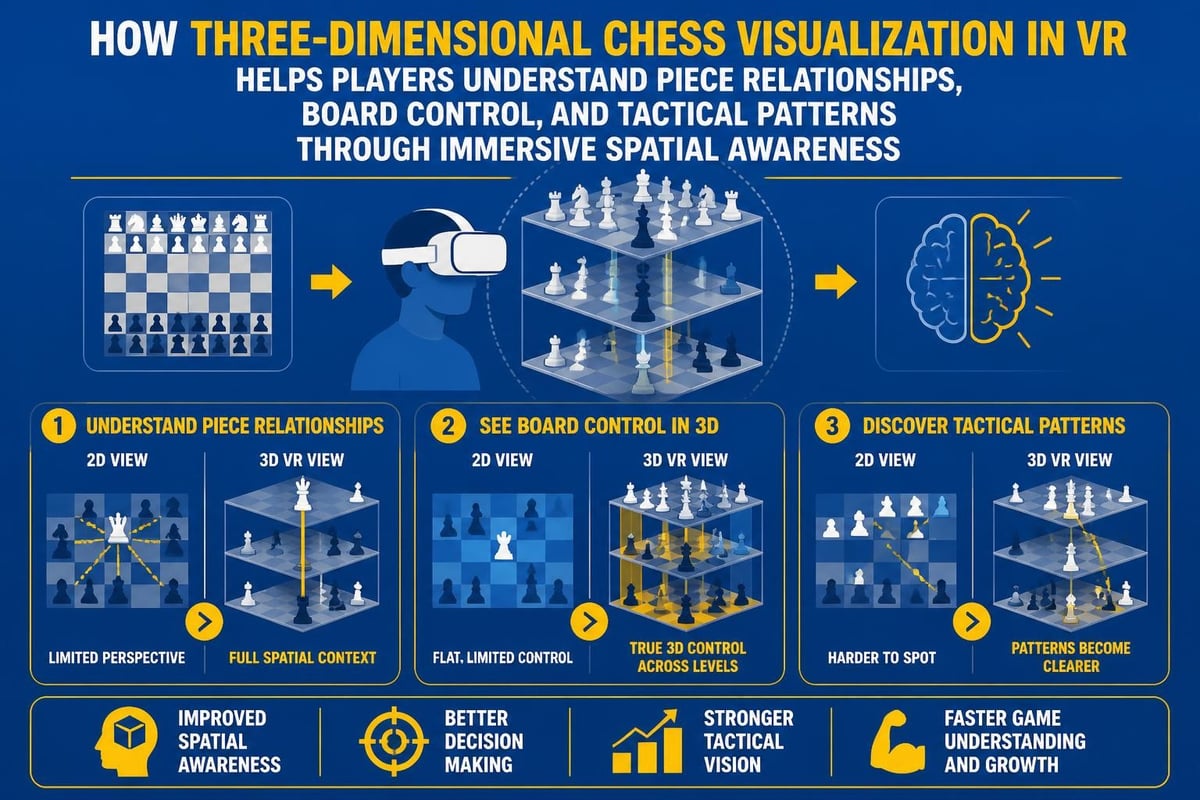
This physical engagement helps cement concepts that often take months to master on traditional boards. When you're learning how to play chess, understanding how pieces move in relation to each other is crucial. VR makes these relationships tangible.
Key learning benefits include:
- Enhanced board vision through 360-degree perspective
- Improved piece coordination understanding
- Better retention of opening patterns
- Stronger endgame visualisation skills
- Increased engagement during practice sessions
Research has even shown that VR chess can enhance social connectedness, particularly in studies like RemoteChess which explores virtual chess communities among older adults. The social dimension of learning chess becomes more natural when you can sit across from an opponent in a virtual space.
The Best Chess VR Platforms Available Today
The chess VR landscape in 2026 offers several compelling options, each with its own strengths. Choosing the right platform depends on your goals, whether that's casual play, serious training, or simply experiencing chess in a new way.
Premium VR Chess Experiences
Merlin's Chess offers an immersive VR experience with animated battles and voice commands, officially supported by Chess.com. This platform stands out for its theatrical presentation, where pieces don't just disappear when captured-they engage in animated duels that bring each capture to life. The hand tracking technology means you can reach out and physically grasp pieces, making the experience feel incredibly natural.
For players who want fantasy-themed excitement, Ultima Chess VR provides a unique approach where pieces come alive and engage in animated battles. While this might seem purely aesthetic, the visual feedback actually helps players remember critical captures and tactical sequences.
| Platform | Key Feature | Best For | Price Point |
|---|---|---|---|
| Merlin's Chess | Voice commands & hand tracking | Chess.com users | Premium |
| Very Real Chess | Interactive environment | VR beginners | Mid-range |
| Chess VR by MasteryVR | Cross-platform play | Social players | Budget-friendly |
| MR-Chess | Physical board integration | Hybrid learners | Premium |
Accessible Options for Beginners
If you're just starting your VR chess journey, Very Real Chess was one of the first VR chess games and remains an excellent entry point. Its straightforward interface and AI opponents make it ideal for players who want to focus on improving their game rather than navigating complex VR mechanics.
Chess VR by MasteryVR provides cross-platform play and multiple AI difficulty levels, allowing you to practice against computer opponents that match your skill level. This is particularly valuable when you're working through common chess openings and need repetition against consistent opposition.
How VR Enhances Chess Training and Study
Traditional chess study involves books, videos, and 2D chess software. While these methods remain valuable, chess VR adds a dimension that particularly benefits visual and kinaesthetic learners.

Practising Openings in Virtual Environments
When you're studying the Queen's Gambit or other complex opening systems, VR allows you to physically walk through the positions. You can set up key positions, move around the board to see how pieces work together, and develop an intuitive feel for the pawn structures that define each opening.
The muscle memory of reaching out to move specific pieces in specific ways reinforces neural pathways differently than clicking moves on a screen. When you physically extend your hand to push a pawn to d4, then reach for your knight to develop it to f3, your brain creates stronger associations with these patterns.
Opening study becomes more effective when you:
- Set up critical positions in VR
- Walk around to examine pawn chains
- Physically practice piece development sequences
- Review variations from different viewing angles
- Use voice notes to record your analysis
Tactical Training in Three Dimensions
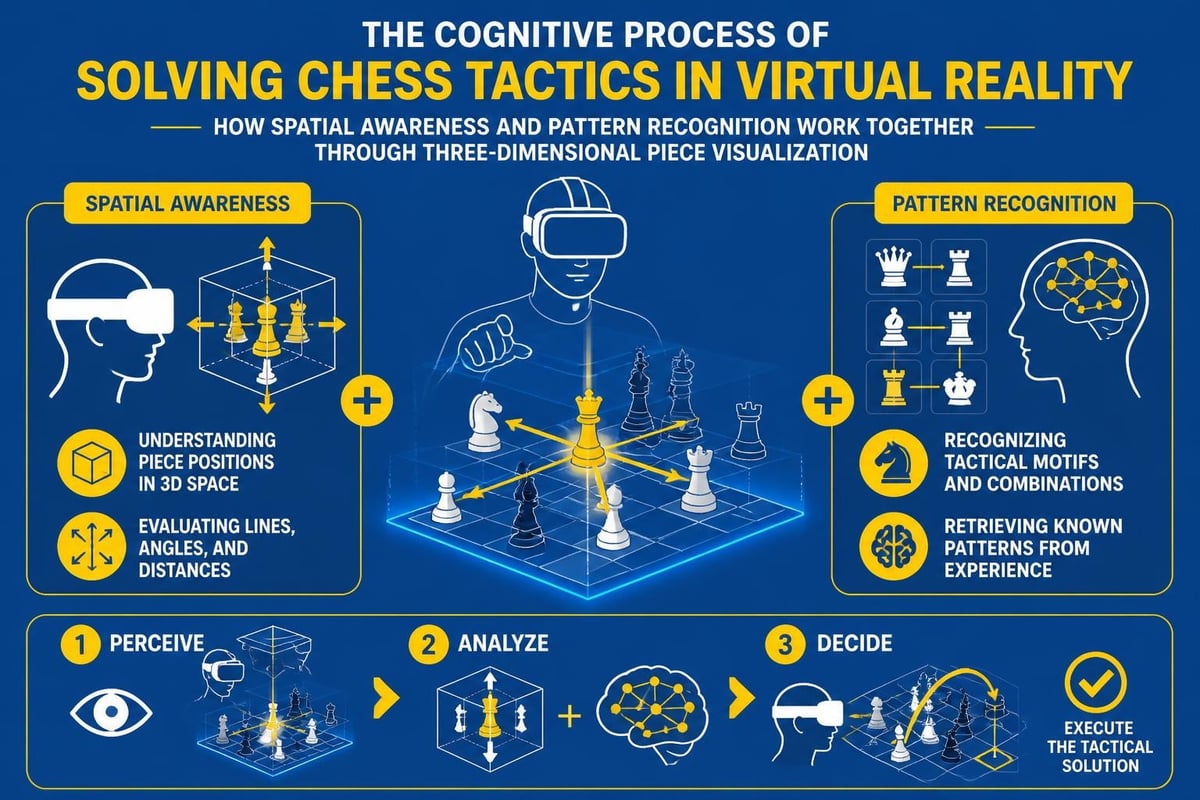
Tactical puzzles take on new life in VR. Instead of solving puzzles on a flat screen, you're positioned at the board as if you were playing a real game. This perspective shift helps transfer puzzle-solving skills directly into your over-the-board play.
The integration of technology like that described in the Augmented Reality Chess Analyzer research suggests future possibilities where VR systems could analyse your physical movements and provide real-time feedback on your tactical vision.
Technical Considerations and Hardware Requirements
Getting started with chess VR doesn't require the most expensive equipment, but understanding the basics helps ensure a smooth experience.
VR Headset Options
In 2026, several headset options work well for chess applications:
- Meta Quest 3: Standalone operation, excellent hand tracking, no PC required
- PlayStation VR2: Console integration, comfortable for extended sessions
- Valve Index: Premium experience with superior tracking precision
- Pico 4: Budget-friendly with solid performance for chess
Hand tracking has become the standard input method for chess VR, eliminating the need for controllers in most applications. This creates a more natural experience where you simply reach out and grab pieces as you would on a physical board.
Room Scale vs Seated Play
Most chess VR applications work well in seated mode, which is ideal for longer study sessions. However, room-scale VR allows you to physically walk around the board, offering unique perspectives that can deepen your understanding of positional play.
Some platforms like MR-Chess offer mixed reality experiences that blend physical chessboards with virtual elements, creating a hybrid approach that appeals to traditionalists who still value the tactile feedback of wooden pieces.
Social and Multiplayer Aspects of Chess VR
One of the most compelling aspects of chess VR is how it recreates the social experience of over-the-board play. When you sit across from an opponent in virtual space, you get many of the psychological elements that make tournament chess so engaging.
Building Virtual Chess Communities
Online chess has always been somewhat isolating-you're playing against a username and an avatar, with minimal human connection. Chess VR changes this by allowing you to see your opponent's body language, observe their reactions to surprising moves, and engage in pre-game and post-game conversations that feel genuinely social.
Community features typically include:
- Voice chat during and after games
- Spectator modes where others can watch your matches
- Virtual chess clubs with scheduled events
- Tournament organisation with bracket systems
- Training sessions with virtual coaches
The ability to work with an online chess coach in VR adds another dimension to instruction. Rather than screen sharing, your coach can sit beside you in virtual space, pointing to specific squares and demonstrating ideas from their perspective.
Cross-Platform Play Considerations
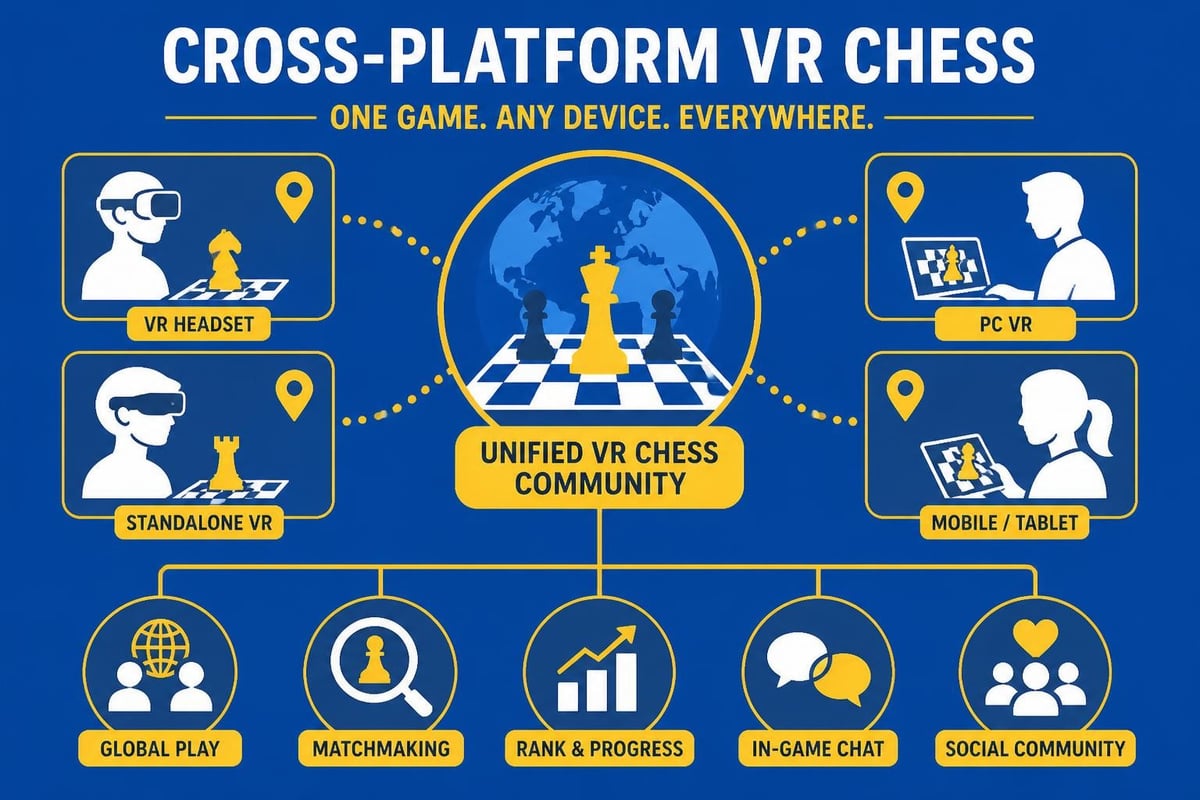
Many modern chess VR platforms support cross-platform play, meaning PC VR users can play against standalone headset users. This expanded player pool ensures you'll always find opponents at your skill level, regardless of your hardware setup.
Comparing VR Chess to Traditional and Digital Chess
It's worth examining how chess VR fits into your overall chess improvement plan. Each format offers distinct advantages.
Traditional Board Play
Physical chess boards provide tactile feedback and require no batteries or screens. They're perfect for face-to-face games and tournament preparation. However, they lack the ability to instantly analyse positions or connect with players worldwide.
2D Digital Chess
Online chess platforms like Chess.com and Lichess offer enormous player pools, sophisticated analysis tools, and comprehensive training resources. They're accessible from any device and require minimal setup. The trade-off is the flat, two-dimensional presentation that doesn't engage your spatial reasoning in the same way.
Virtual Reality Chess
Chess VR combines elements of both: the immersive, three-dimensional experience of physical chess with the connectivity and AI features of digital platforms. The learning curve is steeper, and you need specific hardware, but the engagement and retention benefits often justify the investment.
| Format | Spatial Awareness | Accessibility | Social Connection | Analysis Tools |
|---|---|---|---|---|
| Physical Board | Excellent | High | Local only | Manual |
| 2D Digital | Limited | Very High | Global | Comprehensive |
| VR Chess | Exceptional | Moderate | Global & immersive | Emerging |
Future Developments in Chess VR Technology
The trajectory of chess VR technology suggests exciting developments on the horizon. AI integration is becoming more sophisticated, with virtual coaches that can provide real-time feedback on your position evaluation and suggest improvements to your thought process.
Haptic feedback research, such as that explored in the PhyShare haptic interface study, could soon bring tactile sensations to VR chess, allowing you to feel the weight of pieces and the texture of different boards. This would add another layer of immersion that bridges the gap between virtual and physical chess.
Integration with Chess Learning Platforms
We're likely to see deeper integration between VR chess applications and comprehensive chess education platforms. Imagine working through a Sicilian Defense guide in VR, where critical positions materialize around you and you can practice variations against AI that adapts to your skill level.
The combination of traditional study materials-cheat sheets, puzzle collections, and opening guides-with immersive VR practice creates a powerful learning ecosystem. You might study the Italian Game through written guides, then immediately practice it in VR against opponents who play the most common responses.
Getting Started with Your VR Chess Journey
If you're ready to explore chess VR, start with a clear goal. Are you primarily interested in casual play, serious training, or experiencing chess in a novel way? Your answer will guide your platform choice.
For beginners to intermediate players, starting with a user-friendly platform like Chess and Checkers VR allows you to ease into the technology while maintaining focus on chess fundamentals. The AI opponents typically offer multiple difficulty levels, letting you progress at your own pace.
Setting Up Your Practice Routine
Incorporating VR into your chess routine doesn't mean abandoning other study methods. Instead, use VR for specific purposes:
Weekly VR Chess Schedule:
- Monday: Opening practice in VR (30 minutes)
- Wednesday: Tactical puzzles from different perspectives (20 minutes)
- Friday: Social games against VR opponents (45 minutes)
- Sunday: Position review and analysis (30 minutes)
Between VR sessions, continue using traditional resources like chess opening cheat sheets and endgame guides. The combination of 2D study materials with 3D VR practice creates a comprehensive improvement system.
Tracking Your Progress
Many VR chess platforms now include performance tracking that monitors your rating, win percentage, and improvement over time. Pay attention to whether your tactical vision and board awareness improve in your regular 2D online games after incorporating VR practice. Many players report that the spatial reasoning developed in VR translates directly to better visualisation in traditional formats.
Understanding your chess ELO and how it changes across different platforms gives you valuable feedback on whether VR practice is effectively complementing your overall chess development.
Virtual reality has transformed chess from a static board game into an immersive experience that engages multiple senses and learning styles. Whether you're working on your opening repertoire, sharpening your tactical vision, or simply enjoying the social aspects of the game, VR offers unique benefits that complement traditional study methods. Ready to accelerate your chess improvement with proven resources? Chess Cheat Sheets provides comprehensive guides, opening cheat sheets, and puzzles designed to enhance your skills efficiently, giving you the perfect foundation to combine with your VR practice sessions.


