

You've probably been there. You're in the middle of a game, everything seems balanced, and then suddenly your opponent makes a brilliant move that wins material or checkmates you. What just happened? Chances are, they used a tactical pattern you didn't see coming. Learning chess tactics for beginners is the fastest way to transform your game from passive pushing of pieces to active, powerful play that puts your opponents on the defensive. Unlike openings that require memorisation or endgames that demand patience, tactics are immediate and exciting. They're the tools that let you punish mistakes, create threats, and turn equal positions into winning ones.
What Are Chess Tactics and Why Do They Matter?
Before we dive into specific patterns, let's clarify what we mean by chess tactics. In simple terms, tactics are short-term manoeuvres that gain a concrete advantage, usually winning material, forcing checkmate, or securing a better position. They're different from strategy, which is your long-term plan.
Think of it this way: strategy is deciding you want to attack on the kingside, whilst tactics are the specific sequences that actually deliver the knockout blow. You might have a brilliant strategic plan, but without tactical awareness, you'll miss the opportunities to execute it.
The Building Blocks of Tactical Success
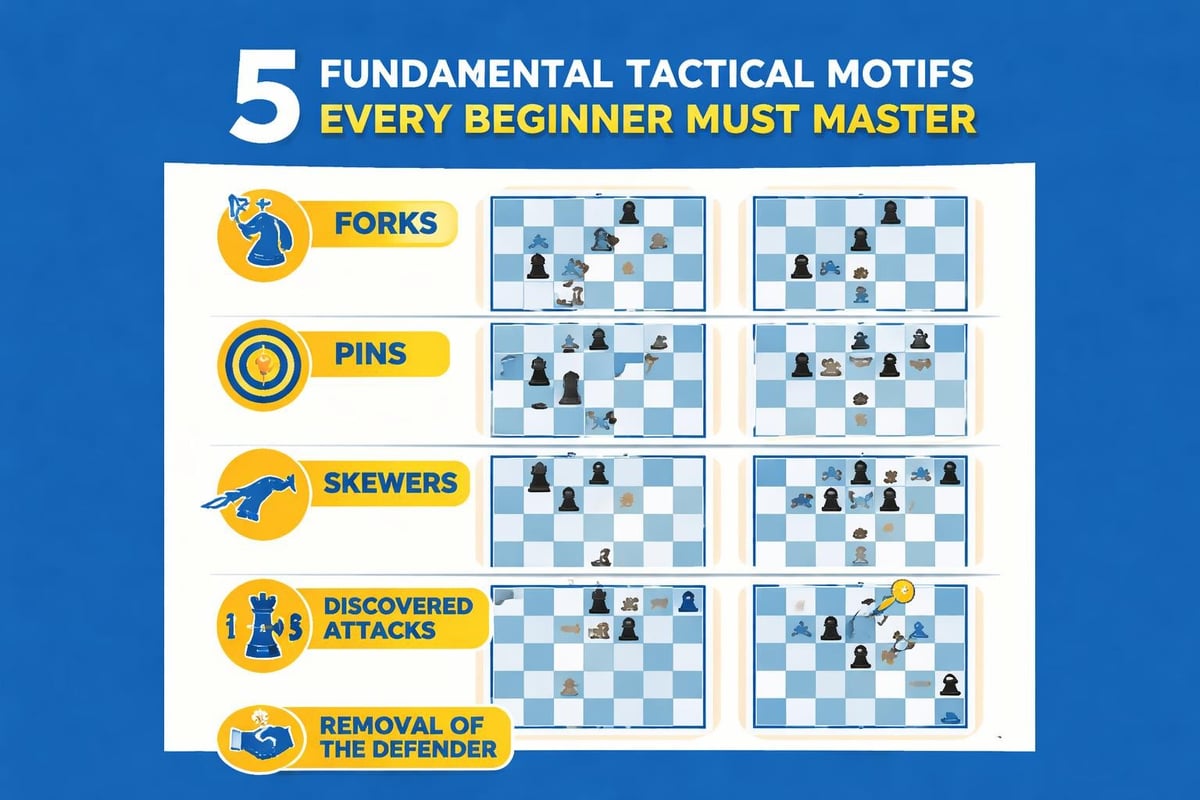
Every strong player has a mental library of tactical patterns. When these patterns appear on the board, they recognise them instantly. For beginners, building this library starts with understanding the most common motifs:
- Material gain: Winning pieces or pawns through forcing sequences
- Checkmate threats: Creating unstoppable mating attacks
- Positional advantage: Using tactics to improve piece placement or pawn structure
- Defensive resources: Tactical tricks to save difficult positions
The beauty of studying chess tactics for beginners is that you'll start noticing these patterns everywhere. Your games will feel different. You'll spot opportunities your opponents miss.
Essential Tactical Patterns Every Beginner Should Know
Let's explore the core tactical weapons in your arsenal. These patterns appear in virtually every game, from beginner level to grandmaster encounters.
The Fork: Double Trouble for Your Opponent
A fork is when one piece attacks two or more enemy pieces simultaneously. The knight fork is particularly deadly because knights move in their unique L-shape pattern, making their attacks harder to anticipate.
Imagine your knight lands on a square where it attacks both the enemy king and queen. Your opponent must move their king out of check, and you simply capture the queen on the next move. That's a royal fork, the most spectacular type.
Common forking pieces:
- Knights (the fork specialists)
- Pawns (surprisingly effective forkers)
- Bishops (on long diagonals)
- Queens (the ultimate forking weapon)
The Pin: When Pieces Can't Move
A pin occurs when moving a piece would expose a more valuable piece behind it to capture. Pins come in two flavours: absolute and relative.
An absolute pin involves the king. The pinned piece literally cannot move legally because it would put the king in check. A relative pin involves any other piece where moving would lose material but isn't illegal.
| Pin Type | Pinned Piece | Behind It | Can It Move? |
|---|---|---|---|
| Absolute | Any piece | King | No (illegal) |
| Relative | Lower value | Higher value | Yes (but costly) |
Bishops and rooks excel at creating pins because they attack along straight lines. When you're playing beginner-friendly openings, watch for opportunities to pin knights to queens or rooks.
The Skewer: The Reverse Pin
A skewer is essentially a pin in reverse. You attack a valuable piece, and when it moves, you capture a less valuable piece behind it. The most common skewer attacks the king first, forcing it to move and exposing a rook or queen.
Queens, bishops, and rooks perform skewers. They're particularly effective in the endgame when there are fewer pieces on the board and pieces have less shelter.

Intermediate Tactical Concepts to Expand Your Skills
Once you've mastered the basics, these slightly more complex tactics will take your game to the next level. Don't worry, they're still fundamental chess tactics for beginners, just requiring a bit more visualisation.
Discovered Attacks: The Hidden Threat
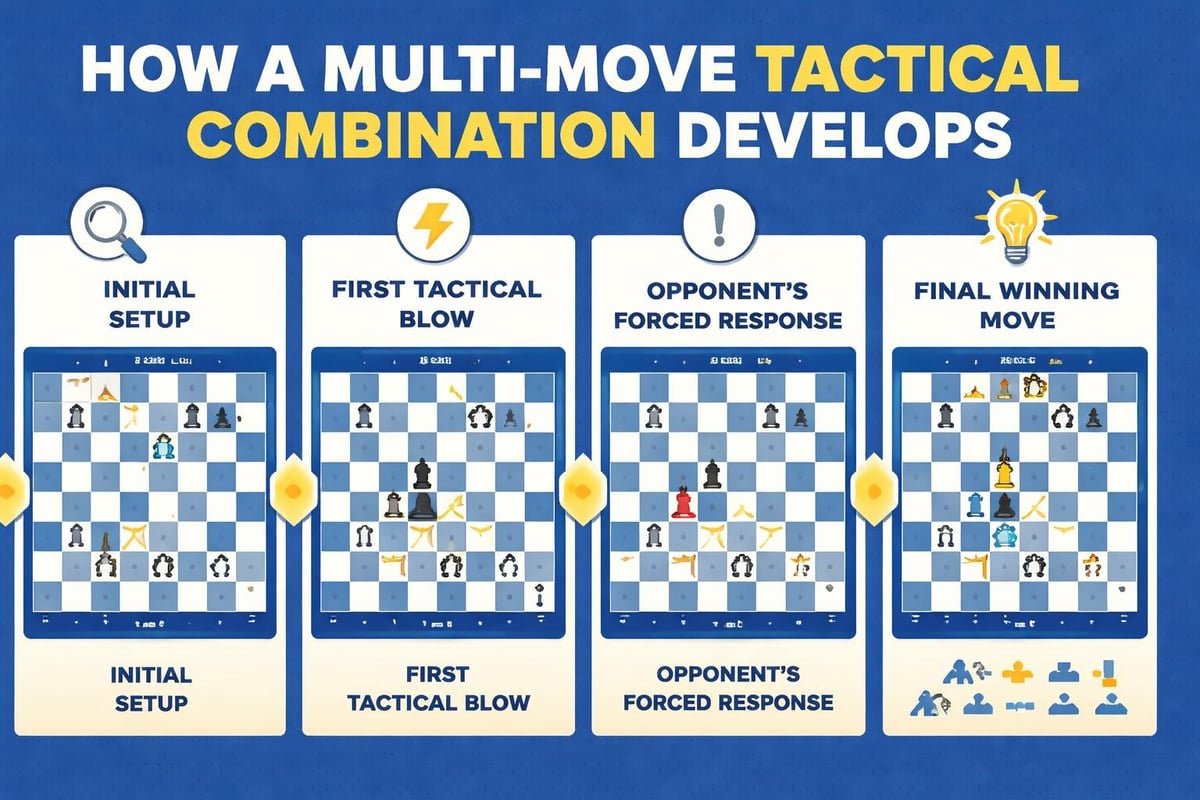
A discovered attack happens when moving one piece unveils an attack from another piece behind it. These are particularly dangerous because the moving piece can create its own threat whilst the piece behind delivers the attack.
Discovered check is the most forcing version. The piece that moves can go anywhere, doing anything (even moving into danger), because the opponent must respond to the check.
Removing the Defender
Sometimes a piece you want to capture is defended. The solution? Remove or deflect the defender first. This might involve:
- Capturing the defending piece
- Forcing it away with a threat
- Pinning it so it can't perform its defensive duty
- Blocking the defensive line
Double Attacks: Creating Multiple Threats
This is the general category that includes forks. A double attack means threatening two things at once, forcing your opponent to choose which threat to address. Often, they can only deal with one.
How to Practice and Improve Your Tactical Vision
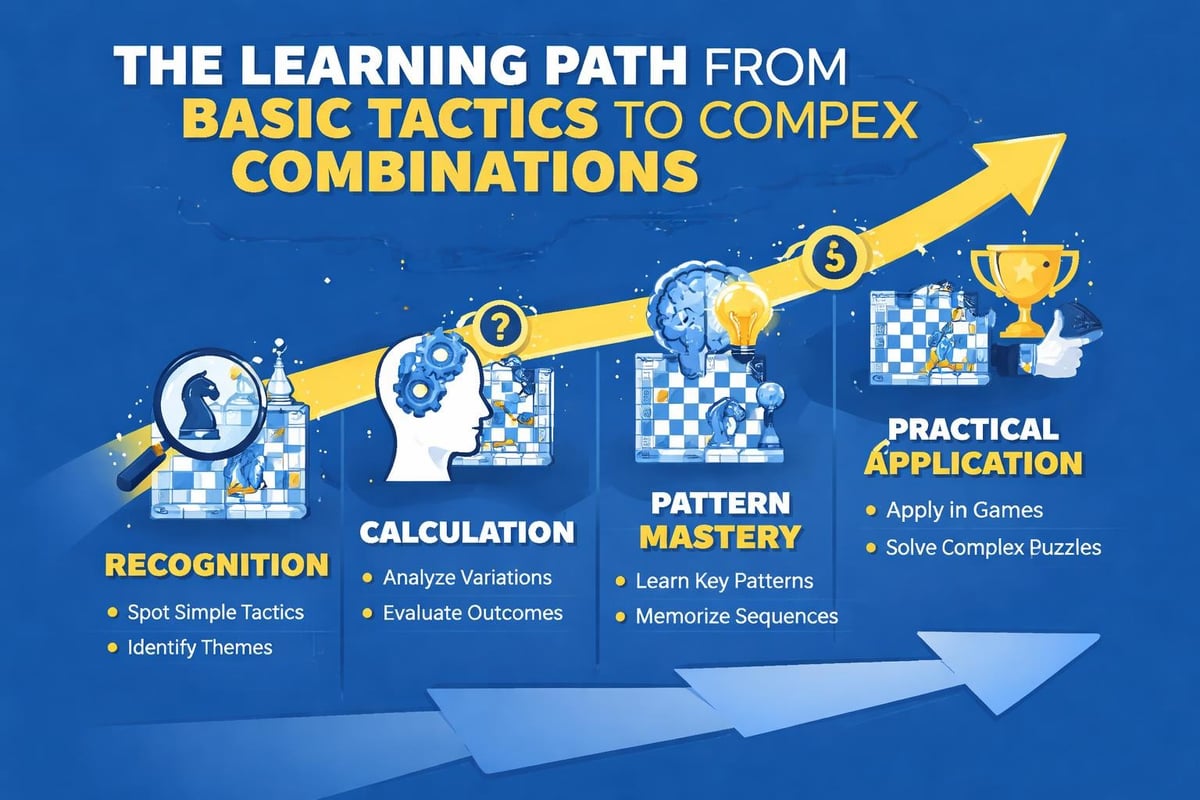
Knowing these patterns intellectually is one thing. Spotting them in your games is quite another. Here's how to bridge that gap.
Daily Tactical Puzzles
The single best way to improve your tactics is solving puzzles daily. Even just 10-15 minutes makes a massive difference. Resources like the Chess Tactics for Beginners app offer structured training with over 1,200 exercises designed specifically for developing tactical vision.
When solving puzzles, don't just guess. Calculate the full sequence. Ask yourself:
- What's my opponent's threat?
- What pieces are undefended?
- Are there any checks, captures, or attacks available?
- Can I force my opponent's responses?
Analysing Your Games
Every game you play contains tactical lessons. When you finish a game, especially one you lost, go through it move by move. Look for moments where you missed a tactic or fell victim to one.
You'll often find that losses weren't due to your opening choice or general strategy but a single tactical oversight. That's actually good news, because tactical awareness improves faster than positional understanding.
Pattern Recognition Exercises
The human brain is brilliant at pattern recognition. Train yours by studying tactical themes systematically. Spend a week focusing exclusively on forks, then move to pins, then skewers. This focused approach builds deeper understanding than random puzzle solving.
Common Tactical Mistakes Beginners Make
Let's address the pitfalls that trip up most improving players. Avoiding these mistakes is as important as learning the tactics themselves.
Calculation Errors
You spot a tactic but miscalculate the sequence. Maybe you thought your opponent had to recapture, but they had a counter-tactic. Or you counted material wrong after a complex exchange.
Solution: Always calculate one move deeper than you think necessary. Double-check your counting.
Tunnel Vision
You see one tactic and become fixated on making it work, even when better moves exist or your tactic has a refutation.
Solution: Always look for your opponent's best response. If they have a good defence, your "tactic" isn't actually winning.
Ignoring Defensive Tactics
Tactics aren't just for attacking. Many players overlook defensive tactics like perpetual check, stalemate tricks, or tactical counterplay.
Solution: When you're worse, look for tactical resources that might save the game. Never resign whilst tactical possibilities exist.
Combining Tactics with Opening Knowledge
Here's where things get interesting. Chess tactics for beginners become even more powerful when you understand typical tactical themes in your favourite openings. Different openings produce different tactical patterns.
For instance, if you're studying the Italian Game, you'll encounter specific knight fork patterns and bishop pin opportunities. The Sicilian Defense features different tactical motifs involving open files and pawn breaks.
Opening-Specific Tactical Themes
| Opening | Common Tactics | Key Pieces |
|---|---|---|
| Italian Game | Knight forks, bishop pins | Bishops, knights |
| Sicilian Defense | Pawn breaks, piece sacrifices | Rooks, queens |
| London System | Space exploitation, piece exchanges | Bishops, knights |
When you understand both the opening's strategic goals and its tactical patterns, you'll play more confidently and accurately. Resources at Chess Cheat Sheets provide exactly this integrated approach, showing you not just what moves to play but why they work tactically.
Training Methods That Actually Work
Not all practice is created equal. Here's what research and coaching experience show actually improves tactical ability.
Spaced Repetition
Don't just solve a puzzle once and move on. Return to difficult positions after a day, then a week, then a month. This cements the pattern in your memory.
Blindfold Visualisation
Try solving simple tactical puzzles without looking at the board. Start with one-move tactics, then progress to two-move sequences. This dramatically improves your visualisation skills.
Themed Training Sessions
Rather than random puzzles, work through sets focused on one theme. Solve 20 fork puzzles in a row, then 20 pins. This intensive focus accelerates pattern recognition.
Time Pressure Practice
Occasionally practice tactics under time pressure to simulate real games. But also do untimed deep calculation work. You need both skills.
Tactical Awareness in Different Game Phases
Tactics appear throughout the game, but they look different in each phase. Understanding this helps you stay alert to opportunities.
Opening Tactics
Early game tactics usually involve piece development, central control, and pawn structure. Common patterns include:
- Pins against incompletely developed positions
- Knight forks exploiting uncastled kings
- Pawn breaks opening lines for pieces
Many players relax in the opening, thinking "I'm just developing." Stay alert. Tactical opportunities appear from move one.
Middlegame Tactics
This is where most tactics occur. Pieces are active, the position is complex, and opportunities abound. The player with better tactical vision usually dominates the middlegame.
Watch for:
- Weak back ranks
- Undefended pieces
- Overworked defenders
- Pieces that can't retreat
- Exposed kings
Endgame Tactics
Even with few pieces remaining, tactics matter. Pawn promotion tactics, king and pawn opposition tricks, and rook activity all involve tactical precision.
The endgame rewards calculation accuracy. A single tempo often decides the result, so tactical precision becomes crucial.
Resources for Continued Learning
You've got a solid foundation now, but learning chess tactics for beginners is an ongoing journey. Here are some valuable resources to continue your development.
The book "Chess Tactics for Beginners" by R.G. Wade provides structured lessons with progressive difficulty. For online learning, Chess.com offers excellent tactical training articles with clear explanations and diagrams.
Additionally, exploring comprehensive chess resources can help you find books, apps, and websites tailored to your learning style and current level.
Building a Complete Game
Tactics don't exist in isolation. The strongest players combine tactical sharpness with sound positional play and solid opening preparation. If you're working on your openings, understanding tactical themes in positions like the Caro-Kann Defense or studying opening choices for white will make your tactical training more effective.
Tracking Your Tactical Progress
How do you know if you're actually improving? Here are concrete metrics to monitor:
- Puzzle rating: Most platforms give you a tactics rating. Track its growth over time.
- Time per puzzle: Are you solving faster whilst maintaining accuracy?
- Game blunders: Review your games. Are you making fewer tactical mistakes?
- Opponent mistakes: Are you spotting and punishing your opponents' tactics more often?
Keep a training journal. Note which tactical patterns you struggle with and which come naturally. This helps you focus practice where it's most needed.
Setting Realistic Goals
Don't expect overnight transformation. Tactical improvement follows a curve. You'll have breakthroughs followed by plateaus. That's normal.
Aim for:
- Solving 10-20 tactical puzzles daily
- Reviewing at least one game per week for tactical lessons
- Studying one tactical theme deeply each month
- Playing regularly to apply what you've learned
Consistency beats intensity. Fifteen minutes daily outperforms three-hour sessions once a week.
Mastering chess tactics for beginners opens up a whole new level of play where you're not just moving pieces but creating threats and exploiting weaknesses in every position. The patterns we've covered form the foundation of tactical chess, but they're just the beginning of your journey to stronger, more confident play. Whether you're looking to improve your calculation skills, learn opening-specific tactics, or simply want quick-reference materials during your study sessions, Chess Cheat Sheets offers streamlined guides, puzzles, and resources designed specifically for players ready to take their tactical understanding to the next level without spending years on study.


