

Unlock the secrets to dominating your chess games in 2026 by mastering the latest openings for white. As chess evolves at lightning speed, staying ahead in opening theory can make all the difference between a win and a missed opportunity.
This expert guide blends time-tested classical ideas with modern engine discoveries, giving you practical tools and confidence whether you’re a beginner or seasoned competitor. You’ll explore core principles, discover trending openings, and get move-by-move breakdowns used by the world’s best.
Ready to elevate your play? Dive in and learn how adopting cutting-edge strategies can help you win games before they even begin.

Core Principles of Successful White Openings in 2026
Mastering openings for white in 2026 starts with timeless chess truths, but it also demands an eye for modern innovations. What makes an opening truly successful for White today? Let’s break down the essential ideas shaping opening play this year.
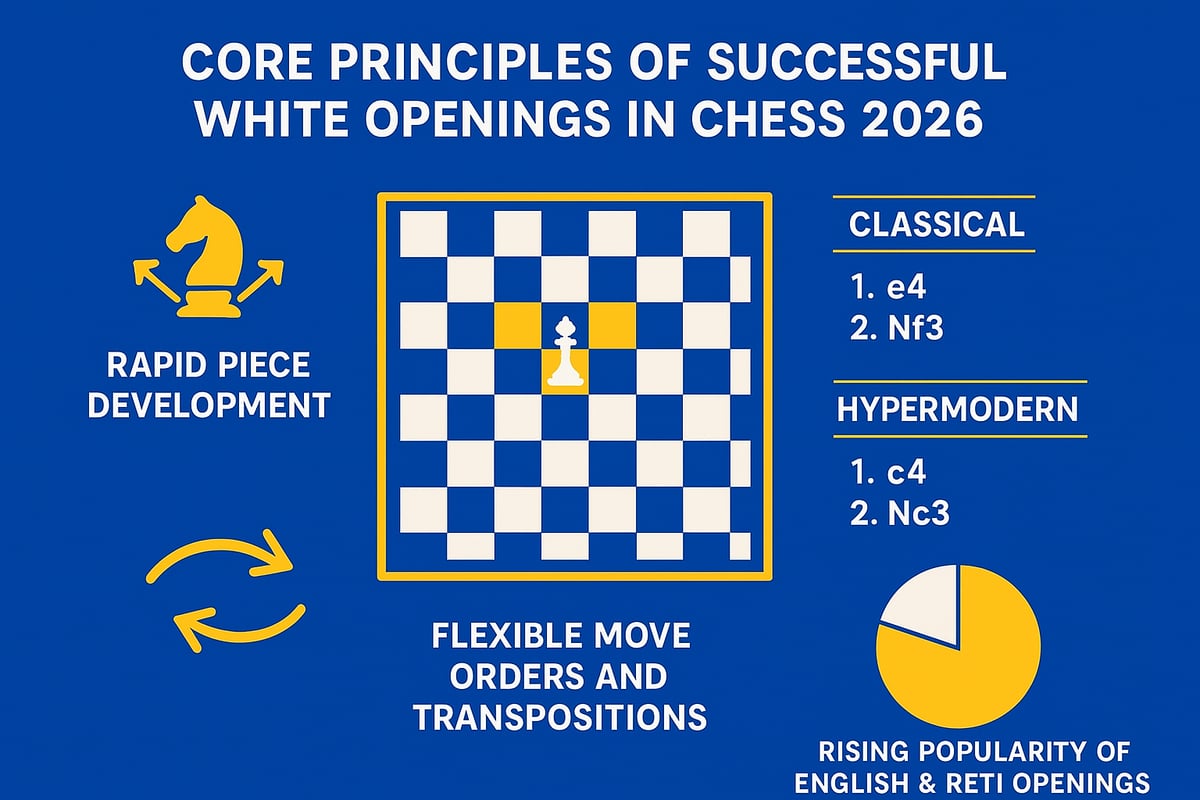
Central Control and Piece Development
Let’s start with the basics. Openings for white still revolve around grabbing the center (think e4, d4, c4, and f3) and getting pieces out quickly. If you control the center, your pieces have more space. This means your attacks can launch faster and your king stays safer. The classic rules—develop knights before bishops, avoid moving the same piece twice, and don’t grab too many pawns—remain essential.
Engine Discoveries and the 2026 Revolution
Here’s where things get spicy. Chess engines have changed the way we think about openings for white. In 2026, engines like Stockfish and LeelaZero have shown that subtle move orders or surprising pawn pushes can tilt the balance early. For example, engines often recommend flexible setups, like delaying d4 or c4 until Black’s plans are clear. This makes it harder for your opponent to “play by the book.”
Classical vs. Hypermodern Approaches
Should you play like Capablanca or follow the new wave of hypermodernists? Both styles have a place in openings for white.
| Approach | Key Features | 2026 Trend |
|---|---|---|
| Classical | Direct central control, rapid development | Still foundational, but more nuanced |
| Hypermodern | Control from a distance, fianchetto bishops, flexible pawn moves | Gaining ground, especially in online play |
Engines have blurred the lines between these styles, encouraging hybrid systems that mix solid structure with creative piece placement.
Flexibility vs. Commitment
One big question for players: Should you stick to a fixed system, or adapt on the fly? In openings for white, flexibility is now king. Many top players use systems like the English or Reti because they can pivot based on Black’s setup. This means you’re less likely to get ambushed by deep prep or surprise novelties.
Move Order Subtleties
Ever wonder why the pros shuffle their first few moves? Move order tricks are a secret weapon in openings for white. By tweaking the timing of moves like c4 or Nf3, you can avoid your opponent’s pet lines and force them into unfamiliar territory. Even a single move can change the entire character of the game.
Psychological Advantages for White
Starting with White gives you the initiative, but there’s more to it. You can:
- Set the tone and pace of the game
- Push opponents out of their comfort zone
- Choose lines that maximize your strengths and minimize theirs
Openings for white also let you put pressure on Black to react, rather than dictate.
Pawn Structure and Middlegame Plans
Early pawn decisions shape your entire game. Building a strong, flexible pawn structure in openings for white sets you up for a smoother transition to the middlegame. For example, playing d4-d5 can lock in space, while c4 or g3 can lead to dynamic, open positions.
Modern Trends: From 1.e4 to the English and Reti
If you check elite databases from 2025–2026, you’ll notice a clear shift. While 1.e4 is still popular, many players are embracing openings for white like the English and Reti for their adaptability and surprise value. Curious about this trend? The English Opening explained offers a practical look at why this flexible system is winning fans at every level.
In short, successful openings for white in 2026 blend age-old principles with cutting-edge ideas. When you combine solid fundamentals with modern flexibility, you’ll stay ahead of the curve and start every game with confidence.
Trending White Openings for 2026: Move-by-Move Analysis
Curious about which openings for white are winning games in 2026? Let’s break down the latest moves, trends, and discoveries so you can play what works at every level. Whether you’re a club player or chasing titles, understanding the current landscape is key to getting an edge right out of the gate.

1.e4 Openings: Modern Aggression and Classical Roots
If you love direct play, 1.e4 remains a top choice among openings for white. In 2026, the Ruy Lopez is still the gold standard, but it’s evolved. Players are shifting toward anti-Berlin and anti-Marshall lines, using move order tricks to dodge deep computer prep. Want to dive deeper? Check out this Ruy Lopez chess opening guide for a step-by-step breakdown.
The Italian Game has seen a true renaissance, especially with engines backing up bold lines like the Giuoco Piano and a revived Evans Gambit. These openings for white offer a blend of tactical fireworks and deep strategy. The Scotch Game is also gaining traction, providing early tactical chances and less theoretical overload.
If you’re a fan of surprise, the King’s Gambit and Vienna Game are making niche comebacks. They aren’t mainline weapons at the top, but their practical value is up thanks to new engine ideas. Tournament data shows that 1.e4 still leads in decisive results, especially in rapid formats. Here’s a quick comparison:
| Opening | Win Rate (White) | Popularity (Top 100) | Notable Trend |
|---|---|---|---|
| Ruy Lopez | 54% | 38% | Anti-Berlin focus |
| Italian Game | 53% | 24% | Giuoco & Evans rising |
| Scotch Game | 51% | 12% | Tactical surges |
| Vienna/KGambit | 48% | 6% | Surprise weapons |
Overall, if you’re aiming for sharp play and want to stay ahead of the curve, 1.e4 openings for white give you plenty of options to outfox even the best-prepared opponents.
1.d4 Openings: Strategic Depth and Flexibility
Prefer a slower buildup and more strategic battles? 1.d4 is thriving among openings for white, thanks to its flexibility and depth. The Queen’s Gambit is still a central pillar, with new wrinkles in both QGD and QGA, plus creative plans in the Exchange lines. Modern engines have sharpened old ideas and unearthed fresh ones, making it a must-know for all serious players.
The London System continues to dominate at every level, from club games to elite blitz. Its popularity comes from its rock-solid setup and easy-to-learn plans. You’ll also see the Colle and Jobava systems pop up, especially when players want to avoid heavy theory or catch opponents off guard.
Trompowsky and Veresov offer practical traps and early imbalances. These openings for white are ideal if you want to sidestep your opponent’s preparation and create chaos from move one. Recent stats from major platforms show:
- Queen’s Gambit: 46% of 1.d4 games at master level
- London System: 28%, especially in rapid/blitz
- Colle/Jobava: 10%, growing fast
- Trompowsky/Veresov: 7%, used for surprise value
Even Magnus Carlsen has leaned on the London in fast games, showing its lasting appeal. If you want strategic control and the ability to adapt, 1.d4 openings for white are your ticket.
Hypermodern and Flank Openings: English, Reti, and Beyond
Not every game starts in the center anymore. The English Opening (1.c4) and Reti (1.Nf3) have surged as flexible, hypermodern choices among openings for white. The double fianchetto English, in particular, is trending, letting you control the board from a distance and avoid heavy theory.
The Reti’s magic lies in its move order tricks. You can slip into Catalan, King’s Indian Attack, or even transpose into d4 or c4 setups, all while keeping your opponent guessing. Engines have given their stamp of approval to many of these systems, showing they’re not just for sideline experimenters anymore.
Top-level data from 2025-2026 reveals:
- Over 22% of elite games now start with 1.c4 or 1.Nf3.
- Double fianchetto setups and reversed Sicilian lines are more popular than ever.
- Catalan and King’s Indian Attack are reliable for solid, engine-approved play.
If you want to keep your options open and stay unpredictable, these openings for white offer a modern, flexible approach that’s tough to counter.
Rare and Surprise Weapons for White
Sometimes, the element of surprise is your best friend. Offbeat openings for white like Larsen’s Opening (1.b3), Bird’s Opening (1.f4), and even the Orangutan (1.b4) can catch opponents completely off guard.
While these aren’t mainstays in championship matches, they’ve delivered notable upsets in major tournaments when used at the right moment. The key? Use them as part of a balanced repertoire, not your only weapon.
If you’re facing a prep-heavy opponent or just want to shake things up, rare openings for white can tilt the psychological balance and lead to quick wins.
Opening Repertoire Recommendations by Skill Level
Choosing the right openings for white can feel overwhelming, but matching your repertoire to your skill level makes the journey smoother and far more rewarding. Have you ever wondered why some openings just click while others seem impossible to remember or execute? The secret often lies in picking openings for white that fit your current chess experience, learning style, and goals.
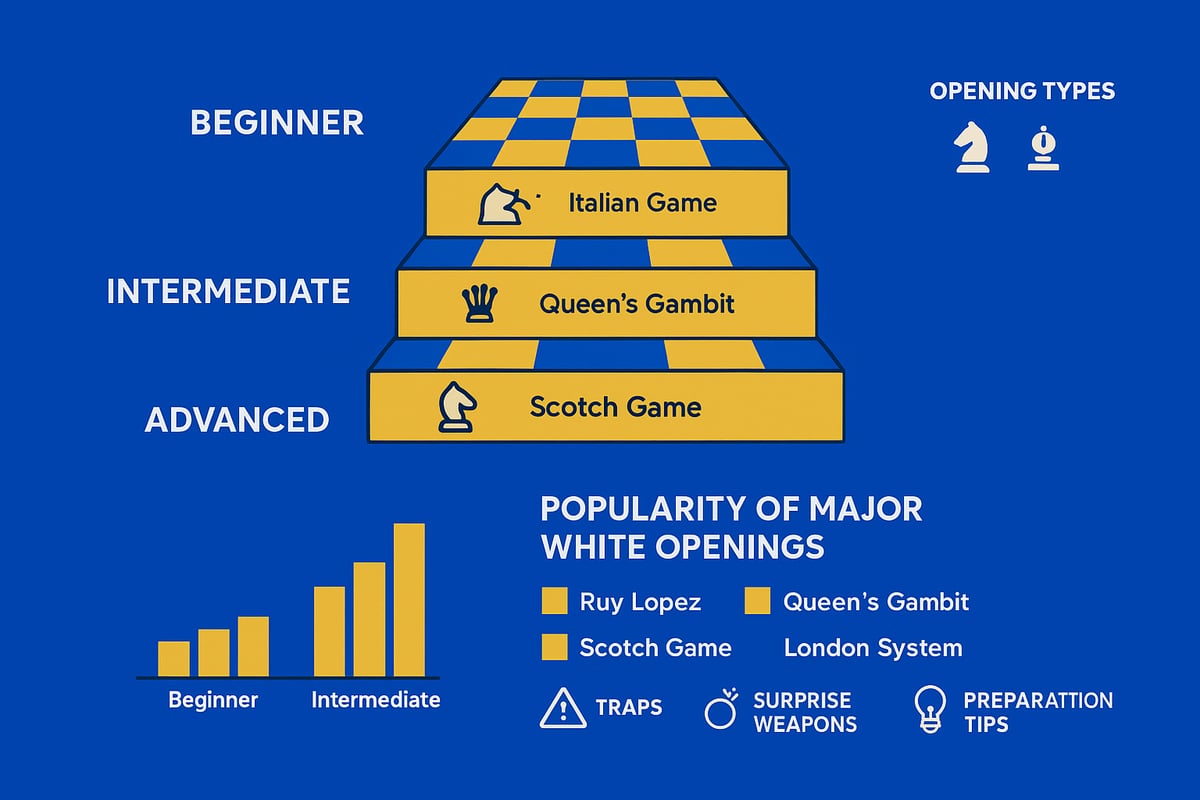
Why Your Opening Choice Should Match Your Level
Let’s be honest, memorizing endless theory is not helpful if you’re just starting out. For most players, the best openings for white are those that teach core principles, offer clear plans, and don’t require hours of rote memorization. As you climb the rating ladder, though, you’ll want openings for white that challenge you with deeper ideas, tactical opportunities, and preparation against specific defenses.
Beginner: Principles and Simple Systems
If you’re new to chess, focus on openings for white that emphasize piece development, central control, and king safety. The Italian Game (1.e4 e5 2.Nf3 Nc6 3.Bc4) is a timeless choice. It’s easy to understand and leads to open positions that sharpen your tactical skills.
Another top pick is the London System, which has become incredibly popular for beginners and club players. The London’s straightforward setup helps you learn opening basics without memorizing endless variations. For a step-by-step resource, check out this London System opening guide to get started fast.
- Focus on developing pieces efficiently.
- Avoid early queen moves or excessive pawn pushes.
- Practice typical plans, like castling early and controlling the center.
Intermediate: Expanding Horizons and Tactical Play
Once you’re comfortable with the basics, it’s time to try openings for white that offer more variety and tactical chances. The Scotch Game (1.e4 e5 2.Nf3 Nc6 3.d4) is a great example, opening up the center for dynamic play. The Queen’s Gambit (1.d4 d5 2.c4) is another favorite, balancing structure and flexibility.
At this stage, experiment with different move orders and start tracking your results. Try mixing in systems like the Colle or Jobava to catch opponents off guard. As you learn, you’ll notice which openings for white fit your style, whether you prefer calm positions or sharp tactics.
Advanced: Deep Theory and Anti-Preparation
For advanced players, openings for white become a playground for theory and psychological warfare. Here, it’s all about move order subtleties and staying ahead of your opponent’s preparation. The Ruy Lopez, English Opening, and engine-influenced lines like the Catalan are staples at this level.
- Study recent Grandmaster games and engine recommendations.
- Prepare offbeat lines or “anti-theory” systems to surprise opponents.
- Pay attention to transpositions and subtle pawn structure tweaks.
Building a Balanced Opening Repertoire
No matter your level, a good repertoire covers all major defenses you’ll face. Start with one main opening for white (e.g., Italian or Queen’s Gambit), add a flexible backup (like the English or London), and keep a surprise weapon ready for special occasions.
Here’s a quick table summarizing the most-played openings for white by rating bracket, based on recent online data:
| Rating Level | Most-Played Openings for White | Popular Surprise Weapons |
|---|---|---|
| Beginner | Italian Game, London System | Bishop’s Opening, Four Knights |
| Intermediate | Queen’s Gambit, Scotch Game | Jobava, Trompowsky |
| Advanced | Ruy Lopez, English, Catalan | Vienna, King’s Gambit |
Key Insights: Avoiding Traps and Maximizing Surprise
For beginners, steer clear of complex gambits or rare traps until you’re confident in opening principles. Intermediate and advanced players, on the other hand, can use surprise lines to gain a psychological edge.
Remember, the best openings for white are the ones you understand, enjoy, and can play confidently. Adjust your repertoire as you grow, keep learning from your games, and never be afraid to try something new.
Preparation and Practical Training: Steps to Master White Openings
Mastering openings for white is a journey that blends curiosity, discipline, and a touch of creativity. If you want to win more games right from move one, you need a practical training plan. Let’s break down the process into easy, actionable steps you can follow, whether you’re a club player or aiming for the next title.
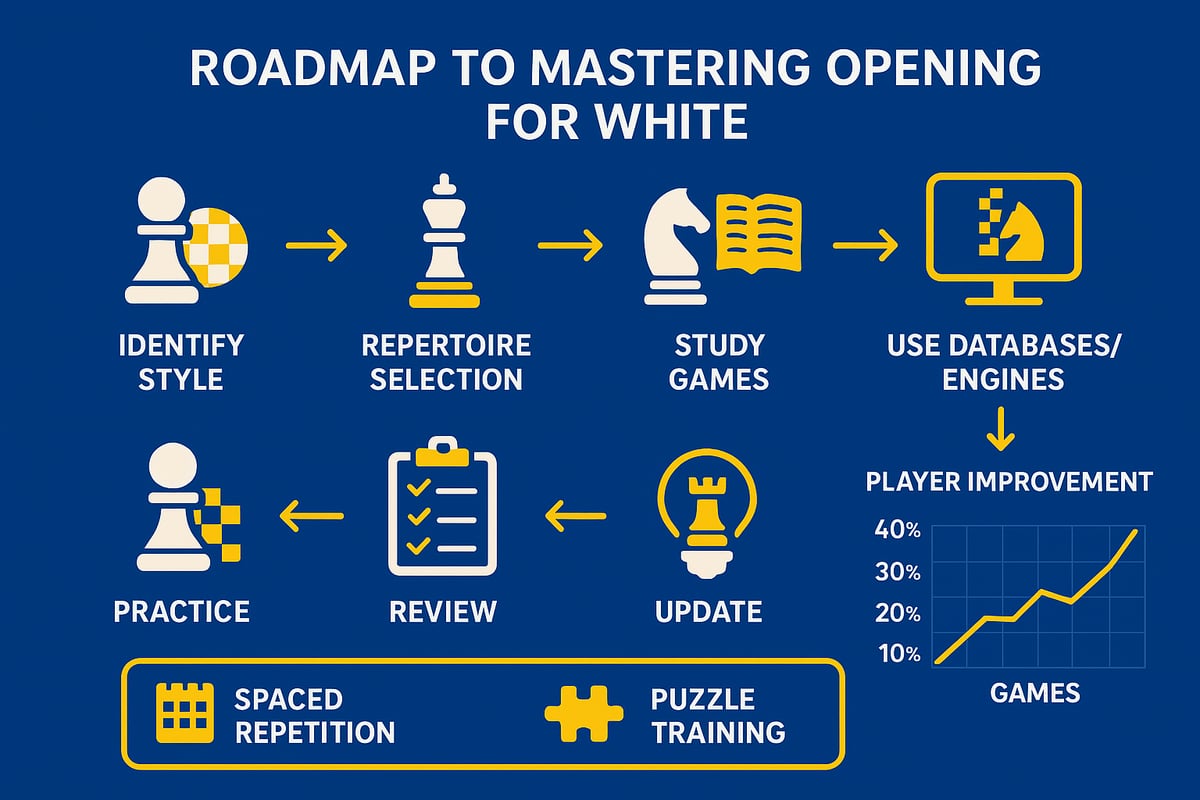
Step 1: Identify Your Opening Style
First, ask yourself what kind of chess you enjoy most. Do you love wild tactics, or do you prefer slow, positional battles? Your personal style should guide your approach to openings for white. If you crave excitement, sharp lines like the Scotch or King’s Gambit might suit you. Prefer control? Try the London or English. Knowing your style will help you focus your studies and boost your confidence at the board.
Step 2: Select a Core Repertoire
Choose one or two main openings for white that fit your style, plus a surprise weapon for variety. For example, combine the Italian Game with the London System, and keep a tricky sideline ready for unprepared opponents. Keeping your repertoire manageable helps you go deeper, not just broader. This approach ensures you’re always ready for a wide range of Black responses.
Step 3: Study Model Games and Grandmaster Battles
Dive into annotated games played by top players in your chosen openings for white. Watching how grandmasters handle the same positions you’ll face is like having a personal coach. Focus on the plans, not just the moves. Notice how they handle the middlegame after the opening phase. This habit will help you understand the “why” behind each move.
Step 4: Use Databases and Engines
Modern chess engines and online databases are essential tools for mastering openings for white. Check your lines for tactical pitfalls, and see how computers suggest improvements. Use sites that let you explore the latest trends and novelties. If you want to understand how technology is shaping preparation, check out the Impact of AI on Modern Chess Strategy for insights on using AI-driven tools to find fresh ideas and avoid outdated traps.
Step 5: Practice in Real and Simulated Games
Test your openings for white by playing training games with friends, online opponents, or even against computer simulations. The goal isn’t just to memorize moves, but to recognize patterns and adapt to surprises. Try setting up key positions from your openings and playing them out repeatedly. This kind of targeted practice builds muscle memory and sharpens your instincts.
Step 6: Review Your Games and Learn
After each game, take a few minutes to review your opening moves. Did you stick to your preparation? Were there any unfamiliar positions? Use this time to spot recurring mistakes or missed opportunities in your openings for white. Even top players make tweaks after reviewing their games, so never skip this step.
Step 7: Update Your Repertoire
Chess is always evolving, and so should your openings for white. Regularly update your repertoire with fresh lines and move order tricks. Follow the latest tournament games and engine discoveries. Make it a habit to refresh your notes, so you stay ahead of the curve. AI and online play have accelerated opening theory, making regular updates more important than ever.
Insights: Spaced Repetition, Puzzle Training, and Success Rates
To lock in your openings for white, use spaced repetition—review key positions and lines at increasing intervals. Mix in tactical puzzles based on your chosen openings to sharpen calculation skills. According to recent studies, players who update their repertoires and practice regularly improve their results by up to 15 percent.
Example: Preparing Against Popular Black Defenses
Let’s say you want to face the Queen’s Gambit Declined with confidence. Start by reviewing annotated games, then read resources like Queen's Gambit pros and cons for practical tips. Practice key lines against your training partner, and review your games to spot areas for improvement. Repeat the same process for the Sicilian or King’s Indian Defense to round out your preparation.
No matter your level, a structured approach to openings for white will transform your results. Remember, the key isn’t just memorizing moves—it’s building a toolkit you can rely on in every game.
Future Trends: How Opening Theory for White is Evolving
Are you wondering how the landscape of openings for white will look in 2026? The chess world is changing rapidly, and understanding where things are headed can give you a major edge. Let’s explore the key trends shaping the future of your opening choices.
AI and Engine Discoveries: The New Frontier
In recent years, engines like Stockfish 16+ and Leela have transformed how players approach openings for white. These powerful tools uncover new resources in well-trodden lines and even revive forgotten ideas. If you want to stay ahead, you need to keep up with the latest discoveries. For a deeper dive into how artificial intelligence is driving these changes, check out AI's Influence on Chess Openings.
Universal Systems and “Anti-Theory” Play
You might have noticed top players gravitating toward universal systems and “anti-theory” approaches. Openings for white like the London System, English, and flexible Reti setups allow you to sidestep heavy preparation and keep opponents guessing. This trend is only growing as more players look for lines that are easy to learn but hard to counter.
Online Chess and Faster Time Controls
The rise of online chess and faster time controls is reshaping the popularity of openings for white. With less time to memorize deep theory, practical systems and surprise weapons are more valuable than ever. Players are choosing lines that offer solid plans and tactical chances, even if they aren’t the most “bookish” options.
Move Order Flexibility and Transpositions
Modern opening theory is all about move order tricks and transpositions. By mixing up your first moves, you can dodge your opponent’s preparation and reach positions you know well. This flexibility is essential if you want your repertoire to hold up as theory evolves.
Openings on the Rise and Fall: 2024–2026
Here’s a snapshot of how the popularity of top openings for white is shifting:
| Opening | Trend | Notable Reason |
|---|---|---|
| Ruy Lopez (anti-Berlin) | Rising | New engine ideas |
| English (1.c4) | Rising | Flexibility, reversed Sicilian |
| London System | Stable | Universal, easy to play |
| King’s Gambit | Falling | Engine refutations, riskier lines |
| Queen’s Gambit Declined | Stable | Reliable, but more move order tricks |
Future-Proofing Your Repertoire
How can you keep your openings for white up to date as 2026 approaches? Focus on systems that offer flexibility, study model games from current top players, and regularly review the latest engine discoveries. Don’t be afraid to experiment—sometimes a new line can breathe life into your entire repertoire.
The future of openings for white is dynamic and exciting. If you stay curious and adaptable, you’ll always be ready for what comes next.
So, after diving into all these fresh strategies and seeing how much chess is evolving for White in 2026, you’re probably wondering—how do you actually put this into practice without getting overwhelmed? That’s where having the right tools at your fingertips really makes a difference. If you want to make real progress and start playing your openings with more purpose and confidence, why not take the next step? You can find easy-to-follow guides, visual cheat sheets, and practical tips that match exactly what you’ve just read about. Ready to upgrade your opening game and see results in your next match? Start Improving Your Openings


