

Ever stared at your opponent across the chessboard, wondering what their first move means? You're not alone. The opening phase can feel overwhelming, especially when you're facing someone who seems to know exactly what they're doing. That's where a chess openings book becomes your secret weapon. Whether you're flipping through physical pages or scrolling through digital guides, understanding how to use these resources properly can dramatically improve your performance in those crucial first moves. Let's explore what makes an opening book valuable, how to choose the right one, and most importantly, how to study it effectively without getting lost in endless variations.
What Exactly Is a Chess Openings Book?
A chess openings book isn't just a collection of moves you memorise like a shopping list. Think of it more as your strategic roadmap through the initial phase of the game.
These resources compile centuries of chess knowledge, documenting what works, what doesn't, and why certain moves lead to particular positions. The Encyclopaedia of Chess Openings represents the most comprehensive classification system, dividing openings into five categories (A through E) based on their characteristics.
Different Types of Opening Books
Not all chess openings books serve the same purpose. Here's what you'll encounter:
- Repertoire books focus on building a complete set of openings for White and Black
- Survey books cover multiple openings broadly, giving you general understanding
- Single-opening monographs dive deep into one specific opening system
- Theoretical references provide exhaustive variations for serious students
- Practical guides emphasise understanding over memorisation
The type you need depends entirely on your current level and goals. A beginner doesn't need the same depth as an advanced tournament player.
Why You Need More Than Just Database Memorisation
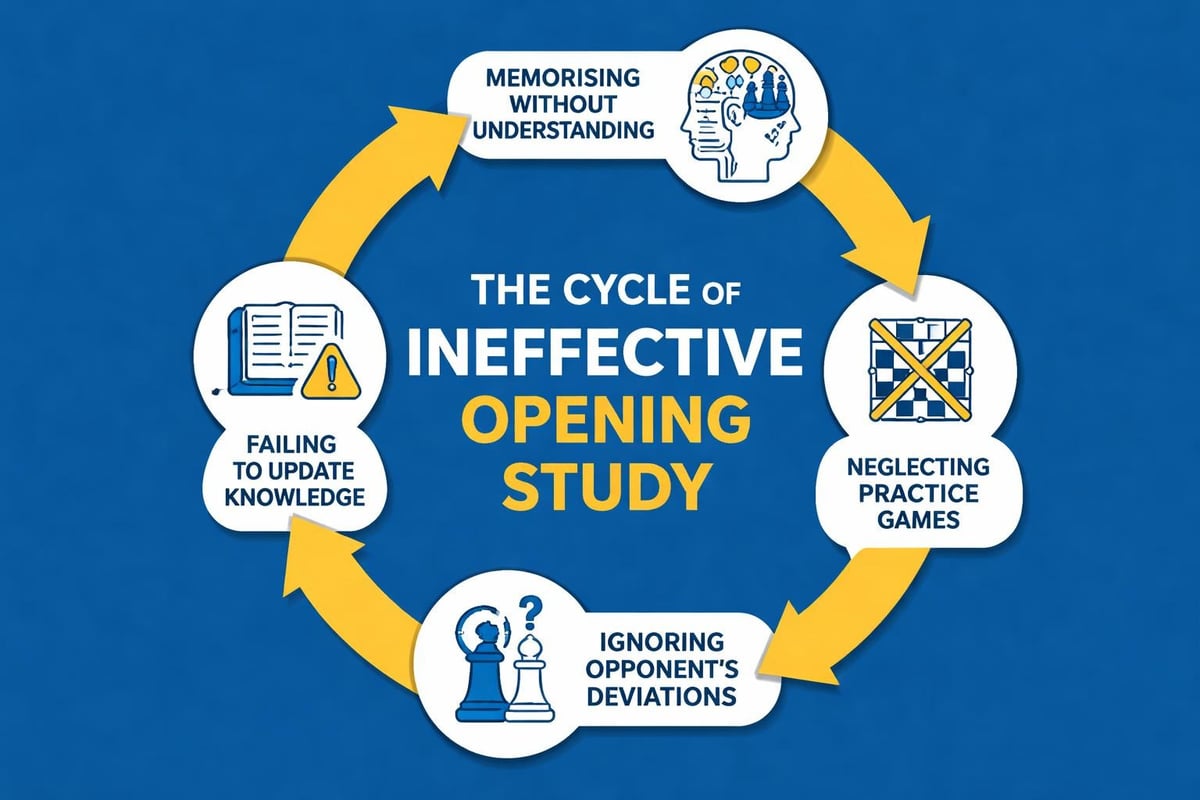
Here's something many players get wrong: they treat opening study like rote memorisation. You've probably seen it yourself, watching someone rattle off twenty moves of theory only to collapse when their opponent deviates on move twelve.
Understanding beats memorisation every single time. A quality chess openings book explains the ideas behind the moves, not just the moves themselves. According to research on chess opening complexity and similarity, the patterns and structures within openings matter far more than specific move orders.
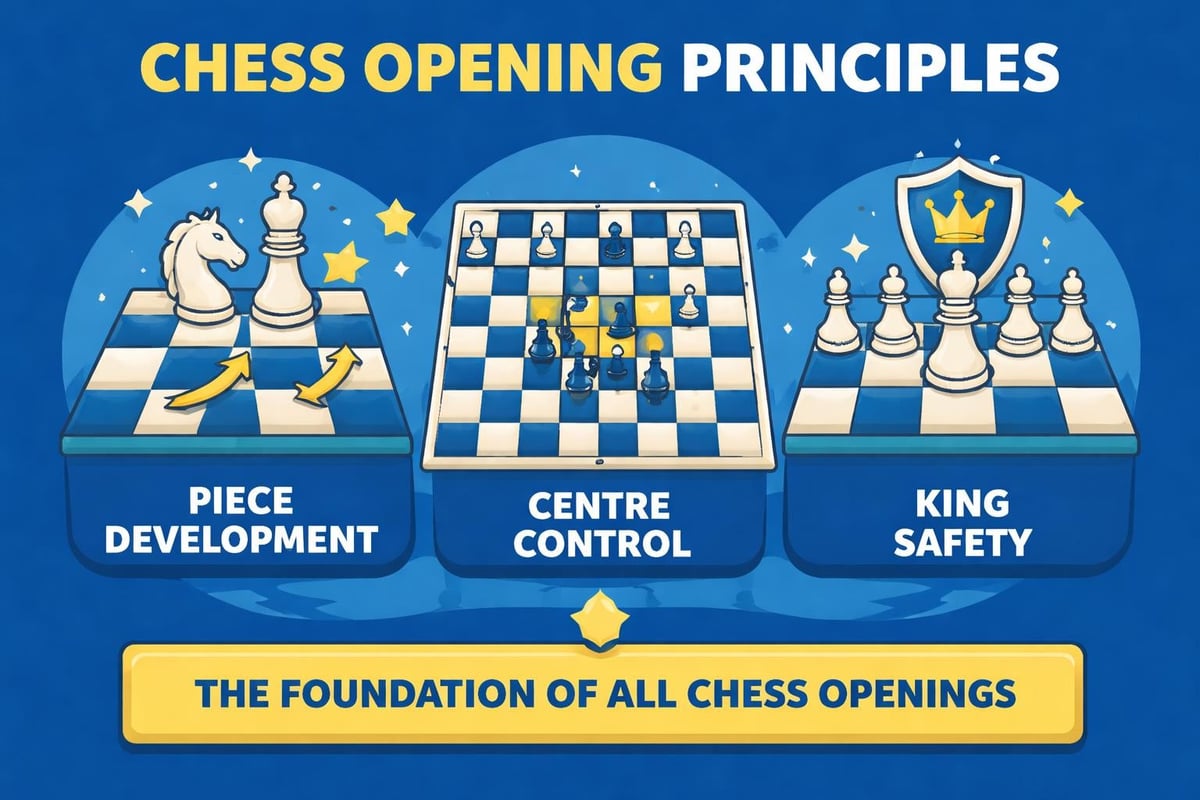
When you grasp why you're playing a move, you can handle surprises. Your opponent plays something unexpected? No problem, because you understand the underlying principles.
| Learning Approach | Pros | Cons |
|---|---|---|
| Pure Memorisation | Quick initial results | Collapses against deviations |
| Principle-Based | Flexible, adaptable | Slower initial progress |
| Combined Method | Best of both worlds | Requires more time investment |
The combined approach works best for most players. Learn the main lines, but always ask yourself: what's the point of this move?
Choosing the Right Chess Openings Book for Your Level
Walk into any chess shop and you'll face dozens of opening books. How do you choose?
For Beginners
You need books that focus on fundamental principles rather than complex variations. Look for titles that explain why moves are played, covering popular openings without drowning you in detail.
Start with resources that cover the most common chess openings rather than obscure systems. You'll face these openings regularly in actual games, making your study time immediately practical.
For Intermediate Players
At this stage, you're ready to build a proper repertoire. Choose a chess openings book that provides:
- Complete systems for both colours
- Explanations of typical middlegame plans
- Coverage of key sidelines opponents might try
- Model games showing ideas in action
The Chess.com opening theory articles offer excellent supplementary material alongside traditional books, showing how modern players handle classical positions.
Matching Books to Your Playing Style
Do you prefer aggressive or positional play? Your chess openings book should reflect your natural tendencies.
Aggressive players might explore the King's Gambit or sharp Sicilian variations, whilst positional players could focus on the English Opening or Queen's Gambit systems. Trying to force yourself into openings that don't suit your style leads to frustration and poor results.
How to Study a Chess Openings Book Effectively
Right, you've bought the book. Now what? Simply reading through variations won't help much. You need a systematic approach.
The Active Study Method
Never just read passively. Set up a physical board or use your favourite chess app, and play through the moves yourself. This engages your brain differently than reading alone.
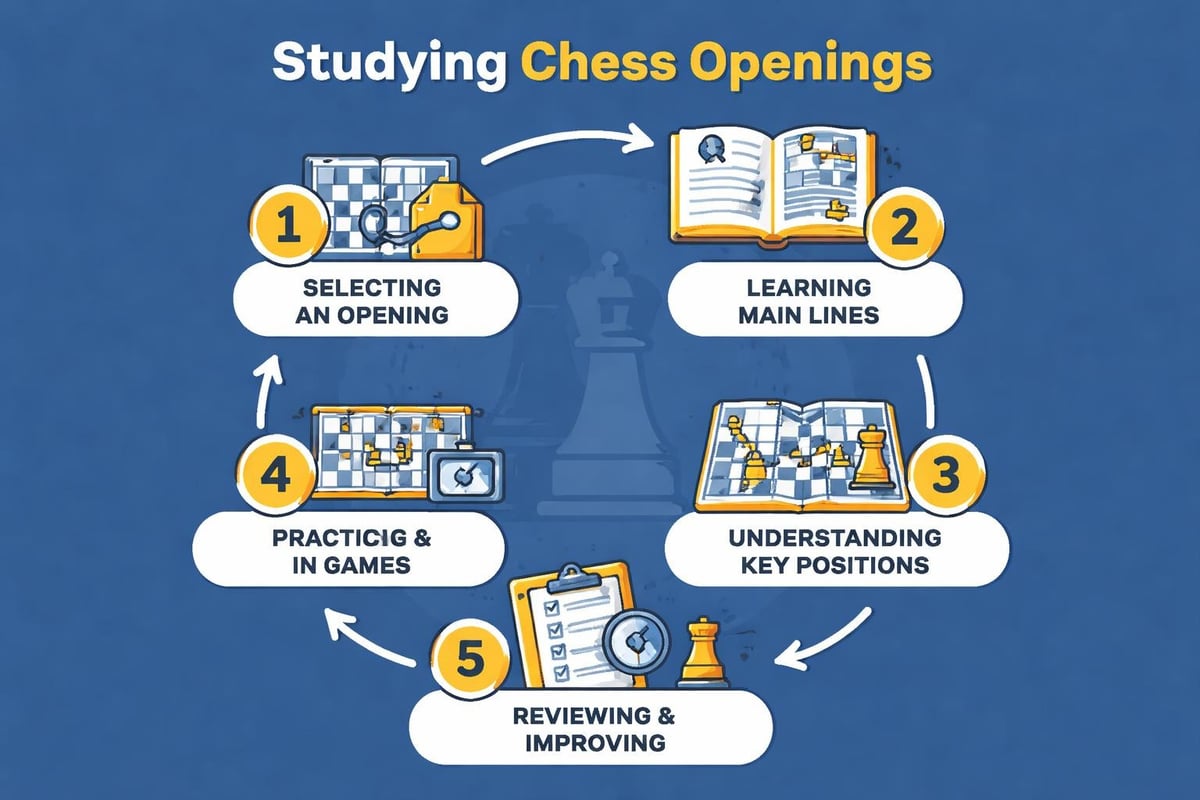
Follow these steps for each opening:
- Learn the main line first (typically 10-12 moves deep)
- Understand the resulting position and typical plans
- Add one or two important sidelines
- Play practice games using the opening
- Review your games and identify gaps in your knowledge
This cycle repeats as you deepen your understanding. The historical development of chess theory shows that even grandmasters continuously refine their opening repertoires throughout their careers.
Creating Your Personal Opening Notebook
Here's a game-changer: create summaries in your own words. When you finish studying a section of your chess openings book, write down the key ideas without looking at the book.
- What are the main strategic goals?
- Which piece placements are ideal?
- What common tactical themes exist?
- How does this opening transition to the middlegame?
This forces you to process the information rather than just storing it. Many players find that curated chess resources complement traditional books perfectly, offering quick reference guides that reinforce book learning.

Balancing Breadth and Depth in Your Opening Study
One of the trickiest aspects of using a chess openings book is knowing how deep to go. Study too many openings superficially, and you won't really know any of them. Study too few too deeply, and you're wasting time on positions you'll rarely reach.
The Goldilocks Zone
For most club players, this balance works well:
As White: Master one main opening deeply (like 1.e4 or 1.d4), understanding it to move 15-20 in main lines. Learn responses to common Black defences, going about 10-12 moves deep in each.
As Black: Prepare one solid defence against 1.e4 and one against 1.d4. Quality beats quantity here. If you're wondering about best openings for Black, choose based on your style rather than what's theoretically "best."
| Time Investment | Study Depth | Practical Benefit |
|---|---|---|
| 10 hours | Surface understanding | Minimal |
| 25 hours | Working knowledge | Good |
| 50+ hours | Deep understanding | Excellent |
These numbers are per opening system, not total. Quality study beats hours logged mindlessly.
Common Mistakes When Using Opening Books
Let's address the pitfalls that trap even experienced players.
Mistake #1: Studying Without Playing
Your chess openings book isn't a novel you read once and shelve. You must test your knowledge in real games, whether online rapid games or club matches. Theory only sticks when you've made the mistakes yourself.
Mistake #2: Ignoring Move Order Details
Sometimes the same position can arise through different move orders, but those differences matter. Some orders allow your opponent extra options or let them avoid lines you've prepared. Pay attention to these nuances.
Mistake #3: Neglecting Transpositions
Chess openings rarely stay in neat boxes. Your Caro-Kann Defence study might transpose into French structures, or your English Opening preparation might reach Queen's Gambit positions. Understanding these connections makes your knowledge more flexible.
Mistake #4: Forgetting to Update Your Knowledge
Opening theory constantly evolves. A chess openings book from 1990 contains valuable ideas, but modern engines have refuted some lines whilst discovering new resources in others. Supplement older books with current resources like ChessPublishing.com, where grandmasters share the latest theoretical developments monthly.
Digital vs Physical Opening Books
Technology has transformed how we access opening knowledge, but does that make traditional books obsolete?
Advantages of Physical Books
There's something about turning pages and setting up positions on a real board. Many players retain information better this way, and physical books don't come with the distractions of screens and notifications.
Physical books also tend to offer better narrative flow. Authors can guide you through opening complexities in a structured way that makes sense pedagogically.
Benefits of Digital Resources
Digital resources offer searchability, regular updates, and interactive features. You can often play through variations with engine evaluation, seeing immediately when a line is dubious.
Cost matters too. Digital subscriptions often provide access to multiple opening resources for less than purchasing several physical books. The concept of opening books has expanded significantly in the digital age, now including video courses, interactive training tools, and constantly updated databases.
The best approach? Use both. Get a foundational physical chess openings book for your main openings, and supplement with digital resources for specific questions and updates.
Building a Complete Opening Repertoire
A chess openings book helps you construct your personal arsenal of openings. But what should that repertoire look like?
Essential Components
Your repertoire needs coverage for every situation:
- Response to 1.e4 as Black
- Response to 1.d4 as Black
- Response to other first moves (1.c4, 1.Nf3, etc.)
- Your chosen first move as White
- Responses to your opponent's main defences
Trying to prepare for everything leads to superficial knowledge. Focus on building one solid option in each category first, then expand later if desired.
When to Switch Openings
Should you stick with one opening forever? Not necessarily. You might switch if:
- Your style has evolved and the opening no longer fits
- You've hit a plateau and fresh positions might help
- Opponents have figured out your repertoire
- You find a system that genuinely excites you more
Just don't switch every month. Give openings time to work. Sometimes you lose games because you played the opening poorly, not because the opening itself is flawed.
Integrating Opening Study With Overall Improvement
Here's a reality check: spending 90% of your study time on openings whilst neglecting tactics, endgames, and strategy won't make you a better player.
The Balanced Study Plan
Most experts recommend something like:
- 30% tactics and calculation
- 25% opening study
- 25% endgame technique
- 20% middlegame strategy and game analysis
These percentages shift based on your level and tournament schedule, but the principle remains: openings are important, not everything.
When you study your chess openings book, always look forward to the resulting middlegame. What types of positions arise? What skills do you need to play them well? This connects your opening preparation to practical improvement.
Making Opening Study Enjoyable
Let's be honest, ploughing through dense variation after variation can feel like homework. How do you make it engaging?
Study What Interests You
Choose openings that produce positions you enjoy. Love attacking? The King's Indian Defence or Sicilian Dragon might suit you. Prefer quiet positional play? The Caro-Kann or Queen's Gambit could be your style.
Reading about good beginner chess books can help you find resources written in accessible, engaging styles rather than dry, encyclopaedic formats.
Set Specific Goals
Rather than "study openings," try "learn the main line of the Italian Game and two sidelines this week." Specific targets make progress measurable and satisfying.
Join Study Groups
Discussing openings with others brings fresh perspectives. You might discover ideas you missed, or explaining concepts to someone else deepens your understanding.
Beyond the Book: Supplementary Resources
Your chess openings book forms the foundation, but other resources enhance the structure.
Computer engines help you understand why certain moves work. Just don't let engine analysis replace human understanding. The engine might say a position is equal, but if you can't figure out the plan, that evaluation doesn't help you.
Databases of grandmaster games show how strong players handle your openings in practice. Watching experts navigate the positions you're studying provides invaluable pattern recognition.
Video courses offer different learning modalities. Some concepts click better when you hear someone explain them verbally whilst showing moves on screen.
The key is using these resources to complement, not replace, your core chess openings book study.
Tracking Your Progress
How do you know if your opening study is actually helping? Track these metrics:
| Metric | How to Measure | Target |
|---|---|---|
| Opening phase results | Win/draw/loss record in first 15 moves | Improving trend |
| Depth of preparation | Average move number where you leave theory | Gradually increasing |
| Comfort level | Subjective rating after games | Growing confidence |
| Time usage | Clock time spent in opening | Decreasing |
Don't obsess over these numbers, but reviewing them monthly gives you feedback on whether your study methods work.
Adapting Your Repertoire to Opponents
Here's an advanced concept: your chess openings book might present the "objectively best" lines, but sometimes playing something slightly less critical catches opponents off guard.
If you're facing someone who's memorised twenty moves of mainline theory, steering into a respectable sideline where you both need to think can level the playing field. This doesn't mean playing rubbish moves, just choosing practical paths over theoretical debates.
Similarly, if you know your opponent plays the Caro-Kann and you've prepared specific lines against it, you can steer the game towards your preparation. Understanding common Caro-Kann mistakes helps you set traps even in familiar positions.
Keeping Your Opening Knowledge Fresh
You've studied your chess openings book thoroughly. Now what? Knowledge fades without reinforcement.
Spaced repetition works brilliantly for openings. Review your main lines weekly at first, then every two weeks, then monthly. This prevents the frustration of forgetting variations you spent hours learning.
Regular practice games are essential. Play your openings in rapid or blitz formats online, treating these games as applied study sessions rather than rating contests.
Analyse your opening phase after every game. Even if you won, did you handle the opening optimally? Where did you deviate from your preparation, and was that deviation intentional or a mistake?
Mastering chess openings doesn't happen overnight, but a well-chosen chess openings book combined with systematic study will transform your confidence in those crucial first moves. Whether you're just starting to build a repertoire or refining your existing knowledge, the principles remain the same: understand before you memorise, practice consistently, and keep your learning active rather than passive. Ready to accelerate your opening mastery with resources designed specifically for efficient learning? Chess Cheat Sheets provides streamlined guides, visual references, and practical tools that complement your book study, helping you absorb opening knowledge faster and apply it more effectively in your games.


