

You're sitting across from an opponent, and suddenly you can't remember how a knight moves. Or was that pawn allowed to move two squares? We've all been there. Whether you're just learning the game or brushing up on fundamentals, having a reliable chess moves cheat sheet at your fingertips transforms confusion into confidence. Let's dive into everything you need to know about chess moves, from basic piece movements to advanced tactical patterns that'll sharpen your play.

Understanding Basic Chess Piece Movements
Before you can think about strategy or tactics, you need to know how each piece travels across the board. It sounds simple, but mastering these fundamentals is where every great player begins.
The Pawn: Your Front-Line Soldiers
Pawns might seem straightforward, but they're surprisingly nuanced. Here's what you need to remember:
- Forward movement: Pawns move one square straight ahead (never backwards)
- Initial double move: On their first move only, pawns can advance two squares
- Capturing: Pawns capture diagonally, one square forward to the left or right
- Promotion: When a pawn reaches the opposite end of the board, it transforms into any piece (except a king)
The pawn's unique movement pattern makes it both a defensive wall and an attacking force. Think of them as the foundation of your position-strong when connected, vulnerable when isolated.
Knights: The Tactical Tricksters
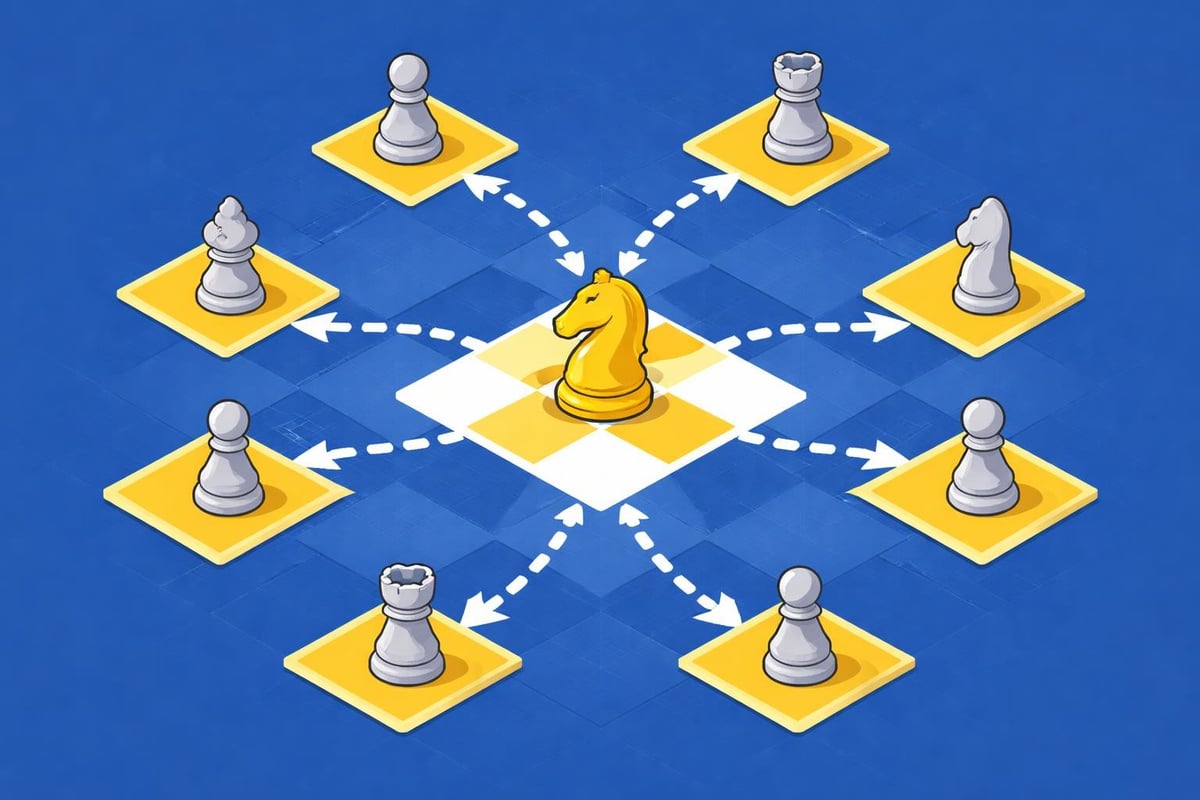
Knights move in an L-shape: two squares in one direction and one square perpendicular. This distinctive pattern means they're the only pieces that can jump over others. A chess moves cheat sheet should emphasize that knights excel in closed positions where other pieces struggle to manoeuvre.
Bishops, Rooks, and Queens: The Long-Range Arsenal
These pieces control diagonals and files with devastating effect:
| Piece | Movement Pattern | Relative Value | Key Strength |
|---|---|---|---|
| Bishop | Diagonals only | 3 points | Long-range diagonal control |
| Rook | Files and ranks only | 5 points | Dominates open files |
| Queen | All directions | 9 points | Ultimate flexibility |
Bishops glide along diagonals for as many squares as are unobstructed. You'll always have one light-squared and one dark-squared bishop. Rooks command entire files and ranks, making them particularly powerful in endgames. The queen combines both patterns, moving like a bishop or rook in any direction.
The King: Protecting Your Crown
Your king moves one square in any direction. He's the most important piece-lose him and you lose the game. But don't underestimate his power in the endgame, where he transforms from a liability into an active fighting piece.
Special Moves Every Player Must Know
Beyond basic movements, chess includes several special moves that can dramatically shift the game's momentum. Missing these in your chess moves cheat sheet would be like learning to drive without understanding traffic signals.
Castling: Your King's Safety Mechanism
Castling is the only move that allows you to move two pieces simultaneously. You slide your king two squares toward a rook, then tuck the rook next to him on the opposite side. This accomplishes two critical objectives: king safety and rook activation.
Requirements for castling:
- Neither piece has moved previously
- No pieces stand between king and rook
- King isn't in check
- King doesn't pass through or land on an attacked square
You can castle kingside (shorter side, often called "castling short") or queenside (longer side, "castling long"). Most players castle kingside because it's quicker and generally safer.
En Passant: The Forgotten Capture
This peculiar pawn capture confuses many intermediate players. When an opponent's pawn advances two squares from its starting position and lands beside your pawn, you can capture it as if it had only moved one square. You must execute this capture immediately on your next move or lose the opportunity forever.
Pawn Promotion: Creating New Threats
When your pawn reaches the eighth rank, you must immediately promote it. Almost always, you'll choose a queen, but occasionally a knight works better to deliver checkmate or avoid stalemate. This transformation can completely reverse a losing position, which is why experienced players push passed pawns relentlessly.
Tactical Patterns for Your Chess Moves Cheat Sheet
Understanding how pieces move is just the beginning. The real magic happens when you combine these movements into tactical patterns. Chess.com's comprehensive guide offers excellent visual representations of these concepts.
Forks: Double Trouble
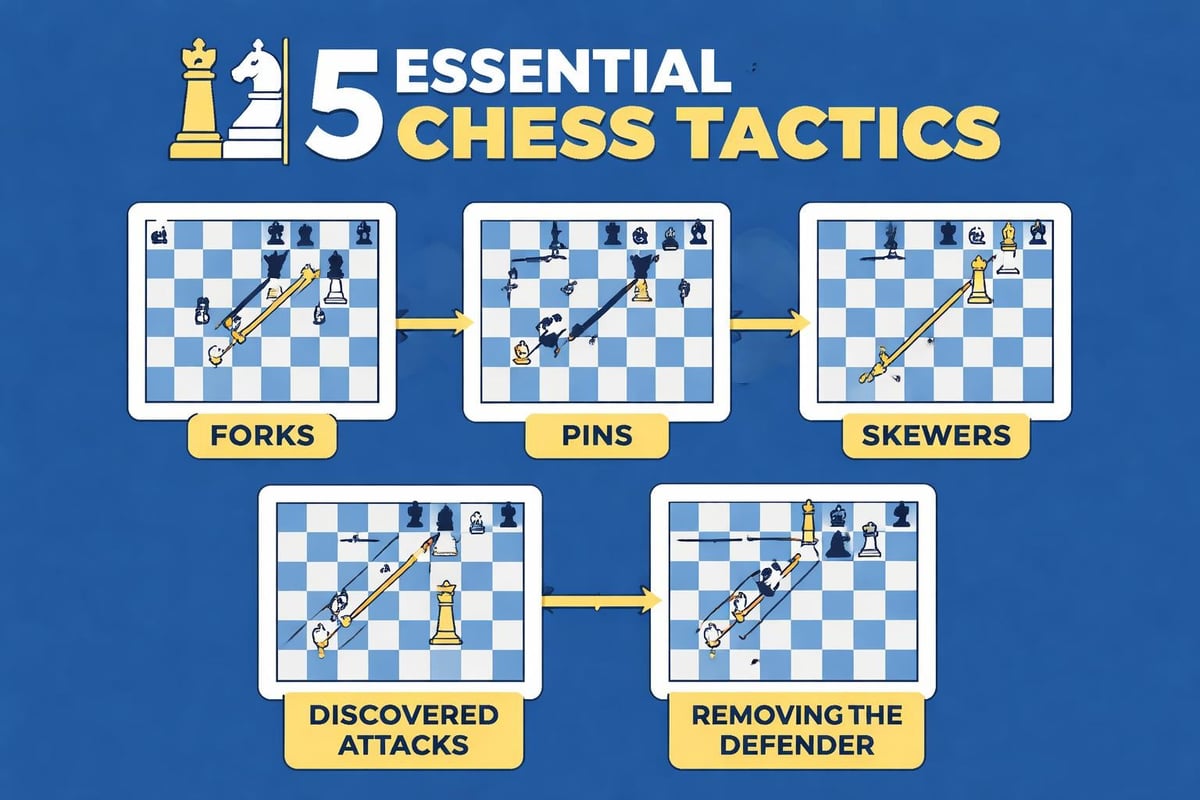
A fork occurs when one piece attacks two or more enemy pieces simultaneously. Knights excel at this because of their unique movement pattern-they can attack squares that other pieces struggle to defend together.
Common fork scenarios:
- Knight forks (the famous "family fork" attacks king and queen)
- Pawn forks (attacking two pieces on adjacent diagonals)
- Bishop forks (less common but devastating when they land)
Pins and Skewers: Restricting Movement
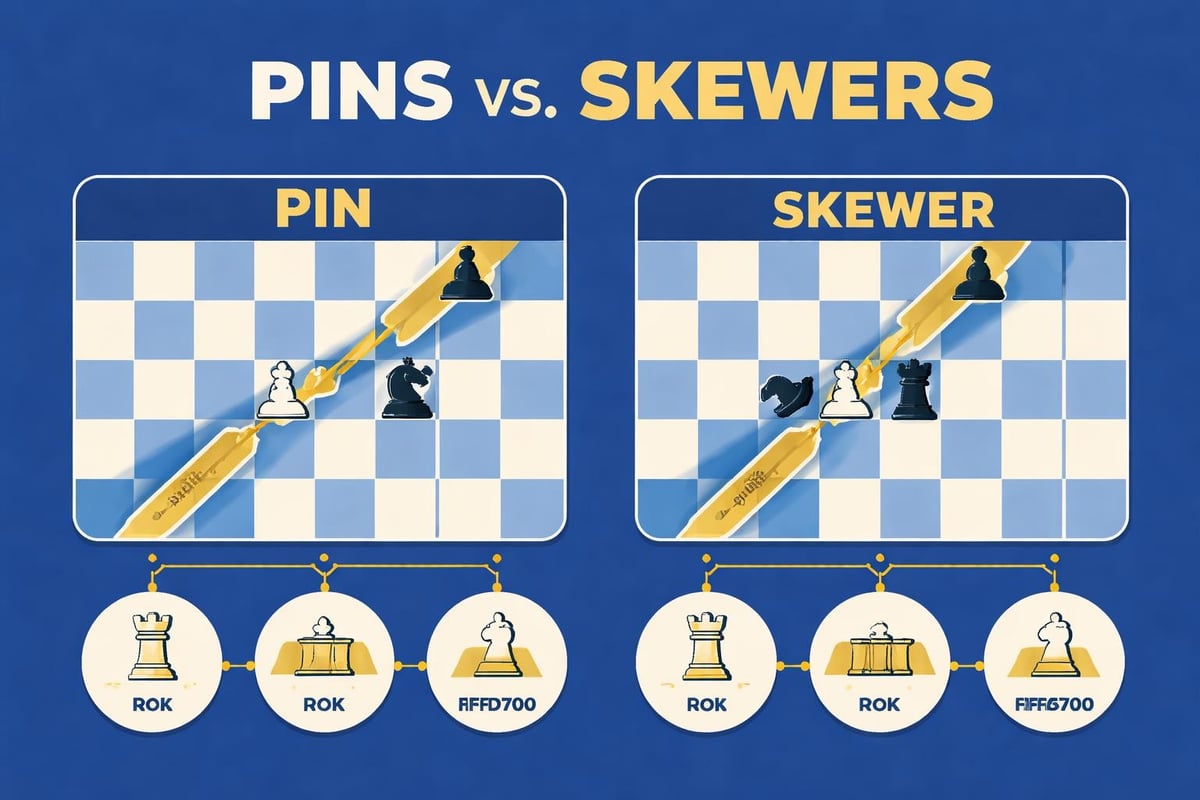
Pins and skewers exploit alignment. A pin attacks a piece that can't move without exposing a more valuable piece behind it. A skewer reverses this: you attack a valuable piece that must move, exposing a less valuable piece behind it.
Think of pins as handcuffs and skewers as forcing someone to step aside. Both tactics use bishops, rooks, or queens along lines, making them essential patterns for any chess moves cheat sheet.
Discovered Attacks: Hidden Threats
When you move one piece and simultaneously unleash an attack from a piece behind it, you've executed a discovered attack. The most dangerous version is the discovered check, where moving one piece reveals check from another. Your opponent must respond to the check, often allowing your moved piece to capture material freely.
Opening Principles Worth Memorising
Your first 10-15 moves set the tone for the entire game. Rather than memorising dozens of variations, focus on these core principles that apply across all openings.
Control the Centre
The four central squares (e4, d4, e5, d5) are the most important real estate on the board. Pieces in the centre influence more squares and provide greater flexibility. Most strong openings fight for central control with pawns and pieces.
Here's a quick breakdown:
- Occupy the centre with pawns (e4 and d4 for White, e5 and d5 for Black)
- Support your centre with pieces, not just more pawns
- Attack your opponent's centre when you can't control it yourself
If you're exploring specific systems, resources like Dave Child's opening references provide excellent starting points. You might also find comparing defensive systems helpful when choosing your repertoire.
Develop Your Pieces Efficiently
Don't move the same piece twice in the opening unless absolutely necessary. Each move should bring a new piece into the game or improve your position significantly. Knights and bishops should reach active squares quickly, typically by move 5-7.
Development checklist:
- Knights before bishops (they have fewer good squares)
- Castle early (usually by move 8-10)
- Connect your rooks (develop all minor pieces first)
- Don't bring your queen out too early (she's easily harassed)
King Safety: Castle Early
Leaving your king in the centre invites disaster. Castling accomplishes two goals with one move: tucking your king into a corner fortress and activating a rook. Most games at every level are decided by whoever castles first and maintains better king safety.

Building Your Personal Chess Moves Cheat Sheet
Creating your own reference materials reinforces learning far better than simply reading someone else's notes. Here's how to construct a chess moves cheat sheet that actually improves your game.
Organise by Category
Structure your cheat sheet into logical sections:
- Piece movements (with diagrams)
- Special rules (castling, en passant, promotion)
- Tactical patterns (forks, pins, skewers)
- Opening principles (specific to your repertoire)
- Endgame basics (king and pawn opposition, basic checkmates)
The collection of structured guides demonstrates how professional materials organise information for quick reference during study sessions.
Include Visual Diagrams
Chess is a visual game. Words alone don't capture how a knight fork looks or how pawn chains support each other. Sketch simple board diagrams showing key positions. You don't need artistic talent-just clear representations of piece placement.
For digital versions, numerous online tools generate position diagrams from notation. For physical sheets, graph paper works brilliantly for sketching boards.
Add Personal Notes and Mistakes
Your chess moves cheat sheet becomes truly valuable when it reflects your specific weaknesses. Did you forget en passant in a tournament game? Highlight it. Do you consistently miscalculate knight moves? Add extra practice positions.
Review your recent games and identify recurring mistakes. Then create specific reminders in your cheat sheet addressing those exact problems.
Middlegame Tactics to Master
The middlegame is where tactics flourish. Unlike the structured opening or simplified endgame, middlegames burst with complexity and opportunity. Your chess moves cheat sheet should include these essential patterns.
Removing the Defender
Sometimes a piece is only defended by one guardian. Remove that guardian-through capture, deflection, or forcing it away-and the target falls. This simple concept underlies countless tactical sequences.
Overloading and Deflection
A piece defending multiple targets simultaneously is overloaded. You can often deflect it from one duty to another, winning material on the abandoned square. Queens defending both a back-rank mate threat and a loose piece are classic overload victims.
Trapped Pieces
Even powerful pieces become useless when trapped without escape squares. Bishops hemmed in by their own pawns, knights stuck on the rim, rooks sealed behind their own pieces-all represent tactical opportunities to win material.
| Tactic | Difficulty | Common Pieces | Key Indicator |
|---|---|---|---|
| Fork | Beginner | Knight, Pawn | Pieces on same-coloured squares |
| Pin | Beginner | Bishop, Rook | Aligned pieces |
| Skewer | Intermediate | Bishop, Rook | Valuable piece in front |
| Discovered Attack | Intermediate | Any | Pieces on same line |
| Deflection | Advanced | Any | Overworked defender |
Endgame Essentials for Your Reference Sheet
Many games are decided in the endgame, yet most players study it least. Your chess moves cheat sheet needs these fundamental endgame concepts.
King and Pawn versus King
This is the most basic endgame, and understanding it unlocks countless positions. The key concepts are opposition (kings facing each other with one square between), the square rule (can your king catch a passed pawn?), and key squares (critical squares your king must reach to promote).
Can you win with king and pawn against a lone king? It depends entirely on piece positions, not just material count.
Basic Checkmates
You should be able to deliver checkmate with:
- King and queen versus king (easiest)
- King and rook versus king (restrict the enemy king to the edge)
- Two bishops and king versus king (requires more technique)
- Bishop, knight, and king versus king (difficult but learnable)
Failing to convert a won endgame is heartbreaking. Spending 30 minutes practising these checkmates prevents countless drawn games you should have won. Many players benefit from structured puzzle practice to internalise these patterns.
Rook Endgames: The Lucena and Philidor
Rook endgames occur more frequently than any other type. Two positions appear repeatedly:
The Lucena position is a winning technique for the side with an extra pawn. The Philidor position shows how the defending side can hold a draw despite being down a pawn. Understanding these positions transforms your endgame confidence.
How to Use Your Chess Moves Cheat Sheet Effectively
Creating the perfect reference material means nothing if you don't use it properly. Here's how to integrate your cheat sheet into actual improvement.
Review Before Games
Spend five minutes before playing reviewing your cheat sheet. Refresh the tactical patterns, remind yourself of opening principles, and visualise the piece movements. This mental warm-up activates pattern recognition during the game.
Analyse with Your Cheat Sheet Nearby
After each game, especially losses, review with your chess moves cheat sheet beside you. Did you miss a tactical pattern you've documented? Did you violate an opening principle? Mark these moments for special attention.
Update Regularly
Your cheat sheet should evolve as you improve. Add new patterns you've learned, remove basics you've mastered completely, and reorganise sections that aren't working. A living document serves you better than a static one.
Consider exploring additional chess resources to supplement your personal notes with professional insights.
Common Mistakes When Learning Chess Moves
Even with a comprehensive chess moves cheat sheet, players repeatedly make certain errors. Recognising these pitfalls helps you avoid them.
Moving Too Quickly
Blitzing out moves without calculating consequences is the amateur's curse. Even when you know how pieces move, you must verify that your intended move doesn't hang material or walk into tactics. Slow down, especially in critical positions.
Ignoring Opponent Threats
Focusing solely on your own plans whilst ignoring your opponent's threats leads to disaster. Before making any move, ask yourself: "What is my opponent threatening?" Then address the most dangerous threat.
Overvaluing Material
Sometimes sacrificing material creates overwhelming positional advantages or mating attacks. Beginners cling to every pawn, but intermediate players understand when to invest material for the initiative, better piece placement, or attacking chances.
Neglecting King Safety
At every stage of the game, king safety matters. Opening: castle early. Middlegame: maintain pawn shields. Endgame: activate your king but watch for back-rank threats. More games are lost to king hunts than to material deficits.
Resources to Complement Your Cheat Sheet
No single document contains everything about chess. Supplement your personal chess moves cheat sheet with these resources for comprehensive learning.
Quality learning materials accelerate improvement dramatically. Chess.com's opening cheat sheet provides excellent coverage of popular opening systems, whilst video tutorials help visual learners grasp piece movements quickly.
For players building a complete learning system, exploring comprehensive opening guides helps you develop a solid repertoire alongside tactical skills. The most common chess openings article identifies which systems you'll face most frequently.
Recommended resource types:
- Puzzle books for tactical training
- Opening repertoire guides for your style
- Endgame manuals for technical positions
- Game collections from strong players
- Video lessons for visual explanations
Don't forget about structured learning approaches. Many players find success with beginner-friendly chess books that systematically build understanding rather than overwhelming you with information.
Customising Your Cheat Sheet for Your Playing Style
Not every chess moves cheat sheet serves every player equally. Tailor yours to match your preferences and tendencies.
Aggressive Players
If you love attacking, emphasise tactical patterns that create threats. Include sacrificial ideas, mating patterns, and aggressive opening systems. Your cheat sheet might feature more diagrams of attacking piece coordination and fewer defensive techniques.
Positional Players
Prefer slow strategic squeezes? Focus your cheat sheet on pawn structures, piece placement principles, and endgame technique. Document how to restrict opponent pieces and gradually improve your position.
Defensive Specialists
Some players excel at defending difficult positions. If that's you, include defensive tactics like counterattack patterns, fortress positions, and drawing techniques when down material. Document how to neutralise opponent advantages.
Time Management Styles
Blitz players need instant pattern recognition, so prioritise visual diagrams and quick-reference tables. Classical players can include more detailed explanations and calculation trees for complex positions.
Making Your Cheat Sheet Portable and Accessible
The best chess moves cheat sheet is the one you actually reference. Make yours convenient to use whenever you need it.
Digital Options
Store your cheat sheet on your phone for instant access. Cloud documents sync across devices, ensuring you always have the latest version. Screenshots of key positions work brilliantly for quick visual reference during online games.
Physical Formats
Print a condensed version on a single laminated sheet for over-the-board play. Keep it in your chess bag alongside your clock and scorebook. Some players create small pocket-sized cards for individual tactics or positions.
Combination Approaches
Many successful players maintain both digital master documents and physical quick-reference cards. The digital version contains everything, whilst physical cards highlight the most critical patterns you're currently working to master.
A well-constructed chess moves cheat sheet becomes your trusted companion on the path to improvement, transforming complex concepts into accessible references you can consult anytime. Whether you're struggling with basic piece movements or refining advanced tactical patterns, having organised, personalised notes accelerates your learning dramatically. Chess Cheat Sheets offers professionally designed guides, opening toolkits, and puzzle collections that complement your personal notes, providing the structured resources you need to master chess efficiently without spending years on extensive study. Their materials work perfectly alongside your own cheat sheets, giving you both personalised notes and expert-designed references to sharpen your skills and boost your confidence at the board.


