

If you've ever faced 1.e4 and felt overwhelmed by the sharp tactical complications of the Sicilian or the endless theory of the Ruy Lopez, you're not alone. The chess French defense offers a completely different approach: a solid, positional opening that lets you fight for the centre without memorising twenty moves of theory. Named after a correspondence match between London and Paris in 1834, this defence has been trusted by world champions and club players alike for nearly two centuries. Today, we'll explore why this opening remains such a powerful weapon and how you can add it to your repertoire with confidence.
Understanding the Basic French Defense Structure
The chess French defense begins with the moves 1.e4 e6, followed by 2.d4 d5. Right from the start, you're making a statement about how you want to play the game. Instead of allowing White complete control of the centre, you immediately challenge the e4 pawn with your d-pawn.
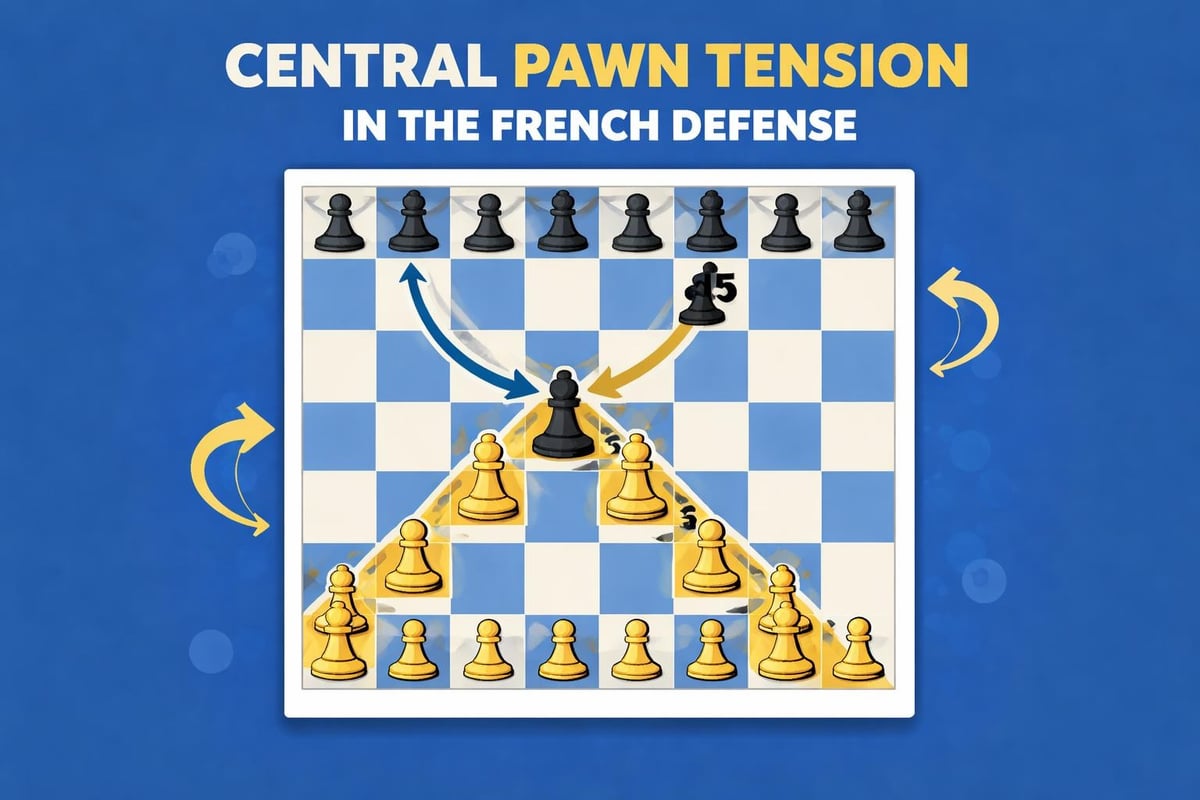
What makes this opening fascinating is the pawn chain that develops. After White plays 3.e5 (in many variations), you get a locked pawn structure that defines the entire middlegame. Your light-squared bishop often gets trapped behind your own pawns on e6, which is both the main drawback and a key feature of the position.
The Central Pawn Tension
Here's where things get interesting. Unlike open positions you might encounter in other openings, the French creates immediate tension in the centre. You're not just developing pieces randomly; every move connects to this central battle.
The fundamental question becomes: how will you resolve this tension? Will you capture on e4? Will you undermine White's centre with moves like ...c5? These decisions shape your entire game plan.
Main Variations You Need to Know
The beauty of the chess French defense lies in its flexibility. Depending on White's third move, you'll enter completely different types of positions. Let's break down the most important variations you'll face over the board.
The Advance Variation (3.e5)
This is what many players throw at French defenders. White pushes the e-pawn to e5, gaining space and restricting your pieces. But here's the thing: they've also created a target.
Your typical plan involves:
- Playing ...c5 to attack the d4 pawn
- Developing your queenside knight to c6
- Fighting for space on the kingside with ...f6
- Manoeuvring your light-squared bishop via d7 or sometimes even a6
| White's Advantages | Black's Advantages |
|---|---|
| More space | Clear plan with ...c5 |
| Kingside attacking chances | Solid pawn structure |
| Better piece mobility | Long-term pressure on d4 |
The Exchange Variation (3.exd5)
When White plays 3.exd5 exd5, they're essentially saying "I want a quiet game." This variation has a reputation for being drawish, but don't be fooled. There's plenty of play left in the position.
The Exchange Variation of the French Defense leads to symmetrical pawn structures where piece activity becomes paramount. Your main challenge is developing your light-squared bishop effectively, often through moves like ...Bd6 or ...Bf5.
The Classical Variation (3.Nc3)
This is where theory gets deep. After 3.Nc3 Nf6, White must decide how to defend the e4 pawn. The most common continuation is 4.Bg5, leading to rich, complex positions.
Here's what you need to remember:
- Pin pressure on your knight creates tactical opportunities
- The move ...dxe4 often leads to piece trades
- Your bishop pair can become a long-term asset
- Castling kingside is usually your priority
The Tarrasch Variation (3.Nd2)
White develops the knight to d2 instead of c3, keeping the c-pawn free to support the centre. This variation gained popularity because it gives White more flexibility in handling the position.
After 3.Nd2 c5, you're fighting for central control immediately. The resulting positions often feature:
- Isolated queen's pawn structures
- Active piece play for both sides
- Sharp tactical complications
- Dynamic pawn breaks
For those looking to expand their opening knowledge beyond the French, you might find our guide on chess openings for intermediate players helpful.

Strategic Ideas for Black
Playing the chess French defense isn't just about memorising moves. You need to understand the underlying strategic concepts that guide your decisions throughout the game. Let's explore the key themes you'll encounter.
The Light-Squared Bishop Problem
Every French player must confront this issue: what do you do with your light-squared bishop? This piece often becomes trapped behind your pawn chain, particularly after ...e6 and ...d5.
Your solutions include:
- Developing it to d7 before playing ...e6
- Fianchettoing on the kingside in some lines
- Trading it off for White's dark-squared bishop
- Accepting its passive role temporarily whilst building pressure elsewhere
Pawn Breaks: Your Path to Activity
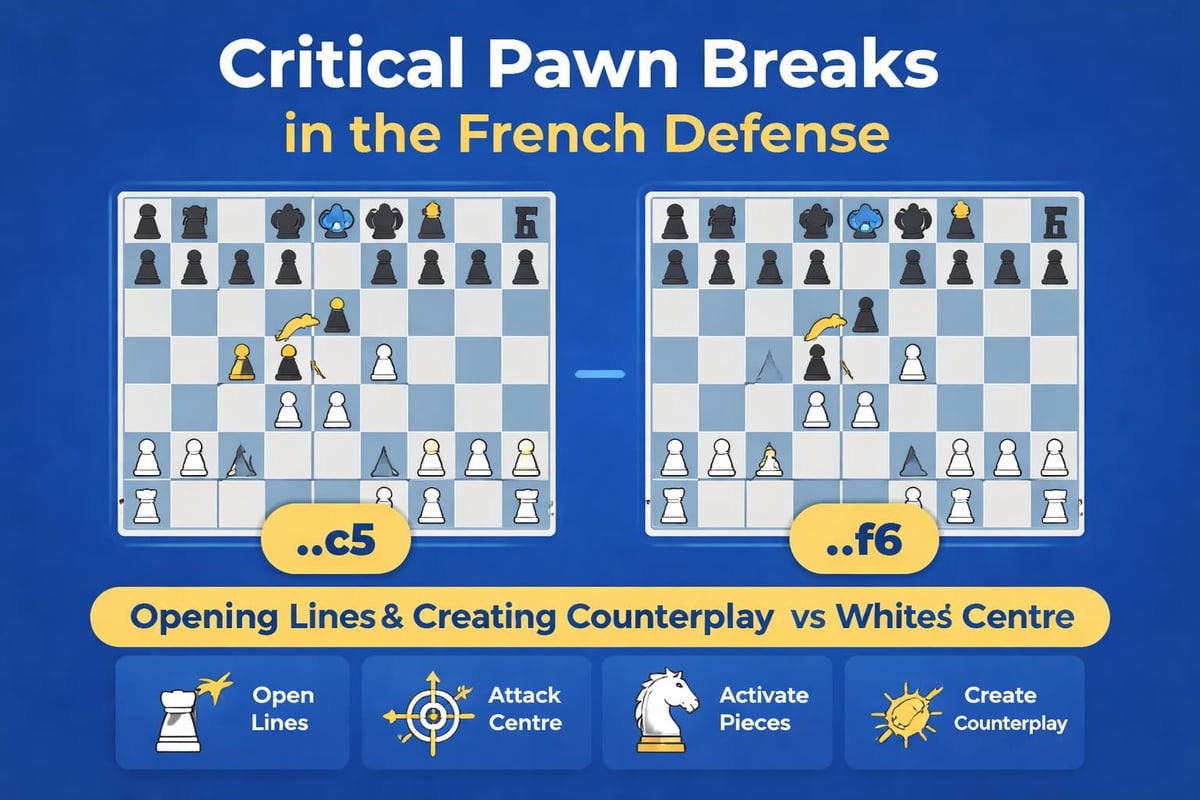
The chess French defense revolves around well-timed pawn breaks. These moves open lines, create weaknesses in your opponent's position, and give your pieces breathing room.
Key pawn breaks to remember:
The ...c5 break challenges White's centre directly. Timing this move correctly often determines the success of your entire position. Too early, and you might weaken your own structure. Too late, and White consolidates their space advantage.
The ...f6 break undermines White's advanced e5 pawn in the Advance Variation. This aggressive move often leads to sharp tactical play, so calculate carefully before pushing.
Piece Coordination and Development
Developing your pieces harmoniously requires patience in the French. Unlike more open defences like the Sicilian, you can't rush your development.
Consider this typical development scheme:
- Get your knight to f6 (usually)
- Develop your dark-squared bishop to e7 or d6
- Castle kingside
- Manoeuvre your queenside knight to d7 or c6
- Find a home for your light-squared bishop
Tactical Patterns You'll Encounter
The chess French defense produces specific tactical motifs that appear repeatedly. Recognising these patterns gives you a massive advantage during games. You'll start seeing opportunities your opponents miss entirely.
Breaks and Sacrifices on e4
The e4 square becomes a focal point in many French positions. Watch for tactical opportunities involving captures on e4, particularly when White's pieces aren't perfectly coordinated.
Sometimes you'll sacrifice material temporarily on e4 to open lines or activate your pieces. These tactical shots often work because White's pieces are awkwardly placed after advancing the e-pawn.
King Safety Considerations
In the Advance Variation and other sharp lines, both kings can come under fire. White often attacks on the kingside where they have more space, whilst you generate counterplay on the queenside.
| Your Defensive Resources | Your Attacking Chances |
|---|---|
| Solid pawn chain | Queenside majority |
| Piece blockades | Pressure against d4 |
| Timely ...f6 breaks | Open c-file control |
| King evacuation to queenside | Knight outposts |
Typical Endgame Scenarios
The chess French defense often transitions into favourable endgames. Your pawn structure, whilst compact, gives you natural strengths in the endgame phase.
Understanding which pieces to trade becomes crucial. Generally speaking:
- Trading dark-squared bishops helps you
- Keeping rooks on suits your pawn breaks
- Knight endgames can be tricky due to pawn chains
- Queen endgames often favour the side with more space
Common Mistakes to Avoid
Even experienced players stumble in the French. Let me share the pitfalls I've seen countless times, so you can dodge them in your own games.
Premature Pawn Breaks
Pushing ...c5 or ...f6 without proper preparation often backfires spectacularly. Before making these committal moves, ask yourself: are my pieces supporting this break? What weaknesses am I creating?
Calculate the consequences at least three moves deep. White's most dangerous responses usually involve opening lines toward your king or exploiting the squares you've weakened.
Neglecting King Safety
Getting caught up in central battles whilst ignoring your king's safety is a classic French tragedy. Yes, you need to challenge White's centre, but not at the expense of basic safety.
Castle early in most variations. Keep escape squares available. Watch for White's attacking ideas, particularly in the Advance Variation where they often launch kingside pawn storms.
Passive Play
The chess French defense shouldn't be played passively. You're not just sitting and waiting for White to make mistakes. You need active plans, concrete ideas, and the courage to create complications.
Don't fall into the trap of thinking the French is purely defensive. It's a fighting opening with rich counterattacking possibilities.
Training Your French Defense Skills
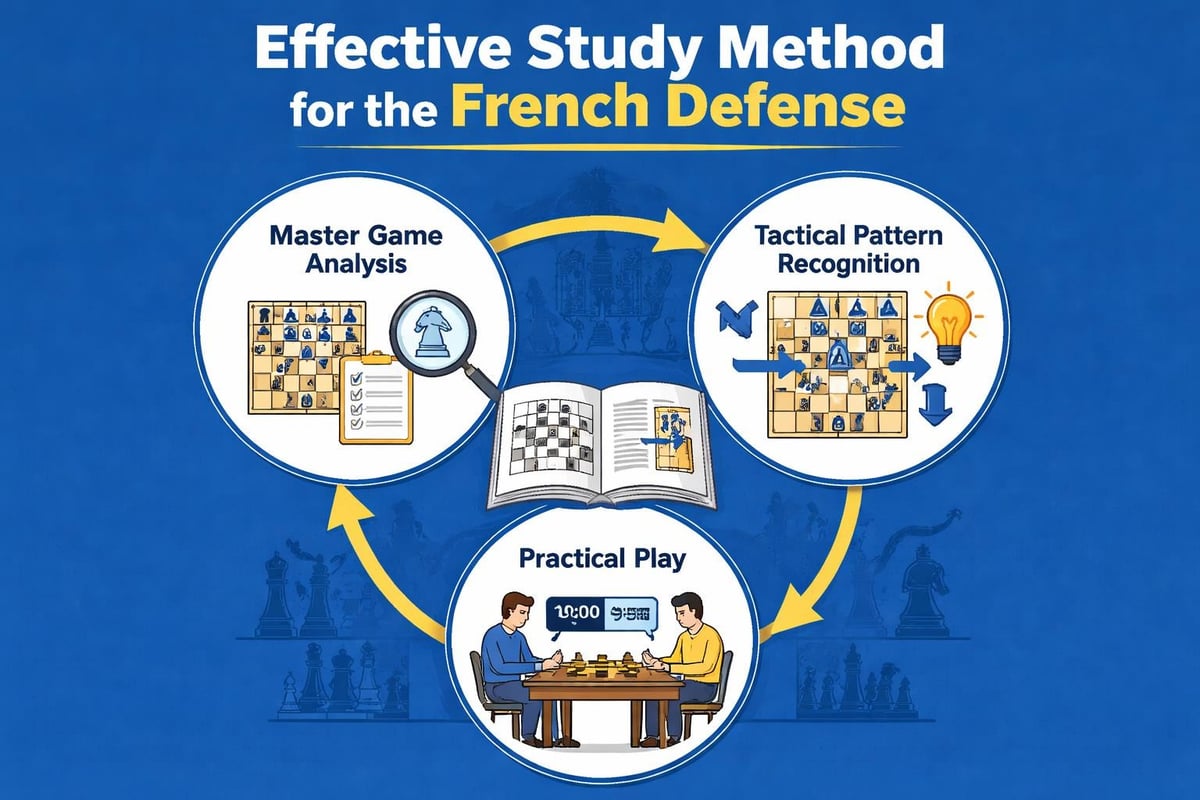
Improving your understanding of the chess French defense requires structured practice. Here's how you can accelerate your learning without drowning in endless theory.
Study Master Games
Watching how strong players handle typical French positions teaches you strategic nuances that books often miss. Focus on games by players like Botvinnik, Korchnoi, and Morozevich, who all championed this opening.
Pay attention to:
- How they handle the light-squared bishop
- When they execute pawn breaks
- Their piece manoeuvring in closed positions
- Endgame technique with French structures
Practice with Puzzles
Tactical awareness in French positions improves through targeted practice. Look for puzzle sets featuring French structures, particularly those involving typical breaks and sacrifices.
For a broader approach to improving your chess through puzzles, check out our guide on how to improve your positional skills with chess puzzles.
Build Your Repertoire Systematically
Rather than trying to learn everything at once, build your French repertoire gradually. Start with one variation against each of White's main tries.
Suggested learning order:
- Master the Advance Variation first (most common)
- Add the Classical Variation (3.Nc3)
- Learn the Tarrasch Variation
- Finally, study the Exchange Variation
This approach lets you start playing the opening quickly whilst deepening your understanding over time. You'll gain practical experience in the most frequently occurring positions before tackling obscure sidelines.
Use Technology Wisely
Modern chess engines and databases offer incredible resources for French players. You can analyse your games, check theoretical novelties, and prepare against specific opponents.
However, don't let the engine do all your thinking. Try to understand the strategic ideas before checking computer evaluations. The French is positional enough that human understanding matters enormously.
Choosing the Right Variation for You
Not all French variations suit every playing style. Your personal preferences should guide which lines you adopt as your main weapon. Let's figure out which variation matches your chess personality.
For Solid, Positional Players
If you enjoy manoeuvring, building slowly, and squeezing opponents in technical positions, the Classical and Tarrasch variations suit you perfectly. These lines reward patience and deep strategic understanding.
You'll get plenty of opportunities to outplay opponents in complex middlegames where calculation matters less than judgment and piece coordination.
For Sharp, Tactical Players
The Winawer Variation (3.Nc3 Bb4) delivers sharp, unbalanced positions with mutual chances. This variation often leads to opposite-side castling and fierce attacks.
Similarly, accepting the Advance Variation and fighting with ...f6 creates tactical complications that reward concrete calculation and aggressive play.
For Practical Tournament Players
Want a solid, reliable defence without memorising encyclopaedic theory? Focus on understanding the main strategic themes in each variation rather than memorising specific move orders.
The comprehensive overview of the French Defense shows that even top players often rely on general principles rather than deep theoretical preparation in many lines.
The French Defense in 2026
The chess French defense remains thoroughly modern despite its age. Computer analysis has refined many lines, and new ideas continue emerging at the highest levels.
Recent trends show:
- The Advance Variation remains White's most testing try
- The Tarrasch sees increased popularity among strong players
- New moves in the Winawer challenge old assessments
- Endgame technique becomes increasingly important
Professional players still trust the French at the highest levels. Its solid foundation and rich strategic content ensure it won't disappear from tournament practice anytime soon.
Resources for Further Study
Deepening your French knowledge requires quality learning materials. Beyond this guide, several excellent resources can accelerate your improvement.
The detailed historical background and key concepts available through various chess sites provide valuable context for understanding why certain plans work.
For those seeking comprehensive opening guidance across multiple systems, our best chess books on openings article reviews the top resources available today.
| Resource Type | Benefits | Best For |
|---|---|---|
| Opening books | Deep theoretical coverage | Serious students |
| Video courses | Visual learning | Pattern recognition |
| Database study | Practical examples | Understanding typical positions |
| Cheat sheets | Quick reference | Tournament preparation |
Comparing the French to Other Defenses
Understanding where the chess French defense fits in your opening repertoire helps you make informed choices. How does it compare to other responses to 1.e4?
Against the Caro-Kann Defense, the French tends to create more tension and dynamic imbalances. The Caro-Kann avoids the light-squared bishop problem but often leads to slightly passive positions.
The Sicilian offers more winning chances but requires memorising significantly more theory. If you prefer strategic play over tactical complications, the French suits you better.
The chess French defense occupies a sweet spot: solid enough to avoid early disasters, sharp enough to play for a win, and manageable enough to learn without years of study.
The chess French defense offers club players a reliable, strategically rich opening that rewards understanding over memorisation. By mastering the key variations, recognising typical tactical patterns, and developing a feel for the characteristic pawn structures, you'll build a solid foundation for handling 1.e4 with confidence. Whether you're just starting to explore this opening or looking to refine your existing repertoire, Chess Cheat Sheets provides the guides and resources you need to accelerate your learning, giving you quick-reference materials that distil complex theory into practical, easy-to-apply concepts that work in real games.


