

Looking for ways to improve your chess without breaking the bank? You're in the right place. Finding quality free game review tools can feel like searching for a needle in a haystack, but the landscape has changed dramatically over the past few years. Whether you're just starting out or you've been pushing pawns for years, understanding which platforms offer genuine value versus those that hold back features behind paywalls is crucial. This chess free game review explores the best options available in 2026, helping you make informed decisions about where to spend your precious study time.
What Makes a Quality Chess Game Review Tool
When you're evaluating free chess platforms, not all analysis is created equal. The difference between a basic review and a comprehensive analysis can be the difference between spotting surface-level blunders and understanding the deeper strategic mistakes that hold back your progress.
Engine Strength and Analysis Depth
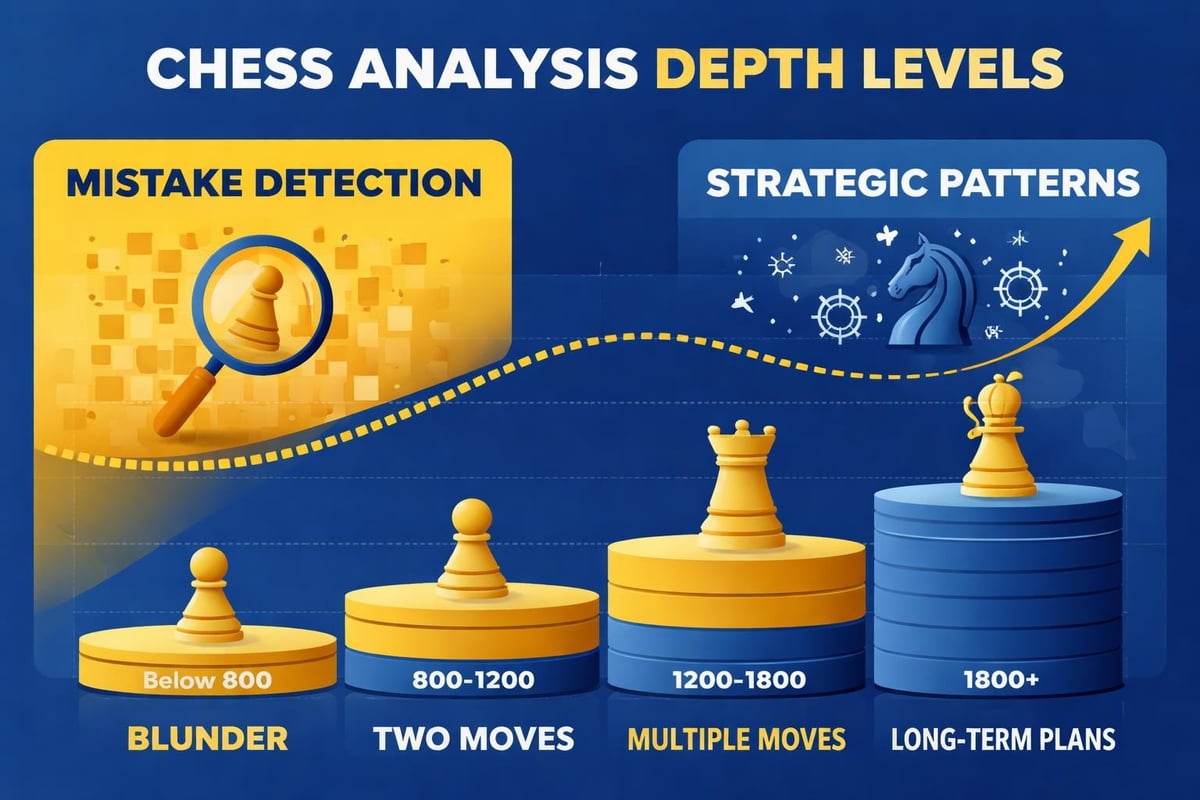
The heart of any chess free game review tool is its analysis engine. Modern platforms typically use variations of Stockfish, the open-source engine that rivals and often surpasses commercial alternatives. But here's what many players don't realise: it's not just about having Stockfish, it's about which version and how deeply it analyses your games.
Key factors to consider:
- Engine version (Stockfish 16+ is current standard)
- Analysis depth (measured in ply or moves ahead)
- Multi-PV analysis (showing multiple best moves)
- Time allocated per position
Some platforms like Chessigma offers free online chess game analysis powered by Stockfish 17, providing unlimited reviews without the daily restrictions you'll find elsewhere. That's a game-changer when you're trying to review multiple games after a tournament or a heavy practice session.
User Interface and Learning Experience
You've probably opened an analysis tool before and felt completely overwhelmed by the avalanche of numbers, symbols, and evaluation bars. A truly effective chess free game review platform bridges the gap between raw engine data and actionable insights you can actually use.
The best platforms present information in digestible chunks. They highlight critical moments, explain why certain moves were mistakes, and suggest improvements in language you can understand. This is where platforms like ChessDream offers free chess analysis excel, providing instant feedback with clear blunder detection.
Comparing Free Chess Game Review Platforms
Let's break down what you're actually getting with different platforms. The free chess landscape has evolved significantly, and understanding the limitations and strengths of each option helps you choose wisely.
Platform Feature Comparison
| Platform | Daily Limit | Engine Version | Import Options | Detailed Reports |
|---|---|---|---|---|
| Chess.com Free | 1 game | Varies | Native only | Basic |
| Lichess | Unlimited | Stockfish 16+ | PGN, FEN | Comprehensive |
| Chessigma | Unlimited | Stockfish 17 | Multiple sites | Advanced |
| ChessDream | Unlimited | Stockfish 16+ | Universal | Detailed |
The table above reveals something interesting. While Chess.com is incredibly popular, their free tier is quite restrictive. According to discussions in Chess.com's forum on free game reviews, many players express frustration with these limitations, especially when they're trying to analyse multiple games to prepare for important matches.
What You Get Without Paying
Here's the honest truth: free doesn't always mean comprehensive. Most platforms offer varying levels of analysis depending on whether you're using their free or premium tiers.
Typical free features include:
- Basic mistake identification (blunders, mistakes, inaccuracies)
- Computer evaluation at each move
- Best move suggestions
- Opening name identification
- Basic statistics (accuracy percentage, average centipawn loss)
Often locked behind paywalls:
- Detailed position explanations
- Training recommendations based on mistakes
- Deep tactical analysis
- Pattern recognition reports
- Historical tracking over time
Understanding these distinctions helps you set realistic expectations. If you're working on your opening repertoire, resources like the Caro-Kann Defense guide can complement your game reviews by providing structured learning alongside your analysis.

Making the Most of Free Game Analysis
You've found a platform you like. Now what? Simply running your games through an engine and glancing at the mistakes won't transform your chess. Let me share how to extract maximum value from every review session.
The Three-Pass Review Method
First Pass: Emotional Reset
- Review the game without engine assistance
- Note where you felt uncertain
- Identify moments where you changed your plan
- Write down your thought process at critical junctures
Second Pass: Engine Analysis
- Run the complete game through your chosen platform
- Focus on moves marked as mistakes or blunders
- Try to understand WHY the engine prefers its suggestion
- Look for patterns in your errors (tactical oversights, positional misjudgements)
Third Pass: Deep Learning
- Select 2-3 critical positions from the game
- Study them thoroughly without engine assistance
- Create mental checkpoints for similar positions
- Add instructive positions to your training routine
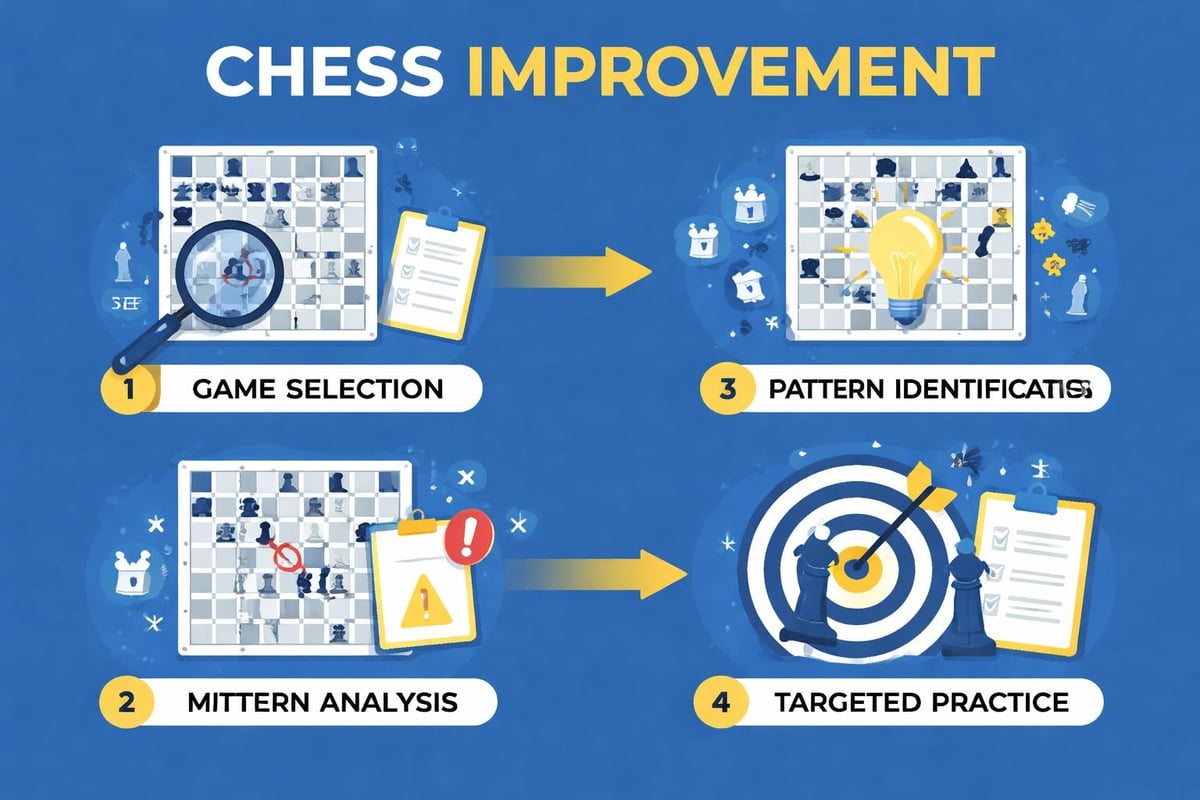
This systematic approach transforms a simple chess free game review into a powerful learning experience. You're not just seeing what went wrong; you're building the neural pathways to avoid similar mistakes in future games.
Platform-Specific Strengths and Limitations
Different tools serve different purposes, and knowing when to use each one can significantly enhance your improvement journey. Let's explore what makes each major platform unique.
Chess.com's Free Analysis
Chess.com dominates the online chess world, and their analysis tools are solid. However, the limitations discussed in their forums reveal that serious students often need alternatives. You get one free game review daily, which might suffice if you play casually, but falls short for dedicated improvers.
The platform excels at integration. Since you're playing, analysing, and learning all in one ecosystem, there's minimal friction. The downside? You're locked into their analysis schedule unless you upgrade.
Lichess: The Open-Source Champion
Lichess deserves massive credit for making unlimited analysis available to everyone. Their commitment to free, ad-free chess is admirable, and their Stockfish implementation is robust. The analysis clearly shows mistakes, provides computer evaluation, and allows you to explore variations freely.
What makes Lichess particularly valuable is the ability to share analysed games with coaches or study partners. You can collaborate on positions, discuss alternatives, and build a shared understanding of chess concepts.
Third-Party Analysis Tools
Platforms specifically designed for game review, rather than playing, often provide superior analytical features. They focus entirely on helping you learn from your games rather than splitting attention between multiple functions.
These tools typically offer:
- Cross-platform game import (analyse Chess.com games using different engines)
- More detailed statistical breakdowns
- Advanced filtering options
- Custom analysis parameters
For players who want serious analysis without subscription fees, exploring these dedicated platforms makes excellent sense.
Integrating Game Review into Your Training Routine
Analysis without application is just entertainment. The real question is: how do you turn insights from your chess free game review sessions into tangible rating gains?
Building a Review Schedule
Your review frequency should match your playing volume and improvement goals. Here's a practical framework:
| Playing Volume | Review Frequency | Focus Areas |
|---|---|---|
| 1-3 games/week | Review all games | Comprehensive analysis |
| 4-10 games/week | Review losses + interesting wins | Pattern identification |
| 10+ games/week | Review critical/close games | Specific weaknesses |
Pro tip: Quality beats quantity every time. Reviewing three games thoroughly teaches you more than skimming through twenty.
Connecting Analysis to Study Materials
Game review reveals what you need to study. Noticed you're struggling with pawn endgames? That's your signal. Consistently losing in the middlegame after specific openings? Time to deepen your understanding.
This is where resources like Chess Cheat Sheets' comprehensive guides become invaluable. You're not studying chess in a vacuum; you're addressing specific weaknesses identified through analysis. If you're consistently struggling in the Italian Game, for instance, consulting the Italian Game chess opening guide provides structured knowledge to address those gaps.
Tracking Progress Over Time
Many players analyse games but never look back at previous reviews. This is a massive missed opportunity. Creating a simple spreadsheet or document tracking recurring mistakes reveals patterns you'd otherwise miss.
Track these metrics:
- Most common mistake types (tactical, positional, time pressure)
- Phase of game where errors cluster (opening, middlegame, endgame)
- Improvement in accuracy percentage over weeks/months
- Specific positions or structures causing problems
This data-driven approach removes guesswork from your training. You know exactly what needs work.
Beyond Basic Analysis: Advanced Techniques
Once you're comfortable with standard game review, these advanced techniques can unlock the next level of improvement. Not every chess free game review session needs to be this detailed, but incorporating these methods occasionally provides valuable insights.
Comparative Analysis
Instead of reviewing games in isolation, analyse multiple games featuring the same opening or structure. This reveals whether your mistakes are one-off blunders or systematic misunderstandings of certain positions.
For example, if you play the English Opening regularly, reviewing five of your recent games with this opening simultaneously helps you spot recurring strategic errors. The English Opening guide can then help you understand the proper plans and ideas.
Prediction Training
Before revealing the engine's analysis, pause at critical positions and predict:
- Whether you made a mistake
- What the engine will suggest
- The evaluation of the position
This active engagement strengthens your chess intuition far more effectively than passive review. Over time, your predictions become more accurate, indicating genuine improvement in chess understanding.
Peer Review Sessions
Find a chess partner at a similar level and exchange games for review. Fresh eyes spot things you'll miss, and explaining your thinking to someone else deepens your understanding. Online chess communities make finding review partners easier than ever.
Mobile vs Desktop Analysis
Where you analyse matters more than you might think. Each platform offers different experiences depending on your device, and understanding these differences helps you optimise your review sessions.
Desktop Advantages
The larger screen real-time on desktop computers makes analysing complex positions significantly easier. You can see the full board clearly, review multiple variations simultaneously, and take detailed notes without cramping your hands.
For serious study sessions where you're exploring three to five moves deep in critical positions, desktop is unquestionably superior.
Mobile Convenience
That said, mobile analysis has its place. You can review games during commutes, lunch breaks, or any spare moment. While you won't do your deepest analytical work on a phone, you can absolutely identify major mistakes and general patterns.
Mobile is ideal for:
- Quick reviews of blitz/bullet games
- Identifying obvious blunders
- Browsing opening moves
- Light review sessions
Desktop excels at:
- Deep positional analysis
- Complex variation exploration
- Detailed note-taking
- Comparative study across multiple games
Many serious players adopt a hybrid approach: quick mobile reviews to triage games, then deeper desktop analysis for the most instructive ones.
Common Mistakes in Game Analysis
Even with excellent free tools at your disposal, improper analysis habits can undermine your improvement. Let's address the most frequent errors players make during chess free game review sessions.
Focusing Only on Blunders
Yes, that hanging queen was terrible. But if you only review obvious blunders, you're missing the strategic and positional errors that gradually worsen your position before you blunder. The engine shows a -0.5 evaluation swing as a "mistake" for good reason. Those accumulate.
Pay attention to moves where the evaluation changed by 0.3-0.7 pawns. These subtle errors reveal gaps in your positional understanding and often matter more for long-term improvement than the occasional tactical oversight.
Not Understanding Engine Suggestions
The engine recommends Nf3. You note it and move on. But why Nf3? What was wrong with your move? What principle did you violate? Without answering these questions, you're just collecting suggestions rather than learning chess.
Force yourself to articulate the reason behind each significant suggestion. This mental exercise builds the pattern recognition that defines strong players.
Analysis Paralysis
Some players spend hours reviewing a single game, exploring every alternative move to exhausting depth. Unless you're a titled player preparing for a critical match, this is inefficient. The goal is identifying patterns and learning, not achieving analytical perfection.
Set time limits for your reviews. Thirty to forty-five minutes per standard game typically provides enough depth without diminishing returns.
Rating-Specific Review Strategies
What you should focus on during analysis changes as you improve. A beginner and an expert can review the same game but need completely different insights to advance.
Beginner Focus (Under 1200)
At this level, most games are decided by piece-hanging and simple tactical oversights. Your chess free game review sessions should prioritise:
- Identifying undefended pieces
- Recognising basic tactical patterns (pins, forks, skewers)
- Checking for threats before moving
- Developing pieces with purpose
Resources like learn to play chess free guides complement your analysis by establishing fundamental principles.
Intermediate Focus (1200-1800)
You're past hanging pieces regularly. Now the focus shifts to plans, pawn structures, and deeper tactics.
Priority review areas:
- Understanding pawn breaks and structures
- Piece activity and coordination
- Converting advantages
- Opening understanding beyond memorisation
Advanced Focus (1800+)
At higher levels, games often hinge on subtle positional factors and calculation accuracy. Your analysis should examine:
- Dynamic versus static advantages
- Prophylactic thinking
- Deep calculation accuracy
- Opening novelties and improvements
Supplementing Free Tools with Structured Learning
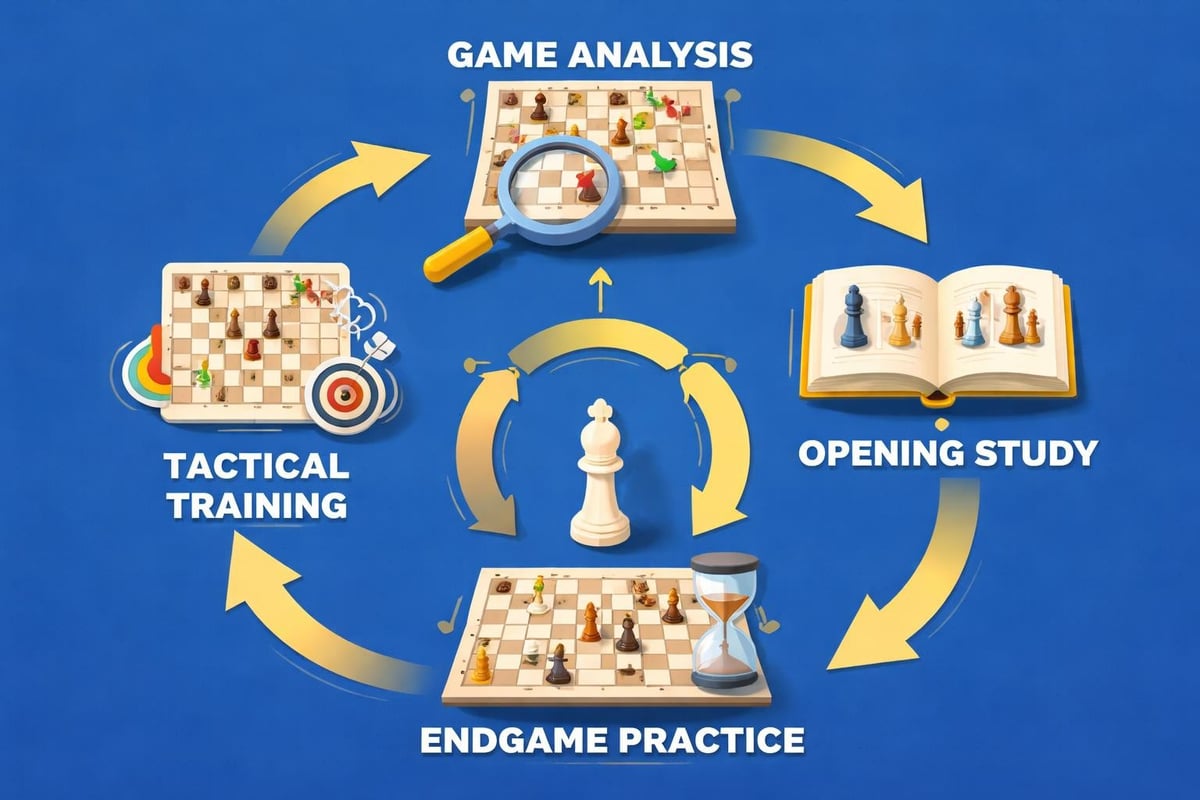
While free analysis tools are fantastic, they work best when combined with structured learning materials. Think of game review as diagnosis and study materials as the prescription.
You've identified through repeated analysis that you struggle against the King's Indian Defense. That's valuable information, but knowing you have a problem doesn't solve it. Consulting specialised resources like the King's Indian Defense guide provides the structured knowledge to address that weakness systematically.
Creating a Balanced Improvement Plan
| Study Component | Time Allocation | Purpose |
|---|---|---|
| Game Analysis | 30% | Identify weaknesses |
| Tactical Training | 30% | Sharpen calculation |
| Opening Study | 20% | Build repertoire |
| Endgame Practice | 20% | Convert advantages |
This balanced approach ensures your chess free game review sessions feed into a comprehensive improvement system rather than existing in isolation.
The Psychology of Reviewing Losses
Let's address the elephant in the room: reviewing losses is painful. Nobody enjoys reliving their mistakes, especially crushing defeats. But here's a perspective shift that might help.
Every loss contains at least three valuable lessons you won't find anywhere else. Those lessons are customised to your specific weaknesses, making them exponentially more valuable than generic study material. The grandmaster who lost doesn't feel different from you; they've just learned to extract value from discomfort.
Mindset shifts that help:
- View losses as personalised coaching sessions
- Celebrate finding mistakes (you can't fix what you don't see)
- Remember that strong players lose regularly too
- Focus on the learning, not the rating point
When you approach your chess free game review with curiosity rather than judgment, the experience transforms from painful to productive.
Free chess game review tools have never been better or more accessible than they are in 2026. By choosing the right platform, developing systematic review habits, and connecting your analysis to structured study, you can achieve remarkable improvement without spending a penny. Ready to take your chess to the next level with targeted, practical resources? Chess Cheat Sheets offers comprehensive opening guides, tactical puzzles, and endgame resources designed specifically for players who want to improve efficiently without getting lost in endless theory. Transform those game review insights into concrete progress today.


