

You've probably sat down at a chess board and felt immediately comfortable, or perhaps noticed something was slightly off without being able to pinpoint why. That's the power of proper chess equipment. Whether you're just learning the basics of playing chess or you're preparing for your first tournament, understanding what makes good chess equipment can transform your playing experience. The right setup doesn't just look professional; it actually helps you think more clearly, make better moves, and enjoy the game more fully.
Understanding Chess Equipment Standards
When we talk about chess equipment, we're not just discussing any random board and pieces you might find in a cupboard. There are established standards that have evolved over centuries, refined to create the optimal playing experience.
The comprehensive overview of chess equipment shows us that standardisation became essential as chess tournaments grew more formal in the 19th century. Today, FIDE (the International Chess Federation) sets the gold standard for competitive play, and these regulations trickle down to influence what's considered quality chess equipment even in casual settings.
Why Standards Matter for Your Game
Have you ever tried playing on a board where the pieces were too large for the squares? It's frustrating, isn't it? Standards exist for good reasons:
- Visual clarity: Proper proportions reduce eye strain during long games
- Ease of movement: Correctly sized pieces glide smoothly without overcrowding
- Mental processing: Familiar setups reduce cognitive load, letting you focus on strategy
- Tournament readiness: Practising with standard equipment prepares you for competitive play
The updated chess equipment regulations effective March 1, 2026 have brought even more clarity to what constitutes acceptable chess equipment for official events. These changes primarily affect tournament organisers and manufacturers, but they also guide serious players in choosing equipment that won't feel alien in competitive settings.
The Chess Board: Your Battlefield
Let's start with the foundation of any chess setup. The board might seem simple, but there's more to consider than you'd think.
Board Dimensions and Square Size
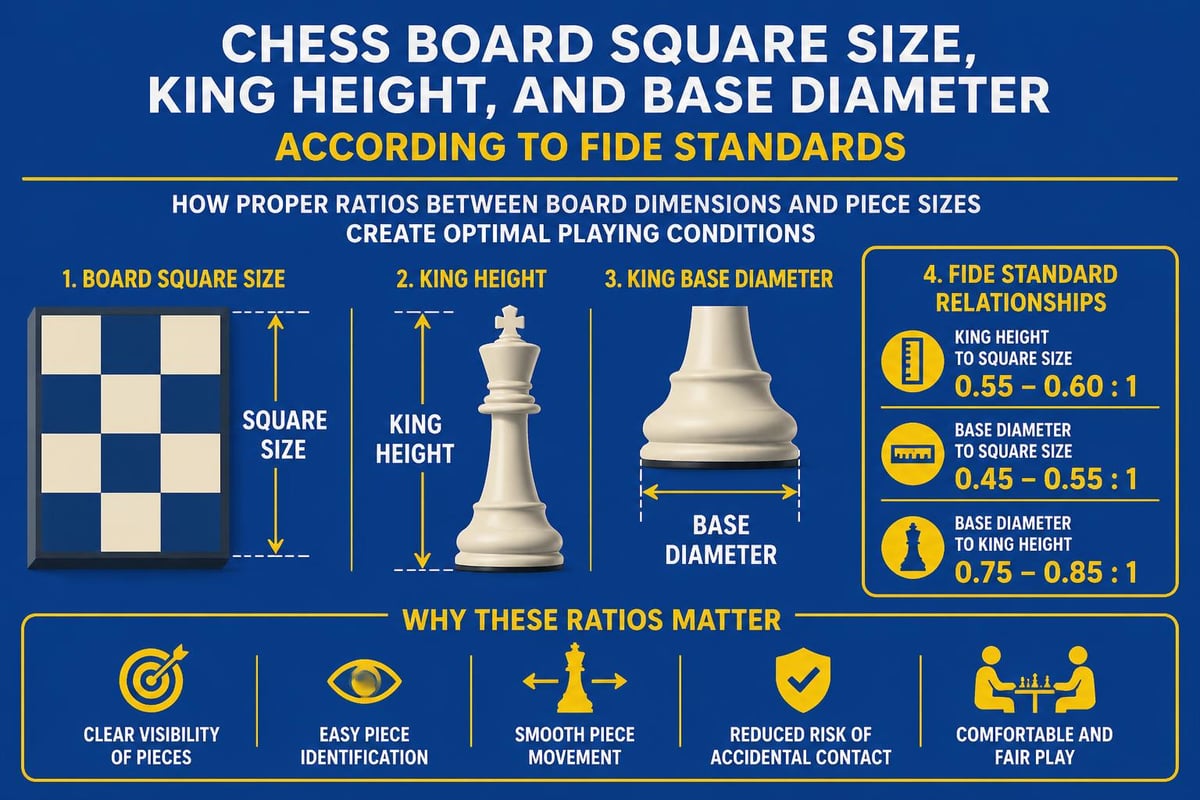
According to guidance on chess board dimensions, the standard tournament board has squares measuring between 5 and 6.5 centimetres (approximately 2 to 2.5 inches). This isn't arbitrary. The size needs to accommodate pieces comfortably whilst remaining large enough for easy visibility and small enough for practical table placement.
For home use, you have more flexibility, but staying within this range ensures your muscle memory translates when you encounter different boards. Think about it: if you're working through chess opening guides at home, you want conditions that mirror tournament play.
| Board Type | Square Size | Best For | Typical Cost |
|---|---|---|---|
| Tournament Standard | 5-5.5 cm | Competitive play | £40-£150 |
| Club Board | 4.5-5.5 cm | Regular practice | £25-£80 |
| Travel Board | 3-4 cm | Portability | £15-£40 |
| Demonstration Board | 8+ cm | Teaching groups | £60-£200 |
Material Considerations
Wood remains the classic choice for chess boards, offering warmth and tactile satisfaction. Vinyl boards are fantastic for portability and durability, especially if you're taking your chess equipment to clubs or parks. Silicone roll-up boards have their place too, though they can be slightly less stable during rapid play.
Whatever material you choose, ensure the colour contrast is sufficient. Dark green and buff (off-white) is the traditional tournament pairing, but what matters most is that you can instantly distinguish the squares without conscious thought. After all, when you're deep into calculating variations from the Italian Game, the last thing you need is squinting at unclear squares.

Chess Pieces: The Heart of Your Equipment
If the board is your battlefield, the pieces are your army. Quality pieces make an enormous difference to your playing experience.
The Staunton Design Standard
Nearly all serious chess equipment uses the Staunton pattern, named after Howard Staunton, a 19th-century English chess master. This design has become universal because of its clarity: each piece is instantly recognisable, even from across the table.
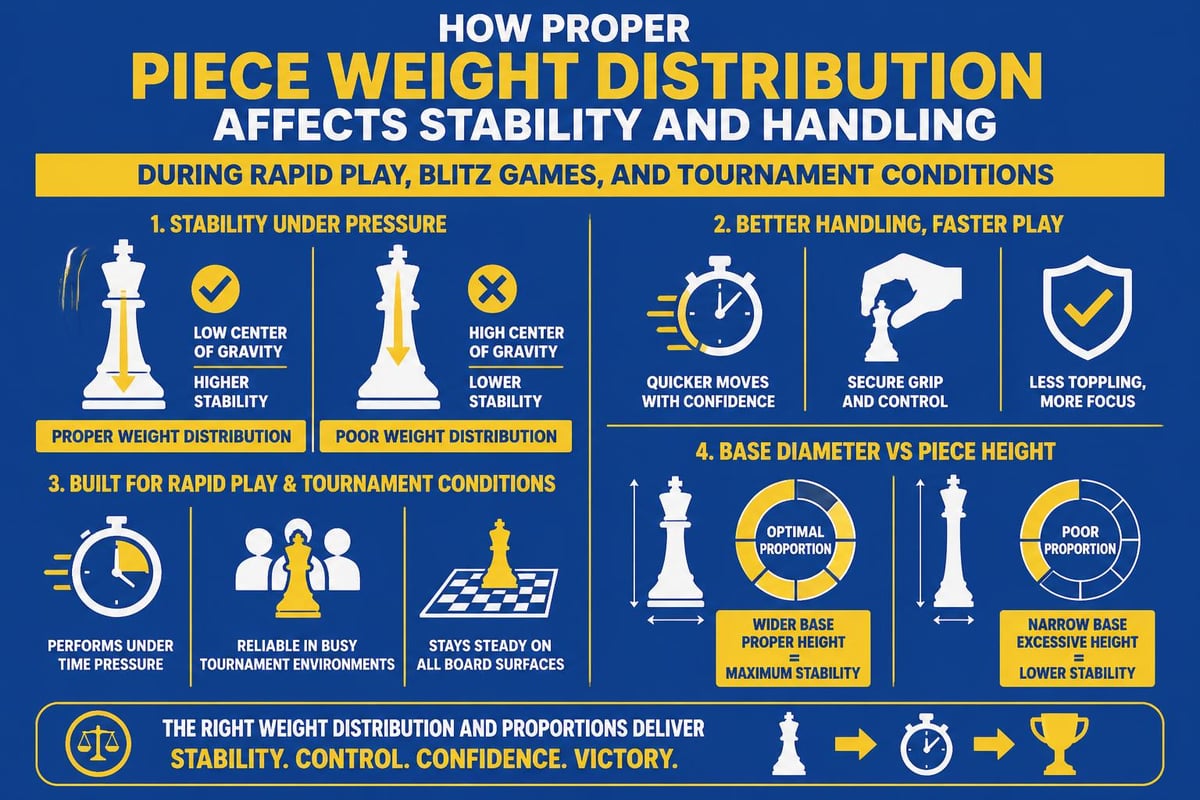
When selecting pieces, how chess equipment affects your play becomes immediately apparent. The weight, balance, and finish of your pieces influence everything from how confidently you make moves to how easily you can conduct rapid play.
Piece Specifications
The king should be 9.5 centimetres tall (give or take a centimetre for different sets). The base diameter should be 40-50% of the piece's height. These proportions ensure pieces are stable enough not to topple easily, yet not so heavy they're cumbersome.
Key features to look for:
- Weight: Weighted pieces stay put and feel substantial
- Felt base: Protects the board and dampens noise
- Clear differentiation: Queens, bishops, and knights should be unmistakable
- Appropriate size: The king's base should fit comfortably on a square with room to spare
Plastic pieces work perfectly well for most players. Weighted plastic offers good value and durability. Wood pieces add aesthetic appeal and a traditional feel, though they require more care. For advanced chess players seeking the ultimate experience, weighted wooden pieces in ebony and boxwood represent the pinnacle, though they come with a corresponding price tag.
Chess Clocks: Managing Your Time
In 2026, digital chess clocks have become the overwhelming standard, offering precision and flexibility that mechanical clocks simply can't match.
Digital vs Analogue
Whilst analogue clocks have nostalgic charm, digital clocks provide crucial features for modern time controls. They handle increment time (adding seconds per move), delay modes, and complex tournament schedules with ease.
For players working on improving tactical skills through resources like chess opening puzzles, using a clock during practice helps develop time management skills that translate directly to competitive play.
Essential Clock Features
- Multiple time control settings: Fischer (increment), Bronstein (delay), and standard modes
- Clear display: Large, backlit screens visible in various lighting
- Reliable buttons: Responsive action without requiring excessive force
- Battery life: Should last multiple tournaments on a single charge
- Move counter: Helpful for tracking time-control changes
Most tournament-quality digital clocks range from £30 to £100. This is one area where investing in quality chess equipment pays dividends, as a reliable clock will serve you for years.
Additional Equipment for Serious Players
Beyond the basics, several items complete your chess equipment collection.
Score Sheets and Notation Tools
Recording your games is essential for improvement. Standard score sheets let you review your decisions, particularly useful when you're exploring new territory like the English Opening or other complex systems.
Some players prefer carbon-copy score sheets, which automatically create a duplicate for your records. Others use simple notation pads. What matters is developing the habit of recording games, as this data becomes invaluable for post-game analysis.
Storage and Transportation
Protecting your chess equipment extends its life considerably. Purpose-made chess bags typically include:
- Padded compartments for pieces
- Flat sections for boards
- Pockets for clocks and accessories
- Water-resistant materials
A decent chess bag costs £20-£50 and saves you the frustration of damaged equipment or forgotten pieces.
Teaching and Study Tools
If you're serious about improvement, consider demonstration boards for studying with others. These oversized boards let small groups analyse positions together. They're particularly effective when working through endgame guides or reviewing critical moments from master games.
Choosing Equipment for Different Skill Levels
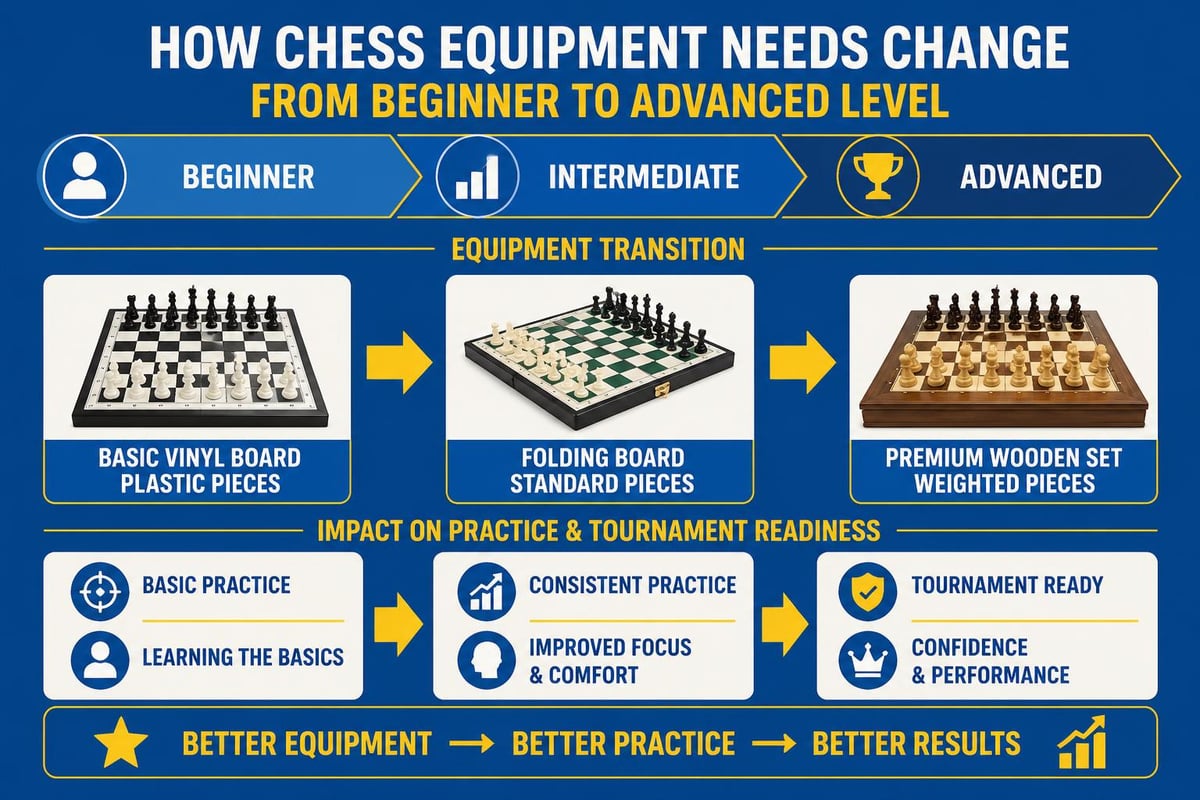
Your chess equipment needs evolve as you develop as a player. What's perfect for a beginner might frustrate an intermediate player preparing for serious tournament play.
For Beginners
When you're starting out, affordability and durability matter most. A vinyl board with plastic pieces provides excellent value. Focus on standard sizing rather than premium materials. You want equipment that helps you learn without breaking the bank.
Beginner chess equipment checklist:
- Vinyl roll-up board (tournament square size)
- Weighted plastic Staunton pieces
- Basic digital clock (optional initially)
- Simple score pad
- Beginner-friendly chess resources
Budget: £40-£80 for a complete starter setup
For Intermediate Players
As you progress, you'll appreciate quality upgrades. This is when chess equipment standards explained in guides like what quality looks like become relevant to your purchasing decisions.
| Component | Beginner | Intermediate | Advanced |
|---|---|---|---|
| Board | Vinyl | Wood or vinyl | Premium wood |
| Pieces | Plastic | Weighted plastic/wood | Weighted wood |
| Clock | Basic digital | Feature-rich digital | Professional digital |
| Total Investment | £40-£80 | £100-£250 | £250-£500+ |
Intermediate players benefit from investing in a quality wooden board and weighted pieces. The tactile feedback and visual appeal enhance your practice sessions, making it easier to maintain focus during long study periods.
Tournament-Ready Equipment
Planning to compete regularly? Your chess equipment should meet all official standards. Check current regulations to ensure compliance, particularly with the recent March 2026 updates to FIDE guidelines.
Tournament players often maintain multiple sets: a premium wooden set for home study and a durable vinyl set for actual competition, where the risk of damage or loss is higher. This practical approach balances quality practice with sensible tournament logistics.
Maintaining Your Chess Equipment
Proper care extends the life of your investment and maintains optimal playing conditions.
Board Maintenance
Wooden boards need occasional treatment with appropriate wood care products. Avoid excessive moisture, which can warp the board or lift veneer. Store boards flat when not in use to prevent warping.
Vinyl boards are more forgiving but still benefit from careful handling. Roll them with the playing surface outward to prevent persistent curling. Clean with a damp cloth and mild detergent when needed.
Piece Care
Wooden pieces should be handled with clean hands to prevent oil buildup. If felt bases become worn, replacement felt is inexpensive and easy to apply with craft glue. Store pieces in individual compartments to prevent damage during transport.
Plastic pieces are remarkably durable but can become scratched or scuffed. Keep them in soft pouches or boxes rather than loose in bags where they'll rub together.
Clock Longevity
Digital clocks require minimal maintenance beyond battery replacement. Keep them away from liquids and extreme temperatures. The buttons represent the most vulnerable component, so press decisively but gently rather than jabbing or slapping.
Where to Purchase Quality Chess Equipment
The market offers numerous options, from specialist chess retailers to general sporting goods stores. Online retailers often provide better selection and competitive pricing, though you miss the ability to physically examine equipment before purchase.
Specialist chess shops (both online and physical) offer expertise that general retailers can't match. Staff can answer specific questions about how different chess equipment suits various playing styles and needs. They often stock items that mainstream retailers don't carry, like specific piece designs or specialised clock models.
Consider these factors when choosing a supplier:
- Return policy: Essential when buying sight-unseen online
- Warranty coverage: Particularly important for electronic equipment like clocks
- Expert advice: Specialist retailers offer better guidance
- Price competitiveness: Balance cost against service and reliability
- Stock availability: Frustrating when items show in stock but aren't actually available
Special Considerations for Online Play Transition
Interestingly, many players who primarily compete online still maintain physical chess equipment for offline study. There's something about moving actual pieces that engages your brain differently than clicking squares on a screen.
When you're working through opening theory, perhaps studying variations of the Scandinavian Defense, physically setting up positions can deepen your understanding. The muscle memory of placing pieces reinforces mental patterns in ways that digital-only study doesn't quite replicate.
This hybrid approach represents modern chess perfectly: leverage online tools for their convenience and analytical power, whilst using physical equipment to ground your understanding in tactile, spatial reality.
Equipment for Teaching and Coaching
If you're coaching others or working with a chess coach, demonstration equipment becomes valuable. Large magnetic boards for vertical display, demonstration pieces visible from several metres away, and sets optimised for group viewing all serve specific teaching purposes.
Demo Board Specifications
Demonstration boards typically feature squares of 10-15 centimetres, making them visible to groups of 10-20 students. Magnetic pieces ensure they stay in place during animated explanations. Wall-mounted options save space in teaching environments.
These specialised items represent a different category of chess equipment, optimised for visibility and communication rather than personal play. They're investments in effective teaching rather than direct performance enhancement.
Making Your Final Selection
Choosing chess equipment ultimately comes down to matching your specific needs with appropriate quality and budget. Ask yourself:
- Where will I primarily use this equipment?
- Am I preparing for tournament play or casual games?
- What's my realistic budget?
- Do I prioritise portability or premium quality?
- Will I need to transport equipment regularly?
Your honest answers guide you toward the right choices. There's no universal "best" chess equipment, only what's best for your situation.
Remember that while studying famous players' opening repertoires or working through tactical puzzles, your equipment should facilitate learning rather than distract from it. The sweet spot lies in equipment good enough to support serious study without overspending on features you don't need.
Quality chess equipment creates the foundation for effective practice and enjoyable play, but it's your dedication to learning that truly drives improvement. Whether you're setting up your first board or upgrading to tournament-standard equipment, pairing proper tools with structured learning accelerates your progress. Chess Cheat Sheets provides comprehensive guides, puzzles, and opening resources that complement your equipment investment, helping you make the most of every practice session without overwhelming you with endless theory.


