

Finding the right chess book can transform your game, but with thousands of titles available, where do you start? Chess book reviews serve as your personal guide through the maze of chess literature, helping you identify which books match your skill level, learning style, and specific goals. Whether you're searching for opening theory, tactical puzzles, or endgame mastery, understanding how to read and use chess book reviews effectively will save you time and money whilst accelerating your improvement.

Why Chess Book Reviews Matter for Your Development
You wouldn't buy a car without reading reviews first, so why treat chess books any differently? The chess publishing world releases hundreds of new titles each year, and not all of them deliver on their promises. Chess book reviews help you separate genuinely useful resources from overhyped disappointments.
Here's what makes them invaluable:
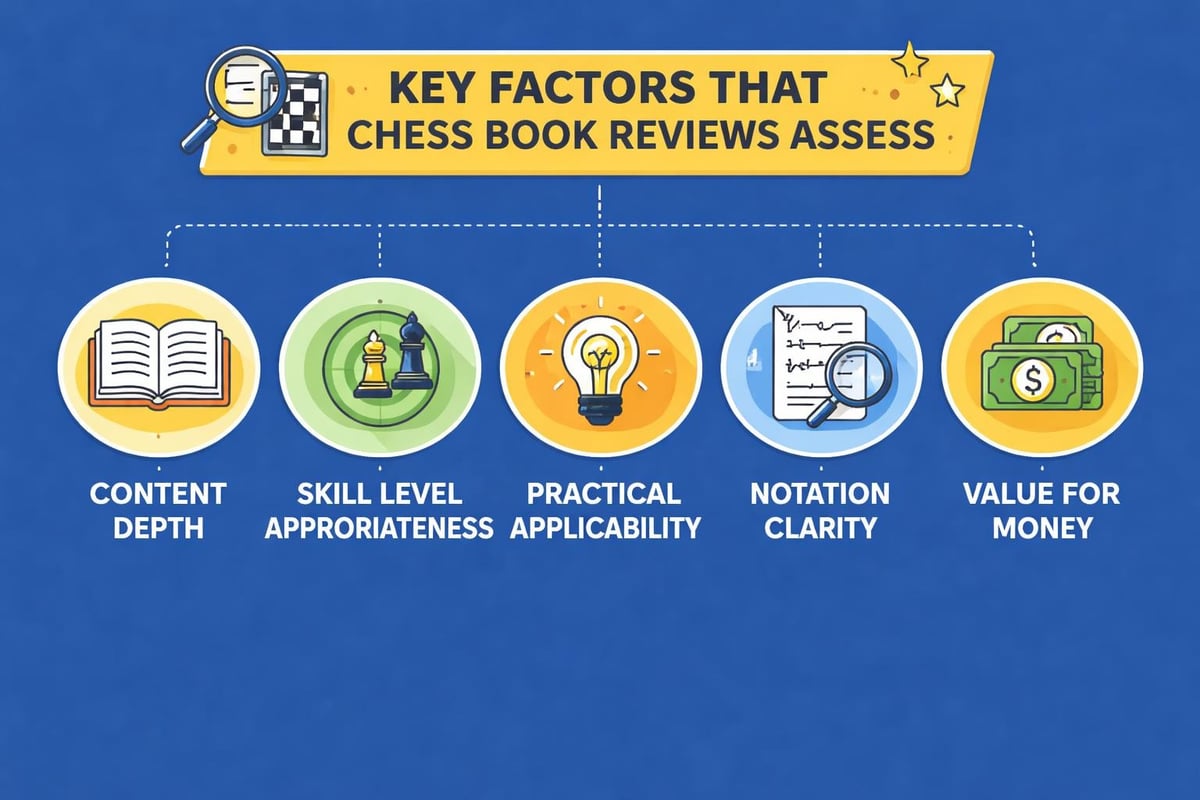
- Skill-level matching: A book praised as "brilliant" might be completely wrong for your current rating
- Content verification: Reviews reveal whether a book actually covers what its title suggests
- Writing quality assessment: Some authors explain concepts clearly; others assume too much knowledge
- Time efficiency: Why spend three weeks with the wrong book when reviews could have steered you right?
The best chess book reviews come from players who've actually worked through the material, not just skimmed the first chapter. Sites like ChessReads feature reviews written by players of varying strengths, giving you multiple perspectives on the same book.
Understanding Different Types of Chess Books
Before diving into reviews, you need to understand what you're looking for. Chess literature spans several distinct categories, each serving different purposes in your development.
Opening Books and Repertoire Guides
Opening books dominate chess publishing, but they vary enormously in approach. Some provide encyclopaedic coverage of every variation, whilst others focus on building a complete repertoire with just the essential lines.
When reading chess book reviews for openings material, look for comments about:
- Move-by-move depth versus conceptual explanation balance
- Whether the recommended lines suit your playing style
- How current the analysis is (opening theory evolves quickly)
- If the book requires engine checking or stands alone
If you're exploring specific systems, resources on good beginner chess books can point you toward accessible starting points.
Tactical and Puzzle Collections
Tactics books range from basic pattern recognition to fiendishly difficult compositions. Chess book reviews for puzzle collections should tell you about difficulty progression, solution quality, and whether positions come from real games or composed studies.
| Review Aspect | What to Look For | Red Flags |
|---|---|---|
| Difficulty Range | Clear progression from simple to complex | All puzzles too easy or too hard |
| Solution Quality | Detailed explanations, not just moves | Answers with no commentary |
| Organization | Themes grouped logically | Random puzzle order |
| Practical Value | Positions from real games | Unrealistic compositions only |
Strategy and Positional Play
These books teach you the "why" behind moves rather than just memorizing sequences. Reviews should indicate whether the author uses instructive examples and explains concepts in accessible language.

How to Evaluate Chess Book Reviews Effectively
Not all chess book reviews are equally helpful. You'll find everything from detailed analytical breakdowns to vague "this book is great!" endorsements. Learning to spot quality reviews saves you from making poor purchasing decisions.
Identify the Reviewer's Skill Level
A 2200-rated player and a 1400-rated player will have completely different experiences with the same book. Quality reviews always mention the reviewer's approximate strength. The British Chess Magazine maintains a searchable archive of reviews that often include this context.
When you're browsing chess book reviews, ask yourself:
- Is this reviewer stronger, weaker, or similar to my level?
- Did they actually work through the exercises?
- How long did they spend with the material?
- Are they reviewing books in their area of expertise?
Look for Specific Examples
Vague praise like "excellent book" tells you nothing. Useful chess book reviews include specific examples: which chapters proved most valuable, where explanations fell short, or how certain diagrams clarified complex positions.
The most helpful reviews compare books to similar titles. For instance, if you're considering an advanced openings book, a review might note whether it's more thorough than previous works or offers genuinely new ideas. Speaking of advanced material, our guide to chess books for advanced players explores what separates elite-level resources from intermediate ones.

Classic Chess Books That Consistently Earn Top Reviews
Some chess books have withstood the test of time, earning praise from generation after generation of players. These classics appear repeatedly in top-rated chess book reviews, and for good reason.
Bobby Fischer's My 60 Memorable Games
Published in 1969, Fischer's annotated game collection remains the gold standard for instructive game collections. Reviews consistently praise Fischer's honest, critical annotations that reveal his thought process, including his mistakes.
What makes this book special according to chess book reviews across decades:
- Fischer annotates his losses as thoroughly as his wins
- Complex positions receive deep, yet accessible explanation
- The psychological insights into tournament chess remain relevant
- The writing style engages readers beyond just chess moves
The Oxford Companion to Chess
For reference material, few books match the comprehensive scope of The Oxford Companion to Chess. Reviews highlight its value as a desk reference covering terminology, opening names, historical players, and chess culture.
Kasparov's How Life Imitates Chess
Not every great chess book focuses purely on moves and variations. Kasparov's exploration of decision-making and strategy receives consistently positive reviews from players interested in the broader applications of chess thinking.
Finding Reviews for Specialized Chess Topics
Perhaps you're not interested in general improvement. Maybe you want to master the Sicilian Dragon, improve your queen endgames, or understand pawn structures. Specialized chess book reviews help you find exactly what you need.
Opening-Specific Resources
When researching books about specific openings, look for chess book reviews that discuss whether the repertoire recommendations are sound and whether the author plays the opening themselves at a high level. There's a significant difference between a player who compiles engine lines and one who shares hard-won practical experience.
For instance, if you're comparing defensive systems, our analysis of Caro-Kann versus French Defense can help inform which opening books suit your style.
Endgame Guides
Endgame books receive particularly detailed chess book reviews because this phase of the game rewards precision. Reviews should tell you whether the book focuses on theoretical endgames (king and pawn versus king) or practical positions more likely in your games.
Training and Improvement Methods
Some books teach you how to study rather than what to study. Reviews of training methodology books should indicate whether the suggested approaches suit self-study or require a coach's guidance.
Where to Find Reliable Chess Book Reviews
The internet has democratized chess book reviews, but it's also created an overwhelming number of opinions. Knowing where to look separates signal from noise.
Dedicated Chess Review Platforms
ChessReads offers over 1,000 chess book reviews categorized by topic and rating. Their system allows you to filter by your rating range, ensuring you're reading reviews relevant to your level. They even provide guidelines for submitting reviews, maintaining quality standards.
For comprehensive coverage, browse their complete collection of reviews organized by difficulty and subject matter.
Chess Magazine Archives
Traditional chess magazines have reviewed books for decades. These publications employ strong players as reviewers, offering expert perspectives. The accumulated archives represent a treasure trove of historical chess book reviews.
Online Retailers and Forums
Amazon and specialist chess retailers host user reviews, though quality varies wildly. Read these with a critical eye:
- Check if reviewers mention their rating
- Look for reviews that discuss specific content
- Be sceptical of extremely brief or generic feedback
- Notice if reviews compare the book to alternatives
Forums like ChessPub and Reddit's chess community offer discussion threads where players debate book merits in detail.
Common Mistakes When Using Chess Book Reviews
Even experienced players make errors when selecting books based on reviews. Avoiding these pitfalls improves your hit rate significantly.
Buying Above Your Level
The most common mistake? Purchasing books that reviewers loved but that assume knowledge you haven't acquired yet. A five-star review from a master doesn't mean the book suits an intermediate player.
When chess book reviews mention prerequisites or assumed knowledge, take them seriously. If you're still mastering fundamental concepts, explore our collection of chess resources appropriate for developing players.
Ignoring Your Learning Style
Some players learn best from verbal explanations, whilst others prefer heavy analysis with minimal prose. Chess book reviews often indicate an author's style, but readers sometimes ignore this crucial information.
Consider these preferences:
- Do you want every variation explained or just main lines?
- Do you prefer concrete analysis or general principles?
- Does the book need exercises or is reading sufficient?
- Do you want historical context or pure instruction?
Collecting Instead of Studying
Reviews make books sound so appealing that you might buy three new opening books in a month. But owning books doesn't improve your chess; working through them does. Use chess book reviews to make informed purchases, then commit to completing each book before buying the next.
Creating Your Own Chess Book Reviews
Once you've worked through a few books, consider writing your own reviews. Contributing chess book reviews helps the community whilst clarifying your own understanding.
What Makes a Helpful Review
Structure your reviews around these questions:
- Who is this book for (skill level, interests)?
- What does it cover comprehensively versus superficially?
- How does it compare to similar books you've read?
- What specific sections proved most valuable?
- Were there errors or unclear explanations?
- Would you recommend it, and to whom?
Include your approximate rating and how long you spent with the material. These details help readers contextualize your perspective.
Where to Share Your Reviews
Beyond posting on retailer websites, consider submitting to dedicated platforms. Contributing to the chess book reviews ecosystem benefits everyone searching for their next learning resource.
Using Reviews to Build Your Chess Library Strategically
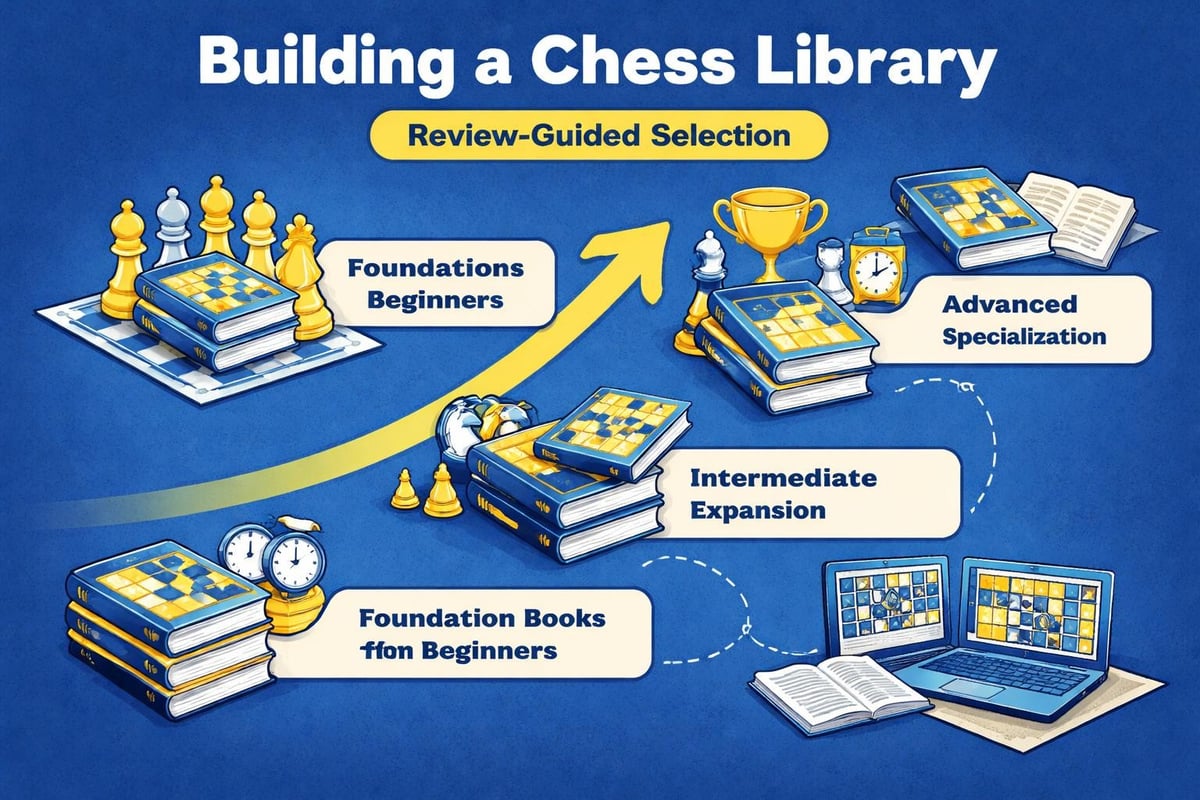
You don't need fifty chess books. You need the right five or six books that address your specific weaknesses and learning stage. Chess book reviews guide this strategic selection process.
The Core Library Approach
Based on commonly recommended titles across chess book reviews, consider building a foundational library with these categories:
- One opening repertoire book for White and Black
- A tactics training collection at your level
- An endgame manual covering essential positions
- A strategy/positional play guide explaining plans
- An annotated game collection showing complete games
This framework ensures balanced development without overwhelming yourself. As you progress, chess book reviews help you identify when you've outgrown a resource and need something more advanced.
Budgeting Your Book Purchases
Quality chess books aren't cheap, but chess book reviews help you avoid expensive mistakes. Before purchasing:
- Read at least three independent reviews
- Check if your local library carries the book
- Look for sample chapters or previews
- Compare the book's focus to your current training needs
- Consider whether free PDF chess books might serve the same purpose
Remember that the best book isn't necessarily the newest or most expensive. Many affordable classics receive better chess book reviews than recent releases with flashy marketing.
The Future of Chess Book Reviews
The chess publishing landscape continues evolving with video courses, interactive training platforms, and AI-powered analysis. How will chess book reviews adapt?
Digital vs. Physical Book Reviews
Reviews increasingly need to address whether a book's format matters. Some books translate well to e-readers; others require physical boards and pieces. Quality chess book reviews now mention these practical considerations.
Integration with Chess Databases
Modern players expect books to integrate with their training software. Reviews might discuss whether a book includes PGN files, Chessable courses, or other digital supplements.
The Wikipedia list of notable chess books provides historical context for how chess publishing has evolved, helping you understand which older titles remain relevant despite new technologies.
Matching Books to Your Playing Style
Chess book reviews become most valuable when you understand your own preferences. Are you a tactical player who loves complications, or do you prefer quiet positional manoeuvring?
Aggressive Players
If you enjoy attacking chess, look for chess book reviews mentioning sharp openings, tactical themes, and sacrificial ideas. Books about the King's Gambit, Dragon Sicilian, or the Marshall Attack suit aggressive styles.
Solid Positional Players
Reviews highlighting strategic depth, pawn structures, and long-term planning indicate books for positional players. The Caro-Kann, Queen's Gambit Declined, and various closed openings feature prominently in reviews for this audience.
Understanding the most common chess openings helps you identify which opening books deserve your attention based on what you'll actually face over the board.
Making the Most of Every Book You Buy
Once chess book reviews have guided you to the right purchase, maximize your investment by actively engaging with the material.
Active Study Techniques
- Set up positions on a physical board
- Attempt exercises before checking solutions
- Review chapters multiple times
- Keep notes on insights that surprised you
- Apply new ideas in your actual games
Simply reading a highly-reviewed book doesn't guarantee improvement. The value emerges through deliberate practice with the material.
Tracking Your Progress
Maintain a study journal noting which books you've completed, key lessons learned, and how your rating changed during that study period. Over time, you'll develop personal insights about which types of books accelerate your improvement most effectively, making future chess book reviews even more useful for your specific needs.
Chess book reviews serve as your compass through the vast world of chess literature, pointing you toward resources that match your skill level, interests, and improvement goals. By learning to evaluate reviews critically and applying their insights strategically, you'll build a focused library that genuinely advances your play. Ready to complement your book study with instantly accessible resources? Chess Cheat Sheets provides streamlined guides, opening cheat sheets, and puzzle collections designed for efficient learning without the overwhelm. Whether you're strengthening your opening repertoire or sharpening your tactical vision, our resources help you improve faster alongside the books you choose.


