

You've probably felt it before: that knot in your stomach when you sit down for a serious chess match, clock ticking, rating points on the line. It's exhausting, isn't it? But here's the thing, chess doesn't always have to be that way. Casual chess offers a refreshing alternative where you can enjoy the beauty of the game without the pressure of competitive play. Whether you're brewing a cuppa on a Sunday morning or squeezing in a quick game during your lunch break, casual chess lets you experience the joy of strategy and tactics at your own pace. Let's explore what makes this approach so appealing and how you can make the most of it.
What Exactly Is Casual Chess?
Casual chess is precisely what it sounds like: playing chess in a relaxed, low-stakes environment where the primary goal is enjoyment rather than rating points or tournament victories. Think of it as the difference between a friendly kickabout in the park versus a Premier League match.
This approach to the game removes much of the stress that comes with competitive chess. You're not constantly worried about your rating dropping, there's no timer creating anxiety, and you can experiment with new ideas without fear of judgment. Casual chess platforms often include adjustable difficulty levels and optional hints, making the experience accessible for everyone.
The Benefits of Playing Without Pressure
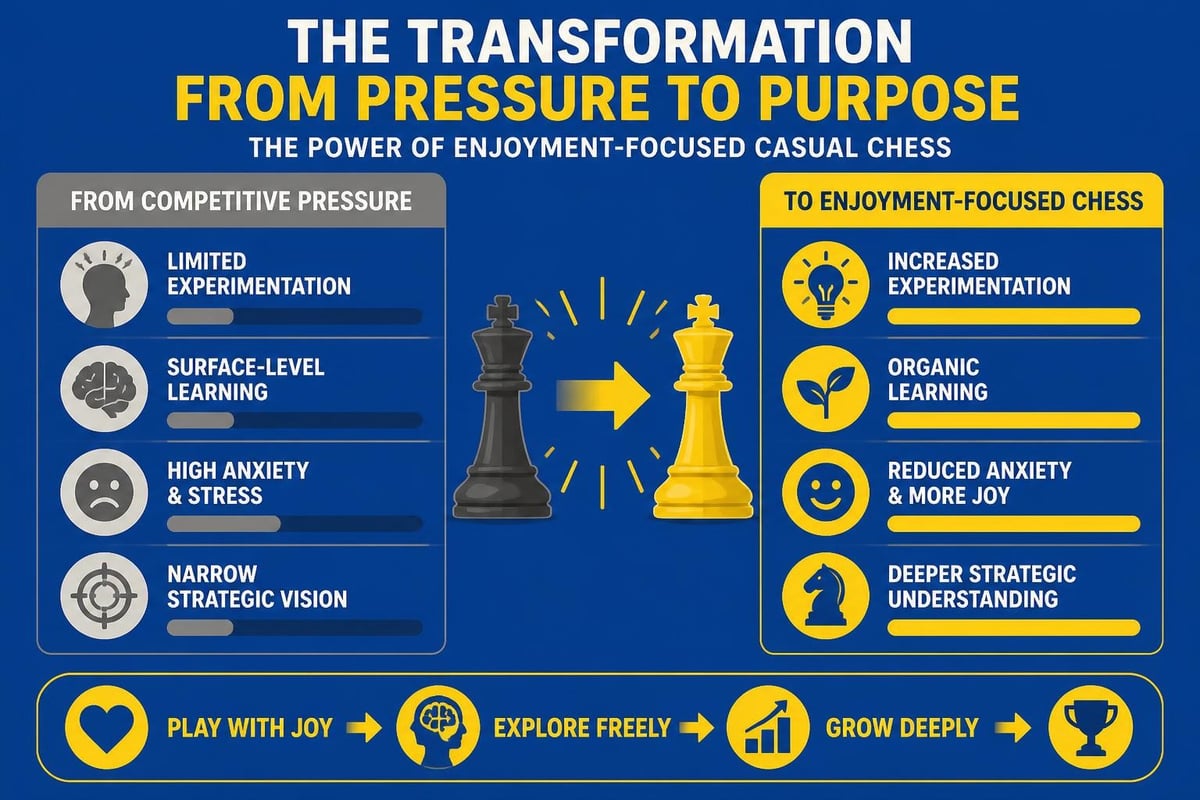
When you remove the competitive element, something wonderful happens. You start seeing chess differently.
- Experimentation becomes natural – you'll try that crazy gambit you've been curious about
- Learning feels organic – mistakes become lessons, not disasters
- Enjoyment takes centre stage – you remember why you fell in love with chess initially
- Stress levels plummet – no more anxious clock-watching or rating paranoia
Many players discover that their understanding of chess actually deepens when they're not frantically calculating under time pressure. You have space to think about why a move works, not just whether it wins material.
Finding Your Perfect Casual Chess Platform
The digital chess landscape in 2026 offers brilliant options for casual players. But how do you choose?
Selecting the best platform for casual chess depends on what you value most. Some players prefer AI opponents that adapt to their skill level, whilst others crave the unpredictability of human opponents in an unrated setting.
Key Features to Look For
| Feature | Why It Matters | Best For |
|---|---|---|
| Adjustable time controls | Play at your preferred pace | Busy schedules |
| AI difficulty settings | Perfect practice without judgment | Building confidence |
| Unrated game modes | Zero pressure environment | Pure enjoyment |
| Analysis tools | Learn from your games afterwards | Gradual improvement |
| Mobile compatibility | Play anywhere, anytime | Flexibility |
User-friendly chess software has become increasingly sophisticated, offering features that help you improve whilst keeping things relaxed. The key is finding software that doesn't overwhelm you with complexity but still provides enough depth to keep things interesting.
Developing a Weekly Chess Routine
Here's something that might surprise you: even casual chess benefits from a bit of structure. Not rigid tournament preparation, mind you, but a gentle routine that keeps you engaged.
Establishing a weekly casual chess routine doesn't mean turning chess into a chore. It's about creating moments you look forward to.
Monday: Start the week with a couple of quick games over breakfast. No analysis, just play.
Wednesday: Mid-week puzzle session. Spend fifteen minutes on the Chess Cheat Sheets puzzle collection to sharpen your tactical vision.
Friday: Wind down the work week with a longer, more thoughtful game. Maybe pour yourself a glass of wine and really savor the positions.
Weekend: Whatever you fancy! Try a new opening, play a friend, or explore chess variants.
This rhythm keeps chess present in your life without it dominating your schedule. You're building skills incrementally whilst maintaining that crucial element of fun.
Simple Opening Approaches for Casual Play
You don't need to memorise thirty moves of theory to enjoy casual chess. In fact, trying to do so often backfires, leaving you paralysed by options.
The "Good Enough" Opening Philosophy
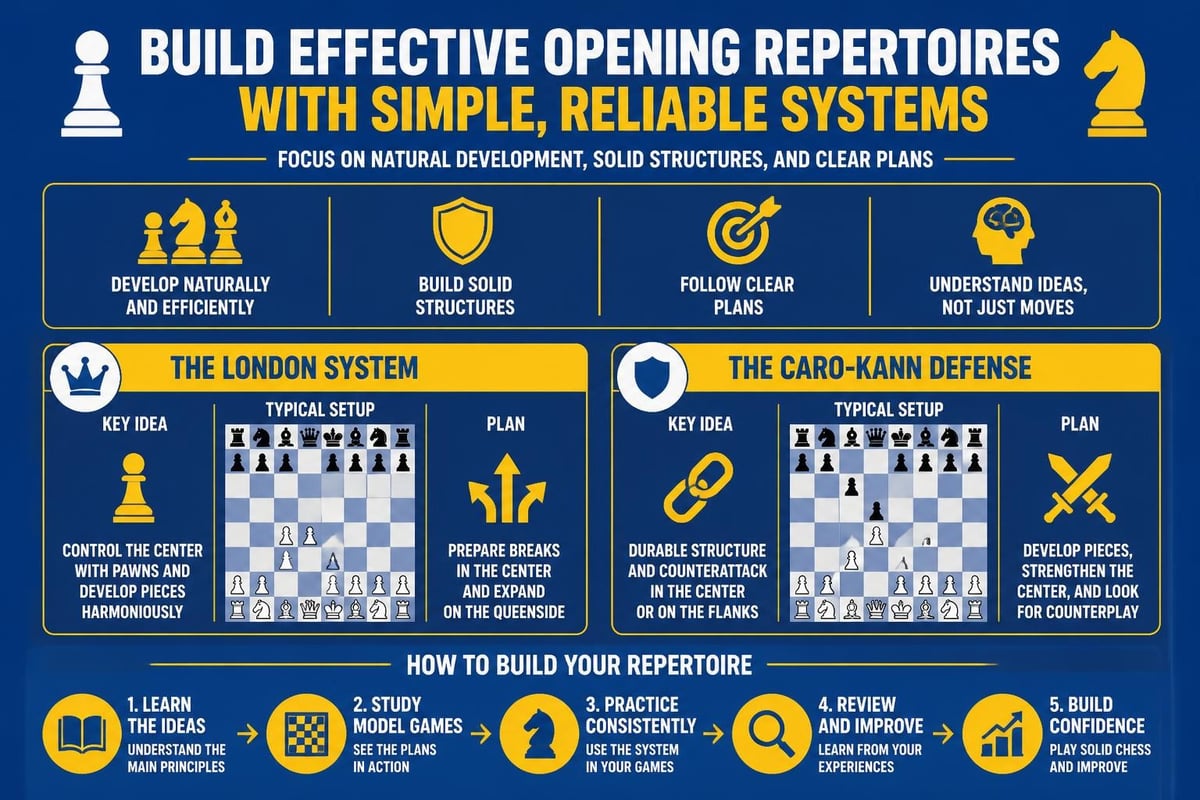
For casual chess, aim for openings that give you solid positions and clear plans. The London System exemplifies this beautifully as White, offering straightforward development and flexible middlegame possibilities.
As Black, defences like the Caro-Kann provide solid structures without requiring exhaustive theoretical knowledge. You'll get decent positions reliably, which is exactly what casual chess is about.
Consider these opening principles for relaxed play:
- Develop your pieces to natural squares
- Control the centre without obsessing over it
- Castle early to keep your king safe
- Avoid wild complications unless you're in the mood for chaos
- Choose systems with clear middlegame plans
Understanding chess move by move helps you grasp the logic behind positions rather than just memorising sequences. This knowledge serves you brilliantly in casual games where opponents won't follow theoretical paths anyway.
Balancing Learning and Enjoyment
This is where many players struggle. How do you improve without turning casual chess into homework?
The secret lies in passive learning. After your games, spend just five minutes glancing through what happened. Not deep computer analysis, just asking yourself: "What worked? What didn't? What was fun?"
Lightweight Learning Methods
Post-game reflections: Jot down one interesting moment from each game. Maybe you spotted a tactic you're proud of, or perhaps you fell into a trap worth remembering. These small observations accumulate into genuine understanding.
Themed practice sessions: Occasionally dedicate a session to exploring one aspect. Fancy working on endgames? Play a few games where you simplify early. Curious about a specific opening? Try it a few times and see what happens.
Casual study materials: Resources like those from Chess Cheat Sheets work brilliantly because they distill complex ideas into digestible formats. You're learning without the overwhelming detail of traditional chess books.
| Learning Approach | Time Investment | Stress Level | Effectiveness for Casual Players |
|---|---|---|---|
| Tournament prep books | High | High | Low |
| Quick reference guides | Low | Low | High |
| Engine analysis | Medium | Medium | Medium |
| Self-reflection | Very Low | Very Low | High |
| Puzzle practice | Low | Low | Very High |
Making Peace with Imperfect Play
Here's something liberating: your casual chess games will be full of mistakes. And that's absolutely fine.
Competitive players often torture themselves over blunders, but in casual chess, those mistakes become learning opportunities without the sting of lost rating points. You hung your queen? Brilliant – now you'll remember to check for tactics on that square pattern. Your opponent found a crushing combination? Fantastic, you just witnessed something beautiful.
This mindset shift transforms how you experience chess. Instead of each game being a test you can pass or fail, games become explorations where discoveries await around every corner.
Embracing the Journey
Progress in casual chess looks different from competitive improvement. You might not see your rating climb (there might not even be a rating), but you'll notice other markers:
- Positions start making intuitive sense
- You spot tactical patterns more quickly
- Endgames feel less mysterious
- Opening moves come naturally rather than requiring memorisation
- The game simply becomes more enjoyable
These improvements happen gradually, almost sneakily, whilst you're focused on having fun. That's the beauty of the casual approach.

Social Aspects of Casual Chess
Chess needn't be a solitary pursuit. Some of the most rewarding casual chess happens with friends, family, or club members who share your relaxed approach.
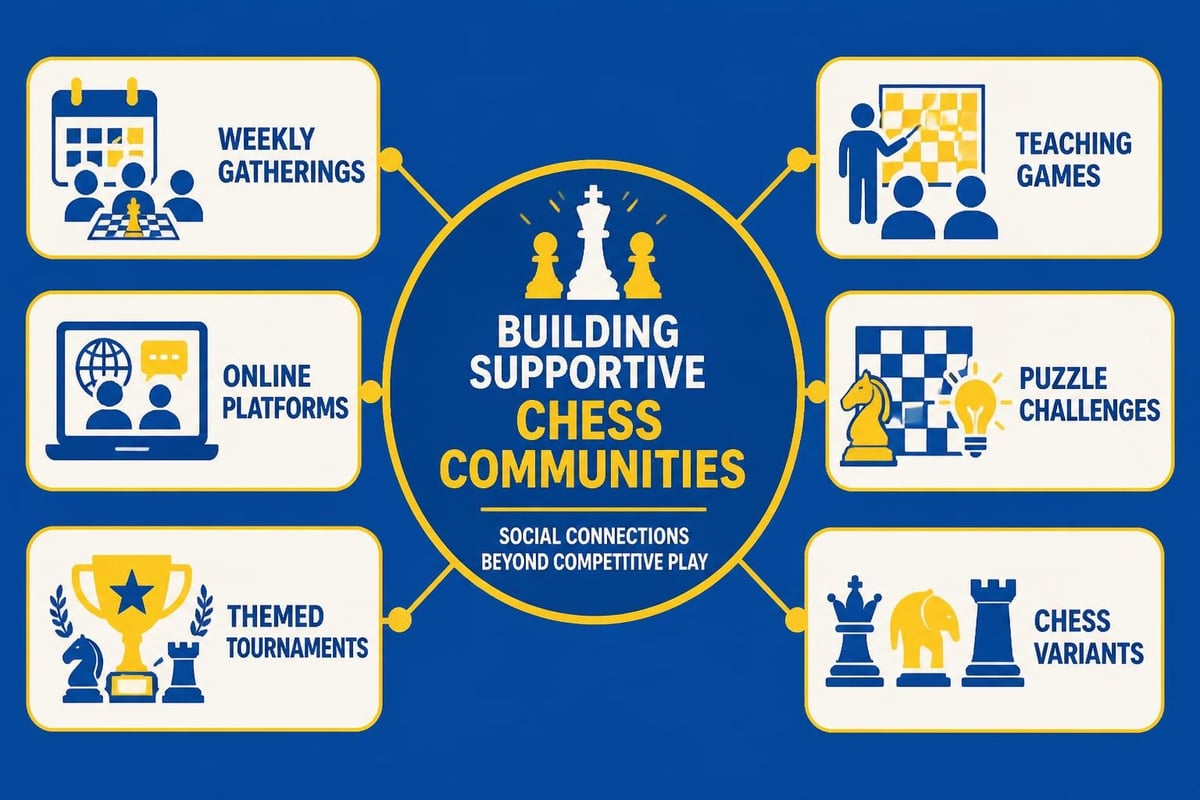
Starting a casual chess group transforms the experience entirely. You might establish a weekly gathering where everyone brings their favourite beverage and you play round-robin games with zero stakes. The conversation flows, laughter erupts when someone blunders spectacularly, and everyone leaves feeling energized rather than drained.
Building Your Chess Community
Online communities also offer wonderful opportunities for casual chess. Many platforms feature lounges or clubs specifically for players seeking relaxed games. Free online resources can help you connect with like-minded players at various skill levels.
Consider these community-building ideas:
- Monthly themed tournaments: Casual doesn't mean you can't have structure. Run a tournament where everyone must play the Scotch Game or another specific opening.
- Teaching games: Pair stronger players with beginners for mentoring sessions that benefit both participants.
- Puzzle challenges: Share interesting positions and discuss solutions together.
- Chess variants evenings: Try Chess960, bughouse, or other variants for a completely different experience.
The social element adds richness that solo play can't match. You're not just moving pieces; you're building friendships around a shared passion.
Accessibility in Casual Chess
One beautiful aspect of casual chess is its inclusivity. The game welcomes everyone regardless of physical ability, age, or background.
For visually impaired players, specialized resources provide adaptive equipment and accessible platforms that make casual chess fully enjoyable. The digital age has opened chess to players who might have faced barriers in the past.
Age proves no obstacle either. You'll find enthusiastic casual players from youngsters just learning the moves to retirees discovering chess for the first time in their seventies. The lack of competitive pressure means everyone can participate at their own level.
Practical Tips for Better Casual Games
Let's get practical. What actually makes a casual chess session brilliant rather than merely okay?
Set the mood: Your environment matters more than you might think. A comfortable chair, good lighting, and perhaps some background music create an atmosphere conducive to enjoyment. Some players swear by classical music, whilst others prefer silence or ambient sounds.
Choose appropriate time controls: Blitz might feel exciting, but it often introduces stress that undermines the casual vibe. Try longer time controls that let you actually think about positions. Even untimed games work wonderfully when both players agree.
Use analysis features wisely: After games, use computer analysis sparingly. Seeing every mistake highlighted in red can be discouraging. Instead, focus on critical moments where the game shifted.
Mix up your opponents: Playing the same person repeatedly can become stale. Rotate between different opponents to experience varied playing styles and keep things fresh.
Quick Wins for Immediate Improvement
- Review common chess openings to recognize patterns quickly
- Practice basic endgames like king and pawn versus king
- Learn the algebraic notation so you can record interesting games
- Set up positions from your games to explore alternative moves
- Keep a simple chess journal noting what you enjoyed each session
The Philosophy Behind Casual Chess
Why does casual chess matter in a world obsessed with improvement and optimization?
Because chess at its heart is a game. Yes, it's intellectually stimulating and strategically deep, but it's meant to be enjoyed. The competitive chess world sometimes forgets this fundamental truth, turning chess into a grueling mental battle where only results matter.
Casual chess reminds us that the journey matters more than the destination. Each game offers its own rewards: a beautiful combination, an interesting endgame, a clever defensive resource, or simply the pleasure of focused thinking. When you remove external pressures, you rediscover what makes chess magical.
This philosophy doesn't mean you won't improve. Paradoxically, many players find their understanding deepens precisely when they stop obsessing over rating points. Without the anxiety of competitive play, your mind absorbs patterns and ideas more naturally.
Integrating Casual Chess Into a Busy Life
You're busy. We all are. So how does casual chess fit into modern life?
The beauty lies in its flexibility. Unlike tournament chess with its rigid schedules and time commitments, casual chess adapts to your life rather than demanding you adapt to it.
Micro-sessions: Five minutes waiting for a meeting to start? Play a quick bullet game. Not for rating points or serious practice, just to keep your mind engaged with chess patterns.
Commute companions: Mobile chess apps transform boring journeys into opportunities for play. Those thirty minutes on the train become your personal chess time.
Social integration: Combine chess with other activities. Having friends over? Set up a board in the corner. It'll naturally draw people in, and you might play a few casual games whilst chatting and laughing.
Family involvement: Teaching family members to play creates built-in casual opponents. Games with kids or partners carry zero competitive pressure and often produce hilarious moments.
The key is viewing casual chess as a hobby that enhances your life rather than another obligation demanding your time. When approached this way, you'll find pockets of opportunity everywhere.
Resources Worth Exploring
Beyond platforms and software, what resources genuinely help casual players?
Physical chess sets remain wonderful for casual play. There's something tactile and satisfying about moving actual pieces. Keep a board set up at home, and you'll find yourself stopping to solve positions or replay interesting games.
Books can work too, provided you choose wisely. Avoid dense theoretical tomes in favour of annotated game collections or thematic puzzle books. You're looking for inspiration and entertainment, not comprehensive opening encyclopaedias.
Opening guides designed for efficient learning help you build practical knowledge without excessive study. These resources acknowledge that most players want to improve their chess whilst maintaining other interests and commitments.
YouTube channels featuring casual, instructive content offer another excellent resource. Watching strong players explain their thinking process helps you absorb strategic concepts naturally whilst being entertained.
Making Your Casual Chess Sustainable
How do you maintain enthusiasm for casual chess over months and years?
Variety prevents boredom: Alternate between different aspects of the game. Play some games, solve some puzzles, watch some videos, read some articles. This rotation keeps things fresh.
Set playful goals: Instead of "increase my rating by 100 points," try "play twenty games with the Sicilian Defense" or "solve fifty tactical puzzles this month." These goals provide direction without pressure.
Celebrate small victories: Did you spot a fork you might have missed six months ago? Celebrate it! Improvement in casual chess comes incrementally, and acknowledging progress maintains motivation.
Take breaks guilt-free: If chess stops being fun, step away for a while. The beauty of casual chess is that it'll be waiting when you return, without penalties for your absence.
Connect with your why: Regularly remind yourself why you play chess casually. Is it relaxation? Mental stimulation? Social connection? Keeping your core motivation visible helps sustain engagement.
Casual chess offers a sustainable, enjoyable way to engage with this timeless game without the pressures of competitive play. Whether you're experimenting with new openings, solving puzzles over your morning coffee, or enjoying friendly games with mates, the casual approach keeps chess fresh and rewarding. If you're ready to deepen your understanding whilst maintaining that relaxed vibe, Chess Cheat Sheets provides streamlined guides, puzzles, and resources that help you improve efficiently without turning chess into homework. Start exploring today and discover how enjoyable chess improvement can be.


