

You've probably sat across a chessboard, staring at the pieces, wondering what the best chess strategy actually looks like in practice. Is it memorising countless opening variations? Mastering tactical combinations? Or perhaps there's a deeper approach that ties everything together? The truth is, chess strategy isn't about a single magic formula-it's about understanding core principles and knowing when to apply them. Whether you're just starting your chess journey or working to break through to the next level, developing a solid strategic foundation will transform how you approach every game.
Understanding What Makes a Strategy Truly Effective
Strategy in chess differs fundamentally from tactics, though many players confuse the two. Chess strategy involves long-term planning and positional understanding, whilst tactics are the short-term combinations that win material or deliver checkmate. Think of strategy as your roadmap and tactics as the vehicle that gets you there.
The best chess strategy starts with recognising that every position has unique characteristics. You're not simply moving pieces randomly-you're crafting a plan based on pawn structure, piece activity, king safety, and control of key squares. This requires patience and the discipline to evaluate what the position truly demands rather than what you'd like to play.
The Foundation: Central Control and Development
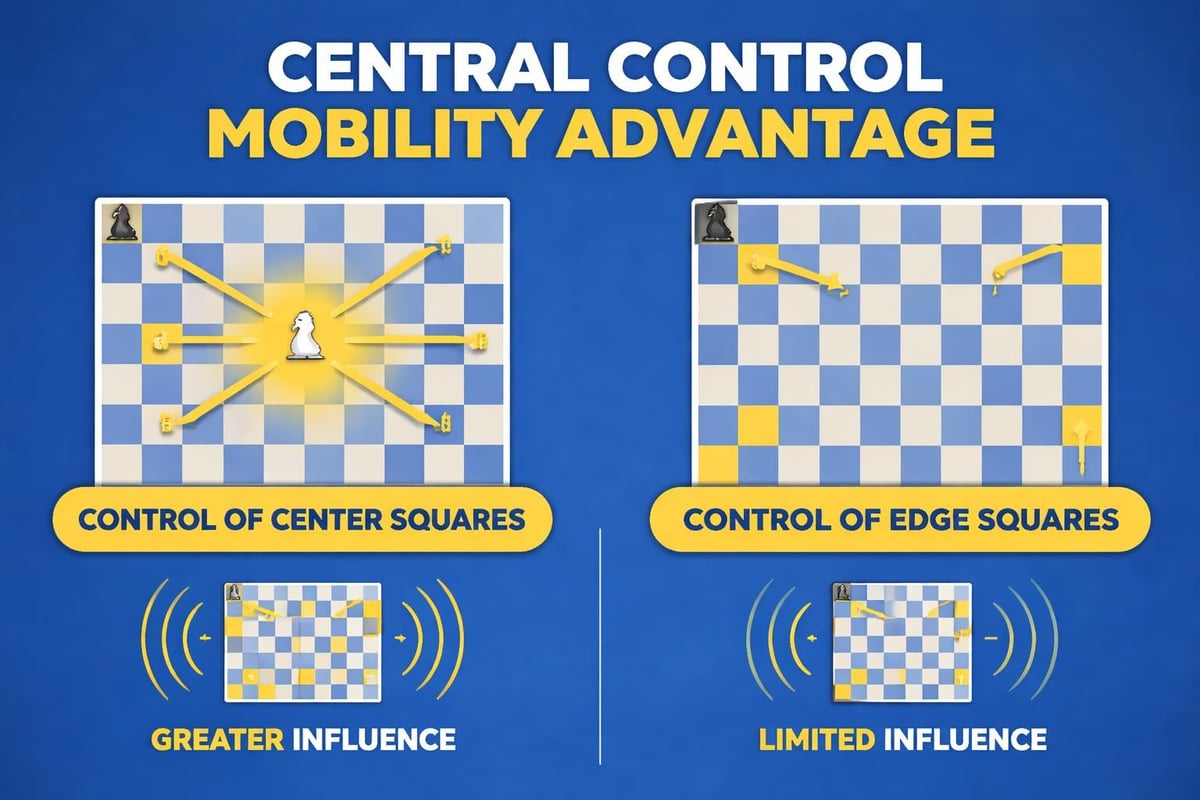
Controlling the centre remains one of the most fundamental strategic concepts you'll encounter. Why? Because pieces placed in the centre influence more squares and create more threats than those stuck on the rim.
When you develop your pieces in the opening, you're not just following convention:
- Knights before bishops generally provides more flexibility
- Castle early to safeguard your king and connect your rooks
- Don't move the same piece twice unless there's a concrete reason
- Control central squares with pawns or pieces
These principles guide your first 10-15 moves in most games. If you're looking for structured guidance on openings, exploring resources like opening guides for white can give you repeatable patterns to work with.
Building Your Positional Understanding
Positional play forms the backbone of the best chess strategy for intermediate players. You're evaluating subtle factors that don't immediately win material but gradually improve your position.
Pawn Structure: Your Strategic Skeleton
Your pawn structure dictates your entire plan. Since pawns can't move backwards, every pawn move creates permanent commitments. Doubled pawns, isolated pawns, and pawn chains each tell a different strategic story.
| Pawn Formation | Strategic Implications | Typical Plan |
|---|---|---|
| Isolated pawn | Active pieces, weak square behind | Attack before opponent blockades |
| Doubled pawns | Weakness but open files | Use open files for rooks |
| Pawn chain | Strong diagonal control | Attack the base of the chain |
| Passed pawn | Endgame advantage | Push and support advancement |
Consider the Caro-Kann Defense-it prioritises solid pawn structure over rapid development. Black accepts slightly cramped positions initially but gets a rock-solid foundation without weaknesses. That's positional chess at its finest.
Piece Activity vs Material Balance
Here's something that might surprise you: sometimes the best chess strategy involves sacrificing material for activity. A well-placed knight on an outpost square can be worth more than a passive rook trapped on its starting square.
Watch for these activity indicators:
- Pieces on optimal squares (knights on strong outposts, bishops on open diagonals)
- Rooks on open or semi-open files
- Bishops with clear diagonals unobstructed by your own pawns
- Queen positioned to support attacks without being vulnerable
Modern chess engines like Stockfish have revolutionised how we evaluate positions, often favouring dynamic piece activity over static material counts. Understanding what openings Stockfish prefers reveals how top-level strategy prioritises activity.

Developing Your Strategic Vision
You're not born with strategic vision-you develop it through pattern recognition and deliberate practice. The best chess strategy emerges when you can look at a position and identify which elements matter most.
The Principle of Two Weaknesses
One of the most powerful strategic concepts is creating multiple weaknesses in your opponent's position. A single weakness can usually be defended, but when you create a second weakness, your opponent faces an impossible defensive task.
Imagine your opponent has a weak pawn on the queenside. That's manageable. But if you also create threats on the kingside, they'll struggle to defend both flanks simultaneously. This is exactly how grandmasters convert small advantages into wins.
When to Trade Pieces
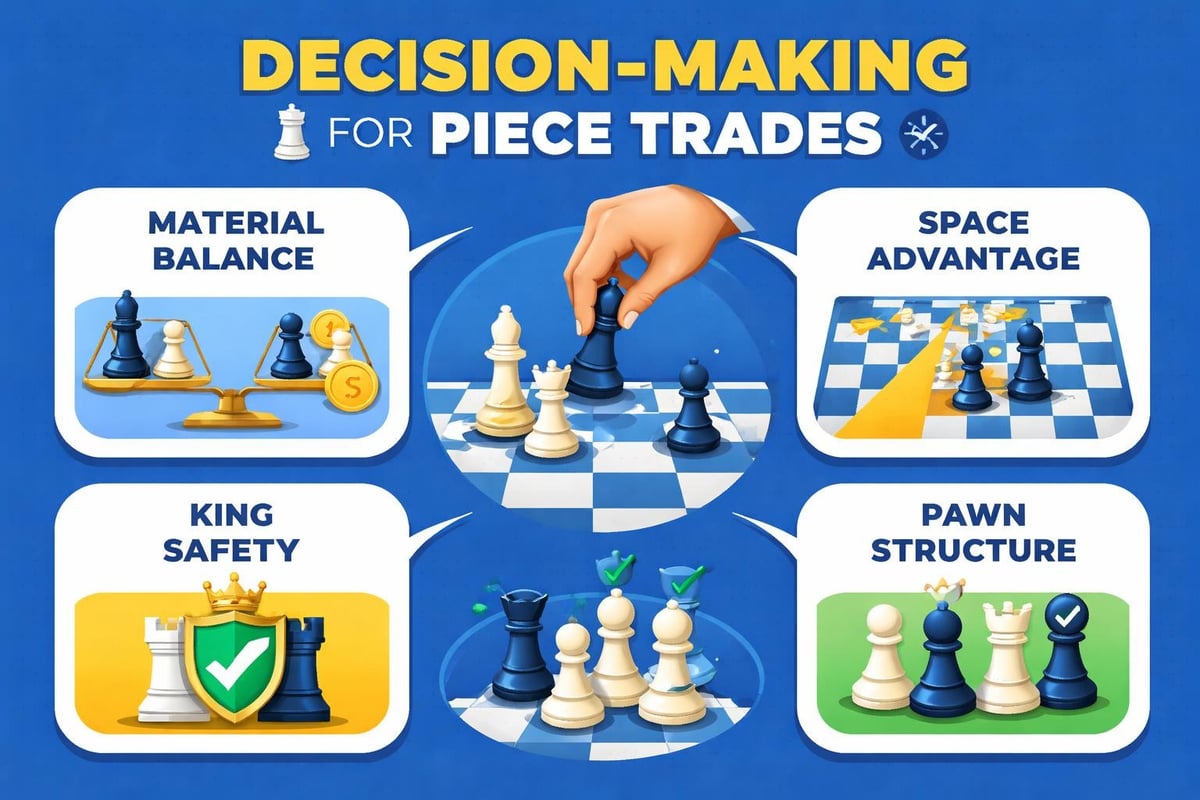
Knowing when to exchange pieces separates strong players from average ones. The best chess strategy regarding trades considers several factors:
- When ahead in material: trade pieces (not pawns) to simplify
- When cramped: trade pieces to relieve congestion
- When attacking: keep pieces on to maintain pressure
- When defending: trade attackers to reduce threats
If you're playing the London System, you might keep pieces on longer because your setup thrives on middlegame plans rather than early simplification.
Middlegame Planning: Where Strategy Shines
The middlegame is where your strategic understanding truly matters. You've completed development, castled, and now face the critical question: what's my plan?
Creating Weaknesses in Your Opponent's Camp
You can't simply attack randomly and hope for success. Strategic play involves identifying or creating targets:
- Pawn breaks that open lines towards the opponent's king
- Piece manoeuvres that infiltrate weak squares
- Prophylactic moves that prevent your opponent's counterplay
- Sacrifices that expose the enemy king
The Italian Game demonstrates this beautifully-White develops naturally whilst maintaining central tension, then chooses between aggressive pawn storms or strategic manoeuvring based on Black's setup.
Space Advantage and Its Exploitation
When you control more space, your pieces have more room to manoeuvre whilst your opponent's pieces trip over each other. But here's the catch: space advantages require maintenance. Overextend, and those advanced pawns become targets.
The best chess strategy with a space advantage involves:
- Restricting opponent piece mobility
- Preventing pawn breaks that would free their position
- Transferring pieces smoothly between flanks
- Avoiding unnecessary trades that ease their cramp
Transitioning to the Endgame
Many games are won or lost based on how well you transition from middlegame to endgame. The best chess strategy recognises that piece values shift dramatically as material comes off the board.
The Changing Value of Pieces
In the middlegame, rooks often struggle to find open files. In the endgame, they dominate. Bishops can be superior to knights in open positions, whilst knights thrive in blocked positions with fixed pawns.
| Piece | Middlegame Strength | Endgame Strength | Strategic Preference |
|---|---|---|---|
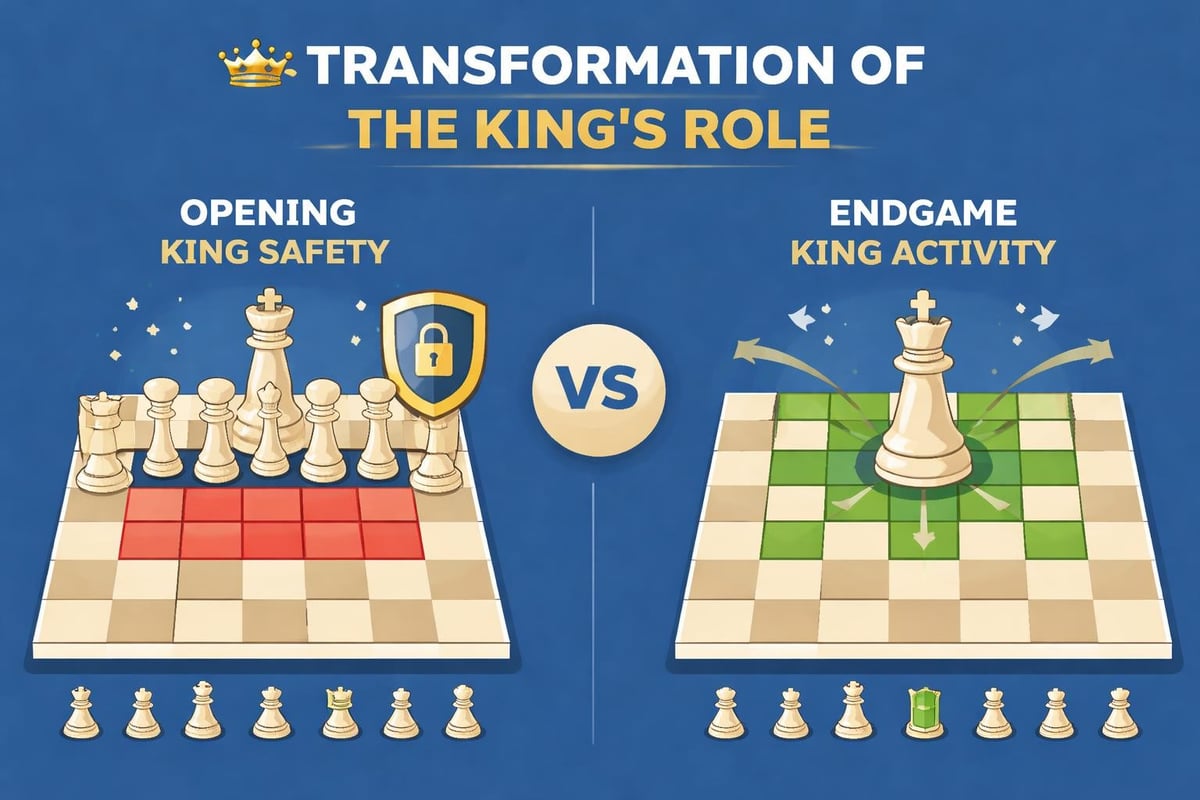
| King | Liability (must hide) | Active piece | Centralise in endgames |
| Rook | Needs open files | Dominates ranks/files | Keep for endgames |
| Bishop | Depends on pawn structure | Strong in open positions | Good versus bad bishop |
| Knight | Excellent on outposts | Limited by closed positions | Best in blockaded structures |
Understanding these transitions helps you make better strategic decisions about which pieces to trade and when.
King Activity in the Endgame
Your king transforms from a liability into a powerful attacking piece once queens leave the board. The best chess strategy in endgames often centres on king activity-getting your monarch into the action whilst keeping your opponent's king passive.
Consider how quickly you can activate your king. Every tempo matters when racing to support passed pawns or attack enemy weaknesses.
Practical Strategic Patterns You Can Use Immediately
Let's make this concrete. Here are specific strategic patterns you can apply in your next game, regardless of opening choice.
The Minority Attack
When you have fewer pawns on one flank than your opponent, you can often create weaknesses by advancing them. This classic chess strategic concept appears frequently in Queen's Gambit structures and similar openings.
Your queenside pawn minority advances (typically b4-b5) against their three-pawn majority, forcing them to either capture (creating weak pawns) or allow penetration. It's strategic pressure at its finest.
Prophylaxis: Preventing Your Opponent's Plans
The best chess strategy isn't just about executing your own plans-it's about stopping your opponent's ideas. Before making your next move, ask yourself: "What does my opponent want to do?"
If they're preparing a pawn break, can you prevent it? If they want to reroute a knight, can you control the key square? This preventative thinking, called prophylaxis, elevates your strategic play enormously.
Strategic Themes by Opening Type
Different openings create different strategic landscapes. Recognising these patterns helps you choose appropriate plans quickly.
Closed Positions
In closed positions with locked pawn chains (common in French Defense or King's Indian structures), the best chess strategy involves:
- Playing on the flank opposite to where your pawn chain points
- Manoeuvring pieces rather than forcing tactics
- Preparing pawn breaks methodically
- Building up pressure before striking
Patience rewards you in these positions. Rushing leads to overextension and positional collapse.
Open Positions
Open positions demand dynamic play. With few central pawns and open files everywhere, tactical opportunities abound:
- Rapid development becomes crucial
- King safety requires immediate attention
- Piece coordination matters more than long-term plans
- Tactical vigilance prevents disasters
Looking at the best openings for Black reveals how different systems create varying strategic demands.
Semi-Closed Positions
These hybrid positions offer the richest strategic complexity. You'll find elements of both positional manoeuvring and tactical sharpness. The best chess strategy here involves flexibility-being ready to shift between strategic grinding and tactical complications as opportunities arise.
Common Strategic Mistakes to Avoid
Even with solid strategic knowledge, certain pitfalls catch players repeatedly. Avoiding these mistakes immediately improves your results.
Moving Pawns Without Purpose
Every pawn move creates permanent commitments. Don't advance pawns just because you're unsure what else to do. Each pawn push should serve a concrete purpose: controlling a square, opening a line, or restricting opponent pieces.
Ignoring Your Opponent's Threats
You've got a brilliant plan-but did you check what your opponent's threatening? The best chess strategy balances your own ideas with defensive necessity. Miss their tactics, and your beautiful strategy becomes irrelevant.
Failing to Adjust Plans
Stubborn adherence to a plan when the position has changed is a classic error. Strategic flexibility separates strong players from rigid ones. If your opponent has neutralised your initial plan, reassess and find a new approach.
Integrating Tactics Within Strategic Frameworks
Strategy and tactics aren't separate-they're intertwined. Your strategic plan creates the conditions where tactical opportunities emerge.
Think of it this way: strategy is improving your position until a tactic works. You manoeuvre pieces to optimal squares, create weaknesses, restrict opponent options, and suddenly-a tactical blow decides the game.
The best chess strategy acknowledges this relationship. You're not choosing between positional play and tactics; you're using positional play to set up devastating tactics.
Pattern Recognition Accelerates Strategic Understanding
The more positions you study, the faster you'll recognise strategic patterns. This is why working through annotated games and studying master play proves so valuable. You're building a mental library of positions and associated plans.
Resources like those found in free chess books collections can significantly accelerate this pattern recognition development without requiring expensive materials.
Developing Your Personal Strategic Style
Not everyone plays chess the same way, and that's perfectly fine. The best chess strategy for you aligns with your personality and preferences.
Aggressive Players
If you thrive on attacking chess, your strategic approach emphasises:
- King-side pawn storms
- Piece sacrifices for initiative
- Open positions with tactical opportunities
- Time pressure on opponents
Openings like the King's Gambit suit aggressive players who want immediate confrontation.
Positional Players
Prefer slow, strategic squeezes? Your approach prioritises:
- Solid pawn structures
- Gradual improvement of piece placement
- Long-term weaknesses over immediate tactics
- Technical endgame conversion
Systems like the London System provide the strategic frameworks positional players enjoy.
Universal Players
The ideal approach combines both styles, adapting to what each position demands. This flexibility represents the highest level of strategic understanding-you're not bound by personal preference but guided by objective position requirements.
Practical Training Methods for Strategic Improvement
Knowing strategic principles intellectually differs from applying them over the board. Here's how you bridge that gap.
Study Master Games with Annotations
Don't just replay moves-read the annotations explaining why grandmasters chose particular plans. Understanding the reasoning behind moves develops your strategic intuition far better than memorising variations.
Analyse Your Own Games
After each game, spend time identifying where your strategic plan succeeded or failed. Did you create a plan based on position requirements? Did you adjust when circumstances changed? This self-analysis creates lasting improvement.
Solve Strategic Exercises
Not all puzzles are tactical. Strategic exercises ask you to find the best plan or manoeuvre rather than a forcing sequence. Resources focused on positional chess skills help develop this crucial ability.
Play Longer Time Controls
You can't develop strategic understanding in bullet chess. Longer time controls force you to create and execute plans rather than relying on reflexes and tactics. Even 15-minute games provide enough time for genuine strategic thinking.
Measuring Your Strategic Progress
How do you know if your strategic understanding is improving? Look for these indicators in your games:
- Fewer aimless moves where you're unsure what to do
- Better conversion of advantages into wins
- Improved performance in positions without immediate tactics
- Stronger endgame technique and planning
Your rating might fluctuate, but these qualitative improvements indicate genuine strategic growth. Understanding chess rating systems helps contextualise your progress within the broader chess community.
Developing the best chess strategy requires patience, study, and practical experience combining opening knowledge, middlegame planning, and endgame technique. Rather than trying to master everything simultaneously, focus on understanding core strategic principles and gradually building your pattern recognition. Chess Cheat Sheets provides streamlined guides and resources that help you absorb these concepts efficiently, offering opening guides, puzzle collections, and endgame resources designed specifically for players ready to elevate their strategic understanding without overwhelming study requirements. Start building your strategic foundation today, and watch your chess understanding transform.


