

You've probably wondered what separates a good chess player from a great one. Is it natural talent? Hours of practice? While both help, understanding and executing the best chess moves can dramatically accelerate your improvement. These aren't just random brilliant moves from grandmaster games; they're fundamental patterns, opening principles, and tactical ideas that work consistently across all levels of play. Whether you're just learning the rules or pushing towards intermediate strength, mastering these essential moves will transform how you think about the board and give you practical weapons to win more games.

Understanding What Makes a Move Truly Great
Not all chess moves are created equal. Some push pawns aimlessly. Others create immediate threats that force your opponent into difficult decisions. But what actually defines the best chess moves?
Think about it this way: the strongest moves accomplish multiple goals simultaneously. They might develop a piece while attacking something, or control key squares whilst preparing a future tactic. This concept of multi-purpose moves is fundamental to chess mastery.
The criteria for excellent moves include:
- Development: Getting pieces off the back rank and into the game quickly
- Control: Dominating central squares and key diagonals
- King safety: Castling early or creating a secure king position
- Threat creation: Forcing your opponent to respond to your ideas
- Positional improvement: Enhancing piece placement and pawn structure
When you evaluate your candidate moves, you're essentially asking yourself which option gives you the most benefit. Sometimes that's a tactical blow. Other times it's a quiet positional improvement that sets up future opportunities.
Opening Moves That Set the Foundation
Your first few moves determine the entire character of the game. Start poorly, and you'll spend the rest of the game defending. Start with strong opening principles, and you'll have comfortable positions that naturally lead to good middlegame plans.
The King's Pawn Game, starting with 1.e4, remains one of the most popular first moves for excellent reasons. It immediately stakes a claim to the centre, opens lines for your bishop and queen, and creates dynamic play from move one.
Classical Opening Principles
These fundamental concepts have guided strong players for centuries, and they're just as relevant in 2026 as they were a hundred years ago:
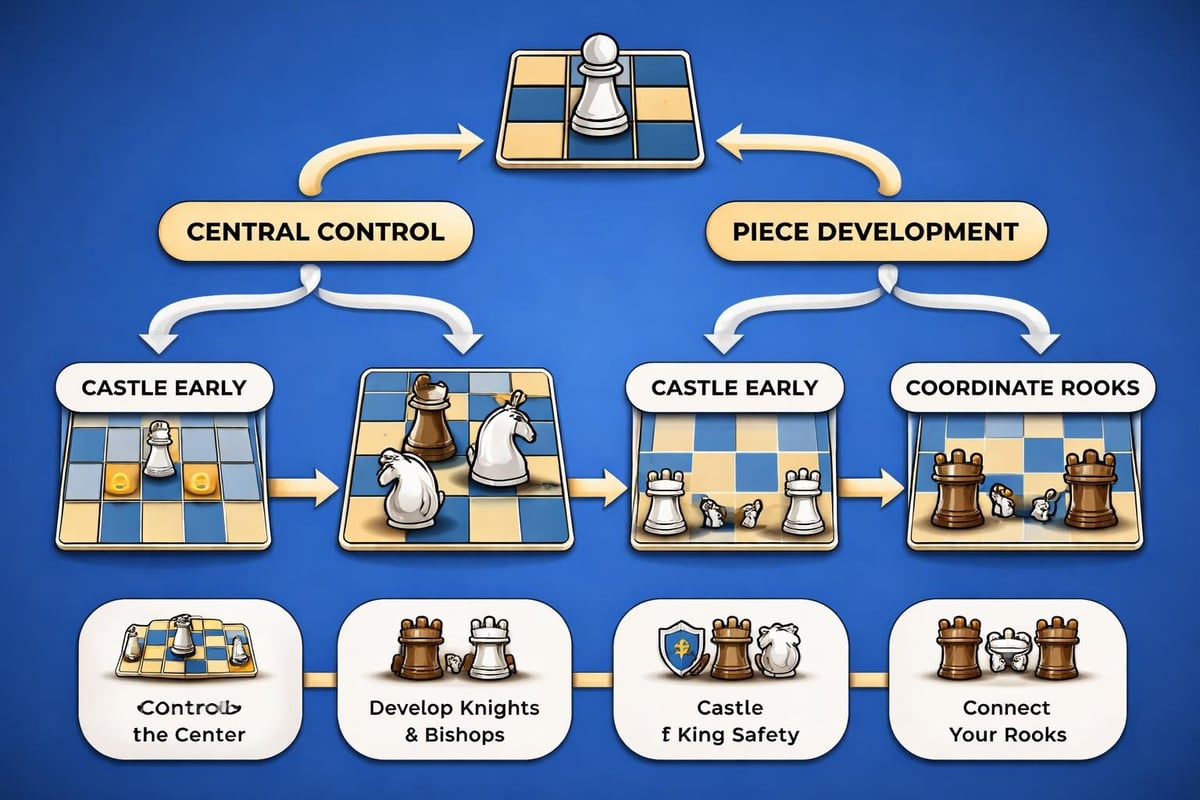
- Control the centre with pawns and pieces
- Develop knights before bishops (they have fewer good squares)
- Castle early to protect your king
- Don't move the same piece twice in the opening
- Connect your rooks by completing development
Understanding most common chess openings gives you a huge advantage. You'll recognise patterns faster and know which moves typically work well in familiar positions.
Tactical Moves That Win Material
Tactics are the bread and butter of practical chess improvement. You can understand positional concepts brilliantly, but if you miss a simple tactic, you'll lose material and probably the game.
The best chess moves often involve classic tactical patterns that appear repeatedly. Learn to recognise these patterns, and you'll spot winning opportunities your opponents miss.
| Tactical Pattern | Key Characteristics | Typical Result |
|---|---|---|
| Fork | One piece attacks two targets | Win material |
| Pin | Piece can't move without exposing more valuable piece | Gain positional advantage or material |
| Skewer | Valuable piece must move, exposing less valuable piece behind | Win material |
| Discovered Attack | Moving one piece reveals attack from another | Create double threats |
| Double Attack | Two pieces attack simultaneously | Overwhelm defence |
The Power of the Queen
The queen's unique movement abilities make it your most powerful attacking piece. She combines the power of rook and bishop, moving any distance along ranks, files, or diagonals.
However, developing your queen too early often backfires. Opponents can attack it with developing moves, gaining time whilst you waste moves retreating. The best chess moves involving the queen typically occur after you've completed most of your development.
One exception worth knowing: Fool's Mate, the fastest possible checkmate, features an early queen move. It happens after 1.f3 e5 2.g4 Qh4#. Whilst you'll rarely see this in serious games, it illustrates the danger of weakening squares around your king.
Positional Moves That Build Long-Term Advantages
Tactics win games, but positional understanding helps you create the conditions where tactics become possible. The best chess moves aren't always forcing or dramatic; sometimes they're quiet improvements that accumulate small advantages.
Consider the concept of piece activity. An active bishop on a long diagonal influences the entire game. A passive bishop blocked by its own pawns might as well not exist. Moving that bishop to a better diagonal, even without creating immediate threats, often ranks among your strongest options.
Key positional concepts to master:
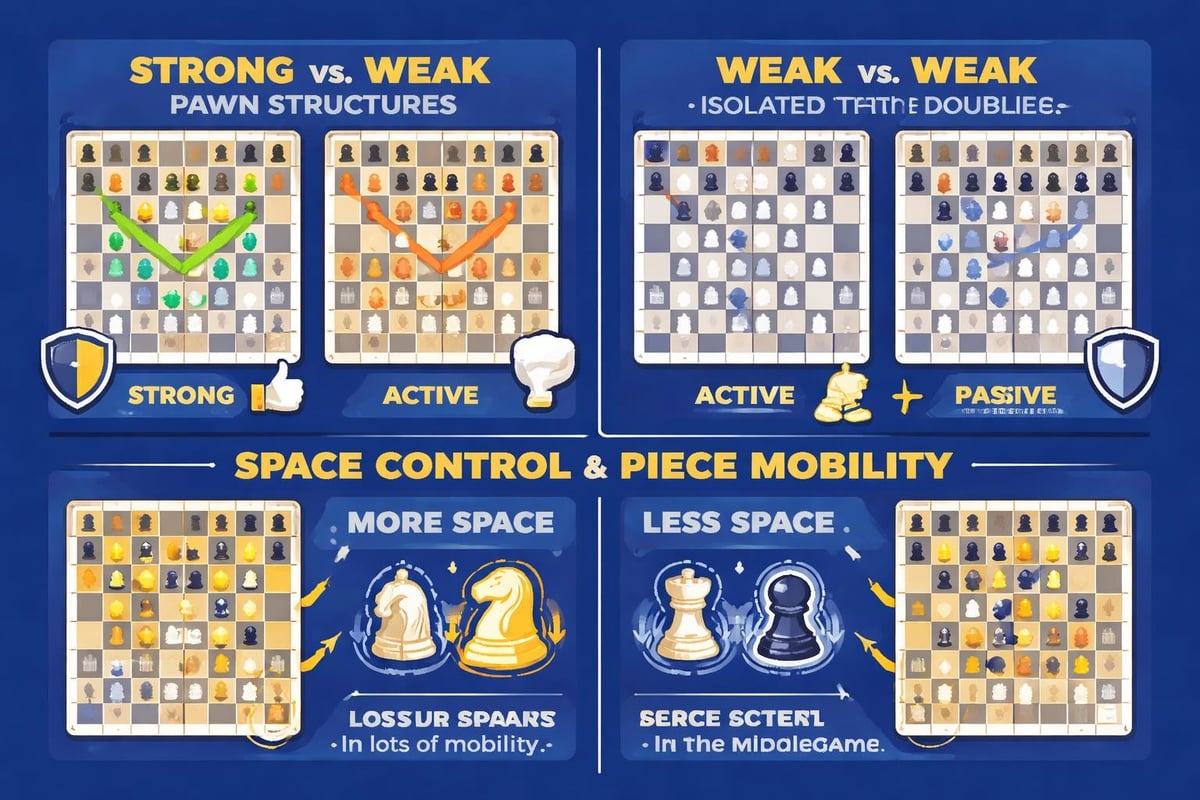
- Pawn structure: Create strengths (passed pawns, pawn chains) whilst avoiding weaknesses (isolated, doubled pawns)
- Piece coordination: Ensure your pieces work together rather than getting in each other's way
- Weak squares: Identify and occupy squares your opponent can't defend with pawns
- Space advantage: Control more squares to give your pieces better mobility
You can accelerate your understanding of these concepts through free online chess courses that break down complex positions into digestible principles.
Endgame Moves That Convert Advantages
Many players reach winning endgames only to draw or even lose because they don't know the proper technique. The best chess moves in the endgame often involve precise calculation and understanding theoretical positions.
King activity becomes paramount once queens leave the board. Your king transforms from a liability needing protection into a powerful piece that should actively participate. Centralising your king and using it to support passed pawns frequently makes the difference between winning and drawing.
Essential Endgame Patterns
- Opposition: Kings facing each other with one square between create a tactical relationship where the player not moving has the advantage
- Triangulation: Manoeuvring your king to reach the same position with your opponent to move
- Shouldering: Using your king to prevent the opponent's king from reaching key squares
- Outflanking: Going around the opponent's king to support your passed pawn
The Queen's Gambit's strategic principles often lead to endgames where understanding pawn structures becomes crucial. Trading pieces when you're ahead simplifies the position and makes your advantage easier to convert.
Defensive Moves That Save Difficult Positions
Strong defence wins just as many games as brilliant attacks. When you're under pressure, finding the best chess moves requires nerves of steel and accurate calculation.
Defensive techniques that work:
- Counterattack: Create threats against your opponent's king or pieces rather than passively defending
- Simplification: Trade pieces when defending to reduce attacking potential
- Fortress building: Create positions where your opponent can't make progress despite material advantages
- Perpetual check: Force a draw through continuous checks when losing
Look at how grandmasters defend difficult positions. They don't panic or resign immediately. They create practical problems, set traps, and make opponents prove they can convert advantages. This resilience separates strong players from weak ones.
Chess.com's collection of the 10 best moves of all time includes several stunning defensive resources that saved seemingly hopeless positions. Studying these moves expands your defensive imagination.

Combination Moves That Force Wins
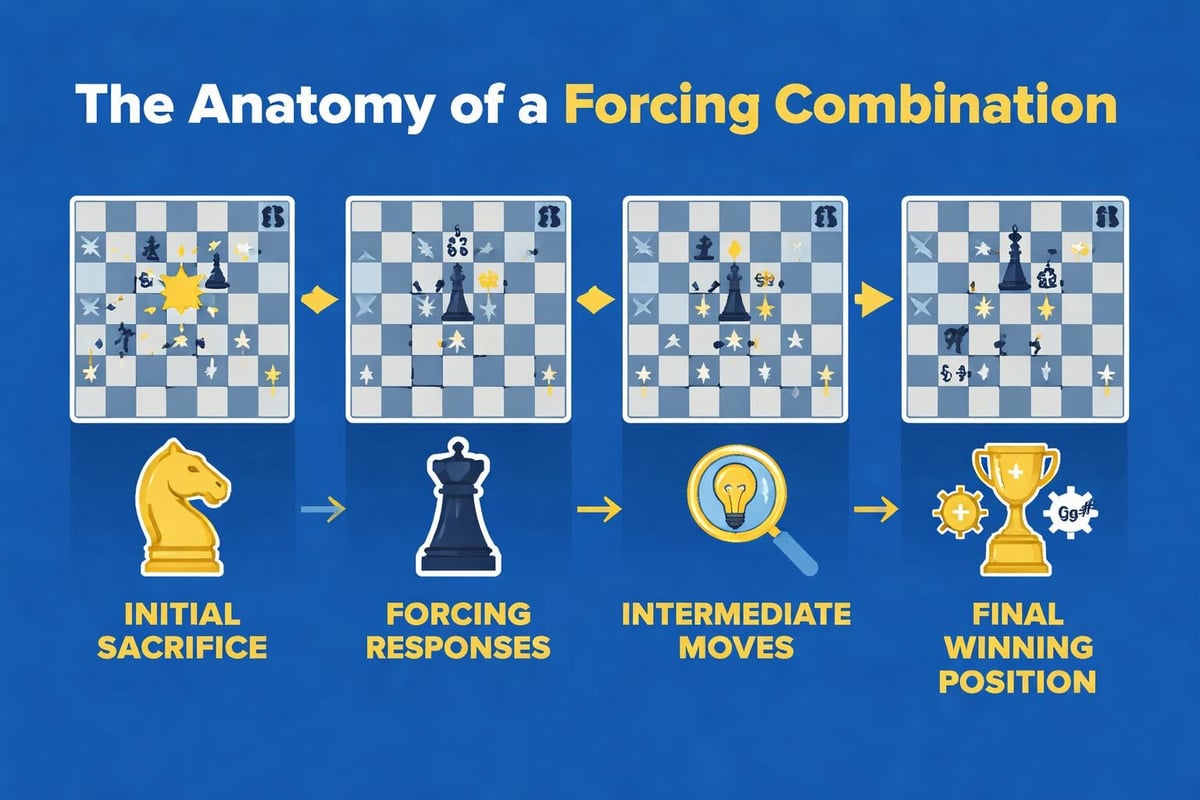
Combinations string together several moves with forcing play (checks, captures, threats) that lead to a concrete advantage. These sequences represent chess at its most beautiful and decisive.
The best chess moves in combinations often involve sacrifices. You give up material temporarily, knowing that your follow-up moves will win it back with interest or deliver checkmate.
| Combination Type | Characteristics | When to Look For It |
|---|---|---|
| Mating Attack | Series of forcing moves leading to checkmate | Opponent's king is exposed or poorly defended |
| Deflection | Force a defending piece away from its duty | Key piece guards multiple targets |
| Decoy | Lure a piece to a bad square | Setting up discovered attacks or forks |
| Clearance | Remove your own piece to open lines | Creating breakthrough moves or clearance sacrifices |
The Two Knights Defense often leads to sharp tactical positions where these combinations appear frequently. Understanding typical patterns in your openings helps you spot combinations faster.
Opening-Specific Strong Moves
Different openings lead to characteristic types of positions with typical strong moves. Understanding these patterns helps you play the middlegame more effectively.
The Scandinavian Defense features early queen development, which normally violates opening principles. However, in this specific opening, the queen can find safe squares while developing pieces harmoniously.
Similarly, the Italian Game prioritises rapid development and central control. The bishop on c4 eyes the vulnerable f7 square, often leading to tactical opportunities.
Gambit Considerations
Gambits sacrifice material (usually pawns) for rapid development and attacking chances. The Bishop's Gambit exemplifies this approach, giving up a pawn to open lines and activate pieces quickly.
When playing gambits, your best moves typically involve:
- Maintaining initiative through continuous threats
- Preventing opponent from consolidating extra material
- Creating attacking chances before the position simplifies
- Recognising when to accept perpetual check rather than pressing for more
Moves from Memorable Games
History's greatest games showcase the best chess moves in practical context. Watching how elite players handle critical moments teaches pattern recognition and decision-making.
The 2021 World Chess Championship Game 6 between Magnus Carlsen and Ian Nepomniachtchi became the longest championship game in history. Carlsen's precise moves in a complex endgame demonstrated world-class technique converting minimal advantages.
Chess.com's list of 10 chess moves to play before you die highlights spectacular combinations worth studying. These moves showcase creativity, calculation, and courage under pressure.
Practical Training Methods
Knowing which moves are strong theoretically means little without the ability to find them during your games. Developing this practical skill requires deliberate training methods.
Effective training approaches:
- Tactical puzzles: Solve 10-20 daily to sharpen pattern recognition
- Position analysis: Study master games move by move, predicting their choices
- Opening preparation: Build repertoires around chess openings you understand deeply
- Blitz games: Play faster time controls to develop intuition
- Post-game analysis: Review every game to identify missed opportunities
The Ruy Lopez and Sicilian Defense represent two of the most theoretically rich openings. Studying typical middlegame plans from these openings improves your strategic understanding significantly.
Adapting Moves to Your Playing Style
The objectively best chess moves sometimes clash with your natural playing style. Aggressive players struggle with quiet positional games. Defensive players feel uncomfortable launching wild attacks.
Rather than fighting your natural tendencies, choose openings and positions that suit your style whilst gradually expanding your comfort zone. If you love attacking, explore the King's Gambit. Prefer solid positions? The Caro-Kann Defense might suit you perfectly.
This doesn't mean avoiding uncomfortable positions entirely. Growth requires stretching beyond your comfort zone. But starting with positions you naturally understand makes learning more enjoyable and effective.
Common Mistakes to Avoid
Even knowing what constitutes strong moves, players repeatedly fall into predictable traps. Awareness helps you avoid these pitfalls.
Frequent errors that cost games:
- Moving without checking for opponent's threats
- Neglecting king safety in pursuit of attack
- Trading pieces without considering resulting pawn structure
- Developing pieces to squares where they'll be attacked
- Ignoring opponent's plan whilst pursuing your own
Chess.com's collection of the most beautiful chess moves often punish exactly these mistakes. Opponents make errors, and strong players capitalise with stunning combinations.
Building Your Move Selection Process
Consistent move quality requires a systematic thinking process. Random evaluation leads to inconsistent results. Structured thinking produces reliable decision-making.
Here's a practical framework:
- Check for immediate tactics (both yours and your opponent's)
- Identify candidate moves (typically 3-4 options worth considering)
- Calculate forcing variations (checks, captures, threats)
- Evaluate resulting positions (which leaves you better off?)
- Choose and commit (avoid time pressure from overthinking)
This process becomes faster with practice. Initially, you'll need several minutes per move. Eventually, pattern recognition accelerates evaluation, and you'll reach good moves quickly.
Resources for Continuous Improvement
The best chess moves evolve with your understanding. What seems brilliant at beginner level might appear crude once you reach intermediate strength. Continuous learning keeps your skills sharp.
Beyond studying individual moves, understanding broader strategic concepts matters enormously. Resources like chess tools and comprehensive chess resources provide frameworks for systematic improvement.
Regular engagement with chess content maintains momentum. Read articles, watch videos, solve puzzles, and play games consistently rather than cramming sporadically.
Mastering the best chess moves transforms your game from random piece-shuffling into purposeful, strategic play that consistently creates winning opportunities. Whether you're working on opening principles, tactical patterns, or endgame technique, the key is understanding why certain moves work and building the pattern recognition to find them in your games. Chess Cheat Sheets provides comprehensive guides, streamlined resources, and practical tools designed specifically to help players like you master essential positions and openings without overwhelming study requirements. Start building your chess foundation today with clear, actionable guidance that accelerates your path to stronger play.


