

You've probably heard experienced players mention the term "american opening chess" and wondered what makes it distinctly American. The truth is, whilst chess openings often bear the names of countries or cities, the so-called American approach to opening theory represents a fascinating blend of pragmatism, flexibility, and aggressive play that's evolved over decades. Rather than a single defined sequence of moves, american opening chess encompasses several systems favoured by American grandmasters and club players alike, from the dynamic King's Pawn openings to the subtle English Opening. Understanding this approach can transform how you think about the critical first moves of your game, giving you the confidence to choose openings that suit your style whilst keeping your opponents guessing.
What Actually Is American Opening Chess
Let's clear up the confusion right away. When chess players discuss american opening chess, they're typically referring to one of two things: either specific opening systems historically popularised by American masters, or the broader American style of aggressive, practical play in the opening phase.
The English Opening (1.c4) stands out as the most genuinely "American" named opening, though ironically it was named after English master Howard Staunton. American players throughout the 20th century embraced this flexible system because it allowed for creative transpositions and avoided heavily analysed main lines.
Historical Context and Development
American chess culture has always valued practical results over pure theory. Bobby Fischer, perhaps America's most famous chess export, revolutionised opening preparation with his concrete approach to the King's Pawn opening. He didn't just memorise variations; he understood the underlying strategic concepts that made positions work.
During the 1970s and 1980s, American grandmasters like Walter Browne, Yasser Seirawan, and Larry Christiansen developed reputations for sharp, tactical opening play. They weren't afraid to deviate from Soviet opening theory, instead trusting their calculation and middlegame understanding.
Core Principles Behind American Opening Choices
What distinguishes american opening chess from other national traditions isn't necessarily the specific moves, but rather the philosophy guiding those moves. American players have traditionally prioritised several key principles when selecting their opening repertoires.
Flexibility and Transpositions
American opening chess typically emphasises systems that can transpose into multiple structures. This approach gives you maximum flexibility whilst minimising the amount of pure memorisation required. The English Opening exemplifies this perfectly, as explained in this comprehensive guide, offering routes into Queen's Gambit structures, Sicilian formations with colours reversed, and unique symmetrical variations.
Practical Winning Chances
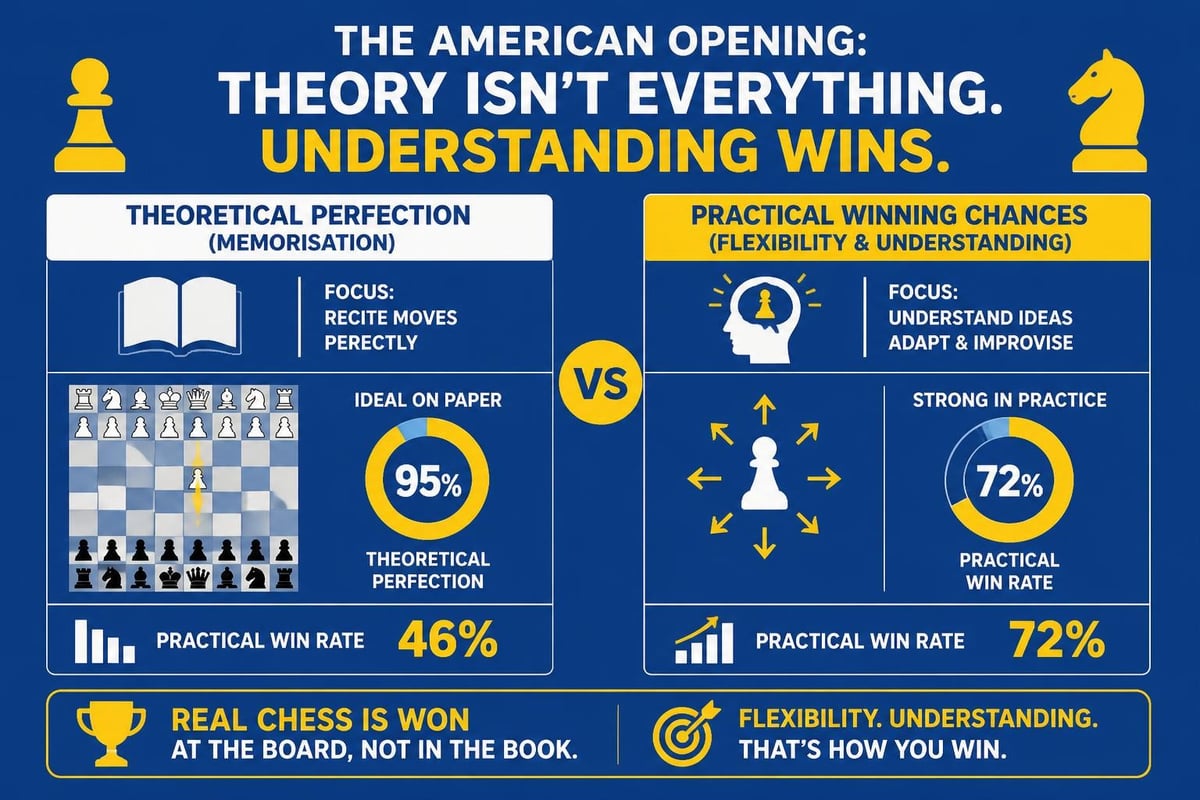
Rather than seeking theoretical equality, the American approach often prioritises creating imbalanced positions where both sides have chances. You'll find American players more willing to accept slight theoretical disadvantages in exchange for positions they understand better than their opponents.
- Active piece play over perfect pawn structure
- Dynamic compensation rather than static equality
- Concrete calculation trumping abstract principles
- Willingness to sacrifice for initiative
Systems Favoured by American Players
Throughout chess history, certain opening systems have become particularly associated with American players, whether through innovation, popularisation, or simply frequent use at the highest levels.
| Opening System | Key American Advocates | Main Appeal |
|---|---|---|
| English Opening | Caruana, Nakamura | Flexibility, transpositions |
| Ruy Lopez | Fischer, Morphy | Classical principles, long-term pressure |
| Scotch Game | Nakamura | Direct tactics, early simplification |
| Benko Gambit | Benko, Christiansen | Long-term compensation, practical chances |
| King's Indian Attack | Fischer | Universal system against various setups |
The Ruy Lopez deserves special mention here. Whilst not uniquely American, it's been the weapon of choice for American champions from Paul Morphy in the 1850s through Bobby Fischer in the 1960s and beyond. This opening perfectly embodies the american opening chess philosophy: it's principled, aggressive, and offers White long-term pressure without requiring encyclopaedic knowledge.
Building Your American-Style Opening Repertoire
So how do you actually implement american opening chess principles into your own game? The beauty of this approach is that it's adaptable to your level and style, whether you're just learning the most common chess openings or refining an advanced repertoire.
For White: Choosing Your First Move
Your opening move sets the tone for the entire game. American players have historically favoured 1.e4 and 1.c4, though 1.d4 certainly has its adherents.
Starting with 1.e4
This King's Pawn Opening remains the most popular choice worldwide. It leads to open positions where tactical awareness matters more than deep theoretical knowledge. You'll need responses to:
- The Sicilian Defence (Black's most popular and challenging response)
- The French Defence (solid but somewhat passive for Black)
- The Caro-Kann Defence (another solid option, popular at all levels)
- 1...e5 (leading to classical openings like the Ruy Lopez or Italian Game)
Trying the English Opening
The 1.c4 approach offers something different. You're immediately taking the game into less theoretical waters, and this detailed explanation shows how it developed as a legitimate alternative to classical first moves. The learning curve is gentler because you're dealing with strategic themes rather than forcing variations.
For Black: The American Defensive Approach
When playing Black, american opening chess philosophy suggests fighting for the initiative rather than passively equalising. This means choosing defences that create immediate counterplay.
Against 1.e4, consider:
- The Sicilian Defence: Maximum winning chances, countless variations
- The Alekhine's Defence: Provocative and concrete
- The Scandinavian Defence: Immediate central challenge
Against 1.d4, popular American choices include:
- The King's Indian Defence: Counterattacking chances, sharp play
- The Grünfeld Defence: Active piece play, central pressure
- The Nimzo-Indian Defence: Solid yet flexible, fights for the initiative

Practical Tips for Studying American Opening Chess
Here's where many players go wrong: they try to memorise variations without understanding the underlying concepts. The american opening chess approach emphasises understanding over memorisation, which actually makes it perfect for busy players who can't dedicate hours daily to opening theory.
Focus on Understanding Key Positions
Rather than learning move-by-move sequences, study the typical middlegame positions that arise from your chosen openings. What are the common pawn structures? Where do your pieces belong? What plans does each side pursue?
For instance, if you're playing the English Opening, you should understand the "hedgehog" structure, the symmetrical variations, and how to transition into favourable Queen's Gambit positions. You don't need to memorise every possible move order to reach these positions.
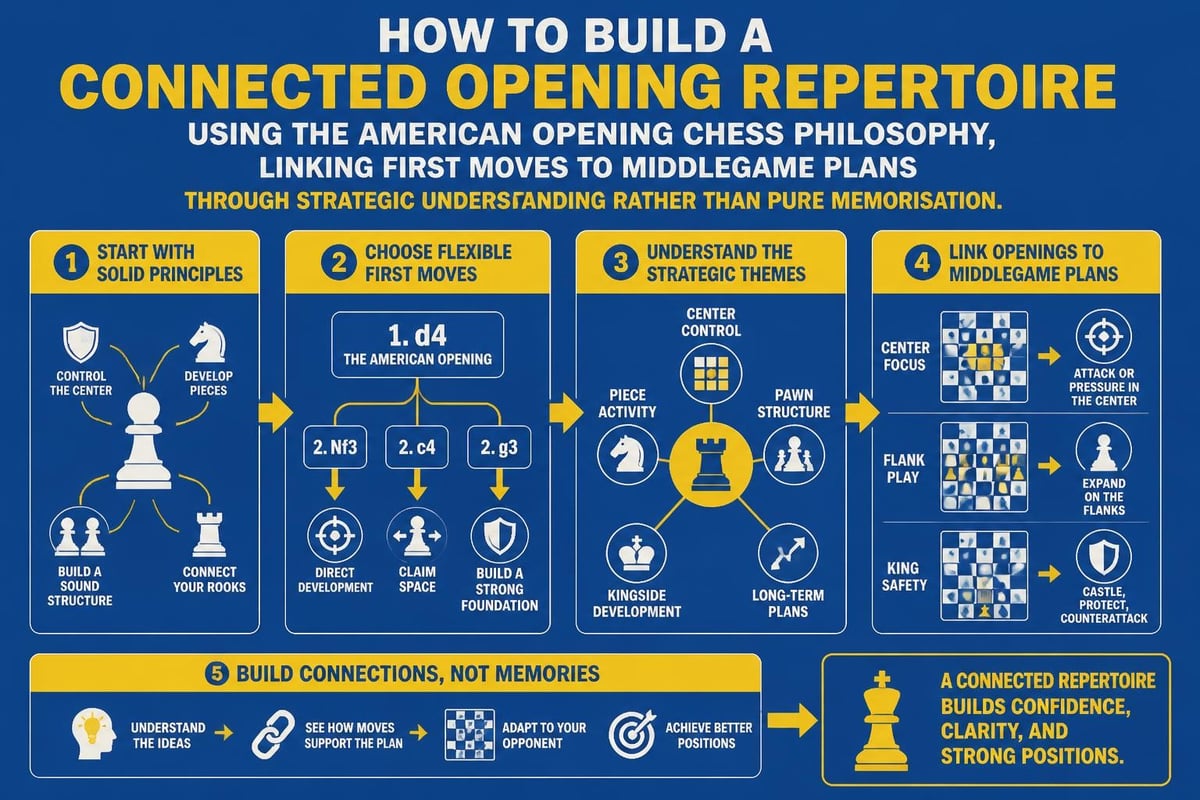
Create Your Personal Opening Chart
Map out your repertoire visually. Start with your first move, then branch out based on your opponent's responses. For each branch, note:
- The main strategic ideas
- Critical positions you must reach (or avoid)
- Typical tactical themes
- Key moves that change the character of the position
This visual approach, similar to what you'd find in comprehensive resources at Chess Cheat Sheets, helps you see how everything connects rather than treating each variation as isolated theory.
Study Grandmaster Games Selectively
Don't just play through games randomly. Choose 10-15 model games in your chosen opening and study them deeply. Watch how American grandmasters handle the transition from opening to middlegame. This video exploration of American players' opening choices provides valuable insights into how top players think about opening selection.
When studying games, ask yourself:
- Why did the player choose this particular setup?
- What was the critical moment where the opening ended and the middlegame began?
- How did the opening choice influence the resulting middlegame?
- What would have happened with a different move order?
Common Mistakes When Adopting American Opening Chess
Even with the best intentions, players often stumble when trying to implement american opening chess principles. Recognising these pitfalls can save you months of frustration.
Mistake One: Confusing Flexibility with Aimlessness
Flexibility doesn't mean playing without a plan. Each move should have a purpose, even if that purpose allows for later transpositions. The English Opening is flexible, but it's not random. You're still developing pieces, controlling the centre (albeit from the flank), and preparing for specific pawn breaks.
Mistake Two: Avoiding Theory Completely
The American approach values understanding over memorisation, but that doesn't mean ignoring theory altogether. You still need to know the critical lines where one wrong move loses material or ruins your position. The difference is that you're learning these variations through the lens of strategic understanding.
| Aspect | Wrong Approach | Right Approach |
|---|---|---|
| Theory Study | Memorise everything | Learn critical positions and ideas |
| Flexibility | Play anything | Have a connected repertoire with options |
| Preparation | Avoid all mainlines | Choose lines you understand deeply |
| Practice | Constantly switch openings | Master 2-3 systems thoroughly |
Mistake Three: Neglecting Your Chess Fundamentals
Opening knowledge means nothing if your chess elo rating isn't supported by solid tactical and endgame skills. American opening chess gets you interesting positions, but you need the skills to capitalise on them. This is where regular practice with puzzles and endgame studies becomes essential.
Adapting American Opening Principles to Your Level
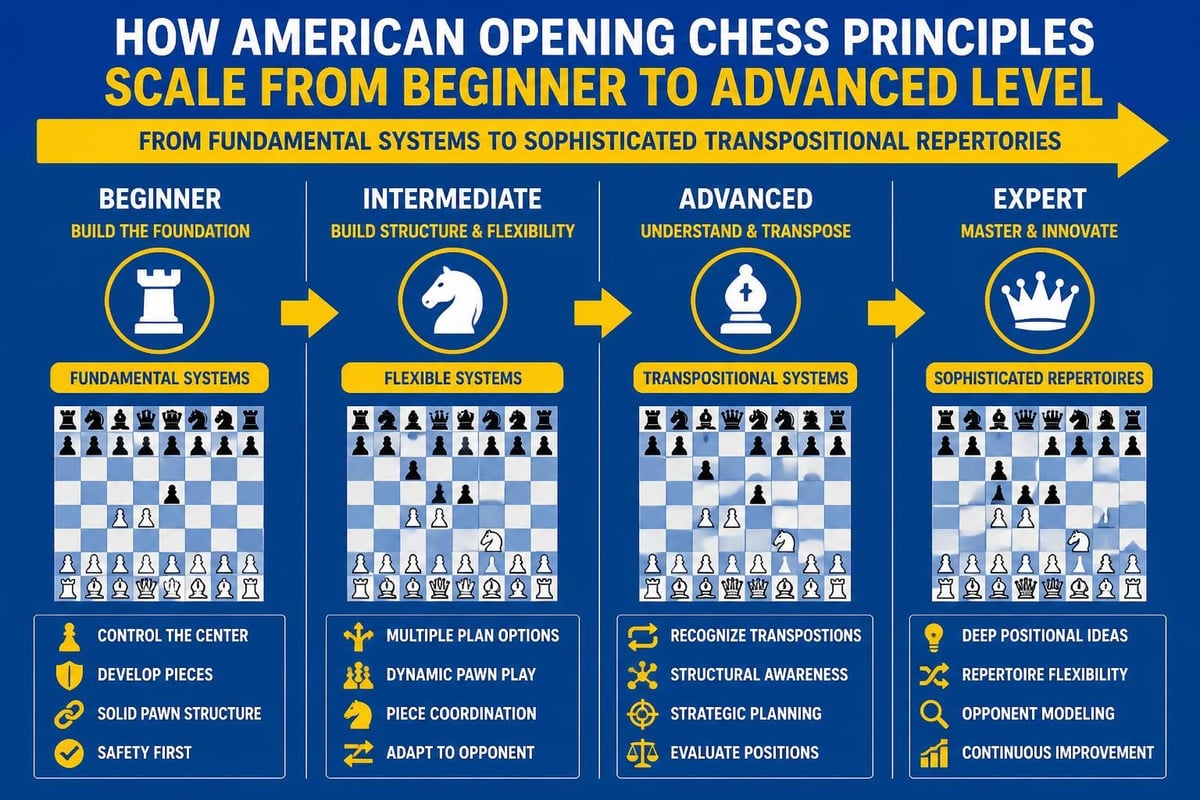
The beauty of american opening chess is its scalability. Whether you're rated 800 or 2000, you can apply these principles effectively. The key is choosing systems appropriate to your current understanding whilst maintaining room for growth.
Beginner Level (Under 1200)
At this stage, focus on opening systems that teach fundamental principles:
- Control the centre
- Develop your pieces efficiently
- Castle early
- Don't move the same piece twice without good reason
The Italian Game, Scotch Game, and basic Queen's Pawn openings work brilliantly here. They're straightforward, principled, and punish common beginner mistakes from your opponents.
Intermediate Level (1200-1800)
Now you can expand into more sophisticated systems. The English Opening becomes accessible because you understand pawn structures and piece coordination. The Ruy Lopez reveals its depths as you appreciate subtle positional factors.
This is when studying american opening chess seriously pays dividends. You're ready to understand why certain move orders matter, how to handle transpositions, and when to deviate from mainlines for practical reasons.
Advanced Level (1800+)
At higher levels, american opening chess becomes about deeper preparation, psychological warfare, and finding the balance between objectivity and pragmatism. You might study niche variations not because they're theoretically best, but because they lead to positions where your specific strengths shine.
Training Methods to Improve Your Opening Play
Knowing what to study matters less than knowing how to study it effectively. Here's a structured approach that American coaches have used successfully with students at all levels.
The Three-Position Method
For each opening in your repertoire, identify three critical positions:
- The basic starting position after your main setup is complete
- A favorable middlegame position you're aiming to reach
- A critical tactical position where precise calculation matters
Study these positions until you could reach them in your sleep. Use them as anchors for your broader understanding.
Regular Position Training
Set up positions from your openings and play them against the computer or training partners, starting from move 10 or 12 rather than move 1. This develops your understanding of typical middlegames whilst saving time on the opening moves you already know.
You can find structured training like this through quality free online chess courses that focus on systematic improvement rather than random study.
Spaced Repetition for Key Variations
Not everything needs memorisation, but some critical lines do. Use spaced repetition to lock in:
- Sharp tactical lines where one mistake loses
- Key move orders that avoid inferior variations
- Important defensive resources you must know
Review these at increasing intervals: 1 day, 3 days, 1 week, 2 weeks, 1 month. This technique, borrowed from language learning, works brilliantly for opening study.
Integrating Opening Study with Overall Chess Improvement
American opening chess shouldn't exist in isolation from the rest of your game. The best players seamlessly connect opening preparation with middlegame planning and endgame technique.
When you study an opening, always follow the game into the middlegame. Don't stop at move 15 just because the "opening" is over. See how the opening's character influences what follows. Notice how pawn structure from the opening determines piece placement in the middlegame.
Similarly, work backwards from endgames. If your chosen opening typically leads to rook endgames, make sure your rook endgame technique is solid. The Benko Gambit, for instance, often features long-term positional compensation, so understanding endgames with extra pawns versus active pieces becomes crucial.
Monthly Study Schedule Example
Week 1: Learn two new variations in your main opening, playing through 5 master games featuring each
Week 2: Practice those variations against computer and human opponents, reviewing your games carefully
Week 3: Study typical middlegame positions arising from your opening, focusing on common plans and piece maneuvers
Week 4: Work on endgame positions that commonly arise, plus review and consolidate everything from the previous three weeks
This balanced approach ensures your american opening chess knowledge integrates with practical playing strength.
Choosing Between Popular American Opening Systems
If you're convinced about adopting american opening chess principles but still unsure which specific systems to play, here's a practical comparison to help you decide.
The English Opening vs King's Pawn Openings
Both represent valid interpretations of American chess philosophy, but they suit different playing styles and learning approaches.
Choose the English Opening if you:
- Prefer gradual strategic maneuvering to immediate tactics
- Want to minimise theoretical memorisation
- Enjoy positions where both sides have long-term plans
- Don't mind slower, more subtle games
- Want maximum flexibility in move orders
Choose King's Pawn Openings if you:
- Love tactical complications and sharp play
- Want to test your calculation in every game
- Prefer shorter, more decisive games
- Enjoy classical opening theory
- Value aggressive, forcing chess
Neither choice is objectively better. Your personality, study time, and competitive goals should guide your decision. Many players eventually develop competence in both, using each for different opponents or situations.
Practical Considerations for Your Repertoire
Beyond style, consider practical factors:
Time Investment Required
King's Pawn openings, especially the Ruy Lopez and Sicilian Defence, demand more theoretical knowledge. You'll face well-prepared opponents even at club level. The English Opening requires deeper positional understanding but less pure memorisation.
Opponent Preparation
At higher levels, your opponents will prepare against your known repertoire. The transpositional nature of systems like the English makes this harder for them. However, if you're playing primarily at club level, this factor matters less than your own comfort and understanding.
Learning Resources Available
Some openings have extensive resources whilst others rely on scattered articles and videos. Check what's available before committing. High-quality guides and cheat sheets make learning any opening significantly easier.
Mastering american opening chess gives you a practical, flexible foundation that works at every level of play. By focusing on understanding rather than memorisation, choosing systems that create winning chances, and connecting your opening play to broader chess skills, you'll develop a repertoire that grows with you. Whether you're looking to expand your opening knowledge or build a completely new repertoire, Chess Cheat Sheets offers the streamlined guides and practical resources you need to master these systems efficiently and start winning more games with confidence.


