

Ever wondered how chess masters seem to see into the future, planning moves you never saw coming? In 2026, there’s never been a better time to ask, “Can you teach me chess game strategies like the pros?”
Chess is thriving worldwide, from the surge of online play to exciting global tournaments watched by millions. It’s more than a game—it’s a workout for your mind, boosting memory, focus, and strategic thinking. Plus, it’s a fantastic way to connect with friends and new opponents.
This expert guide is here to help you learn chess step by step, whether you’re just starting or looking to level up your play. You’ll discover the basics, key strategies, advanced tactics, the latest resources, and insider tips to make 2026 the year you master the chessboard.
Get ready to unlock your potential and enjoy every move!

Understanding Chess Fundamentals
If you’re thinking, “teach me chess game basics,” you’re in the right place. Every chess journey begins with solid fundamentals. Let’s break down the essentials so you can build a strong foundation and enjoy the game’s unique blend of logic and creativity.
The Chessboard and Pieces
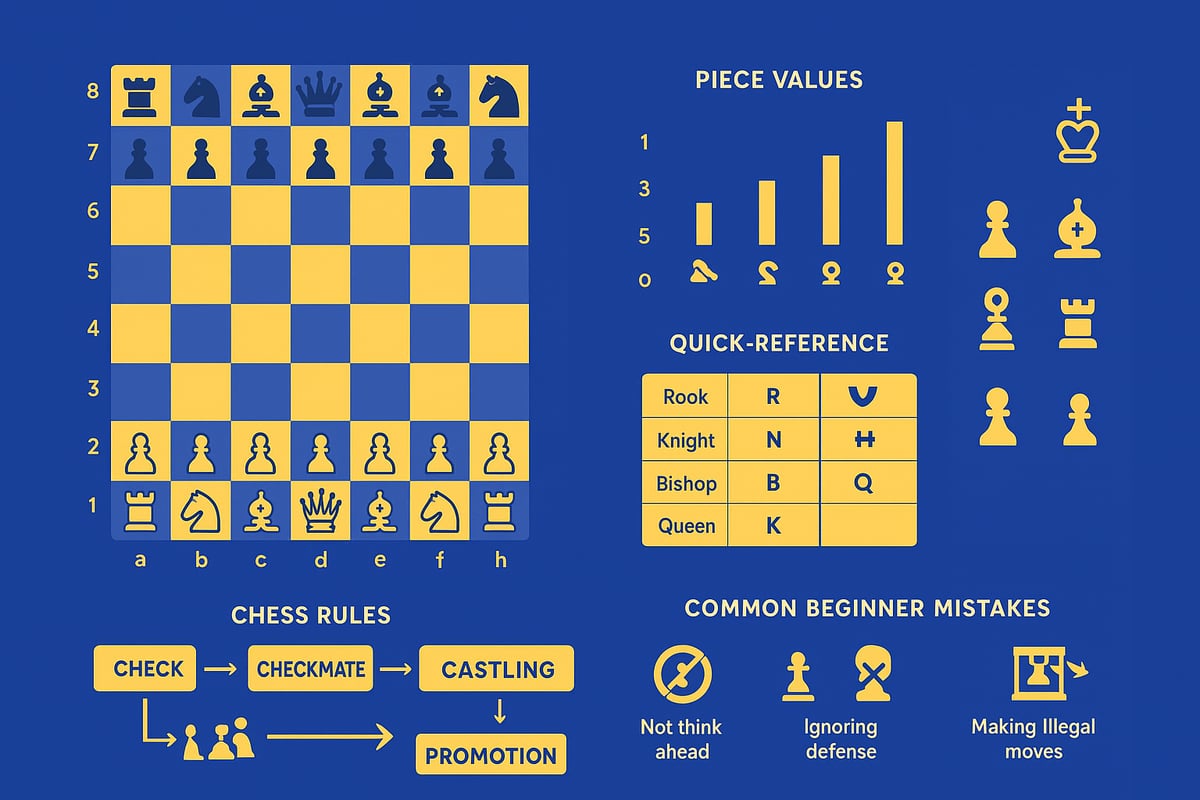
Imagine looking at a chessboard for the first time and thinking, “teach me chess game layout.” The board has 64 squares arranged in an 8x8 grid, with alternating light and dark colours. Each square has a coordinate, like e4 or d5, which helps you track moves.
There are 32 pieces at the start: 16 for each player. Here’s a quick breakdown:
| Piece | Moves Like | Value |
|---|---|---|
| Pawn | Forward, captures diagonally | 1 |
| Knight | L-shape (unique) | 3 |
| Bishop | Diagonally | 3 |
| Rook | Straight lines | 5 |
| Queen | Any direction | 9 |
| King | One square, any direction | Infinite (game over if lost) |
The knight’s unusual L-shaped jump lets it leap over other pieces, controlling key squares in surprising ways. Learning square notation is vital for tracking your games and analysing your progress. Did you know there are over 1,000 unique opening setups from the initial position?
If you want a handy reference, check out the How to Play Chess Cheat Sheet for a beginner-friendly overview of board layout and piece moves.
Basic Rules and Objectives
At its core, the main aim is simple: checkmate your opponent’s king. If you’ve ever said, “teach me chess game rules,” here are your must-knows.
Every piece has legal moves, and you can’t move into check (where your king would be captured). Special moves include castling (safeguarding your king and activating your rook), en passant (a unique pawn capture), and pawn promotion (turning a pawn into a queen or another piece upon reaching the other side).
Games don’t always end in checkmate. Draws can happen via stalemate (no legal moves, but king not in check), threefold repetition, or the 50-move rule. Grandmasters sometimes reach famous stalemates, showing how even a losing position can be saved with the right knowledge.
Chess Notation and Record Keeping
If you ask, “teach me chess game notation,” you’re setting yourself up for rapid improvement. Chess uses algebraic notation, where each move is recorded using the piece letter and destination square (like Nf3 for knight to f3).
Keeping track of your games helps you review, spot patterns, and learn from mistakes. Notation lets you follow legendary matches and study how the best play. Nowadays, digital tools make recording and analysing your games effortless, so you can revisit your best (and worst) moments anytime.
Essential Opening Principles
Many beginners say, “teach me chess game openings,” hoping for a quick win. Instead, focus on these principles:
- Control the centre with moves like
e4andd4. - Develop your knights and bishops before moving your queen or rooks.
- Prioritise king safety by castling early.
- Avoid bringing your queen out too soon.
Following these basics gives you a stronger, safer position. For example, sticking to these ideas can stop you from falling into early traps and help you grow your confidence as you learn.
Common Beginner Mistakes
It’s easy to slip up when you’re just starting and thinking, “teach me chess game without mistakes.” Watch out for these classic errors:
- Moving the same piece several times in the opening.
- Neglecting to develop all your pieces or leaving your king exposed.
- Missing threats and leaving pieces unprotected (known as ‘hanging’ pieces).
A quick blunder—like forgetting to guard your queen—can lead to a fast loss. In fact, over 60% of beginner games end because of early tactical errors. Spotting these mistakes early helps you level up your play and enjoy steady improvement.
Building a Winning Chess Strategy
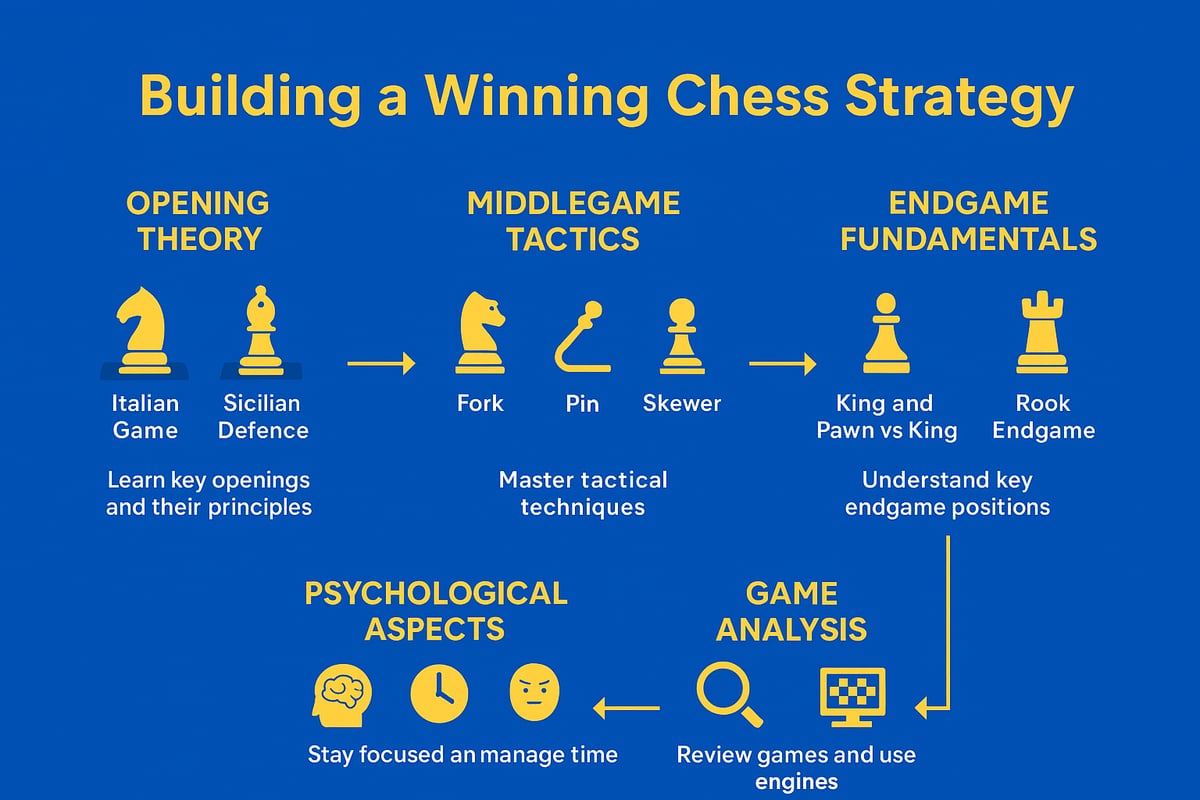
Ready to move from casual play to real mastery? Building a winning strategy is where the magic happens in chess. When you say, "teach me chess game," you’re really asking how to think ahead, spot patterns, and outmanoeuvre your opponent. Let’s break this journey down into the key phases of every battle on the board.
Opening Theory and Popular Openings
Think of the opening as your launchpad. The first ten moves set the tone for everything that follows, so getting them right is essential. If you’ve ever thought, "teach me chess game basics," start here.
The most popular openings, like the Italian Game, Sicilian Defence, and Queen’s Gambit, are used by beginners and grandmasters alike. Each has its own flavour. The Italian Game is all about quick development and early attacks. The Sicilian Defence, on the other hand, leads to sharp, tactical battles. Want a strategic edge? The Queen’s Gambit gives you control of the centre and lots of room to manoeuvre.
Here’s a quick comparison:
| Opening | Main Idea | Typical Moves |
|---|---|---|
| Italian Game | Fast development, control | 1.e4 e5 2.Nf3 Nc6 3.Bc4 |
| Sicilian Defence | Counterattack, complexity | 1.e4 c5 |
| Queen’s Gambit | Central control, flexibility | 1.d4 d5 2.c4 |
Did you know that about 80% of master-level games begin with either e4 or d4? These moves grab the centre and open lines for your pieces.
If you want to dive deeper into these and see practical examples, check out this guide to the Most Common Chess Openings.
Understanding openings is not about memorising endless lines. It’s about grasping the main ideas, so your pieces work together from the start. Next time you think, "teach me chess game strategies," remember that your first moves shape your whole plan.
Middlegame Tactics and Planning
Once the opening is over, it’s time for the real battle. The middlegame is where you build plans, spot tactics, and try to outwit your opponent. If you’ve ever asked someone to "teach me chess game tricks," this is the phase they’ll focus on.
Tactical tricks are everywhere. Look out for:
- Forks: One piece attacks two targets at once.
- Pins: A piece can’t move without exposing something valuable.
- Skewers: Attack a valuable piece, forcing it to move and exposing another.
- Discovered attacks: Move one piece to reveal an attack from another.
Pawn structure is the skeleton of your position. Doubled, isolated, or backward pawns can be weaknesses or strengths, depending on your plan. Try to create and exploit weaknesses in your opponent’s camp.
Let’s see a classic example:
White: Rook on e1, Queen on e5.
Black: King on g8, Knight on f6.
White plays Qxf6! (removing the defender), then Re8# (checkmate).
Calculation and visualisation are your best friends here. Always ask, “What if my opponent does this?” before you move. Mastering these skills is vital if you want someone to really "teach me chess game" and take your play to the next level.

Endgame Fundamentals
The endgame is where many games are won or lost. You can have the best opening in the world, but if you don’t know how to finish, victory can slip away. If you’re serious when you say "teach me chess game basics," don’t skip endgames.
Key endgame principles include:
- Opposition: Outmanoeuvre the enemy king in pawn endgames.
- Triangulation: Waste a move to put your opponent in zugzwang.
- Pawn promotion: Guide your pawn to the eighth rank for a new queen.
Common endgames to know:
- King and pawn vs. king: Simple, but all about precision.
- Rook endgames: Learn how to cut off the king and use the “Lucena” and “Philidor” positions.
- Basic checkmates: Like king and queen vs. king. Practise these until they’re second nature.
Over 40% of games reach simplified endgames, so this is not just a niche skill. If you want a complete answer to "teach me chess game," mastering endgames is non-negotiable.
Psychological Aspects of Chess
Chess is as much a mental game as it is a battle of pieces. You might know the moves, but how do you handle nerves or bounce back after a blunder? If you want someone to "teach me chess game" in a real-world way, you need to get your mind in shape too.
Time pressure can lead to mistakes, so practise using a chess clock. Try to read your opponent’s intentions by watching their body language or move speed. If you make a mistake, don’t panic. Even grandmasters have staged amazing comebacks after big errors.
Stay focused, breathe, and remember that every new game is a fresh start.
Analysing Your Own Games
Improvement comes from reflection. After each game, take a few minutes to review your moves. Ask yourself, “Why did I play that?” and “What could I do better?” If you ask someone to "teach me chess game" properly, they’ll tell you that reviewing games is as important as playing them.
Use computer engines and online tools to spot missed tactics and evaluate your plans. Over time, this habit will make your progress skyrocket.
Step-by-Step Guide: How to Learn Chess in 2026
Ready to say, “Teach me chess game,” and actually master it? Whether you’re just curious or determined to outplay your friends, learning chess in 2026 has never been more accessible. The best part? With modern tools and a clear plan, you can progress faster than ever.
This step-by-step guide breaks down everything you need. Let’s start your journey to becoming a confident chess player, one practical step at a time.
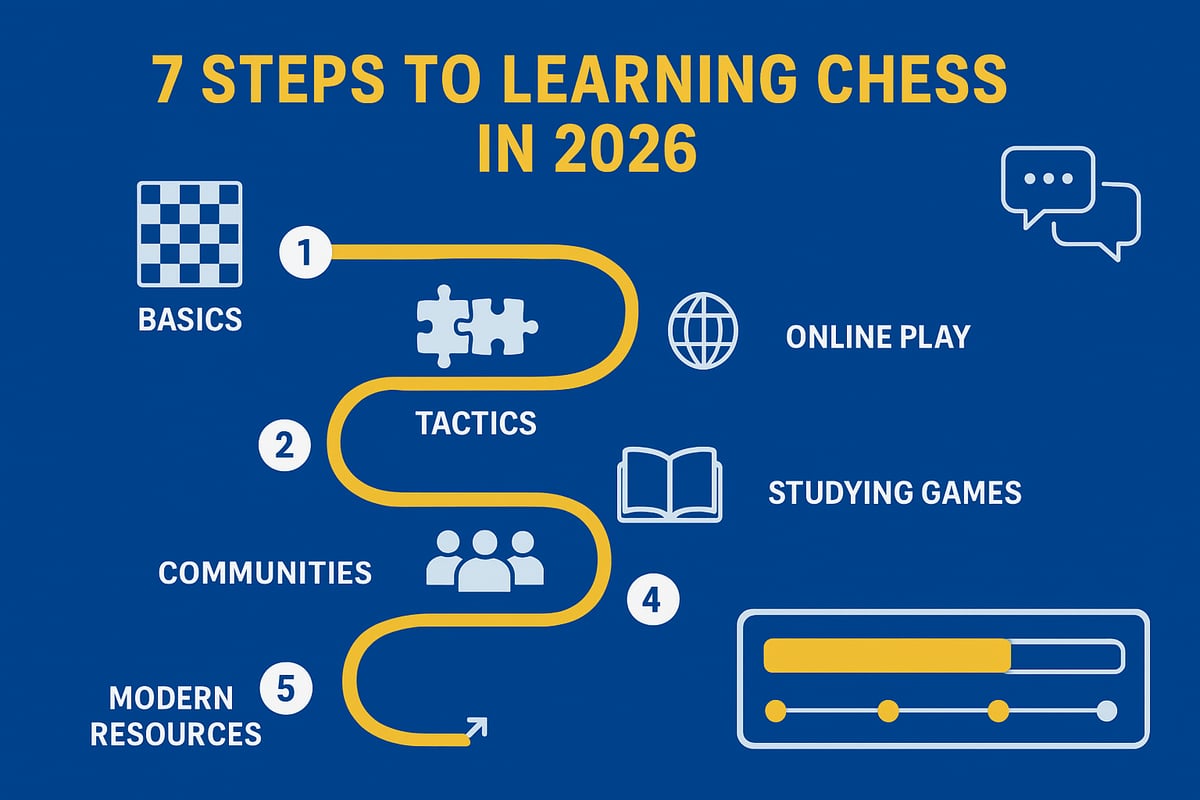
Step 1: Master the Basics
Every chess journey begins with the basics. If you’ve ever thought, “Teach me chess game, but make it simple,” this is your starting point.
Get familiar with the chessboard, piece movements, and the core rules. Focus on learning how to checkmate with a king and queen or king and rook. These patterns build your foundation.
Interactive online tutorials are a fantastic way to practise. Platforms like Chess.com offer beginner modules that walk you through each rule with instant feedback.
As you learn, try to visualise the board and use algebraic notation. This will help you follow games and review your own moves later. Remember, even grandmasters started with these simple steps.
Step 2: Practise with Puzzles and Tactics
After you’ve got the basics down, it’s time to sharpen your tactical skills. Daily chess puzzles are a fun way to train your mind and spot opportunities in real games.
Focus on common patterns like forks, pins, and mates-in-one. These will pop up over and over, and recognising them quickly is a game-changer. Lichess puzzle streaks are a great feature for testing yourself.
If you want to dive deeper, check out guides such as Improve with Chess Puzzles for structured advice on building your tactical vision. This step is essential if you want to confidently say, “Teach me chess game, and help me win!”
Step 3: Play Regularly Against Varied Opponents
Theory is important, but nothing beats real practice. Playing chess online lets you face a wide range of opponents, from beginners to advanced players.
Try platforms like Chess.com or Lichess for instant games. Mix it up — play against both humans and computer opponents. Each game is a learning opportunity.
Most sites offer rating systems that track your progress. Watching your rating climb is motivating and shows that your “teach me chess game” effort is paying off. Don’t be discouraged by losses; they’re valuable lessons in disguise.
Step 4: Study Classic Games and Modern Masterpieces
If you want to truly understand chess, analyse the games of world champions and grandmasters. These games reveal deep strategies, creative tactics, and endgame techniques.
Look for annotated games or video lessons where experts explain each move. Studying Magnus Carlsen’s endgames or Garry Kasparov’s attacks will open your eyes to new ideas.
Try replaying classic matches move by move. Notice how top players develop their pieces, control the centre, and convert advantages. This habit will help you think several moves ahead, just like the masters.
Step 5: Join Chess Communities and Clubs
Chess is even more rewarding when shared. Joining a club or online community connects you with fellow learners, mentors, and rivals.
Local clubs offer face-to-face games, while online forums provide discussion and friendly competitions. You’ll find support, advice, and new friends who share your passion.
Participating in online tournaments is a fantastic way to test your skills. The encouragement and feedback from a community can make all the difference as you continue to think, “Teach me chess game, and let me grow.”
Step 6: Track Progress and Set Goals
Improvement happens fastest when you track your journey. Keep a chess journal or use digital trackers to record your games, mistakes, and achievements.
Set short-term goals, like solving five puzzles a day, and longer-term ones, such as reaching a specific rating. Review your games, especially your losses, to spot patterns and avoid repeating mistakes.
Ask stronger players for feedback. Their insights can help you break through plateaus and keep your “teach me chess game” journey on the right path.
Step 7: Leverage Modern Chess Resources
2026 offers incredible tools for learning chess. Use apps, AI coaches, and online databases to expand your knowledge and practise anytime.
Chessable’s spaced repetition system is perfect for memorising openings. Mobile apps let you train on the go, whether you’re on a train or in a coffee shop.
Stay updated with the latest technology and trends. With so many resources at your fingertips, there’s no better time to say, “Teach me chess game,” and truly excel.
Leveraging Technology and Modern Resources
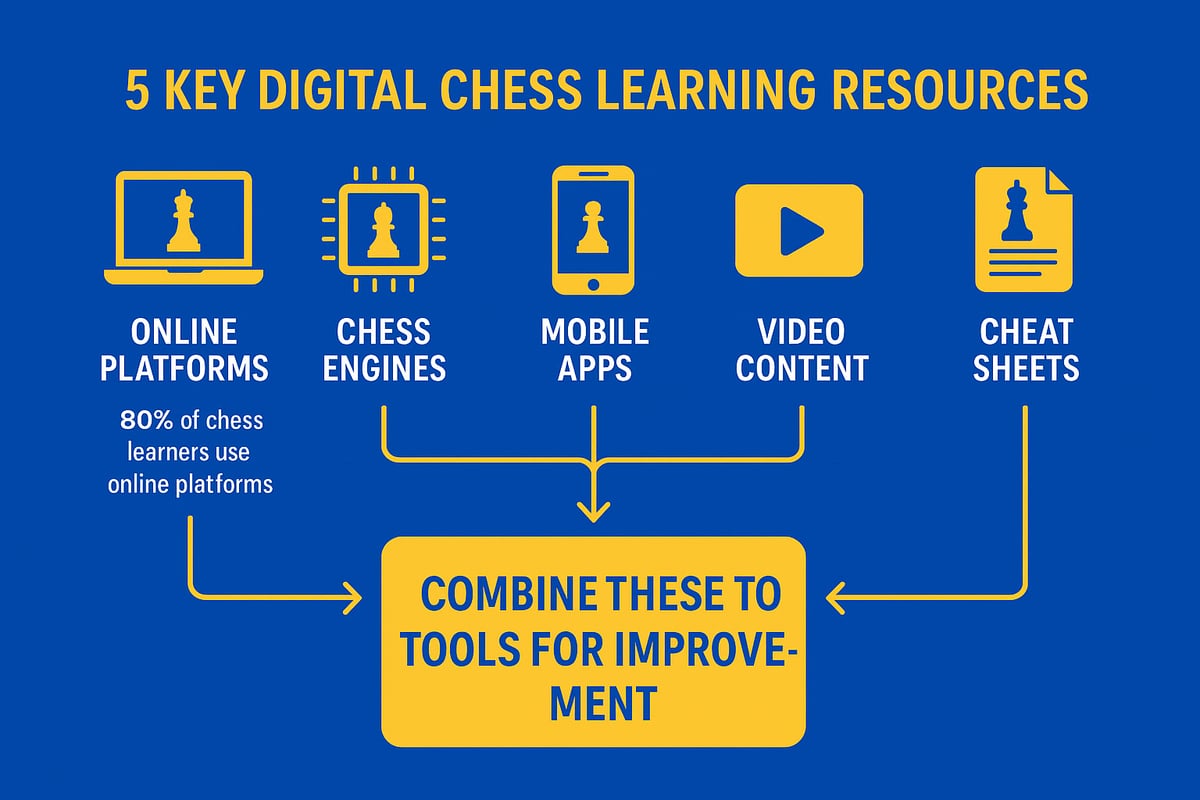
The digital world has completely transformed the way people learn chess. With so many resources at your fingertips, you might be thinking, “Can technology really teach me chess game skills as well as a coach?” The answer is yes, and often even better. Let’s explore how modern tools make learning chess more accessible and engaging than ever before.
Online Learning Platforms and Courses
When you think, “Where do I start if I want someone to teach me chess game basics?”, online platforms are your new best friend. Chess.com, Lichess, and Chessable offer structured courses for every level, from total beginners to advanced players. Interactive lessons, instant feedback, and quizzes help you build confidence step by step.
Here’s a quick comparison:
| Platform | Strengths | Unique Feature |
|---|---|---|
| Chess.com | Huge community | Puzzle rush |
| Lichess | 100% free, open source | Unlimited puzzles |
| Chessable | Science-based learning | Spaced repetition |
For a curated list of high-quality courses, check out Free Online Chess Courses to supercharge your progress.
Chess Engines and Analysis Tools
Ever wished you had a grandmaster whispering in your ear as you play? Modern chess engines like Stockfish and Leela Chess Zero make that possible. These AI tools analyse every move, highlight errors, and show alternative lines. If you want tech to "teach me chess game logic," using an engine after your games is a must.
You can load your games into these tools and see where you went wrong or spot brilliancies you might have missed. Many platforms integrate engines directly, letting you instantly review games and sharpen your tactical vision.
Mobile Apps and On-the-Go Learning
Life gets busy, but your chess journey doesn’t have to pause. If you want technology to help teach me chess game skills anytime, mobile apps are the answer. Top apps like Chess.com, Lichess, and Magnus Trainer work on Android and iOS, offering puzzles, lessons, and live play with a tap.
Features to look for:
- Daily puzzles for brain training
- Interactive lessons for all levels
- Rating trackers to monitor improvement
You can squeeze in practice during your commute or a lunch break, making it easier to stick with your learning goals.
Video Content and Streaming
Learning by watching is now easier than ever. Twitch and YouTube are packed with grandmasters and streamers who break down games, explain strategies, and answer questions live. If you prefer a friendly face to teach me chess game concepts, video content is ideal.
Popular streamers like Hikaru Nakamura make advanced ideas accessible, while commentary on big tournaments offers real-world examples. Video lessons cater to all learning styles and often include chats with viewers for extra interaction.
Chess Cheat Sheets: Streamlined Learning Resources
Sometimes you need answers fast. Chess cheat sheets, quick-reference guides, and summary tables are perfect for this. They condense complex ideas into bite-sized chunks, helping beginners and intermediates avoid common pitfalls. If you’re searching for a way to teach me chess game essentials without overwhelm, cheat sheets are a real lifesaver.
Use opening cheat sheets to remember key moves, or endgame guides to quickly master checkmating patterns. Platforms like Chess Cheat Sheets offer comprehensive guides, puzzles, and endgame resources so you can level up efficiently.
Advanced Tips from Chess Experts
Ready to level up your play? Here’s where you move beyond basics and start thinking like a chess master. If you’ve ever thought, “Can someone really teach me chess game secrets at the expert level?”—this is your section.
Training Like a Grandmaster
What separates a club player from a grandmaster? The answer is structure. If you want someone to truly teach me chess game expertise, you need a routine. Grandmasters split their time between openings, tactics, and endgames, often using a weekly plan.
A typical training day might start with 30 minutes of tactical puzzles, followed by 20 minutes of reviewing opening theory, then practical endgame drills. Consistency is key. This approach does not just improve your chess, it also boosts your brain power—a fact confirmed by research showing that chess enhances cognitive abilities in children. Whether you’re young or not so young, a grandmaster-style routine is the fastest path to progress.
Adapting to Your Opponent’s Style
Every chess player has a unique approach. Some attack with reckless abandon, while others defend patiently. To master the teach me chess game challenge, you’ve got to read your opponent like a book.
Ask yourself: Is your rival aggressive or cautious? Do they favour open positions or closed ones? If you spot patterns, adapt your plan. For example, switch to a solid defence against wild attackers, or open the centre if your opponent is too passive. The art of adaptation is what makes chess endlessly fascinating. Remember, the best players never stick to just one style.
Handling Tournament Pressure
Ever felt your hands shake during a big match? You’re not alone. Tournament nerves can make even the best forget their training. If you want someone to teach me chess game strategies for high-stakes moments, preparation is everything.
Start with a calming pre-game routine: deep breaths, quick review of your favourite openings, and a reminder that mistakes happen to everyone. During the game, manage your clock wisely—don’t burn all your time early. Studies show that chess can help reduce anxiety and even boost mental resilience. So, next time you feel the pressure, remember that steady nerves can turn tension into triumph.
Using Chess Databases and Opening Preparation
Modern chess is a game of information. Top players rely on massive databases to prepare openings and outsmart their rivals. If you want to teach me chess game strategies at the expert level, get comfortable with these tools.
Here’s a quick comparison of popular chess databases:
| Database | Features | Best For |
|---|---|---|
| ChessBase | Millions of games, deep analysis | Opening research, game prep |
| Lichess | Free, user-friendly, community features | Casual study, quick reviews |
| Chess.com | Integrated lessons, large database | Blending study and play |
Use these platforms to build your opening repertoire, spot trends, and prepare novelties. Preparation is what gives you the edge before a single piece moves.
Avoiding Common Pitfalls at Advanced Levels
Even advanced players trip up. Want to avoid the usual traps as you ask, “Can you teach me chess game skills for the next level?” Watch out for these:
- Overconfidence after a winning streak
- Time trouble from poor clock management
- Neglecting endgame study in favour of flashy openings
- Ignoring lessons from past mistakes
The best way to sidestep these pitfalls is by embracing a growth mindset. Remember, learning never stops. Regular review, honest self-reflection, and a willingness to adapt are your greatest assets. Chess is a lifelong journey—treat every setback as a lesson.
Staying Updated with Chess Trends in 2026
Chess is evolving faster than ever. From AI-powered opening theory to online super-tournaments, staying current is vital for anyone serious about improvement. If you want to teach me chess game knowledge that stays relevant, keep your finger on the pulse of new trends.
Follow top streamers, join online events, and experiment with AI analysis tools. Innovations in chess tech are making it easier for everyone to learn, play, and connect. Whether you’re a casual fan or a future grandmaster, embracing these advances will keep your game sharp and your passion alive.
So, now that you’ve got a handle on the basics and some expert strategies, where do you go from here? If you’re serious about taking your chess skills up a notch—especially when it comes to mastering those tricky openings—we both know it’s much easier with the right resources at hand. I’ve found that having all the essential cheat sheets, puzzles, and endgame guides in one place saves loads of time and frustration. Why not give yourself that advantage? You can Get The FULL Chess Mastery Bundle and take the next big step towards becoming the player you want to be.


